Running low on Sykes I explored another box of his slides, one I’d not searched before. Inside were a few slides grouped by subjects and captioned – minimally. For these subjects we have already seen slides “without words” in Our Daily Sykes. There was a grouping for “Snake River,” another with many close-ups of flowers and a third of sunsets, of which the above was one. It is that rare photograph of a sunset that breaks the commonplace of the sinking sun sensations with a very satisfying composition and what editors and ad-agents like to call “human interest” too. But where is it? Again, Horace does not tell us. However, after “reading” the horizon I remembered it from a Washington State real photo postcard we used in our book “Washington Then and Now.” With the help of Google Earth I think I figured out within a few feet from where Horace took this sunset sometime in the 1940s. However, I’m not telling. Rather I’ll include a good clue below – another display of the same horizon and in full daylight. So where is it? (Click TWICE to Enlarge)
We know that Horace Sykes was not always sizing up the picturesque in nature, but sometimes taking grotesque breaks too. This sturdy little tree in the mid-ground holds its own against the river and our habit of consuming Sykes either for the picturesque or the sensational parts of his Kodachrome slides. Here it seem Horace takes hold of this subject for its irony and brave good humor.
One more of those rare Sykes subjects that are titled in Syke's hand on the cardboard cover of his Kodachrome. It reads in a lower corner "Clouds at Sunrise H. Sykes #4." A different number written in a higher corner has been blotted out. The slide is also accompanied by another sunset subject that is also given a low number, which suggest that Horace Sykes was creating a collection of such. (Click to Enlarge)
The garden lover Horace turns his lens to a gilded Venus attended by her two sons Eros and Enteros. The original may be caste or it may be painted plaster. When I was still visiting garage sales looking for forsaken art I would often come upon such stuff, although never this size.
Syke's original slide of this subject was underexposed. A scan of it pumped with Photoshop steroids has it looking like a black and white soft focus photograph hand colored with Marshall Oil paints - the kind we purchased legally over the counter in art stores without written notes from either our parents or teachers. I never had the knack for it neither did I compensate by learning the hang of it all. Especially the trees in the foreground look painted. The mountains seem asleep in dreams of mountains. There may be snow there but it has all gone light blue squeezed from a Marshall tube, or so it seems. The colors and the subject also remind me of the paper place mats given in the 1950s to those who filled their tanks at Chevron service stations. My dad - and many others - collected them.
THEN: After twenty years of debate about whether to build it and where and how, the first bridge across Lake Washington took 18 months and a few days from ground breaking to accepting its first tolls from drivers happy for the short cut. (Photo courtesy Washington State Archive.)NOW: For his repeat, Jean Sherrard got within a few feet of the original prospect (now hidden behind bushes) taken by a Port of Seattle photographer at the bridge’s dedication.
Three thousand men got depression-time jobs building the Lacey V. Murrow Bridge – aka the Lake Washington Floating Bridge. Forty-five percent was paid with a federal public works grant and the rest by revenue bonds secured by the 25-cent tolls. The bridge was formally dedicated and opened in the early afternoon – judging by the shadows – of a sunlit July 2, 1940.
About 2000 people watched from the tunnel plaza area here on the bridge’s Seattle side and hundreds more gathered around the toll booths at the bridge’s Mercer Island end. Broadcast by radio nation-wide, the floating bridge was christened like a ship. After cutting the red ribbon, Kate Stevens Bates, daughter of Washington Territory’s first governor, Isaac Stevens, let swing and crash against the concrete bridge a yellow urn in which were mixed the waters of fifty-eight of the state’s waterways: lakes, bays and rivers.
With a smile about as wide, turned up and fixed as the grill work of his inaugural chariot, an open 1940 Lincoln Convertible, the state’s Governor Clarence Martin rode twice across the new bridge. At half way Martin was the first to pay a toll.
We could compare the public effort required to build “the largest floating structure in the world” with our recent struggle to replace the feeble Alaska Way Viaduct with a deep bore tunnel, except that it would take too long. Instead, we suggest that readers consult Genevieve McCoy’s fine chapter on the state’s bridges that is part our book “Building Washington.” You can read it for free on the blog noted here below.
One more toot – an announcement. This “now-then” comparison is one of about 100 such selected for an exhibit of “repeat photography” opening Saturday, April 9th, at the Museum of History and Industry. Most of the exhibit’s Seattle examples were first published here in Pacific. But the exhibit – most likely the last one for MOHAI in its old Montlake quarters – also includes examples from Washington State and even from Paris, the birthplace of photography.
Let me coyly answer my own question. I know Paul has some treats hidden away; including one of my favorites: a delightful photo of grinning then-governor Clarence Martin, as described above. For that and much more, click on ‘Web Extras’….
[Click to Enlarge] This may be our fourth or fifth visit with Horace Sykes to the top of Steptoe Butte. The view is to the south and, I believe, a little to the east too. Sykes’ decision to include a horizon of the hill as well as the quilt of Palouse wheat fields below it is typical of his often displayed urge to when shooting something far off to also include something nearby. And here the lift of that upstanding cloud plays parallel to the rise in the butte’s horizon. All is right with the world and heaven above.
[Click to Enlarge] Completed in 1922 the “Yellowstone Trail” bridge between Pasco and Kennewick was the first of four cantilever trusses to be erected across the Columbia River during the 1920s. The ferry it replaced could not handle more than six cars a trip, a paucity that kept the twin cities distant. (There was no Richland as yet to make it the Tri-Cities.) A public subscription drive subsidized the construction, and on the day of its dedication people were as likely to break into song as to breath. The bridge became a symbol of that rarity in Washington, a statewide cooperation. The Seattle Times called the subscription effort the “greatest community undertaking in the history of the Northwest.” Soon about 200 motorists a day were paying the steep, for the times, 75-cent toll. Here I have fallen into quoting myself. This bridge’s story and many others across the state can be read for free by you on this blog in the issuing here of the book “Building Washington” that Genevieve McCoy and I wrote in the late 1980s. Go to the front page books button and find the cover of the book upper left. Click and wait about five minutes for the big book to download. If you are looking for this bridge you’ll find it on pages 112 and 113. “Building Washington” is well illustrated.
Most likely this is another of Horace Sykes looks into the Palouse with the Blue Mountains of southeast Washington or those of Idaho on the horizon. Some strange light is working here. A bolt of sunlight has streaked those distant hills, and not the mountains above them. Or perhaps only a band of snow has dropped onto these hills. We may expect that of rain – but of snow? (Click to Enlarge)
Included in the Sykes collection are a number of slides of paintings. Most were photographed from the originals. This one may be a copy of a copy. If I have read the signature correctly, the artist was Alice C. Holland, and the date 1949. I had no luck finding her on the net but I did only the most basic of searches, which is by now often enough. The painting shows considerable skill. I also searched for portraits of Franz Schubert but did not find this one. Still it seems like this likeness was adapted from one of the most oft reproduce portraits of Schubert. Busts for many admired composers were often purchased for setting on the family’s piano. I have one of Bach on mine. I am pleased with Horace that he would care so for this composer who although he died young was still prolific and the most lyric of the romantics. Both his songs and sonatas will reward a lifetime of listening, and his symphonies are at once inventive and restrained. Some of his arranging for brass has riffs that sounded like jazz – sort of. We may now imagine Horace Sykes listening to Schubert serenades in his sun room with his orchids
This is another certainly Sykesian set. As such - and at 300 and climbing - I wonder if perhaps we included this earlier in our series of Daily Sykes. We have seen a few other vacant roads, mostly not paved, climbing directly to a horizon. (Click to Enlarge)
THEN: For more than half a century Lowman and Hanford was an active printing business in the Pioneer Square neighborhood. This view looks southeast through the intersection of First Avenue and Cherry Street, on the left, to the building row still standing along the eastern edge of Pioneer Place – or Square. (Courtesy Michael Cerelli)NOW: The Lowman Building at the southeast corner of Cherry and First was completed in 1906. It was recently remodeled inside for low and middle-income housing offering, the ads say, “all the charm of years gone by, updated with amenities for today.”
Aside from the pyramid tower that originally topped the Pioneer Building (Far right, it was pioneer Henry Yesler’s last contribution to Pioneer Place or Square), everything has survived between this “then” and this “now.” (As a precaution the tower was removed following the city’s 1949 earthquake.) The historical photo was recorded sometime between 1902 when the top three floors of the slender Lowman and Hanford Building – here covered with signs at the scene’s center – were added to it’s seventh story, and 1905 when the temporary wood structures at the southeast corner of First Ave. and Cherry Street were razed for the construction of the Lowman Building, the dominant structure in Jean’s Sherrard’s repeat. Here we will insert a front-on photograph also recorded sometime between 1902 and 1905.
The sensational part of the first of these two scenes is surely that signage, all of it promoting the principal commercial interests of James Lowman and Clarence Hanford. The former arrived at his older cousin Henry Yesler’s invitation in 1877 and was directly made the assistance manager of Yesler’s Wharf. Within the decade he was managing Yesler’s affairs while also in business with pioneer Clarence Hanford running a joined job printing shop and stationary store that also sold books, pianos and such.
Plastering or painting the side of a brick building with signs is, of course, easier when there are no – or few – windows. Clearly, when he added floors to his and his partner’s business address next door, James Lowman had his taller namesake building envisioned for the corner. The signs would be short-lived and windows not needed.
(If you CLICK the “web extras” immediately below you will have opened to you four or five more historical features clustered around Cherry Street and supported with many more illustrations.)
Long ago while behaving like a student at the Claremont Graduate School east of Los angeles, but not yet out of the smog, I lived with four other students in a modern shack in the type of subdivision that was known then in L.A. as a Slurb: a combination of slum and suburb. The homes were new, poorly built and very much alike. I got a job from the slurblord to clean up homes that had been abandoned or foreclosed on. I was paid $75 a home, which was a happy sum in 1964.
The five of us liked our little shack because the rent was cheap split between us, and our dinner conversations were vigorous. We were all graduate students on the exercise machines of seminars and our meals together. Our home was up against a open concrete box drain that was there to carry any flood that Mt. Baldy might send out of its hills onto Claremont and Montclaire, its neighbor across the tracks and our “community.” It is fitting that the names of the two towns share the same letters but in a different order. Claremont was one of L.A.’s oldest suburbs with a grown landscape and large old homes, some of them Victorian. Montclaire was nearly new and made with no apparent or felt soul.
My room had a door to the side lawn nestled beside the canal that was guarded by a sturdy wire fence, which was hardly noticed. Lying on bed and looking west into the smog of Los angeles the sun set very much like Horace Sykes’ sun above, except that my setting sun was also seen through a screen of Eucalyptus trees on the far side of the canal. That combination was most serene and sponsored both day dreams and meditation. It was the sun of Tao during those sunsets, and the filter of smog was so effective that you could continue to look directly into the sun without harm. Depending on its layering the smog made its mark on the sun, and I sometimes squinted at it and imagined the globe resolving itself the balance of the yin and yang that was once best known as the Northern Pacific Railroad symbol.
I remember rain in that canal only once, our first week in L.A.. It rained seven inches in seven days, and set some record.
An old friend experienced with the lifts, downhills and mountains around Snoqualmie Pass called me and suggested that my description of Guys peak as resembling a “pile of sugar” in the winter was a poor analogy for Guys peak is in places – like those facing motorists and skiers at the lodge beside the highway – too steep to hold snow. In the worst and coldest of snowfalls it might resemble a sculpted scoop of Rocky Road Ice Cream but never a pile of pure sugar. We accept this admonishment and print below several looks at Guys Peak, all of them by the “postcard artist” Ellis and none of them showing Guys behaving like any shape of sugar. Guys, if you don’t already know, is the forward peak that resembles a pile of sugar, or would if it could hold on to it. (Thanks to Ellis collector John Cooper for sharing these scenes.) I will conclude the list with one by Jean, taken while we were working on the book Washington Then and Now. CLICK TWICE TO ENLARGE
My first hunch was that this was photographed from Guys Peak, that cross between a pyramid and a pile of sugar (during the winter) that rises abruptly over Snoqualmie Pass. But now I figure this view looks south and a little east from the southern slopes of Denny Mountain (and the then still future Alpental ski runs and lifts) over the Pass to Lake Keechelus.
This is another of Horace Sykes looks into the city and the waterfront during his and others pre-vehicular access to the viaduct in the spring of 1953. This one looks east on Yesler Way.
We return with Horace to the Grant Tetons to make a by now didactic point. This naturalist photographer could not leave it like we saw it with Our Daily Sykes #290 (printed again just below) with nothing growing in the foreground but also felt a pull no doubt to this beach flora and used it, like we have shown many times through now 296 of Sykes subjects, in a foreground given to those smaller – or small by comparison – growing things that were his other enduring interest or devotion. It is still morning in the Tetons but the mountains are not reflecting now on Jackson Lake. Hold on! It is silly if predictable that I gave a narrative to these two recordings, that I put the first one shown here first for Horace too. He might have just as well taken the top photo first and then chased the mountain reflections in the lake.
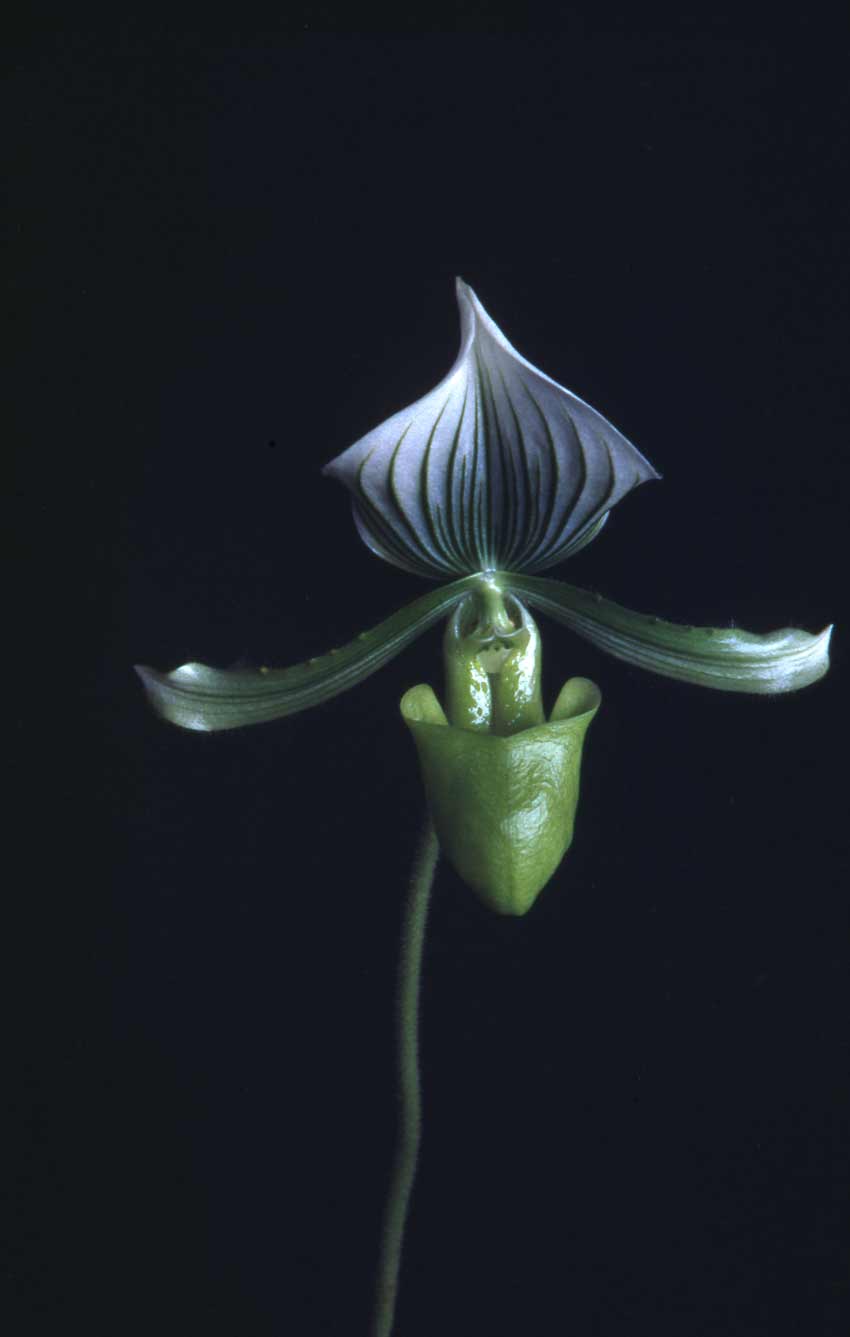
We will pause now for Horace Sykes orchids. Besides his talents for picturesque landscape Sykes loved the orchid and gave a lot of attention to growing, exhibiting and photographing them. We imagine that when he was off on his trips for adjusting insurance claims and shutter speeds that some part of him missed his happy times at home with his family and his orchids.
I confess to a small worry that this may be out of place; that is that it may not be a Sykes, although it is pulled from his collection. First, the photo is of a Seattle landmark, the Seattle Art Museum in Volunteer Park. Seattle subjects are rare for Sykes. But he did love art and so may have cherished its hometown temple. The slide is also dated August 17, 1943. Captioning for Sykes is rare, and dating almost never. Still the slide does show Syke’s sensitivity for framing his subject, and it even has its small singular oddity, which Sykes often finds in small plants and rocks. Here it is the orange trash container. Certainly Sykes did not pose it, but I think he would have liked it, whether he recorded it or not. It is that trash can that “makes” the picture. Everything springs to it and from it. Now try not to give it your attention.
THEN: Thankfully, the original photo for this early view of Madrona Park has its date, December 18, 1892 written on the back. (Photo Courtesy, Ron Edge)NOW: After the city took possession on Madrona Park in 1908 it removed the hotel shown in the historical photograph and later built the bathhouse showing here nearly on the same footprint as the bath house turned dance studio in the “now.” (Photo by Jean Sherrard)
The city’s “great fire” of 1889 excited its already boom town qualities with the great labor of rebuilding more than 30 city blocks from scratch and real estate loans.
The technology for running electric trolleys came to Seattle only months before the fire and following the destruction, trolley systems – in addition to cable cars – began to send out their trunk lines in most directions from the city’s core. Many in the immigrant tide needed cheaper land to build their homes – sites not in old Seattle but also not far from it. The new common carriers to Ballard, the University District (still named Brooklyn then), Beacon Hill and those on the east shore of Lake Washington obliged.
Three lines reached the lake – at Leschi, Madison, and Madrona. There all of them featured parks and other attractions like promenades, canoes for hire and nature trails. The line to Madrona was the last of the three and the final part of it, where the trolley cars descended to the lake, was in the embrace of a picturesque forest. On reaching the lake riders found bathhouses, a dance pavilion, and rustic benches disturbed along paths that led back into the forest. The hotel shown here greeted them at lake’s edge.
The Madrona hotel was built in 1892 and that’s the date penciled on the flip side of the original photo card produced by A. J. McDonald, a photographer responsible for a few of the best suburban scenes hereabouts in the early 1890s. On the left a trolley car stands at the end of its line. Perhaps McDonald road that car to the park to make this impression, while the conductor waited for him to return for the ride back to Pioneer Square, with a First Hill transfer on Broadway Avenue to a James Street cable car. The fare from waterfront to waterfront – Elliott Bay to Lake Washington – was five cents.
WEB EXTRAS
For the complete MADRONA PARK STORY with some extras too, please click here.
We wonder. Is this a bird at hand in a cage - did Horace "capture" this predator in a zoo? Or did he stumble upon it on his Kodak trail? This is, I think, a member of your common Golden Eagle lodge. A friend's pet? (Click to Enlarge)
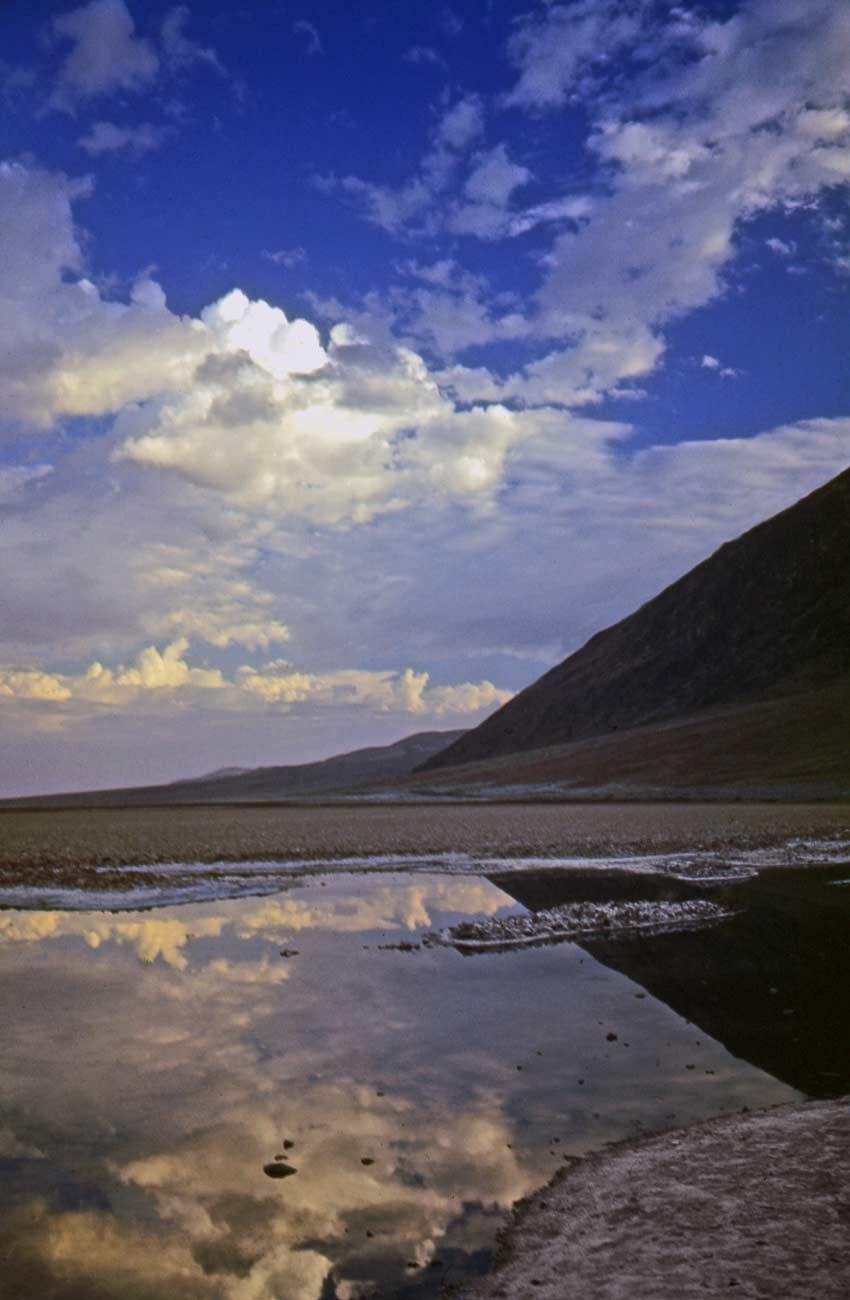
“A Pond Reflection.” This will be as close as we may come to a pun on “Upon Reflection.” And it certainly is meditative. (Click TWICE to reflect.) This may be part of the shoreline of the Great Salt Lake and no pond.
Many have learned thru caldendars, post cards, and such that this is what a mountain range should look like. And it is telling, perhaps, that Horace Sykes did not take any “liberties” with the Teton Range, but instead simply stood on the eastern shore of Jackson Lake and took his obligatory and obedient recording of it. Mt Moran is on the rigiht, and the Cathedral Group with the Grand Teton above it all is on the left. Horace looks to the southwest. (Click to Enlarge)
Ordinarily one looks at the wonders of Bryce Canyon from the edge of it. Here Horace has noticed the line of characters watching him approach on a path. They stand like stock characters in a Commedia dell’arte. There, perhaps, are the boasting solider, the cuckolded husband, the disobedient servant, the jester, the helpless damsel, the scheming Turk, and the hunchback Punchinello. Add your own stock character. Its up to you to decide which is which. Take your time. They are in no hurry. And click to enlarge.
The sun-lighted cut through the rolling mid-ground, the delicate and distance thread of blue mountains, and great curving gravel road in the foreground are all painterly matches for the surreal Kodacolor of this Sykes landscape.
THEN: Stan Stapp, publisher of the North Central Outlook, recorded this fistfight in the spring of 1952. In this instance the story came to him. The fists were thrown for the half-witted amusement of other boys soon after Lincoln High recessed for the day. The scene is on North 42nd Street just east of Ashworth Avenue North.
NOW: As John Sundsten posed where the witness in the letterman's jacket stood in 1952, a neighbor walked by and happily agreed to play the part of an anonymous angry fighter. John first thought that the lad in the jacket might be himself. He had one and the timing was right - or close to right he discovered - for the 1950 Lincoln grad. But he could not remember the fight only the street dances and so gave up on the jacket correspondence even before he found the date for this generally grinning blood lust.
I first saw this snapshot of high-school fisticuffs years ago. The venerable North End journalist Stan Stapp shared it with me for possible use in The Seattle Times or an exhibit. It was one part of a thick handful of mostly Wallingford glossies he used as editor, columnist, reporter and photographer for his family’s neighborhood newspaper, The North Central Outlook.
I don’t remember Stapp explaining the circumstances of the scene — whose fist, whose chin, when and where. But Stapp was a 1936 graduate of Wallingford’s Lincoln High School; the family home and newspaper office were two blocks from Lincoln, and the bungalow behind the impetuous teens is also very Wallingfordian. Stapp passed in 2006.
Recently I stumbled upon my copy and showed it to John Sundsten, a 1950 graduate of Lincoln. On first glance, the retired University of Washington neuroanatomist thought, “The boys are dancing. Isn’t that odd.”
After quickly surrendering to the idea that this was a fight not a dance, the peace-loving musician-scientist carried the print to the Fremont Public Library where back issues of the Outlook are stored. Sundsten started with the issues in 1950, the year he graduated. Thumbing forward he soon found the picture and its story on page 3 of Stapp’s weekly tabloid, published May 2, 1952.
It was, not surprisingly, Stapp who took the picture and wrote the copy. He gave no names except that of Wallingford’s juvenile officer, Walter J. Hauan, who took the two pugilists to a Wallingford precinct room. Stapp leaves his story with a happy ending, we assume. He concludes, “Hauan’s fatherly manner of approach has helped clear things up for thousands of local youths in the past.”
WEB EXTRAS
Anything to add, Paul?…..(for the rest of the story, click here)
Here it occurs to me – again – how a digital camera might have freed Horace Sykes to shoot whatever he wanted to record and many times over if he was so inclined. With such freedom he might have “mapped” this farm with shots left and right as well. As it stands or lingers in this picturesque setting, some days protected from strong winds by the screen of tall poplars, Horace again – and again – gives us few clues.
La rue Soufflot which links the Panthéon ( dedicated to the memory of illustrious Men ) to the garden of Luxembourg is definitely the student street . Located in the heart of Quartier latin , where are gathered the universities ( la Sorbonne), the lycées ( Louis Le Grand , Henri IV ), the libraries (Bibliothèque Sainte Geneviève, the bookstores, the copying stores, and the cafés Institution where students were used to speak latin.
La rue Soufflot qui relie le Panthéon (consacré à la mémoire des Hommes illustres) au jardin du Luxembourg est assurément la rue des étudiants. Elle est située au cœur du Quartier latin, où sont regroupés les universités (la Sorbonne), les lycées Louis le Grand, Henri IV et la Bibliothèque Sainte Geneviève, les libraires, les magasins de photocopie et les cafés intitution là, où l’on parlait latin.
This six day week we have made an exception to the "daily" part of Sykes. Our blog was again suddenly cut off by its server for reasons none of the server's servers could explain - it seems. It was switched off and may well be again. Returning it to service was like dealing with the old Ma Bell of many years ago. We revive with Bryce Canyon, we think. Horace Sykes does not say. But his light speaks. (Click TWICE to Enlarge)
Another of Horace Sykes looks from the Alaskan Way Viaduct when it was open to pedestrians - a few of them - before vehicles took over in early April, 1953. This looks west to what remains of Pier 49, a mere stub of its former self. Following the development of the waterfront following the city's "Great Fire of 1889" piers A and B (their tags then) were of similar size. Peir B (48) grew and Pier A (49) shrank. The ships got larger and required wider slips, and bigger ships also meant more stuff to both carry and warehouse. The Alaska Piers (1 and 2) on the right were on either side of Yesler Way and so framed the location of the pioneer Yesler Wharf. Before the big Alaska docks were built the fill on which Yesler's dock was built was scooped away for another wide and deep slip usefull for big ships.