

(click to enlarge photos)

(Published in The Seattle Times online on Feb. 24, 2022
and in PacificNW Magazine of the print Times on Feb. 27, 2022)
We can’t mangle women’s role in popular, early-day laundries
By Jean Sherrard
I’d never encountered mangles and yeggs until researching this week’s column, but both made an appearance at Troy Laundry, subject of our 1912 “Then” photo.
The mangle was a commercial version of my grandmother’s hand-cranked wringer, mounted in her Renton basement atop an antique washing machine, just below shelves of mason jars filled with applesauce and preserves. The wooden rollers, cracked and worn from decades of use, appeared in at least one child’s nightmares as instruments of torture.
At commercial laundries across the country, skilled mangle operators, mostly young women, were in demand. In 1912, they worked 48 hours a week for $9 pay (about $250 today).
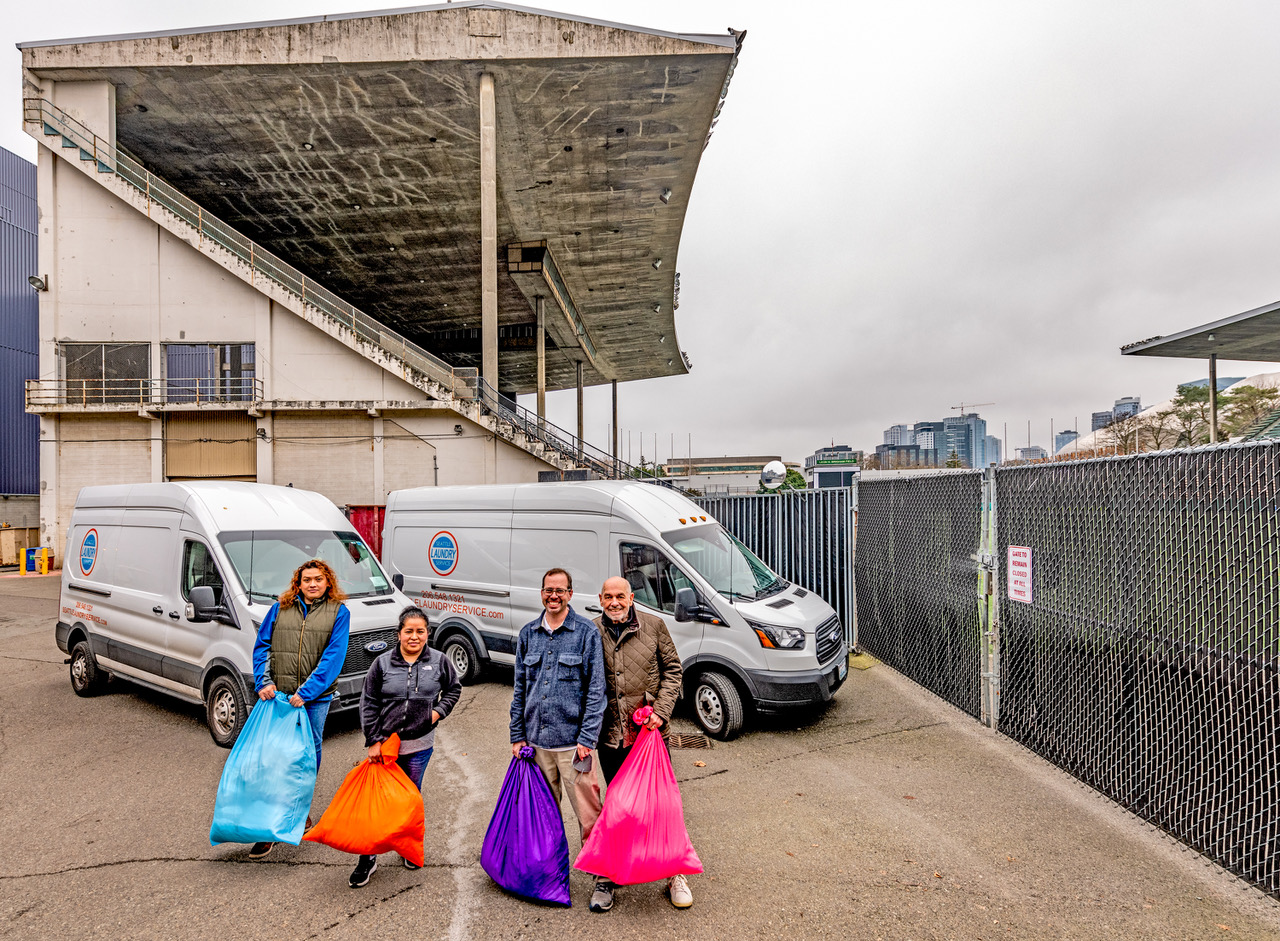
In the first three decades of the 20th century, commercial laundries boomed. One of many, the Troy Laundry, on the northeast corner of Nob Hill and Republican — now within the footprint of Seattle Center’s Memorial Stadium bleachers — eased the drudgery of washing, drying and ironing clothes for Seattle families.
In her book, “Never Done: A History of American Housework,” historian Susan Strasser writes that doing laundry was women’s “most hated task” which they would “jettison … whenever they had any discretionary money at all.”
In 1909, laundries nationwide grossed more than $100 million, an average of $5.30 per American household. Notes Strasser, “Even the poorest people in urban slums sent out some of their wash.”
In coming decades, competition arrived with home washing machines and dryers. By the 1940s, these once-luxury appliances were standard in many households.
Troy Laundry moved from its lower Queen Anne digs (land originally platted by David and Louisa Denny) to Fairview Avenue in 1927, making room for a new Civic Field, Auditorium and Arena, planting seeds that eventually blossomed into today’s Seattle Center.
And, nope, I haven’t forgotten about the yeggs. Their name was most likely derived from John Yegg, alias of a late 19th-early 20th century bank robber. Stickup artists, dubbed Yegg-men, were tempted by easy targets, namely businesses with cash on hand.
On Oct. 9, 1926, as reported in The Seattle Times, one nefarious crew attempted to crack the Troy Laundry safe with nitroglycerin. Interrupted by a night watchman, the “thoughtless yeggs” aborted the effort, leaving an unstable “soup” behind. After consulting experts from the Diebold Safe and Lock Co., DuPont Chemicals, and the University of Washington chemistry department, police successfully defused the threat.
“Science triumphed,” the Times exulted. “Soon … (they) had the safe open, and the laundry girls, breathing sighs of relief, went to work with increased vigor.”
WEB EXTRAS
For our usual 360 degree exploration of the locale plus a reading of the column itself, mosey over in this direction.