(click to enlarge photos)


Like our recent visit to London’s Big Ben, this look north into Paris’ Place de la Concord is one of the rare photos snapped by me for the historical half of this weekly feature. Both were recorded on a Leica I borrowed during the adventurous summer of 1955. I was an exhilarated sixteen-year-old snapping my way through Europe, heading with about thirty other Northwest teenagers for a conference at the Cite Universitaire de Paris. (It was hot that summer, too.)

Most of the ten ‘older students’ posing this summer for their combined teacher-tour guide, Jean Sherrard, are also fifteen and sixteen. But not Kael Sherrard, Jean’s smiling brother in the checkered blue shirt on the right. Kael is the school’s principal. Probably every one of these Hillside students carries her or his own camera (in their phones) and are regularly sending pictures home to their parents, siblings and friends. In 1955 we were not equipped to be that smart.

Place de la Concord is as elegantly packed with landmarks as those surrounding London’s Parliament Square. Posing at the north end of the Pont de la Concorde, the Hillside students are standing above the River Seine. Centered above them, the most distant classical structure with its tall columns, is the eglise de la Madeleine. It was conceived as a pantheon in honor of Napoleon’s armies. The two long and nearly twin classics on the distant side of Place de la

Concord were completed in the 1770s. Through their two centuries-plus served many purposes including serving as a warehouse for the King’s extra furniture. The Hotel de la Marine, on the right, with the temporary gray blanket, reminds me how soot-shrouded were the landmarks of Europe when we visited them in the 1950s.

The Luxor Obelisk that stands tall above the Hillside students, was not stolen from the Egyptians but rather given to the French in the nineteenth century. Removed from its place at the entrance to the Luxor Temple on the Nile, it arrived in Paris on December 21, 1833. Three years later the 75-ft column was set at the center of Place de la Concord, near where in the 1790s the execution ‘theatre’ of the French Revolution excited the hordes with its efficient guillotine. Renamed the Place de la Revolution, its blades cut off the heads of hundreds of aristocrats, along with the people’s terrorist Maximilien Robespierre, the King Louis XVI and his queen Marie Antoinette. By 1795 the square had settled down and was renamed the Place de la Concorde.
WEB EXTRAS
Berangere sent us these spectacular repeats just this morning:

And a special series, thanks to BB, her repeats of a number of Paul’s 1955 photos.

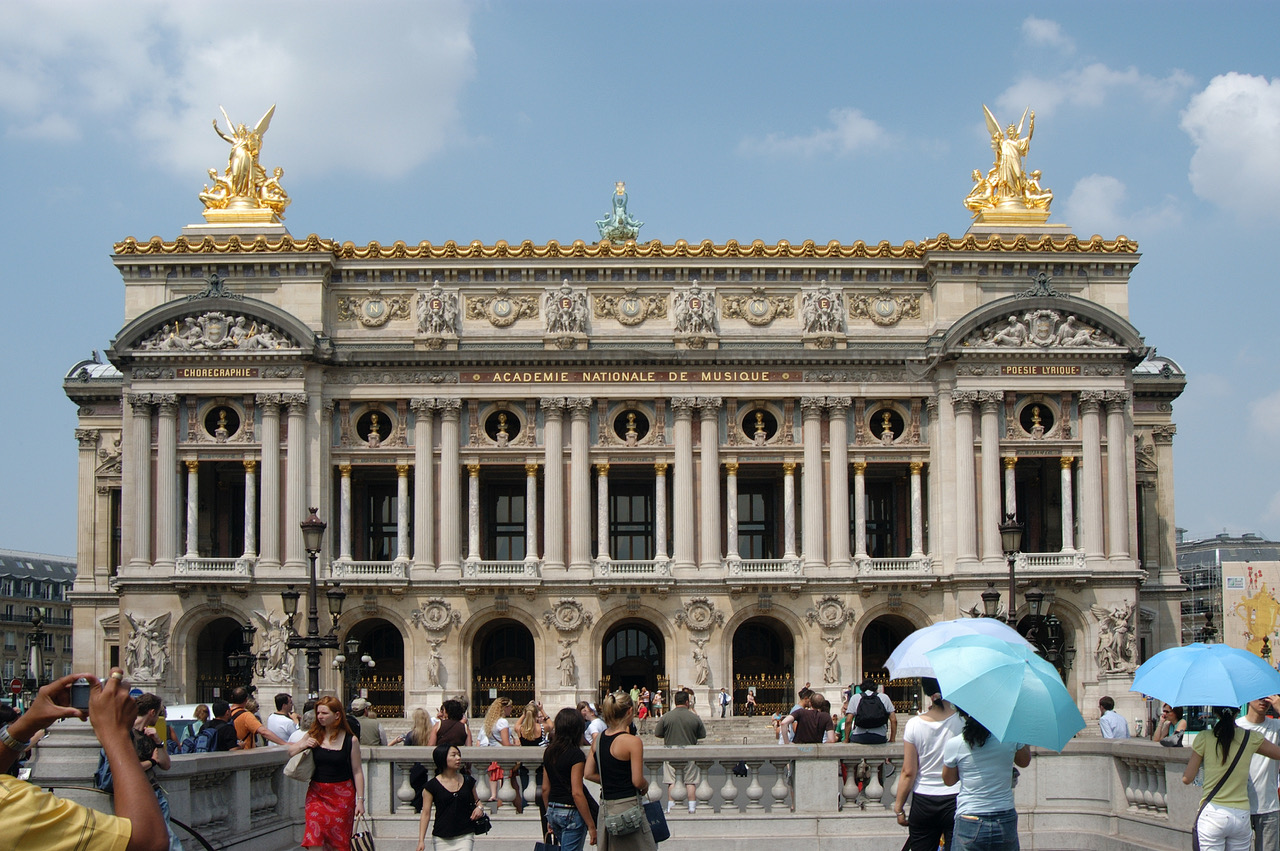


Anything to add, mes compères? More Paris from 1955 Jean.