THEN: Heading southwest along City Hall Park is a city ambulance that our auto informant Bob Carney identifies as a White Motor Company 1-ton truck from the early 1920s. In the background on Fourth Avenue is the Beaux Arts-style King County Courthouse, which topped out in 1916 at a modest five stories. A slice of Smith Tower peeks out upper left. (Courtesy Bert and Elizabeth Prescott)NOW: Another groundbreaking innovation in Seattle began with the creation of Medic One in 1970. Firefighter/EMT Casey Stockwell stations his truck in precisely the same spot as the city ambulance. Oak trees conceal the 10 additional floors added to the courthouse by 1931. A ball-capped concrete gatepost stands behind the front bumpers in both images. (Jean Sherrard)
(Published in the Seattle Times online on Aug. 27, 2020
and in PacificNW Magazine of the print Times on Aug. 30, 2020)
A hearse is a hearse, except when it was an ambulance
By Jean Sherrard
As our pandemic-proscribed summer wanes, we may mourn canceled vacations and neighborhood barbecues, but another singularly American institution, beloved by scavengers, collectors and photo-historians, also has bit the dust – the garage sale.
This week’s “Then” is from an album discovered in West Seattle by Bert Prescott at just such a sale in the 1970s. The collection, dating between 1921 and 1923 and shot by an anonymous photographer, features more than 60 images of commercial and official vehicles, ranging from milk and grocery delivery vans to buses and construction and fire trucks.
This ambulance of “The City of Seattle,” captured on Fourth Avenue near City Hall Park, is both lovely and rare. Serving the City Emergency Hospital, literally a stone’s throw away, the vehicle provides insight into a transitional moment in Seattle medical history.
Along with police headquarters, the city jail and the health and sanitation department, the hospital was crammed into the flatiron Public Safety building (now 400 Yesler), and space was at a premium. A city-owned ambulance was an extravagance soon to be replaced with a more economical solution.
Typically, hospitals of the time contracted with funeral homes for emergency transport, providing a profitable second use for hearses. And it passed muster. Whether injured or deceased, prone human bodies require similar dimensions for delivery.
Jason Engler, an Austin, Texas, funeral director and historian for the National Museum of Funeral History, provides a related piece of undertaker lore. “A hearse would get to the cemetery,” he says, “and no sooner had pallbearers removed the casket than they’d head back out on an ambulance call.”
In trade lingo, they were exchanging their black coats for white ones. What’s more, went a morbid joke, if a patient’s survival seemed dubious, an undertaker might dawdle round the block before reaching the hospital, perhaps instead ending up at the funeral home.
In forward-thinking Seattle, Engler suggests, some citizens seemed to treat the joke seriously. To change the status quo, a mayoral delegation traveled in 1922 to Portland, where an enterprising Frank Shepard ran a successful ambulance service unaffiliated with funeral homes. Might he be persuaded to move north?
Shepard agreed, with conditions. Relocating to Seattle in 1923, he purchased ambulances from Butterworth Funeral Home and negotiated a non-compete agreement: Area funeral homes would stop providing emergency transport if Shepard agreed to stay out of the funeral business.
By 1924, the city of Seattle contracted with Shepard Ambulance to serve its hospitals. Over the decades, the company steadily expanded until 1995, when it merged with American Medical Response (AMR).
WEB EXTRAS
Check back soon for our 360 degree video featuring this location.
On April 28, 2021, the Association of King County Historical Organizations ( AKCHO) announced its selection of Magnolia: Midcentury Memories as winner of the group’s annual Long-Term Project award. The award ceremony, to be held via Zoom, is scheduled for 5:30 p.m. Tuesday, May 25, 2021. Congratulations to Monica Wooton and all others associated with this project!
=====
(click and click again to enlarge photos)
THEN: A house sits mid-move on 34th Avenue West just north of the Magnolia Theatre between June 11 and June 17, 1963, when “It Happened at the World’s Fair” and the Connie Francis vehicle “Follow the Boys” played the second-run house. The theater hit a peak in 1969 as the only place in Seattle to see “Oliver!” in first run, but it closed in 1974 and was razed in 1977. (Ken Baxter / Courtesy Magnolia Historical Society)NOW: Socially distanced and most with masks down, (from left) Jeff Graham, Tab Melton, Brian Hogan, Gene Willard, Dan Kerlee, Kathy Cunningham, Sherrie Quinton, Mike Musslewhite and editor Monica Wooton from the nearly 70-member team that produced “Magnolia: Midcentury Memories” look southwest in front of Chase Bank, whose previous incarnation, Washington Mutual Savings Bank, opened a branch on the Magnolia Theatre site in 1978. For info on the book’s launch, visit magnoliahistoricalsociety.org. (Jean Sherrard)
(Published in the Seattle Times online on Aug. 20, 2020
and in PacificNW Magazine of the print Times on Aug. 23, 2020)
For Magnolia baby boomers, it happened at the midcentury
By Clay Eals
Grab a giant popcorn. This week’s “Then” premieres a triple feature.
The photo comes from a project that enlisted 60 writers to document baby boomers’ youthful years in the Magnolia neighborhood. Just-released Magnolia: Midcentury Memories is the third coffee-table book assembled this century by volunteers and represented by the Magnolia Historical Society.
With 448 pages and 450-plus photos, the volume dives into everything from military family life at Fort Lawton (now Discovery Park) to peninsula-wide immigrant roots and racist redlining, from mudslides along the Perkins Lane cliffs to the demise of the Interbay garbage dump.
In our “Then,” the marquee points to the photo’s date (mid-June 1963) and our first feature, the Seattle World’s Fair. The book notes that Fort Lawton was considered for the 1962 exposition site and that from the Magnolia Bridge locals could see the eventual fairgrounds take shape.
Among memories of the fair from then-upper-grade students – most who attended Queen Anne High School, which peered over what is now Seattle Center – is that of Cheryl Peterson Bower. In the book, she tells of securing two autographs, for her and her sister, from Elvis Presley, who was at the fair to star in the marquee movie. But the crooner “signed both sides of the paper dead in the middle, making it impossible to share.”
Parked near the marquee is our second feature, a midcentury house mid-move. This symbolizes a time 14 years prior when Magnolians vigorously debated whether 20 homes to the north should be condemned to make way for a combined junior high school and fieldhouse. What The Seattle Times labeled “Seattle’s most explosive community controversy in many years” ended with a go-ahead. Some houses made dramatic treks in 1950-1951 to vacant lots nearby.
“It was quite a sight for a 5-year-old to see her house being driven down the street,” Karin Barter Fielding says in the book. “It was such a big event for the family. I still talk about it.”
Our third feature is the Magnolia Theatre itself. Opening Nov. 25, 1948, with Cary Grant in “Mr. Blandings Builds His Dream House,” it was the largest commercial building in the shopping district, dubbed “the Village.” Seating 985 people, it became a true community center.
Michael Musselwhite, who worked there 1959-1963 as a teen, writes that a tavern was barred from buying on-screen advertising “because children were usually in attendance” and that changing the marquee each Monday evening took two students, a tall ladder and 2-1/2 hours.
A Magnolia blockbuster, the book uses only the right half of our “Then.” So consider this photo the widescreen version!
WEB EXTRAS
To see Jean Sherrard‘s 360-degree video of the “Now” prospect and compare it with the “Then” photo, and to hear this column read aloud by Clay Eals, check out our Seattle Now & Then 360 version of the column!
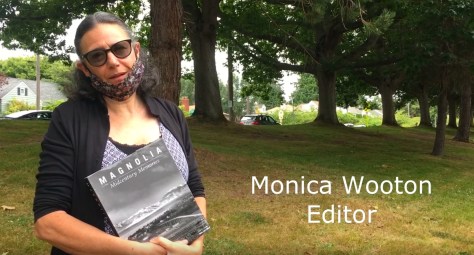
Below are three additional photos, as well as nine clippings from The Seattle Times online archive (available via Seattle Public Library) that were helpful in the preparation of this column. As a bonus, right at the top you will find a nearly five-minute video featuring Monica Wooton, editor of “Magnolia: Midcentury Memories.” Enjoy!
VIDEO: Click photo to see video of Monica Wooton, editor of “Magnolia: Midcentury Memories,” describing the book’s process and product. (Clay Eals)Cover of “Magnolia: Midcentury Memories”The Magnolia Theatre marquee shines in 1949. (Courtesy Magnolia Historical Society)June 11, 1963, Seattle Times, page 17, listing for movies on the marquee in our “Then.”June 11-17, 1963, an alternate to our “Then” photo, showing the same house being moved. (Courtesy Magnolia Historical Society)Jan. 12, 1969, Seattle Times, locator graphic from Magnolia Theatre ad.Jan. 28, 1969, Seattle Times, page 10, ad for exclusive Seattle engagement of “Oliver!”Jan. 30, 1969, Seattle Times, page 10.July 20, 1969, Seattle Times, Magnolia Theatre ad after “Oliver!” had won Best Picture at the Oscars.Nov. 7, 1974, Seattle Times, page 545, announcement of closure.Dec. 3, 1974, Seattle Times, page 38, closing night for the Magnolia.July 17, 1977, Seattle Times, page 51, building demolition.Sept. 8, 1979, Seattle Times, page 17.
THEN1: A family photo of rootin’-tootin’ 4-year old Paul in his parents’ backyard in Grand Forks, North Dakota. Snapped by his dad in 1942, this portrait is what Paul calls in retrospect, “Saving the World for Democracy.”THEN2: Promoting and producing the Sky River Rock Festival and Lighter Than Air Fair near Sultan in 1968, the world’s first multi-day, outdoor rock festivals held on a farm, Paul (right) pauses in his duties for a photo with long-time pal novelist Tom Robbins.THEN3: Around the time Paul’s “Now & Then” column began in The Seattle Times in 1982, Paul pays a visit to his friend and mentor Murray Morgan, writer of “Skid Road,” at Morgan’s cabin on Harstine Island in the South Sound. (Courtesy, Genevieve McCoy)NOW: Pre-pandemic on the waterfront, Paul Dorpat lobs French fries over his shoulder to an admiring trio of seagulls, while also, perhaps, blessing his beloved city. (Jean Sherrard)
(Published in the Seattle Times online on Aug. 13, 2020
and in PacificNW Magazine of the print Times on Aug. 16, 2020)
A colossal contribution, and a blast from Paul Dorpat’s present
By Jean Sherrard
This week we drop in on our “Now & Then” column founder, Paul Dorpat.
For 37 years, his witty wisdom (and wise wit), drawn from deep wells of history – and a vast collection of old photos – provided a weekly fount of delight for thousands of fans. Clay Eals and I take ongoing inspiration from Paul’s legacy, but Dorpat ain’t done yet.
Having recently moved from Wallingford into senior housing near the Pike Place Market, he has overseen the contribution of his extensive archive of historical books and manuscripts, as well as more than 300,000 images, to Seattle Public Library.
“I hope my donation will inspire others to do the same,” Paul says. “When we protect and share our history, we can give our community a depth that’s truly resounding.”
Andrew Harbison, the library’s assistant director of Collections and Access Services, concurs: “We’re thrilled to receive this incredible gift and look forward to making the collection available for the public to see and enjoy.”
But that’s not all.
Along with the rest of us, chafing at the isolation imposed by COVID-19, Dorpat continues to collate his many thousands of hours of documentary film and video, dedicated to making this treasure trove available for future generations of historians and documentarians.
“For me, revisiting the past,” Paul says, “has always been a blast.”
WEB EXTRAS
A few more bonbons for friends and fans alike.
Here’s one of my favorites. When Paul and I took a 2005 trip to London and Paris together, we met up with our dear friend and colleague Berangere Lomont (a professional photographer who has through the years served this column as our Paris correspondent). While strolling in the 5th Arr., we did a double take. Paul’s doppelgänger was sitting at a street-side cafe table! The photo op was too good to be missed. Paul sauntered over to the adjoining table and sat down, pretending to examine a menu.
Paul sitting next to his twin in Paris, 2005 (Berangere Lomont)
Berangere took the still and, trying unsuccessfully not to laugh, I pointed the video camera.
More recently, Clay Eals managed to capture a video of Paul feeding gulls on the waterfront (the perfect accompaniment to my still photo used in the column).
Click on photo to see Clay’s video on YouTube.
And in no particular order, a clutch of Paul pix throughout the years.
Paul, baby of the family, accompanied by brothers Dave, Norm and Ted (clockwise from Paul).Paul with his dad, Rev. Theodore Dorpat, and mom Cherry Dorpat (inset)Paul in London, 2005Paul with former roommate Bill Burden and Berangere, Paris 2005.Paul and Berangere on the Champs Elysees, 2005Paul with long-time friends Mike and Donna James, 2007. Paul, a registered potentate of the Universal Life church, officiated at Mike and Donna’s wedding.Paul at Bumbershoot with One Reel’s Norm Langill (plus mime)Paul and Jean in the Good Shepherd Center’s grotto, posing for ‘Rogue’s Christmas’ PRPaul with pal Marc Cutler in Bellingham, 2005Paul signs our book ‘Washington Then and Now’ at Costco, 2007Paul with historian Alan Stein at the Lakeview CemeteryPaul at his 70th birthday poses with the late Jef Jaisun, who took photos of Paul at his 40th birthday, on which occasion Dorpat’s beard was removed.Paul at his 70th stands between Jean’s mom and dad. Howard Lev looms over Paul’s right shoulderPaul at his 70th, with Ann Folke and Sally Anderson. Eric Lacitis towers upper right.Paul in Pioneer Square with UW archivist and historian Rich Berner in 2011Paul at his 75th birthday with this column’s Clay EalsPaul with Ivar’s President Bob DoneganPaul performs a pre-prandial prayer at the Lake Union Ivar’s
THEN: “Doc” Maynard’s home at 3045 64th Ave. S.W., the oldest structure still standing in Seattle, replaced an earlier Maynard farmhouse that burned in February 1858. This photo, taken after 1905, when the home was moved a block south from Alki Beach, shows later owners, the Hanson and Olson families, ancestors of the late restaurateur Ivar Haglund, who gave the print to this column’s originator, Paul Dorpat. (Paul Dorpat Collection)NOW: Ken Workman (left), board member and great-great-great-great grandson of Chief Seattle, and other representatives of the Southwest Seattle Historical Society (left) join Maynard descendants (right), including Chris Braaten (second from right), last February in front of the Maynard home, renovated in 2019 by owner Mardy Toepke (center, light shirt). The home will be the focus Aug. 15 of the historical society’s “If These Walls Could Talk” tour, online because of the coronavirus. For details, visit loghousemuseum.org. Here are all the IDs: (from left) from the Southwest Seattle Historical Society: Ken Workman, board member and great-great-great-great grandson of Chief Seattle; Phil Hoffman, Alki researcher; Nancy Sorensen, board member; Patty Ahonen, wife of Phil; Judy Bentley, Advisory Council; Rachel Regelein, collection manager and registrar; Marcy Johnsen, Advisory Council; Tasia Williams, curator; Dora-Faye Hendricks, board member; Michael King, executive director; Jen Shaughnessy, Gala Committee; Kerry Korsgaard, board member; Mike Shaughnessy, board member; Kathy Blackwell, board president; (center) Mardy Toepke, building owner and B&B proprietor; Justin O’Dell, Toepke’s friend and Berkshire Hathaway Real Estate agent; (right) Maynard descendants Mike Watson, Karen Watson, Erik Bjodstrup, Victoria Bjodstrup, Brian Bjodstrup, Ann Stenzel, Adam Bjodstrup, John Bjodstrup, Joanne Beyer, David Frost, Mary Braaten, Kai Braaten, Chris Braaten and Jana Hindman. (Jean Sherrard)
(Published in the Seattle Times online on Aug. 6, 2020
and in PacificNW Magazine of the print Times on Aug. 9, 2020)
The unseen letters of ‘Doc’ Maynard reveal poignancy and pride
By Clay Eals
Talk about destiny.
Chris Braaten entered this world Aug. 14, 1950, inside Maynard Hospital, a long-gone First Hill facility named for Chris’ great-great-great grandfather – the storied Seattle physician and promoter David “Doc” Maynard, who befriended and named our city for Seattle, the Duwamish and Suquamish chief.
The birth merited a Seattle Times blurb quoting Chris’ mother, Margret. “We have a lot of Dr. Maynard’s letters and papers at home,” she said. “I think Chris will get a thrill out of looking them over a few years from now.”
(April 29, 1945, Seattle Times)
Today, Chris has delivered on his mom’s hunch, donating to the Southwest Seattle Historical Society 35 handwritten letters unseen by the public, including 25 by Maynard from 1850 to 1873, the year he died at age 64, and five by his second wife, Catherine.
It’s a priceless, scholarly gift to a fitting repository. The historical society’s Log House Museum stands just east of Maynard’s late-1850s farmsite near Alki Beach.
The letters total 112 pages that once had been slipped between magazine pages in a damp family shed at Seola Beach at the south end of West Seattle.
Chris, of Tucson, began to “look them over” 30 years ago. With a typewriter, he transcribed the earliest 17 of the faint missives. (A niece later transcribed two others. A brother-in-law digitized them all.)
Maynard’s letters addressed his grown children, Henry and Frances, whom he had left and failed to lure to Seattle from the Midwest. In 53 transcribed pages, the gregarious tippler whom “Skid Road” author Murray Morgan said “preached the gospel of Seattle’s certain greatness” waxes at length, with misspellings, about everything from coal mines to Catherine’s motherly instinct.
Throughout are poignant fatherly yearnings. “In you two,” he writes Feb. 26, 1854, “are wraped (sic) my troubles and anxieties & my bitter in these my latter days.”
Maynard also touts his territorial appointment as “agent” for local Native Americans, for whom he sought inter-tribal peace during their wars with settlers on Puget Sound.
There can be no avoiding his privileged promotion of white settlers at Native Americans’ expense. “They will fight,” he writes on Nov. 4, 1855. “There is no reason why they (sho)uld not, but we must conquer them.”
Still, on March 30, 1856, based on business and medical transactions with them, Maynard takes pride in building a “friendly feeling.” On Nov. 28, 1858, he says he must close because “the old Indian chief after whom I named the town of Seattle is here to talk with me.”
The museum will preserve and finish transcribing these unique letters and use them in exhibits and a possible book. As Chris’ mom foretold in 1950, this prospect will give students of Seattle “a thrill.”
WEB EXTRAS
To see Jean Sherrard‘s 360-degree video of the “Now” prospect and compare it with the “Then” photo, and to hear this column read aloud by Clay Eals, check out our Seattle Now & Then 360 version of the column!
A follow-up Zoom session on the Maynard house, featuring Phil Hoffman, historian, and Mardy Topeke, owner of the house, is set for 7 p.m. Thursday, Nov. 12, 2020, sponsored by the Mukilteo Historical Society.
The Southwest Seattle Historical Society panel was composed of three experts (see the next three photos):
Ken Workman, great-great-great-great grandson of Chief Seattle and member of the Southwest Seattle Historical Society board. (Clay Eals)Phil Hoffman, Alki historian and Southwest Seattle Historical Society volunteer, https://alkihistoryproject.com/. (Clay Eals)King County archivist and Alki historian Greg Lange. (Clay Eals)
Below are seven additional photos, as well as six clippings from The Seattle Times online archive (available via Seattle Public Library) and other online newspaper sources that were helpful in the preparation of this column. As a bonus, you will find a 40-minute video of the Maynard letter-donation ceremony. Enjoy!
Aug. 17, 1950, Seattle Times, page 23.Chris and wife Pamela Braaten in front of the Maynard house, Dec. 13, 2019 (Clay Eals)The Maynard descendants (back, from left) Adam Bjodstrup, Chris Braaten, Kai Braaten, Erik Bjodstrup, Brian Bjodstrup, (the rest, from left) Victoria Bjodstrup, Mary Braaten, Ann Stenzel, John Bjodstrup, Joanne Beyer, Karen Watson and Mike Watson on the porch of the Maynard home, Feb. 8, 2020. (Jean Sherrard)The Maynard descendants (from left) Chris Braaten, Mary Braaten, David Frost, Kai Braaten, Erik Bjodstrup, Mike Watson, Karen Watson, John Bjodstrup and Joanne Beyer on front steps of the Log House Museum of the Southwest Seattle Historical Society, Feb. 8, 2020. (Clay Eals)Chris Braaten (left), great-great-great grandson of “Doc” Maynard, speaks at the Feb. 8, 2020, ceremony about his donation of original, handwritten letters by “Doc” and his second wife, Catherine. The ceremony was held at the Log House Museum of the Southwest Seattle Historical Society. (Clay Eals)VIDEO: Click above to see video of the complete ceremony on Feb. 8, 2020, regarding the donation to the Southwest Seattle Historical Society of handwritten letters by “Doc” Maynard and his second wife, Catherine. Run time: 40:55. (Clay Eals)A “Doc” Maynard family tree assembled by the Maynard descendants. Click twice to enlarge.A plaque embedded in the sidewalk at 64th Avenue Southwest and Alki Avenue Southwest denoting the Maynard house, the oldest structure still standing in Seattle.The Maynard house before it was moved one block south in 1905. (Caption by Phil Hoffman)Nov. 4, 1908, Seattle Post-Intelligencer, page 67.Dec. 5, 1908, Seattle Post-Intelligencer, page 11.April 27, 1937, Seattle Post-Intelligencer, page 13.The Maynard house as it stood in April 1945. (Seattle Times, courtesy of Bob Carney)April 29, 1945, Seattle Times, page 32.