
BONUSES:
Click here to listen to Feliks Banel‘s one-hour “Cascade of History” focus on Paul, aired Sunday night, May 31, 2026. Guests were Heather McAuliffe, Alan Stein and, yours truly, Jean Sherrard and Clay Eals.
Also, click here to read Moira Macdonald‘s news obituary for Paul in The Seattle Times. And click here for KUOW-FM‘s tribute to Paul.
 Paul Dorpat, Seattle historian and counterculture chronicler, 87

By Jean Sherrard and Clay Eals
Seattle’s leading public historian has officially joined his city’s past.
Paul Dorpat, who helped shape Seattle’s countercultural moment in the 1960s before spending four decades excavating its history for anyone willing to look, died in his sleep Wednesday (May 27). He was 87.

His route to establishing himself as the city’s reliable weekly photo-historian in the “Now & Then” column in the Sunday magazine of The Seattle Times meandered first through alternative media and theatrics.

Born Oct. 28, 1938, in Grand Forks, N.D., Dorpat came west as a child when his father, the Rev. Theodore Erdman Dorpat, accepted the pastorate of Spokane’s First Lutheran Church. He came of age in that city before enrolling at Whitworth College, where his intellectual restlessness found early footing — and where his resonant basso voice earned him a choir scholarship.
Graduate school took him first to Claremont College in California, “the Oxford of the West,” where he pursued philosophy until illness intervened. He recovered, regrouped and continued his studies at the University of Washington — though he would never complete his doctorate. He didn’t need it.
He moved to Seattle to become an artist but became something larger.

In Seattle, Dorpat fell in with the ferment of the University District, teaching at the Free University and absorbing the energies of a city in the middle of remaking itself.
In 1967, he co-founded The Helix, Seattle’s landmark underground newspaper. The first 1,500 copies rolled off the press on March 23 of that year, selling for 15 cents. The paper billed itself as “a community newspaper in the human sense.”
With Dorpat as its self-described “benevolent sheriff,” The Helix survived war protests, police crackdowns and wiretaps before publishing its final issue on June 11, 1970, with this valediction: “It is time. We are tired. Three years is a long time for an experiment to last.”

The late Tom Robbins, Northwest novelist who ran in the same circles, observed that Dorpat was never quite like the others around him.
“Even in the ’60s, Paul may have had the point of view of a sociologist or historian,” Robbins said. “He was most interested in observing and reporting the phenomenon. He participated, but more at a planning level, bringing people together to make things happen.”
He was, Robbins noted, neither a doper nor a drinker — and consequently less obtuse. His Helix co-founder Walt Crowley observed that Paul preferred writing love poems to Tina Turner over slugging out essays condemning the Vietnam War.

Along the way, Dorpat produced one of the era’s more memorable acts of civic theater: the Piano Drop, a fundraiser for The Helix and KRAB radio in which a piano was released from a helicopter over a field outside Duvall. The piano missed its target — a woodpile — and landed in the soft grass just beyond the crowd. “A piano flop,” Dorpat called it.
Among those who donated their services to the drop was the rock band Country Joe and the Fish, fronted by Country Joe McDonald — who became one of Dorpat’s closest friends from early days, and who died just two-and-a-half months before him.
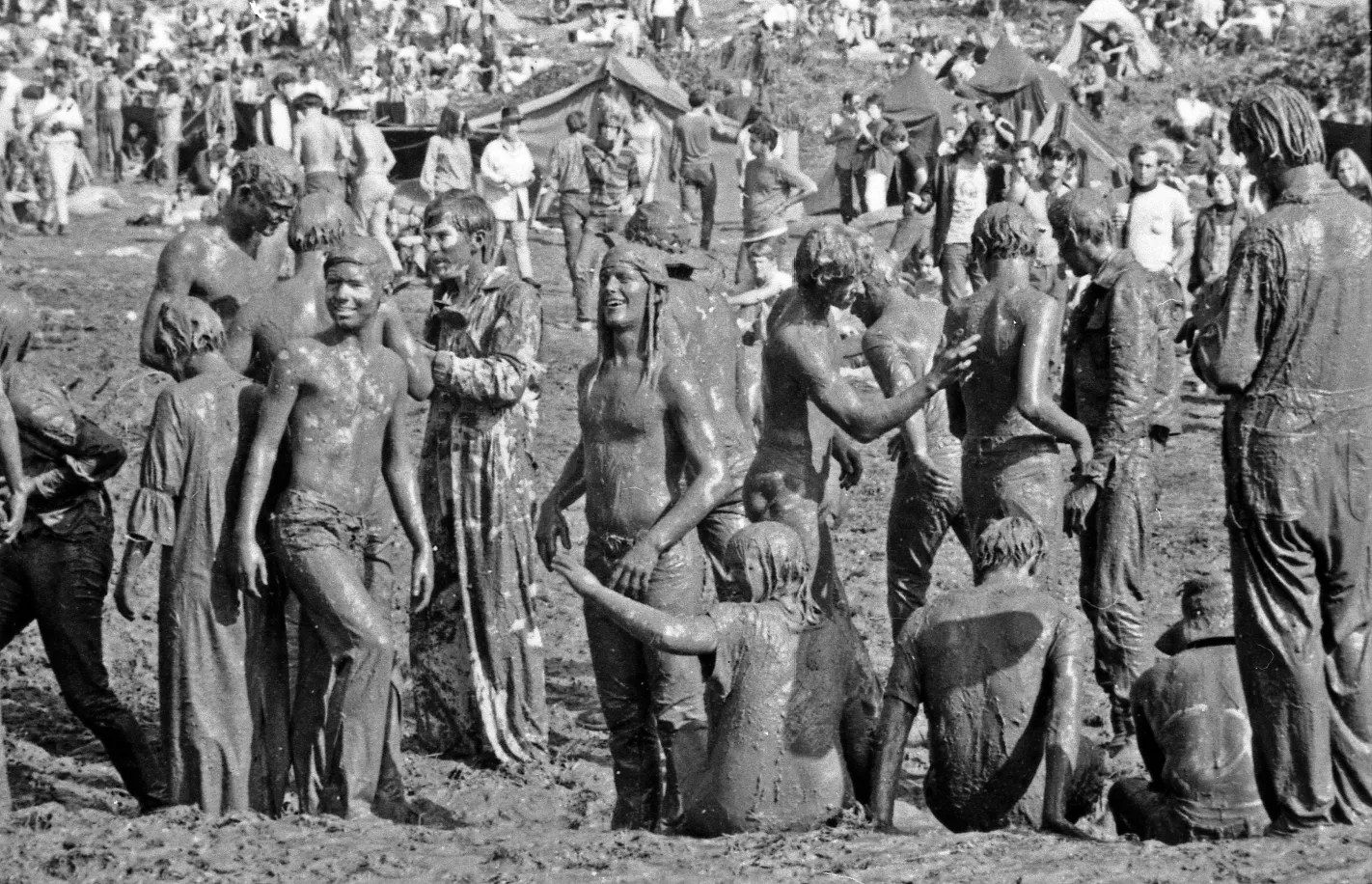
The same spirit animated the Sky River Rock Festival and Lighter Than Air Fair, which he helped produce in rural Sultan in 1968 — a year before Woodstock and in many ways its spiritual precursor: a multi-day gathering on a farm, drawing many of the same artists, and the same restless crowds and conviction that music could be a form of community.
But his most enduring act was more extended.

It started with a detailed examination of the early 20th-century Denny Hill Regrade for the weekly Seattle Sun in 1978, followed by his popular sepia-toned “294 Glimpses” booklet for the Mayor’s Small Business Task Force in 1981.

“Each of these images is in some way quite precious,” Dorpat said at the time. “Sometimes you see values that have been lost. But, happily, you see examples of things improved. It makes you respect the human effort that went into this city.”
Priced at $2.94 (“a penny per glimpse”), the publication eventually sold 40,000 copies, leading directly to the brand for which he is best known.
On Jan. 17, 1982, Dorpat launched the “Now & Then” column in The Seattle Times, a feature that ran under his stewardship for 37 years — concluding in 2019, after more than 1,800 installments — and reframed how this city understood itself.
“Without story,” he once said, “history is a recluse refusing to invite you in.”
The column’s method was elegant in its simplicity: pair a historical photograph with a contemporary one taken from the same vantage, and let the comparison do the talking. Change, loss and survival, visible all at once.

“It’s like hide and seek,” he said. “That’s a really deep motive in all of us, to figure out how things are hidden, where things have changed, what things are revealed.”
He also was the author or co-author of a shelf’s worth of Seattle books, among them the three-volume “Seattle Now & Then” series, “Building Washington” — co-written with his wife, historian Genevieve McCoy (who survives him), and recipient of the 1999 Washington State Book Award — and “Washington Then & Now.”

He received the Lifetime Achievement Award from the Pacific Northwest Historians Guild in 2001 and the Golden Umbrella Award at Bumbershoot that same year.

Dorpat also was one of three co-founders of HistoryLink, the online encyclopedia of Washington state history — alongside Marie McCaffrey and the late Walt Crowley — a fitting institutional expression of his belief that history belonged to everyone, not just to scholars behind closed doors.
McCaffrey once observed of her co-founder: “Paul floats in and out of time, past and present. When he is around, his presence actively slows one’s metabolism. He imparts a calmness, a sense of serenity.”

That belief was itself a kind of mentorship. Dorpat had been shaped by the great Murray Morgan — historian, storyteller, and the writer who gave “Skid Road” and a dozen other Seattle books their lasting voice — and he passed that formation on generously.
In his later years, with the passing of Morgan and Times columnist Emmett Watson, Dorpat had graduated to elder among Seattle historians. When a colleague suggested the role carried new responsibilities — that he was no longer the hippie — he was characteristically undeterred.
“Responsibility is more the language of obligation,” he said. “I think we’re more enthusiasts. The language of joy is more appropriate to what we do.”
Pre-COVID, Dorpat donated his formidable collection of more than 309,000 historical photos, negatives, videos and other items to Seattle Public Library, whose free public access, he noted, emulates his vision of “vox populi” (the voice of the people).

Knute Berger, Feliks Banel, David Williams and a long roster of other historians, journalists and curious citizens found in Dorpat an ally who took their questions seriously, offered what he knew and pushed them to go further.

He was, his colleagues said, constitutionally allergic to a certain word. Paul Dorpat bridled at “iconic” — a term he watched inflate and hollow out over the decades until it meant almost nothing, applied equally to sandwiches and symphonies, storefronts and statesmen. If something had to be called iconic, he reasoned, it probably wasn’t. The word had been cheapened beyond rescue.
Yet, if the word is to be reserved for lives of uncommon breadth, curiosity and consequence, then Dorpat is the human for whom it was made — even though he would have sloughed it off to focus on the substance of his quest.
 “History is delightful,” he said. “It’s understanding. It’s actually the truth if you do it right, and the truth is progressive. It always is.”
More demurely, he often intoned, “I am like an enchanted tourist in my own city.”
Jean Sherrard and Clay Eals are contributing writers for the “Now & Then” column of Pacific NW magazine.

THINGS TO COME
A memorial gathering to celebrate Paul’s life and legacy is being planned. Details will be announced as arrangements take shape.
Bonus article
Enjoy this Seattle Times article by Joe Guppy featuring Paul from Sept. 17, 1977:

Beautifully stated Jean! Happy trails Paul – you will be missed greatly by many.
Aww..! Paul will be missed, yet he left an indelible mark on the preservation of Seattle History! And, with the Seattle Public Library receiving Paul’s extensive photo collection, his photos can be shared and appreciated for generations to come! One last personal memory… I was 12 years old selling the Helix on the corner of 43rd and University Way and when I sold out, always remembered crossing the University Bridge to get more! Happy Trails Paul!
I worked with Paul on Seattle Now and Then. Also working on Building Washington. Paul became like an uncle-mentor for me and I was grateful for it. I can also remember the fun times of playing softball with the Capitol Hill Crazies that Paul and I participated in. When my son went off to Berkeley for film, Paul gave me his 16 mm camera to mail to my kid so we can use it if he needed it. A big generous heart. He will be missed.
I am so sad to read this… I have loved this column so much and the voice that Paul Dorpat brought to every image of the before and after of this city. My enthusiasm for his work was heightened by my role of being the person who did the weekly “Remember When” piece for a newspaper in SW Colorado, a different presentation of the now and then. I have written to him with subject ideas in the past. Please tell us that what he has created will continue on — it is too beloved and important to let fall away, as is happening to so many places and people we love in Seattle.
Thank you Kimberly.
An eloquent eulogy to your friend, colleague, mentor, muse. Heartened that his legacy lives in your collective work among well grounded local historians. Thank you.
This one really hurts. I knew Paul in my youth in Spokane and reconnected with him on several occasions and for varying reasons throughout my lifetime. Truly a singularity and the planet was a better place because of his far-reaching love of thought, spirit, history and possibilities. Again, this one truly hurts. Rest in Paradise Paul!
Beautifully shared, Jean. I am so sorry to hear of Paul’s passing, and so grateful that you continued in love and support for him in the last several years.
Me too Paul. I’m a tourist in the Seattle I grew up in, since 1949 and it’s looking like I’ll always be a tourist.
Forever grateful Paul for all that you have done. Rest Brother Paul.
What a lovely tribute to a ‘geminal’ man.
Seattle has lost a giant.
May his memory be for a blessing.
rest in power, paul. always an inspiration.
What a saint, a man of legacy, & yes: an icon!
An “icon.” I’m sure he would give a nice laugh to this. Rest brother Paul.
May we all carry on his stories and love of art, image, history and our common language and humanity. He will be greatly missed by many.
In all the good times I had with Paul, he always made me think. Never a dull moment!
I am broken hearted.
Paul covered a number of my artistic sculptural activities in Seattle in the 1970s.
He even gave me a recent shout out for my work. I invited him to save the date for my retrospective exhibition at the Bayside Gallery in Port Hadlock, Washington. I was hoping he could come for the opening on November 8, and perhaps even do a short then and now.
My deepest thanks to the writers of the death notice. Beautifully done— thank you.
Rita Kepner,
Sculptor
I had the good fortune of being on a Seattle Waterfront tour guided by Mr. Dorpat. He was truly one of the Seattle greats – up there with Emmett Watson, Ivar Hagland, and Stan Boreson, I imagine he and Doc Maynard would have been fast friends. I mourn his passing and the quirky Seattle he chronicled.
I grew up on the “Then and Now articles” in the Sunday newspaper. Once I found out about my 1851 Seattle Pioneer ancestors, my path crossed with Paul and he was so supportive of my storytelling. He even made an appearance at the Tukwila Heritage and Cultural Center at my invitation. It was a standing room only event. He was so knowledgeable of local history that during a tour of the Georgetown Power Plant, he pointed out where my ancestors had built Fort Duwamish just outside the south door of the plant. Absolutely a history encyclopedia in a human body. He will be missed but I am so glad that I was in the right place and at the right time to be able to say that I knew him.
Thank you Louise. Many great memories!
Thank you, Jean and Clay, for your thoughtful and insightful tribute to Paul. He was one of a kind.
Thanks so much for such gracious writing about Paul. At least he’ll be in the same boat across the River Styx as Sonny Rollins.
A very nice write-up.
Thank you
Sad to learn of Paul’s death. I loved Paul’s enthusiasm and sense of curiosity. He will be missed!
Thx, Jean and Clay, great tribute…you were great friends to him. He is one of the very special people of my life; and, because of him and Charles Payton the Magnolia neighborhood history books were born. Magnolia Historical Society (MHS) will have another book launch for more free online, ongoing Book IV MAGNOLIA: More Memories & Milestones stories this weekend. The first collection done with me only being a writer – now retired from MHS and editing – 30 years after Paul got me and Book I rolling along. We honored him and that work last year w our Historical Person of the Year Award. He let me spend countless hours digging around his basement collection for material (the memories of that!), connected us w wonderful sources (Inez Smith’s writing about her dad Henry Smith, Magnolia’s first Euro pioneer), images (Asahel Curtis’s amazing panorama shots of early Magnolia), helpful history folk (Ron Edge, Greg Lange, and you two!); and, others who helped us w the books (Roy Scully The Seattle Time’s photographer and Magnolian). Paul photographed our book teams, wrote splendid book blurbs, and featured us and the books in several columns. He did many interesting and fun programs for the Society without any fee.
I look forward to the memorial of our very generous, very witty, very argumentative, very wise and very, very very lovingly quirky dear friend!
❣️
Monica Wooton
And many thanks to you Monica for all the work you have done and continue to do. A former lifelong Magnolia resident, since 1949. Now living in the burbs of Shoreline.
You should write for the Magnolia book….memoirs are greatly appreciated❣️Or, academically researched articles we have a fun list of topics! It is a fun process MHS helping now more then 125 writers contribute to the history of the neighborhood in the Historylink model Paul co-founded…check out our free, online book at magnoliahistoricalsociety.org
New collection added Saturday! Paul really loved this project!
I knew this day would come soon, and it hurts as much as it should. Thank you, Jean and Clay and those who visited Paul in his decline. You were magnificent champions for him.
In the late ’90s I wrote a cover story for the Seattle Times’ “Downtown Source” about archaeology being conducted downtown with so much new construction happening. Paul grumpily consented to an interview, I think a bit bludgeoned by my wild enthusiasm for the topic of Seattle and its underground past. His knowledge was vast, but he literally brought me down to earth with his parting shot, said with gravel and humor in his voice before hanging up. “Well…it ain’t Rome.”
Not a bad idea Monica. For those of us born and raised in Magnolia just after WWII I’m sure there are many who would like to share their stories of growing up in Magnolia–“The greatest zip code in America.” According to Claudia Kettles.
Robert “Bob” Maddox, QA Class of 67, put together his book “The Reunion” to acknowledge and digress about our class of 67’s 50th Reunion. Bob’s book is a great read and indeed, Bob’s book dovetails all the events of our time during rather tumultuous times. And yes, the Class of 1967’s 50th QAHS Reunion was a smashing success. And many reunifications of old friendships came alive as well!
Rest Brother Paul Dorpat
It is with profound sadness and fond memories that I learn of Paul’s passing.
As a member of the Helix staff I was privileged to work both with him and under his guidance during those tumultuous yet exciting and transformative times.
My memories include the rowdy nights at the Red Robin; the interview of Eldridge Cleaver in the office on Harvard; the insane drive with Country Joe to SeaTac at Paul’s direction after the Piano Drop; tear gas on University Way; receiving Betty Nelson’s scroll letter offering her pasture for the Sky River Rock Festival and Lighter Than Air Faire; and much much more . . . . all of which were a direct result of my association and friendship with Paul.
Paul was big and imposing but he was gentle, tolerant, and caring. He introduced me to my future wife and mother of my daughter and was extremely patient with me as I struggled to complete the cover art for an issue of Helix.
His importance over decades is well founded by who he was and what he did.
Thank you, Paul, for the articles and preserving the history. You added to my life in Seattle area. Best to your family and friends. Thanks to Jean, Clay, and staff for keeping the articles alive. Tom Taylor
Nicely done, Jean and Paul. A great life he shared with us. He was an irreplaceable part of my life and my awareness for 56 years, totally unique, stubbornly individual, he abides in all of us.
A great hug giver. R.I.P. Paul.
RIP Paul. Beautiful human being. I am blessed to have known you.
A man of great insight, substance and integrity, and he put that into his work conveying historical data to us and channeling us into his work. Thanks Paul for making Sunday morning and reading Seattle now and then something to look forward to and then later online. Condolences and prayers go out to the Dorpat family. Paul’s works, books and publications will live on as part of the fabric that help shape Seattle.
This is a wonderful obituary. Do you think his biography of Ivar will see the light of day?
His bio of Ivar? I sure hope so and I’m looking forward to it. Ivar had a house high up the hill above me on Dravus St on west Magnolia just south of the water tower. I never saw it because it was tucked away deep in a cul de sac but the story goes he never fully completed his remodel of it so he just lived in it as is. A very interesting person Ivar was.
Dean Jackson
I was at a loss for how to act when my older brother Michael brought his high school roommate from Concordia Portland to visit our family in Libby, Montana. Paul was a burly, curly-haired, handsome guy—funny, outgoing, and a bit inscrutable, and such a deep voice. To me, the 11-year-old sister attending the tiny local Lutheran elementary school, he seemed almost out-of-this-world fascinating. Michael (Agather) and Paul stayed friends for a lifetime. Goodbye, Paul. With great love and respect. Martha Agather Jordan
Jean & Clay,
Thank you for stirring a big pot of memories of this great man and dear companion on life’s road. And I never knew Paul attended Concordia Portland, a few years before I taught there!
David Mahler
Sorry to hear of Paul’s passing.
Working with Paul on collecting images from the Seattle Engineering Dept. Photo lab for his videos and publications, taught me the value of history. He was the calmest of researchers. Also fun to work with.
Historic Wallingford also hosted a wonderful event with Paul back in 2018 at the church that used to exist behind Dicks’ Hamburgers. The audio isn’t great but you get a sense of his wonderful humor as he goes through much of Wallingford History and his Wallingford Walks.
Video Here: https://youtu.be/aOgUcbbc9ik?si=rq5UJ40D2_mREzjO