Seattle Now & Then: The ‘Empire Builder’s’ Bust

(click to enlarge photos)

THEN: Situated first at the center of the Alaska Yukon Pacific’s Klondike Circle, James J. Hill’s monumental likeness was backed by the Exposition’s Sweden Building. The view looks to the West. (Courtesy, University of Washington Libraries, Special Collections, Frank H. Nowell, photographer, Nowell Negative No. 3212)
NOW: Author-museologist Fred F Poyner IV poses for Jean Sherrard before Finn Haakon Frolich’s bust of James Hill at its current location since 1953 in front of More Hall, the University School of Civil and Environmental Engineering.

This week a monumental bust of James J. Hill, aka “The Empire Builder”, has been pulled from a new book titled Seattle Public Sculptors. The author, the Nordic Heritage Museum’s museologist and collections manager, Fred F. Poyner IV, has written with clarity and considerable detail about twelve artists who created “Seattle’s first ‘Golden Age’ of public monuments, memorials and statuary.”  Many of these works, including Finn Haakon Frolich’s baronial bust of James Hill, date from 1909, the year of the Alaska Yukon and Pacific Exposition, Seattle’s first worlds fair.

FORLICH contemplating his bust of his friend, the author Jack London. (Courtesy, Huntington Library, California)

Frolich was born in Oslo, Norway, in 1868 “to a family of means.” We may readily imagine him as a fearless – or impetuous – adolescent, for by Poyner’s well-footnoted recounting, the young Finn Haakon took to the sea at the age of nine and kept to it until 1886 when he jumped ship in Brooklyn.  After answering a classified ad in a daily pulp, Frolich began his education in sculpting, working for several years in studios, including those of the sculptor Daniel Chester French in New York and Augustus Saint-Gaudens in Paris.

Frolich

The thirty-year-old artist first visited Seattle in 1898.  He failed in his first attempt to found a school of design here, but ten years later he returned to many successes. These included establishing his Beaux-Arts Workshop studio in the old Territorial University Building, which still stood on Denny’s Knoll in downtown Seattle, and taking on students, including those who attended his “live modeling in clay” demonstrations performed for audiences on stage at the Alhambra Theatre.

Territorial University, somewhat late in its life and so near to its llth hour use by Frolich. The view looks southeast from near what is now 4th Avenue and University Street. (Gourtesy Lawton Gowey)
Another example of Frolich’s work for the AYPE.

Frolich’s grandest success’, which occurred in 1908, made him the Director for Sculpture for the 1909 Alaska Yukon Pacific Exposition, held on the new campus of the University of Washington.  The responsibilities included many works of art, including the sculpted likeness that James Hill’s friends described as “so faithful a likeness, down to the minutest detail of resemblance and personality, as to be startling.”  Six-feet-high, Hill’s statue was caste in bronze in New York, and placed on the twelve-foot-high granite pedestal displayed in the featured photo at the center of the fair’s Klondike Circle.  Its ceremonial unveiling was handled by John A. Johnson, the governor of Minnesota, Hill’s home, and it was the Minnesota Club that had gathered the last support needed to pay for it.

Prelude to the unveiling of the James Hill bust. The still veiled bust on its pedestral stands here above the crowd right-of-center. The Battle of Gettysburg was one of the Expo’s more popular attractions.  The Pay Streak of novelties, rides and other carnival attractions extends south on the avenue beyond the status.
Looking north from the Pay Streak with the Battle of Gettysburg on the right and the James Hill pedestal just visible above the pedestrians left-of-center.

In 1953 Frolich’s James J. Hill was moved about a quarter-of-a mile from Northeast Sevens Way to East Stevens Way, where its back faces More Hall (1948), the University’s School of Civil and Environmental engineering.  In the interest of function as much as form, More Hall was given large windows by its architect, John Paul Jones.  It is from these windows that Frolich’s otherwise hidden bronze plaque of James Hill’s steamer The Minnesota (once the

The Great Northern’s Pacific steamer, the Minnesota (James home state) sequestered at the hardly accessible rear of Frolich’s bust of the “Empire Builder.”
Frolich’s base plague mounted on the front the granite base holding his James HIll bust high above the sidewalk and East Stevens Way on the U.W. Campus. 

largest vessel on the Pacific Ocean) can be seen with pleasure and for the few who discover it also some surprise.  Attached about hip-high to the rear of the granite pedestal, the plaque is obscured by hefty shrubs.  However, at the front of Frolich’s Hill, another of his bas-relief bronzes honoring the “Empire Builder”, a rendering of a “GNRR” steam engine, can be easily seen exiting a tunnel in the Cascades.

WEB EXTRAS

Let me add the photo we intended to run with the column – that of Fred Poyner standing at the statue’s original location.

The original location on the AYP grounds as seen today

Anything to add, lads?  Yes and the usual support from past features and perhaps more, although this bounty will need to wait for tomorrow (Sunday) or Monday, for we are tired early at 4:30 am and hanker to climb the stairs to bed and nighty bears.

For the first feature we will slip in one with another of Frolich’s AYP women.

In his book Fred Poyner gives the story for Frolich’s monumental women.
Another AYP exposure of women and fish was featured on a postcard that explains the meanings of its allegorical parts including the “dominant figures” that “stand for Alaska, Yukon and the Pacific. The caption advises that “the salmon portray the fishing industries” that, we suggest, never caught a salmon either that big or playful.

THEN: The Gothic University of Washington Campus in 1946 beginning a seven-year crowding with prefabricated dormitories beside Frosh Pond. In the immediate background [on the right] is Guggenheim Hall. (Courtesy, Ron Edge)

THEN: Above Lake Washington’s Union Bay the Hoo-Hoo Building on the left and the Bastion facsimile on the right, were both regional departures from the classical beau arts style, the 1909 AYPE’s architectural commonplace. Courtesy John Cooper

tsutakawa-1967-then

THEN: First designated Columbus Street in the 1890 platting of the Brooklyn Addition, and next as 14th Avenue to conform with the Seattle grid, ‘The Ave,’ still its most popular moniker, was renamed University Way by contest in 1919. This trim bungalow at 3711 University Way sat a few lots north of Lake Union’s Portage Bay. (Courtesy, Washington State Archives, Puget Sound Regional Archive)

THEN: Named for a lumberman, and still home for the UW’s School of Environmental and Forest Sciences, the upper floor’s high-ceilinged halls, including the Forest Club Room behind Anderson Hall’s grand Gothic windows, were described for us by the department’s gregarious telephone operator as “very popular and Harry Potterish.” (Courtesy Lawton Gowey)

THEN: An estimated 50 percent of the materials used in the old Husky Union Building were recycled into its recent remodel. The new HUB seems to reach for the roof like its long-ago predecessor, the AYP’s landmark Forestry building. (Courtesy Lawton Gowey)

THEN: sliver of the U.W. campus building called the Applied Physics Laboratory appears on the far right of this 1940 look east towards the U.W. campus from the N.E. 40th Street off-ramp from the University Bridge. While very little other than the enlarged laboratory survives in the fore and mid-grounds, much on the horizon of campus buildings and apartments still stand. (Courtesy, Genevieve McCoy)

THEN: The Latona Bridge was constructed in 1891 along the future line of the Lake Washington Ship Canal Bridge. The photo was taken from the Seattle Lake Shore and Eastern Railway right-of-way, now the Burke Gilman Recreation Trail. The Northlake Apartment/Hotel on the right survived and struggled into the 1960s. (Courtesy, Ron Edge)

THEN: The historical view looks directly south into the Latona addition’s business district on Sixth Ave. NE. from the Northern Pacific’s railroad bridge, now part of the Burke Gilman Recreation Trail. (Courtesy, Lawton Gowey)

THEN: From 1909 to the mid-late 1920s, the precipitous grade separation between the upper and lower parts of NE 40th Street west of 7th Ave. NE was faced with a timber wall. When the wall was removed, the higher part of NE 40th was shunted north, cutting into the lawns of the homes beside it. (Courtesy, Lawton Gowey)

THEN: Sometime before her first move from this brewery courtyard in 1912, Lady Rainier was moved by a freeze to these sensational effects. She did not turn her fountain off. (Courtesy of Frank & Margaret Fickeisen)

THEN: The Big Snow of 1916 trims two jewelers’ clocks on the west side of Second Avenue, north of Marion Street. (Courtesy, Lawton Gowey)

THEN: The first house for Delta Gamma at N.E. 4730 University Way. (Courtesy, Museum of History and Industry)

=====

=====

=====

=====

An early enough map of the AYP to be wrong in several locations, but not so bad that it cannot be learned from or embraced for its confident composition.
The UW campus and its AYP Beau Arts temporaries seen across Portage Bay looking north from the Capitol Hill side. University Way is on the far left.  CLICK TO ENLARGE

First published in Pacific on Feb. 11, 2001, taken by the blog as an opportunist as Historylinks Alan Stein flew away with camera to the San Juan Islands for some early ‘link promotional event, if memory serves. Alan?

=====

=====

=====

=====

Igorrets on their Pay Streak stage with several come-ons hanging above them.

=====

Gas Works from Queen Anne Hill (click to enlarge)
The Pacific Magazine editor’s header for this “Stonehenge In Seattle” was chosen thru the by now ancient expectation that the paper’s reporters or free lance essayists should not be expected to know the special qualities expected of an effective  working title.

=====

DEAR READER – We have more to share, which we will return with tomorrow late evening.   Now we are going to bed.  We may deserve it.

======

An AYP family captured on Stereo invites you to enlarge it and cross your eyes.  

Total Eclipse near Lime, Oregon + A Visit to Lime!

(click to enlarge photos)

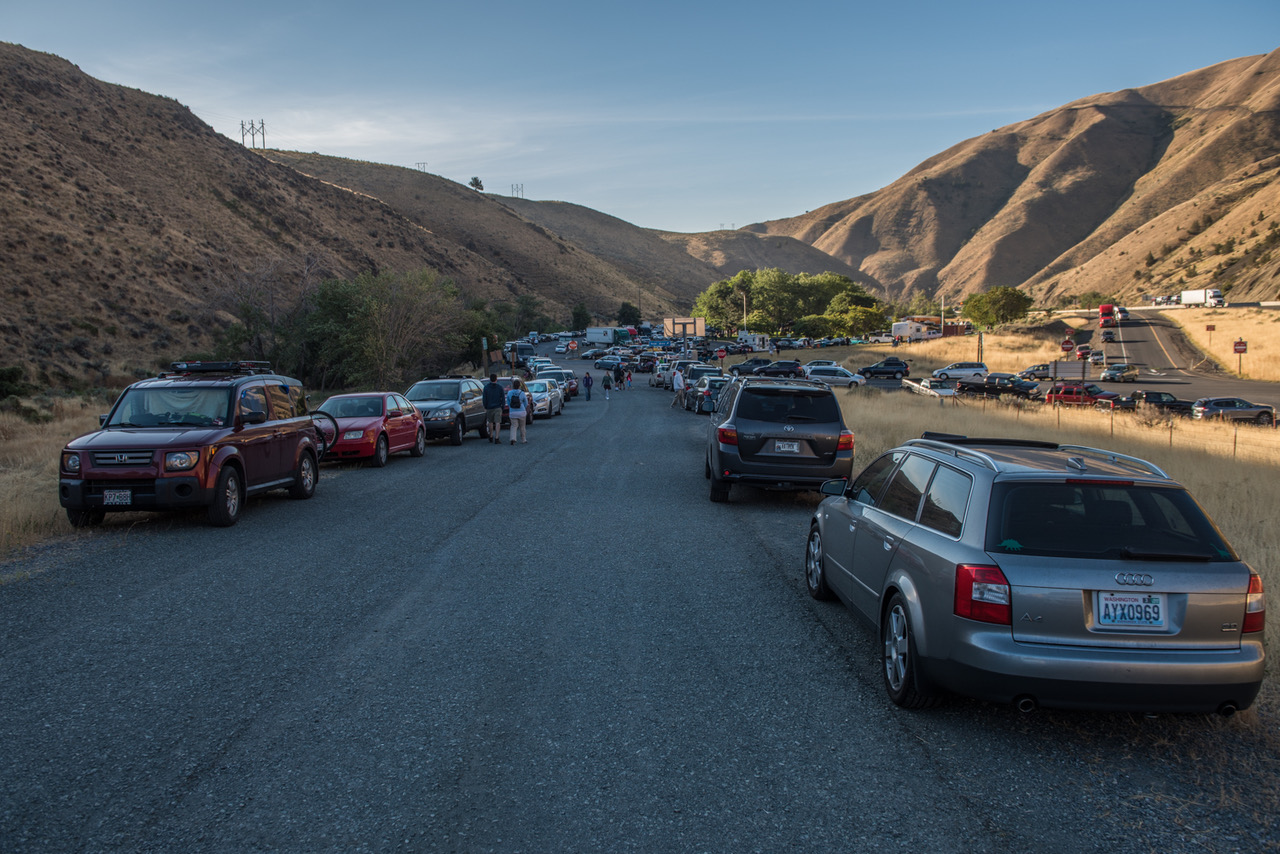
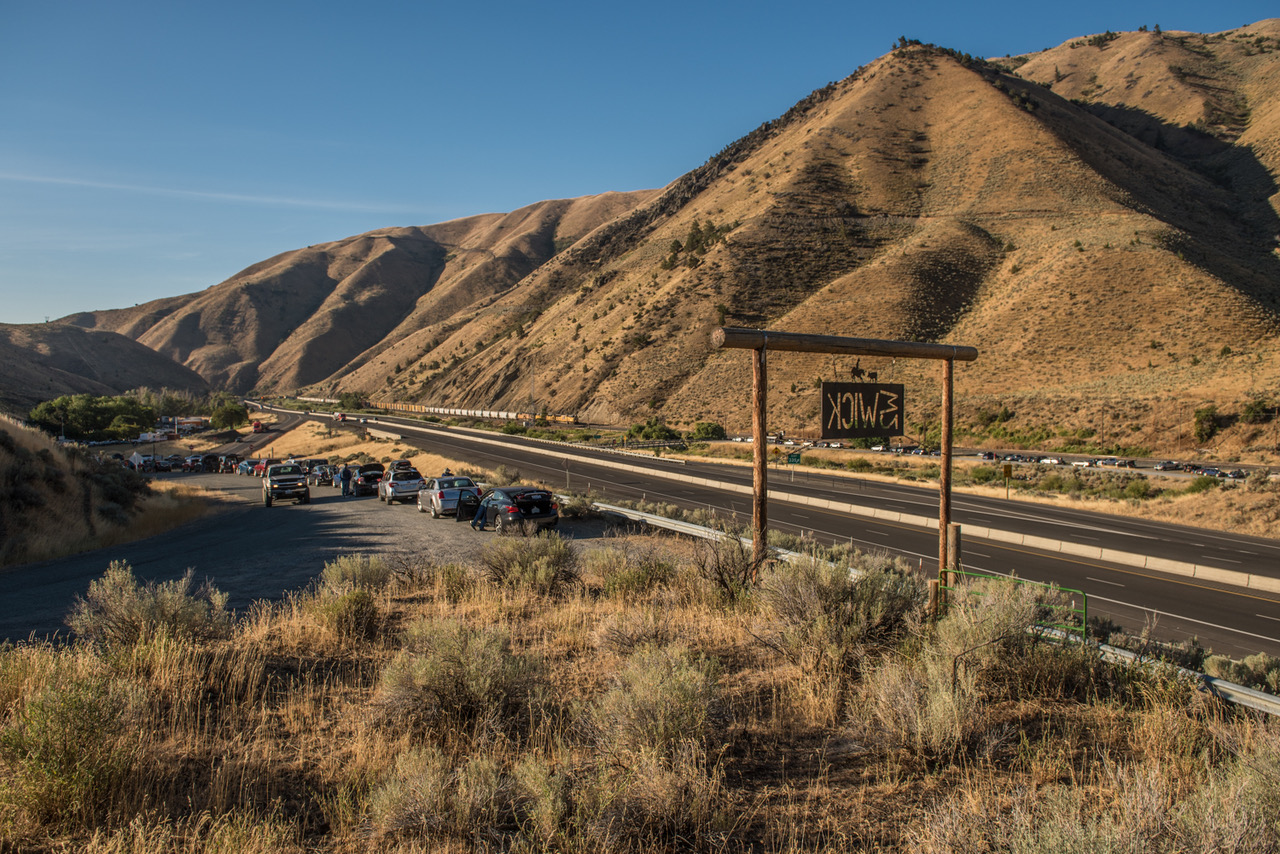
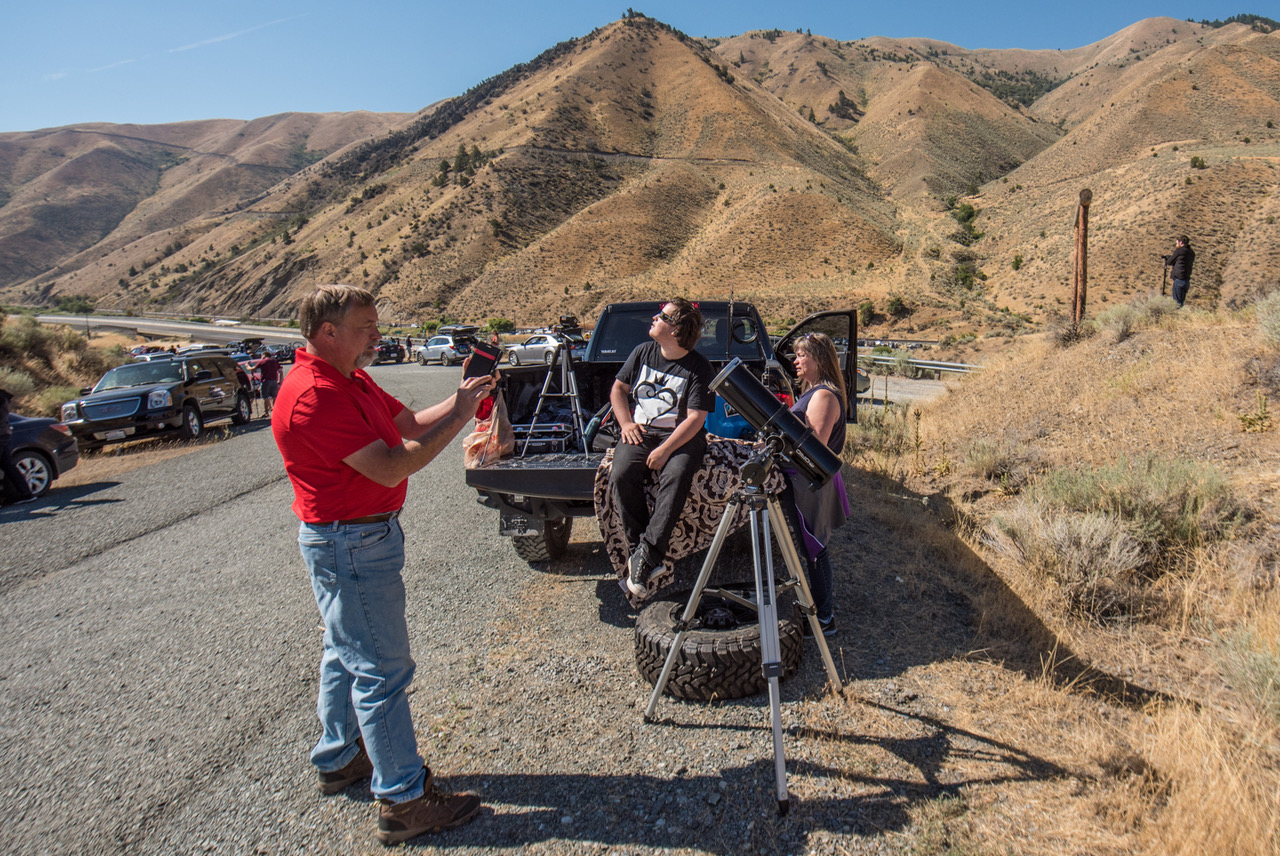
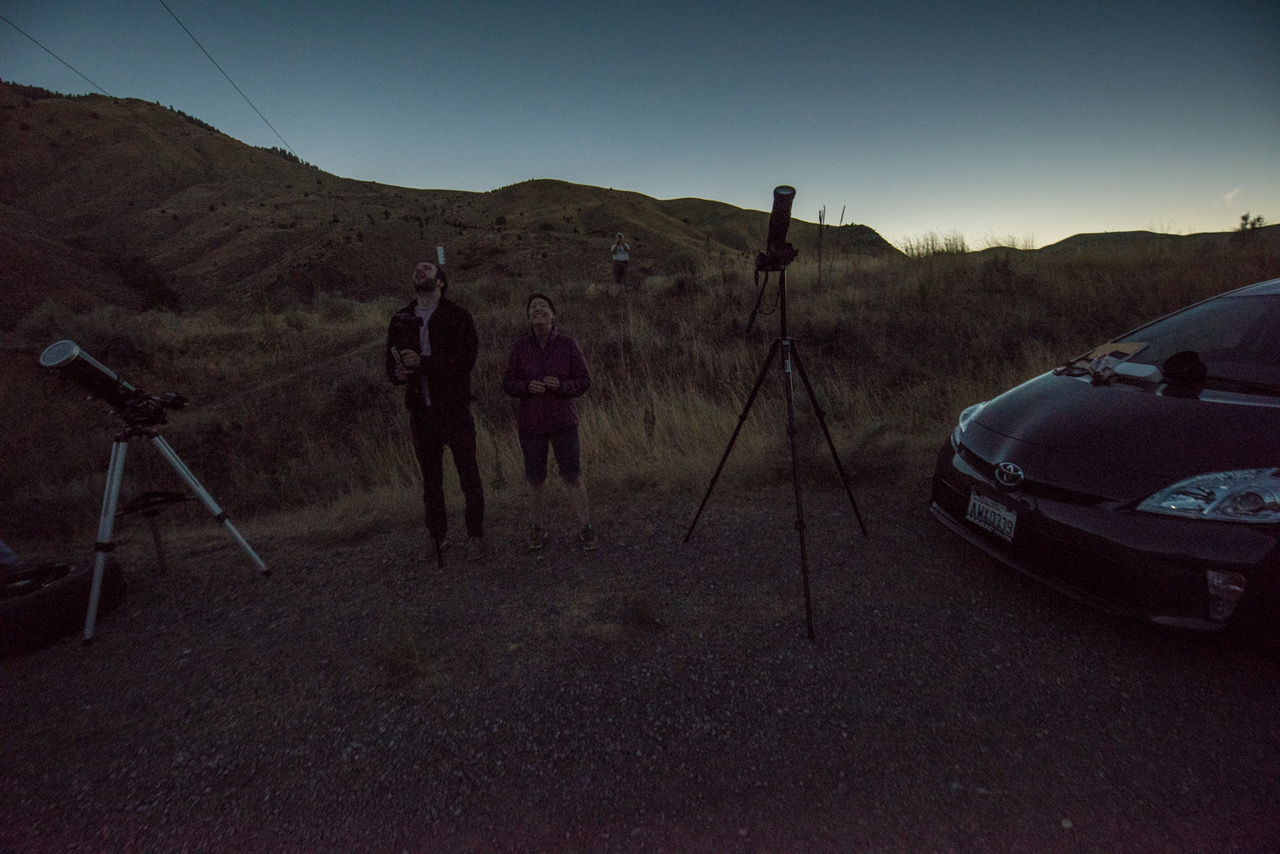
So Karen, our son Noel, and I joined the hordes and drove to a rest stop just north of Lime, Oregon, arriving about 4:30 Monday morning. And any lingering doubts we had about the advisability of the enterprise were put aside after the event. Following are photos documenting our conversion.

Dawn breaks at the rest stop
The view from the farm road above the highway
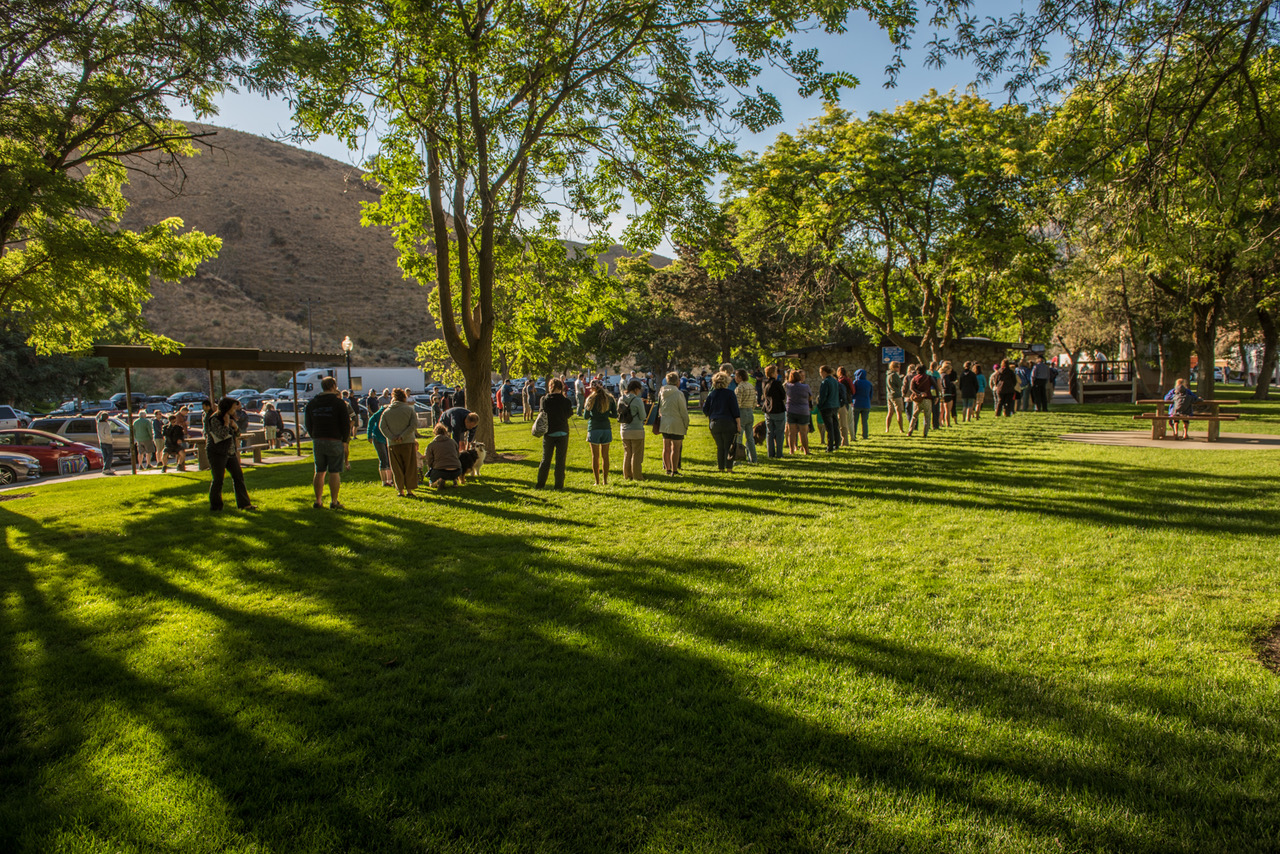
One of the only lines we found that morning: the women’s room at the rest stop just after dawn…
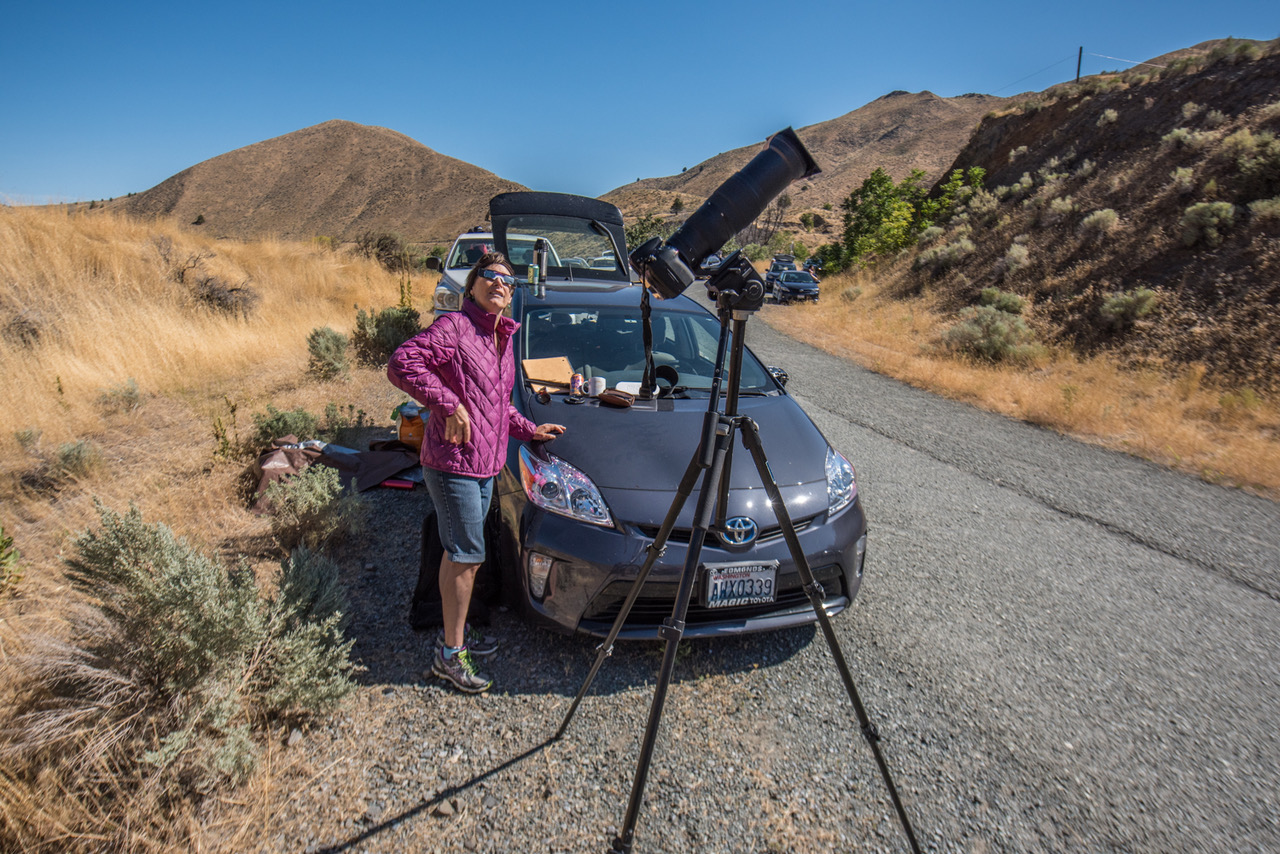
Karen waits for the moon to arrive, next to my second camera…
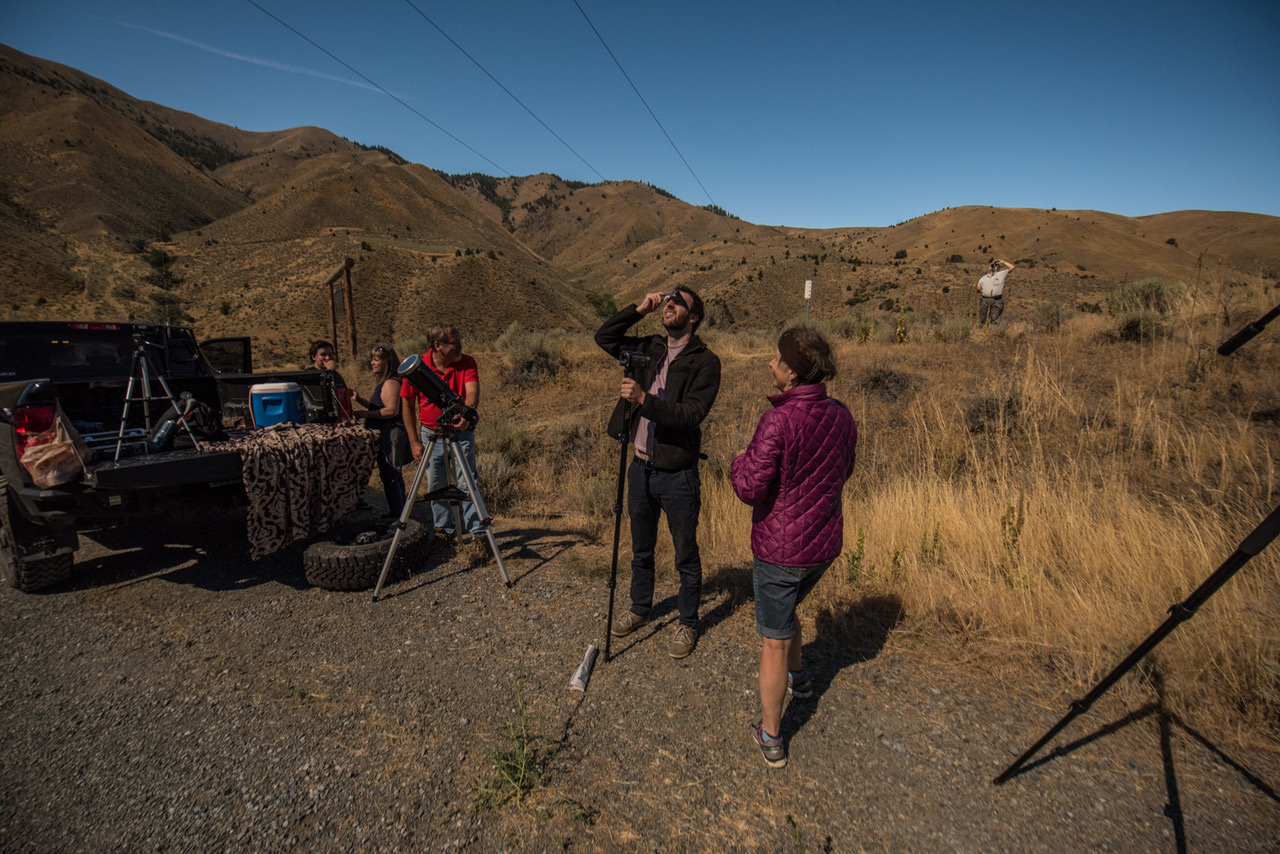
Our friendly neighbor from Olympia, who shared his filtered telescope with us
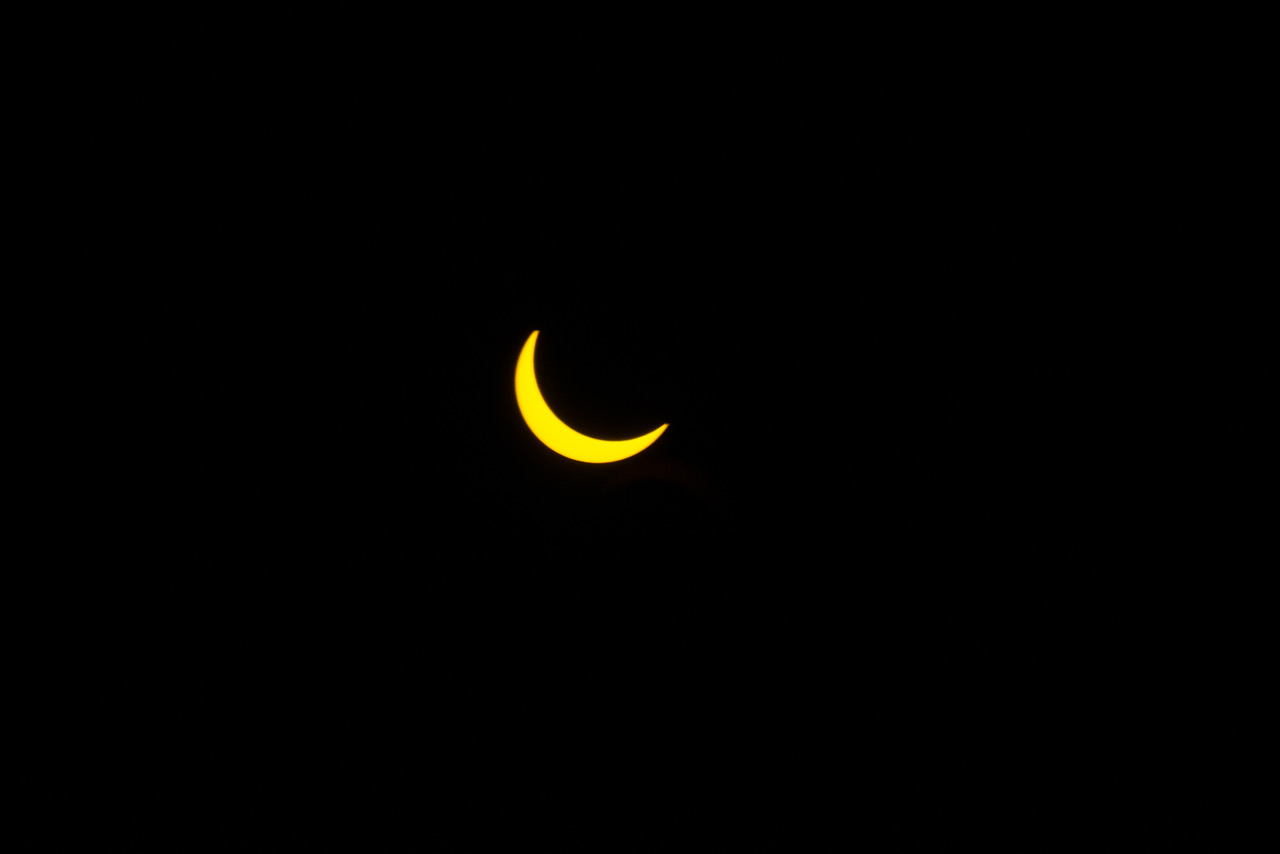
A view using a welder’s lens (thanks, Howard Lev) before totality
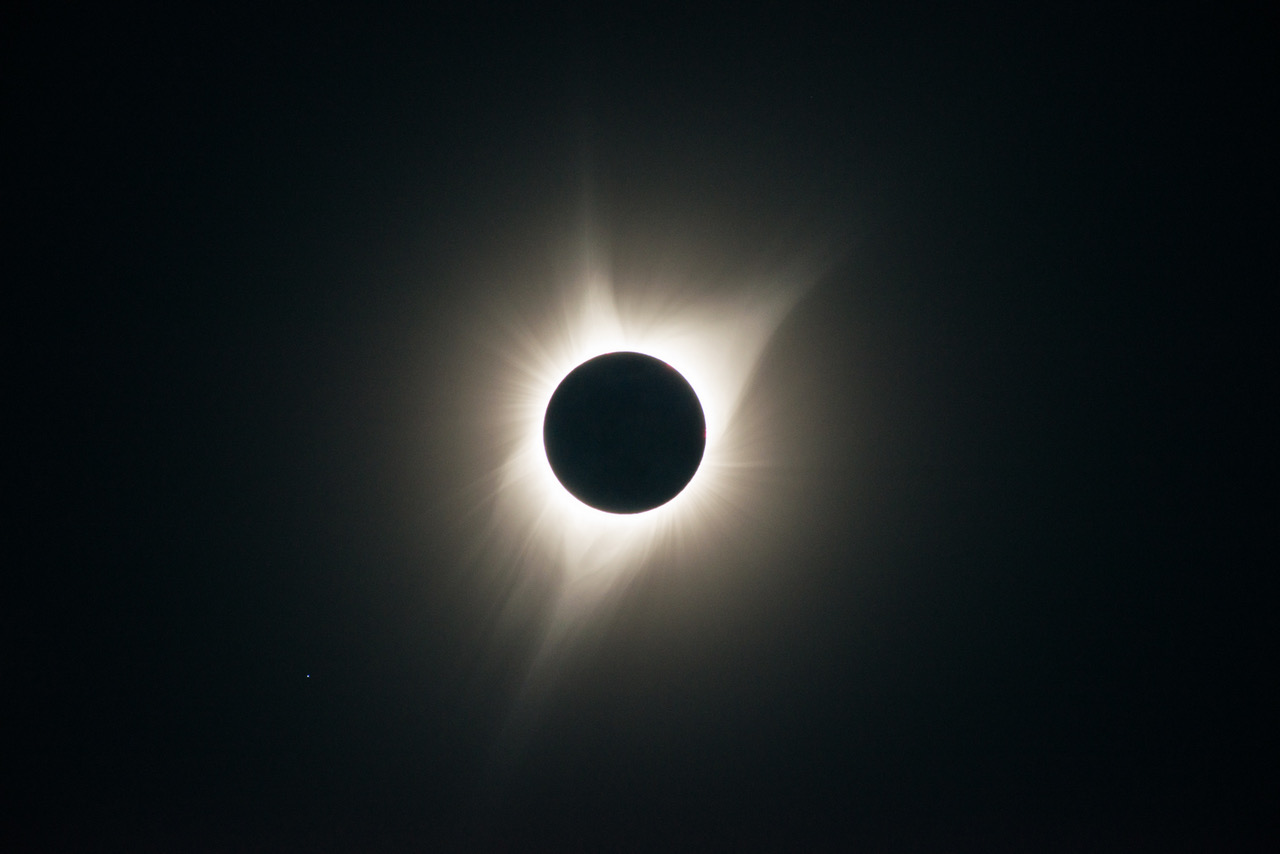
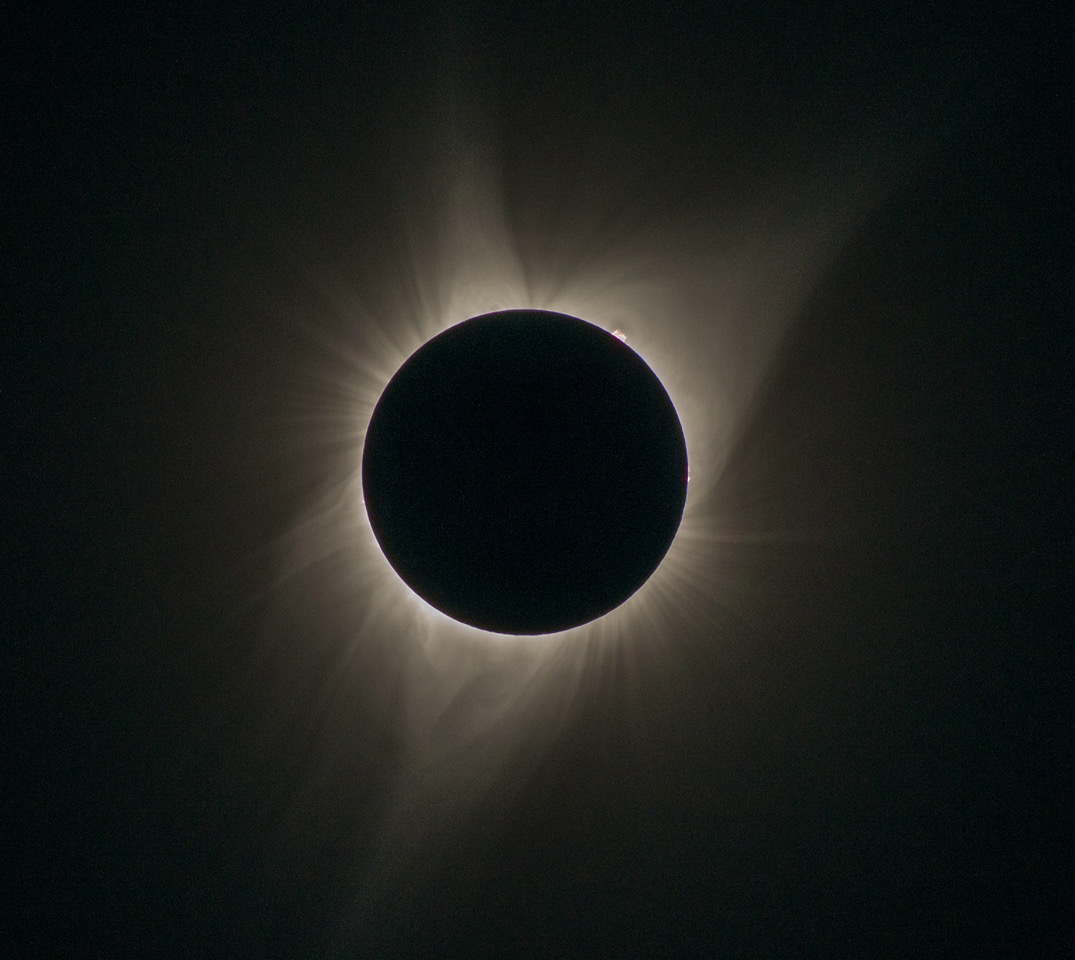
The unfiltered event. Note the planet lower left quadrant. Mars or Mercury.
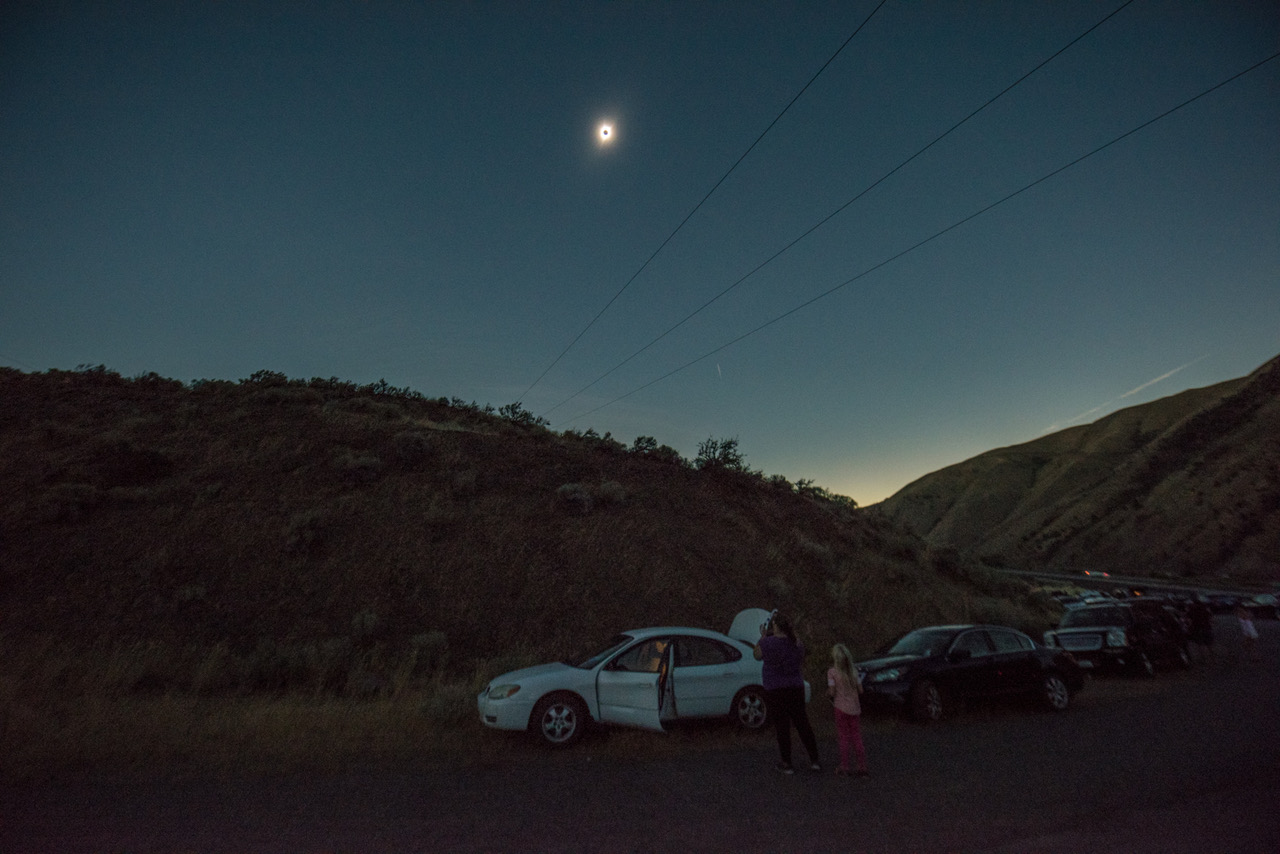
In the dark…
Two minutes of night
I blew up this shot to look a bit closer – is that a solar flare at 1 o’clock?
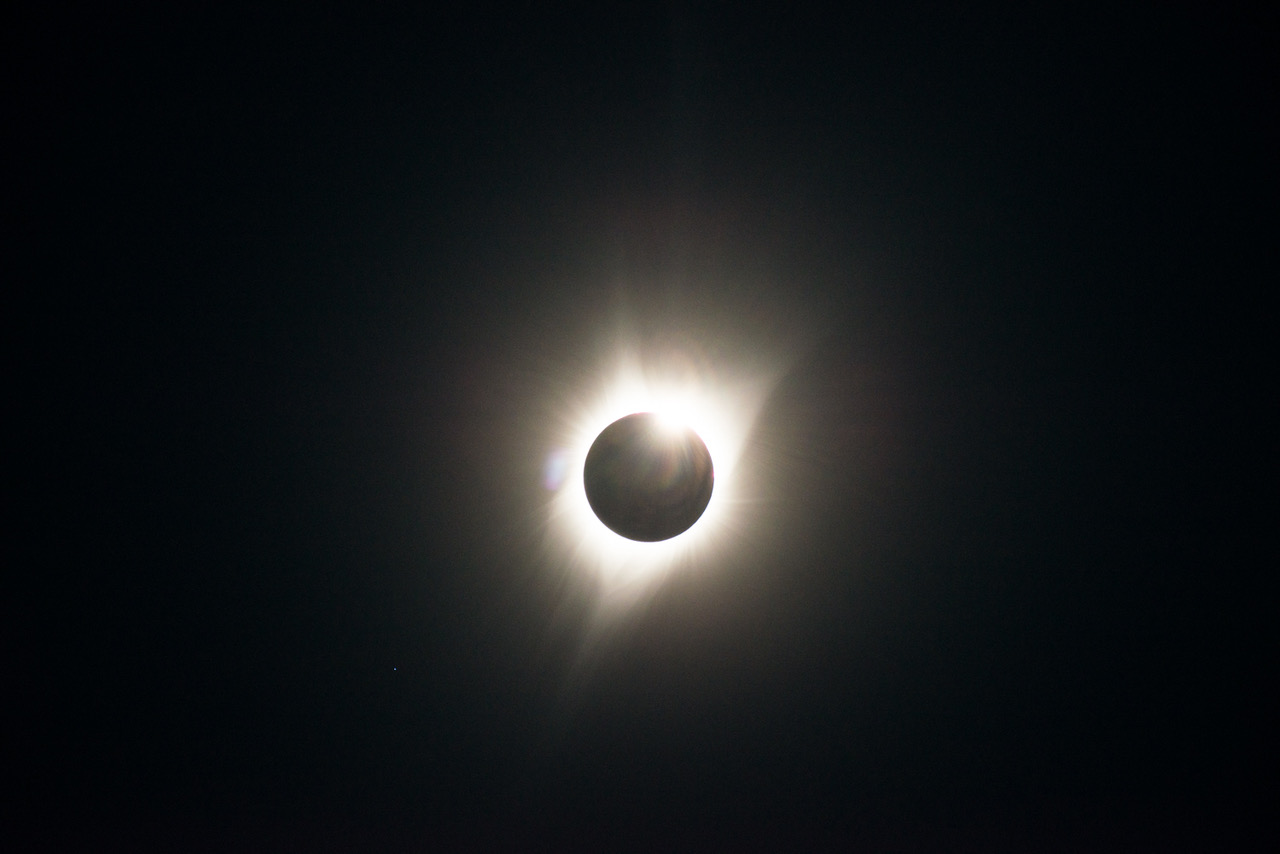
My last photo of the sun peeping out from behind the moon. Magnificent.
Moments after the eclipse, in the twilight of awe

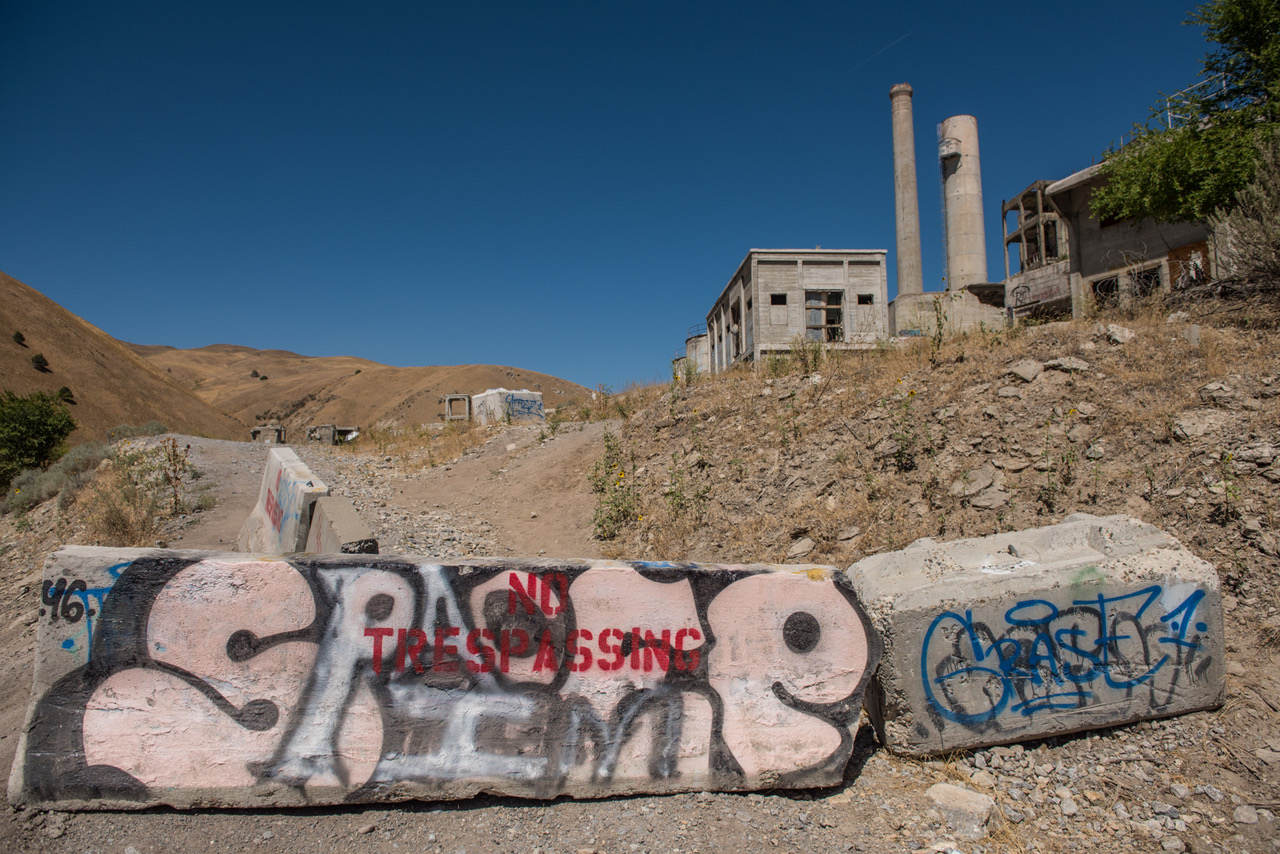
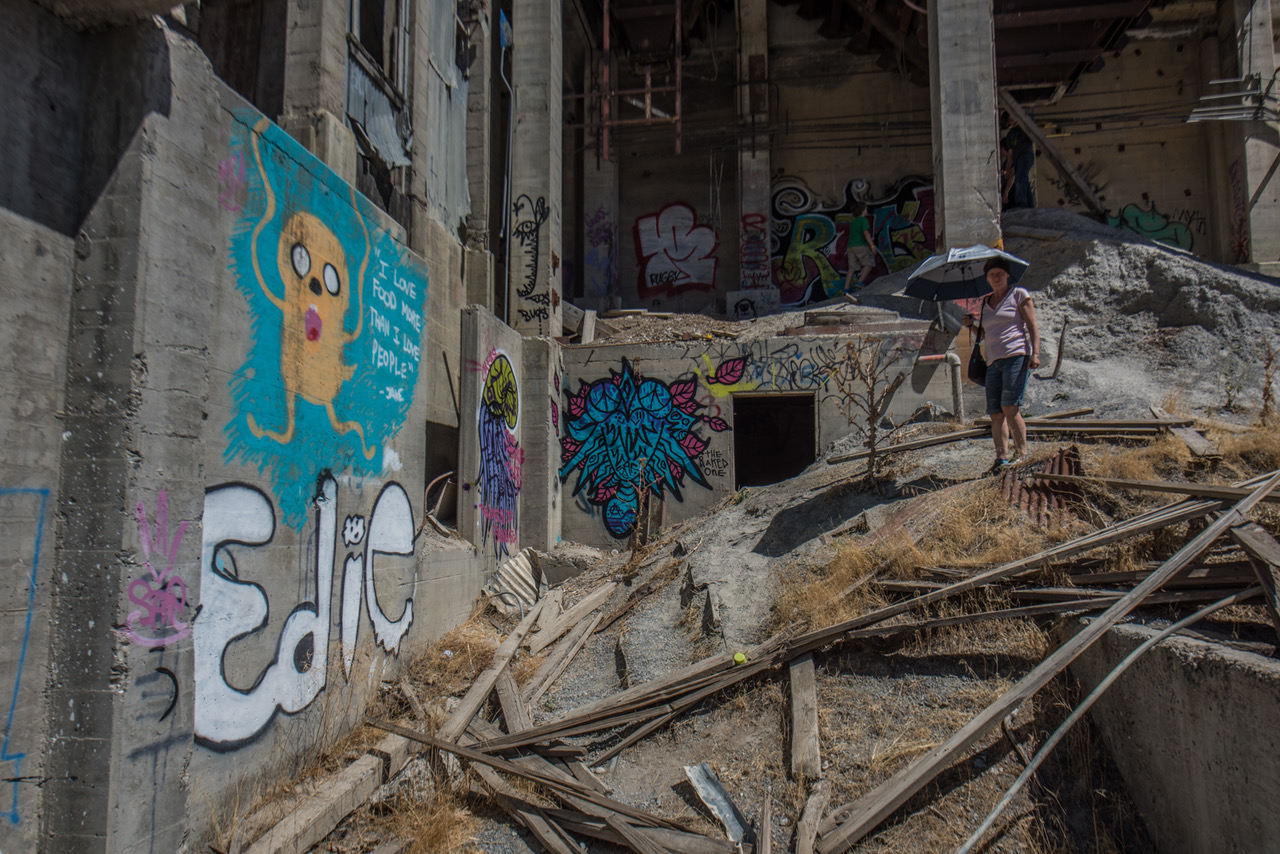
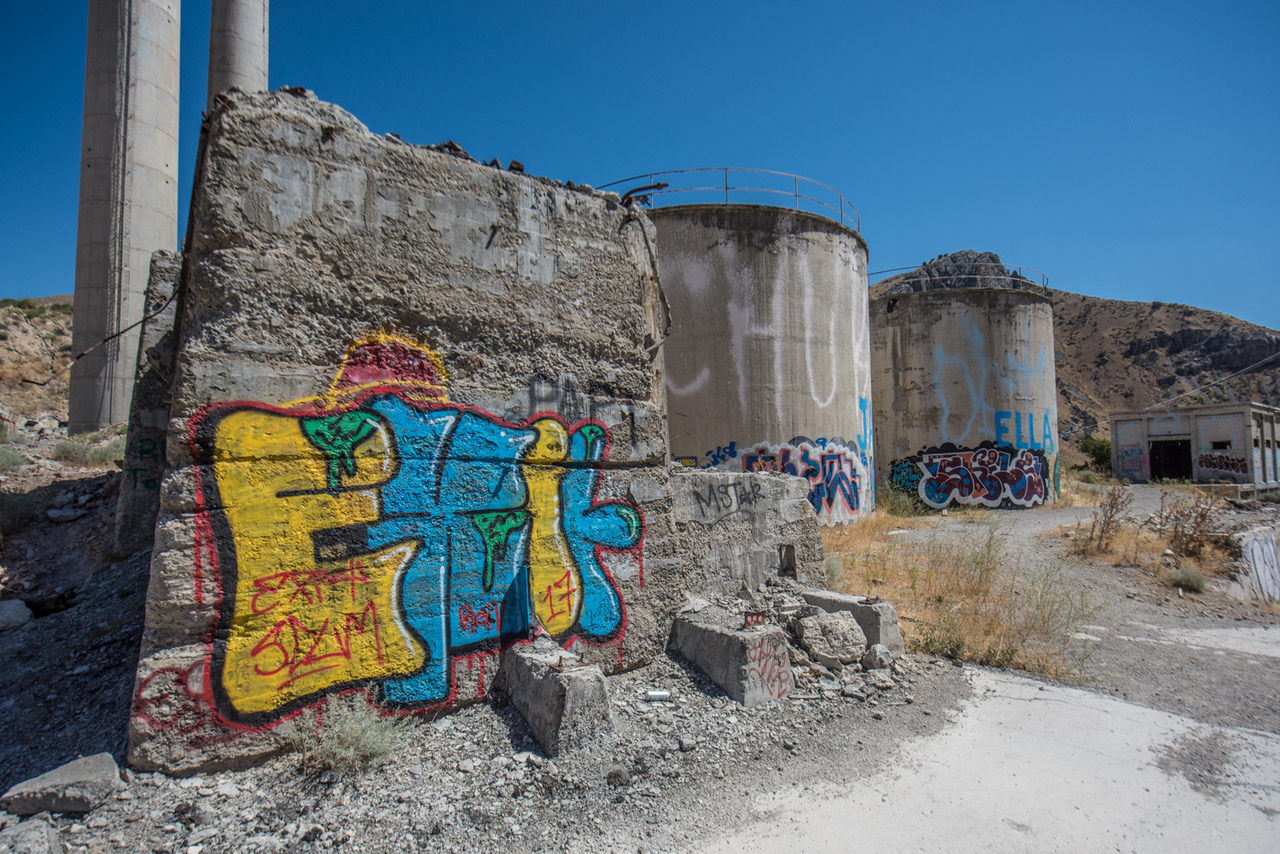
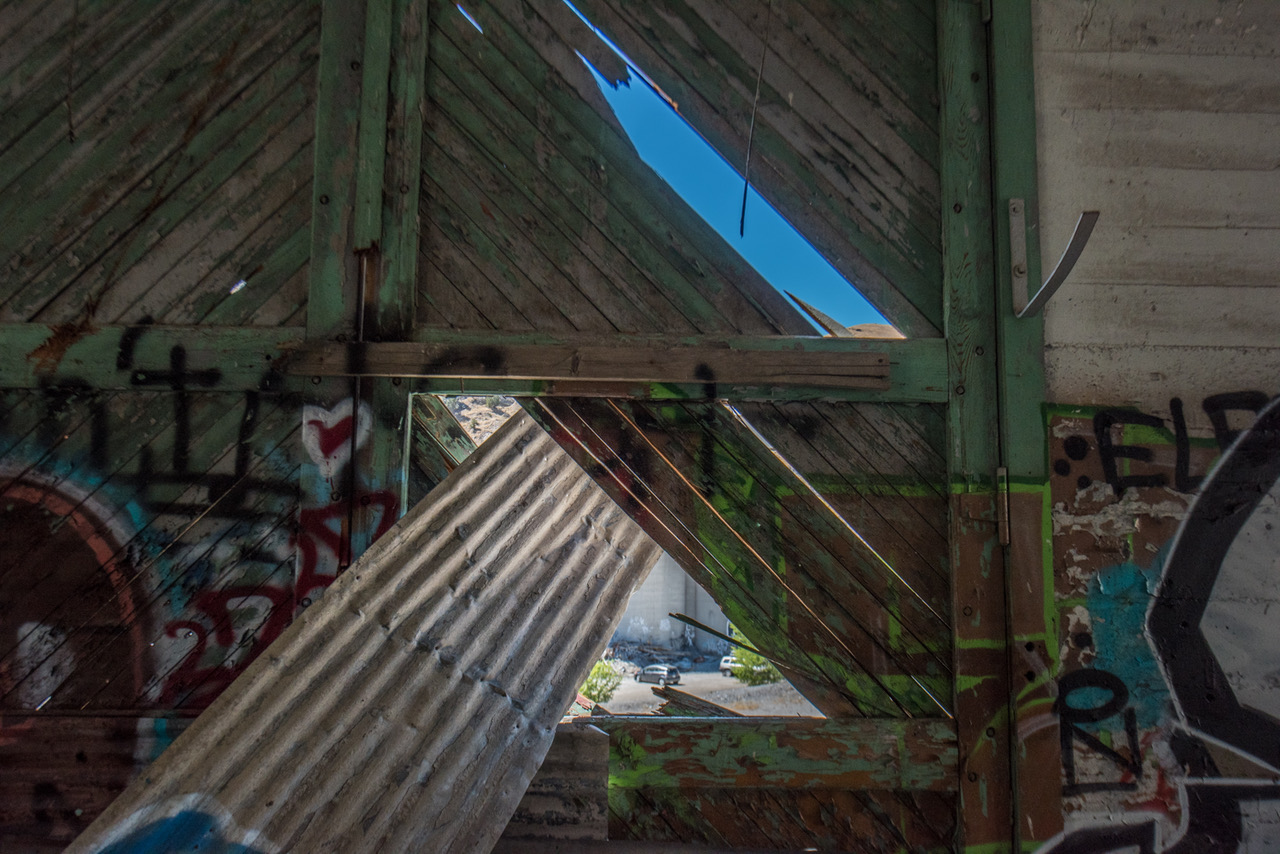
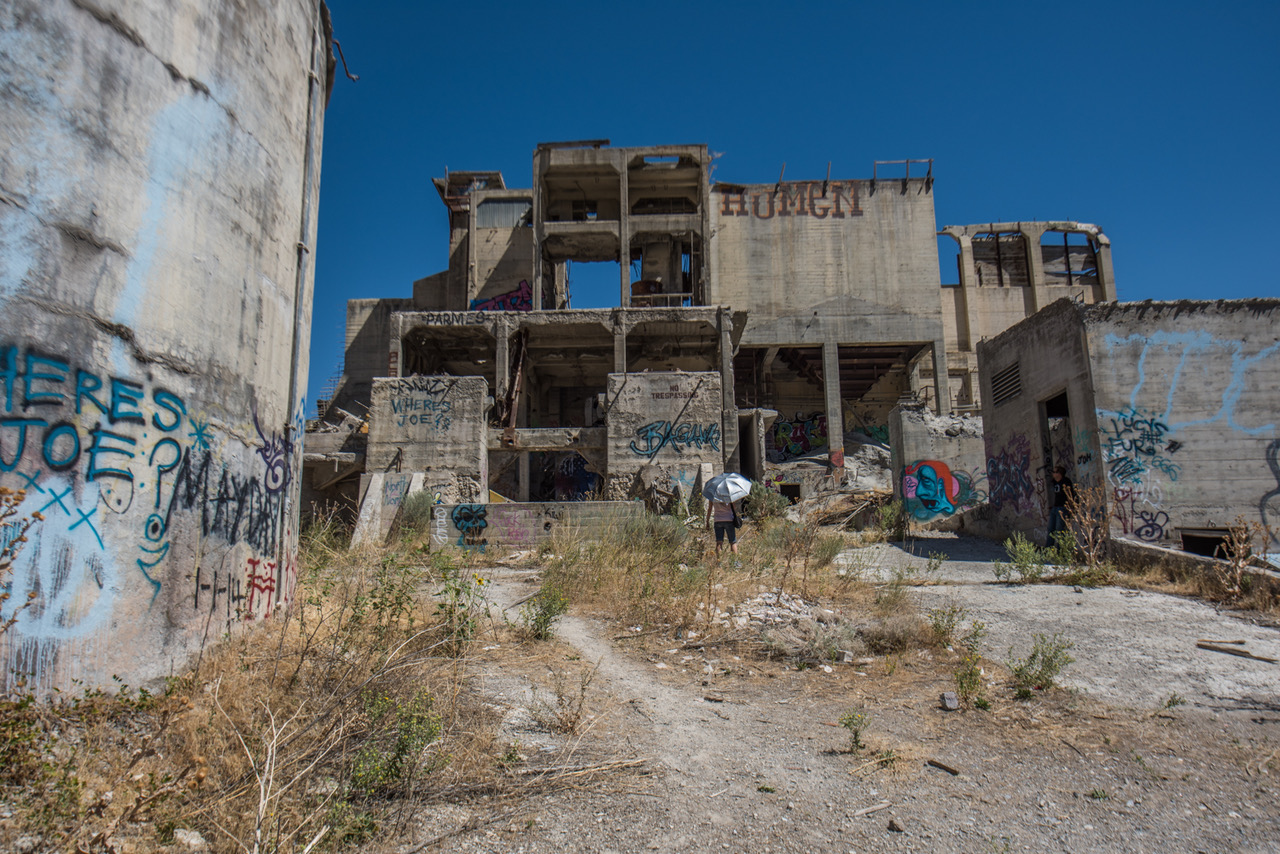
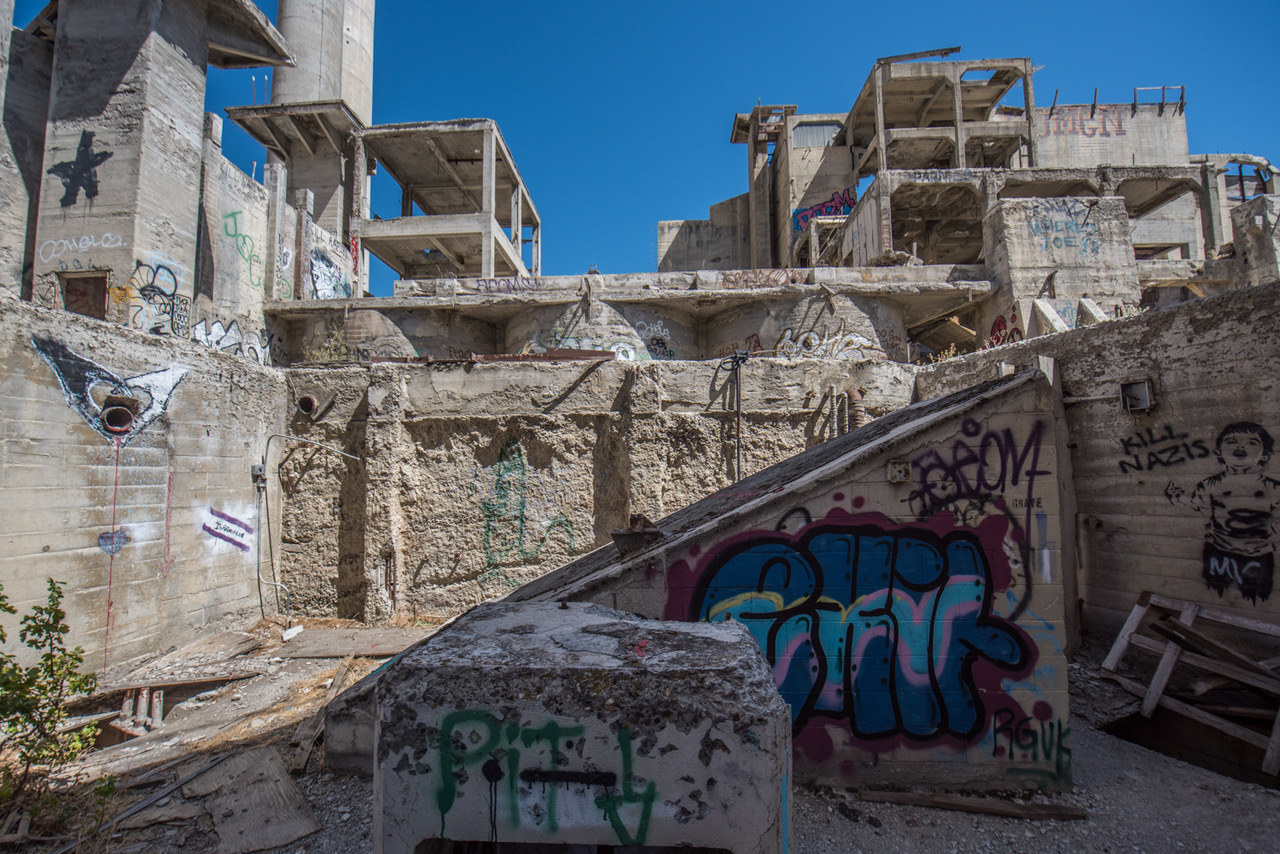
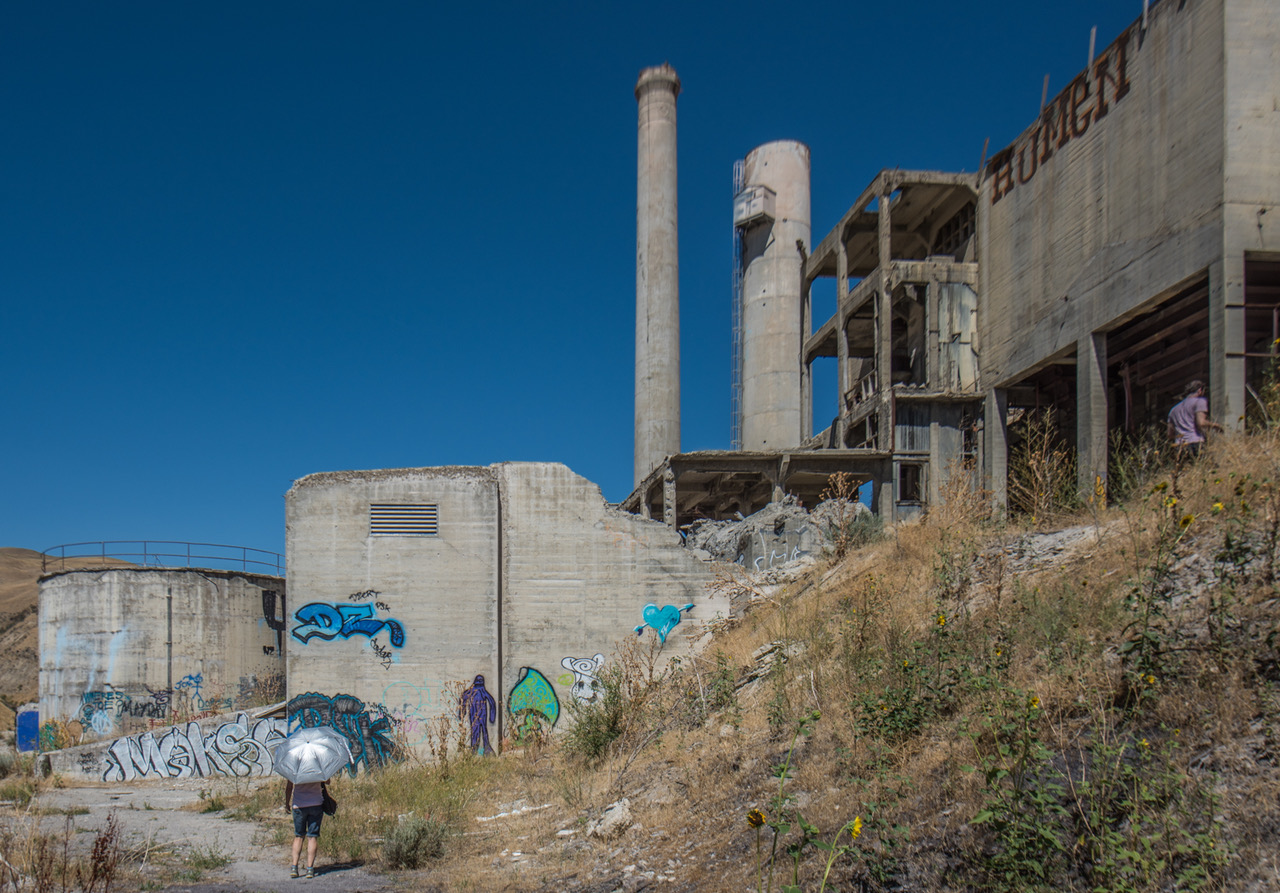
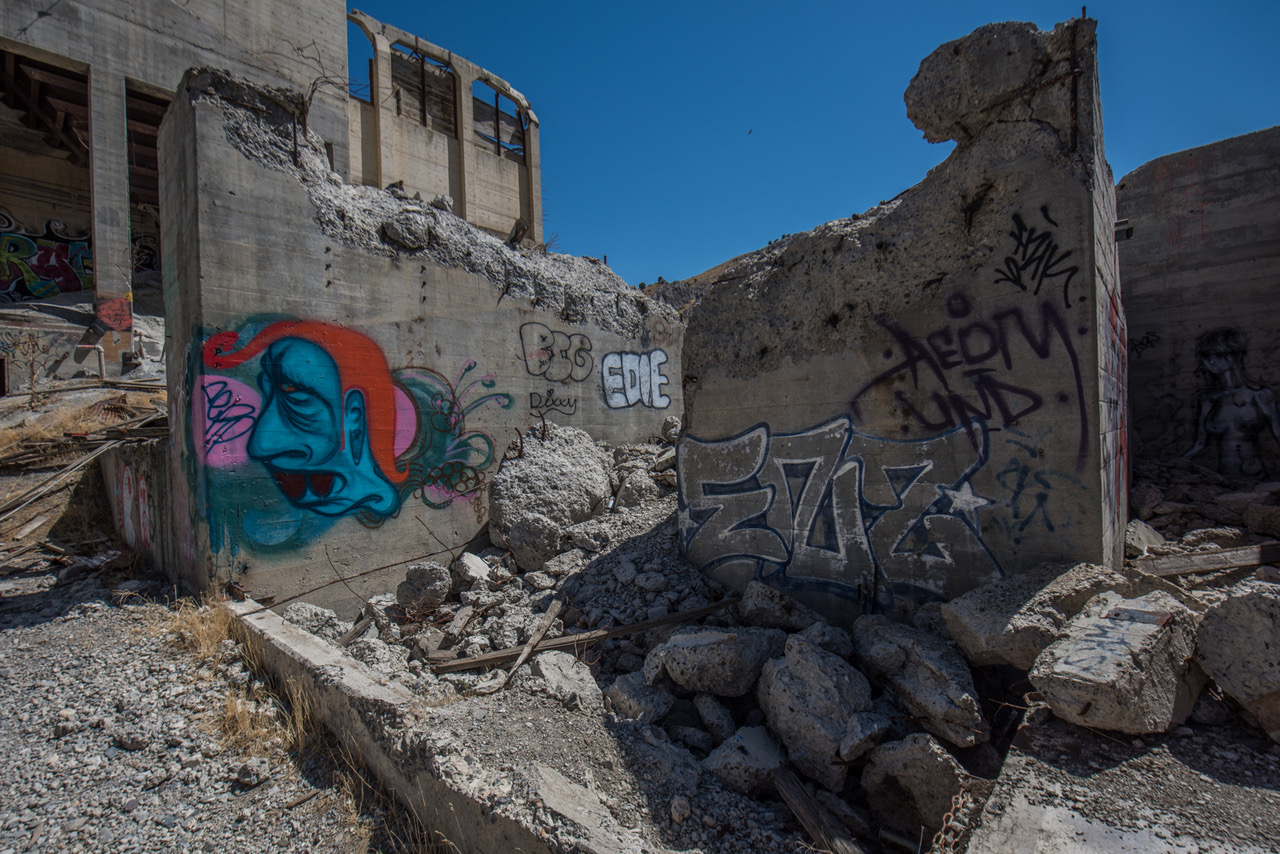
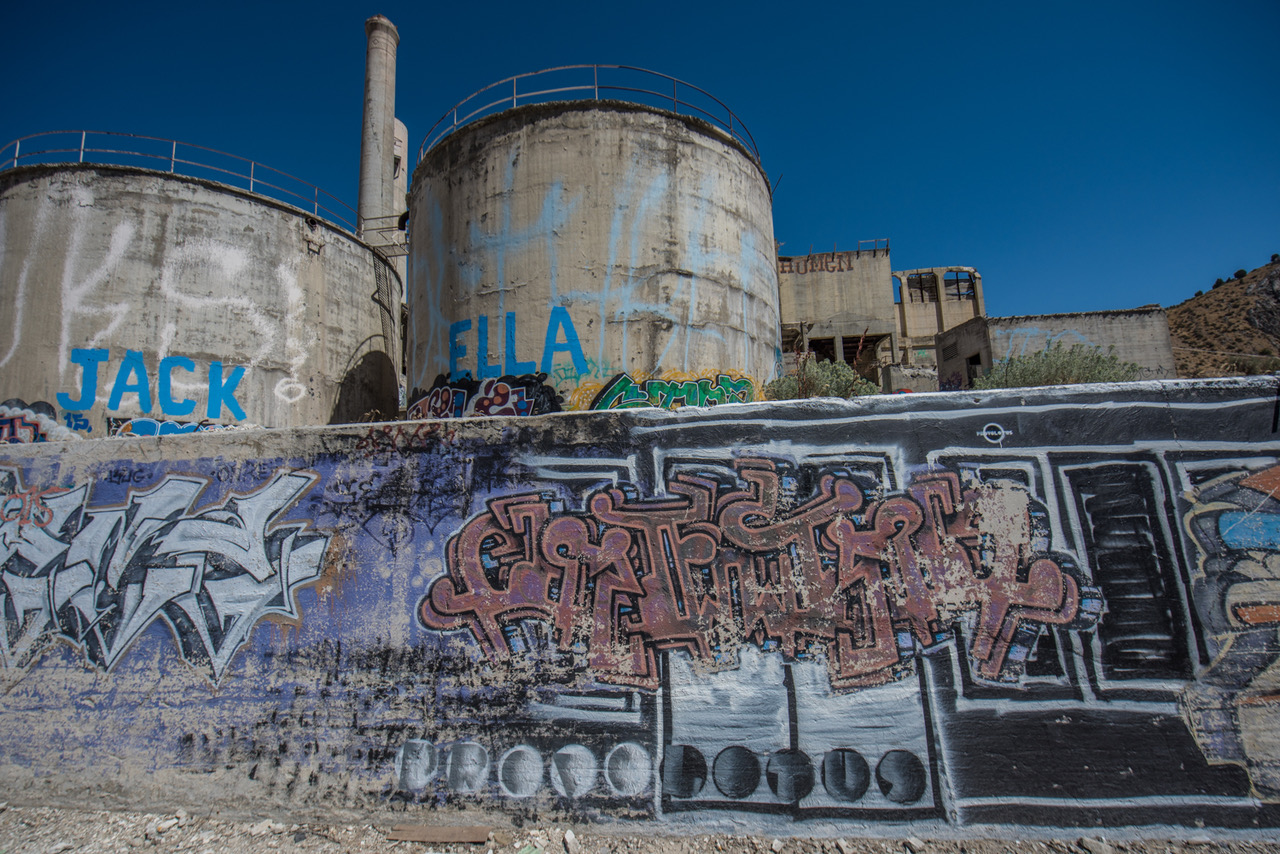
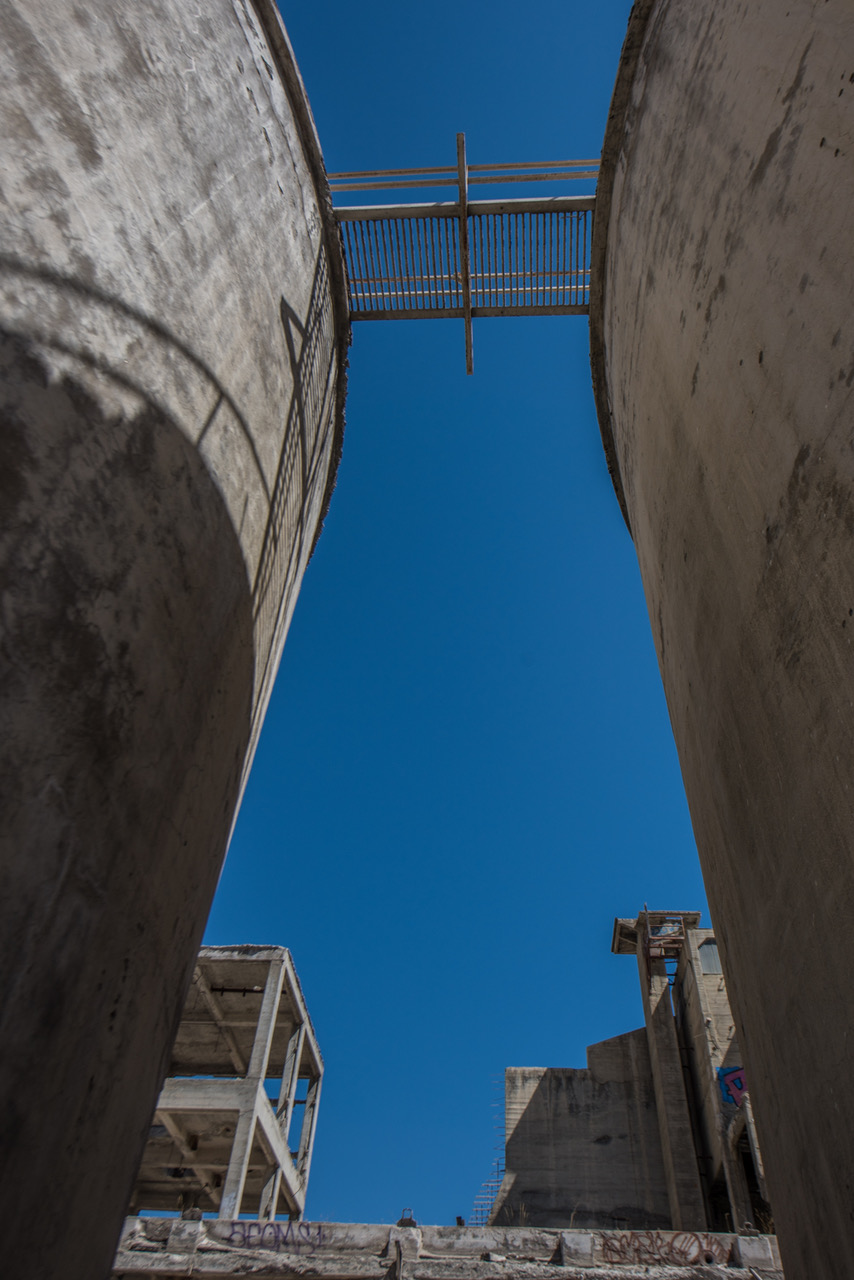
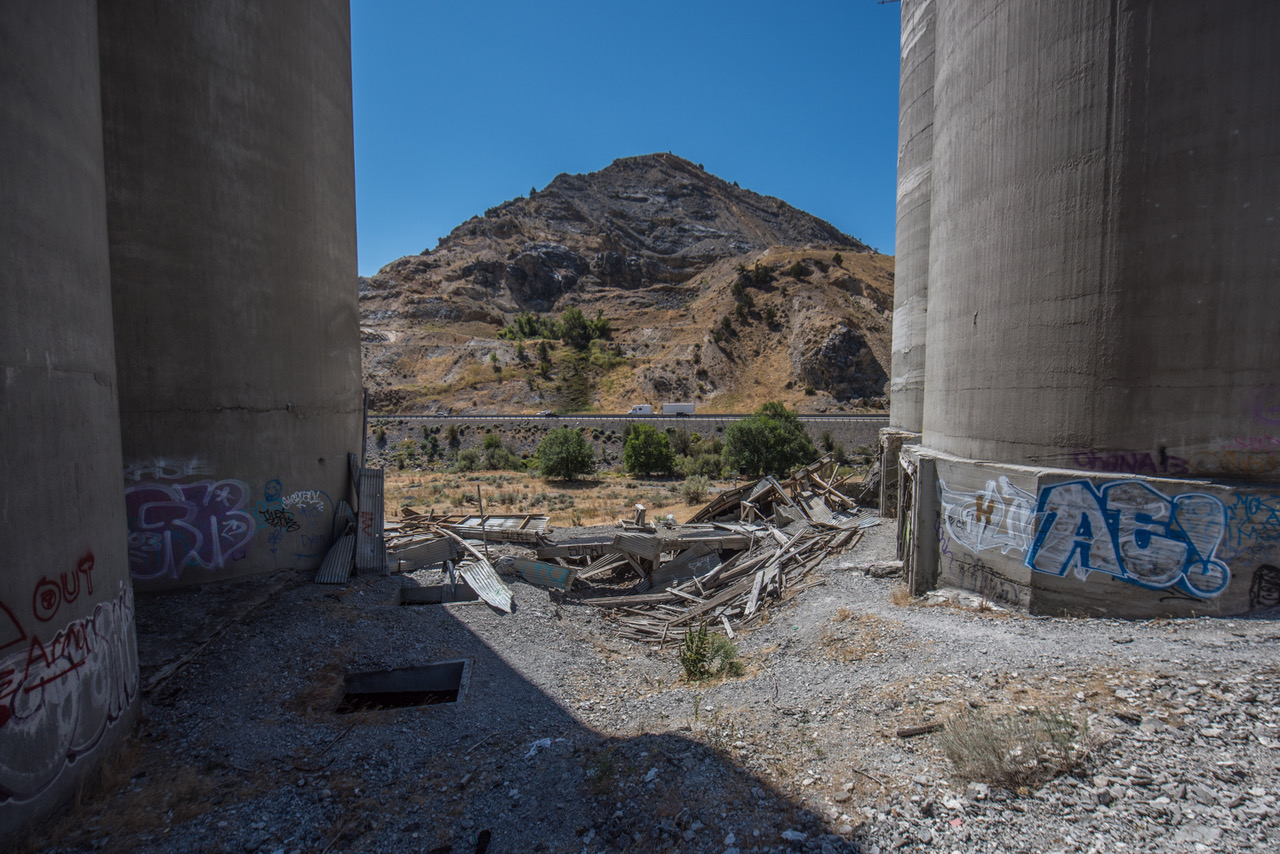
Afterwards, we had a picnic and then decided to drive south a few miles to visit Lime, where Paul Dorpat told us an abandoned cement factory still loomed. We wandered an apocalyptic moonscape of graffiti, art, and lost children – a perfect aftermath comprising melancholy reflection and an exquisite sense of mortality.

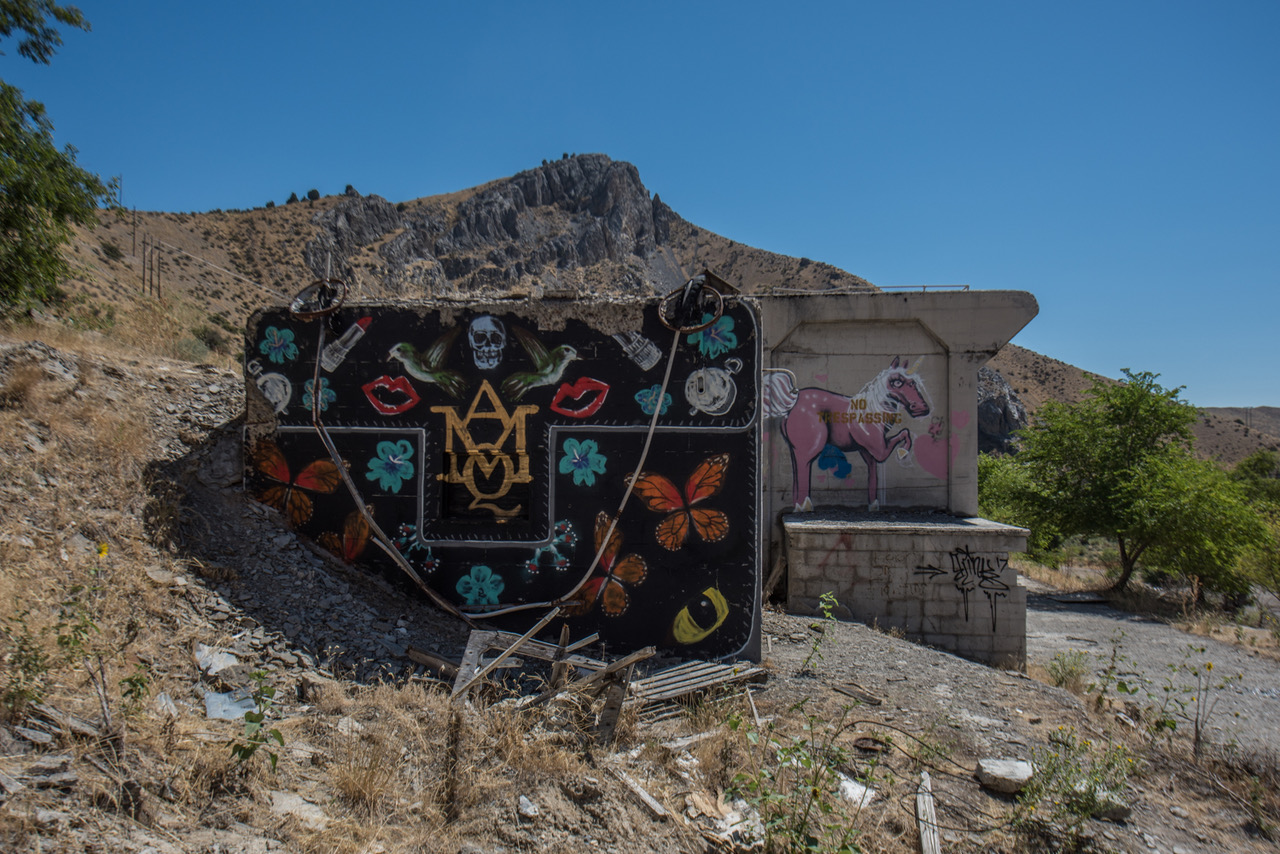
No Trespassing — ignored by artists and visitors alike
Karen in the ruins with her solar umbrella

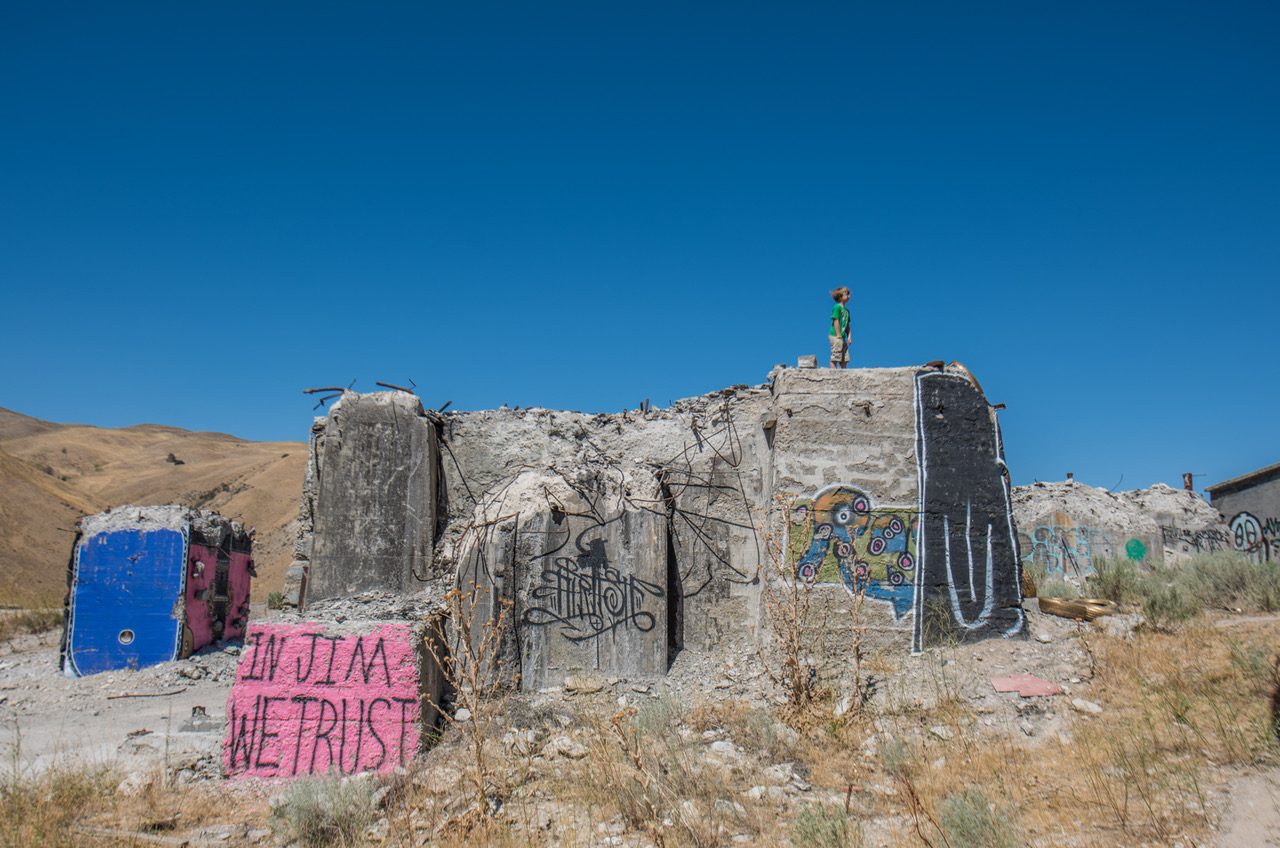
This kid got up but couldn’t get down. I asked if he needed help, but he threw a rock at me and called for his dad (who may have been named Jim)

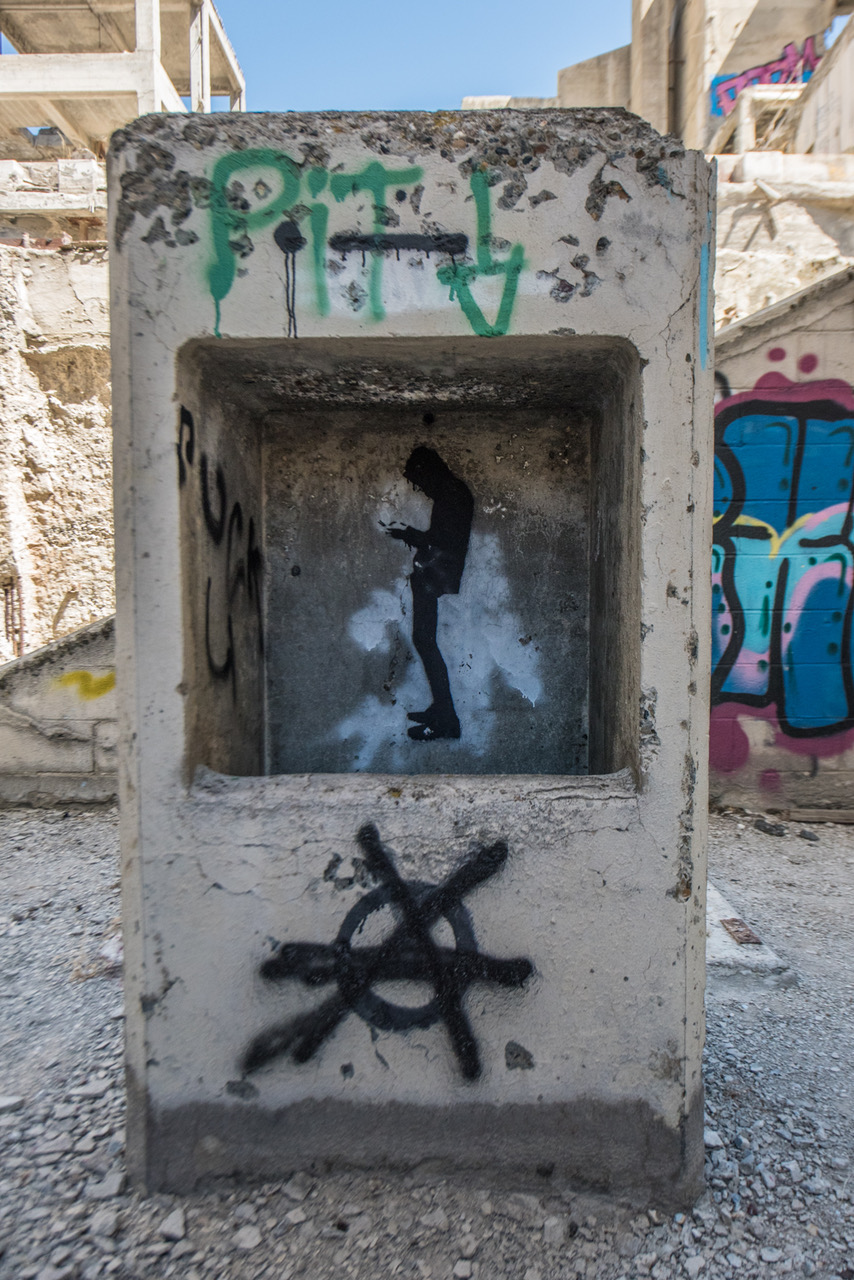
Is this Banksy in a box? The concrete stands about 3 feet tall and is a lovely secret miniature amongst the larger art

Seattle Now & Then: Swedish Hospital, 1929

(click to enlarge photos)

THEN: Looking southwest from Marion Street along Summit Avenue into the campus of the Swedish Hospital in the late 1920s. (Courtesy, The Swedish Club).
NOW: The well-packed central cluster of Swedish Hospital’s additions as recorded looking southwest from the fifth floor of the Nordstrom Medical Tower near the northeast corner of Marion Street and Summit Avenue.

I sparked when first shown the left half of this ca. 1929 panorama of the Swedish Hospital campus.  Although not placed side-by-side, both parts are included in an album of about 100 photographs taken by Seattle/Ballard professional Klaes Nordquist.  Most of the photos are from the 1920s and have Swedish subjects.  Kristine Leander, the current Executive Director of the thriving Swedish Club, introduced me to the album.  She has recently donated the collection to the stewardship of the Museum of History and Industry both for safe-keeping and public access.

Swedish Hospital looking northwest across Columbia Street towards its intersection with Summit Avenue.

It was only recently that I recognized that the Nordquist album also held the right half of the panorama printed here. The combined view looks south-southwest from Nordquist’s prospect near the northeast corner of Summit Avenue and Marion Street. The original three-story hospital sits one block south at the northwest corner of Summit and Columbia.  Both in the featured panorama and in the photograph printed directly above, it is the ornate structure below the water tank, which is half-hiding behind the chimney at the pan’s center.   (Jean and I first featured this “Summit Avenue Hospital” in PacificNW’s November 8, 2014, issue.  It is repeated below as the first link among those placed by Ron Edge for the week’s’ feature.) Far right in the panorama stands the hospital’s first over-sized addition, planned in 1925 and completed to seven floors in 1929.

ABOVE: The drawing above, first published in the June 28, 1925 issue of The Seattle Times, includes a planned addition on the right that was changed before construction. To the left, the original hospital holds on. The changes for the new addition are revealed in The Seattle Times rotogravure page below that groups eight new Seattle structures. The built hospital addition appears at the bottom-left corner of the montage and can be compared to the featured panorama.  The rotogravure dates from August 7, 1927.   (Quiz – What is Seattle’s Chief Coal Supply?  Or was, in 1927.)
A Seattle Times rotogravure photomontage from 1927 includes Swedish Hospital and its new addition as built. (CLICK to ENLARGE)

A Seattle Times clip from March 12, 1929.  [Question/Quiz:  What makes “one of the latest achievements in the cinema field”  (in 1929) possible?)
When compared to Nordquist’s pan, the formidable jumble of walls stacked in Jean Sherrard’s recent “repeat” is a concrete metaphor for the relentless adjustments needed by Swedish Hospital through its first-century-plus of often manic growth.  One can easily ponder the extent of that growth by visiting the hospital’s own webpage.  While sometimes slippery with public-relations prose, it is packed with this grand health service’s accomplishments.  For an independent narrative of the Swedes on First Hill, Jean and I recommend Historylink, the on-line encyclopedia of Washington State history. (One can link to it at http://www.historylink.org/File/9572.  The essay was authored by Jennifer Ott, Historylink’s Assistant Director.  With David B. Williams, Ott is also co-author of Historylink’s timely new book Waterway, the Story of Seattle’s Locks and Ship Canal.)

First published in Pacific on March 28, 2001  (CLICK to ENLARGE)
The Otis hotel line of additions fills the right half of this joined panorama taken from the southeast corner of Summit and Columbia. This pan is described in the first of the Edge Links added below. (You cannot miss it.)
Looking east to the Otis Hotel row from a prospect near Boren Ave. and Marion Street. Second Hill is on the horizon.

Finally, we will note two nearby landmarks in Nordquist’s pan that in the late 1920s had not yet removed for expansion of the Swedish Hospital campus.  The north façade of the nearly block-long Otis Hotel, far left in the featured panorama is described in a Times classified for June 24, 1928: “This popular residential hotel, 804 Summit, opposite Swedish Hospital is being thoroughly renovated … private phones, excellent meals, splendid location.”  Across Summit Avenue, at its southwest corner with Marion, nestles the

Swedish Hospital’s graduate nurses in the spring of 1928. A Times clip form May 14.

professional home for six eye, ear, nose and throat specialists.  W. Marbury Somervell, at the time one of Seattle’s best-known architects, designed this two-story red brick jewel that opened in 1906. Thirty years later, the clinic was moved on rollers down Marion Street to make room for the expanding Swedish Hospital. For this discovery I wish to thank Ron Edge, already noted above, a friend with both zest and talent for eleventh hour research.

From The Seattle Times for January 27, 1936

WEB EXTRAS

Here’s a little mystery I found just after snapping the ‘Now’ shot for this feature. Just below the Nordstrom Tower, there is an obstructed view from the sidewalk of a trio of old Corinthian (so they appear to me) pillars, just below the skyway. There are no plaques identifying them and no indication of their former use and location. Dear readers, we invite you to solve the mystery…

Hidden pillars – note the skyway above right…
Close up…

Anything to add, boys?  Yes Jean, and most relevant is the first link, our earlier feature on Swedish Hospital..  May the dear readers open it first.

THEN: This detail from the prolific local photographer Asahel Curtis’s photograph of the Smith/Rininger home at the northwest corner of Columbia Street and Summit Avenue dates from the early twentieth century when motorcars, rolling or parked, were still very rare on the streets of Seattle, including these on First Hill. (Courtesy, Historic Seattle)

A-Broadway-Row-THEN-MR

THEN: First Hill’s distinguished Old Colony Apartments at 615 Boren Avenue, 1910.

THEN: Faced, in part, with brick veneer and stucco, and opened in 191l, the Comet Apartments at 170 11th Avenue have made it nicely through their first century. (Courtesy, Lawton Gowey)

THEN:

THEN: The Perry Apartments is nearly new in “postcard artist” M. L. Oakes look at them south on Boren to where it intersects with Madison Street. (Courtesy John Cooper)

https://pauldorpat.com/wp-content/uploads/2014/01/zindorf-apts-714-7th-ave-mf1.jpg

THEN: Constructed in 1890 as the Seattle Fire Department’s first headquarters, these substantial four floors (counting the daylight basement) survived until replaced by Interstate Five in the 1960s. (photo by Frank Shaw)

THEN: Built in 1887, the Minor-Collins Home at the northeast corner of Minor Avenue and Cherry Street was one of the grandest and longest surviving pioneer mansions on First Hill. (Courtesy Historic Seattle)

THEN: Built in the early twentieth century at the northeast corner of Jefferson Street and Boren Avenue, Bertha and Frank Gardner’s residence was large but not a mansion, as were many big homes on First Hill. (Courtesy Washington State Museum, Tacoma)

THEN: At the northwest corner of Columbia Street and Boren Avenue, two of the more ordinary housing stock on First Hill in the 1890s. (Courtesy MOHAI)

THEN: Sometime around 1890, George Moore, one of Seattle’s most prolific early photographers, recorded this portrait of the home of the architect (and Daniel Boone descendent) William E. Boone. In the recently published second edition of Shaping Seattle Architecture, the book’s editor, UW Professor of Architecture Jeffry Karl Ochsner, sketches William E. Boone’s life and career. Ochsner adds, “Boone was virtually the only pre-1889 Fire Seattle architect who continued to practice at a significant level through the 1890s and into the twentieth-century.” (Courtesy MOHAI)

THEN: A circa 1923 view looks south on Eighth Avenue over Pike Street, at bottom left.

childhaven-then-lr

THEN: Looking east on University Street towards Ninth Avenue, ca. 1925, with the Normandie Apartments on the left.

THEN: The brand new N&K Packard dealership at Belmont and Pike in 1909. Thanks to both antique car expert Fred Cruger for identifying as Packards the cars on show here, and to collector Ron Edge for finding them listed at this corner in a 1909 Post-Intelligencer. (Courtesy Museum of History and Industry.)

sorrento-late-construction-WEB

THEN: Looking west on Madison Street from Seventh Avenue circa 1909. (Courtesy, Washington State Museum, Tacoma)

THEN: On his visit to the Smith Tower around 1960, Wade Stevenson recorded the western slope of First Hill showing Harborview Hospital and part of Yesler Terrace at the top between 7th and 9th Avenue but still little development in the two blocks between 7th and 5th Avenues. Soon the Seattle Freeway would create a concrete ditch between 7th and 6th (the curving Avenue that runs left-to-right through the middle of the subject.) Much of the wild and spring fed landscape between 6th and 5th near the bottom of the revealing subject was cleared for parking. (Photo by Wade Stevenson, courtesy of Noel Holley)

tsutakawa-1967-then

THEN: Of the three largest Seattle roofs – the Alki Point Natatorium, a grandstand section of the U.W.’s Denny Field, and the St. James Cathedral dome - that crashed under the weight of the “Northwest Blizzard” in February 1916, the last was the grandest and probably loudest. It fell “with a crashing roar that was heard many blocks distant.” (Courtesy Catholic Archdiocese.)

THEN: Looking across Capitol Hill’s Broadway Avenue during its 1931adjustments. (Courtesy Seattle Municipal Archive)

THEN: A half-century after they reached the top of First Hill, electric streets cars and cable cars prepare to leave it. (Courtesy, The Museum of History and Industry)

THEN: Revelers pose on the Masonic Temple stage for “A Night in Old Alexandria,” the Seattle Fine Art Societies annual costume ball for 1921. (Pic courtesy of Arthur “Link” Lingenbrink)

https://pauldorpat.com/wp-content/uploads/2013/04/seattle-hight-school-lk-no-thru-pike-on-harvard-mr-then1.jpg

======

======

======

======

======

======

=====

=====

=====

=====

=====

=====

======

=====

=====

=====

=====

======

The city from Harborview Hosp.  on May 7, 1956. (This was scanned – with a struggle 0 from one of the three Seattle Now and Then books. (We will look it up later.)

======


=====

First Hill skyline from Front St. (First Ave.) and Cherry Street in mid-to-late 1870s.   

Seattle Now & Then: John Stamets’ Pike Place Market Portrait

(click to enlarge photos)

THEN: Most likely many readers will remember – and some can also stand on their proof – when the Market paved its Arcade with new “name tiles” funded by the thousands of preservationist that purchased them. Note the banner promoting the $35 tiles. Stamets recorded this on May 25, 1986 during the Market Street Fair. (Courtesy, University of Washington Libraries, Special Collections, John Stamets Collection, UW38733)
NOW: The larger high-rise changes are to the east, to the far side of First Avenue.

This coming Thursday August 17th, John Stamets’ 1986 panorama looking east on Pike Street from the Pike Place Market, printed here, will be exhibited in the Market from 6:30-8:30 PM near where Jean Sherrard took his contemporary parallel earlier this summer.  A mere thirty-one years separate John’s and Jean’s subjects where Pike Street elbows north into Pike Place. We have chosen this subject in part to honor our brilliant old friend whose civic record of photographic achievements was well chosen and utterly unique.  John Stamets died suddenly on the weekend of June 7-8 2014, near his office and basement laboratory in the University of Washington’s Gould Hall where he had been teaching architectural photography for many years.

The featured photo at the top – looking east from the market’s philanthropic pig – appears on page sixty-five of John’s 1987 book “Portrait Of A Market.”  Although now out of print, you may find a used copy with a little web exploring. All of the book’s seventy-three subjects are pans recorded with his Widelux camera, and each takes its own page.  This leaves room for the often evocative captions authored by Steve Dunnington, whom the book’s publisher, Cathy Hillenbrand of The Real Comet Press, explains is a “journalist and co-owner of the Pike Place Market newsstand.”  Thirty years ago or so,

Four-fifths of the creative star that revealed the wide-angle market in 1987. They are, left-to-right, Ed Marquand, Suzanne Kotz, the publisher Cathy Hillenbrans, and Steve Dunnington, the author and market newsman who wrote the book’s captions. . John Stamets is shown directly below in a market portrait recorded by his friend Skip Kerr.  In the photo, John is pointing with his right toe to his name tile in the market arcade. It dates  from 1986, the time of the book’s production. John’s  Widelux hangs from his neck.
John Stamets by Skip Kerr

you may have bought a publication from him here at the southwest corner of what remains one of Seattle’s most cherished landmarks: the intersection of First Avenue and Pike Street.  On the Thursday afternoon of August 17, both Dunnington and Hillenbrand will be on hand to share in what is also the Market’s 110th Anniversary Celebration.

I first met John Stamets in the 1970s on Capitol Hill, we then both rented apartments on 13th Avenue.  John, a Yale graduate, was then the progressive tabloid Seattle Sun’s last editor and also its last photographer.  Among his many projects that followed were an elaborate colored survey of “Flesh Avenue,” the name sometimes used for First Avenue south of the Market before its gentrification, a masterful collection of portraits of his riders when he was driving a cab, and the oversized record of the business district through its changes in the 1980s and after.  John was also famous for his serendipitous knack for recording the unannounced 1987 collapse of the new construction on the Husky Stadium (he was biking by) and the fall of the Hammering Man at the somewhat new Seattle Art Museum’s entrance in 1991.

John Stamet’s Widelux Negatives as boxed and marked in the UW Library Special Collections.

This coming Thursday’s unique tour begins at 6:30 pm in in the Market Arcade. (Here is a link, www.pikeplacemarket.org/stametsexhibit  hashtag: #StametsExhibit.)  Each of the twenty featured subjects will be attended and interpreted by a member of the sponsoring organizations, including Friends of the Market, the Pike Place Market Preservation and Development Authority, and the King Conservation District.   Later this year, the selected Stamets Market panoramas will be put on permanent exhibit in the Market Commons, part of the new addition on the west side of Western Avenue.

John Stamets by Davis Freeman

WEB EXTRAS

Anything to add, lads?  Yup Jean and more of the similar, although Ron Edge’s excavations from recent blog contributions (about the market and such) will need to wait on his rising to, we hope, a wet Sunday the 13th.  Meanwhile here follows some old features from the neighborhood.  (Thanks for your stirring Meridian Street block party this Sat. the 12th..  Did you have time to also take some snaps of that joyful congregating of North Green Lake familiars and visiting friends Berangere, our fellow blogger, and her family?)

[Ron is awake, while I am off again to nighty-bears.  The champion of that aka good-night, Bill Burden, is also in town this weekend for visits with Berangere and her family, and tasting Jean’s roasted duck at  the Sherrard’s welcoming banquet on the elegant roof of their garage on Friday last.  So here follows, and just in time, Ron’s links to recent posts.]

pmarket-n-arcade-30s-then-mr

THEN: Mark Tobey, almost certainly Seattle’s historically most celebrated artist, poses in the early 1960s with some Red Delicious apples beside the Sanitary Market in the Pike Place Market. (Courtesy, Museum of History and Industry)

THEN: The Hotel York at the northwest corner of Pike Street and First Avenue supplied beds on the American Plan for travelers and rooms for traveling hucksters. (Courtesy Lawton Gowey)

THEN: A circa 1920 look north along the tiled roofline of the Pike Place Market’s North Arcade, which is fitted into the slender block between Pike Place, on the right, and Western Avenue, on the left. (Courtesy, Museum of History and Industry)

Montana-Horse-Meat-MR-THEN

THEN: Looking south from the Schwabacher Wharf to the Baker Dock and along the Seattle waterfront rebuilt following the city’s Great Fire of June 6, 1889. (Courtesy, Museum of History and Industry)

THEN: Steel beams clutter a freshly regraded Second Avenue during the 1907 construction of the Moore Theatre. The view looks north toward Virginia Street.

THEN: An early-20th-century scene during the Second Avenue Regrade looks east into its intersection with Virginia Avenue. A home is being moved from harm's way, but the hotel on the hill behind it would not survive the regrade's spoiling. Courtesy of Ron Edge.

THEN: The five buildings shown here on the west side of Third Avenue south of Virginia Street have endured with few changes since the ‘then’ photo was snapped in 1936. The exception is the smallest, far-right, the Virginian Tavern now stripped for an open garage at Third’s southwest corner with Virginia Street. The six-story Hardon Hall Apartments, at the center of the five, was renovated in 2006 for low-income housing by the Plymouth Housing Group.

THEN: Sometime between early December 1906 and mid-February 1907 an unnamed photographer with her or his back about two lots north of Pike Street recorded landmarks on the east side of Third Avenue including, in part, the Washington Bar stables, on the right; the Union Stables at the center, a church converted for theatre at Pine Street, and north of Pine up a snow-dusted Denny Hill, the Washington Hotel. (Used courtesy of Ron Edge)

belltown-moran-then

THEN: Seattle Architect Paul Henderson Ryan designed the Liberty Theatre around the first of many subsequent Wurlitzer organs used for accompanying silent films in theatres “across the land”. The Spanish-clad actor-dancers posed on the stage apron are most likely involved in a promotion for a film – perhaps Don Q, Son of Zorro (1925) or Douglas Fairbanks’ The Gaucho (1929) that also played at the Liberty. (Courtesy Lawton Gowey)

THEN: Looking south from Pine Street down the wide Second Avenue in 1911, then Seattle’s growing retail strip and parade promenade. (courtesy of Jim Westall)

THEN: Where last week the old Washington Hotel looked down from the top of Denny Hill to the 3rd Ave. and Pine St. intersection, on the left, here the New Washington Hotel, left of center and one block west of the razed hotel, towers over the still new Denny Regrade neighborhood in 1917. (Historical photo courtesy of Ron Edge)

THEN: In 1910, a circa date for this look north on First Avenue across Virginia Street, the two corners on the east side of the intersection were still undeveloped – except for signs. The Terminal Sales Building, seen far right in Jean Sherrard’s repeat, did not replace the billboards that crowd the sidewalk in the “then” until 1923. (Seattle Municipal Archive)

THEN: The Pike Place Market’s irregular block shapes and bluff-side topography joined to create a multi-level campus of surprising places, such as this covered curve routing Post Alley up into the Market. Here, in 1966, the “gent’s” entrance to Seattle’s first Municipal Rest Room (1908) is closed with red tape and a sign reading “Toilet room, closed temporarily for repairs.” The Market was then generally very much in need of repair. (by Frank Shaw, courtesy, Mike Veitenhans)

THEN: The 1974 fire at the Municipal Market Building on the west side of Western Avenue did not hasten the demise of the by then half-century old addition of the Pike Place Market. It had already been scheduled for demolition. (Courtesy, Seattle Municipal Archive)


=======

The Post Alley curve by Frank Shaw, May 1, 1966.

=====

=====

=====

=====

=====

=====

=====

=====

=====

=====

=====

=====

=====

=====

=====

=====

=====

=====

=====

Seattle Now & Then: The Gatewood School

(click to enlarge photos)

THEN: Opened in 1910 to 268 students in grades 1 to 8, school architect Edgar Blair’s Gatewood Elementary School was awarded landmark status by the city in 1988. (Courtesy, Museum of History and Industry)
NOW: Looking south over Myrtle Street and down 44th Ave. S.W., the school’s Tudor-styled face survives with very few changes.

Set five-or-so blocks east of Puget Sound and 200 feet above it, Gatewood Elementary School is also only a half mile west of – and about 320 feet below – the highest point in Seattle. At 522 feet above the tides this elevated area is appropriately called Highpoint, and like the school below it, its two water towers face Myrtle Street.

A borrow from the generous Google Earth looking north over the nighest part of Seattle – somewhere on the alley that drops down the middle of the subject from Myrtle Street and the two municipal water tanks.
A detail of the neighborhood pulled from the 1912 Baist Real Estate Map. Both Gatewood School and the Kenny Home are colored red to indicate or celebrate their brick construction. The namesake additions are both directly north of the school.  

In Jean Sherrard’s “now” Myrtle interrupts the northward extension of 44th Avenue SW, bottom-left.  In the historical photo we can detect the rails and timber ties of the trolley line that spurred the building of both homes and families in this part of West Seattle.  The streetcars began running south from The Junction at Alaska Street

Looking north though the Junction on Sept. 23, 1941.
California Avenue and Myrtle Street looking north on the former and thru the latter where tracks turn west (or left).
Looking north on 47th Avenue SW thru its intersection with Othello Street. We did a now-then on this recently and will include it below with at the second of our “Edge-Links.”  We also published a now-then long ago on the same intersection and will interrupt with it here above a temporary Vashon Welcome Archi that follows it..   Here – in the photo above – the Kenny Home is on the right.

and California Avenue in 1907.  The tracks turned west on Myrtle and soon after passing the school turned south past the Kenney Home (treated in this column for June 19, 2016)  to reach the nearby Fauntleroy neighborhood and its pier for ferry and mosquito fleet connections with all of Puget Sound, most importantly with Vashon Island.

First appeared in PACIFIC on April 9, 2000, and honestly it shakes me so to understand that that is now seventeen years ago. (I need a match to light some incense.)

In spite of the school’s name, no great gate was built to open for admission into these woods.  Rather, the school is named for Carlisle Gatewood, a developer who platted two residential additions nearby: Gatewood Acres and Gatewood Gardens. (You can find them in the Baist Map detail printed above.)  Liking, perhaps, the picturesque qualities of the name, the Seattle School Board kept it for its neighborhood school, which opened in 1910 on the campus’ original 1.67 acres.  The first year’s attendance of 268 students indicates that the school was needed – perhaps desperately.  While the 1922 addition by architect Floyd A. Naramore was later demolished, the original schoolhouse was saved and designated a city landmark in 1988.

Franklin High School another of architect Edgar Blair’s creations.

Certainly, by many tastes, the Tudor-styled Gatewood School is beautiful.  The architect Edgar Blair was 35 when he moved here in 1906. Three years later he succeeded the prolific James Stephen as the official Seattle school architect. Blair also kept busy. As we learn from the repeatedly helpful UW Press tome Shaping Seattle Architecture, he drew the plans for many other schools with which the reader may well be familiar. His more than 35 school designs (originals and additions) include three Seattle high schools, Franklin (1910-11, above),  Ballard (since replaced) and West Seattle.

Horace Sykes late 1940s panorama of the Olympic Mountains lighted by a winter sunset. We confess that Horace lived in Magnolia not West Seattle. He was a member of the Seattle Camera Club and a sensitive adjuster of fire insurance claims who also lectured on subjects related to fire safety. A few years back we shared a daily feature on this blog that we titled “Our Daily Sykes.” You may search for it and perhaps rediscover Horace Sykes’ splendid embrace of the picturesque during his travels with camera around the American West…

Gatewood is but one part of the undulating neighborhood that looks west across Puget Sound from the long and laid back western side of West Seattle.  The five miles from Duwamish Head to Fauntleroy is worth an unplanned exploration.  Across Puget Sound the string of Olympic Mountains summits with their sunsets are the benchmarks for what is also alluring about the western side of West Seattle.  In 1924 the enduring gift of this panorama inspired a sentimental majority of the West Seattle Commercial Club to profess “We feel that the term West Seattle covering the west side is confusing.”  In its place the business boosters proposed a new “blanket term to cover the entire west side.”  The term, elegiac but short-lived, was “Olympic Hills.”

WEB EXTRAS

Anything to add, les mecs? Yes Jean more wallowing by Ron and I mostly in West Seattle or on the way to and from it.   But something  is new.  When we select an appropriate feature that was first published in Pacific before we started our weekly printing of this blog, me will now feel free to mix it with any more recent blog feature with which it mixes well.  For instance four inches below we have snuggled the first illustrated writing we did on Sea View Hall, not so long ago on January 23, 2000, hand-in-hand with our recent treatment of the same structure.  We hope you will find that not too much it lifted from the old narrative into the new.   We decided to do it twice because of our love for Clay Eals, our old friend who until recently was the executive director (or some such status-saturated power-title) for the West Seattle Historical Society.   Start clicking.

THEN: The Gatewood Craftsman Lodge was built on a road, in a neighborhood, and near a public school all named for the developer Carlisle Gatewood, who also lived in the neighborhood. The three women posing in the third floor’s open windows are the Clark sisters, Jean, Dorothy and Peggy, members of the family that moved into the home in the late 1930s.

KENNY-HOME-then-mr

THEN: Looking into West Seattle’s Junction and north on California Ave. SW to its intersection with SW Alaska Street in 1941. The Hamm Building, is seen above the light-colored car, and the Campbell Building is at right, behind the G.O. Guy Drugs sign.

The above first appeared in Pacific on April 10, 1994.

THEN: Included among the several detailed photos taken for the Bernards of their new and yet rustic Fir Lodge, was this one of the living room with its oversized fireplace and the piano on which Marie, their older daughter, learned to play well enough to concertize. (Courtesy Doris Nelson)

THEN: In 1852 many of Seattle’s first pioneers removed from Alki Point by dugout canoe for the deeper and safer harbor along the east shore of Elliott Bay (our central waterfront). About a half-century later any hope or expectation that the few survivors among these pioneers could readily visit Alki Beach and Point by land were fulfilled with the timber quays and bridges along Spokane Street. (Courtesy Seattle Municipal Archive)

THEN: The Seattle Times in its lengthy coverage of the then new Seattle Steel in the paper’s Magazine Section for Sept. 10, 1905 – the year this photograph was recorded – noted that “the plant itself is a series of strong, substantial, cavernous sheds, built for use, not for beauty.” (Courtesy, MOHAI, the Museum of History and Industry)

THEN: Looking southeast from above Alki Avenue, the Schmitz Park horizon is serrated by the oldest trees in the city. The five duplexes clustered on the right were built 1919-1921 by Ernest and Alberta Conklin. Ernest died in 1924, but Alberta continued to live there until well past 1932, the year this photograph was recorded. (Seattle Municipal Archives.)

Hanson-St.-ca.-1913-THEN

THEN: Built in 1893, West Seattle School kept teaching until ruined by the region’s 1949 earthquake. (Courtesy Michael Maslan)

THEN: The Oregon and Washington Railroad Georgetown Depot was built in 1910 about two blocks north of the Seattle Lighting Company’s Gas Works, far-right. (Courtesy, Frank and Margaret Fickheisen)

THEN: As the caption at the bottom allows, the Juneau Street footbridge opened for pedestrians on March 26,1915. It crossed the main track lines – not spurs – of three railroads and reached east from the Georgetown business district to a sprawling neighborhood of workers’ homes on the gentle slope of the Beacon Hill ridge. (Courtesy, Seattle Municipal Archives.)

THEN: Part of the pond that here in 1946 filled much of the long block between Massachusetts and Holgate Streets and 8th Avenue S. and Airport Way. (Courtesy, Ron Edge)

THEN: The work of filling the tidelands south of King Street began in 1853 with the chips from Yesler’s sawmill. Here in the neighborhood of 9th Ave. S. (Airport Way) and Holgate Street, the tideland reclaiming and street regrading continue 70 years later in 1923. (Courtesy, Municipal Archive)

THEN: Unemployed men search for anything useful in land being reclaimed with city garbage used for fill on the tideflats. The date is March 6, 1937. The scene looks northwest from what was once near 7th Ave. S. and Forest Street, but is now inside the operations facilities for the Light Rail Division of Sound Transit. The Sears Department Store, now home of Starbucks Coffee Co., appears in the upper-left corner. Courtesy: The Post-Intelligencer Collection at the Museum of History and Industry.

THEN: Sometime before her first move from this brewery courtyard in 1912, Lady Rainier was moved by a freeze to these sensational effects. She did not turn her fountain off. (Courtesy of Frank & Margaret Fickeisen)

THEN: Twenty years ago the Mukai Farm and Garden on Vashon Island was designated a King County Landmark. (Courtesy, Vashon Maury Island Heritage Association)

=====

=====

=====

=====

=====

=====

=====

First printed in Pacific on July 24, 1988, the then 7th year for “Seattle Now and Then.”