Here’s a sampler of photos from yesterday’s rededication ceremony at Salmon Bay.
This magnificent work of art by one of the northwest’s greatest indigenous artists is well worth a visit.



Here’s a sampler of photos from yesterday’s rededication ceremony at Salmon Bay.
This magnificent work of art by one of the northwest’s greatest indigenous artists is well worth a visit.
(click to enlarge photos)


Please enjoy these staggering views of Mount St. Helens pre- and post-eruption from the shores of Spirit Lake. And for a 360 degree video of the site, head over here!
LATEST UPDATE: Minutes ago, the cedar was girdled and is now being cut down. Neighbors and police have squared off.
One 70-year-old protester lay down in front of a construction vehicle. Click for video.
EARLY THIS MORNING:
We are notified by column informants that a hundred-year-old cedar in Ravenna is about to be toppled by developers.


Named Grandma Brooks’ Cedar, the tree is a beloved feature of the neighborhood. Neighbors have gathered throughout the night to protest and keep vigil while this beautiful survivor is under threat.

Located at 6514 23rd Ave NE.
I’m stopping by later this morning to check things out.

Was just emptying my spam filter and found this stunning photo shared by historian Kurt E. Armbruster.
Kurt comments: “We live just a couple of blocks away and Cedar saw a big puff of smoke, so I grabbed my phone and dashed over. Quite a spectacle. Sorry to see it go, but it was going anyway.”
Last Sunday, the Rogue’s Christmas irregulars performed ‘A Christmas Carol’ via Zoom in place of our annual live show at Town Hall. This evening at 7pm, KUOW will air an audio version of the show on Speaker’s Forum (where it can also be found on-line). Kurt Beattie’s Scrooge is not to be missed!


A quick reminder for column friends and fans: our prize-winning collection of ‘Seattle Now & Then’ columns (published in November 2018) is still available!
We’ve only got a few copies signed by Paul Dorpat and Jean Sherrard on hand, but they’re ready to be inscribed with a personal note and mailed out as last minute gifts.
Any questions, contact Jean directly at seattlenowandthen@gmail.com.

Join us for our 13th annual Rogue’s Christmas in a live reading of Dickens’s ‘A Christmas Carol’ – this year featuring Seattle’s favorite Scrooge, Kurt Beattie, as well as Marianne Owen, Julie Briskman and Jean Sherrard.
Also, through the magic of video, Paul Dorpat sings ‘The Little Birdie Song’ not to mention a special pre-recorded appearance of our house band Pineola.
For more information, click on through:
https://townhallseattle.org/event/a-rogues-christmas-2020-livestream/
(Published in the PacificNW Magazine of the Seattle Times on July 19, 2020)
THE BACKSTORY: Chronicling the bright art of a dark, coronaviral time
By Jean Sherrard
(click to enlarge photos)
In the last week of March, witnessing the suddenly quiescent streets of Seattle, I assigned myself the task of documenting the changes that were sure to follow. All but “essential” businesses and services had been closed, and my near-deserted hometown carried more than a whiff of post-apocalyptic sulfur.

In the Pike Place Market, owners of restaurants and many dozens of shops had closed until further notice, leaving behind lonely, “essential” islands of grocers, produce and fish shops. Usually chockablock with artisanal crafts and flowers, the market’s long tables were abandoned. A place that for me represents the beating heart of Seattle had suffered near-cardiac arrest.


Yet this was not my first pandemic rodeo. In August 1976, I took a gap year from college and volunteered halfway around the world as an aid worker in South Sudan during the world’s first recorded encounter with the Ebola virus. After months of quarantine, the outbreak abated, and I could travel home to immensely relieved parents.

By comparison, while it bears a lower mortality rate, COVID-19 nevertheless has proven significantly more infectious, casting a planet-wide shadow for the foreseeable future.

In these uniquely dark times, however, my daily contact with works of art-in-progress provided me a palpable sense of hope, and I wasn’t alone. Many artists noted the warm reception from passersby as they worked. “So much gratitude,” marveled Katlyn Hubner, whose “Pup Pack” can be found just below. What’s more, the murals, interactive by nature, encouraged the recording of thousands of selfies.

No sooner had pandemic restrictions begun to ease than Black Lives Matter protests began, resulting in a vibrant new crop of political art, wielding its own set of fiery messages that demanded change. While this magazine’s deadlines limited me to chronicling art of the pandemic, the bare plywood installed more recently on the streets of downtown and Capitol Hill has opened up new vistas.
For those who seek an encyclopedic overview of the murals, local press Chatwin Books plans to publish a full-color book featuring more than 140 artworks from all over town, for which artists supplied their own photos. For more info, visit www.chatwinbooks.com.
THE MAIN STORY: Artists fill the bleak streets of our locked-down city with color and life
In many ways, it looked to be a spartan spring.
Throughout Seattle’s now-deserted commercial districts – including Capitol Hill, Pioneer Square, Belltown and Ballard – shop and restaurant owners shuttered their plate-glass windows and doors with protective plywood panels following Gov. Jay Inslee’s March 23 “Stay Home Stay Healthy” order to slow the coronavirus.
There was no telling how long the panels would remain during the pandemic, but once colorful and vibrant streets were left hollowed out and drained of purpose. Raw wood surfaces offered tempting targets for graffiti and taggers. Yet where some saw bleakness, others saw opportunity.
Muralist and sign painter VK recalls the shock of seeing First Avenue south of Yesler after the governor’s order. Within hours, graffiti had materialized haphazardly on the raw wood surfaces. “My first thought,” he says, “was we’ve got to get down there and paint some murals.”

All across Seattle, great minds were thinking alike. Kathleen Warren, artist and director of Overall Creative, working alongside the Alliance for Pioneer Square, the Ballard Alliance, the Broadway Business Improvement Area and the Downtown Seattle Association, put out a call for artists to submit proposals for mural art. The response was huge.
Belltown Pizza owner Doug Lee made a similar plea on Facebook and almost overnight was inundated with offers from more than 200 artists.
Adding to the mix, several business owners independently contracted with muralists to cover plywood with color.
In the weeks to come, murals reimagined and reinvigorated the empty streets. Some works were by established artists, others by street artists who cut their teeth on graffiti.
The response proved as myriad as might be expected from random humans facing times of turmoil. “Art is not about providing answers,” says Wakuda, another muralist, “but asking the right questions.”
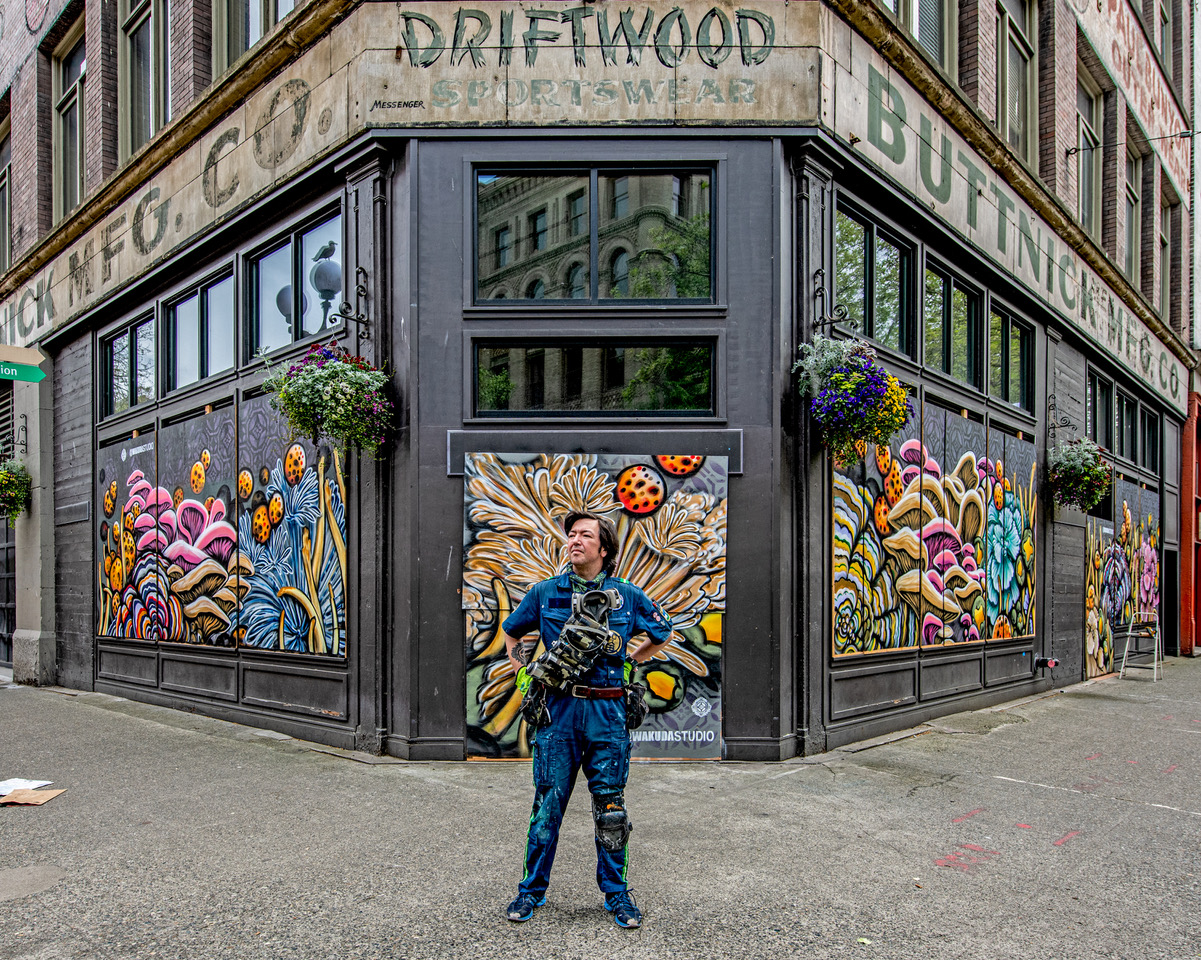
Anne Siems, a prominent Northwest artist whose gallery show had just ended in February, had never painted a mural. The large format both intrigued and unnerved her. “Covering an entire wall with art is kind of like a cave painting,” she says. “It has an inherent power that can draw us in with beauty.”

From comfort and comedy to biting commentary and remonstration, the new murals recalled the past, reflected the present and affirmed the future.
As Inslee’s restrictions lift, the murals’ fate is up for grabs. Entering the next phase of pandemic response, many businesses have removed the painted plywood and put the art into storage. Some have postponed removal or incorporated the panels into their businesses. Other murals already have been sold to private collectors.
But the muralists continue to paint the town.
A new wave of political art is on the rise, embracing and illustrating this summer’s Black Lives Matter protests. As our city confronts the canvas of an uncertain future, both art and artists will be on hand to help us ask the right questions.

THE ART

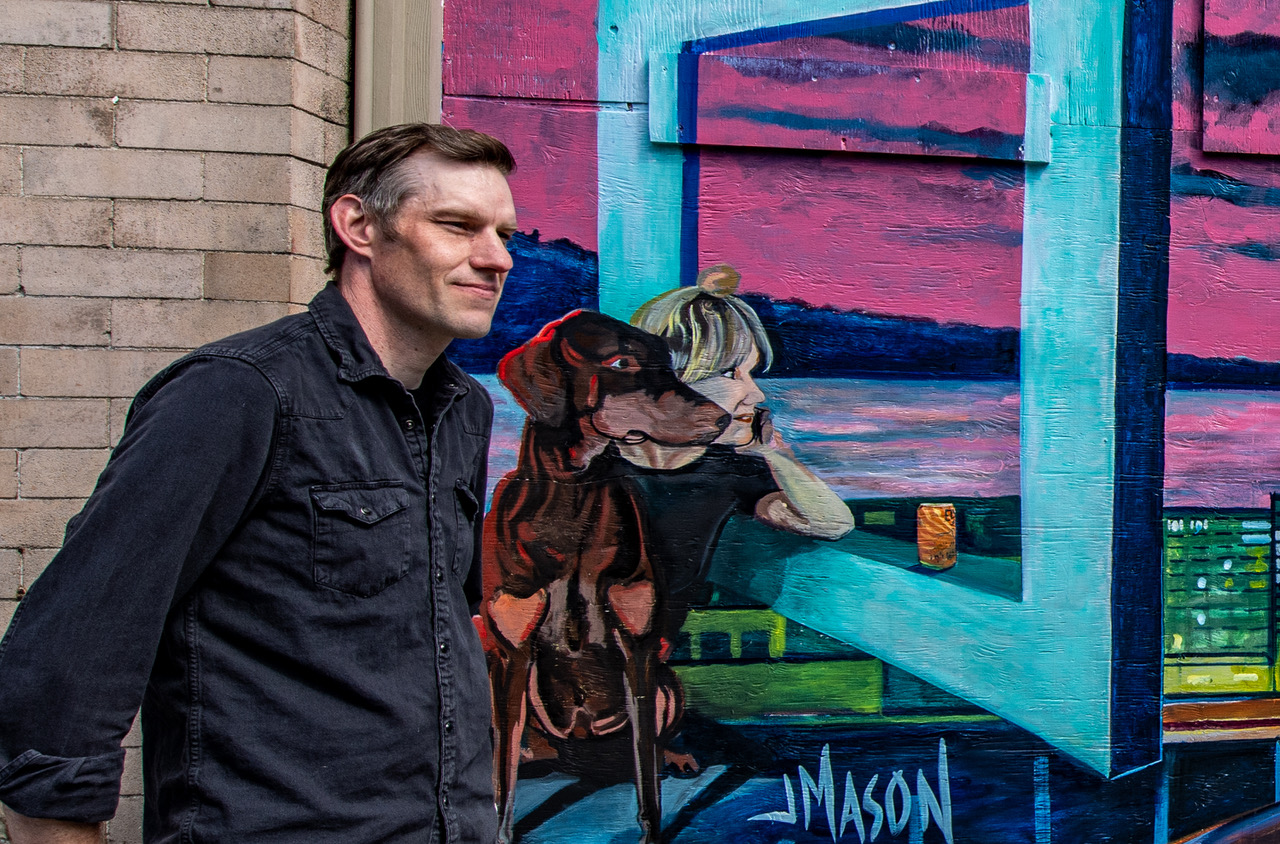

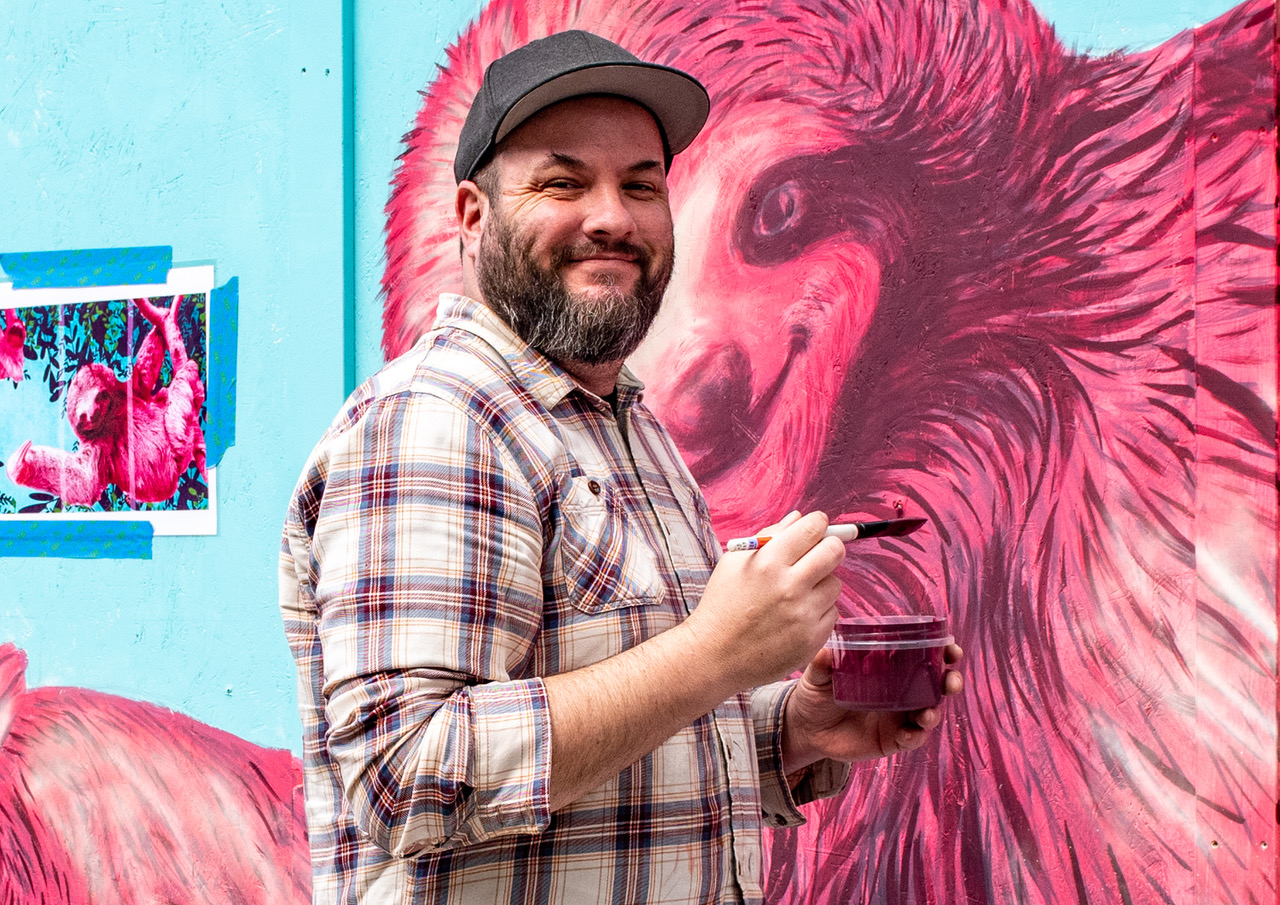

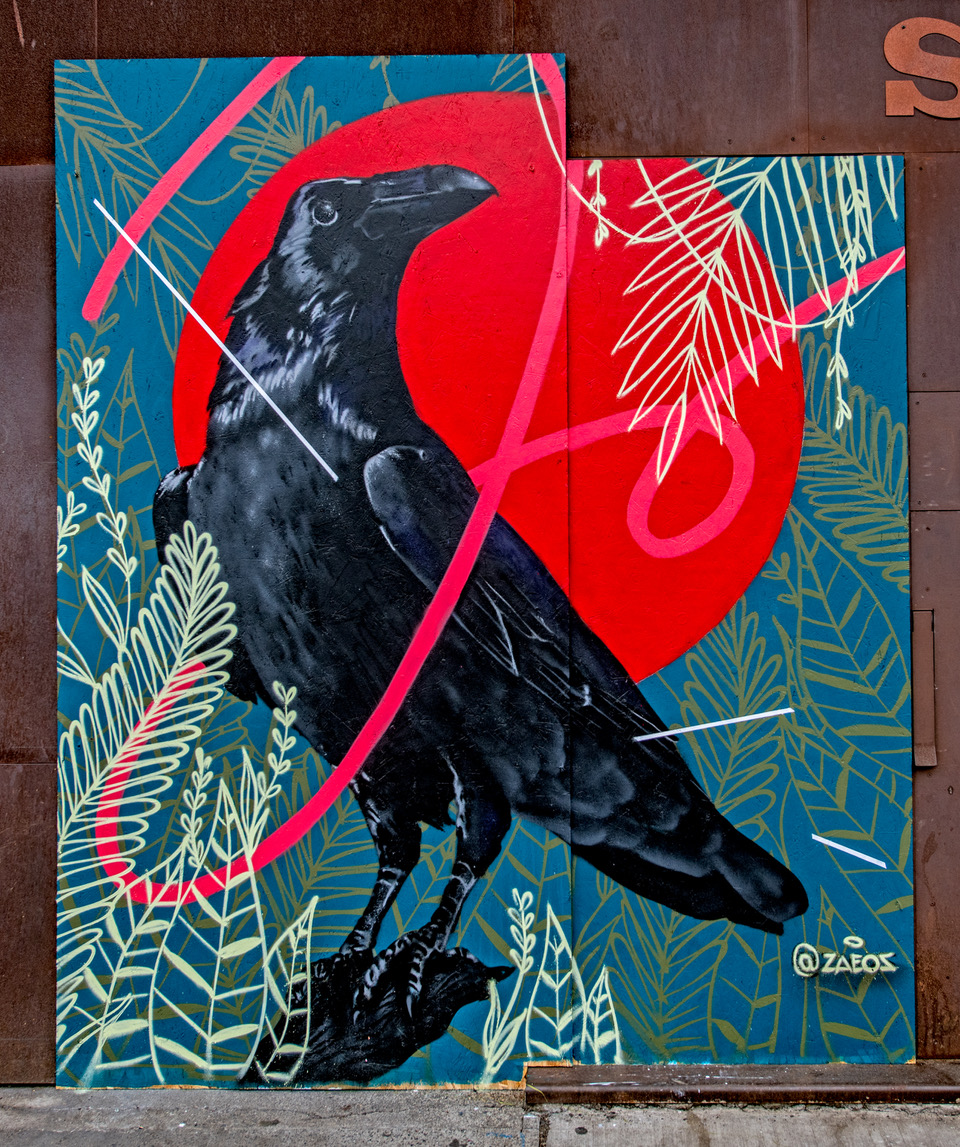


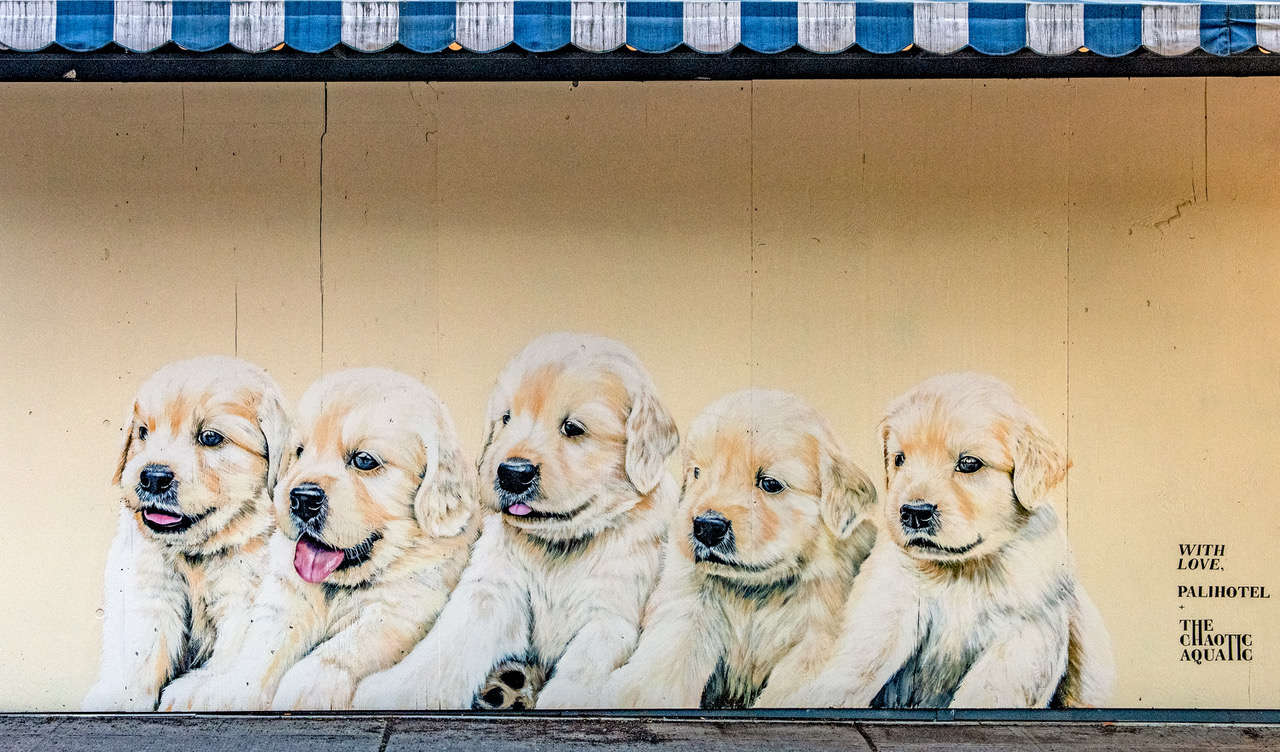


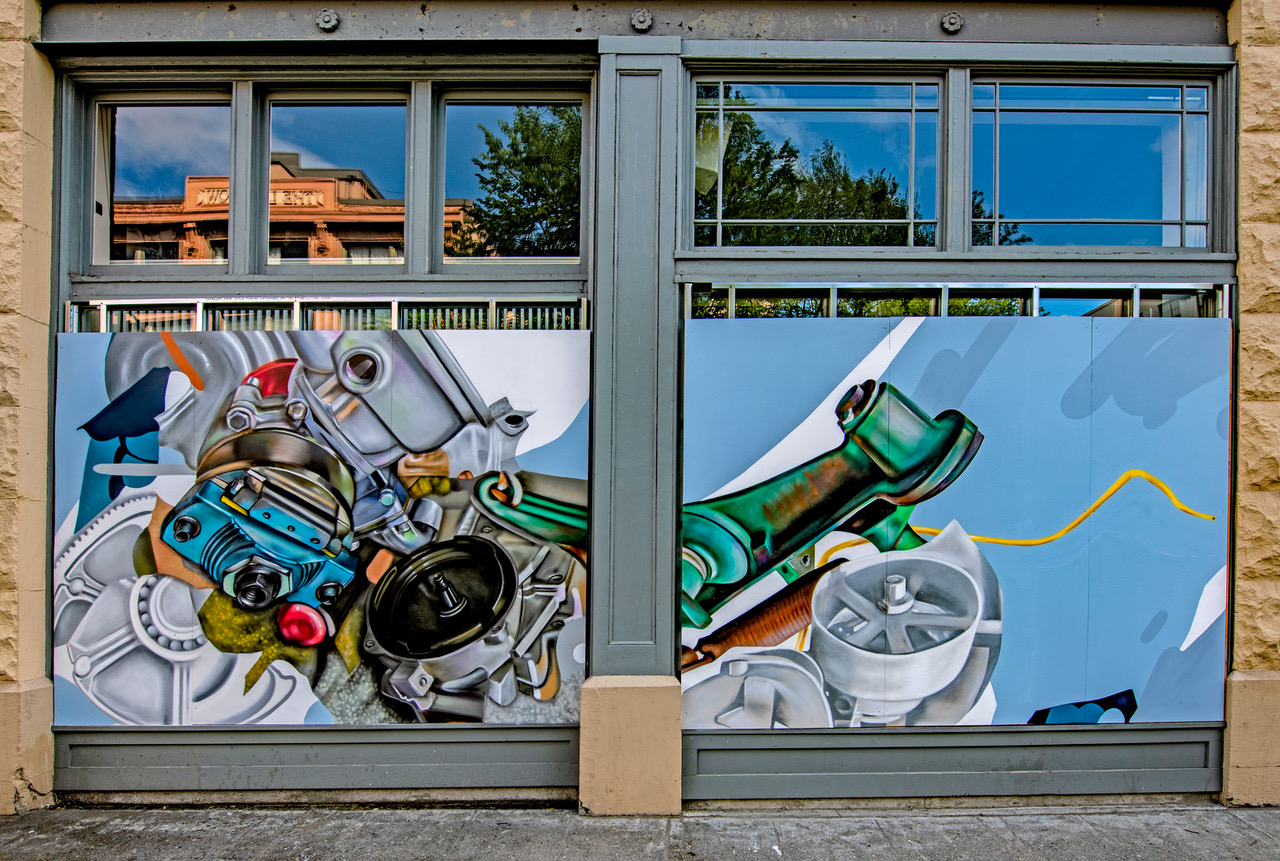


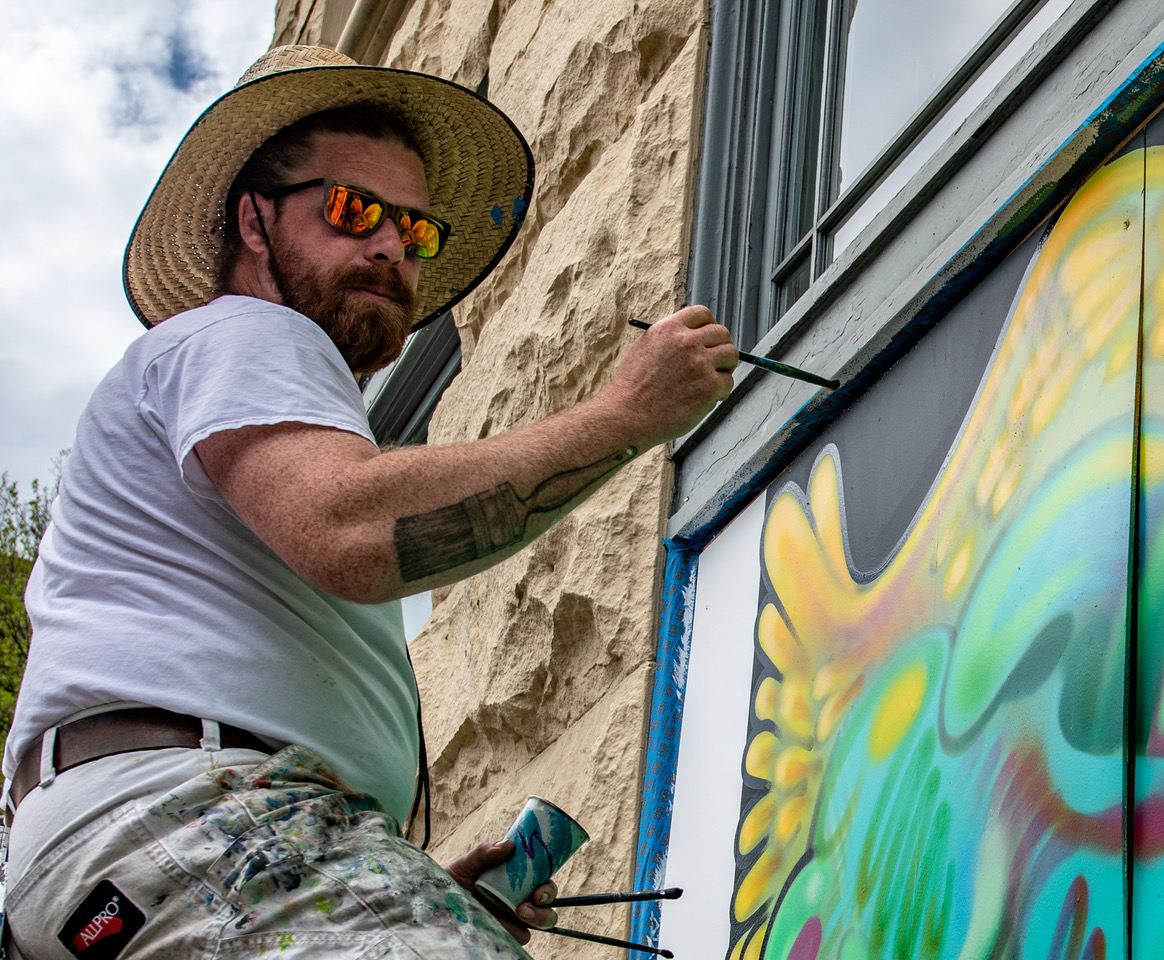


So much remarkable art, so little space. First, heartfelt apologies to those artists whose stunning murals did not appear in the print version of the column. I include a portion of the remarkable artwork spread across town below, divided roughly by location.
First, Ballard:


Belltown:


Capitol Hill:


DOWNTOWN (including Chinatown/ID):


PIONEER SQUARE:


Jean here. As many of you know, I’ve spent the last few weeks wandering the city, attempting to portray Seattle’s response to this pandemic. And it’s been nothing short of inspiring, particularly on the artistic front. Artists and muralists from across the region have gathered in Ballard, on Capitol Hill, in Pioneer Square, and Belltown, to bring color and form to otherwise dormant, plywood-covered streets. Here’s a selection of my faves (double-click to enlarge):


Occasionally, in our travels, we have the opportunity to visit the waterfront. Like any spectacle of demolition, it provides boundless entertainment at no cost. Here’s a few photos from yesterday, featuring a prominent survivor at Marion.


Today, I spent part of the afternoon in West Seattle, shooting for the column. Water, mountains, boats, and a long lens. Who could ask for anything more?


Greetings, travelers! As no doubt most of you are aware, the Alaskan Way Viaduct closed to traffic forever this past Friday at 10PM. We at DorpatSherrardLomont were determined to mark the occasion. While the city remains divided – and perhaps always will be – over the fate of the viaduct and its replacement by the tunnel, there is no disputing the spectacular views it has provided over the past 65 years.
On its final day of operation, we hoisted a 3D camera above our moonroof and took a 360 degree video of the commute. Enjoy!
–April 4, 1953-January 11, 2019, RIP.

Over the years, I’ve had a number of queries asking, Who were you, Jean, before Paul came a-knockin’?
Well, for the better part of a decade, ending in 1992, I was the artistic director of a radio theatre called Globe Radio Repertory. My longtime friend and collaborator, John Siscoe, served as literary director; together, we wrote more than 60 scripts for adaptations of classics of Western literature like Don Quixote, Dead Souls, Madame Bovary, selected stories of Anton Chekhov, and Kafka’s The Castle. I had the privilege of directing a number of Seattle’s great actors, amongst them Glen Mazen, John Aylward, John Gilbert, Ted D’Arms, Frank Corrado, Marjorie Nelson, Marianne Owen, and many others.
Our dramas were supported by the National Endowment for the Arts, the National Endowment for the Humanities, plus a handful of other local and national corporations and foundations. We aired nationally on NPR Playhouse on more than 150 stations around the country, and internationally in Canada, the UK, and Australia.
For your listening pleasure, here’s the first episode of our 13-part adaptation of Don Quixote, starring Ted D’Arms as Quixote, John Aylward as Sancho Panza, Marjorie Nelson as the housekeeper, John Gilbert as Father Pero Perez, and Glen Mazen narrating.
Please join Paul and me for our 12th annual gathering of the rogues! Also in the mix are Kurt Beattie, Julie Briskman, Bill Radke, and our house band Pineola!
A slight change up this year: we’re asking our audience for stories of mishap, mayhem, and mistletoe mischief. Please submit your holiday tales of woe – 500 words or less – for consideration. If selected, it will be performed live at the show by Bill Radke or Julie Briskman, and later be aired on the KUOW ‘Speaker’s Forum’ Christmas edition! Submit your stories to holidaydisasters@townhallseattle.org.
https://townhallseattle.org/event/short-stories-live-a-rogues-christmas-2018/
Still quite glorious in its diversity and wide appeal, Folklife is surely one of the planet’s great festivals. As Baby Gramps reflected on Sunday evening, in the Newport Folk Festivals heyday, it drew a respectable crowd of 50,000 –Folklife brings out five times that many. A few snaps from my all-too brief visit yesterday evening and this afternoon.
(as always, click to enlarge photos)


The Pike Place Market has been one of my stomping grounds since my early teens. Formative place – the first beer I actually purchased was in Post Alley’s long-gone Victrola Tavern at the age of 15 (still in costume as Laertes in a production of ‘Hamlet’ at the Stage One Theatre).
Yesterday, I watched the Pike Place Market Historical Commission at work and was impressed once again by their commitment to fostering and maintaining a thriving market, accessible and accountable to locals and tourists alike.
A few more photos, taken in glorious daylight saving time while the sun sets over a closing market.


Every sunny weekend in the Pike Place Market is a revelation – a flood of people, light, and color. In addition, yesterday there were a number of celebrants of the East Indian Holi festival of colors. Here are a few candid shots that for some reason make me happy.


A short trip to sunny CA – just north of San Diego. A momentary respite from the rain and recent snow.
(as always, click to enlarge)


I was taking photos yesterday downtown and met a friend for lunch in the Athenian. The market and its new westward extensions are quite lovely, imho.
Here are a few shots:


How fortunate we are to have a living PP Market! Thank you, Victor!!!
(as always, click to enlarge photos)
While the lunar new year (of the dog!) doesn’t actually begin until this coming Friday, festivities were begun today in the International District. Your faithful Now & Then operative was there to record a few repeat photos, but got caught up in the fun…


(click to enlarge photos)
Greetings to all and best wishes for a healthy, happy year to come.


We had a lovely evening at the Taproot Theatre and I received a number of requests for a list of the readings performed by our stellar cast. Here they are in order:
Our wonderful house band, Pineola, performed intro and interim music. I’ll update their set list when I can get it.
There’s only one more chance to catch this program: next Saturday at the Rainier Arts Center in Columbia City. But this show’s only available to Town Hall members. What a fine time to show your support and join Town Hall – then join us for the party on Saturday!

Greetings, all! FYI, this evening’s performance will not be held at the usual Town Hall location, which is closed for remodel and reconstruction! All Town Hall events are now sprinkled throughout the city in many different venues. Ours is at Greenwood’s Taproot Theatre. For direction and info on parking, please click here.
Thanks for the suggestion to clarify this, Clay Eals!
Once more, into the merry breach, my friends! Join me and Paul, Kurt Beattie, Marianne Owen, Bill Ontiveros and Pineola for our annual evening of roguish cheer, short stories, music and delight. Although Town Hall is closed for reconstruction, the show must go on! We’ll be in full celebration mode at the Taproot Theatre, tomorrow at 6PM.
https://townhallseattle.org/event/short-stories-live-a-rogues-christmas/
On yesterday’s Winslow-bound ferry…

(click to enlarge photos)
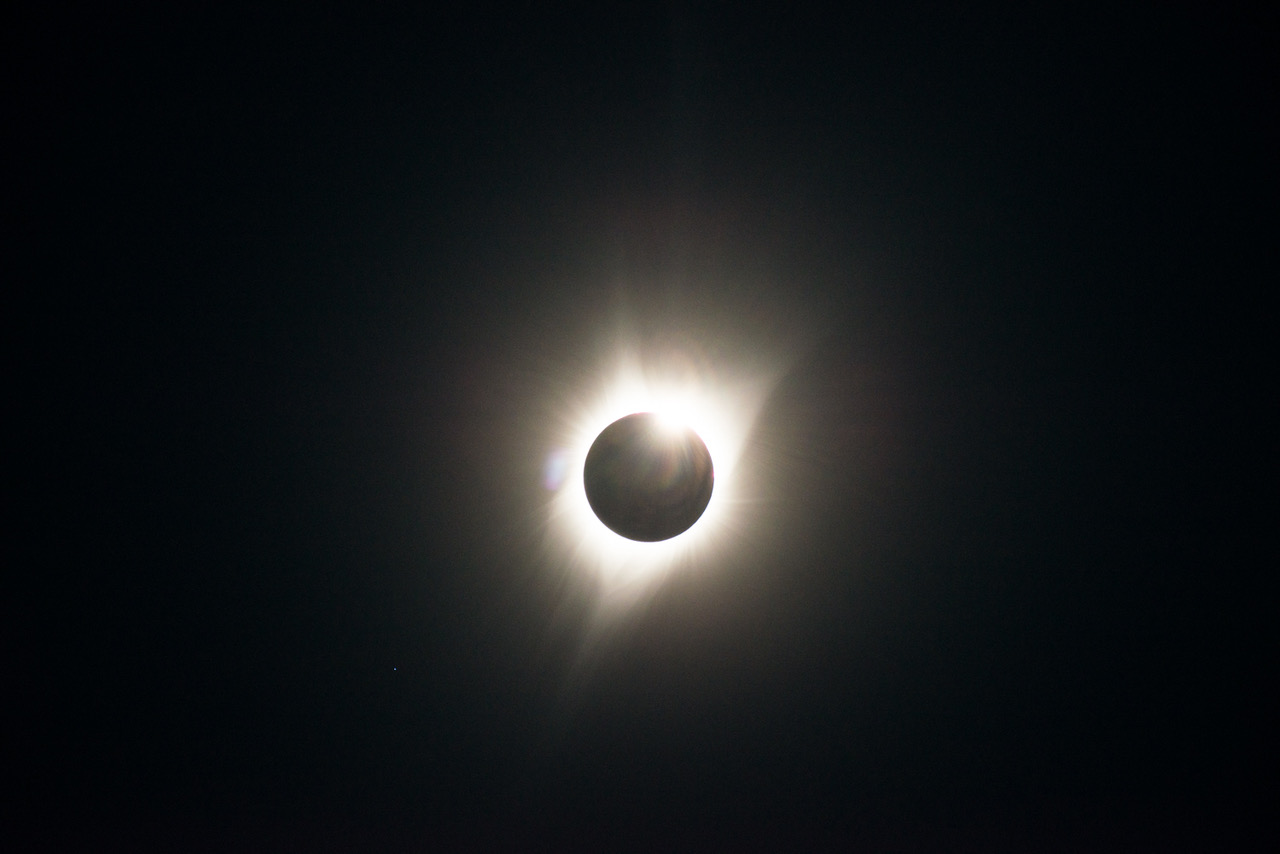
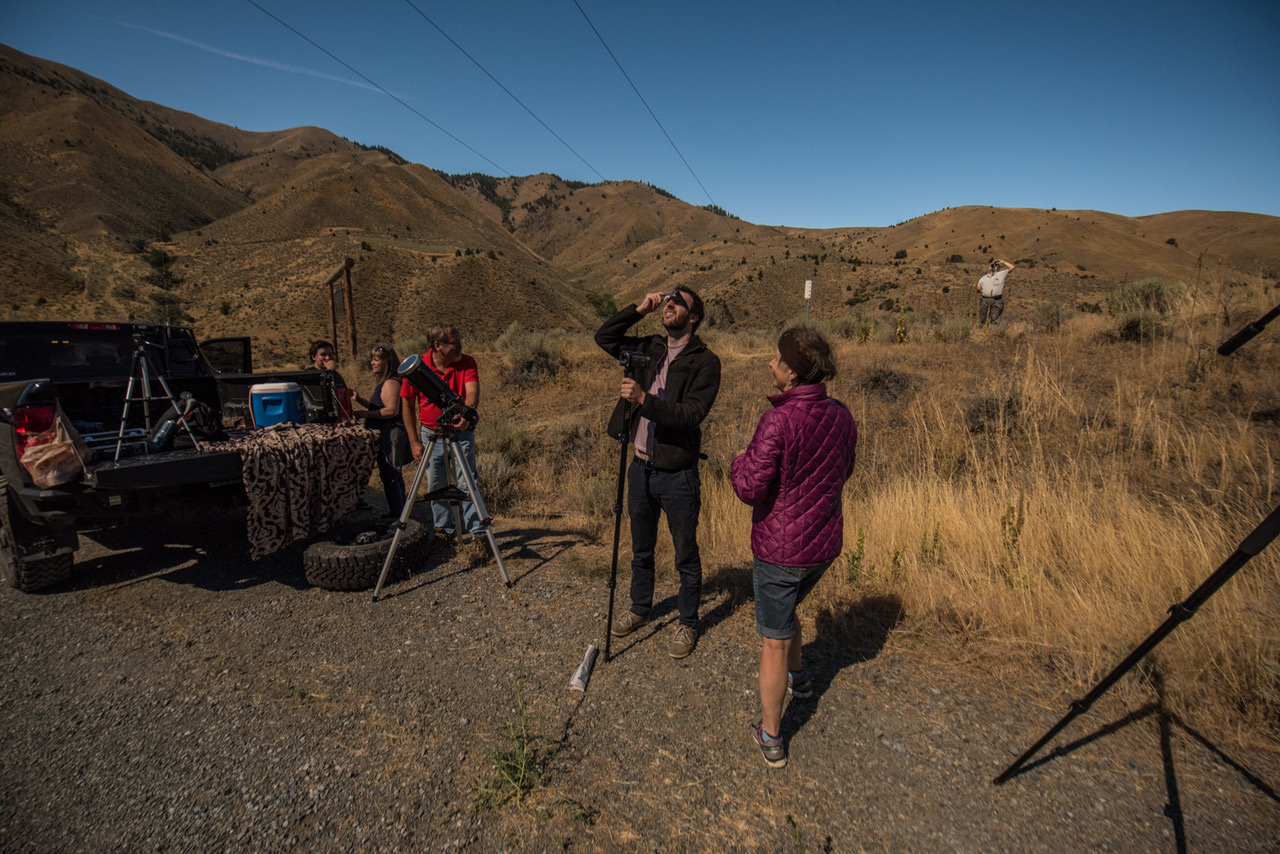
So Karen, our son Noel, and I joined the hordes and drove to a rest stop just north of Lime, Oregon, arriving about 4:30 Monday morning. And any lingering doubts we had about the advisability of the enterprise were put aside after the event. Following are photos documenting our conversion.
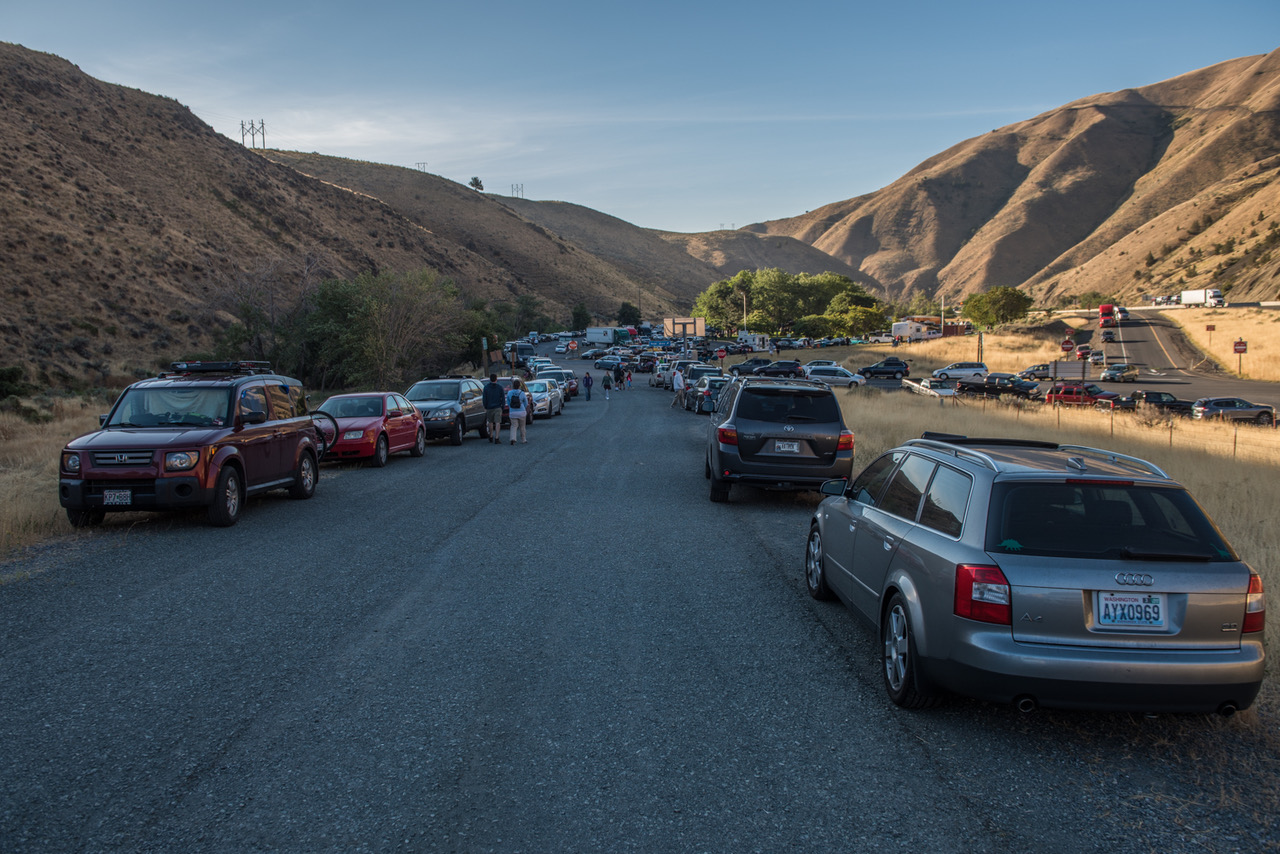
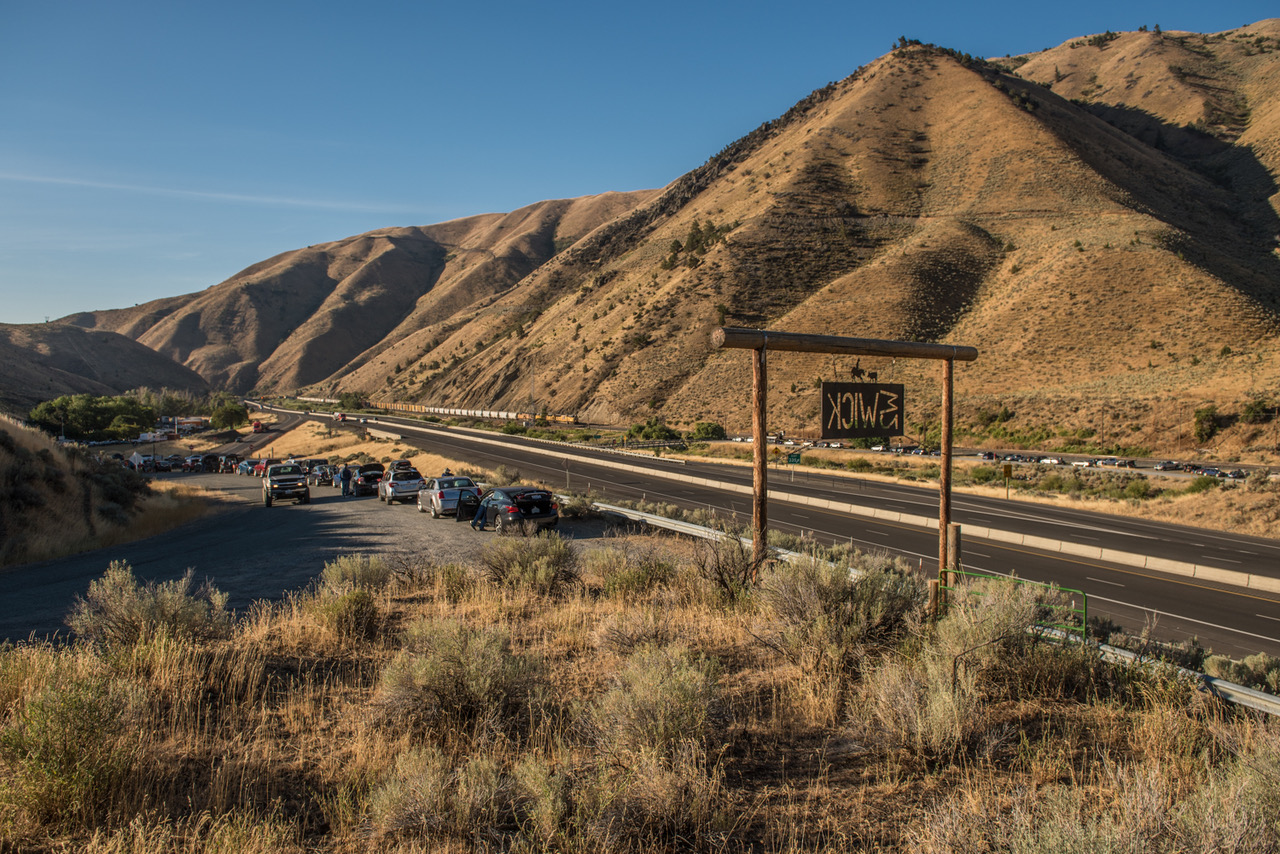
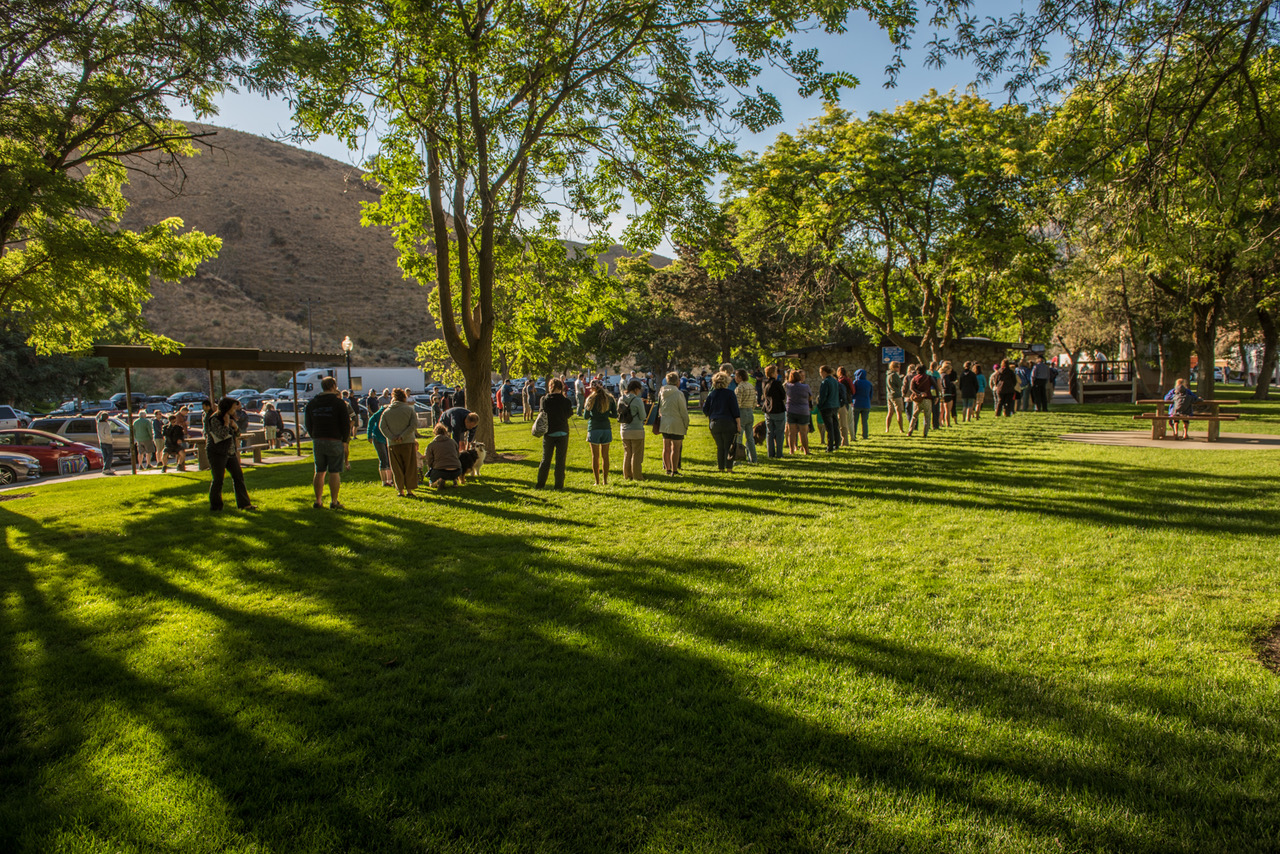
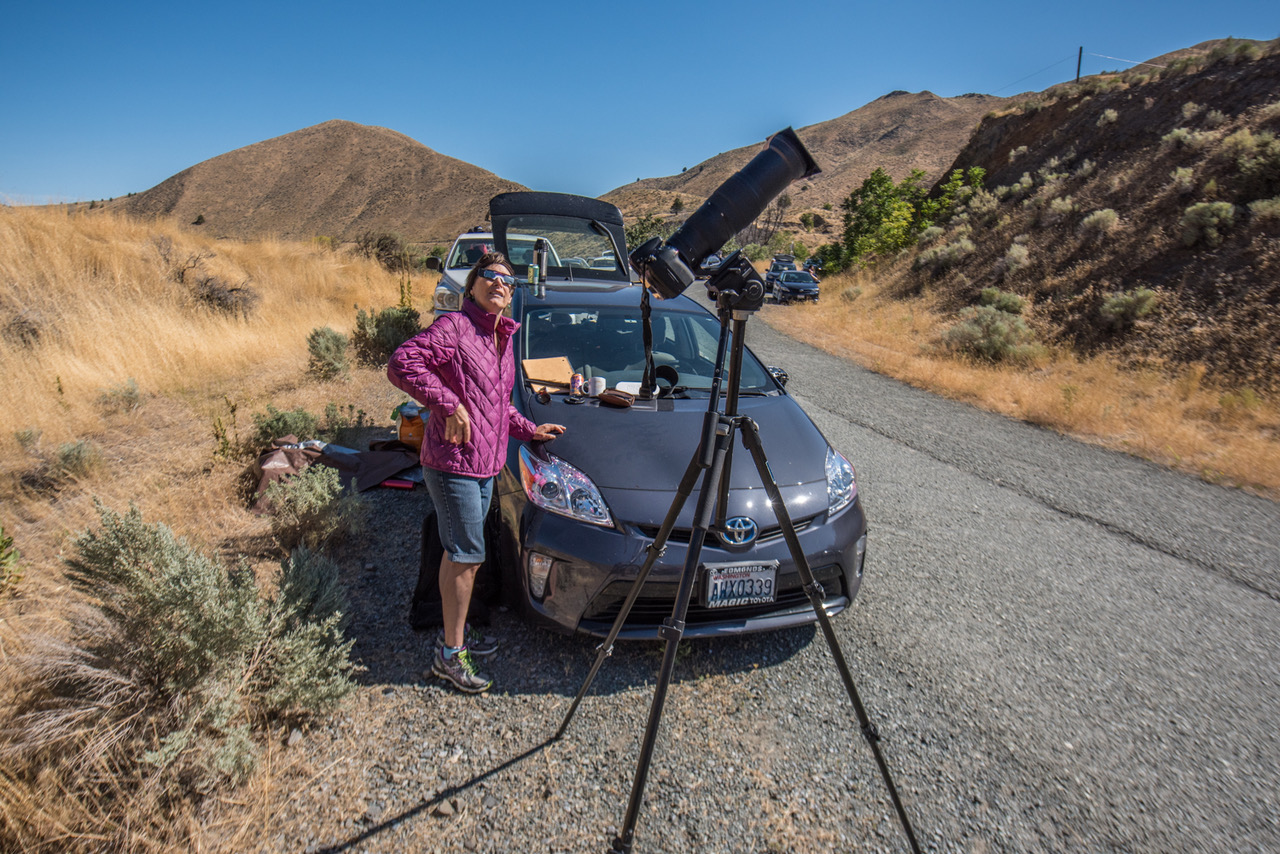
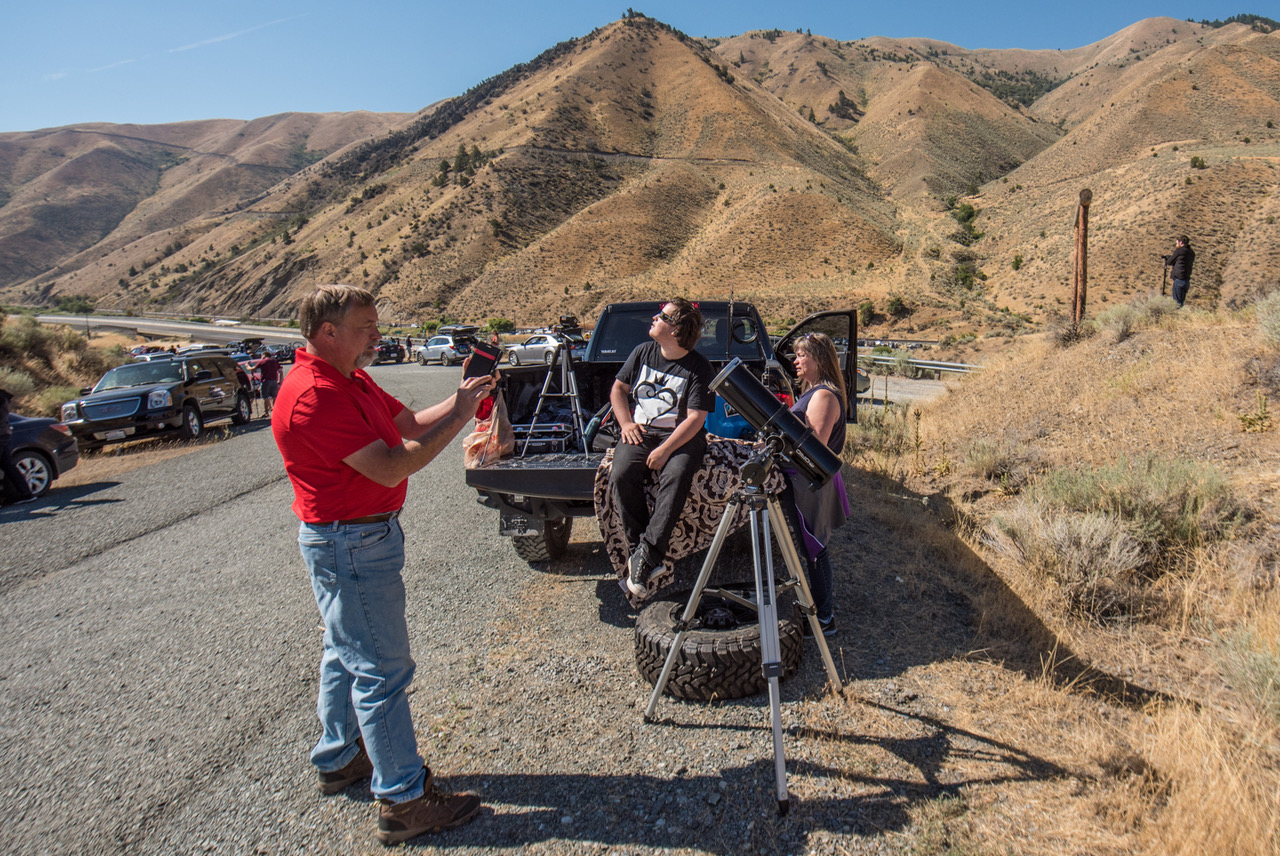
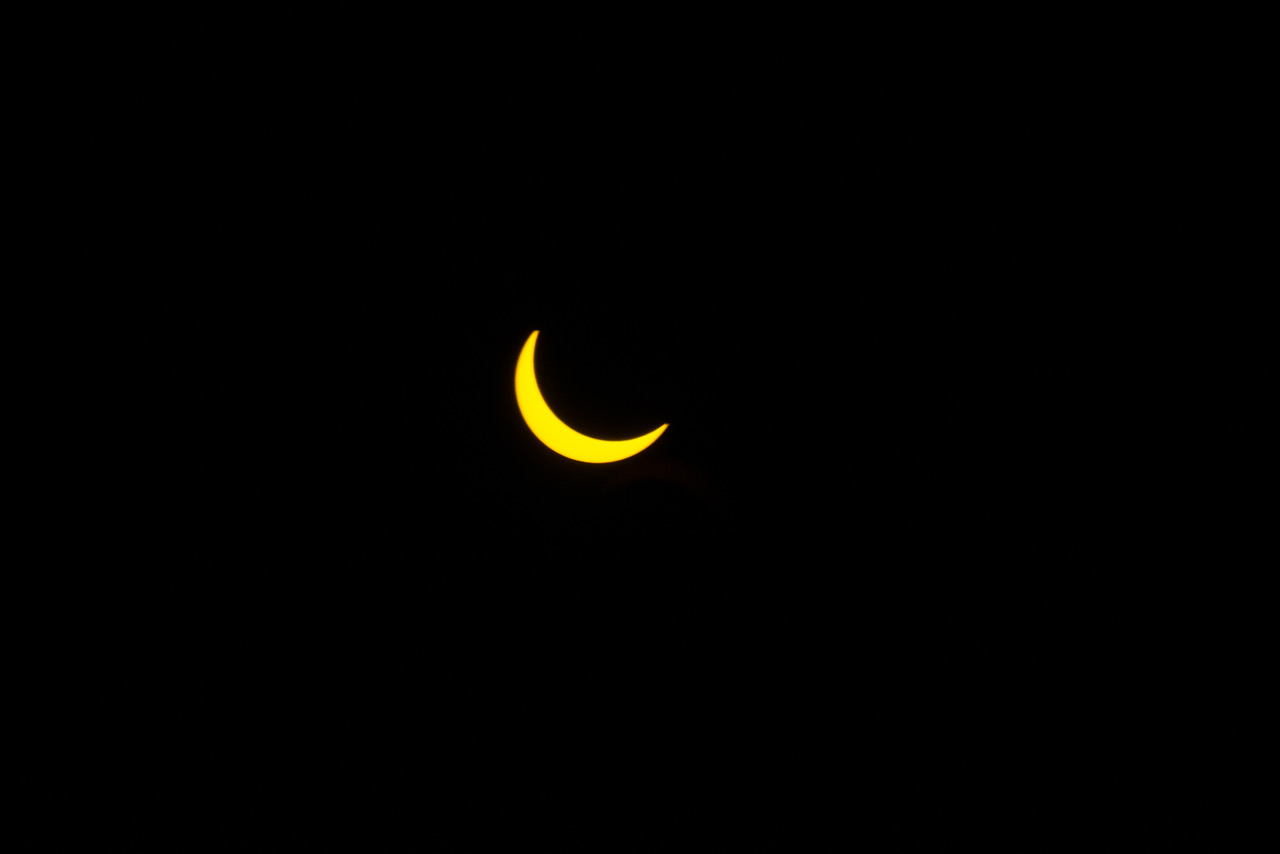
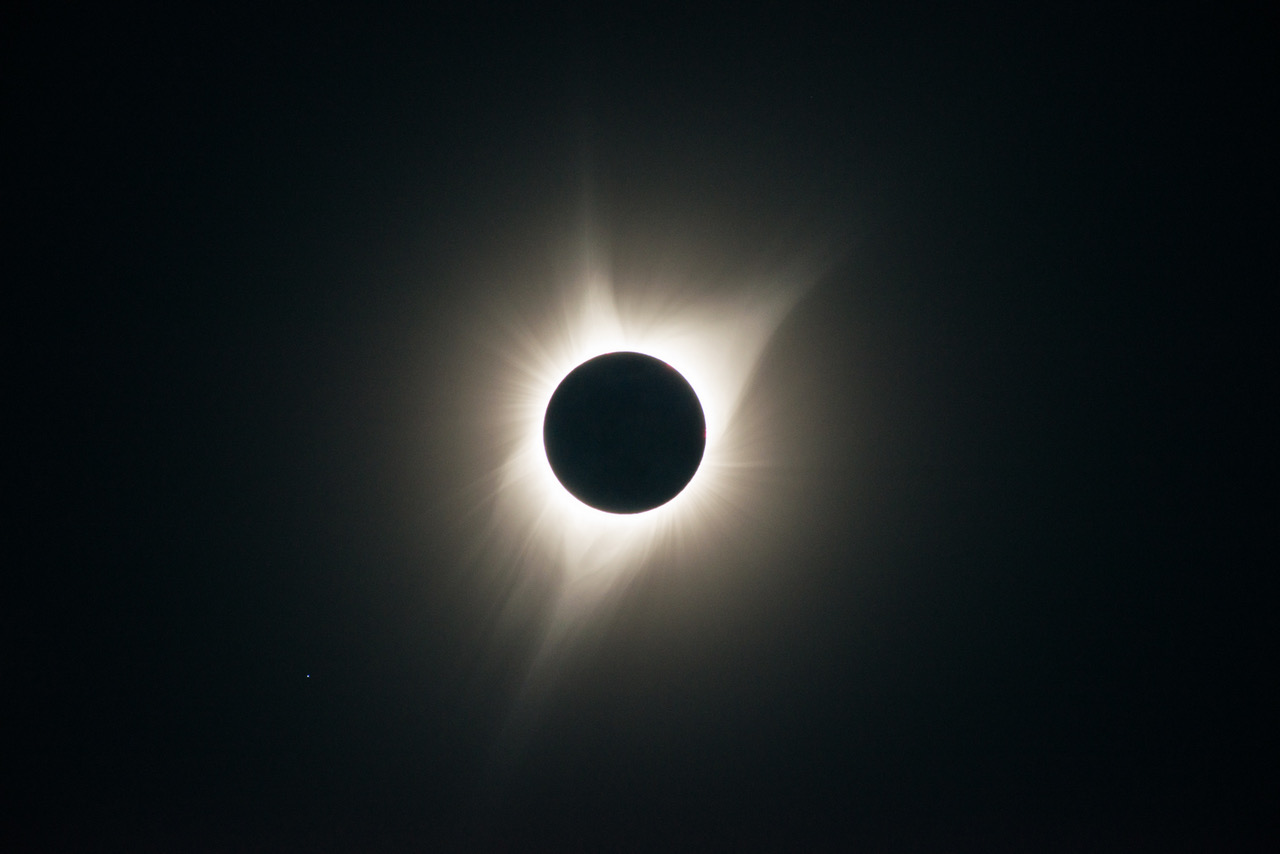
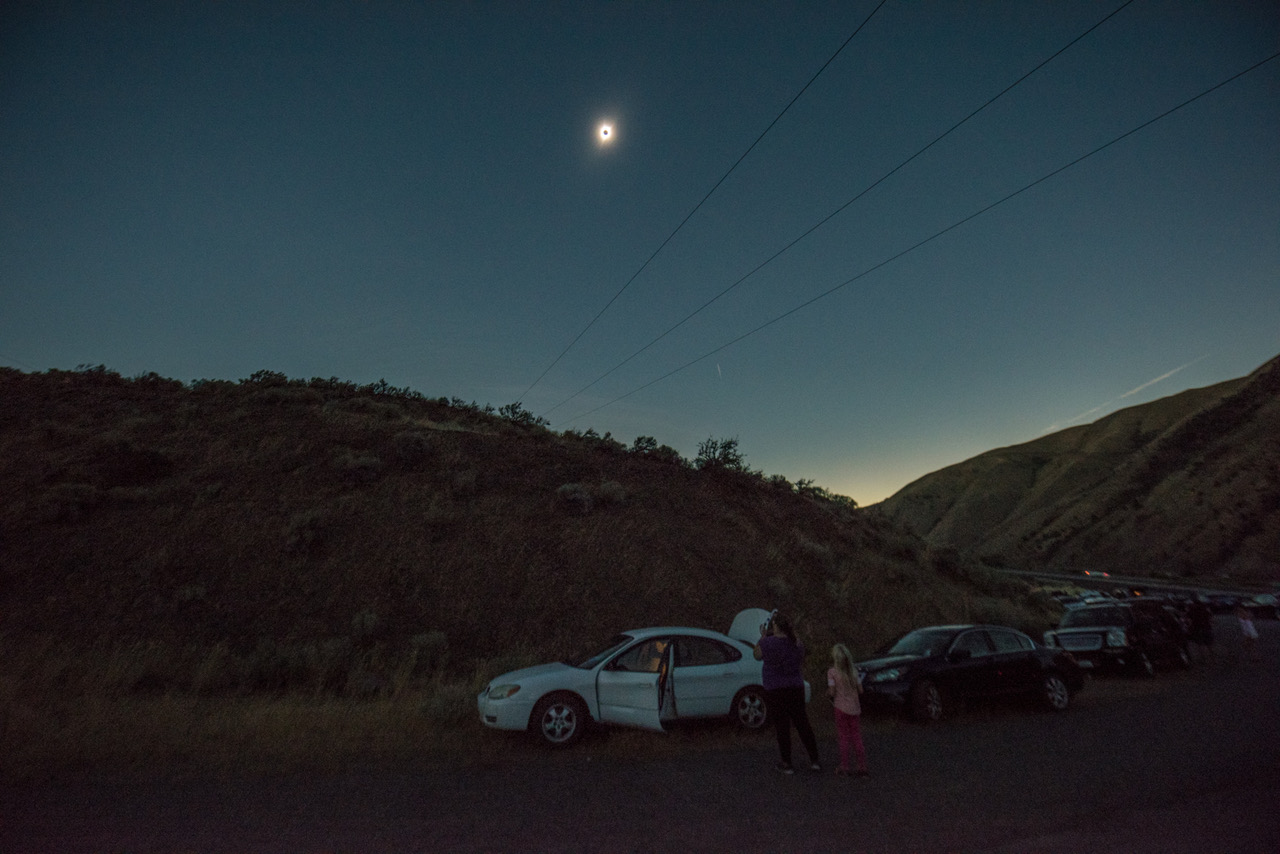
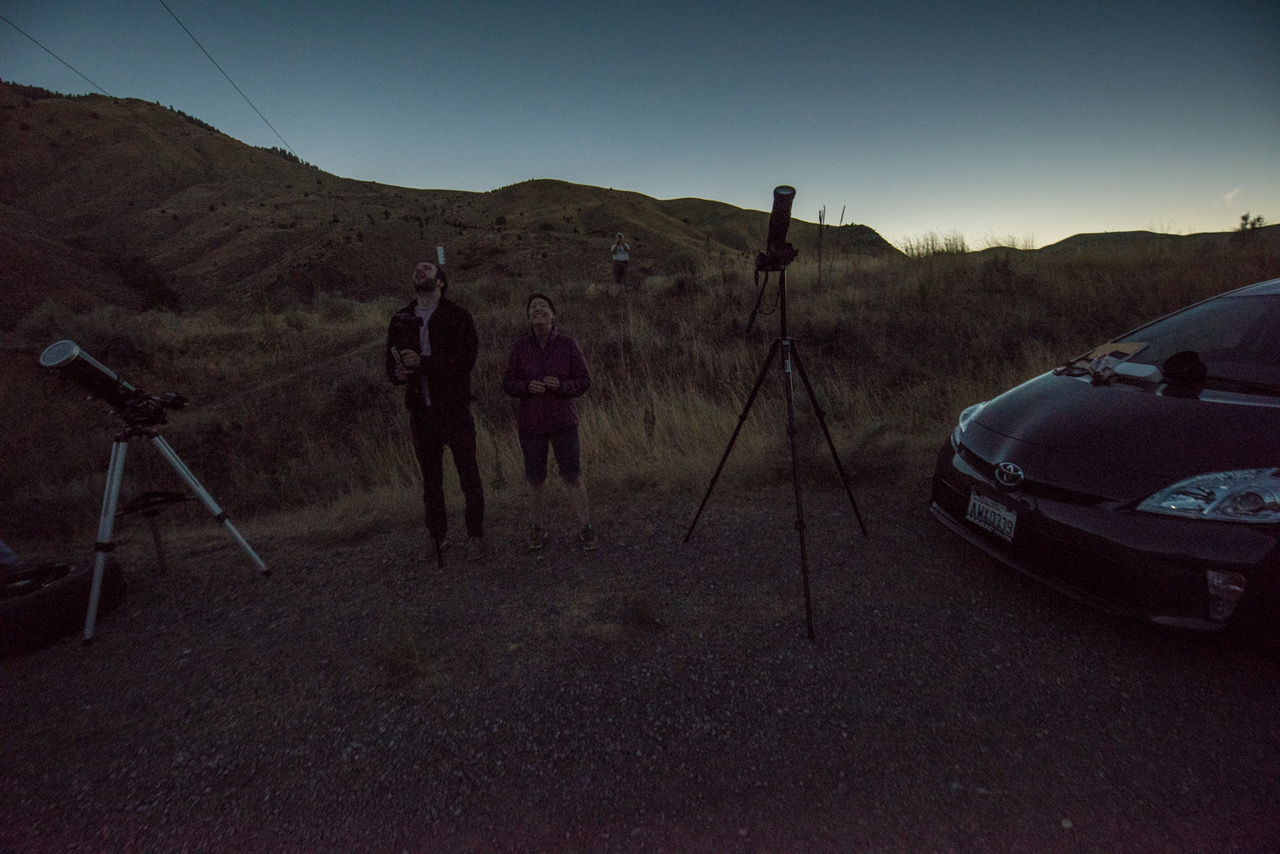

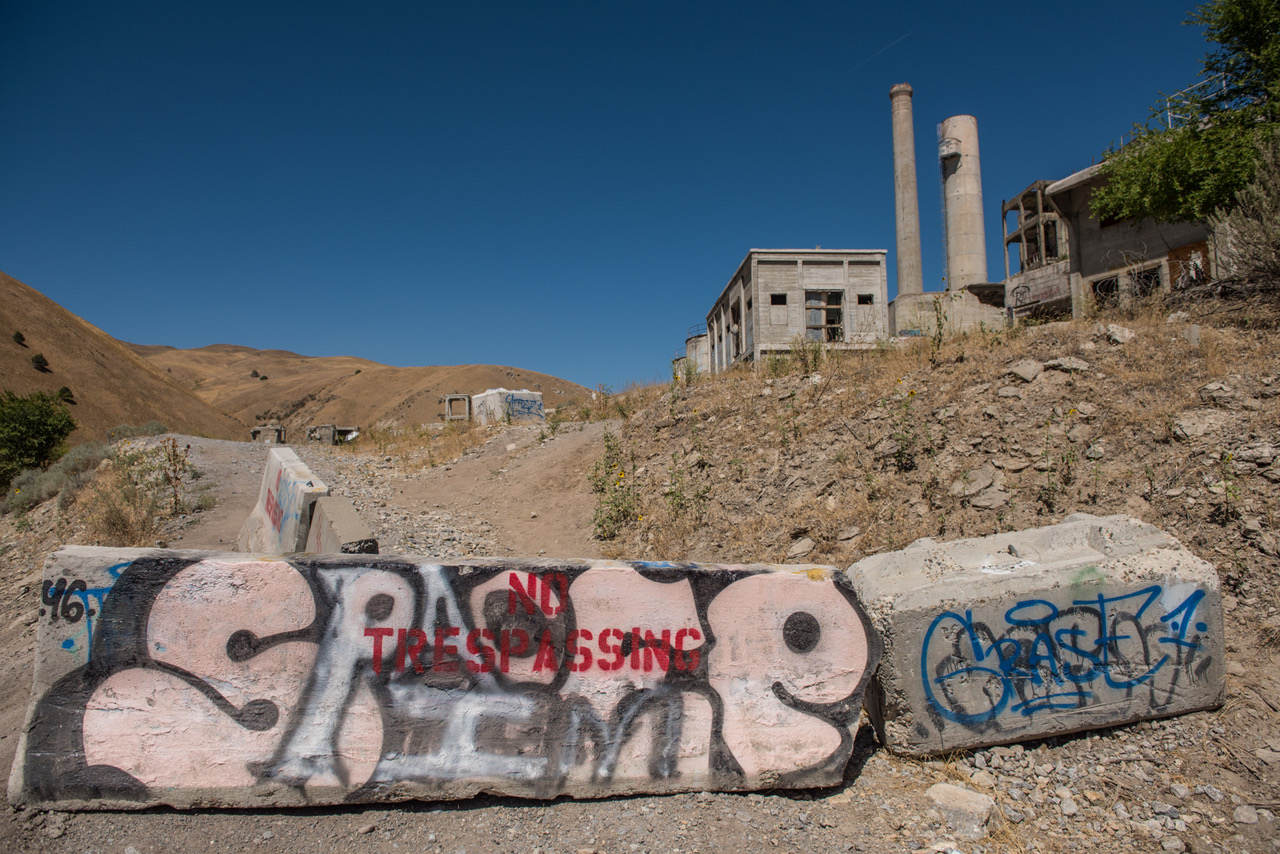
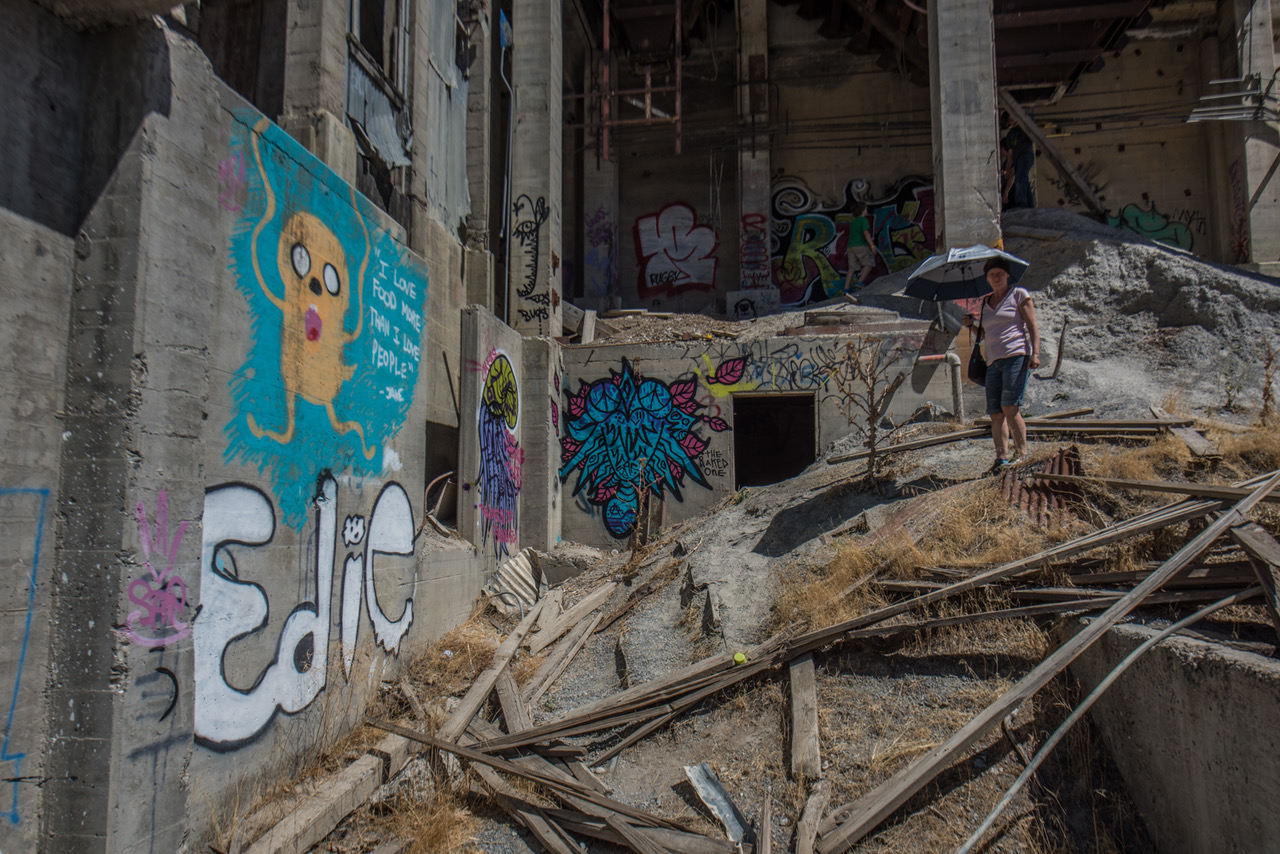
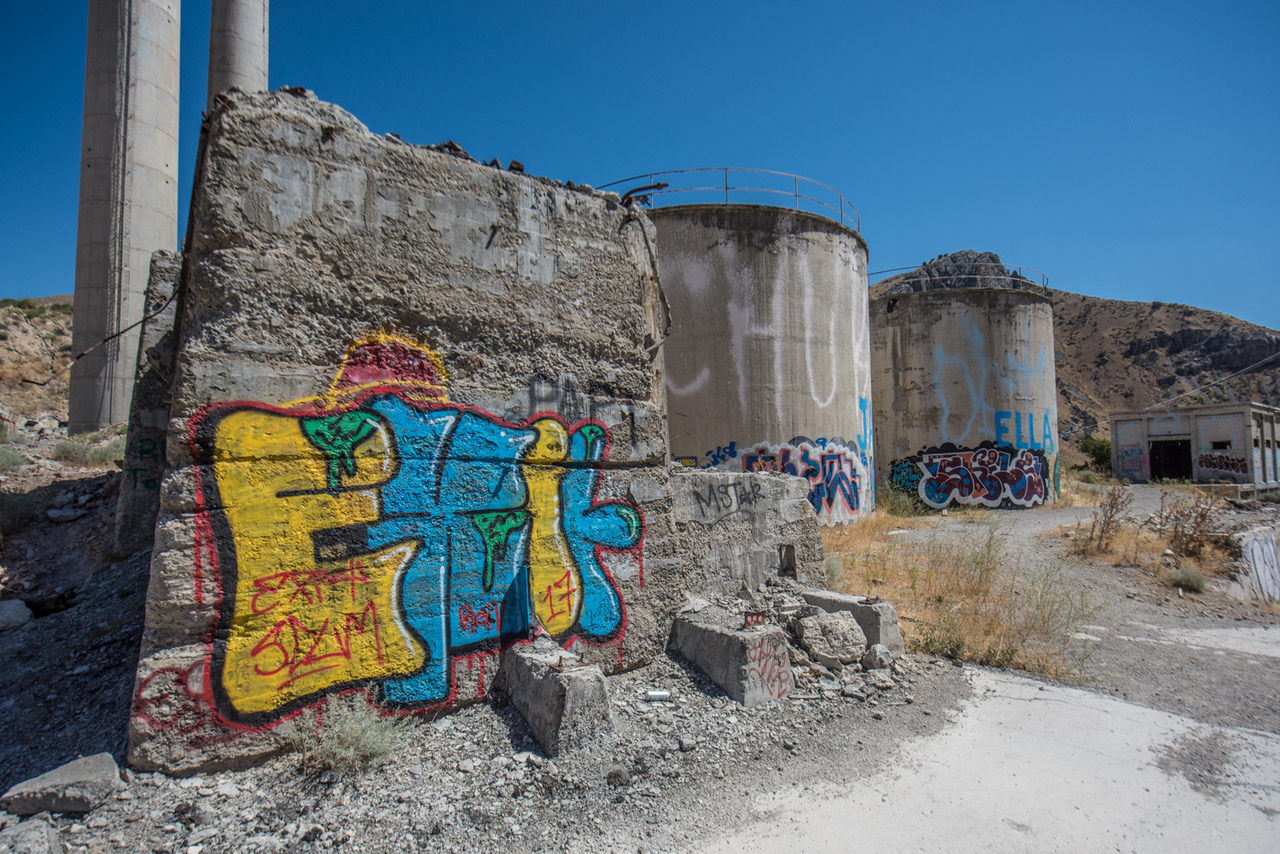
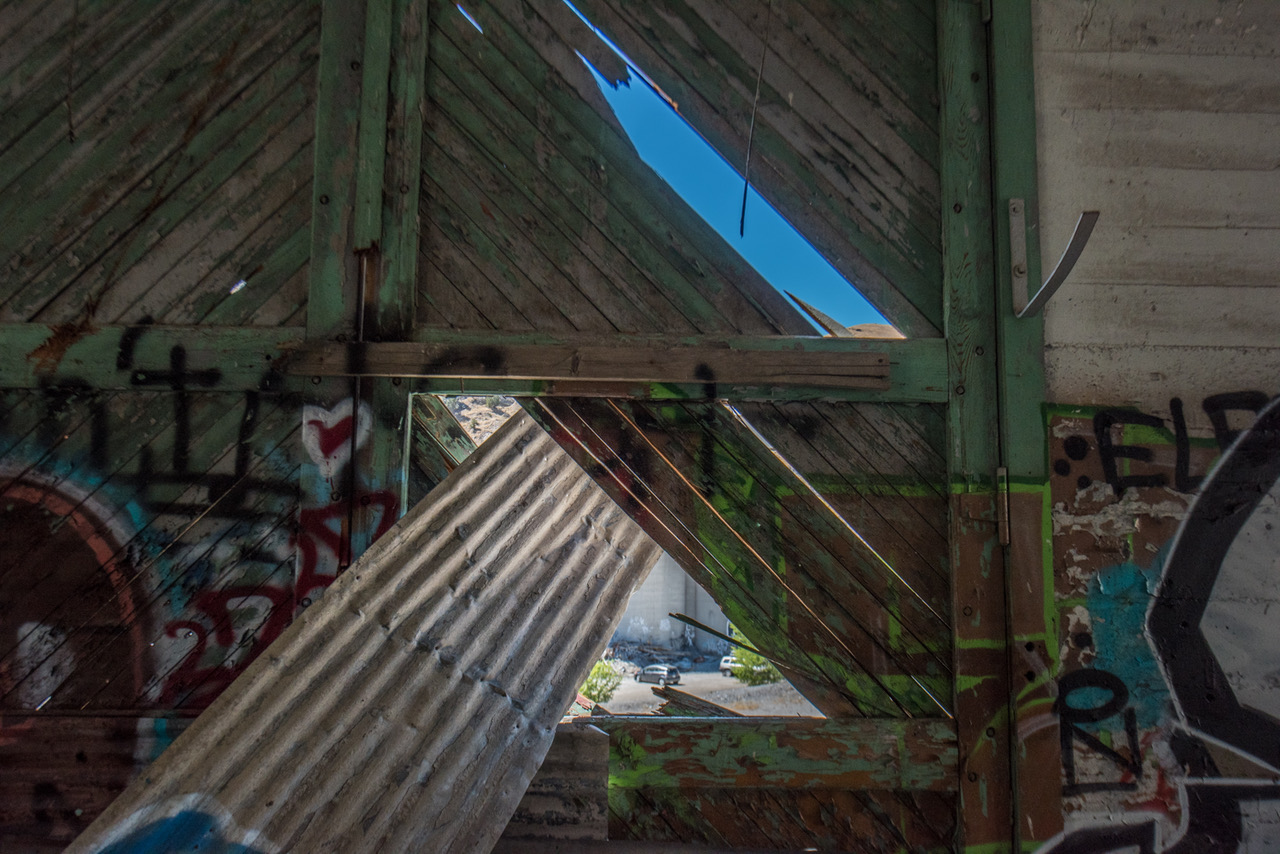
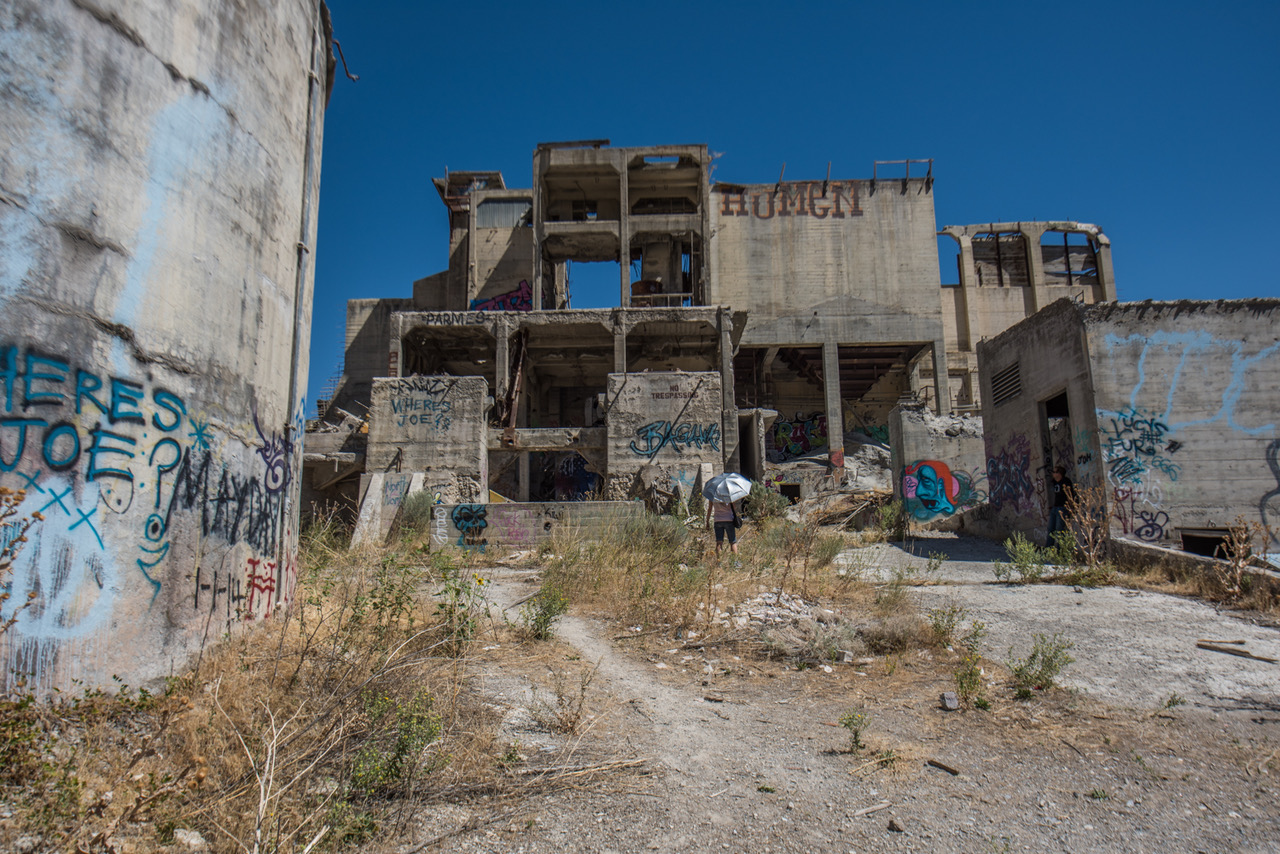
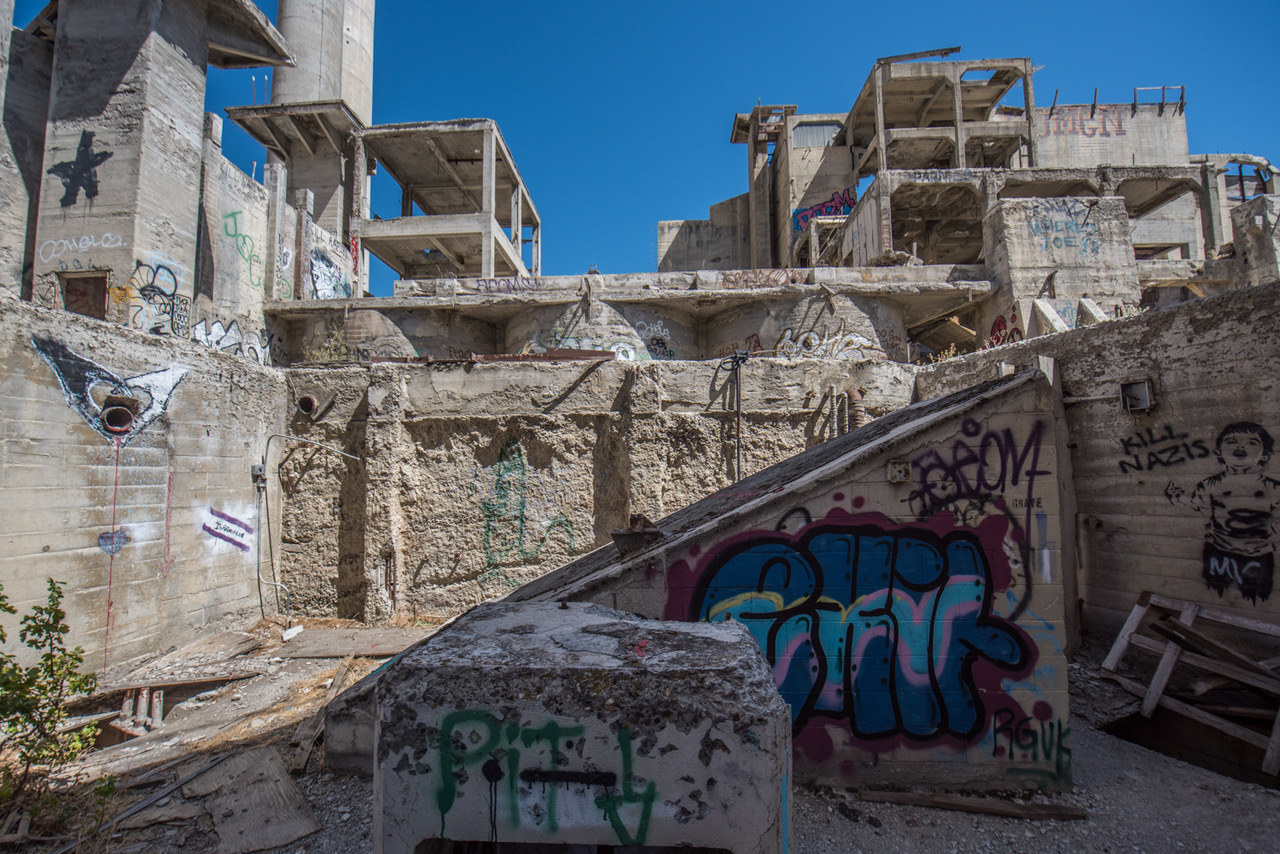
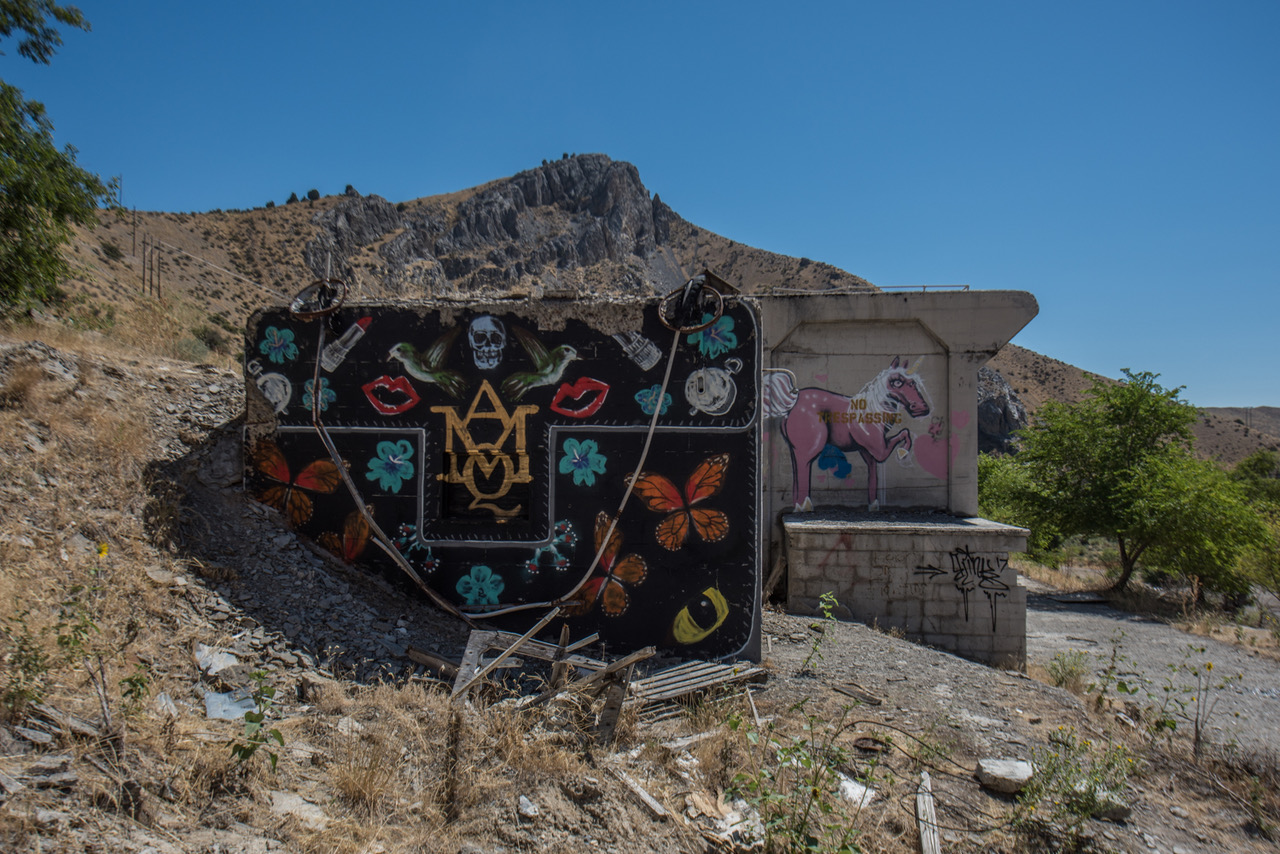
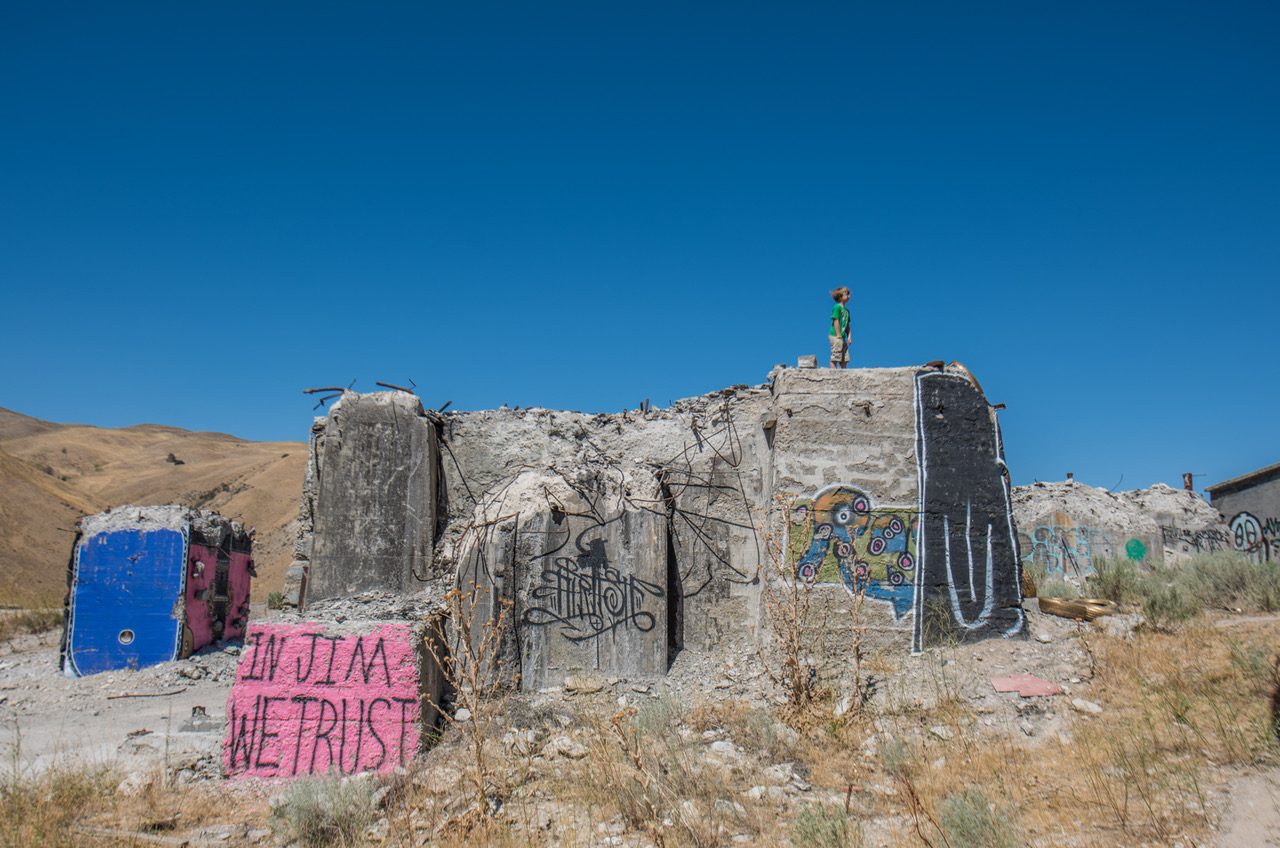
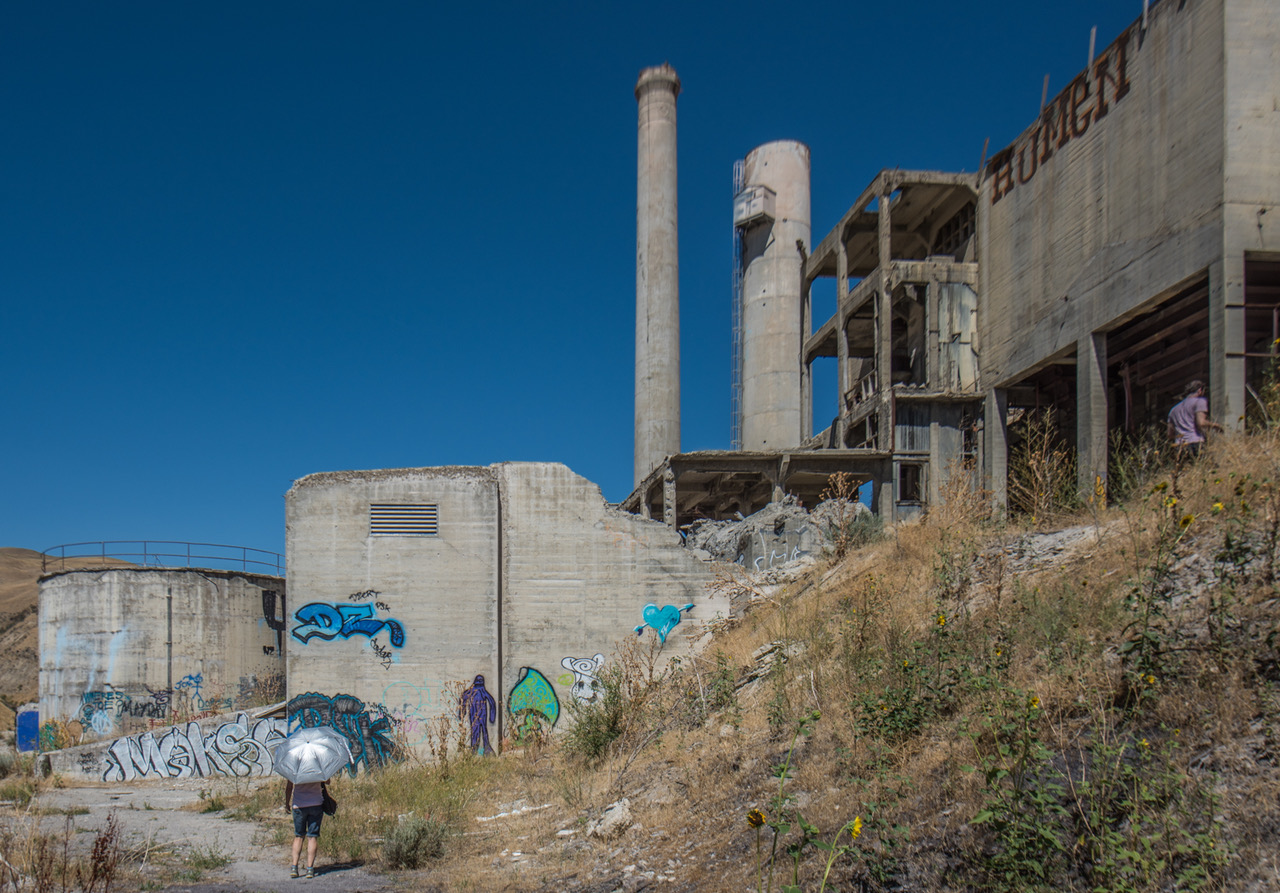
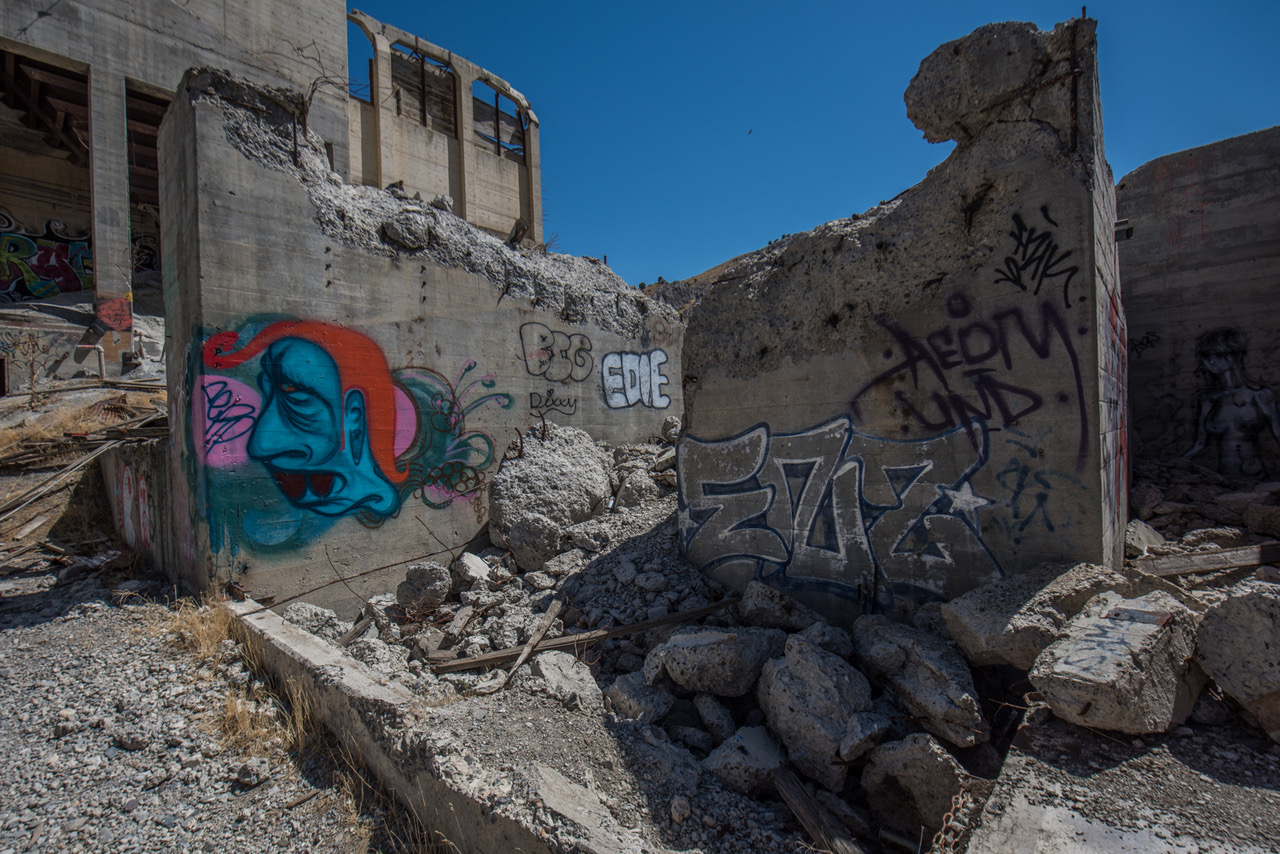
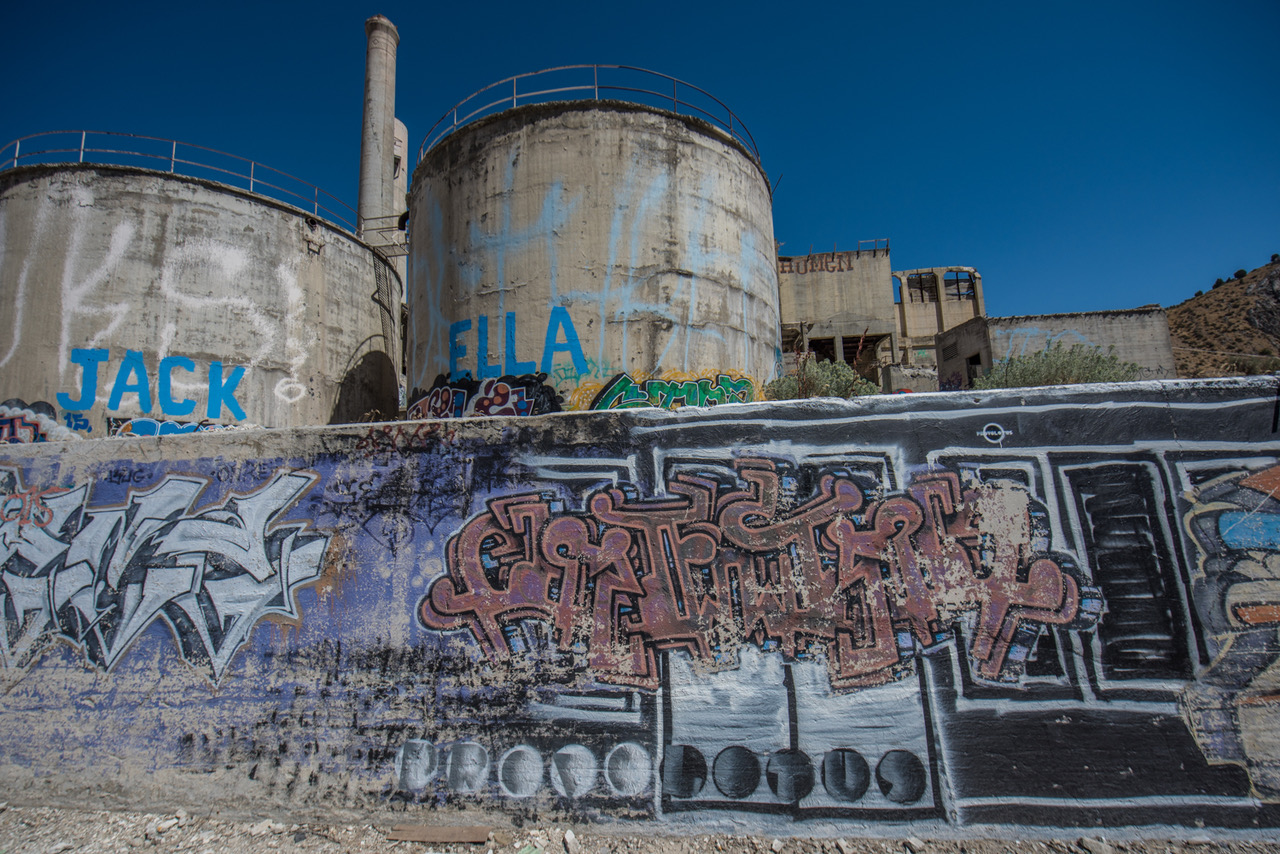
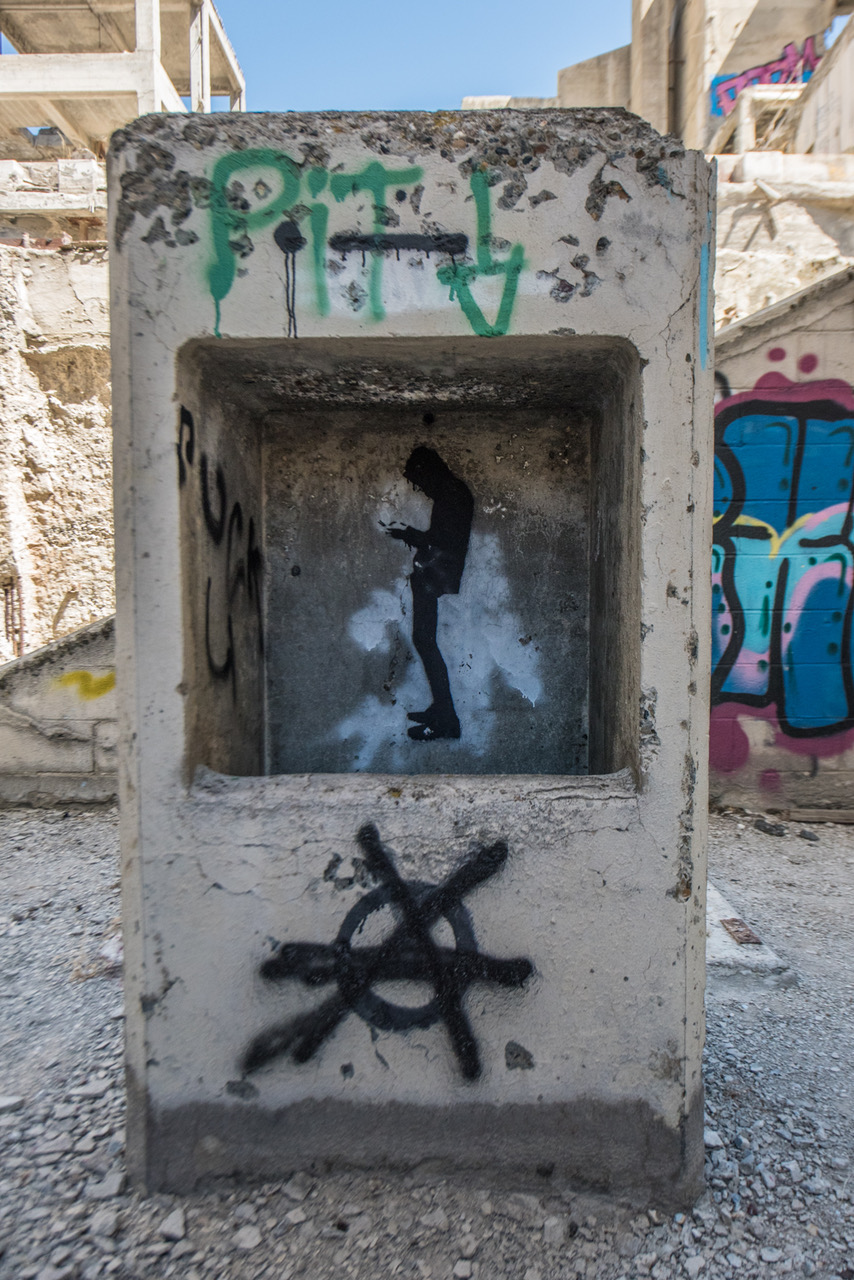
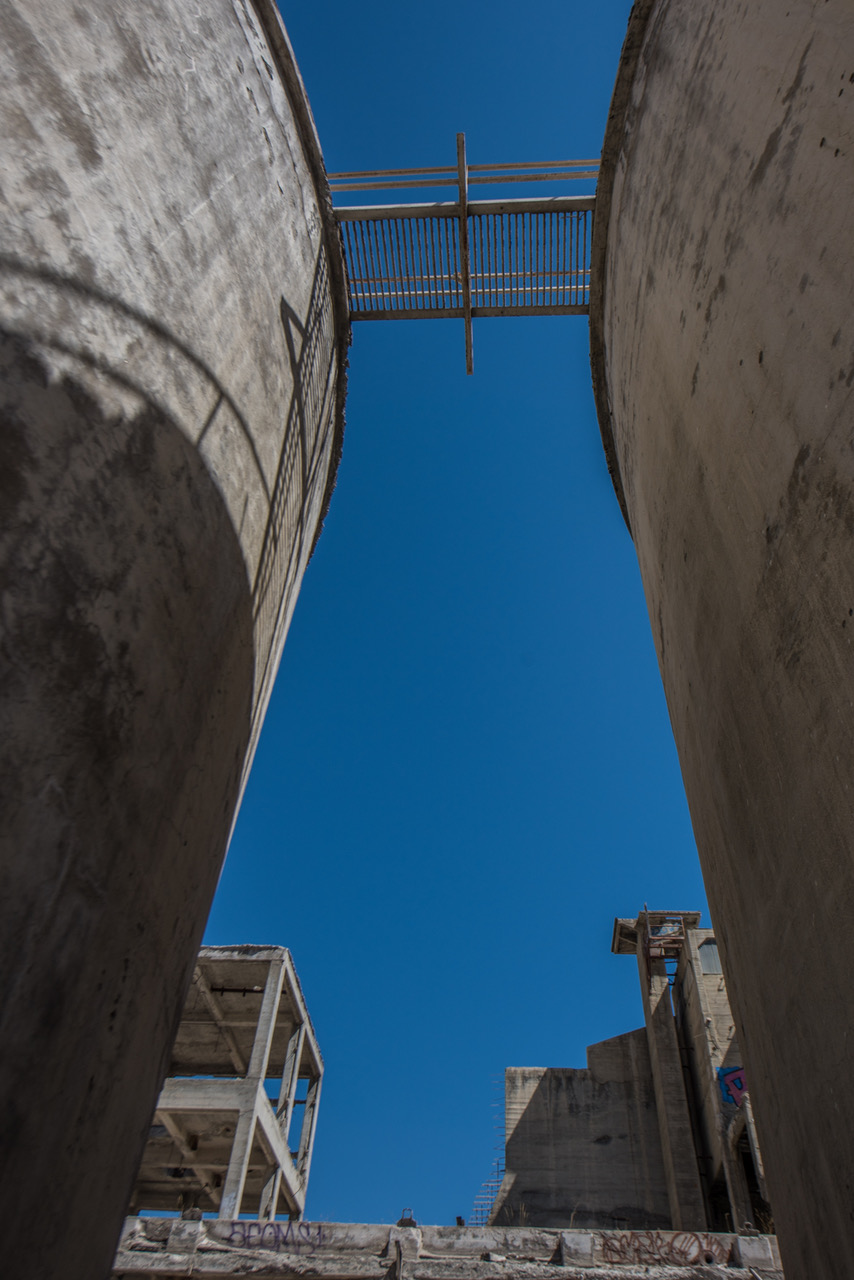
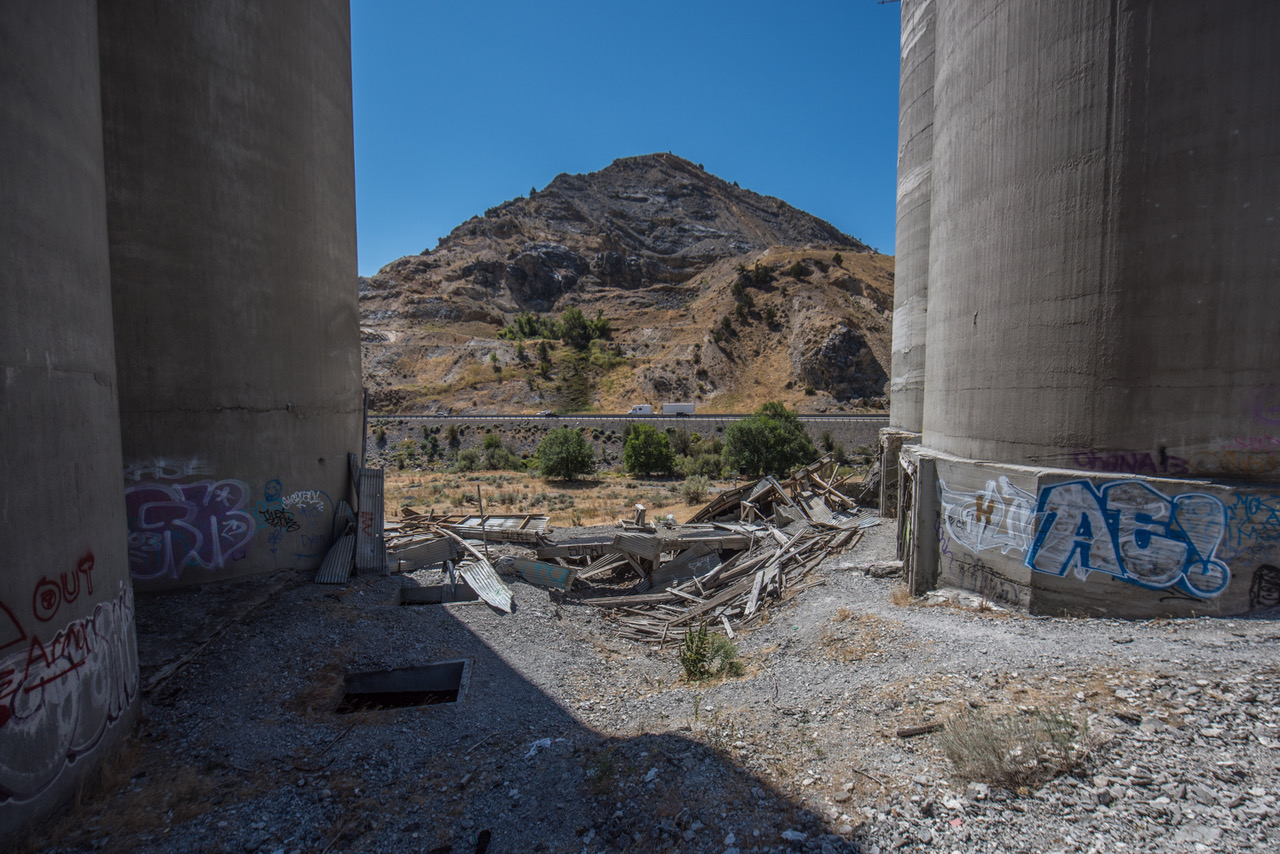
Afterwards, we had a picnic and then decided to drive south a few miles to visit Lime, where Paul Dorpat told us an abandoned cement factory still loomed. We wandered an apocalyptic moonscape of graffiti, art, and lost children – a perfect aftermath comprising melancholy reflection and an exquisite sense of mortality.

Perhaps you came for the Now & Then, which, never fear, is just below. But a couple of days ago, I came across a moth the size of a mouse, in its final hours, resting in a doorway. What a gift of watchful shadow and light.

Click to enlarge to full size:

(click to enlarge)


I’m posting a few photos I took from yesterday’s Womxn’s March in Seattle. Many contain views of Fourth Avenue. Some will be used in future Now & Then columns. Enjoy!
(click to enlarge thumbnails as well!)


Morning on First Beach


Rialto in the afternoon. A girl wearing an American flag dress; mom taking photos…


James Island


Rye (a shelter dog rescued by my sister-in-law) waiting for a skipped rock and a wave

Looking north towards Hole in the Wall

Back to First Beach for sunset and a fingernail moon


Last Saturday evening, we stopped in at Stu Dempster’s 80th birthday celebration at the Good Shepherd Center. It was a gas! And Stu is a force of nature…


Thought I’d toss up a few photos of the Columbia Gorge for perusal and enjoyment. This past week, we drove down to Maryhill and explored that section of the Columbia – but it was Thursday last, when most of the following photos were taken, that thunderheads chased us east, providing some dramatic photo ops.
(Click to enlarge!)


John Owen of Pineola, who gave a stellar performance at yesterday’s Rogue’s Christmas show at Town Hall, remembers the great Dawn Sears:
“On December 11, 2014 one of the greatest singers who ever set foot on this planet left us. Dawn Sears was an unassuming, humble person who you could easily walk past without even noticing…unless she was singing. If she was singing, you couldn’t notice anything else. She could make every person in the room feel like she was singing directly to them and them alone. Dawn was best known as a member of The Time Jumpers and as a backup singer for Vince Gill.
“Here is a link to a YouTube clip of her performing Sweet Memories with Time Jumpers. This clip pairs Dawn with another great who passed on not long ago – John Hughey on pedal steel. Both Dawn and John left an amazing amount of beauty behind. Live fully.”

Join us for an evening of entertaining yet erudite edification at Seattle’s Town Hall, 7:30 PM, this coming Friday! Historical whimsy mixed with a whiff of sulfur and a touch of elysium.
Also, come early (or stay late) to explore the redecorated North Lobby, jam packed with Now and Then comparisons hot off the presses. Reception follows the (very) illustrated lecture.


We hope you made it to our Rogue’s Christmas show of short stories and music at Town Hall. If not, there’s always next year.
In the interim, however, I must share the attached live recording from the event. ‘The King of Everything’ was written by Leslie Braly to follow my reading of ‘The Birds for Christmas’ (about two boys in a charity hospital in Virginia whose only Christmas wish is to stay up late and watch Hitchcock’s ‘The Birds’) and performed by Leslie, John Owen, Josh Woods, and Collin Schulze of Pineola.
Discovering hidden treasures is mostly the unlikely provenance of pirates; but get an earful of the following song and encounter something fragile, hopeful, heartbreaking and joyful in equal measure. The real deal. Have a listen and exult.
11 – King Of Everything

Join Jean and Paul at Town Hall for their eighth annual ‘Rogue’s Christmas’ at Town Hall. An evening of delightfully unconventional stories read by Frank Corrado, Cheyenne Casebier, Jean and Paul, accompanied by the homegrown music of Pineola.
This coming Sunday, December 1st, at 2 PM in the Great Hall. For more information, tickets, etc….
Paul, I’m going to post a few photos from last night – all in thumbnails. Perhaps you’d like to say a few words about this combined anniversary and our now-flourishing Museum of Forsaken Art…. (Formerly known as the Museum of Forlorn and Forsaken Art.)
Jean may I stay with MOFA? MOFA is a museum flourishing in its hopes and expectations. The donations made to MOFA this Monday last (Oct. 28th) will increase the size of our collection to what we known not what. About 30 contributions were made, a generous addition to the hundreds got already from many years of collecting, most of it from north end sales set up on lawns, in garages, basements, and sometimes throughout structures. These last, you know, are often given special status as “estate sales” and to enter these buyers may sometimes stand in lines holding numbers. We have. As pleasing as is MOFA’s new collected art, about 80 new members for the MOFA Board of Directors were also sponsored and admitted on this evening, all of them signing the MOFA Board certificate, which they kept then for themselves. (We will print an example at the bottom – one left accidentally, we are confident, at the event by FMOFA (Friend of MOFA) Clinton resident Paula Kerby. It will be seen that her signing was sponsored by her husband, Bill Kerby. Although it is not necessary for a sponsor to be either related or a member of the board, it is satisfying when they are. Soon after, Paula sponsored Billy. (At this rate the MOFA BOARD may need to rent one of Seattle’s larger venues for its tenth anniversary to arrange seats for its thousands. I expect that the show will be exciting.) The confidence of our charter members is a testimonial to our preparedness. We will be ready. Here are a few of Jean’s portraits of the newest charter members. Certainly, without exception they appear proud. Soon MOFA will have its own page linked to this one. There we may all watch the collection grown in both size and interpretation. Board members are encouraged to criticize the works of the collection. As the Board Certificate puts it, so long such criticism is given “in the spirit of our better mothers.” Members will share the compassionate good sense of one who agrees that “If you cannot say something nice then do not say anything at all.” One who will take care to “Do unto their collage as you would have them do unto your own.” We will be identifying these Board Members, as recorded by Jean late during the tail of the evening event at Ivar’s Salmon House on, again, Oct. 28, 2013. (Of the many who were not able to be there, we certainly missed MOFA’s First Curator, Berangere Lomont, who we show at the bottom – next to the BOARD CERTIFICATE – standing a the front door of the Forsaken Art House in 2010, and the future site – still – for MOFA.)


Whether or not you attended our (Another) Rogues’ Christmas show, there’s still time to grab a wonderful stocking stuffer for the music lover in your life.
Yep, it’s Pineola’s latest CD, The Elephant and the Owl, comprised of songs written for and inspired by the stories told at Short Stories Live at Town Hall this past Sunday. A truly remarkable collection we most highly recommend. Available for purchase or download at the Pineola website.
On Friday afternoon, as the sun set through dark clouds, the commute was abysmal. I pulled off at Lakeview Boulevard and shot in both directions (click on photo to enlarge):


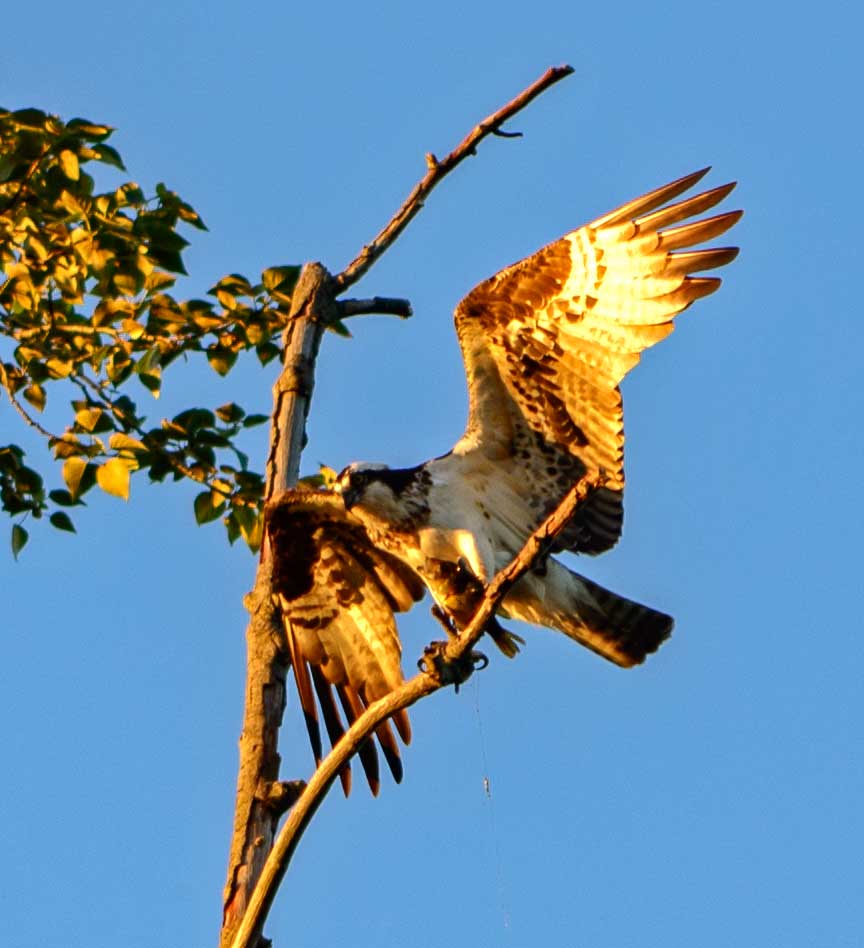
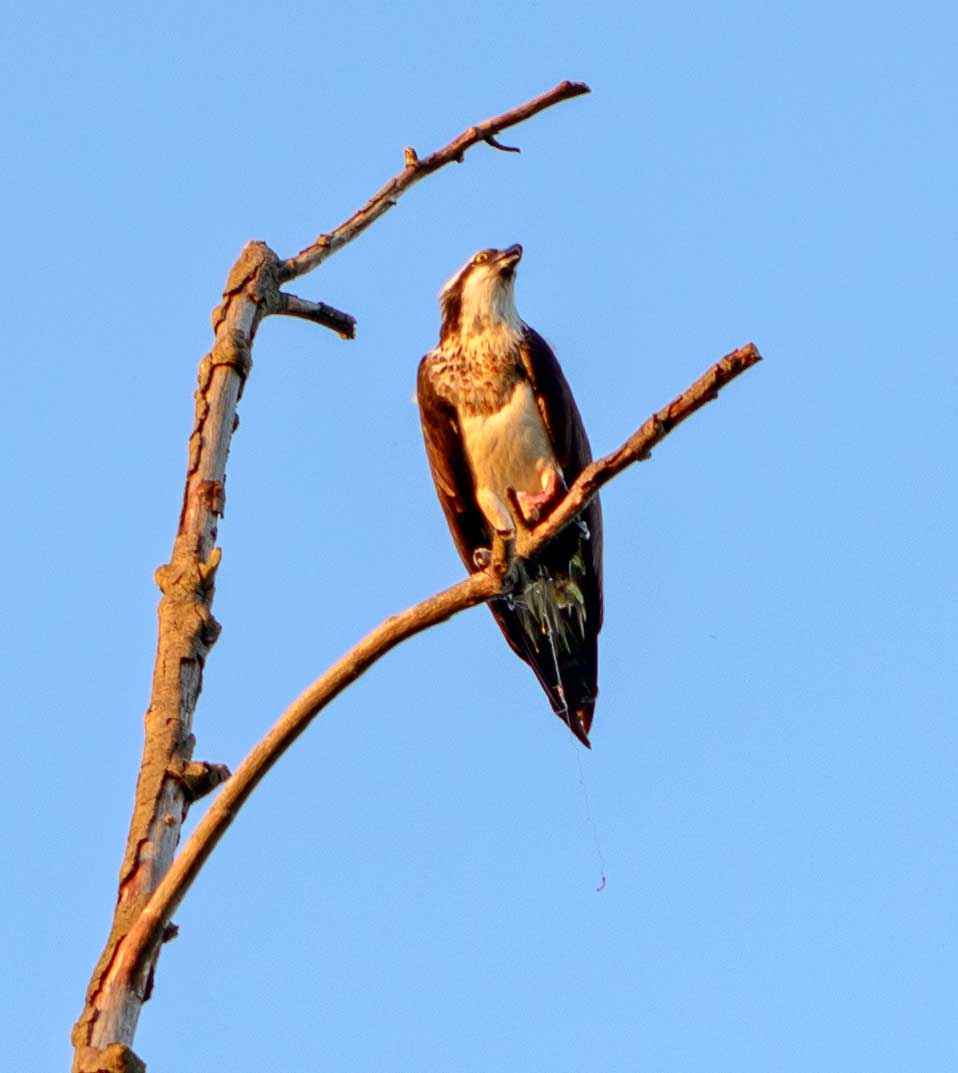
A couple of night ago, I was walking around the lake and saw a young eagle (I’m assuming it was an eagle) perched in a tree just east of the Bathhouse.

I shot the following at high speed, and have blown them up considerably to give a sense of what happened next. Click to enlarge the thumbnails for greater detail.
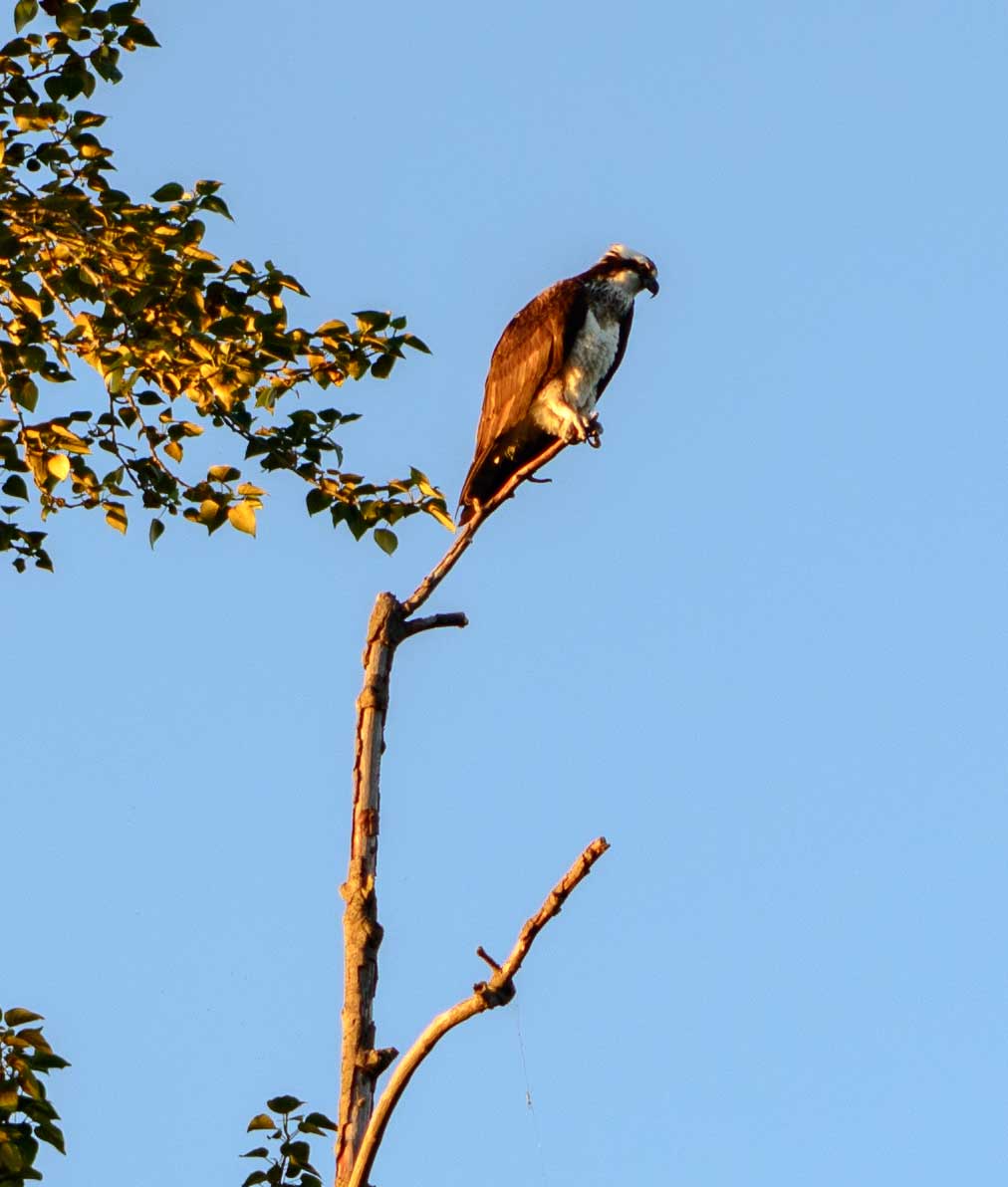
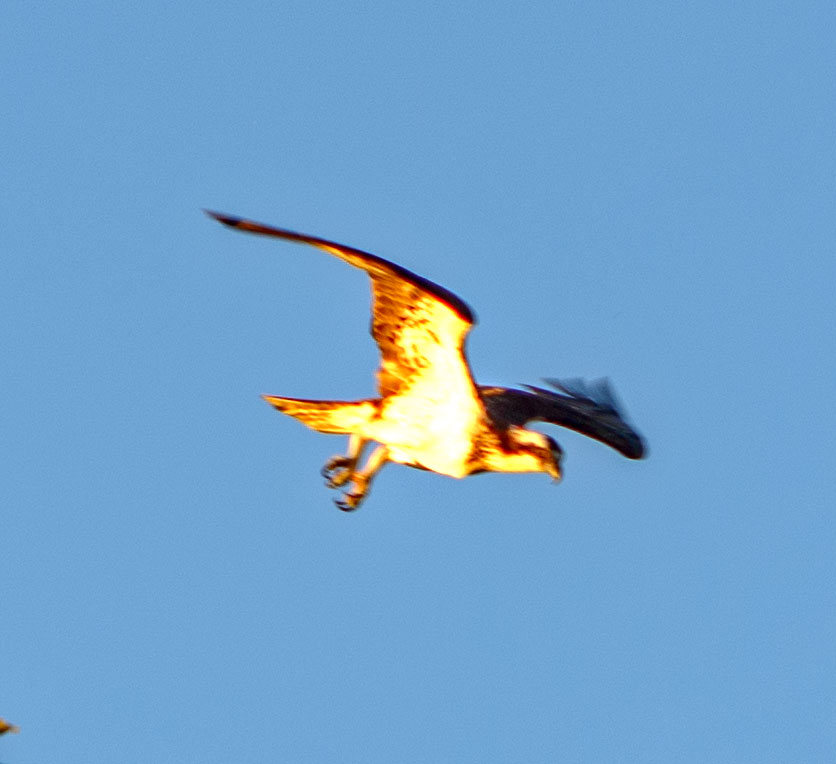
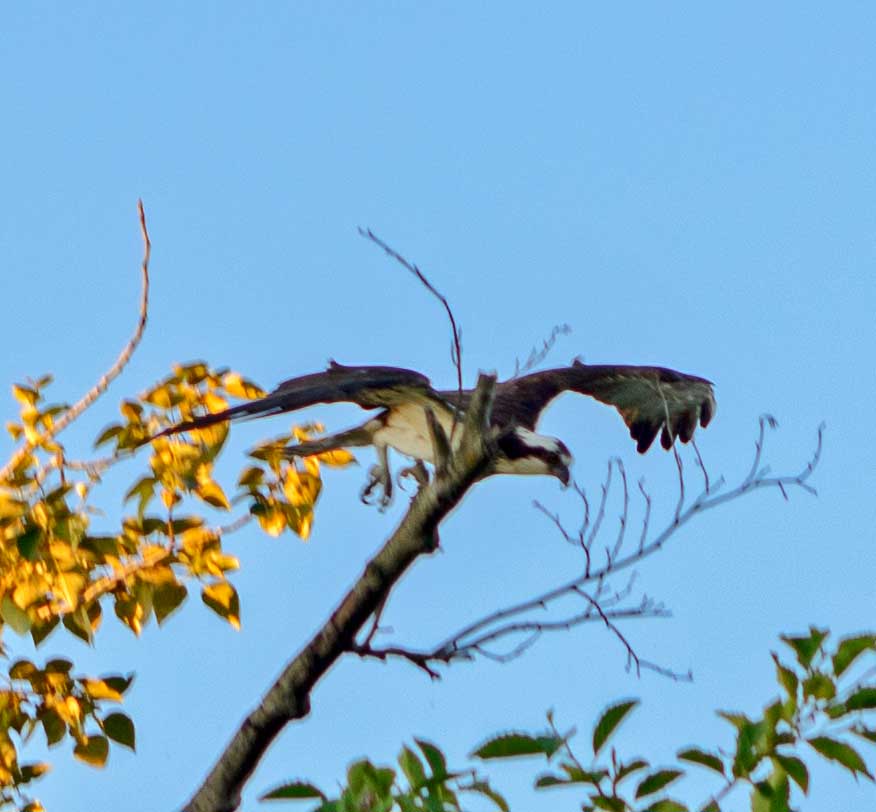
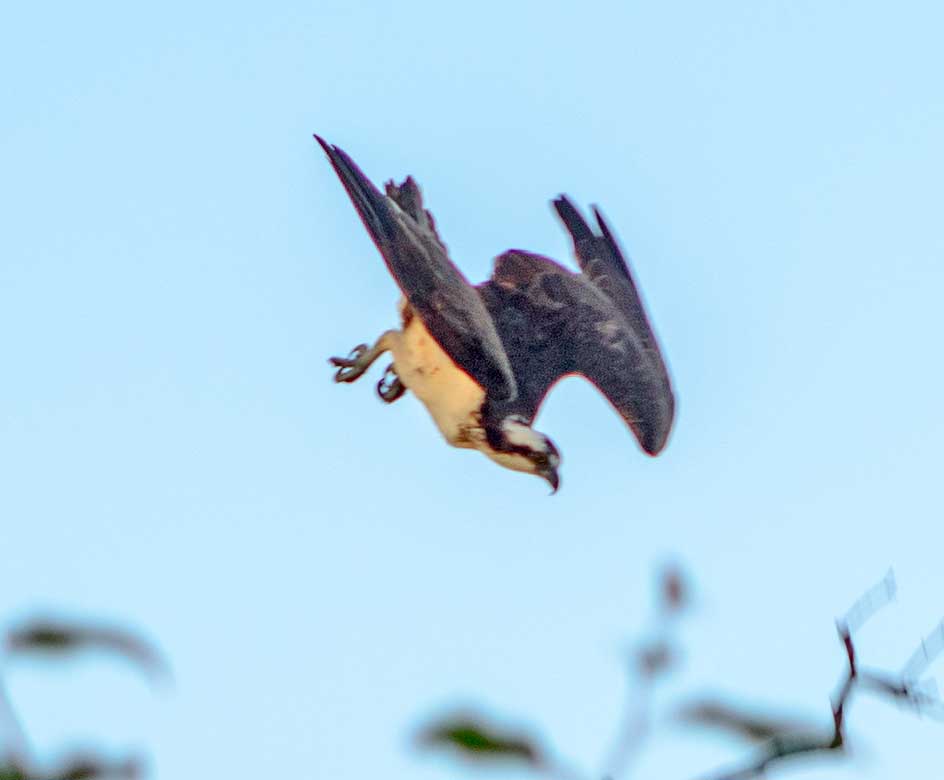
Here the eagle disappeared behind the trees, but dove directly into the lake and emerged with a fish.

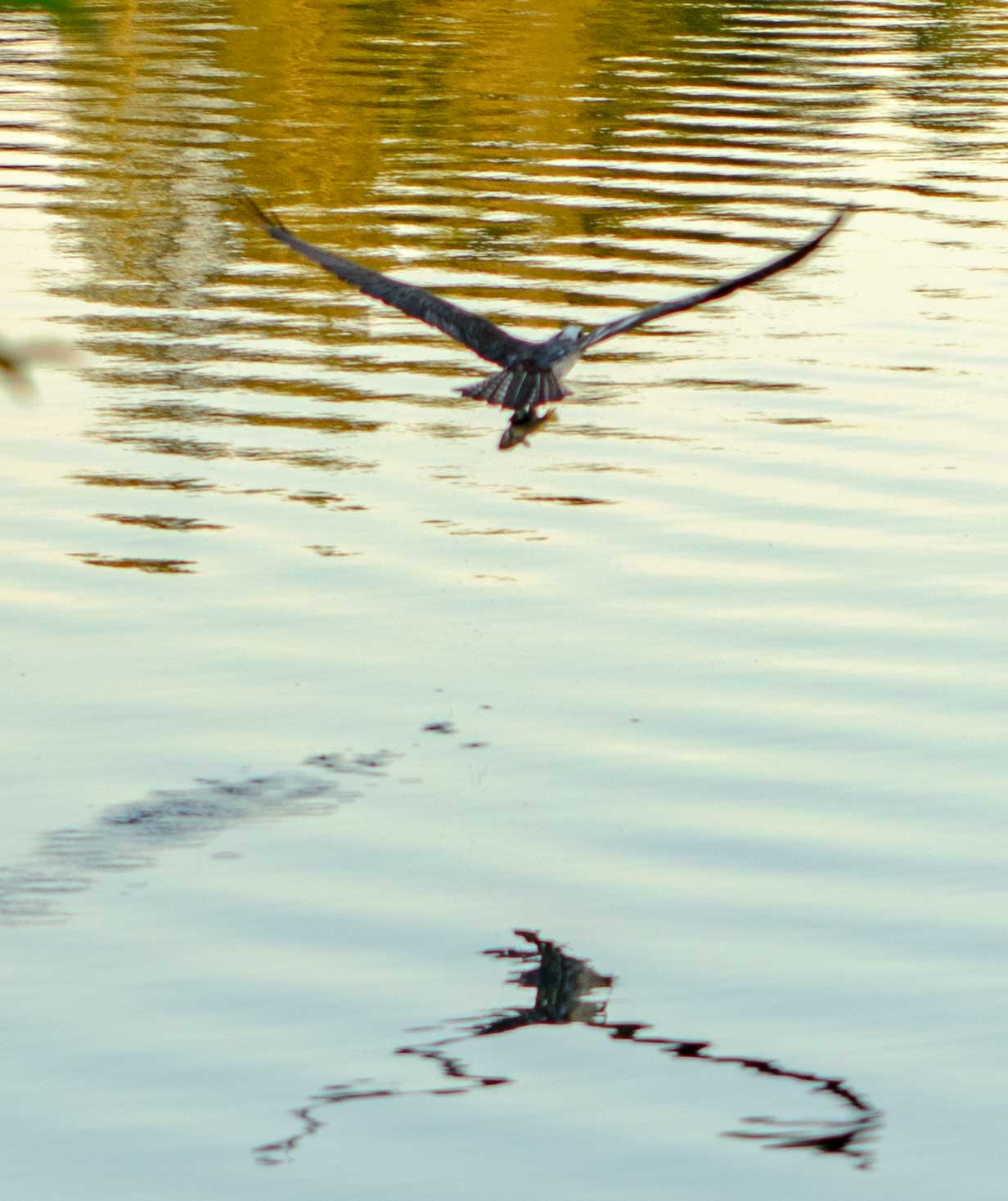
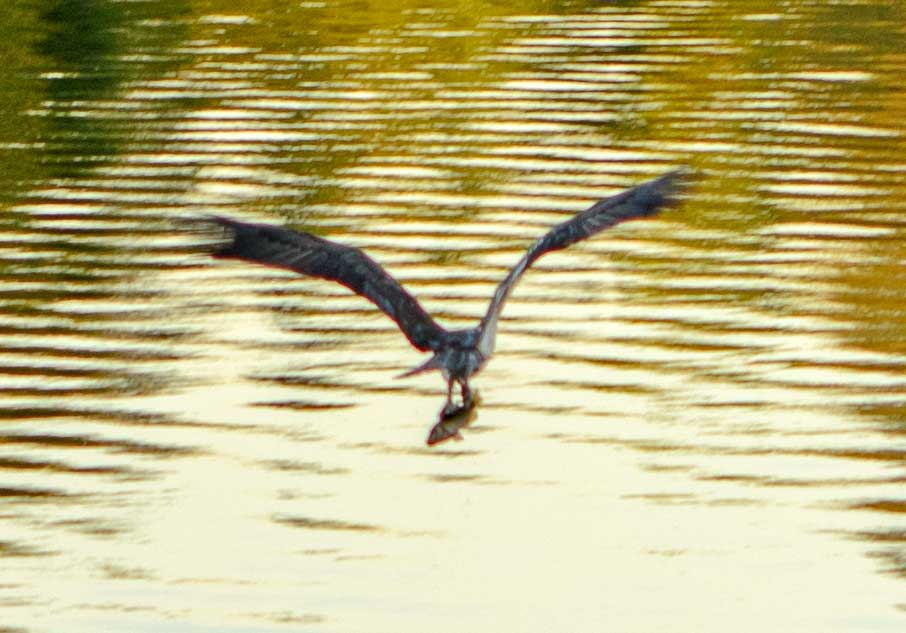
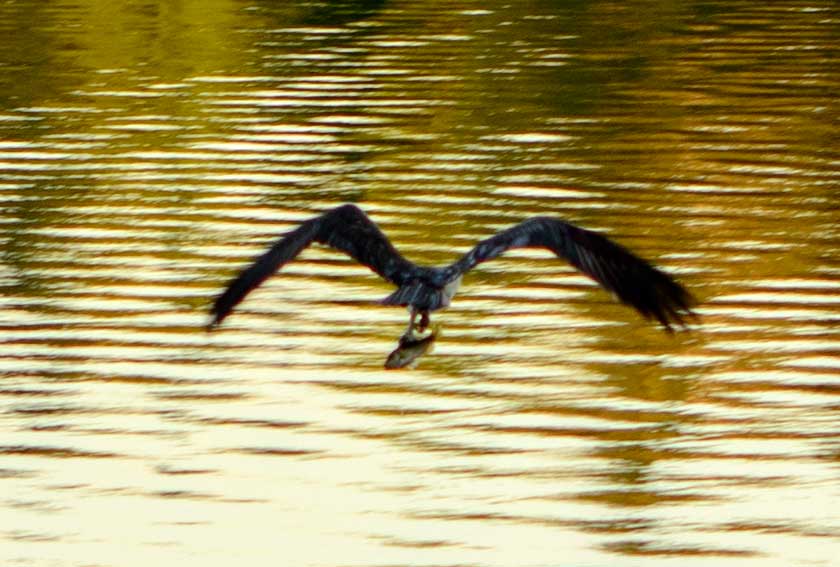
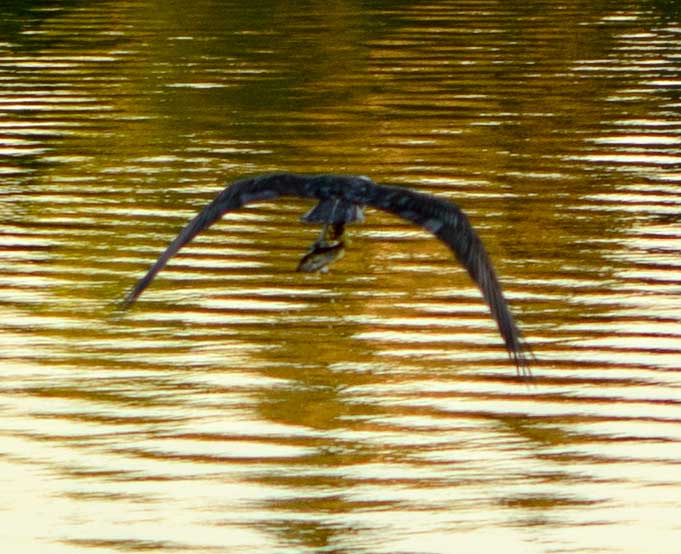
It flew off, fish in talons, half circling the lake – then returned to its original perch for a leisurely meal.

For nearly 30 years, Jean has taught drama at Hillside Student Community, a small private middle-through-high school on the Eastside.
Here are a few photos from his most recent production of ‘Twelfth Night’ performed by a cast of ten 5th and 6th graders. Jean set the play 400 years in the future – a future in which Viola and her brother Sebastian are shipwrecked on the planet, rather than the island, of Illyria. The use of video screens allowed several of these astonishing young actors to double their roles, and they would occasionally find themselves acting opposite….themselves!
(all of the following were taken by the amazing photog/designer Leslie Howells)


For more about Hillside, please visit the website.
Well, despite our best efforts, it was too little too late for this little gem of a restaurant.
Tonight’s the final night for Cioppino, about which we wrote a glowing review a few weeks ago. Last night, a small group of friends blissed out one last time, and afterwards Riccardo and his staff joined us for a photo.

I’ll be dreaming of that short rib gnocchi for years to come….
For those inclined, tonight’s their last night.
We interrupt our regular Sunday post of ‘Seattle Now & Then’ (found just below) to introduce a restaurant we’ve come to adore.

Occasionally, at DorpatSherrardLomont, we come across treasures we feel compelled to share with our readers – often photographic, historical, or quirky – but this is our first culinary treasure: Trattoria Cioppino, opened since late last spring, is the real deal; an Italian jewel on Green Lake’s north end (just across Green Lake Way from the wading pool).

This lovely, welcoming little eatery boasts a mouth-watering menu with dishes that are eyes-rolled-back-in-the-head delicious. Jean has, in short order, become a regular, and finds an excuse to return for more as often as possible. To excerpt his Yelp review, the food is delicious in a way that “reaches down to some well-spring of deliciousness” combined with “gorgeous, no-nonsense preparation.”
From the spectacular calamari appetizer – tender, crisp, with a knock-out aoli for dipping (only $8 for a generous serving that satisfies four) – to mains including melt in the mouth gnocchi with succulent and tender boneless short ribs ($14); perfectly seared and savory duck breast with figs; delicate spectacular veal marsala ($17); and a cioppino that blows the roof off, mussels, clams, baby octopuses, and scallops flawlessly cooked and artfully arranged around a slab of buttery moist salmon (enough to feed two, $23).
Not to mention the desserts, all made in-house by Chef Riccardo, ranging from a mouth-watering chocolate vesuvius, to glorious cheesecake with figs, an amazing tiramisu, and a stunning creme brulee. Give me strength! In four visits so far, Jean hasn’t had a dish anything less than delightful. This is truly Italian soul food.
If it isn’t clear by now, this is a place we can recommend without reservation – although it’s wise to call ahead to make your own!
(For more about Trattoria Cioppino and Chef Simeone, click here)
Traveled part way across the state yesterday and found some lovely micro-climates, particularly the results of fog and hoarfrost.
Enjoy! (and of course, click to enlarge)


Join Jean, Paul, Frank Corrado, and Randy Hoffmeyer at Town Hall for our 6th annual Short Stories Live today at Town Hall at 4PM.
Listen to a selection of roguish and hilarious holiday tales by the likes of Damon Runyon, John Mortimer, P.G. Wodehouse, and John Cheever.
With original musical stylings by Pineola (our favorite local band).
For more info, go to Town Hall’s website.

In late 2005, Paul and Jean traveled to Paris to visit our dear friend and colleague Berangere Lomont. Our joint exhibition of repeat photography from Seattle and Paris, now on display at MOHAI, is the fruit of that trip.
One serendipitous incident, documented in the photograph above by Berangere, is when Paul met his doppelgaenger, his twin, his semblable in a Paris cafe. Actually, Paul never met him, he merely sat down next to him and let the shot be taken. Jean grabbed a video camera to record that moment. Most of the event is clear enough, although Jean began shaking with laughter, ruining the shot a bit.
Here it is:
Yesterday’s inclement weather came bearing gifts – a couple of gorgeous Spring lighting effects.
(click to enlarge photos)


Directly below the most recent Sykes “Entering Big Bottom . . . ” post for Syke, with Our Daily Sykes #213 on Lyons Ferry please note that Jean has surprised us all by adding the photos he took on his visit to Lyons Ferry for our book Washington Then and Now. Look closely at the reflection of the clouds in his splendid and spectacular panorama. Next notice also in the pan how the rock formation on the far bank, to the left of the copse of trees in Lyons Ferry State Park, resembles a ruin of St. Sophia in Istanbul. (It was Constantinople.) It even includes a corner minaret – incipient or in ruins. Below is a mock-up (still with typos any my dimwitted naming of it for the other Lyons bridge, the one with a “gate” in Vancouver B.C.) for the subjects used in the book, although it was printed without the third photograph showing the Vantage Bridge under construction at its original site – Vantage – recorded in the 1920s from the old road on the east side of the Columbia River.


This year I visited a friend of many years, Gerry Murray, who lives near Glasgow, Scotland. Gerry and I spent a couple days at the Edinburgh Fringe (which I’ll write more about soon) and one evening, heading back to catch a train, I turned and snapped the following photo of the city emerging from a cloud bank:

It’s a part of a larger panorama, which you can examine in greater detail by clicking on twice:

Independent of our wives, Jean and I were busy Americans yesterday – Independence Day – between Noon and 6pm. First we visited the “This Place Matter’s” demonstration in front of Alki’s closed and ribboned Homestead Restaurant. (Ribbons and not bunting. They were yellow and not red-white-&-blue.) The sun came out for the moment of Jean’s recording and then retreated as we scampered off to Gasworks Park and the Celebrity Chef Fourth of July Salvation there. We arrived in the rain.
Below are an unattributed mix of snapshots (without fireworks) we took when we were not eating from the potluck at the Alki Lob Cabin Museum or the buffet table in the sponsors and noble seniors gated corral, which was fenced at the extreme most pointed and southern part of the Walllingford Peninsula, the best place to sit in the rain for five hours waiting for the show. We didn’t so sit, but the trio in the top-most photograph did – or told us they would. We left much too early to catch the show but none too early to get dry. (I, at least, am getting old and easily dampened in my enthusiasm.)


If you do not care for demure introductions to sensational stories then just jump past what follows to the sanguine meat of the feature itself. It begins directly below the photograph of the Moclips Weather Service ca. 1909
Today – and in the interests of posterity we will make a recorded note of it – this day, Saturday June 25, 2010, this Blog’s own Jean Sherrard heads out to the Pacific Coast to meet, dine and share more Moclips stories with members of the Museum of the North Beach and their heritage leader Kelly Calhoun. Jean is also making this visit to describe the joys and trials of making our book “Washington Now and Then.” And he is driving that scenic highway to thank Kelly and the citizens of and near Moclips for the records they set in distributing the book. Moclips, of course, was one the subjects that we featured in our book.

We add what follows as evidence of our continued fascination with Moclips history. Recent and disturbing news from Kelly had Jean and I putting our heads together – feeling concerned. His letter about ghost busters visiting the museum and their, it seems, success in finding a few spirits to bust, helped us to recall some Moclips news reports, oddly out of an old London newspaper, that surfaced while we were – now long ago – assembling our book. While there was no place to make note of them in “Washington Then and Now” we do now. Although we could not recover the clips themselves, we remembered, between us, their particulars and, with the support of Grays Harbor historian Gene Woodwick, have confidently assembled the story below, which is actually three short stories concerning Moclips fated nights, first that of its biggest storm – its “One Hundred Year Storm” of Feb. 12 1911.

How soon we have forgotten. Even long ago, in the respected depression-time 1941 publication “Washington, A Guide to Washington State,” no mention was made either of the 1911 storm or the weird events we will soon reconstruct below. Instead, Moclips is described briefly as “a busy little settlement, supported largely by its shingle mill. The Moclips High School serves the oceanside region north of Grays Harbor, and its gymnasium is used for community gatherings. On the northern outskirts is the Moclips Fire Observatory (open), atop a 175-foot fir tree.” We think it unlikely that such an observatory would have survived the events of 1911.

MOCLIPS EXSANGUINATIONS 1911
In Moclips, and now nearly a century ago, between the great Pacific Coast poundings of 1911 and 1913, storms whose damage is recorded in spectacular photos at the time, “Moclips Mysteries” occurred which remain uncanny to this day.
The most alarming of these took place on a small dairy farm. The family name is barely remembered for they changed it and moved away soon after the events described below. But in 1911 they were known as the Van Hooverens. (This is confirmed by Grays Harbor historian Gene Woodwick who rarely makes things up. Readers who have combed her most recent book Ocean Shores will, we wager, not have found a single mistake in it. We have attached her addendum, near the bottom.)

The Van Hooverens brief stay near Moclips may have as much to do with their eldest daughter Arabella’s best chances as with milk and cheese. She was an enthused student of the Moclips Finishing School that rented several rooms on the top or third floor of the north wing of the Moclips Beach Hotel. After only six weeks of study she gave her first “Famous Adagios” recital, which was appreciated for its steadfast sincerity and the length of the program. The destructive storm put an end to the school, and immediate hopes for the Van Hooveran’s daughter of moving on to the Portland Music Conservatory. We know, of course, that it also put an end to much else in Moclips.

The Van Hooverens were a first generation Dutch family. They are also believed to have produced the first Edam cheeses in the Pacific Northwest, although aside from one small fragment of ephemera this evidence is anecdotal, which is to say that it is a story also told by the admired historian Woodwick. No actual cheese or cheeses survive, just part of a cheese wrapper that reads in fragment “Eat’em Eda,” which surely would be completed as “Eat’em Edam Cheeses.” Their mysterious story follows.

On the fateful Sunday of Moclips’ biggest storm day, February 12, 1911, two of their finest milk cows disappeared from their stalls. The next morning, Jan (probably for Jandon or Jandor) Van Hooveren, finding the barn door open and the cows, Marjolin and Mijn, missing, raised a cry. Jan, his wife (Annika or Anneke), two daughters, and three sons scoured the farm and surrounding fields for these valuable animals. The melk boer (milk farmer) began to lose hope that neither hide nor hair would be found of either, but then before sundown on Monday the 13th the cows were stumbled upon by a young couple who had hurried to the coast from Wenatchee. Having heard of the storm’s fury, particularly visited upon Moclips, they rushed to the site aboard the Great Northern Railroad and were already exploring wreckage and the brusied landscape when along the beachfront they came upon the two cows, side by side, and partially buried in the sand. Further examination determined that both animals had died, not from any visible trauma, but most unusually from loss of blood. While neither showed obvious injuries, each carried two small wounds on the neck, located proximate to major arteries. It was surmised that the complete exsanguinations of the cows was accomplished through these wounds alone.

Jean and I both remembered that the clipping on this extraordinary event was headlined either “Two Cows Give Blood Up” or “Two Cows Give Up Blood.” Jean came upon it first while researching for the book “Washington Then and Now” but that is long ago and our memories of all this may be twisted in some points. At that time we, again, made note of it to Northwest historian Gene Woodwick who had also heard of the “exsanguinations sensations”, as she put it and expressed it with an ease that was way beyond either of us. But then the regional historian still knew little more about what was done with the cows or why the Van Hooverens were also swept so thoroughly from the community. (Persons doubting the above or wanting more information may contact Gene – if they can find her.) We remember that the story was not clipped from any regional paper but rather appeared in a London daily. Most likely that first story went over the wire and got little more than that one London chance for being published. That was but the first mysterious event.

A second and uncannily related event also involves a death by loss of blood – this time human blood, and again nearby Moclips. After Bjorn Sandberg was violently struck on his skull and knocked from his wagon by a tree limb during the 1913 storm, his son ran home to alert his mother Inge. When they returned less than an hour later they were startled to find the father-husband bleached as white as the foam pushed ashore by the storm. The discovery sent mother and child into shock. They clutched each other throughout the night and into the following day and could not be pried apart even by other loving hands. Without the ability to express their wishes or give instructions, the body was left lying in the road where the father had first been knocked from his wagon. As with the bovines Marjolin and Mijn, Van Hooverens’ drained livestock, Bjorn was also left bloodless.

The third and again resonant event involved Martha Connelly, a young Sunday school teacher visiting from Aberdeen two years later in 1915. While visiting her married sister Dorothy (whose last name may have been Perkins) in Moclips, Miss Connelly agreed to mount a Christmas pageant with the primary school children. Late one evening, after a long and exhausting rehearsal, Martha was alone at the schoolhouse, putting up streamers and “festoons for the faithful” of all sorts. Out of the corner of her eye, she caught a glimpse of a figure passing by the window and assumed it was her brother-in-law Vernon, come to escort her home. In an account written up in a family “vanity history” (i.e. genealogy), Martha described putting out the lamps and stepping outside onto the schoolhouse porch. As she fumbled for her keys, footsteps approached. She glanced about, expecting to see Vernon, but in an instant, a dark figure (“all claws and teeth,” she claimed) leapt atop her forcing her to the ground. Powerful fingers held down one of her arms. Expecting the worst, the devout Martha closed her eyes and prayed while making the sign of the cross with her free hand. To her surprise, after feeling a sudden piercing but not unpleasant pain in her neck, as if two sharp knitting needles had been skillfully slipped into the side of her neck, the “thing” fled.
Vernon Perkins had indeed been sent by Martha’s sister to bring her home for a late supper. Save for her saving from prayer and cross-marking, Martha, too, may have ended her life sucked dry of blood. Vernon saw the thing but barely, for it was already in flight when he arrived and disappeared quickly from his lantern light. It was “rat like” in appearance, though it would have been the largest rat ever seen in the northwest coast being, Vern guessed, some six feet long. It was dressed elegantly too – “dressed to kill.” Martha bore those two little scars for the rest of her life. She felt most fortunate at having survived the attack and proud as well. Following the attack she did not continue with the Christmas pageant, but later learned to enjoy telling the story of her night with what she insisted was a vampire.

Although, it seems, long forgotten – or perhaps repressed – by the community there survives another belief, which may be related. During the great storm of Feb 12, 1911 that destroyed most of his great Moclips Beach Hotel, Dr. Edward Lycan fell into a panic, or rather a trance and through the duration of the storm he seemed to be without pain or anguish. Those who cared for him those few hours when he was incongruously serene but witless were puzzled then by his repeated and kind advice: “They want our blood, you know. It’s the blood they want.” When told of this later the Aberdeen doctor had neither memory of his temporary madness nor any explanation for the message he insisted on repeating. Several Moclips citizens, however, put their own interpretation on the doctor’s brief lapse. They had heard – and independently – the gale-force winds of that winter storm howling “cud, cud, chew on cud!” or alternatively, “stud, put them out to stud!” One of them, a bartender heard a different refrain. He insisted that it was “We want blood sausage?” that was being shouted and the bartender felt pretty certain it was a group of Spanish sailors, stranded by the gale and pining for their native chorizo. Yet another heard the storm cry aloud “blood blood, we want blood” so plaintively and with such compassion that she only wished that she might that night have given to the winds some of her own blood.
Although Jean and I agreed to put our “heads together” to recreate the above – and without the original sources – we are still confident of the Connelly, Sandberg and Dr. Lycan stories, however, we cannot speak with such certainty for the grotesquely-sized exsanguinations of the Hooverens’ poor Marjolin and Mijn. For those milk cows historian Woodwick’s addendum, which now follows is most helpful.

Van Hooveren’s Cow (from Gene Woodwick)
As you know I am adequately equipped to relate this historical information regarding the Van Hooveren’s cow shown in the attached image. You can see by the photo the farm was located on a meander channel near the Moclips River. The family was famed – although briefly – for its dairy cattle and their products which they supplied to the Moclips Hotel.
As is well known, farmers of that era fertilized their fields with the abundance of spawning salmon from the rivers. Van Hooveran’s were no exception. The purity of the Quinault blueback salmon oil not only produced a rich milk from which the family made excellent cheese, but it also produced pigs with a moist fat content that made the hams and pork sought after. The Hotel featured the Van Houvern’s bacon on the dining room breakfast menu.
The Moclips Madness cheese was easily broken down into salmon balls that accompanied the fine bakery products from the Moclips Bakery. Although some thought the pure milk a little too fishy for their taste, others touted the health benefit of the milk so rich in vitamin D. Further south of Moclips where Dr. Chase operated the Iron Springs Health Spa, his clientele was enamored by the Van Houvern’s milk products and would have no other. After all, old iron bed springs, well hidden upstream from the health facility, provided a wealth of minerals enabling guests to go home full of vim and vigor.
I do hope this historical information is of great value to you and Jean. Especially the fine photograph that illustrates so well the life of farm animals along the Grays Harbor coast.
Happy for Moclips,
Gene


Yesterday evening, walking around Green Lake, I came upon the following domestic scene.

The pair seemed quite content to perch there, and entirely unafraid. I’ve never seen a duck in a tree before and thought it odd enough to post. Now back to Mr. Sykes.
Every year for 45 years, Jean’s family has spent a week or two in LaPush on the coast.
Here’s a little marvel from several years ago, taken looking north from First Beach towards James Island.


We have learned that our friend Nathaniel, the steadfast host of the by now nearly ancient Allegro Coffee Bar in the University District (see our blog post from last Wednesday and only four posts down), has “pulled” through his operation and is now “up and walking around and feeling fine.” That would be still in the hospital, but we are confident that he will soon move from those halls to home and then back again to the Allegro when his family permits it.
(The Allegro is either the oldest or the “next to” oldest espresso bar in Seattle, but the coffee is fresh and the pastries too. Yes we at dorpatsherrardlomont can highly recommend the Allegro, a harbor of repast for both town and gown literati for decades. You will easily find it’s now cozy and very European entrance in the alley 2nd door north of 42nd Street between University Way and 15th Avenue n.e., at the western border of the U.W. Campus. Test their teas and study their bulletin and notices board.)
And this afternoon, a short e-missive arrived from the man himself:
Well, the deed is done. I’m home now licking my wounds, as it were. It has been quite a ride and I am so impressed with the folks in attendance. Now, onward and upward!
We also recommend, for greater acquaintance with Nathaniel and the Allegro, this video portrait.
(click to enlarge photos)

Our friend of many years, Nathaniel Jackson, Café Allegro owner/inspiritor and caffeinated force of nature, put in one last day before undergoing major surgery.
“What’s up?” Jean asked Nathaniel this morning, having heard the news from his cousin Danny Sherrard, who often works behind the counter.
“Tomorrow I’m donating a few inches of colon to the cause,” Nathaniel grinned. Squeezing out another perfect shot of rich powerful espresso, Nathaniel was thoughtful. “Thirty five years I’ve been here, building family.” He’s shaped and nurtured a close-knit community, to which he’s brought his great soul and gentle heart.
We wish him the very very best.

We just received the following poem from Nathaniel. Heady stuff follows:
“Old Barns”
Old barns
Standing in the distance;
Cloaked in grass, morning glories and moss;
Vacant eyes peering over what was and is…
Roofs and walls sagging;
Doors, if there are any, barely hanging,
aided by a rusty nail or two, and entangling vines.
Refusing, thus, to fall all at once…
Beautiful!
Old dogs,
Flea-bitten
Not much to look at,
Hobbling painfully from point to point.
Blink and/or blinding eyes, drooping tail, head bowed;
Concentrating on what was and is…
Periodically rising, with great effort.
Turning a circle or two…
Only to plop back into that very spot,
Now changed in the turning.
Beautiful!
Moth-eaten, sway-backed horses
Standing under a tree,
Or by a fence.
In deep contemplation of what was and is…
Major energy, devoted to standing there.
Obliged to swish
at the pesky flies who have no appreciation
that economy of motion is of the essence
in this moment.
Nothing to excess here.
Beautiful!
These images have intrigued me since early childhood. Of a Sunday afternoon, our family would go for a “drive” through the back-roads of the Shenandoah Valley of Virginia with its rolling hills and farmlands. My special treat, however, was to actually drive, at age 13 (!), along those same roads alone with my father. The icing on the cake was to be able to listen to The Metropolitan Opera, narrated by Milton Cross as I anticipated seeing THAT barn, THAT horse or THAT dog. That I held the car to the road was quite a feat and I think my father would nod in the affirmative on that score.
My interest holds to this day. To the mix I have added: listing outhouses, rotting boats, ancient trees and old folks who are “jes bone taard…” from work, age, or illness. Here, there is no room for pretense. It is what it is: an honesty and an integrity which I experience as the inherent beauty of creation manifesting unencumbered as there is no desire, will or strength to do other than just be.
I feel nurtured, honored and humbled in the presence.
This, coupled with the precious moments with my father who was content to drink his beer and pontificate during the Texaco commercials and letting me drive (!) constitute one of my most treasured memories.
That I have given expression to it, to my satisfaction, and that I was able to share this story with my parents makes it even more precious.
For the experience, the perspective and the memory, I truly give thanks.
And in the tradition of the first folks here, I say loudly,
ALL OUR RELATIVES!!!!
naj
Strolling the lake on an early spring weekend never fails to provide entertainment. Here are several scenes from this afternoon.
(click to enlarge photos)


Here’s a slightly different perspective of one of my favorite places. Drove over this week to capture the subtle greens of spring, which so quickly shift to summer gold and tawny.


The posting of Ron’s crow tale below reminded me of another crow story – actually a crow and falcon story from a couple of years ago.
On a roof across the street from where I live in North Greenlake, a falcon was perched for about half an hour. It wasn’t long before crows found it and commenced to attack. The peregrine falcon had flown off from its handler at Woodland Park Zoo and seemed puzzled and alarmed by the diving crows, but was only driven off after the following picture was snapped, using a telephoto lens.

Officials from the zoo combed our neighborhood minutes later, but to no avail. The missing falcon was found early the next morning near Northgate.
On Monday, Feb. 8th (Boy Scout’s Day) Jean and I visited Steve Sampson in Belltown as he fidgeted with his office-studio. I took the first view below of the two of them. The place is a-funk because Steve was at the time closing it down before returning this coming Sunday to his new home in Paris with Cynthia Rose, another good friend.
Next we came upon the stables or livery door in the alley that Jean put up on this blog a ways below this contribution. We were on the way to the Pike Market where we shared lunch at the Pan Africa. Jean used his “Ethiopian utensils” for the Ethiopian dish prepared. I have often enjoyed Jean’s many good stories of his trips to Ethiopia and he will include below some highlights and illustrate a few of them too.
This evening we met with Steve again – for the last time during this visit to Seattle – in Fremont at Brad’s Swingside Cafe. Next time Jean will see him in Paris this summer. There we found Brad revived from a long and risky stay in hospital (last fall) but now back again behind the stove where he is famous for his delicious concoctions. The carved angel on the front porch of the Swingside was placed there in a vigil for Brad’s recovery. The gracious guardian did well, enjoyed the stay and has decided to abide a while longer.


Jean writes:
As Paul suggested above, I’ll revisit a few highlights of my last trip to Ethiopia, which was, Paul neglects to mention, a number of years ago. The photos I took are pre-digital – a compact Canon point-and-shoot – scanned much later.
I last went to Ethiopia in Nov 1999, missing the Battle in Seattle, the progress of which I watched on a flickering hotel TV in Lalibela, (arguably an eighth wonder of the world – which begs the question, is there a single eighth wonder or is that a category?).

It was a little shocking after a month of travel to see images of Seattle on CNN Asia, which was the only channel available. Of course, it being CNN, the images were stock – a ferry approaching the docks with the space needle in the background. But I’d gone to Ethiopia on a bit of a lark, hardly imagining the serendipities that would grace my trip.

On the plane from Rome, I sat in front of, and carried on a long sore-necked conversation with, Hussein Feyissa, who’d studied engineering in the midwest and ran his family’s burgeoning tannery in Addis. Amazing man of industry who sent me to friends and associates all over the country.
Within my first couple of days, I booked an in-country series of flights on Ethiopian airlines, and standing at the counter, met Firew Bulbula who, it turned out, was returning to Ethiopia for the first time since 1974 when Mengistu overthrew Haile Selassie and became an Ethiopian Stalin. We were flying the same routes and became traveling companions. Amazingly, in 1974, Firew was a freshman at the University of Washington, ended up studying economics and teaching it at Seattle Community College by the early 80s. We actually had friends in common, in particular, Gassim, an Oromo prince and PhD, with whom I’d spent long hours chewing the fat at the Last Exit.

Firew and I toured the north together, visiting Bahir Dar and Lake Tana,

Gondar, and Lalibela. Each one deserves a short novella. In Bahir Dar, accompanying Firew to a tej bar, where country men came of an evening to drink honey beer and sing improvised poems to the lyre. The old man who sang of his fallen friends on the battlefield (translated in whispers by Firew) and overcome with emotion had to step outside to recover.

In Gondar, meeting a Japanese woman traveling alone across Ethiopia by bus, staying in roadside hotel/brothels to save money, her arms and neck covered with bites from bed bugs. Brave beyond measure, but she was the nail who refused to be pounded down.

The hyena man of Harar, who made a show each evening of feeding a pack of hyenas outside the walls of this medieval town (once host to the greatest of Victorian travelers and linguist/translators Richard Burton,

as well as Arthur Rimbaud, whose putative house is labeled ‘Rambo’s house’ and was built long decades after his death).

Heart pounding after feeding the hyenas and being plunged into unexpected darkness, I tipped him a month’s rather than a day’s wages and an Ethiopian friend told me that the hyena man said he would pray for me and my family as long as he had the good fortune of surviving the hyenas.

Near the stone meeting bell of an island monastery,

I stumbled over an unusually heavy and seemingly once-molten stone, unlike any other in the area. After returning to the states, I sent a picture and a description of it to a geologist at Harvard, who also thought it likely to be a meteorite.

Or the 4 hour trip crossing Lake Tana to reach another island monastery where the mummified remains of Ethiopian emperors are enshrined, and where the monks, pissed off at my belligerent young guide, threatened to beat us up. One of the monks had an infected ulcer on his shin and I gave him a tube of antibiotic cream as a gift, which mollified him and the others.

The night before I flew home, Hussein Feyissa brought me a bucket filled with fresh honeycombs as a parting gift. I was sure that raw honey would certainly be impounded by customs and insisted that he take the bulk of it home to his wife, who loved honey, he said. But the two of us slurped through several handful of golden brown comb before Hussein took it away. In the middle of the night, I felt my stomach begin to roil in protest. By the time I boarded the plane the next morning, I was munching on fistfuls of anti-diarrheal pills, just to allow me to stay seated through take off. A month wandering Ethiopia, eating virtually everything that came my way, and it was honeycomb that leveled me.


While visiting Steve Sampson in Belltown yesterday, Paul and I wandered down an alley between 1st and Western and found this gorgeous red door set in blackened bricks. Paul guessed it must have been a stable, which was confirmed by former manager and realtor Stan Piha this afternoon. The Seattle Fire Department kept horses here. Stan recalled wooden columns inside showing marks of being gnawed at by horses. The sign for Doty & Associates is long out of date – the firm having pulled up stakes and moved to SoDo 7 years ago.

 We are delighted to recommend for your enjoyment, Shadow and Light Theatre, a groundbreaking new theatre company presenting two one-act plays by Harold Pinter. Paul and I will be attending next week – the production runs through Feb. 7th at ACT’s Bullitt Theatre – and we urge anyone interested in ‘da real magilla’ to join us for a provocative and haunting theatrical experience.
Directed by Victor Pappas and featuring Frank Corrado and Suzanne Bouchard, this production offers theatregoers an opportunity not only to encounter masterpieces of the theatre (A Kind of Alaska, staged at ACT in 1985; and Ashes to Ashes, receiving its Seattle premiere), but to do so in the company of some extraordinary artists.

Just after brunching at Queen Anne’s Five Spot Cafe with sound design supremo Jim Wilson (with whom I worked on 16 Stories of Chekhov a couple of decades ago), I visited Doris Chase’s 15-foot tall steel “Changing Form” – which Paul hazards is the most photographed sculpture in Seattle – except for, perhaps, the Fremont Troll. This narrow strip called Kerry Park provides some of the best views in town.
And even on this wet New Year’s Day, a half dozen cameras were snapping away. A couple of young women stood out for sheer exuberance: a jumper and her delighted photographer, glimpsed through the sculpture against the gray Sound and sky.
Thanks to all who attended one of our shows this year! The first, at Town Hall, sold out the downstairs space and was a ripsnorter, indulging in oodles of spirited holiday fare. The second, at the Good Shepherd Center Chapel, drew a more intimate 70 or so, but revealed its own candid pleasures.
Performers included Julie Briskman, Frank Corrado, Paul Dorpat, and Jean Sherrard, displaying a wide range of seasonal tonics, anecdotes, and antidotes. Musicians included John and Tia Owen, Mark Kramer, Stu Dempster, and Ethan Sherrard. We particularly thank our tech support staff – artists both – the always inspired David Verkade and Jean’s brilliant former student Rhys Ringwald.
Here are a few photos from both events:


Vladimir Augustin, whom some may remember from an April post, walked into John Siscoe’s Globe Bookstore, looking cold and a bit blurred around the edges.
He writes poems on cards for passersby and lives rough. For the most part, the tourist trade has dried up, but he carries a small boombox (which was playing a Mozart concerto), and continues scavenging for customers.

John gave Augustin a postcard of the Space Needle and when I found him in front of the soon to be evacuated Elliott Bay Bookstore, he wrote me another poem. It was night and hard to decipher under the streetlight, but he read it to me aloud. ‘A Masterpiece of Christmas’ he called it, and I’d share it with you but I can’t quite make out the script.
UPDATE:
As per Maria’s request, a photo of the postcard poem — ‘A Masterpiece of Christmas’ – note it contains an acrostic: “The Collective Purpose” (click to enlarge):


Time once again for our holiday show at the Good Shepherd Center Chapel.
This year it’s on Tuesday the 22nd at 7:30 pm.
Paul (reading Thurber’s hilarious ‘Visit from Saint Nick’) and Jean (reading Truman Capote’s ‘A Christmas memory) will perform with special guest Julie Briskman, one of Seattle’s finest actresses (reading Nathan Englander’s delightful and bittersweet ‘Reb Kringle’).
Musical guests include John Owen (guitar & steel guitar) and Mark Kramer (guitar), accompanied by Tia Owen on violin.
Here’s a short video sampler from last year’s show:
And now let us remember great snow, through which our audience bravely trudged last year. Here are two views – looking east and west from the Good Shepherd Center’s 4th story windows.


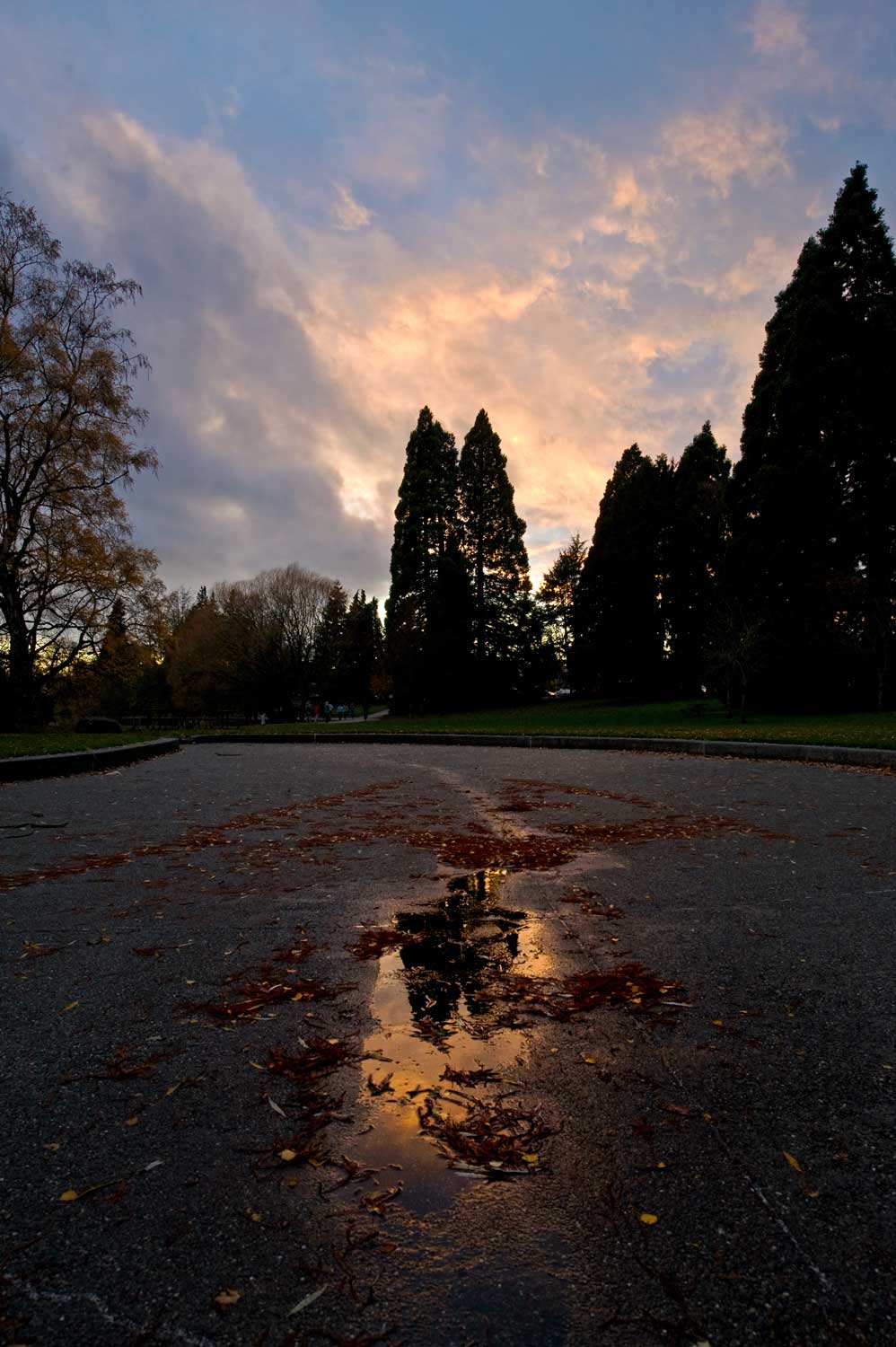
Like all great parks, Greenlake is a seasonal canvas.
Winter, then:

For the past 40 odd years, we’ve been visiting the coast of the Olympic Peninsula, staying alternately at Mora campgrounds, Three Rivers, and LaPush Ocean Park, with occasional sojourns along the shore – beach hikes of 2-5 days duration. I’d posit that nature and our connection to it is a work of imagination; never static, changing ever as we change.
Here, for general enjoyment, are two shots of the same scene on the same day, but quite different, I think. One I prefer in color, the other black and white. Two miles north on Rialto Beach, itself just north of LaPush. A stone’s throw from Hole-in-the-Wall, for those familiar with the area.
(click to enlarge)


And further south, my brother Kael and sister-in-law Anne frightened great flocks of gulls on 2nd Beach, where we’ve been jumping waves in the 46 degree water since we were small.

This last trip was especially sweet if only because the forecast was consistently so bleak. Clouds and showers were predicted for both days represented above, and we were prepared with parkas and tarps. It reminded me of an old and now-departed friend adherence to what he called The Doctrine of Zero Expectations: expect little or nothing and you’ll never be disappointed; you may even be pleasantly surprised.
Went to a dress rehearsal of the last of the Ring cycle last night. Probably the most extraordinary example of earth-shattering beauty combined with utter bullshit; one hell of a roller coaster veering between suppressed giggles and tears of joy.
Afterwards, stopped at the Madison overpass to experiment with a long-exposure – sodium lights are such a pain – but an interesting shot, I think, of the late-night river of traffic, and a moment of respite after Valhalla’s flames die down.
(click to enlarge)

Photos taken along the parade route culminating at Gasworks on this marvelous day of bright sun and looming clouds. Be forewarned: this collection of thumbnails contains a smattering of nudity (although nothing terribly explicit).
Seattle’s own carnival, with a sense, somehow, of decorum and civility thrown in. This solstice celebration has more of a flirty Finnish sauna than wicker man buzz.
Walking away after parade’s end, I saw a tourist approach a couple of cops:
“Excuse me, officer,” she said, “but isn’t nudity against the rules?”
“Not today, ma’am,” the older of the two cops replied with a grin.
(click twice for full size)

This little lost treasure (PG-rated) comes from Charles Martin for your listening amusement.
Ezio Pinza, we guess, must have recorded this musical blague in the late 20s, though we can’t be sure. Any guesses welcome, educated or not. Ezio actually doesn’t start singing for a couple minutes, but when he does…

Sunday evening, an exuberant crowd packed West Seattle’s historic Admiral Theatre for a celebration of Seeger and his amazing life.
The inimitable Clay Eals (whose name must be followed by “Amen!”), writer of a monumental bio of Steve Goodman, journalist, historian, preservationist, hosted the event with his usual infectious joy and enthusiasm – think Garrison Keillor as a tenor – and led us on a musical tour of Pete’s life. His partner in this tower of song was Tom Colwell and his band The Southbound Odyssey, joined by the Clallam County band, the Seattle Labor Chorus, and many others.
Photos from an enchanted evening:


We’re considering adding an audio portion to the blog; a little system test follows.
Here’s a little bon-bon from Ethan Sherrard, written for a Hillside production of ‘As You Like It’ featuring Jean on cello & John Owen on guitar:
And here’s another, from our recent production of ‘The Tempest,’ featuring Grace and Holly Madland’:
(click to enlarge)

The clouds parted.
Many thousands lined the parade route, cheering every float, every costume, every performer. Quoting from the Procession website:
…on Procession day, residents don their creative expressions and proceed through the streets of Olympia in masks and costumes. Carrying banners, windsocks, and giant puppets, they participate in a cultural exchange honoring the awe and splendor of the natural world.
Congratulations to all involved in this glorious event!

On Saturday, hundreds of participants – dancers, musicians, artists, and celebrants – gathered on side streets to prepare for the late afternoon parade.
The streets were filled with chalk drawings, made with chalk freely provided, turning downtown Olympia into a vast tapestry of community art.
The clouds threatened rain.

Some may recall my visit to Eli Sterling’s workshop last week.
Friday night, I returned to Olympia for the Procession of the Species luminarios, during which the luminous creations of months of collaborative art are hoisted along downtown streets, culminating at the lake below the capital, enchanting young and old. Here are a small sample of pix from that evening.
Soon, we’ll have a look at the main event on Saturday.
Consider visiting Olympia this Saturday for the 15th annual Procession of the Species – a delirious and remarkable community arts event (cum parade) with the stated goal of “[elevating] the dignity of the human spirit…through a process of imagination, creation and sharing.” And it looks like they might just pull it off!

Here are some photos taken during a visit with Procession supremo Eli Sterling in his busy and overflowing Olympia workshop last Thursday.
[Editor’s note: The following post was put up in Spring of 2009. For a more recent post about Vladimir, from late December ’09, click here]
(as always, click to enlarge)

This evening, stopping by John Siscoe’s Globe Bookstore in Pioneer Square, I’d just paid for parking in the half-deserted streets, when the fellow above suggested an exchange – poetry for a meal.
“What’s your name?” he asked, “I’ll write you a poem using your name.”
“Deal,” I replied, “but you have to guess my name.”
“Interesting,” said the poet, and I went into the Globe to chat with John. Ten minutes later, my poem was finished, hand-printed on the backside of a borrowed business card.
To
Understand the
Roads that
Belong to us
Under a sky of dreams in the
Light from the garden in an
Embrace that
Never ceases to leave from a
Tender touch of winter.
“Very nice, but where’s my name?” I asked.
The poet pointed. “Turbulent,” he said, “Your name is Turbulent.”
(For more poetry by Vladimir, click here)
Last Saturday evening, we attended the deliriously outre Big Game Dinner, hosted annually by the West Seattle Sportsmen’s Club.

Groaning tables and moaning diners alike were loaded up with vast quantities of meat and fish. Jerry Mascio, head honcho, and wife Roz, pulled it off with vigor and aplomb.

Surprise guests arrive!

The dinner bell sounds and the ravenous follow their noses.

For more pix of meaty fun and frolic, click right here! ….
Great for portraits! I had lunch with Leslie at the Green Lake Bar & Grill yesterday, and the slanting occluded sunlight made everything magic. Here’s Les and a baby girl who happened to be sitting behind us with her parents and twin brother. See how they glow.


John Siscoe – with wife Carolyn – has owned and operated the Globe in Seattle for 30 years. One of our region’s finest small bookstores, it specializes in history and literature. A hundred feet north of Elliott Bay Books in Pioneer Square, this little gem and its astonishingly knowledgeable proprietor merit a visit.
In the interests of full disclosure, John and I founded the Globe Radio Repertory in the mid-80s and spent nearly 10 years making radio drama for NPR (see the Jean’s Radio Theatre link in our blogroll).
When you drop by, ask John about his doing the first unauthorized English translation of a late Samuel Beckett novel – and Beckett’s stunning response.
At Seattle Center on Monday evening, the Winter Solstice Fire Festival lit up the grounds. Delayed for several weeks due to weather, the flames warmed the winter night. Are these the fires that were denied Bumbershoot? (Ah, that now-forbidden closing ceremony! with Durkee and dancers and legerdemain! sigh…)
A little photo tour follows. First, ‘Fire Pod’ created by Mark “Buphalo” Tomkiewicz. The steel sculpture stands eleven feet high and is twenty feet in diameter. The flames are controlled through a midi interface. Eerie percussive sounds synch with bursts of flame. Next, the fire-dance troupe Pyrosutra performs around the base of the fountain.
Flame on!
And afterwards, walking back to my car, a forlorn conjunction. We howl and dance against the dying of the light, but some just go gentle in the night.
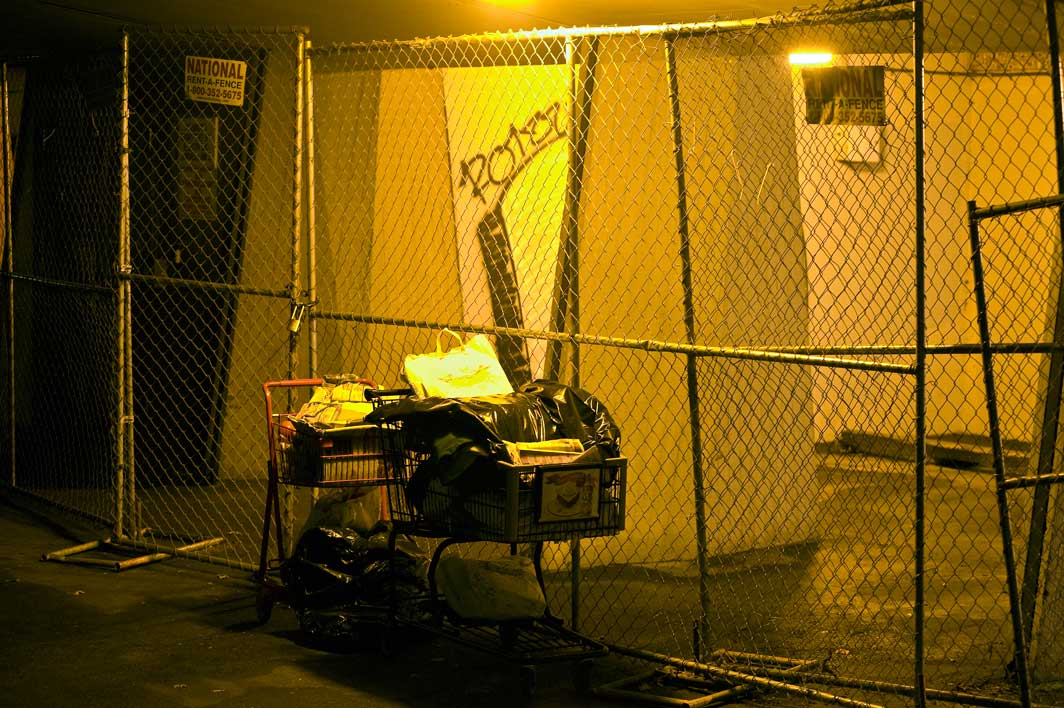
Here’s a single location, taken in all seasons and weathers. Obsessive or what?
Another shot, stitched together from several, looking across the park, just after sunset. Note the raised bumps of the Four of Hearts, lower right.

Let it snow, let it snow, let it snow!
We’re puttin’ on our show. Won’t you join us please at UP THE DOWN CHIMNEY!

Taken at Portage Bay last August, Vi posed for a Seattle Now and Then column. A remarkable woman of enormous dignity, wisdom, and even at 90, great vitality and zest for life. For her astonishing biography, visit Historylink.
(repeat click for full size)

With dear friend and colleague Jay Miller

This evening as the sun set…

Composer/musician David Mahler has kindly sent us copies of our holiday music faves. What follows is a capsule history of his seasonal sings:
“David Mahler’s holiday sings first fluttered wings in December, 1982. Old songs remembered lined up side by side with new songs discovered.
Perhaps a dozen warblers raised voices at the initial three sings that year, held at 906 E. Highland Drive. The flock grew, and followed the music five years later to 2616 E. Ward, and the following two years to 89 Yesler Way. In 1989 the sings hit the road, with two sessions guest hosted. The red book discovered its green cousin. From that year onward, through floating bridges that sank, presidential elections, and Sundays that stretched into January, the song books grew and the swell voices swelled, until David’s departure to Pittsburgh in 2005. Twenty-four consecutive years of December sings nested into memories.”
 In other news, Stu Dempster is bringing along his legendary trombone! Be prepared for a real treat as we raise voices against the darkness on the darkest day of the year. Death shall have no dominion at “Up the Down Chimney“!
Just a few snaps of kids in the neighborhood to prove to out-of-town doubters that it actually snowed and stuck!

Jean and I have made a change. We are now calling it UP THE DOWN CHIMNEY (although actually it’s not a chimney but the Grotto on the Good Shepherd campus. We take the place of Mary, although neither of us qualifies).
And it is an even BIGGER SHOW celebrating Mumbles Wales, Very Long Hair & Vest Pocket Watches, Red Ryder BB-Guns, Down of a Thistle, and composer David Mahler.
It is THIS COMING Monday, the 22nd at 7:30 in the restored Chapel at the Good Shepherd Center in Wallingford. (pictured below)
It has fine acoustics too and can be easily reached by stairs or elevator.
(The Good Shepherd campus has a big and lovingly landscaped parking lot off of Sunnyside Street, between 46th and 50th Streets.)
We will be reading 4 CLASSICS.
* GIFT of the Magi – O.Henry
* A CHILD’S CHRISTMAS in WALES – Dylan Thomas
* Twas the Night Before Christmas
* RED RYDER NAILS the CLEVELAND STREET KID – Jean Shepherd.
 (Here’s a way to remember all this. Jean Sherrard reads Jean Shepherd in the Good Shepherd.)
Mixed with the readings we will all sing together – songs that include but are not limited to…
* Jukebox Christmas Eve (Mahler, David)
* Christmas Island (The Andrews Sisters)
* Hanukkah Candles (Grossman and Goldfarb) Hanukkah begins Sunday at sundown.
* The Pathetic Birdy Song – (The Dorpat Bros) may become a classic. Click the link and hear for yourself.
… and other Holiday selections from composer David Mahler’s beloved Christmas Red and Green Books!
The Chapel at Good Shepherd photographed by Jean during the “Ashes to Ashes” exhibit. Imagine yourself singing and listening to a good story in place of those 21 biodegradable caskets hanging from the ceiling. (For more on this now-closed show read Sally Anderson’s review of it in our archives.)

Attempting to repeat a photo for a recent ‘Seattle Now and Then’, I found myself atop the Hyatt, looking west along Pine. A bit of a gloomy day, but an interesting view, nonetheless. Here’s a slightly distorted stitch of a few pix.
(click for larger size)

Our own little wonderland just after dawn.
(click thumbnails twice for full size)
Friday morning, Paul and I, at the urging of a well-meaning friend, descended on our state’s Capitol for what was meant to be a book signing in the legislative gift shop. It was a slow day for book sales, I fear, though we watched dozens of Washington State calendars selling hotter than hotcakes, and were mildly dispirited by the disinterested yawns (“Washington Then and Now?” the handful of power brokers who wandered past seemed to exclaim, “Been there, done that.”).
There were, as always, pearls of conversation and gentle conversators, but for the most part, we stared blankly at each other and wrestled over a single New York Times. Much amusement was provided when I found a life-sized ad for HBO’s “Saddam, BMOC” and we took turns shooting pix of each other.


Then we each in turns wandered up into the Rotunda, where we discovered an unfolding scandal. While Christmas had reached its merry tendrils into nearly every nook and cranny….
(as always, click to enlarge photos)

…there were serpents in that Yuletide tree (note the state patrolman patrolling with care). But first, let’s visit the capitol’s own creche, a simple stable amongst the marble columns.

Not 30 feet to the left, ATHEISTS had insisted upon their 1st Amendment rights (damn them), and placed a sign reading, in part, “Religion is but myth and superstition that hardens hearts and enslaves minds.”
FOX news, namely Bill O’Reilly, had taken up the cause a few days ago, encouraging his viewers to express their outrage to the Guv. Hundreds of calls and emails poured in hourly. Christmas under siege, Santa held for ransom, myrrh stolen from Christ child. Protesting churchgoers were up in arms. Some added their own signs (see more state patrolmen patrolling beyond the tree).

Then, between 7 and 7:30 in the morning, someone stole the atheists’ sign. Dan Barker, co-founder of the Freedom From Religion Foundation proclaimed the act, “unfriendly.” Later in the day, someone turned the sign in to Country KMPS’s Ichabod Caine. The State Patrol is investigating.
Below, see the brightly colored placard on the left; also in place of the original anti-religious sign is a terse gold-colored reminder from the Foundation: “Church/State – Keep them separate”. George Washington – not a foe of religion, although perhaps of religious partisanship – has positioned his enormous head between opposing sides (his bust here was, Paul informs me, given to the Capitol Building by the Daughters of the American Revolution).

Meanwhile, downstairs in the basement gift shop, Paul and I thanked the staff for putting up with us and left the marble corridors of power, heading once again for our own cluttered basements, which make up in padding what they lack in grandeur. Outside, Paul paused once more to glance at the Times.

In wearing this mask, Paul wrote me earlier this evening, we were doubly posturing, acting the part of an actor acting the part of Saddam, who spent decades rehearsing his own execution by practising it on others.
Is there some significance here? A cradle of hypocracy liberally perfumed with Frankincense? Heavens to Murgatroyd, I’m reluctant to bring up old lessons, but aren’t we all, to some extent, reaping those whirlwinds?
It’s a Christmas cracker! Paul and I will be reading tales of the season in a couple venues around town. The first is on Saturday the 13th at the Haller Lake Community Center at 7 PM. The second is at the Good Shepherd Center Chapel performance space on Monday the 22nd, starting at 7:30.
We’ll be reading classics – Paul’s soulful version of ‘Gift of the Magi’, plus, donning Santa cap and bells, his sonorous and heartfelt ‘Night before Christmas’. Jean will finish off with the hilarious Jean Shepherd saga ‘Red Ryder meets the Cleveland Street Kid’, from which the movie ‘A Christmas Story’ was adapted.
We can’t decide whether to call these evenings Up the Chimney or Down the Chimney with Jean & Paul. Votes?

Join us!
My apologies for not having gotten these up sooner. They should have accompanied Sally Anderson’s fine review, but better late than never, I always say (in fact, I never say that, but it seemed appropriate for this remarkable show).
(click twice on thumbnails to see full size)
(Incidentally, the mysterious final photo of the series was taken peering through the newspaper coffin to obtain a view, not of eyes, but of the negative-corpse-space’s leg holes.)
Yesterday, I made a few stops around town picking up Now and Then shots for Paul’s column. Those below are extras.
First, I stopped at the 41st and Aurora pedestrian overpass and met historian/preservationist Heather McAuliffe and her daughter’s grade school class and teachers from BF Day for a repeat of a 1936 photo. The original was taken below the overpass looking up.

Then I headed downtown to meet Ron Edge, a photo collector and history sleuth, who’s been helping Paul unravel mysteries. We were trying to repeat a pic of an old tin shop at the corner of what is now 1st and Yesler. Here’s Ron, braving traffic:

Later that afternoon, I met baseball historian Dave Eskenazi and we climbed up on top of a vast rooftop (a windowless storage building for King County Elections) looking for signs of Dugdale Park, an ancient baseball field. This eerie white expanse, which covers the footprint of the old park, is just around the corner from Washington Hall at 14th and Fir.

As always, click on the pix to see them full size.
I’m lusting after carbs and proteins, with millions of years of biology urging me to prepare for the long Dampness. I feel a certain kinship with fat crows and bulky spiders feasting before famine.


A remarkable show from Joe, one of our especial favorites around DorpatSherrardLomont. His luminous paintings, at once raucous and restrained, deliriously primitive and utterly civilized, really knock our socks off. Joe’s work is the stuff of dreams, found on cave walls and along alleys, quaysides and memory palaces; signposts for the soulful.
In French, window shopping is leche-vitrines (literally, licking windows). Passing Joe’s bright canvases, I had the nearly irresistible urge to leche-tableaux.

A view from the galleries into the gallery.

Joe with his program writer and designer.


Admirers and fellow leche-tableauxists:


After, outside in the damp, the world seemed refreshed. I found Paul with Renko and Stu Dempster standing in the middle of the street like amazed children.

Don’t miss this show! At Grover/Thurston Gallery, 309 Occidental Ave. S., through December 13th.


