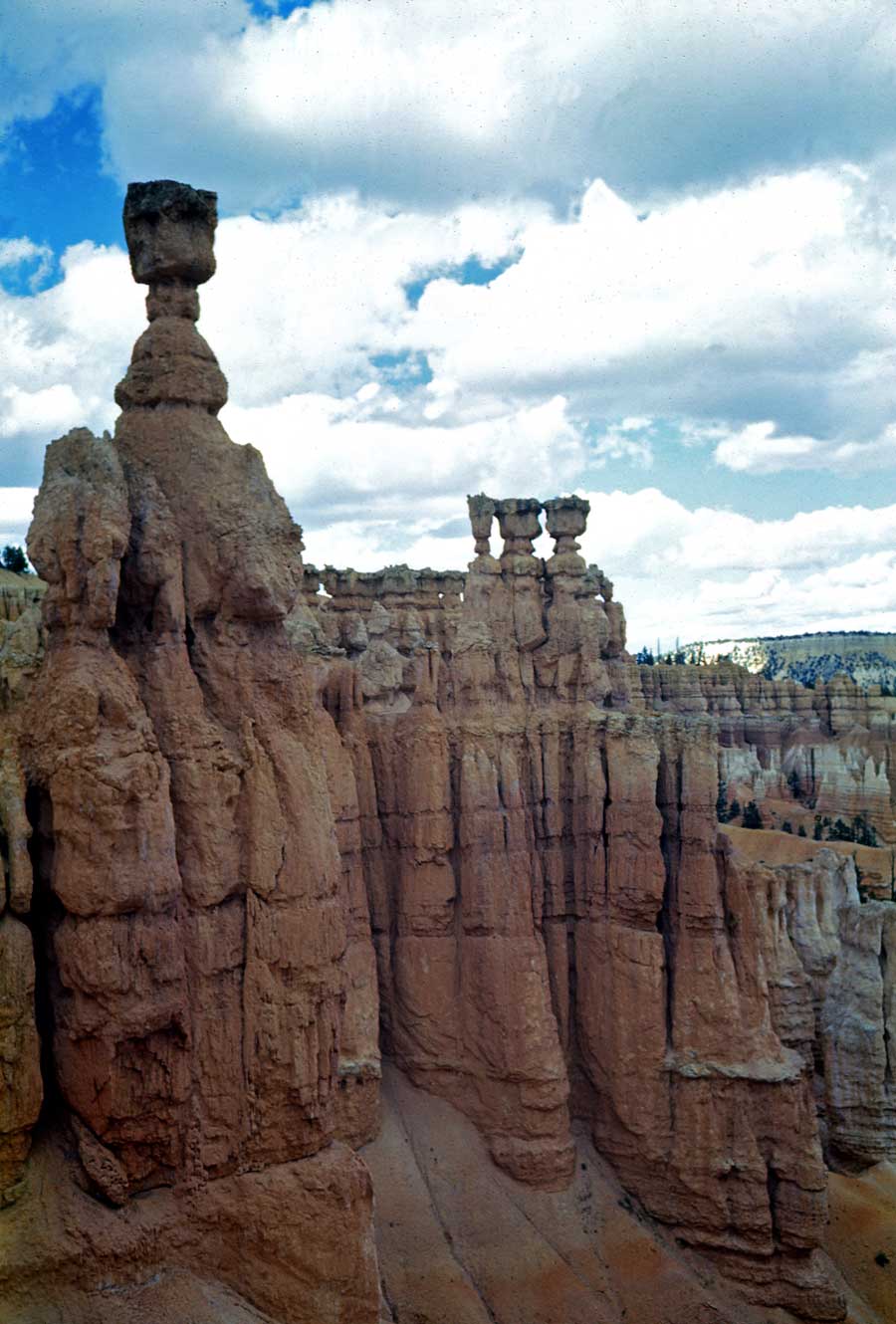
OUR DAILY SYKES #498 – Steptoe Butte

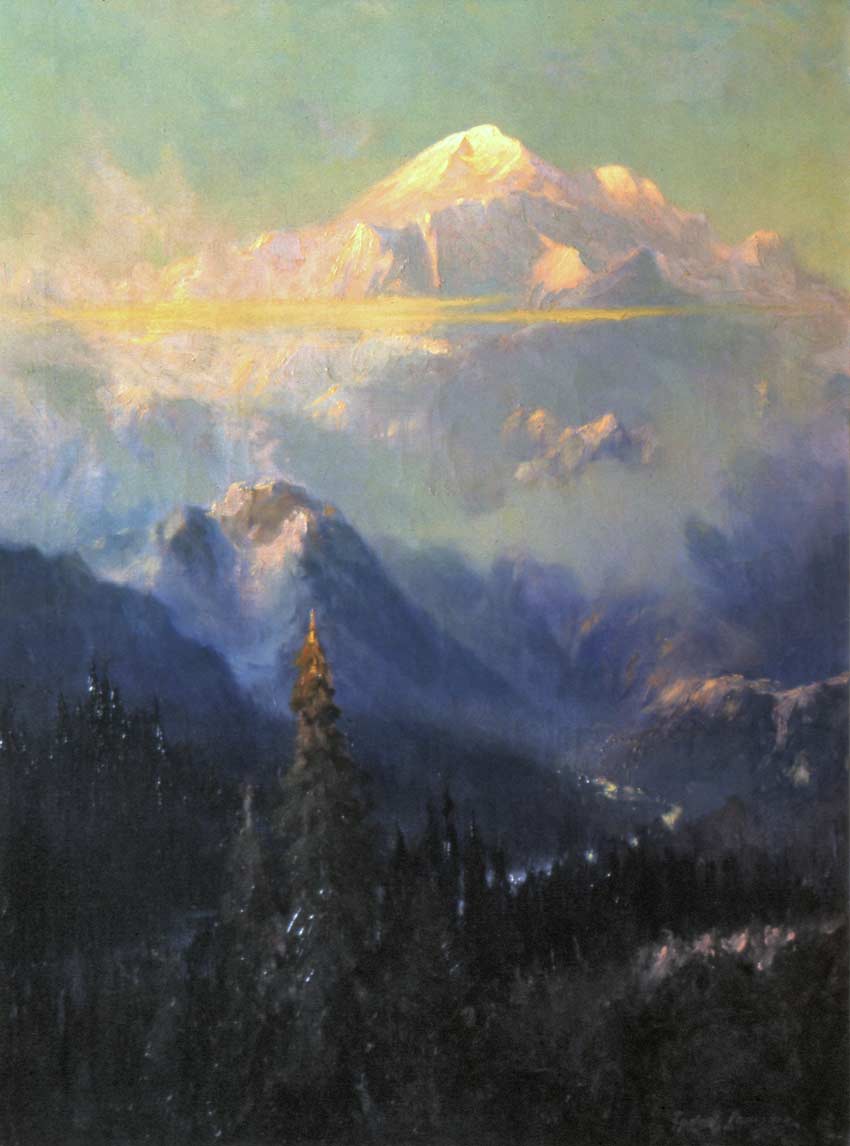


The focus is soft and the color askew but the wit of Horace Sykes caption is enjoyed. “Here’s How Martha Got George.” He penned it on the border of the slide. His daughter Jeannette peeks at her father and he at her through the gate to their home with mother Elizabeth at the Puget Sound end of Bertona Lane in Magnolia. They moved from Capitol Hill to their new Magnolia home in 1932. Jeanette was then twenty-two and still in school – either the U.W. or perhaps by then Cornish. This is many years later – most likely on one of her visits to her folks in the late 1940s. Jeannette was a ballet dancer and distinguished by her formidable frame. Some of her dancing was done at Cornish. The Times description of her on her wedding day to Navy Lieutenant Henry Clay DeLong (of Bath Maine) reads, in part, “The bride who is a tall, stately blond, was given in marriage by her father . . . She carried a handkerchief made from the lace of her great-great grandmother’s wedding gown.” The wedding was at St. Marks on August 16, 1935. Earlier that year Jeannette was crowned Carnival Queen at Mt. Rainier, for the 4th annual Spring Ski Carnival at Paradise Valley. It was also the site of Jeannette’s triumph in 1922 when the 12-year old beat her father to the top of Mt. Rainier, and became, the Times reported, “the youngest person ever to reach the summit.” Three years more and the Times “added” that the teen Jeannette was doing radio skits with her father Horace on the subject of fire safety. She “took the part of ‘Mrs. Smith,’ the woman with the house full of fire hazards.” (Click to Enlarge)


Ron Edge sends along a link to a slick piece of promotion for the Battersea Station’s duty as centerpiece for a proposed new London neighborhood. Perhaps it – the link and these ambitious plans – will work. Warning: while animation included in the link is satisfying the tone of the production is, for my taste, much too pushy-confident. Here’s the link: http://www.battersea-powerstation.com/ I see it shares no color, and so probably will not link. However, you can enter it by key and most-likely find it.
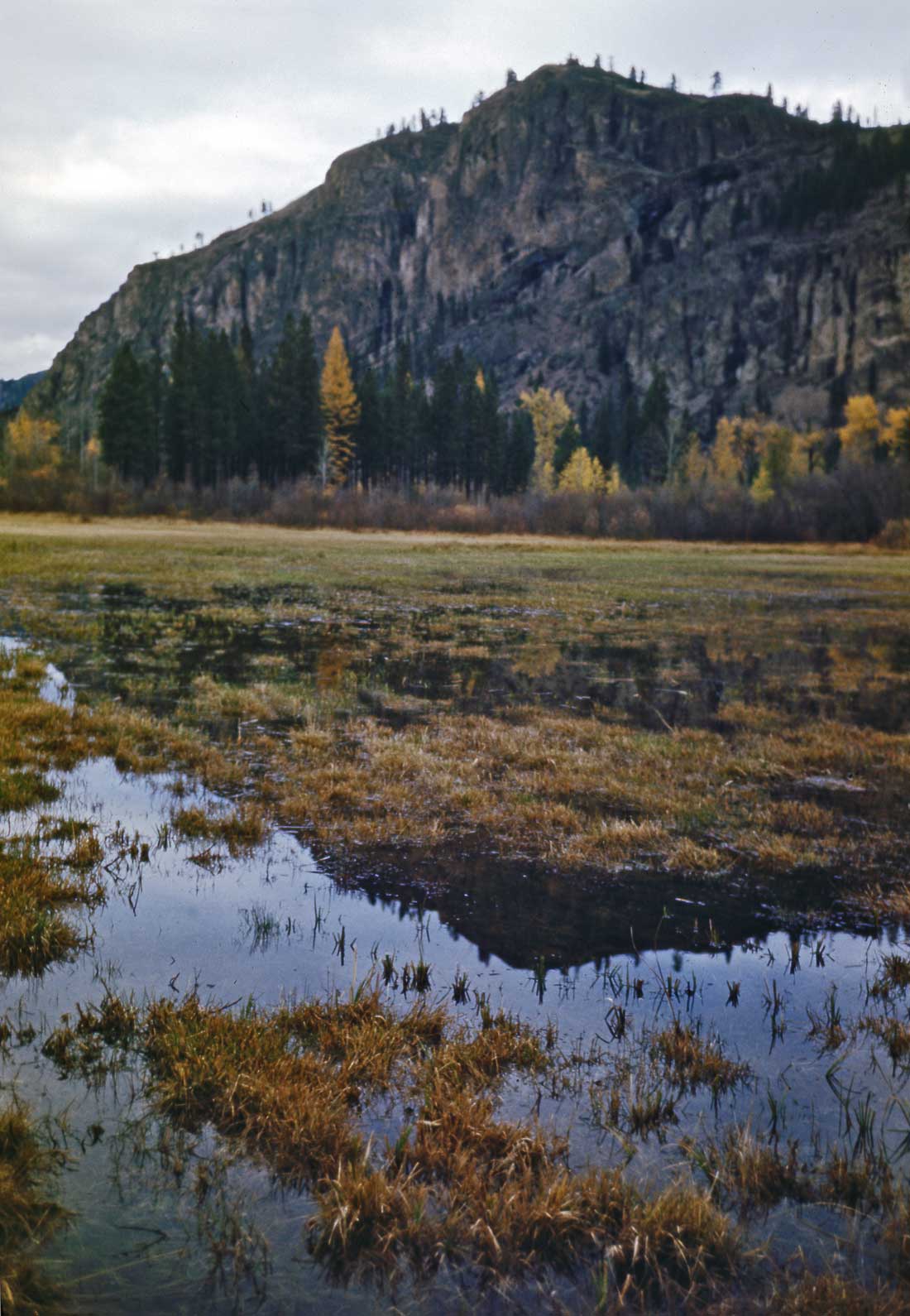
All righty then, Paul – here’s proof of our larch adventure – a 180 degree pan on the snowy dirt road above Blewett (my son Noel is on the left):

And for your viewing pleasure, a few more:


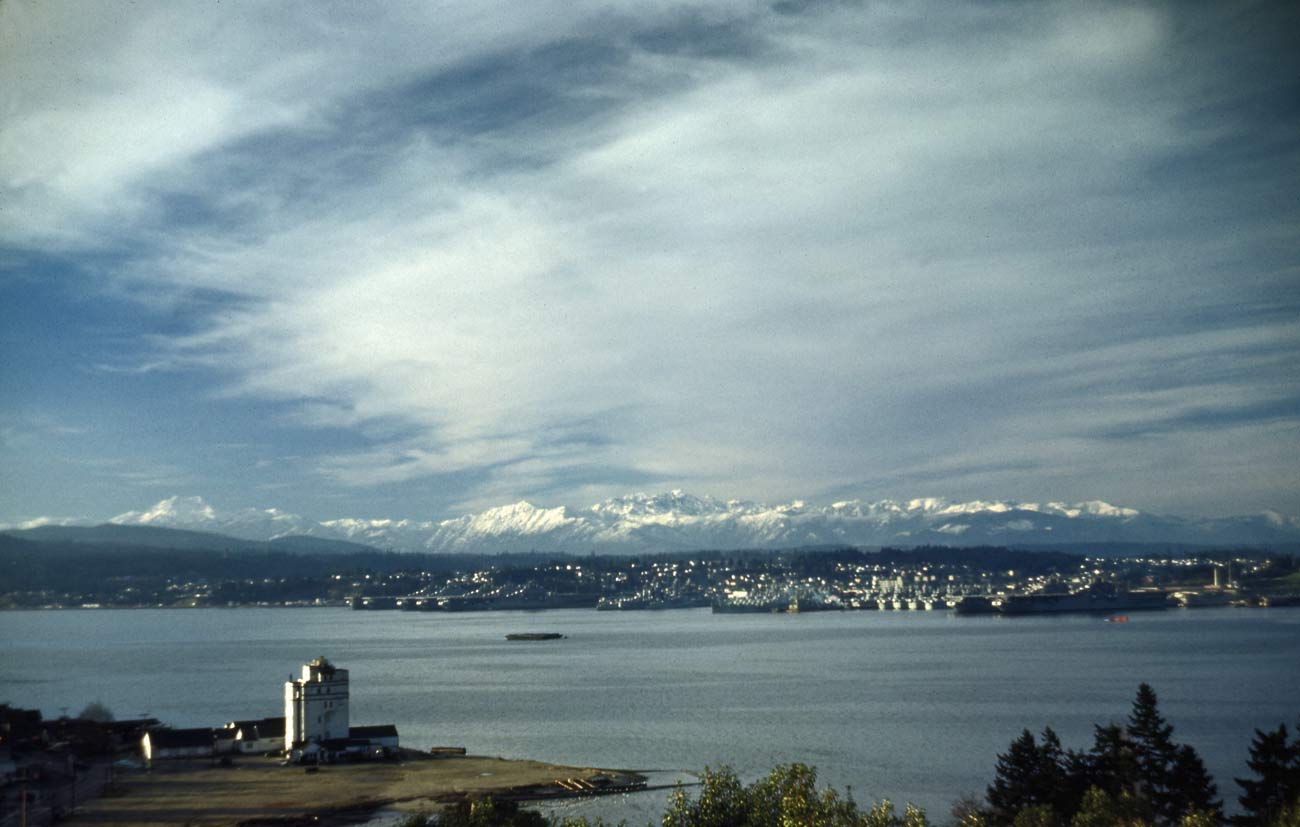


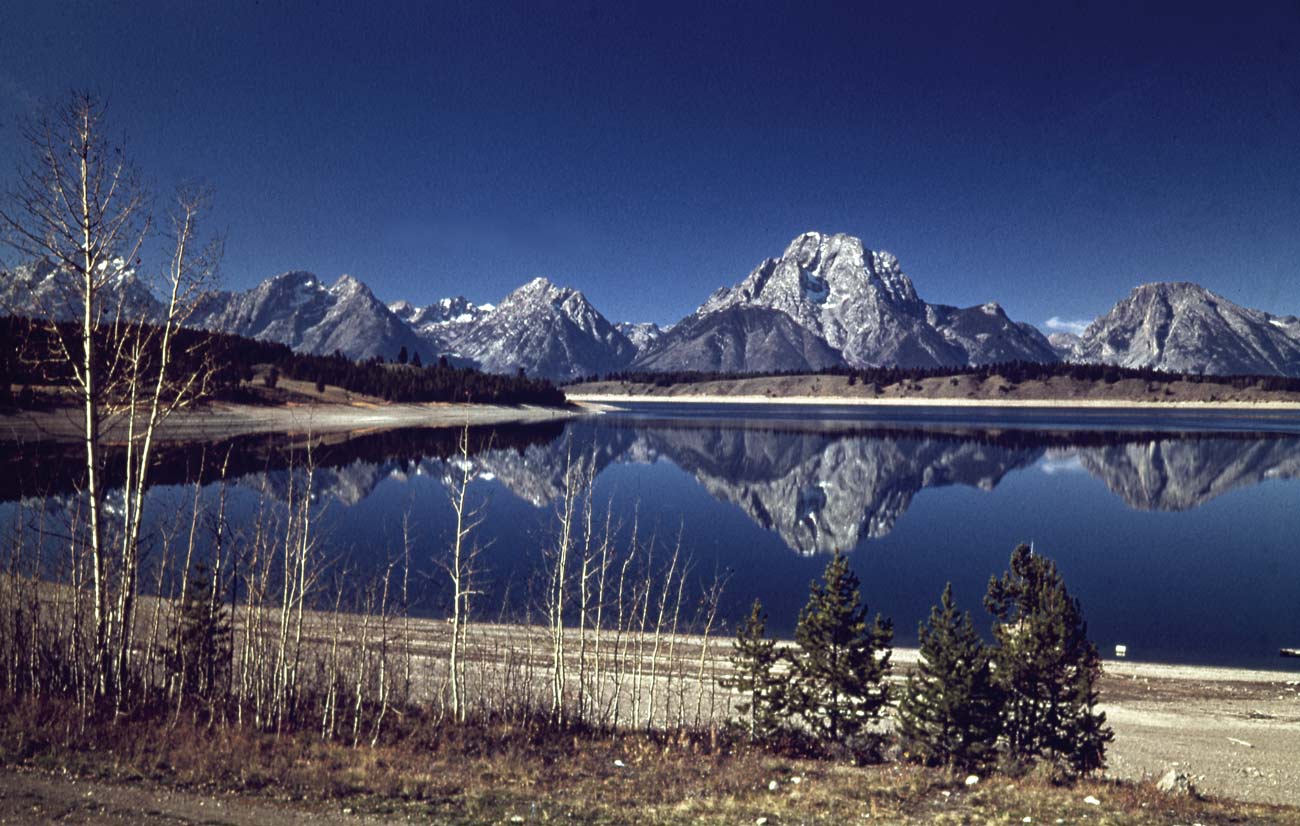


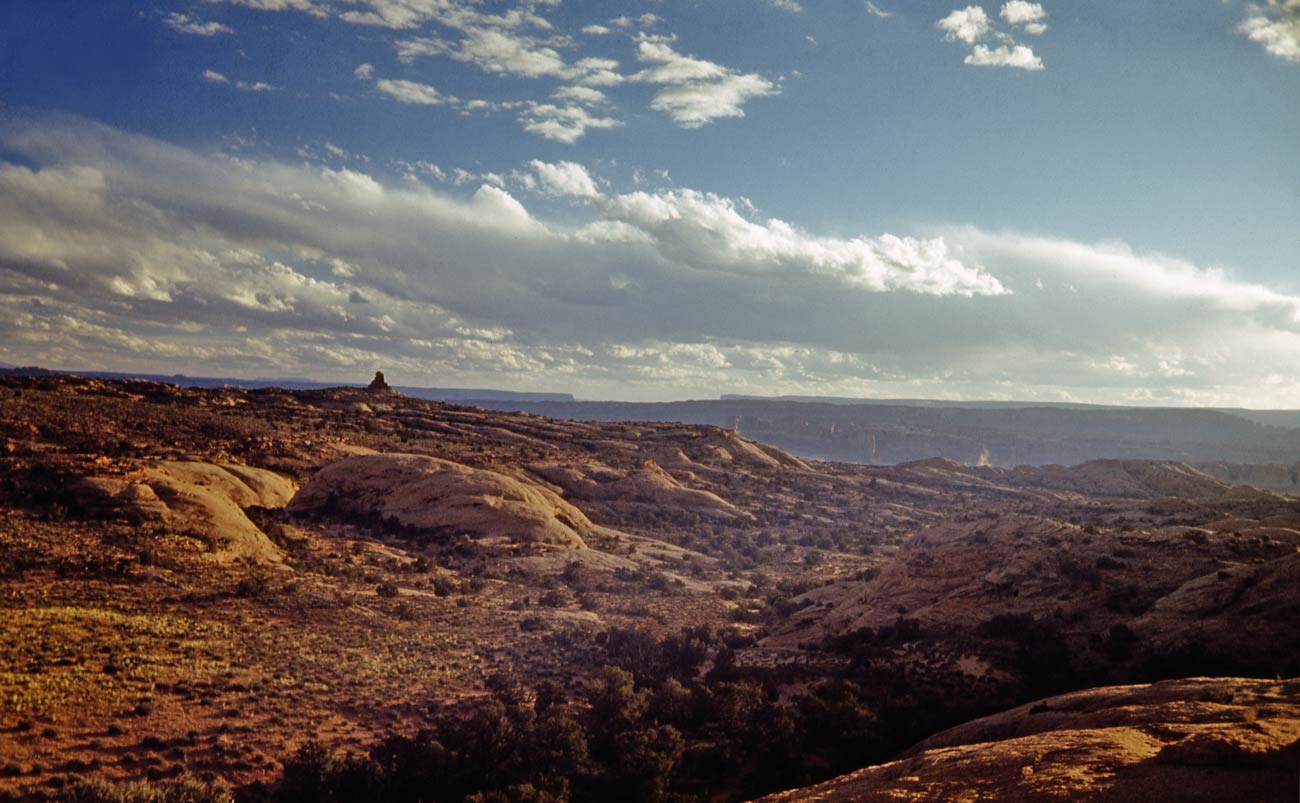
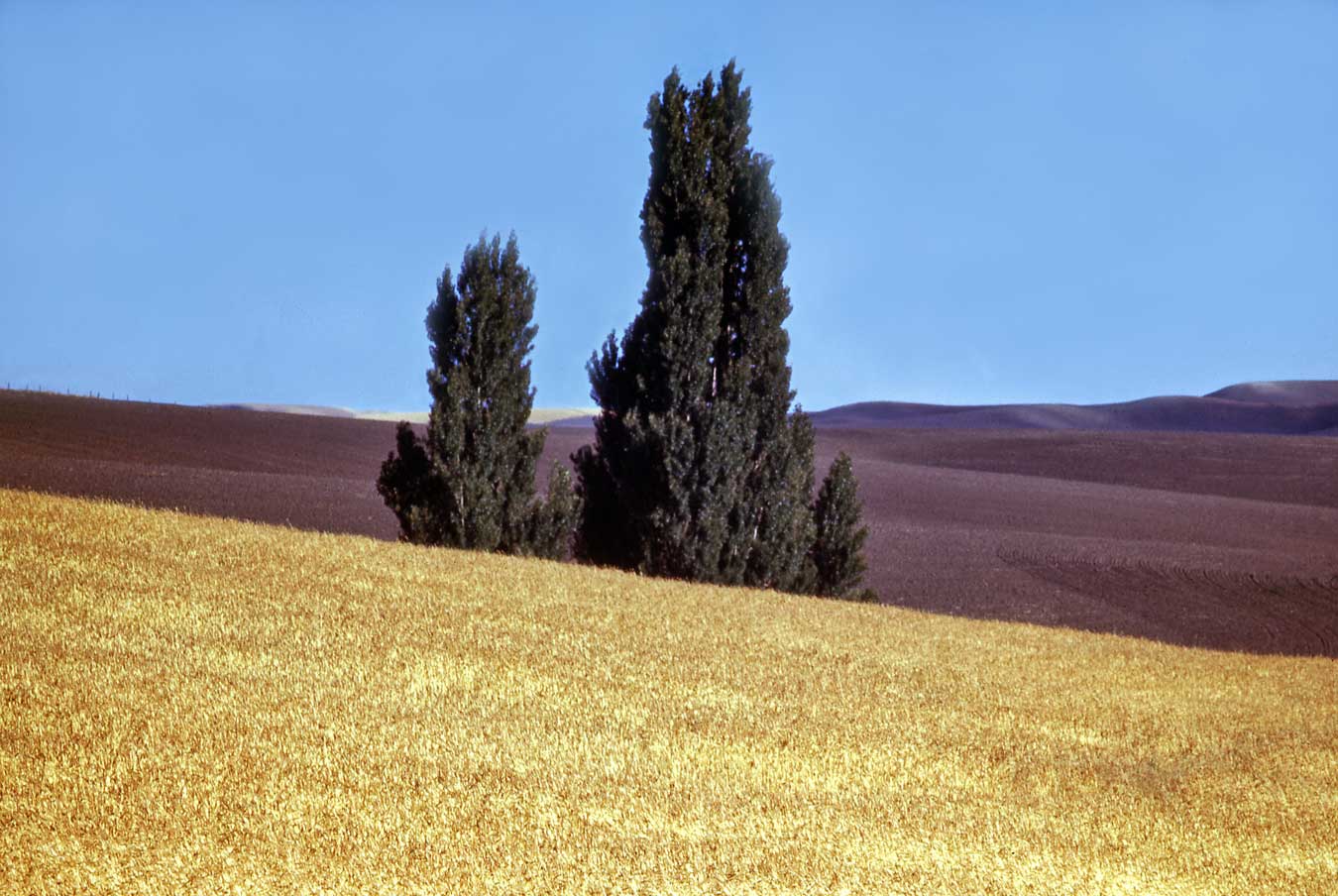
The solitary stack or tower or grain hopper on this horizon reminds me of an artist named Cooper – John Cooper, I think, although I now know a local collector by that name and so may be confused, however the Heald brothers, Paul and Larry/Charles, both artists themselves, would know, for at least Paul taught art in or attended Indiana (or Illinois) University in the mid-1960s when Cooper or Coop’ was there, if that was his name – who in 1968 or ’69 was driving around the United States in an older Cadillac painting grain hoppers (not on them) with whatever media and on whatever surface was available. Coop’s hoppers, I repeat, resembled that landmark left of center in this, of course, unnamed – by Sykes – place. These oversize farming artifacts had, as I remember it, taken on some symbolic role for the often manic Coop who once had exhibited – or assembled – a show of several of them on the campus where he taught. He was a persuasive fellow and traveled – I think I’m correct in this – without funds. I traded him a beer in the Kulshan Tavern – in the Fairhaven part of Bellingham – for a portrait of myself, which he painted on an easel and surrounded with symbols of many sorts like the ying yang and his hoppers. He did the painting in an open field – or vacant lot – near the tavern and the sun was setting over Lummi Island. For me it was a most joyful event. (Click to Enlarge)



Horace Sykes looking down into the dark and deep waters of Dry Falls Lake. Below or looks at the Vista House that are more revealing than those included with Our Daily Sykes #464. (Black and White postcard used courtesy of Drew Miller. – Click to Enlarge)

(Click TWICE to Enlarge)
Dry Fall and a glimpse of Dry Fall Lake too. The environs can be learned below from two of the thousands of recordings taken from the visitor’s interpretative center or near it. A brief study below should find the features of the cliff that Horace Sykes shows above. An alternative is penultimate to the bottom where Mrs. and Mr. Giezentanner pose for real photo postcard artist Ellis with some of the Dry Falls Park observation shelter showing on the left. The Giezentanners are described as the caretakers and lecturers for the park. The couple stands on a short bridge that leads to a monolith that is exposed and feels so. That fenced prospect appears in Jean and my book “Washington Then and Now” on pages 144 and 145. Below the Giezentanners is the billboard that for many years romanticized these rocks and imagined falls. The natural interpretation of the place and its historical forces has changed some since the board was raised. You may easily find contemporary interpretations using the net. There is among them a documentary – with animations and working geologists – that about six years ago was shown on PBS. I have lost the title.


The only identification with confidence here is “Lust for Life,” the 1934 novel by Irving Stone pulled from the brilliance of the letters that Vincent van Gogh wrote to his brother Theo. It is the orange book on the bottom of the pile resting on the table in the lower slide. I suspect that the persons remembered here are both relatives of Horace Sykes – ones living in Oregon. I surely do not know that and there is little chance that these two delicate figures will ever be identified. However, portraits like these are very rare in the Sykes collection, and the most of them – the ones that are identified – are of members of his family and a few of their friends, most often at Christmas. (Click to Enlarge)




Among Horace Sykes slides are one hundred or so copies of paintings. These two are identified with names attached to their frames. The names, however, are either wrong – actually misspelled – or no longer in use. First what the unknown painter has named Crossley Lake is Cosley Lake.
Joe Cosley was a hunter-trapper who frequented this area and later worked as a park ranger once his hunting ground had been nationalized as a protected park. Cosley Lake is about 10 miles north of what was called Lake McDermott, the name used by the painter on his frame, before it was changed to Swiftcurrent Lake. It took awhile to sort this out. There are quite a few postcards of McDermott Lake on line but none that I found indicated where in the park it was. One of the cards described it as near Mt. Wilbur and Mt. Grinnell, so I went looking for them.
Soon I was confident that the little lake named Swiftcurrent, with the largest hotel in the park (Many Glaciers Hotel – and many rooms too), was once named McDermott after a lumberman in the late 1890s. And I also found the waterfalls at the western end of the lake. The name was changed from McDermott to Swiftcurrent in 1928, perhaps because the creek was so named and also the popular mountain pass and trail that cross the divide and lead one to Lake McDonald on the west side of the park. Swiftcurrent lake is only about a quarter mile wide when measured east-west directly across from the hotel. The painting also looks west and a little south. One half mile behind the painter is the western end of the six-mile long finger lake, Lake Sherburne. An earth dam was built at its western end and the lake is now a reservoir for ultimately irrigating the farm lands of Montana and Canada to the east of the park and to the sides of the Milk River.


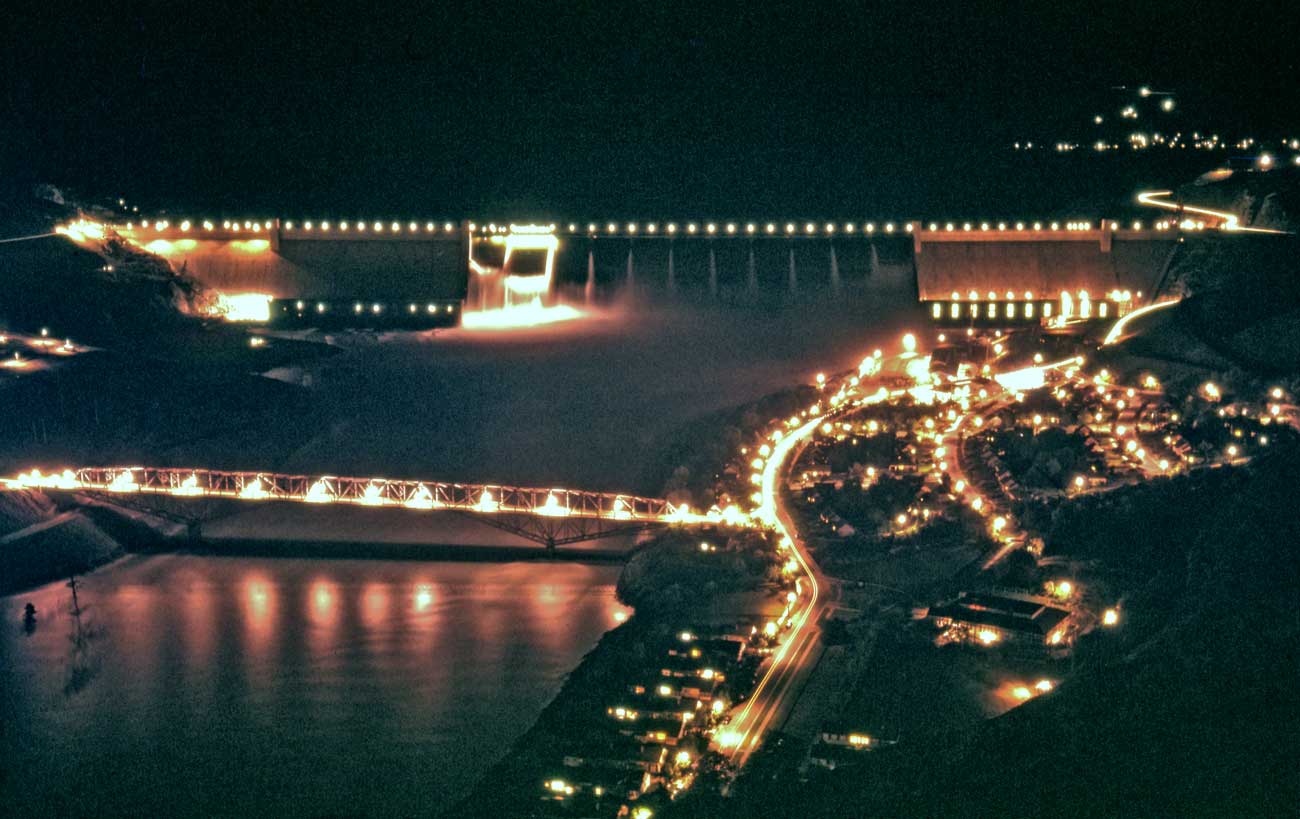

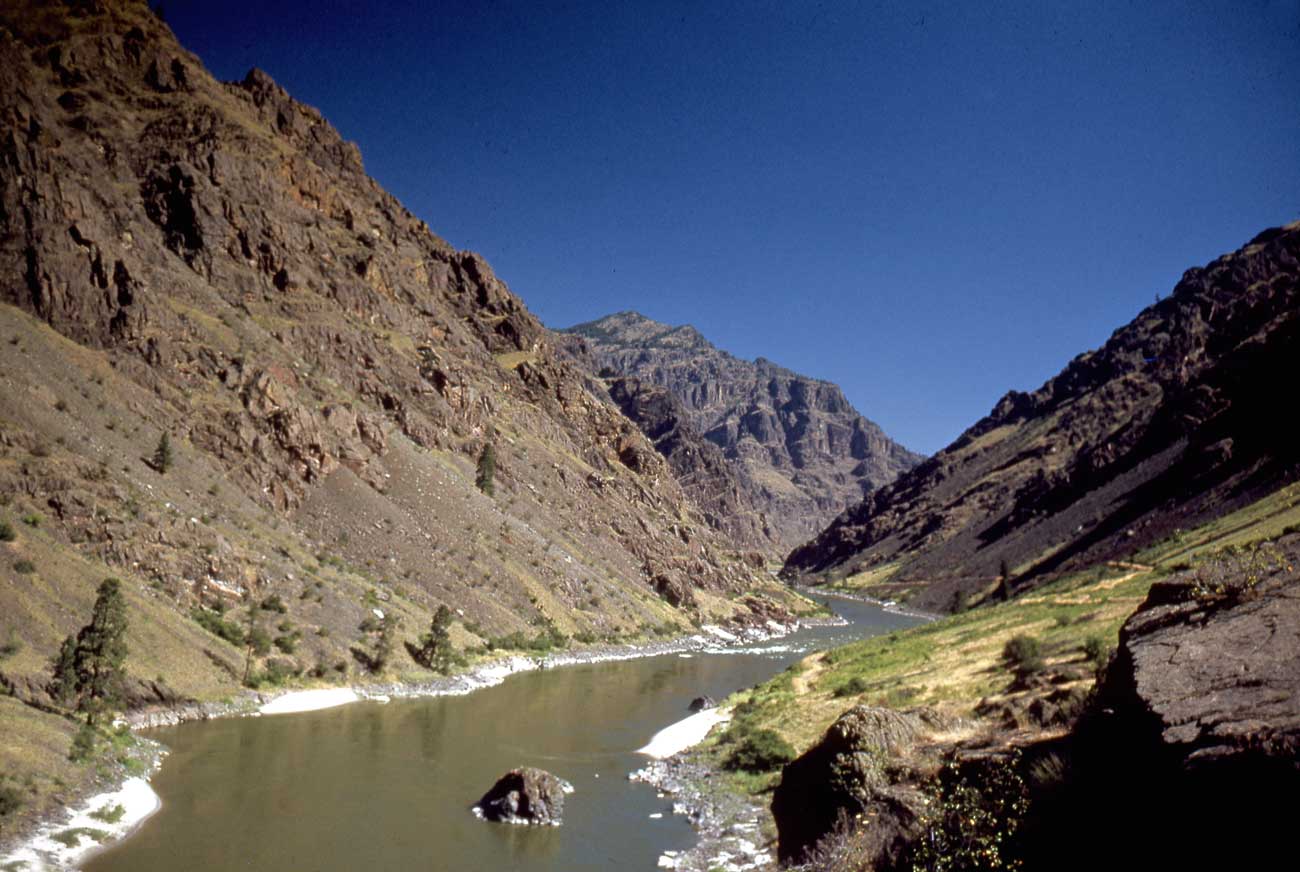
This returns to the rapids shown below as “Our Daily Sykes #435 – ‘Rapids on the Snake, Perhaps’.” This is a wider view and also for me a subject suspected, not known. (Click to Enlarge)
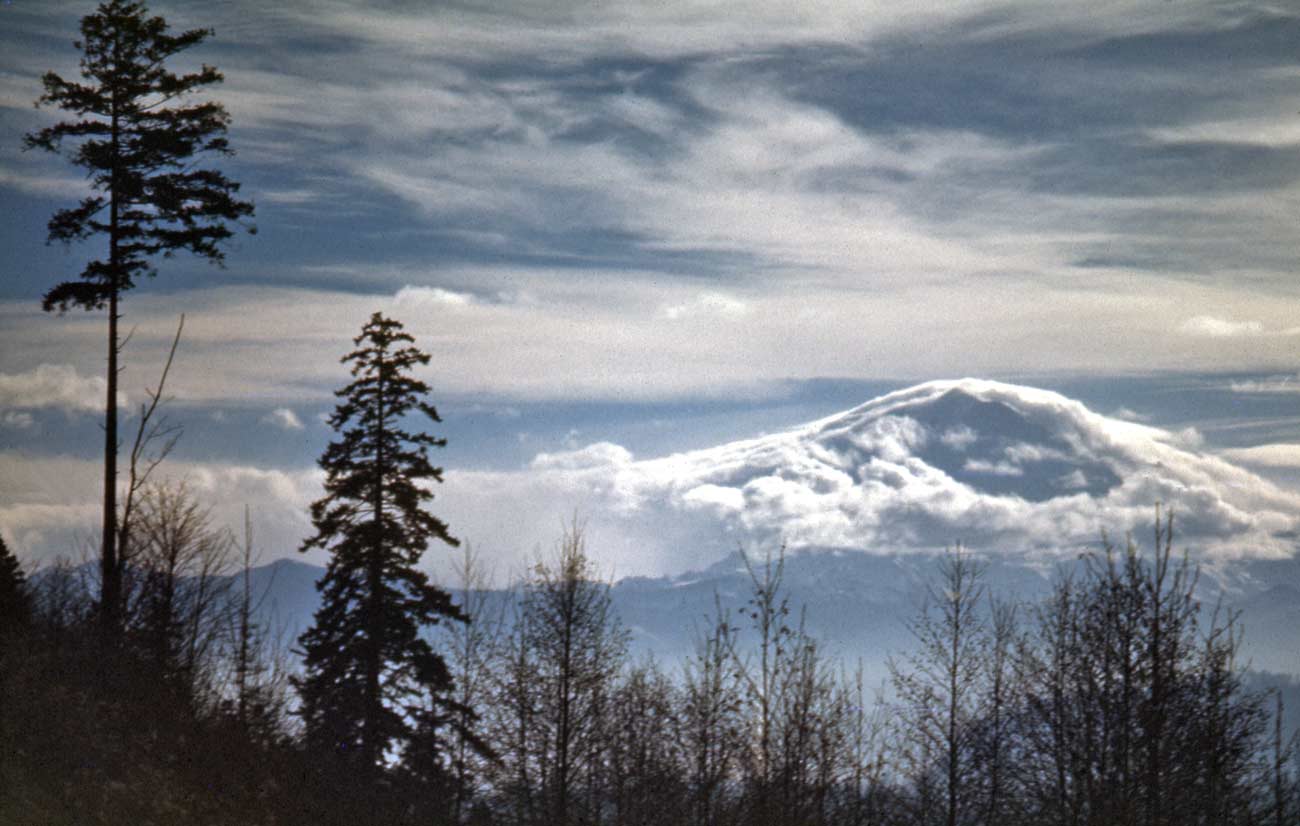
(Click to Enlarge)
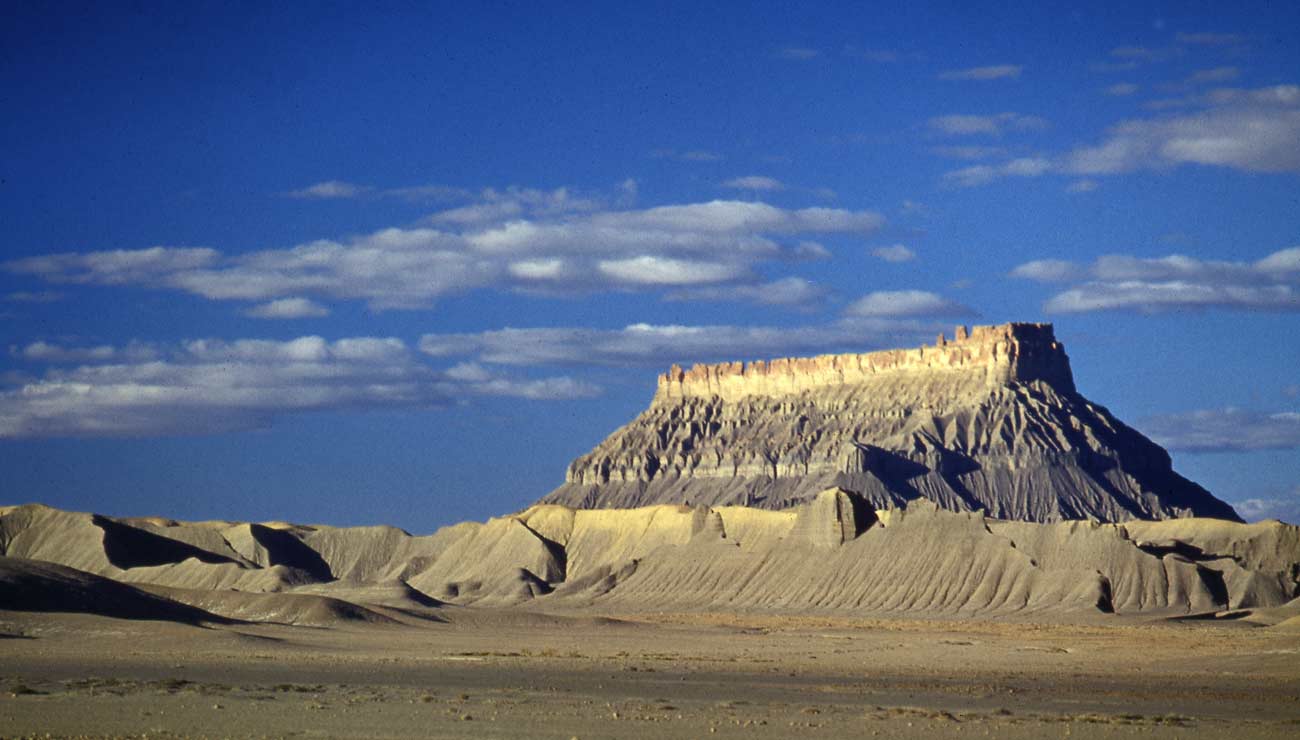
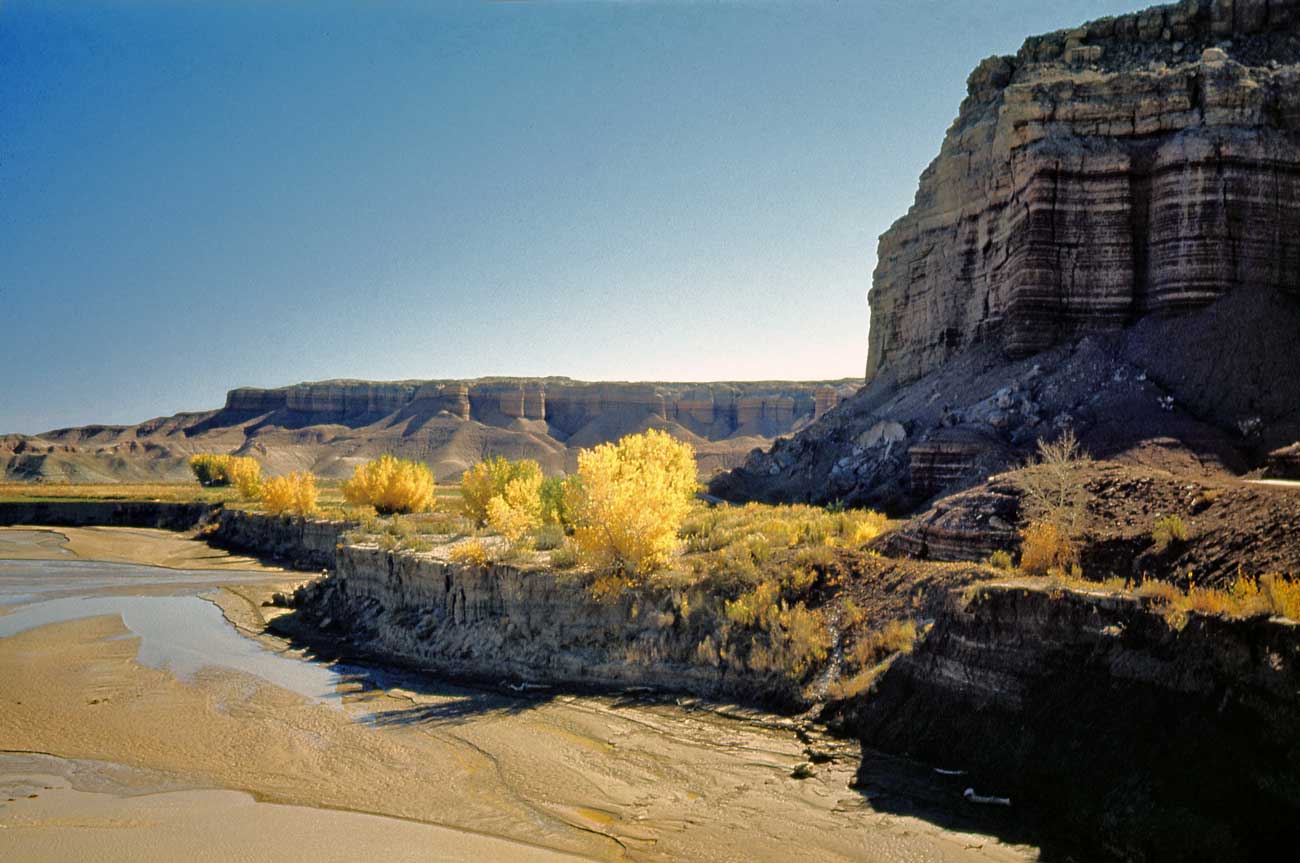
Since I am certain that I have seen this butte before during one of my Google Earth drives – probably through southeast Utah – I have titled it the Temporarily Lost Butte, confident that I will find it again. And yet I have just tried again and failed. I looked mostly to the south of Moab, Utah. That is where I imagined that I saw it earlier. But now I have come upon so many buttes that resemble this one that my hide-and-seek is like confused by the sprite or hobgoblin or leprechan who has tied ribbons around every tree in the forest. Still I will stay with “temporarily” and expect to come upon it again and learn its confident name.

(Click to Enlarge)


(Click to Enlarge)


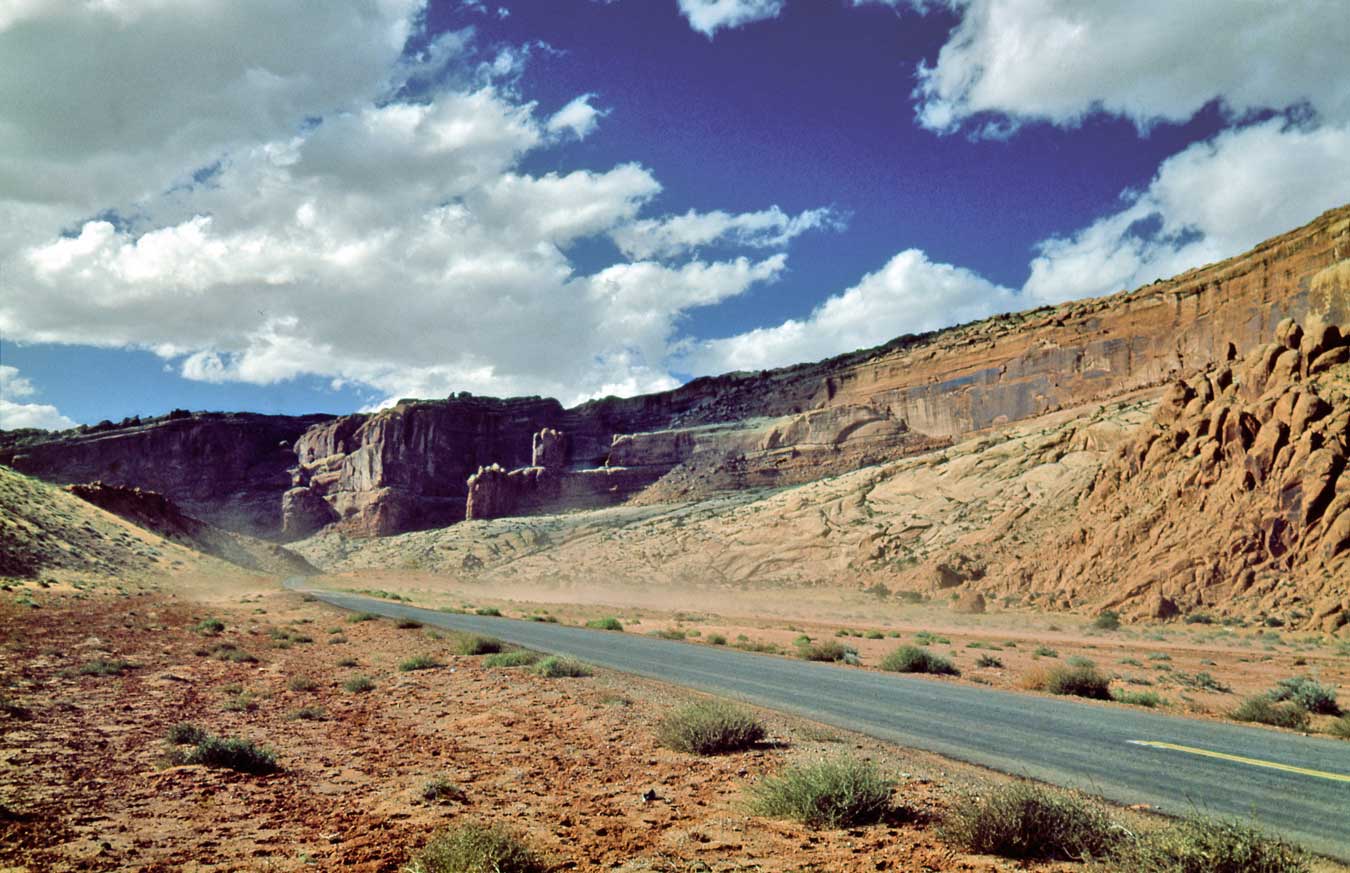
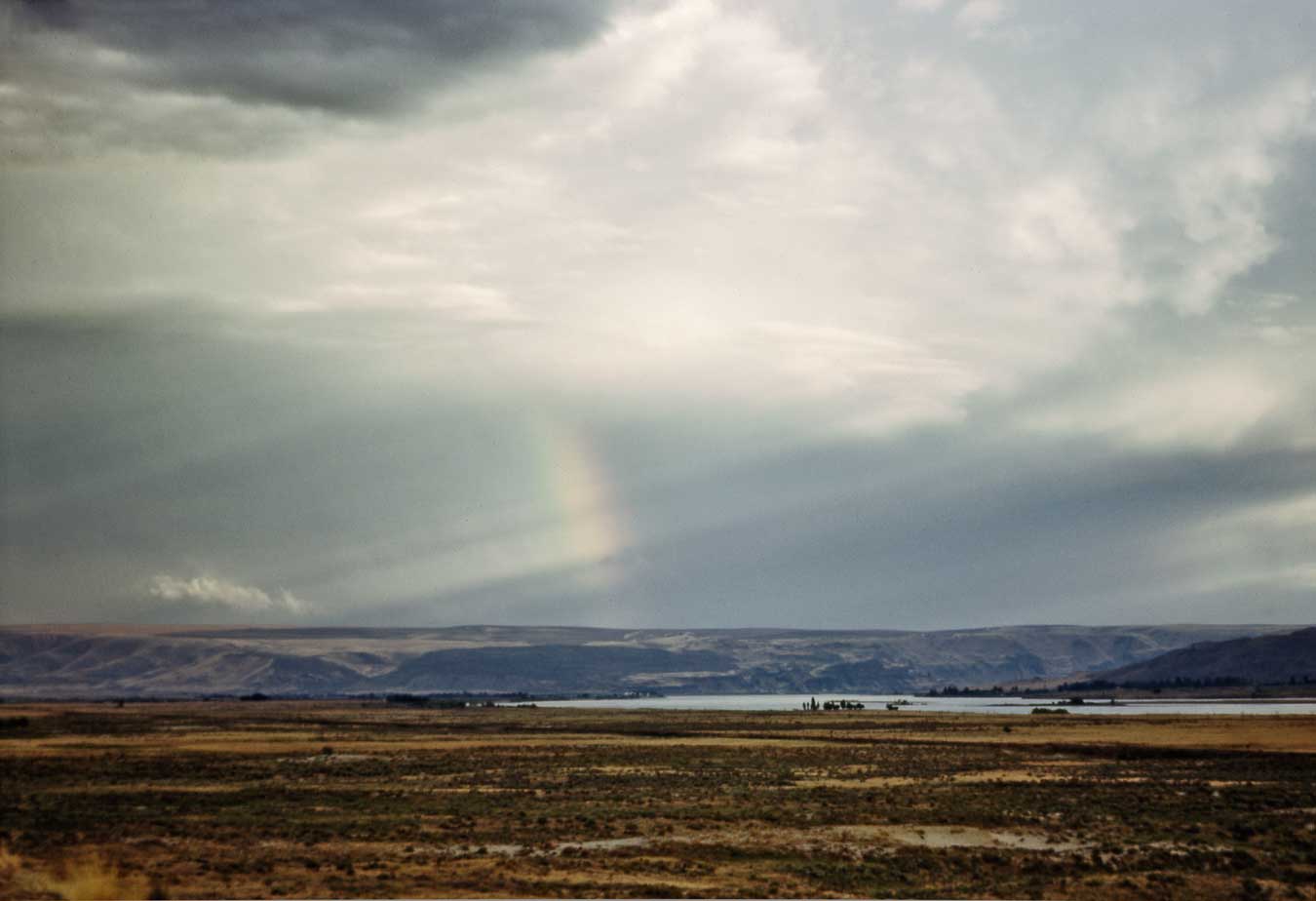
On April 22, 2010 for “Our Daily Sykes #10” we printed an addendum that joyfully announced that we had, at last, figured out the location of a subject nearly the same as this, but just down the road – although in that early installment of our Sykes’ routine, there was no arterial with a comforting yellow stripe as there is here. There is also practically every comparison between the clouds in them. That is, they were photographed from within moments of each other, and yet each is uniquely satisfying. (Click to Enlarge)

Here Sykes visits one of the most frequented prospects for Mt. Rainier: looking west from Chinook Pass, at an elevation that’s a few feet more than 5,440. With this detail he contrasts the rough rocks of Governor’s Ridge (with Mt. Governor near the scene’s center) with the swelling compressions of the Emmons Glazier beyond it. Emmons is part of the most used climbing route to the top of Rainier. There’s also a glimpse of the pointed Little Tahoma near the upper-left corner. At 11138 feet it is the fifth highest mountain in the Cascades, after – and in order from the highest – Rainier, Shasta, Adams and Hood. Little Tahoma is a young mountain, only about 500 thousand years. Sykes moved some to the north (right) for the wider look at the same subject, below. (Click to Enlarge)


Born at Fort Walla Walla in 1883, “Skinny” Gen.J.M Wainwright IV, returned home after enduring three years as a prisoner of Japan during World War Two. “Skinny” was distinguished as the highest-ranking American POW during the war. He and his troops surrendered to the Japanese forces at Corregidor. He first saw action in the Philippines much earlier, in 1908-10 during the Moro Rebellion. “Moro” stood for Muslim – those of the southern Philippines who resisted first Spanish and then American rule. Skinny returned to the Philippines in 1940 to make ready for the Japanese invasion of 1941, and the battles that took Wainwright and thousands more into captivity. Throughout he felt like he had “let his country down,” and was surprised that once freed and back home he was treated as a hero. On Sept. 13, he got his own ticker-tape parade in New York. Horace Sykes does not tell us when he was also celebrated his home town, Walla Walla. [Click to Enlarge]


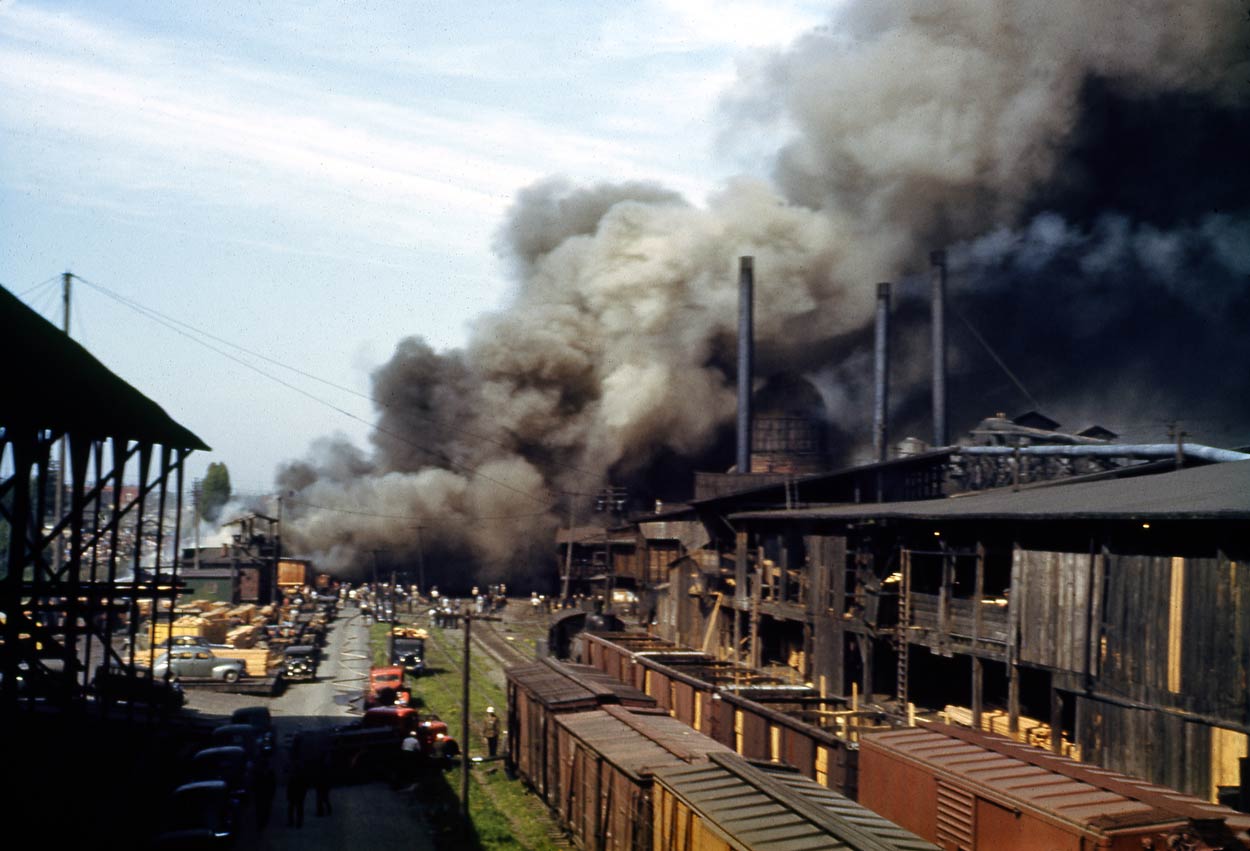
Horace Sykes moved to Seattle from Oregon in the late 1920s as an expert on fire safety. He had come to work for Northern Life soon after the insurance company had moved into their new highrise at the southeast corner of Third Ave. and University Street and Third Ave. It is now called the Seattle Tower. I have always assumed that at least a good percentage of Horace’s picturesque landscapes were photographed while he was on trips examining insurance claims, and yet this and a photograph of an ice plant destroyed by fire are the only instances or “evidence” of the pain and destruction the insurance examiner must have been very familiar with in his subjects. This is one of two photographs taken of this unnamed woman, most likely sometime in the late 1940s. It is the easier one to look at.







A small collection of clipped cartoons figure in Horace Sykes collection of Kodachrome slides – at most a dozen. Here are seven, which I have titled. A title is a kind of second caption. Two of these date from 1955, which is a year before Horace’s death. I am old enough to remember all these cartoon artists, although I could not name them – never could. It is worth remembering when they were published. But I’d not know what insights follow – easily.



On what wide river is this with a railroad – it seems – on the other side? Click to Enlarge (and study).