
(Click and click again to enlarge photos)
‘A public artist, an art activist, a political activist, a survivor and a friend!’
By Clay Eals
Artist Jack Mackie, best known for his beloved and enduring 1982 Dance Steps installation along Seattle’s Broadway on Capitol Hill, died Aug. 21, 2026. He was 80.

The Celebration of Life for Mackie took place Sunday, Oct. 11, 2026, at the Edmonds Waterfront Center, 220 Railroad Ave., Edmonds, Washington. Click here to download a pdf of the memorial program.
Also, click the graphic at right to see our blog version of a “Now & Then” column I prepared on Mackie that appeared Aug. 25, 2024, in Pacific NW magazine of The Seattle Times.
Here are two links to lists of Mackie’s public art:
See below for written tributes to Mackie prepared by several of his friends in the art community. Photos of Mackie that they contributed are included.
And immediately below, don’t miss a 40-minute video from July 2024 in which Jack speaks of the background and execution of his Broadway Dance Steps. Enjoy!
===
‘I took a leap that didn’t quite make it’
By Libby Burke
When I was up on Broadway on one of the days Jack was pouring and installing the Dance Steps, I took a leap that didn’t quite make it, and my foot went into the wet cement. I pulled out my foot, but my pink beaded moccasin stayed down in the cement about two or three feet.
I keep trying to imagine what that might look like one day, far into the future when that moc gets excavated. I won’t be here to see it, but it amuses me to imagine.

===
‘Nothing that was art was foreign to Jack’
By Randy Sue Coburn
It wasn’t long after I met Jack in 1981 that I claimed him as a chosen family member. There was no one more unique.
Jack had an artist’s eye, a poet’s gift for metaphor, a musician’s ear, a dancer’s grace, a comedian’s love of jokes, a crusader’s zeal for justice. And on top of all that, he was an incredibly generous friend who knew his way around a kitchen.

Only my dogs were happier than I was when Jack appeared. They squealed with joy at the sight and scent of him. I didn’t have children, but I bet the kids of his siblings and dear friends did something similar.
It was a shock to all who loved Jack when he was diagnosed with an invasive cancer. On his 47th birthday, he underwent an extensive operation that saved his life and changed it forever.
As Jack recovered from surgery, he watched on videocassette Bill Moyers’ landmark PBS series “Healing and the Mind,” which had aired only a few months earlier. He was especially affected by the “Wounded Healers” episode featuring Dr. Naomi Remen and work she did at her Bolinas retreat to help cancer patients process the emotional and spiritual trauma of their diagnoses.
When Jack was well enough to travel again, he visited Dr. Remen and became a wounded healer himself. Working with hospitals in Seattle and elsewhere, he advocated, facilitated and created public art cognizant of patients’ needs for emotional sanctuary and dignity.
Nothing that was art was foreign to Jack. Nothing human, either. Especially love, which he generated so much of in his time here.
Excelsior, my brother.
(Randy Sue Coburn is the author of the novels “Remembering Jody,” “Owl Island” and “A Better View of Paradise” and cowriter of the screenplay for “Mrs. Parker and the Vicious Circle.”)
===
‘With his free-range imagination, he had great ideas’
By Gene Gentry McMahon
Jack Mackie was a beloved and respected figure in our Northwest art community. He was among the first artists here to focus primarily on public art as opposed to studio art.
I first worked with Jack when he was designated lead artist on the design team for Seattle’s 1986 Metro Tunnel Project. He seemed to have an uncanny skill in his embrace of the complexity of government-funded projects, by weighing input from multiple sources as they related to the environment of each site.

His collaborative approach in working with government funders, engineers, architects, fabricators and artists made our jobs as individual artists on the tunnel project much easier. His knowledgeable input and positive guidance made all of our projects come together as a unified whole.
Jack Mackie and I both went through battles with cancer in 1991 and were asked to help in selecting artworks for the University of Washington Medical Center on the premise, no doubt, that we would have good ideas about the art that might be most appropriate for patients there. With his free-range imagination, Jack had some great ideas for them!
Jack was a public artist, an art activist, a political activist, a survivor and a friend!
His ever-positive spirit will be missed in our community. I miss him already, but next summer I plan to visit his last public projects in Cary and Burnsville, North Carolina.
===
‘The art of making places public’
By Ellen Sollod
Jack Mackie’s impact on the public realm reached across the United States from the Pacific Northwest to the mountains of North Carolina and south to the state of California and places in between.
He was a visionary artist who saw the inherent value of an artist’s voice in shaping and improving public spaces and people’s experience.

He was one of the first artists to participate as an equal member of a design team, joining architects, landscape architects and engineers at the point of conception and continuing through construction. Because of Jack’s adept way of communicating ideas, his quick wit and his sincerity, he was able to achieve things others could not even imagine.
I met Jack in late 1989 and continued to be his friend and colleague until his recent death. Jack and I fought for the livability of the city, for the integration of art in public places and for the voice of the artist.
Jack often said he practiced “the art of making places public.” He brought me in as a member of the artist team for the Valley Transportation Authority in San Jose, Calif., to develop a comprehensive plan for art in the light-rail system. As a result, art was integrated throughout.
This was Jack’s way. Create a big vision and buy-in from city administrators, and bring in other artists who could help shape and realize it.
Jack was generous to his design team and artist colleagues, always believing that diverse voices made a richer place. He was principled to the end, knowing “when to hold them and when to fold them,” but never walking away when he felt he could make a difference.
Jack is most remembered in Seattle for his Broadway Dance Steps. They were only the beginning, and a small part of his incredible legacy.
===
‘It was brilliant, cool and witty’
By Patrice Demombynes
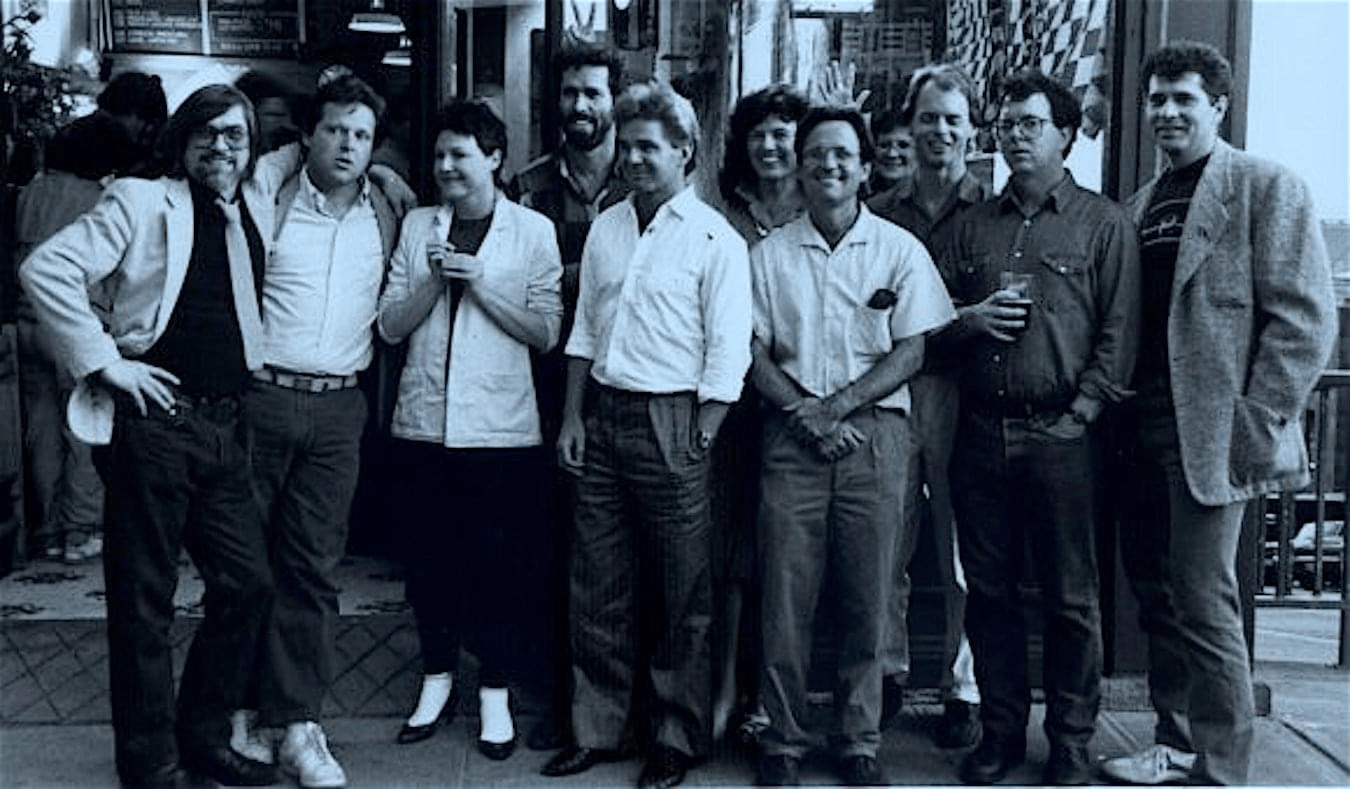
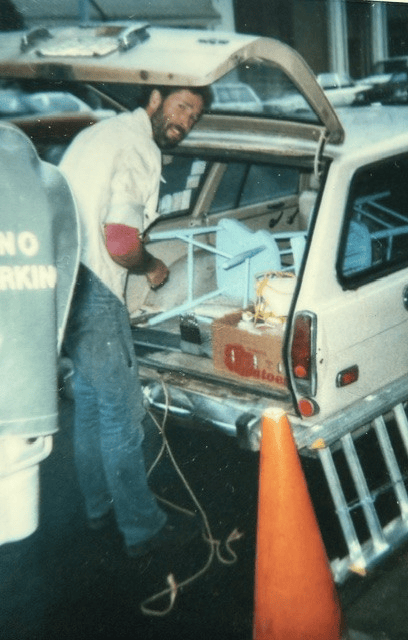
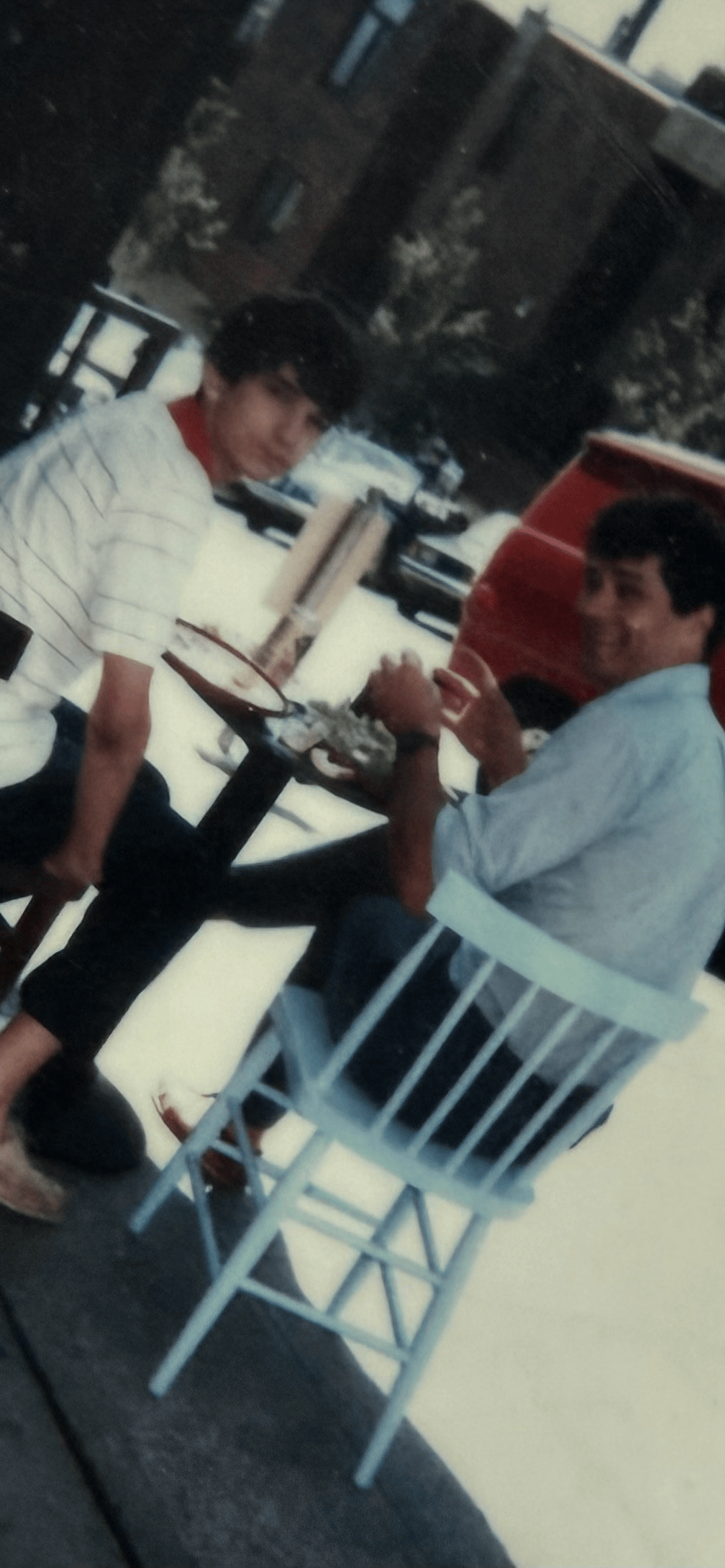
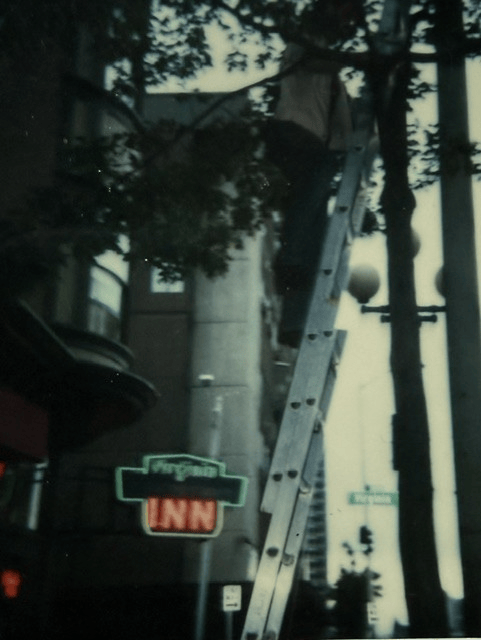
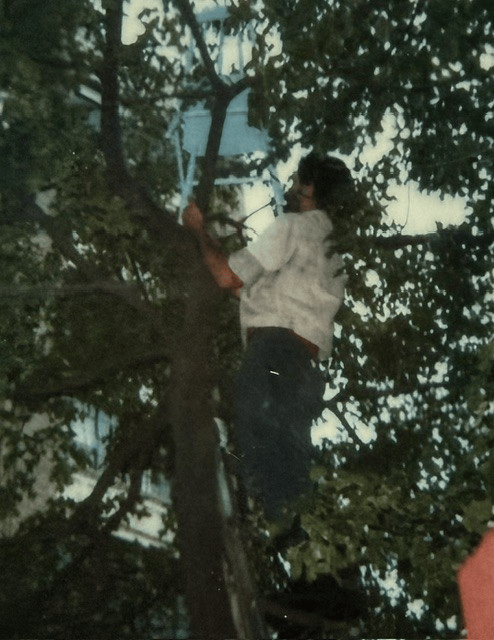
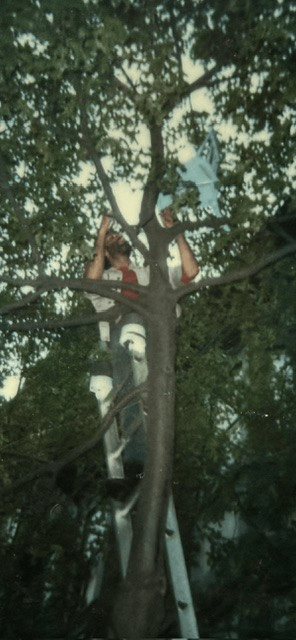
Jack’s contribution to the Virginia Inn’s Founders’ Show was the installation of a periwinkle blue kitchen chair 20 feet up in the oak tree in front of the Virginia Inn.
My son, Gabe, is about 15 in the Polaroid, and now he’s 55, so that was 1986.
The chair floated there in the branches for several years, noticed by few in the leaves save for those sitting outside, but it was a statement when the tree was bare. It was brilliant, cool and witty, just like Jack.
===


Jack was a founding member of Artech Fine Art Services where I worked with him for many years. One of Jack’s many responsibilities was taking care of the City of Seattle’s art collection. The collection was designed to rotate in and out of offices every 18 months and Jack would make the rounds to city departments with slide projector to recommend new art for the offices. A great diplomat and a great friend.
Mike Hascall