
(Click and click again to enlarge photos)

Published in The Seattle Times online on Oct. 8, 2026
and in Pacific NW Magazine of the printed Times on Oct. 11, 2026
Teacher’s Pets
Mice scurry through the memories
of Carol Raney’s 1960 third-graders
By Clay Eals
If a mouse were to sneak up on Carol Raney, the 90-year-old definitely would flinch. “Yes,” she says, “I would be most alarmed if I saw one.”
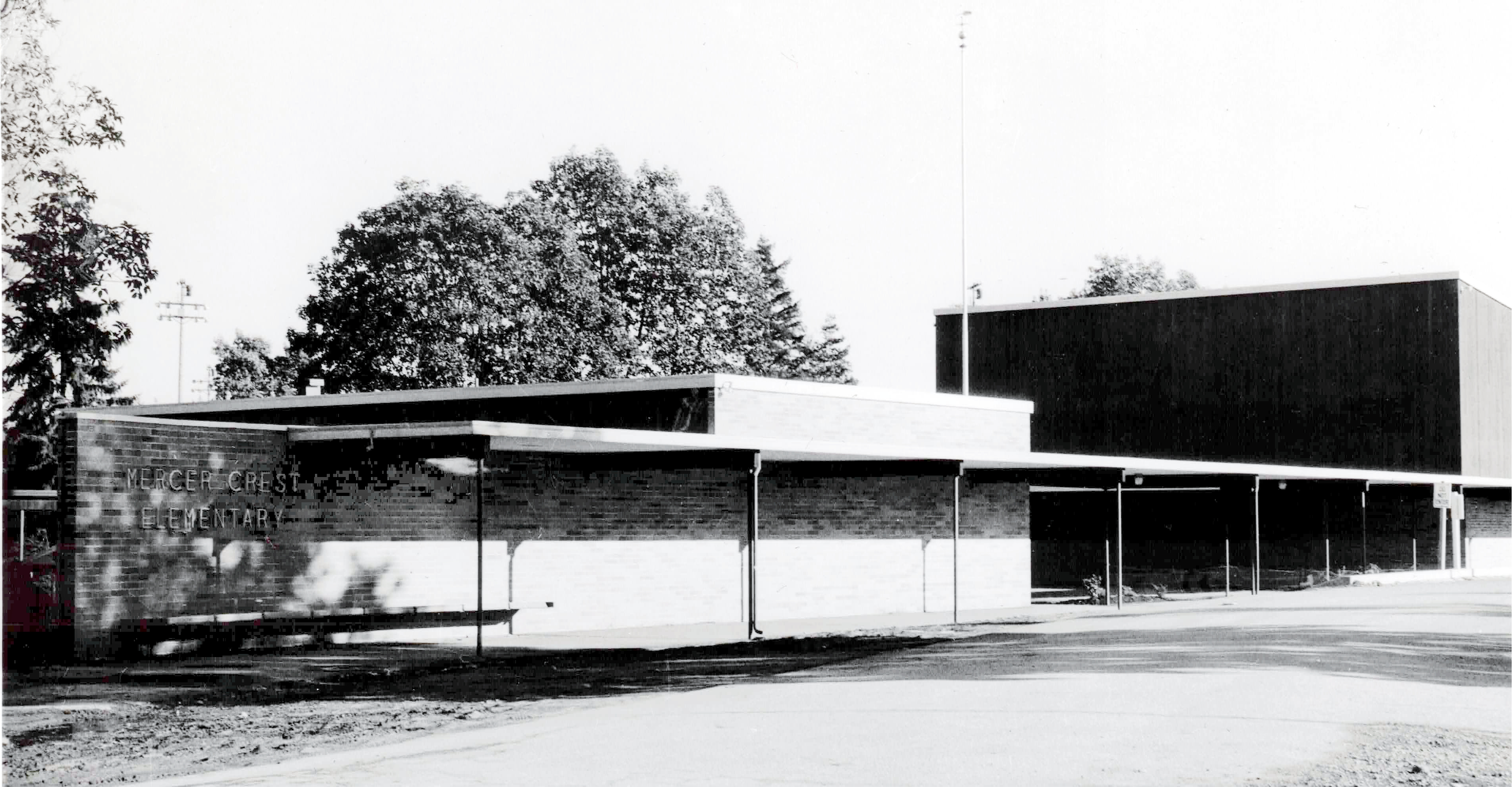
But not 66 years ago. As a fledgling third-grade teacher for 33 students at Mercer Crest Elementary on Mercer Island, she brought mice into her classroom.
Her husband, Jim, a medical student at the University of Washington, was researching mice in a study of genetics and color progression, “and I thought, ‘Well, you’ve got some extra mice. Can I take them to school?’ I thought that’d be fun. The kids would enjoy that.”
What followed became a lesson — not only about the impact of easily dismissed critters but also how a single grade-school year can make a lifelong impression.
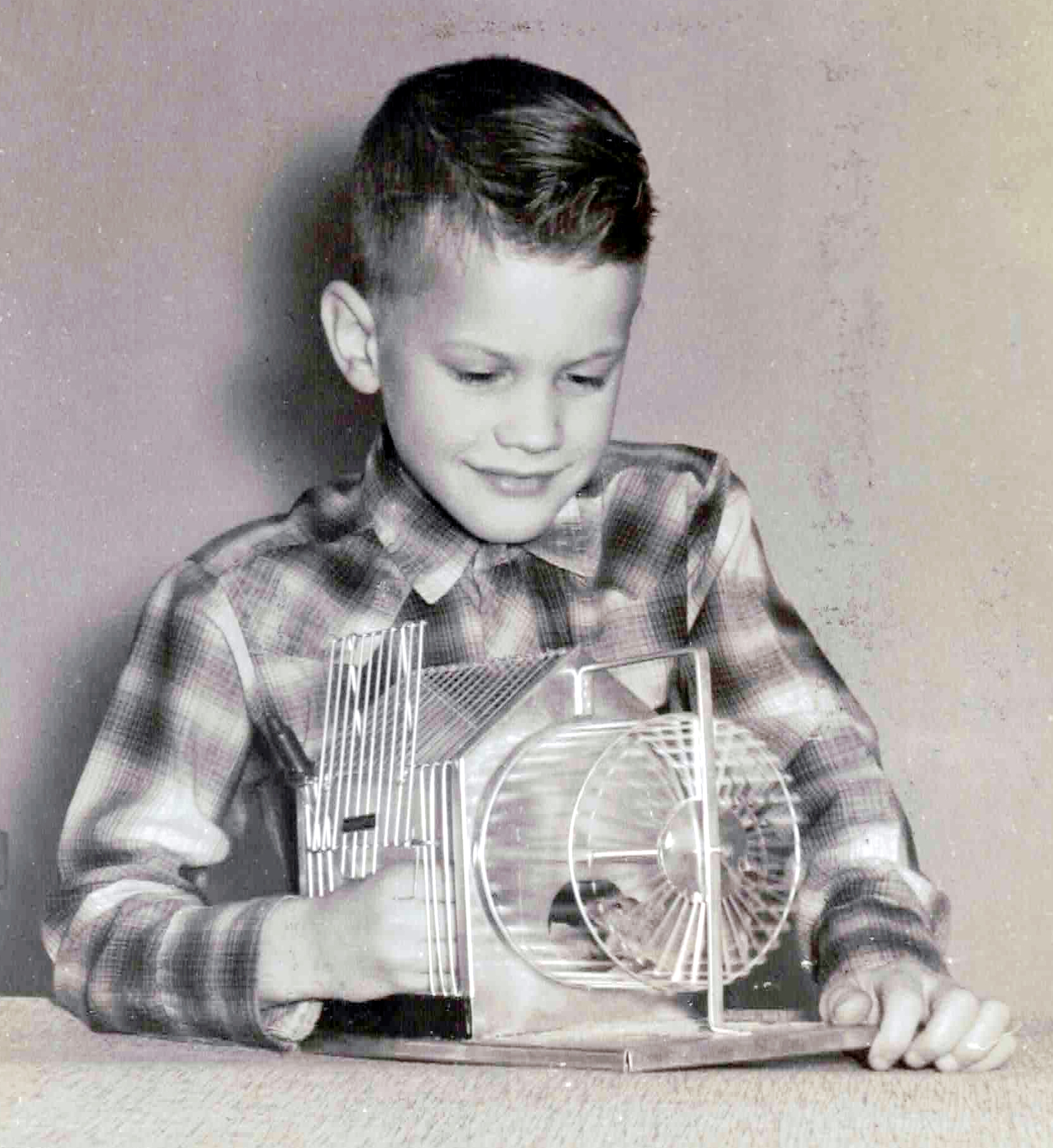
Raney’s students took turns in class feeding the tiny creatures and cleaning the cages. “They vied with each other to take care of them.” The idea was to teach responsibility while eliciting smiles.
The crowning touch came when one mouse approached motherhood. Raney distributed permission slips, and 12 came back signed by parents willing to have their children bring home a baby for keeps. Four offspring emerged, so Raney held a drawing to determine the four new mouse owners.
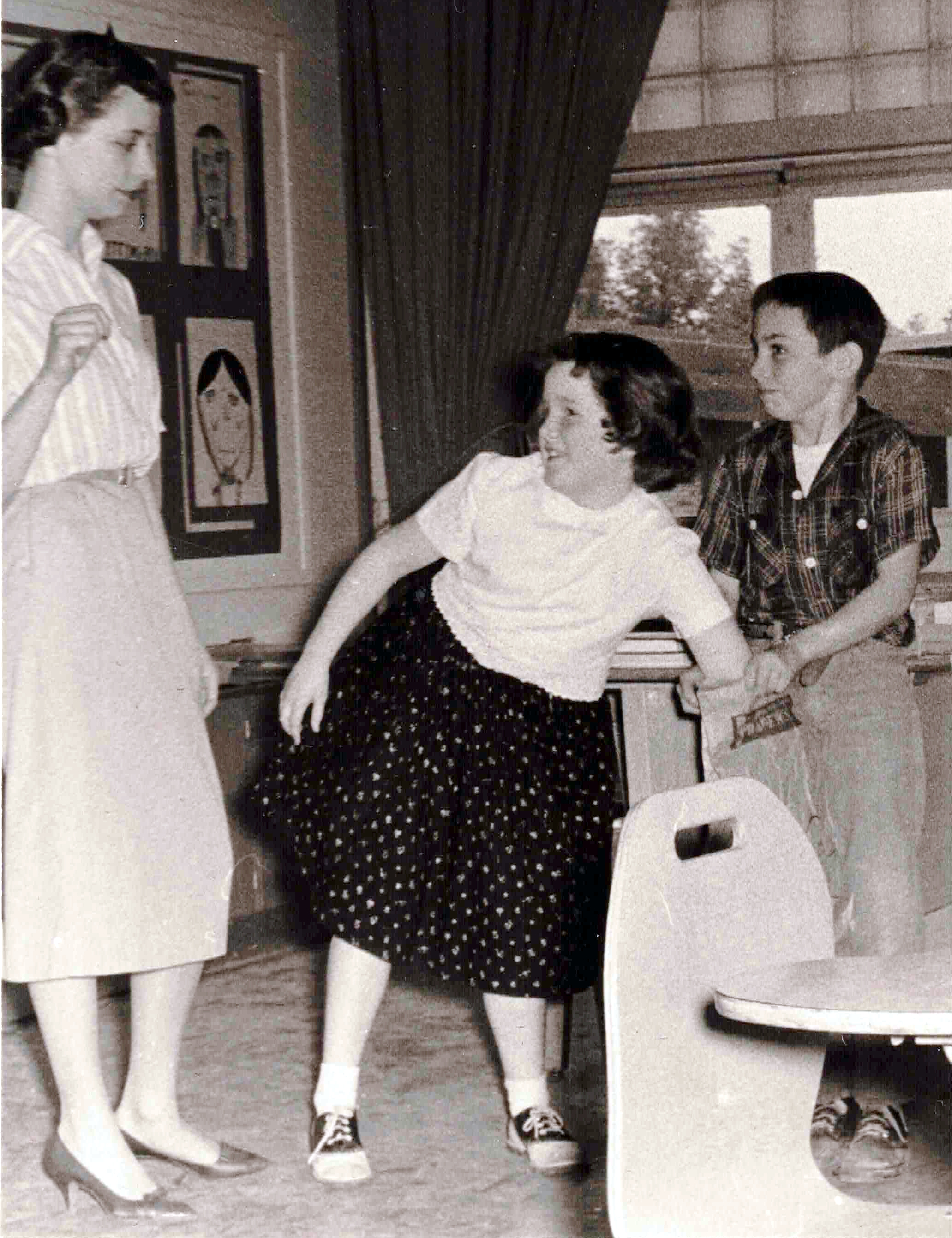
All of this was enshrined May 15, 1960, in The Seattle Times’ Sunday rotogravure magazine, then called Pictorial. An article and eight photos by Marvel Warner gave the mice-capades a regional audience. The headline: “A Mouse for the House.”
You might say the coverage made Raney a star. But her students already had placed her in their highest esteem — and still do.
“That was my favorite year,” says Marci Warner, now Williams, a retired adult-ed teacher from Bothell and daughter of the writer/photographer of the mouse piece. “It was a precious year with a lot of impact. There was joy in the classroom.”
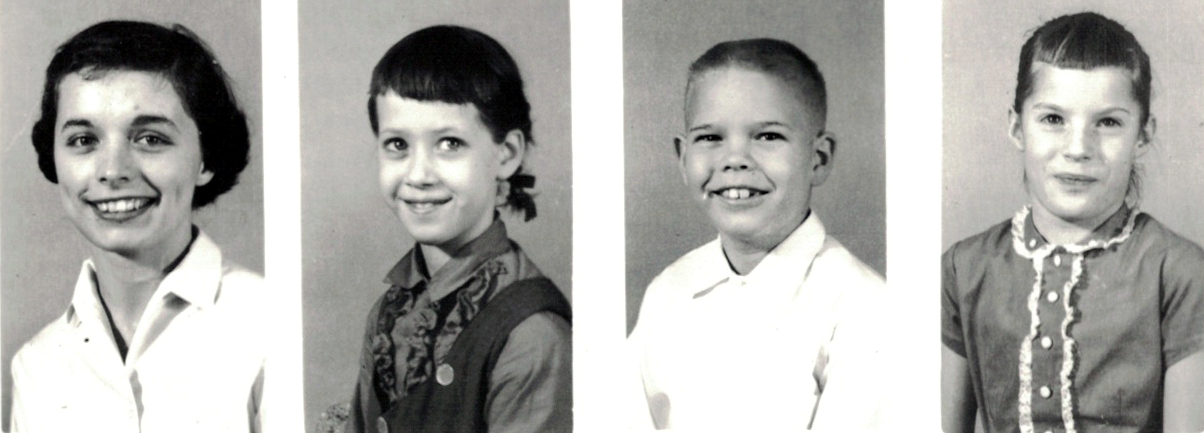
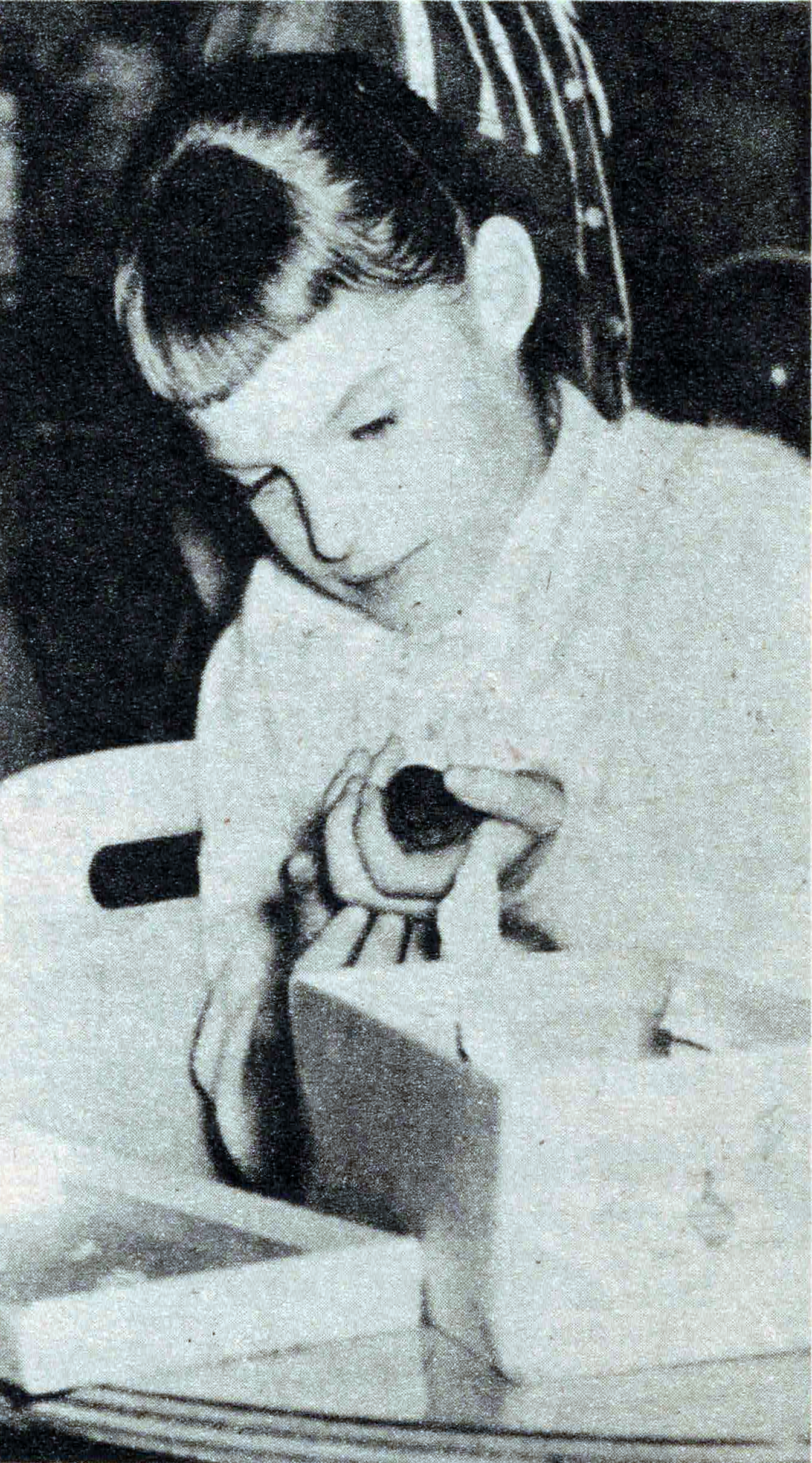
“I think we all had crushes on her,” adds Joan Caldwell, now Anderson, a retired educator and autism specialist from Grand Junction, Colo. “I just remember her smile and her eyes.”
Caldwell, a mouse winner, named her prize Matilda and loved her to the point of tears. “She got stuck under the stove one night. Mom and Dad were at a PTA meeting at the school, and I ran all the way there crying because Matilda had gotten loose.”
The mouse was Caldwell’s gateway to additional pets. The same held true for another winner, John Waldburger, a retired anesthesiologist from Boise, Idaho, who practiced 25 years in Edmonds.
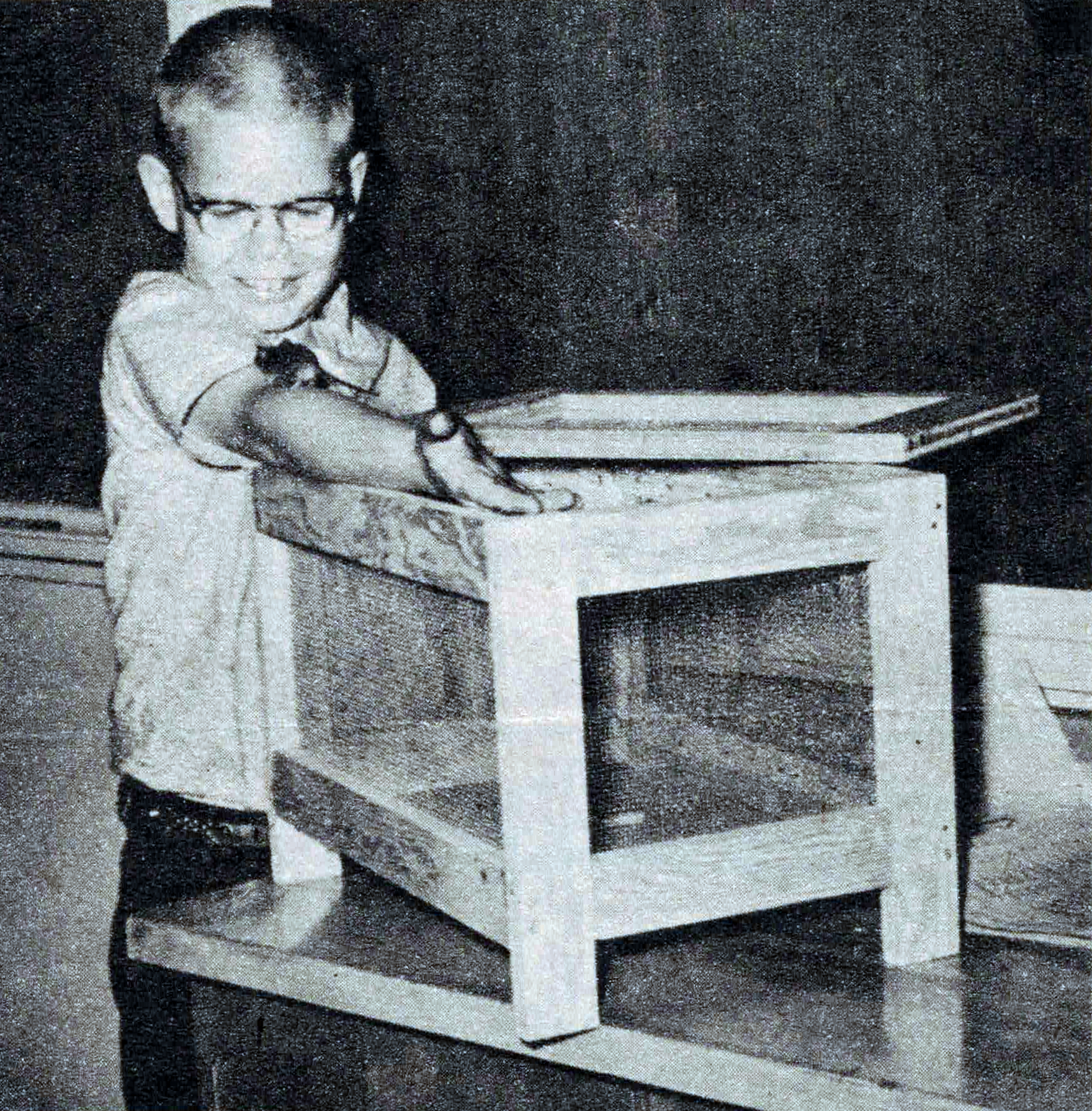
“Like maybe 50 mice,” he recalls. “It was fun watching them run around in their whirligig, and they would run around up and down your arm. Then they became very hard to keep track of. But my grandfather found it disgusting. He thought they were probably dirty and not a good thing to have in our house. He wanted to pay me to get rid of them.”
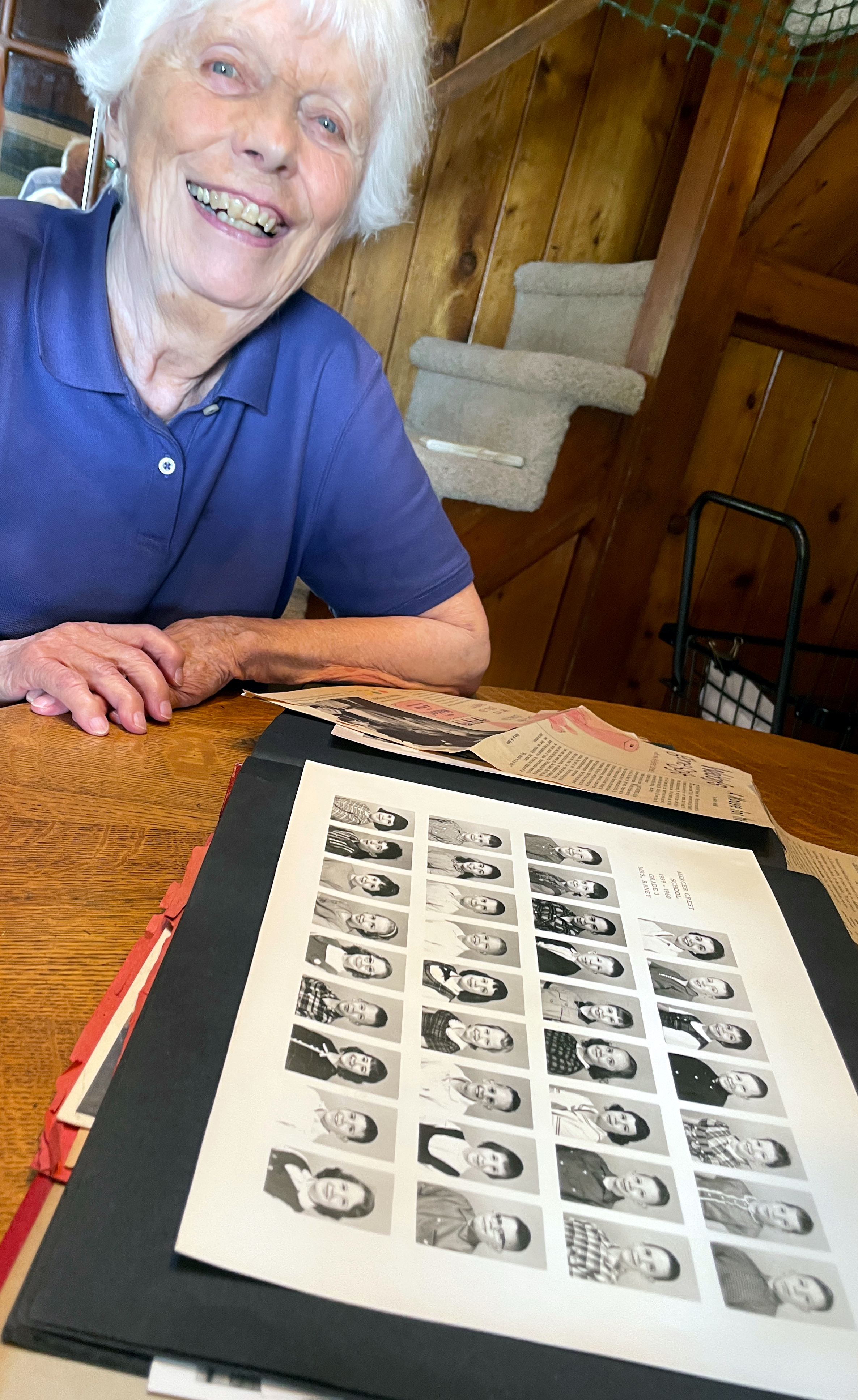
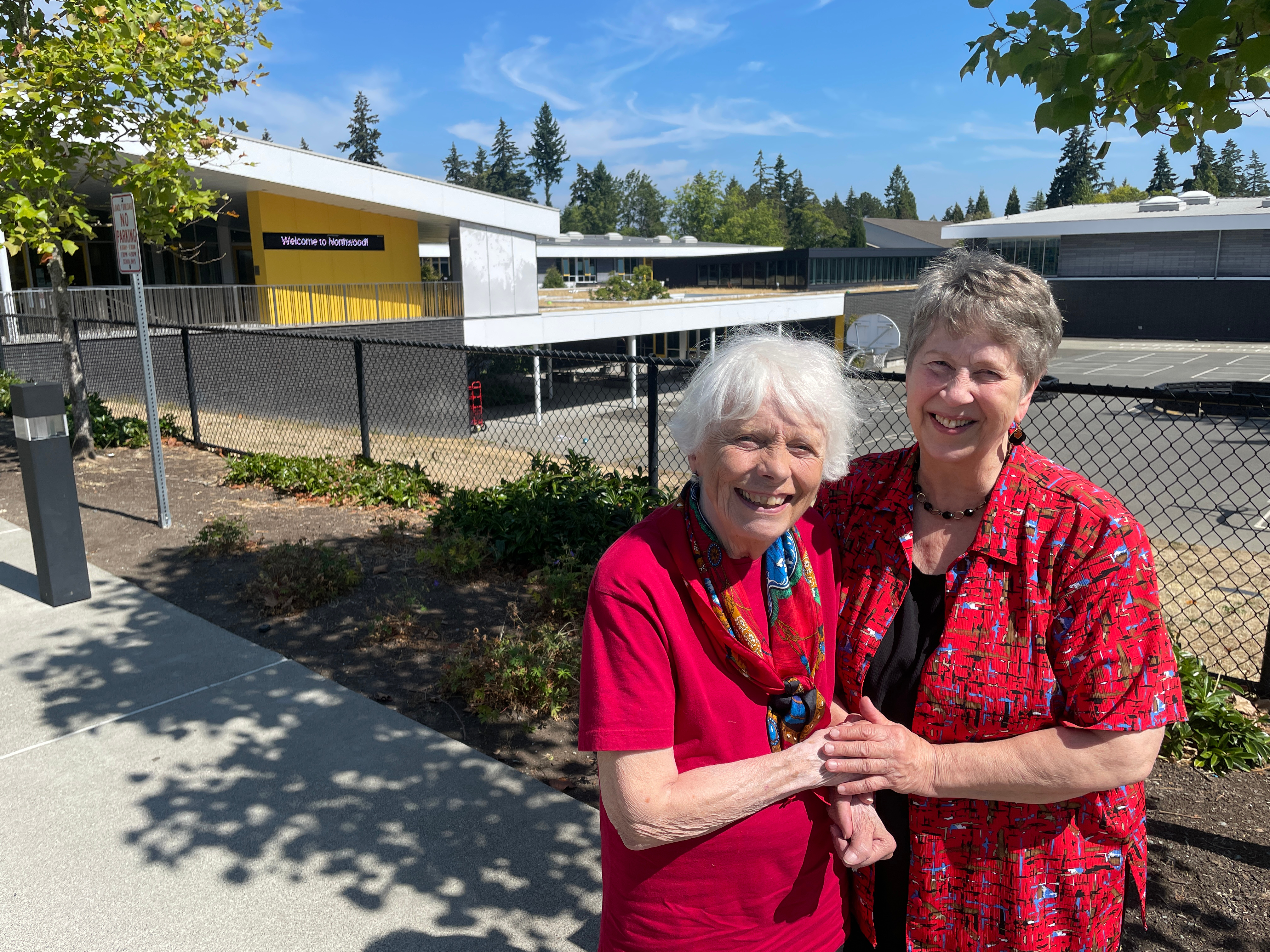
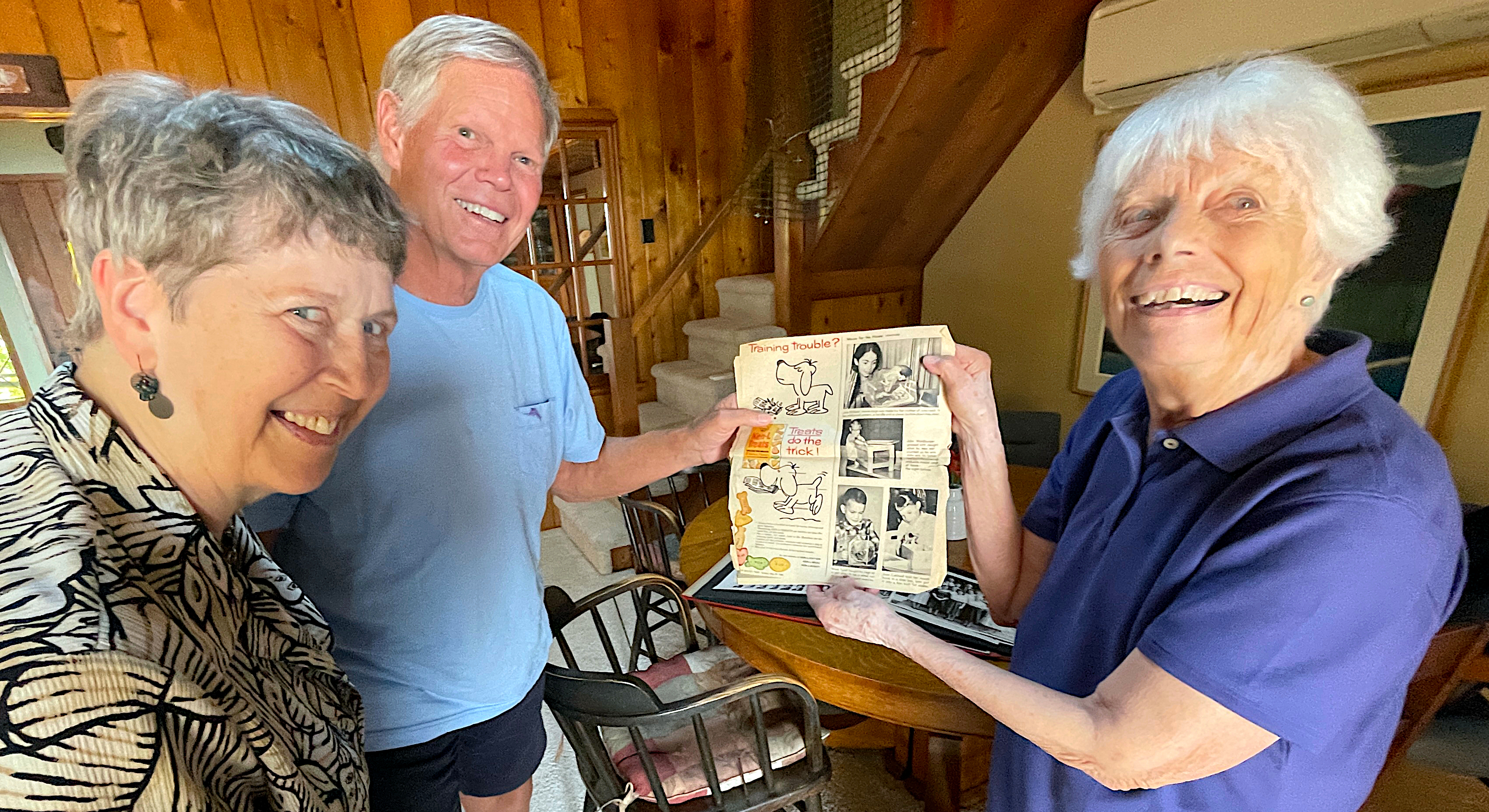
Mice weren’t Waldburger’s only fond memory of “Mrs. Raney.” He and Williams made an August pilgrimage to Raney’s Bainbridge Island home to share their memories — and learn more about their cherished teacher.
They found a woman with the same big eyes and smile, plus a guffaw seemingly every other sentence. “I do tend to laugh a lot,” Raney told them.
To which Waldburger replied, “There are studies to show that when we’re young, we laugh a lot, and as we get older, we don’t laugh as much. But laughing helps release a lot of endorphins, and that’s what helps keep us young. I think that has really proven true with you.”
Raney is grateful for a happy childhood. Born Carolynn Schaub, in Fort Benton, Mont., she grew up mostly in Yakima.
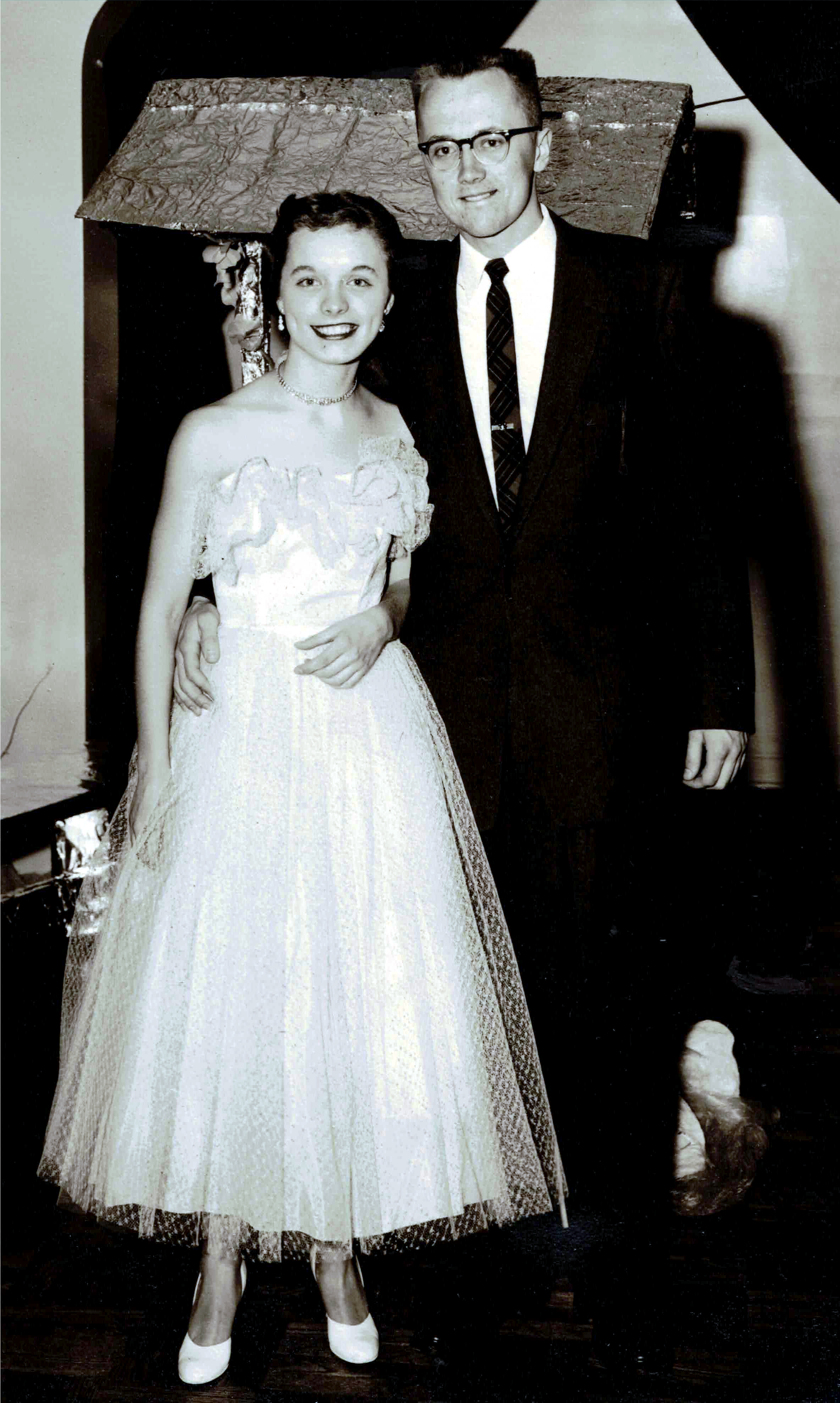
At Washington State University, crowned May Queen and elected to Phi Beta Kappa, she followed her parents’ lead to become a teacher. She married, and the pair moved to Seattle — first to Alki Beach, then Wallingford — from where Raney commuted to her Mercer Crest teaching job in an orange Volkswagen bug.
After four years here, plus one in Buffalo, N.Y., Raney left teaching to build a family, which encompasses four children and eight grandchildren. She and husband Jim settled on Bainbridge in 2000. He died in 2024.
Today, while enjoying family visits, she also reads, mostly murder mysteries. “I’ve killed everybody and gotten away with it,” she quips. “I’ve thought their thoughts with them.”
Her mood is anything but downbeat. “At my age, you better be content,” she says. “I can’t imagine anybody still being a fusspot. For heaven’s sake, you don’t have that many months left, so put them in a good place.”
That includes reflections on teaching. “The kids were fun. They were regular people, just littler.” The August visit of her former students — the first time such a thing had ever happened to her — was particularly uplifting.
The 1960 magazine article signed off with a sardonic joke. It quoted the mother of a student mouse-winner: “Why should we be so lucky?”
The lucky ones were those who had Raney as their teacher.
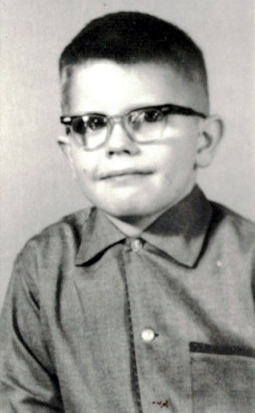
And full disclosure: I was one of her third-graders that year, fully in her thrall. Both then and now.
WEB EXTRAS
Big thanks to John Waldburger and Joan Caldwell and especially Marci Warner Williams and Carol Raney for their invaluable help with this installment!
To see Clay Eals‘ 360-degree video of the “Now” prospect and compare it with the “Then” photos while hearing this column read aloud by Clay, check out our Seattle Now & Then 360 version of the column.
Below, you will find 14 additional photos and 8 historical clips from The Seattle Times and Seattle Post-Intelligencer online archive (available via Seattle Public Library), Newspapers.com, Washington Digital Newspapers, Small Town Papers and other sources that were helpful in the preparation of this column.


