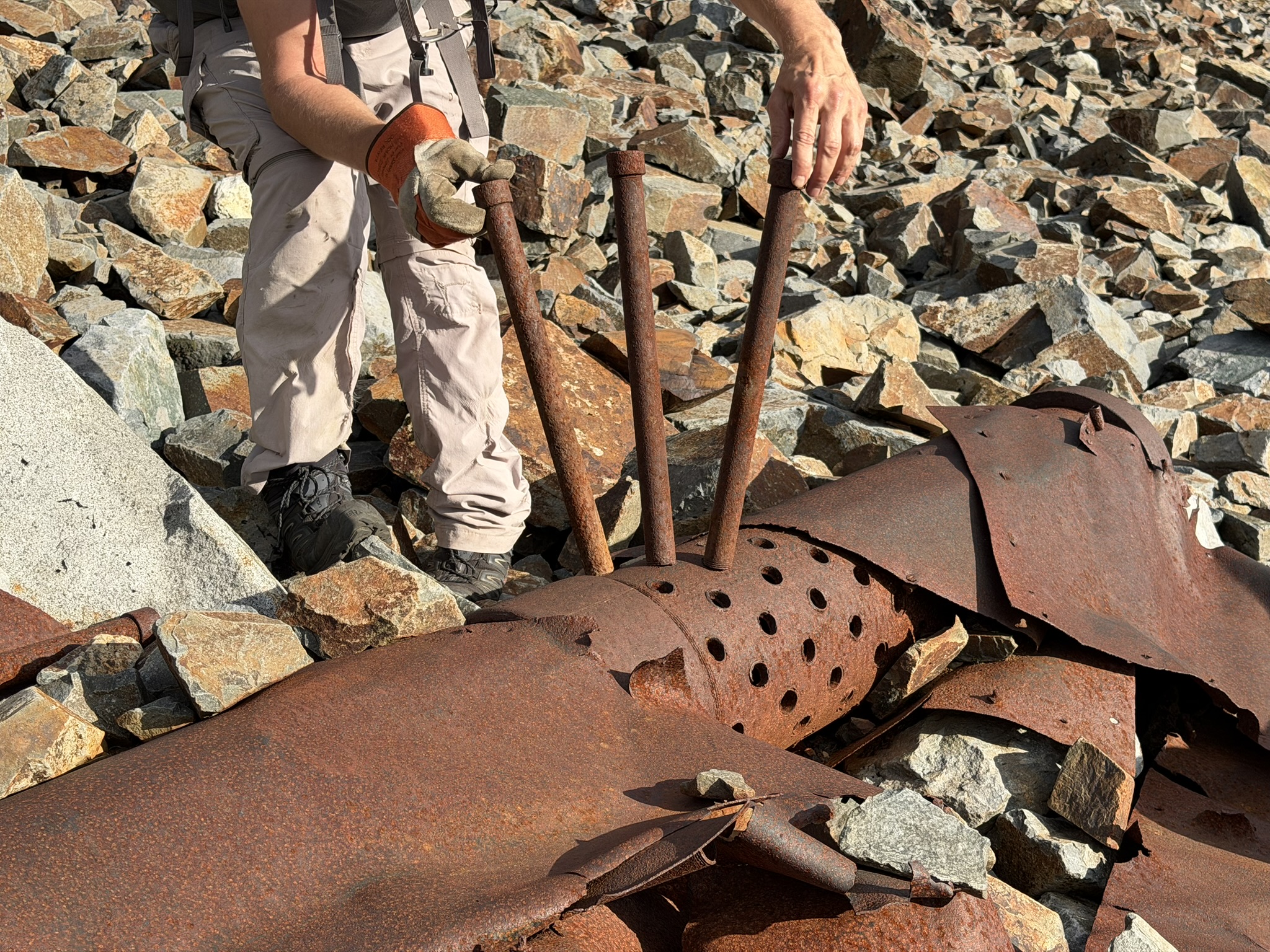
(click to enlarge photos)


Published in The Seattle Times online on Nov. 19, 2026
and in Pacific NW Magazine of the printed Times on Nov. 22, 2026
A Pioneer’s Final Prospect:
Microsoft exec rediscovers Denny mine near Snoqualmie Pass
By Jean Sherrard
Two months ago, carrying a copy of an 1899 photo, John Lambert scrambled up a steep ridge above Gold Creek Valley, east of Snoqualmie Pass. In the image, pioneer David Denny and his son Victor stand at the mouth of a mine tunnel.
“Right away when I got there, I knew — this is that same spot,” Lambert says.

A New Orleans transplant, Lambert arrived in the Northwest 25 years ago and soon realized that “every exit off of I-90 has hiking.” In 2017, he bought a cabin in Gold Creek Valley and began to explore beyond the beaten path.
“Fifteen feet off the trail either way,” says Lambert, who is a Microsoft corporate vice president. “Nobody even knows what’s out there anymore.”
What was out there was David Denny’s last venture.
Denny (1832-1903), younger brother of Seattle co-founder Arthur Denny, had helped build the settlers’ first cabin at Alki in 1851. Over

four decades he became one of the city’s richest men — real estate, a bank, streetcars, a water company and the Western Mill on Lake Union.
In 1890-91, flush with success, David and his sons staked mining claims in the Cascades. Then came the Panic of 1893. Brother Arthur, more conservative, weathered it. Over the next five years, David lost his businesses, his land and his mansion on Queen Anne.
David pinned his hopes on the mine. With sons John and Victor, he

organized the Gold Creek Mining Co. Grandson Lawrence Denny Lindsley, later a celebrated photographer, joined the crew in 1895. They built a cabin in Ptarmigan Park and blasted tunnels into the mountainside, following veins of glittering ore. In 1896, they shipped about ten tons of sorted ore to a Tacoma smelter, worth roughly $1,000 at the time.
For a few years, the claims paid — but not enough to rebuild what the crash had taken.
Some of the glitter was real gold and silver. Much was pyrite (fool’s

gold). Mining sputtered after David’s death in 1903, and Cascade snows eventually crushed the abandoned cabin. Denny’s hoped-for “economic redemption,” as Lambert calls it, never quite arrived.
Guided by century-old Mountaineers annuals and Lindsley’s photos at the Museum of History & Industry, Lambert traced the family’s route up a ridge called the Hogback, then found the cabin’s dugout

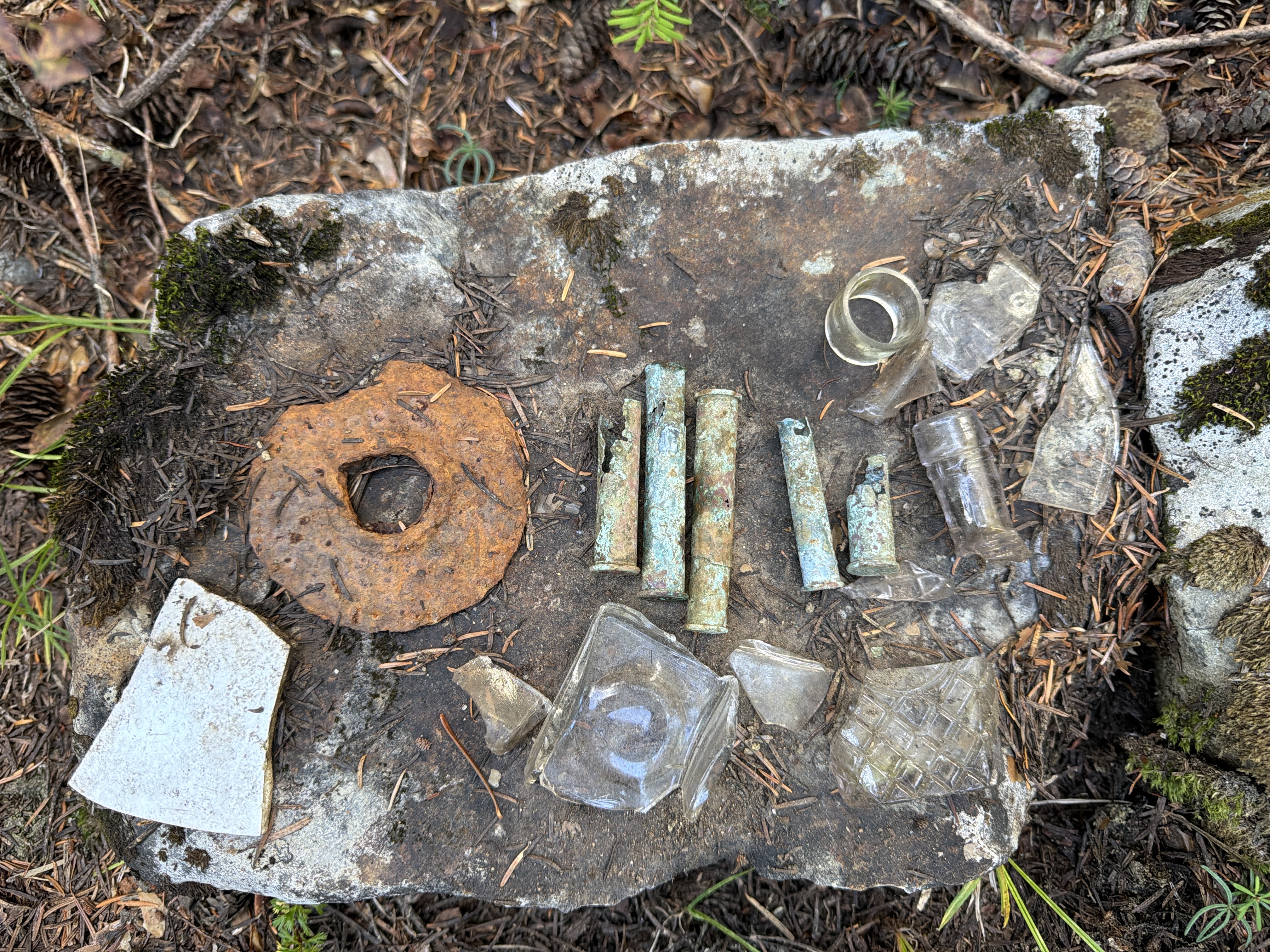
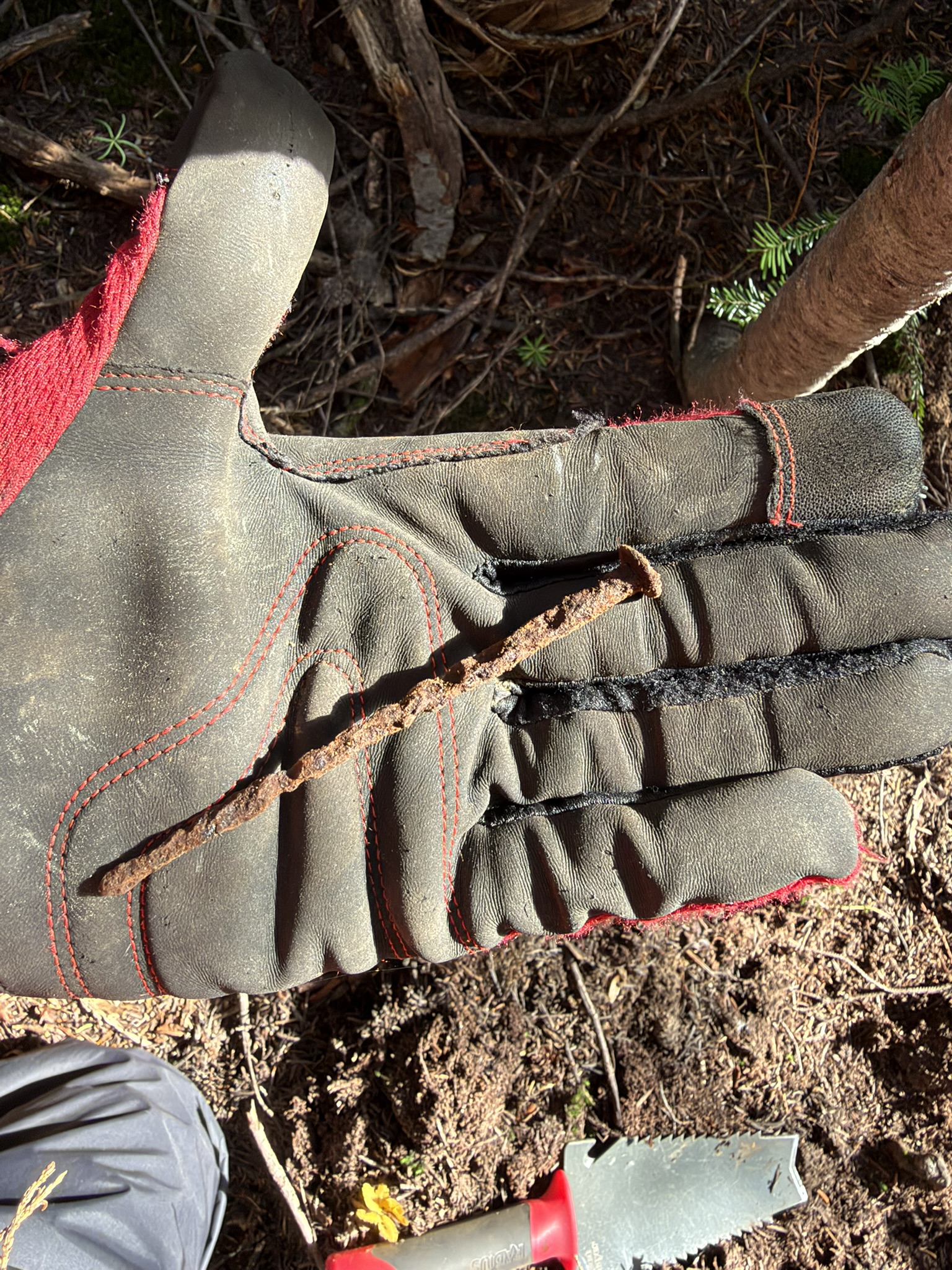
corners, square nails and a stone survey monument with “GCMD,” for Gold Creek Mining District, chiseled on it.
“You’re in their house,” he says. “It almost chills.”
Walking their faint trails, he says, “is to commune with ghosts.”
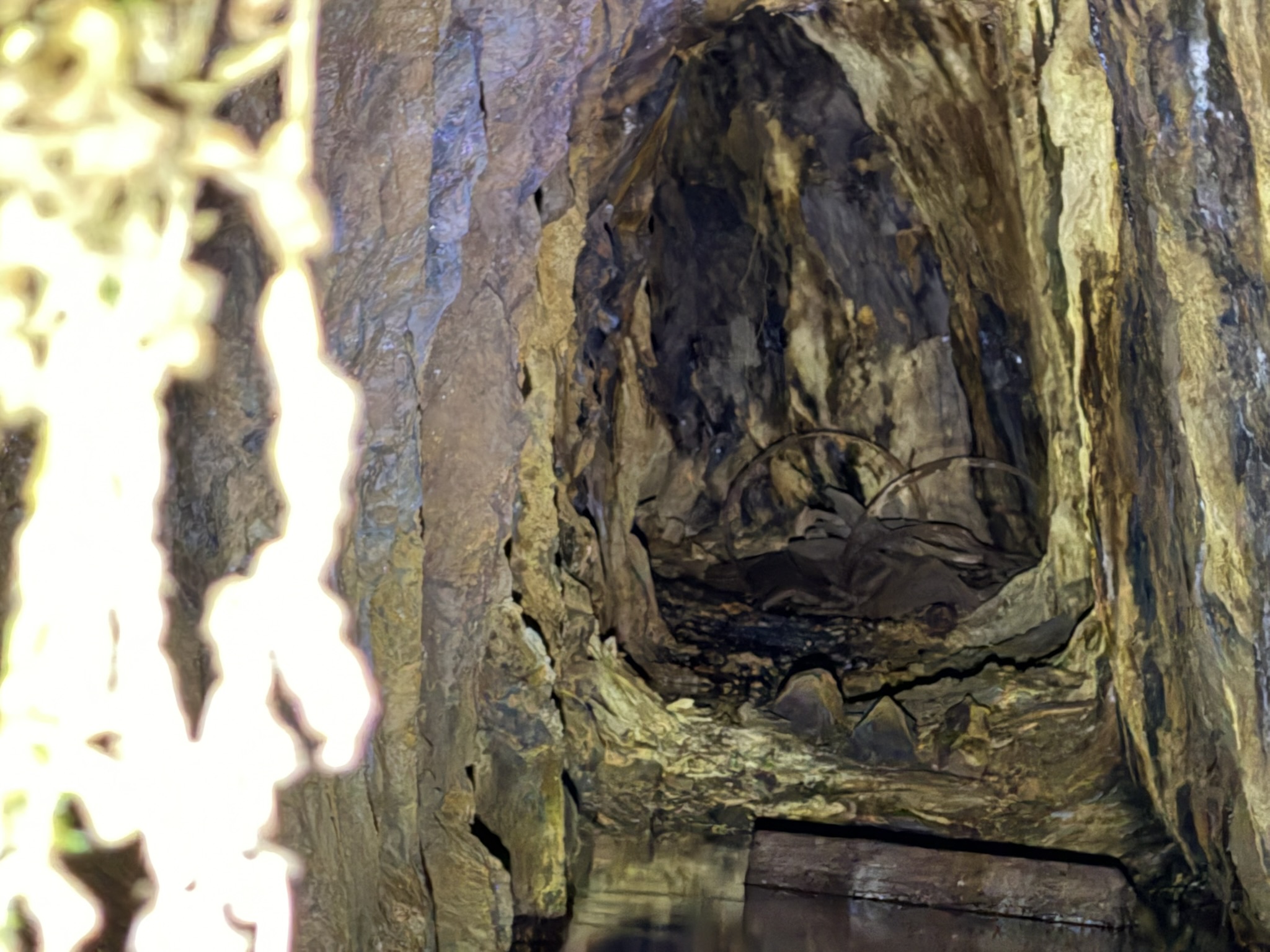
Though David Denny never found his bonanza, his fool’s gold yielded a richer vein for one citizen-historian: a forgotten chapter connecting a wilderness valley to the city below.
WEB EXTRAS
More views from the site, including pix from John Lambert’s September excursion. For an extensive account of his many explorations and discoveries, visit skiturvalley.wordpress.com/hiking-history.

Photos of the cabin, mostly from the late 1890s:


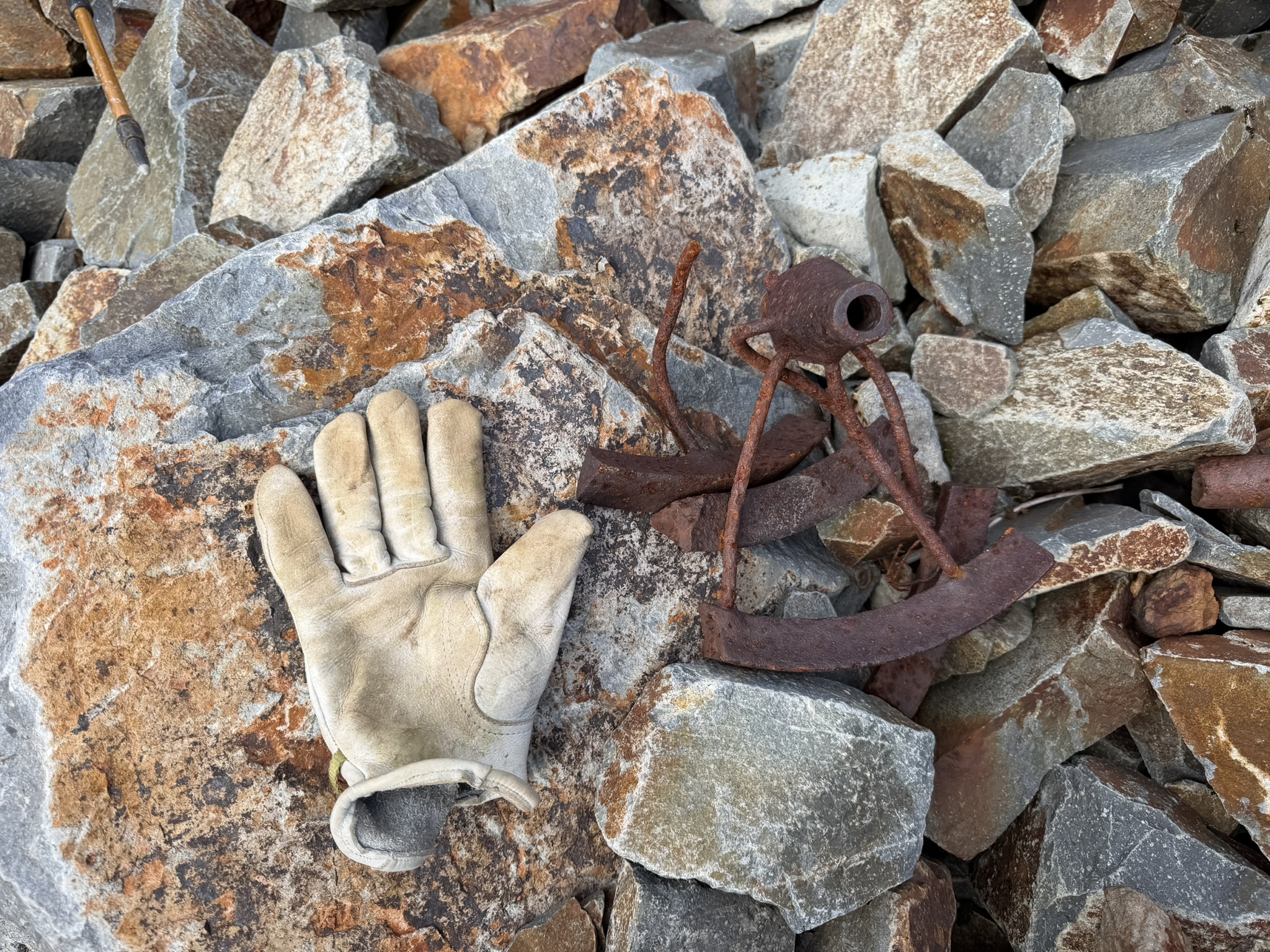
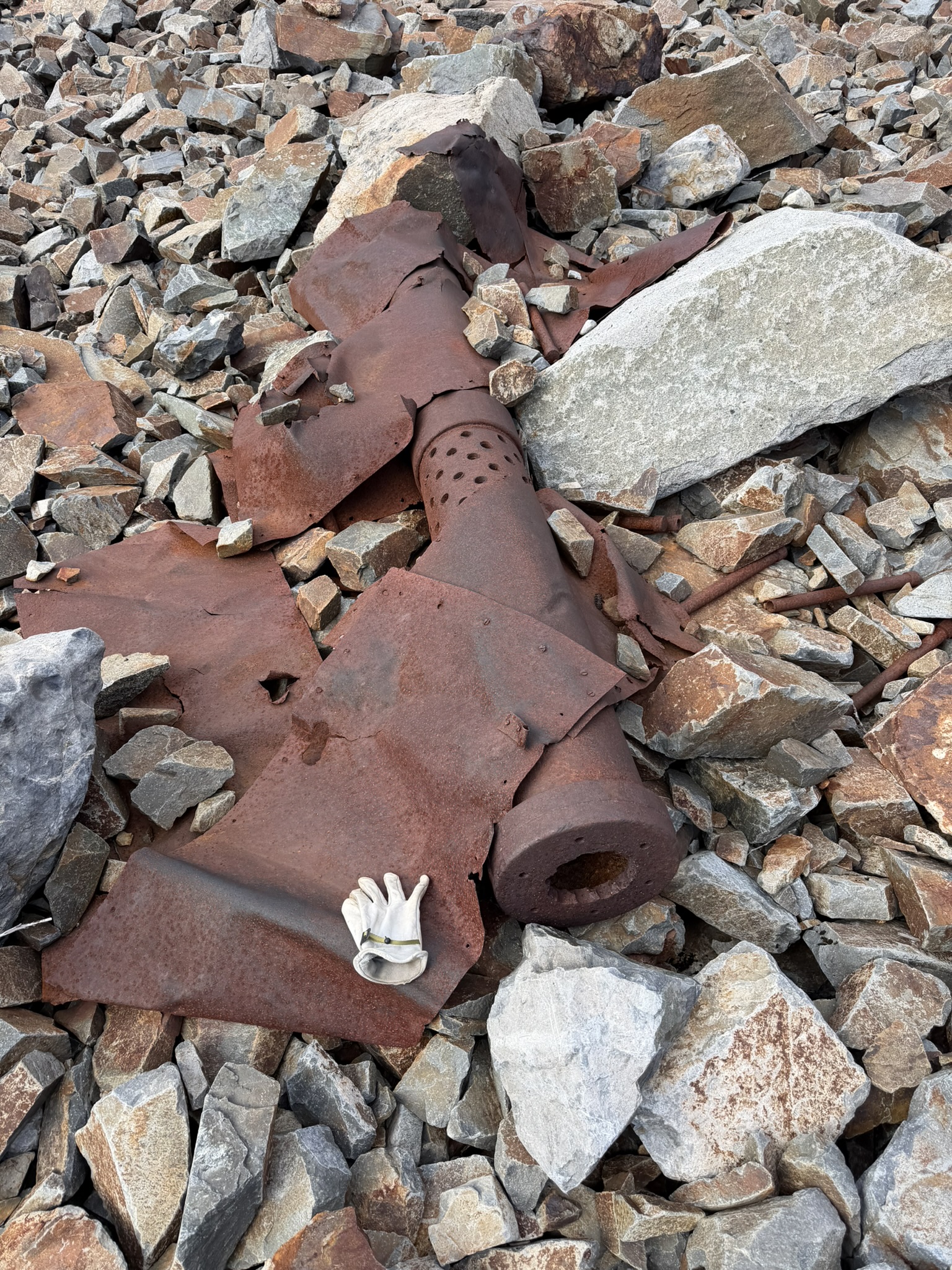
John Lambert documented numerous artifacts from the site.