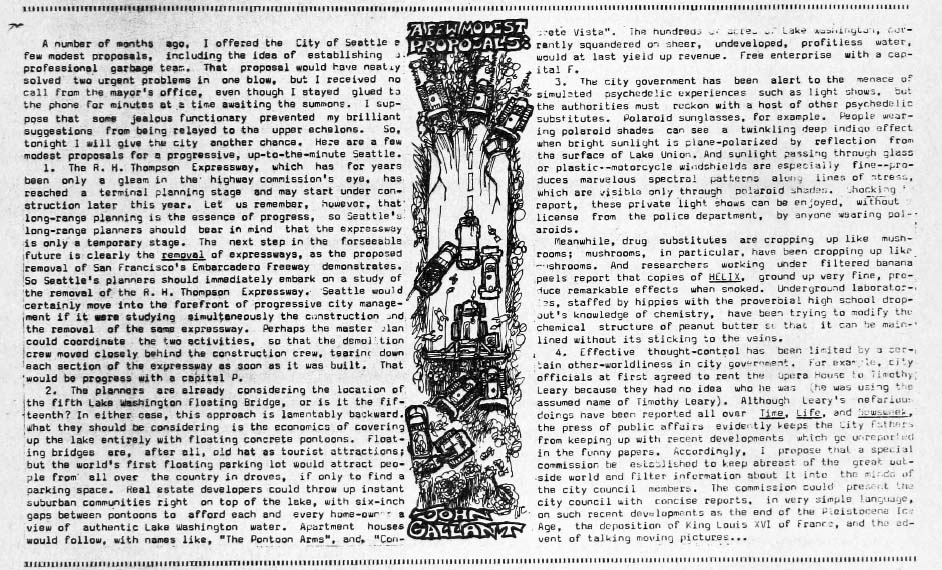
Not flummoxed and yet not certain, I ask an old friend, Bill Burden, for his take on a full-page “proposal” that appears on page 10 of this HELIX Vol. 2 No. 2. His recorded response is included in the audio commentary below. Below is a police surveillance photo of Bill taken during his testimony regarding police behavior on the Ave. He had been gassed while at the time – or nearly – working for the mayor’s office promoting a summer youth program.
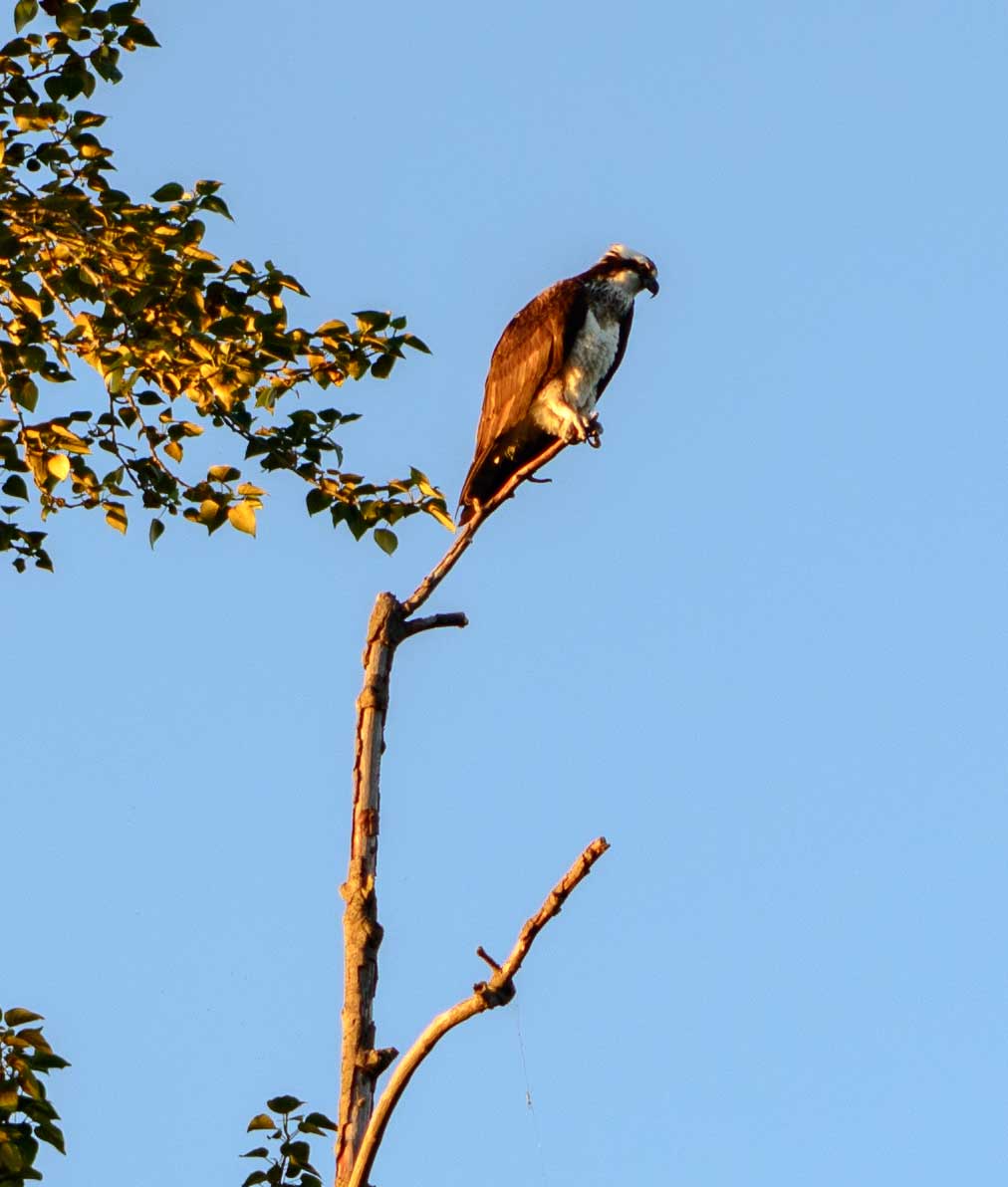
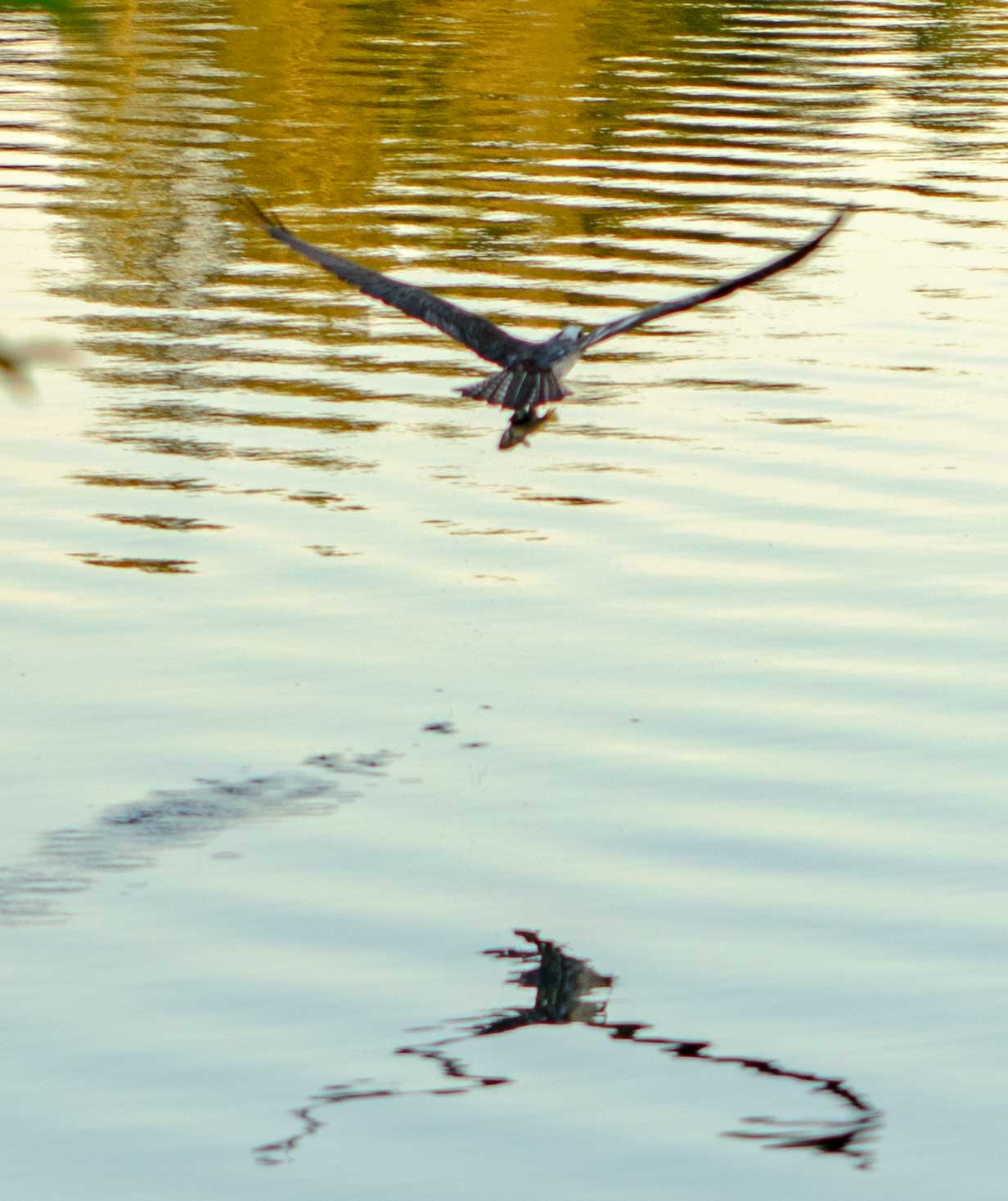
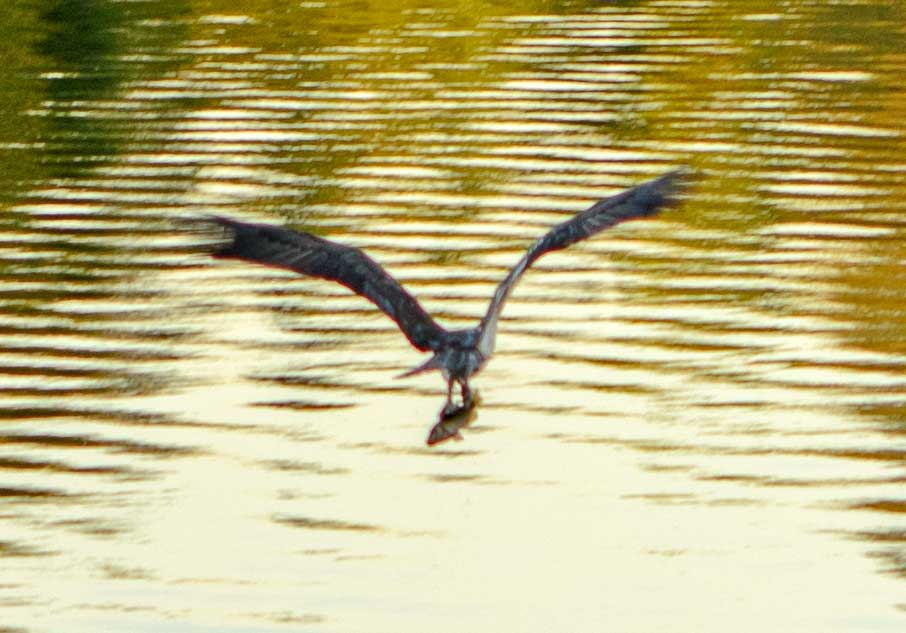
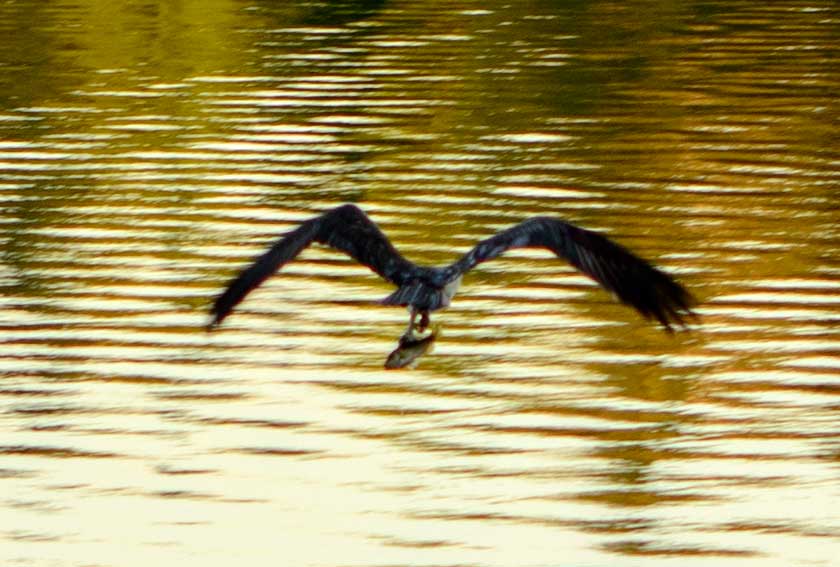
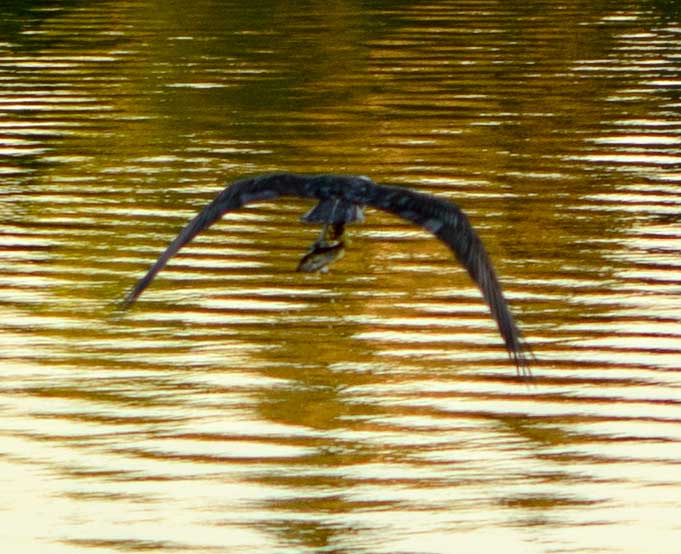
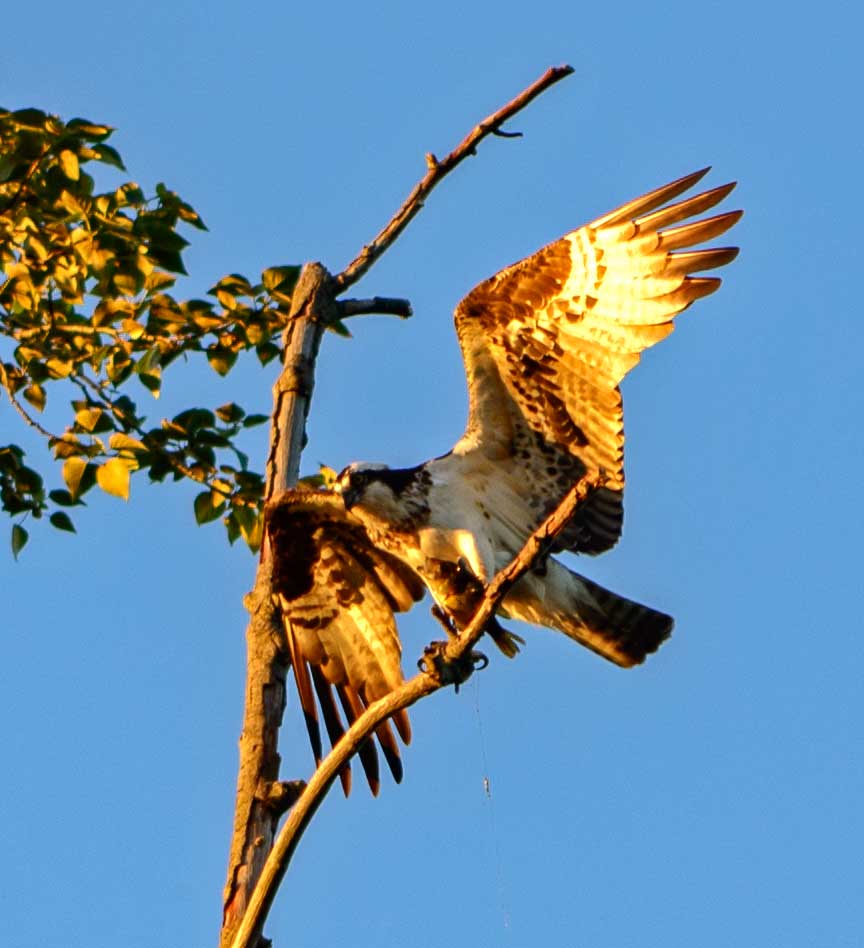
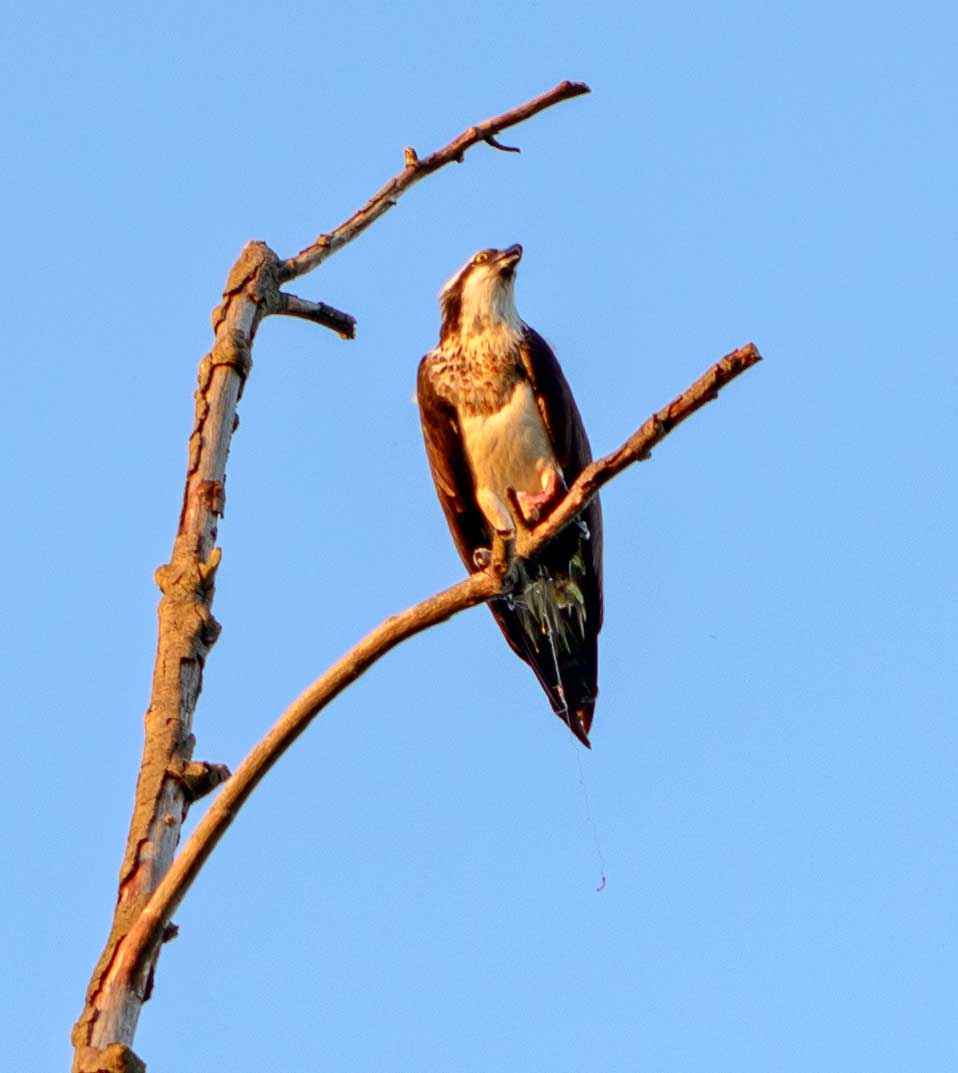
A couple of night ago, I was walking around the lake and saw a young eagle (I’m assuming it was an eagle) perched in a tree just east of the Bathhouse.
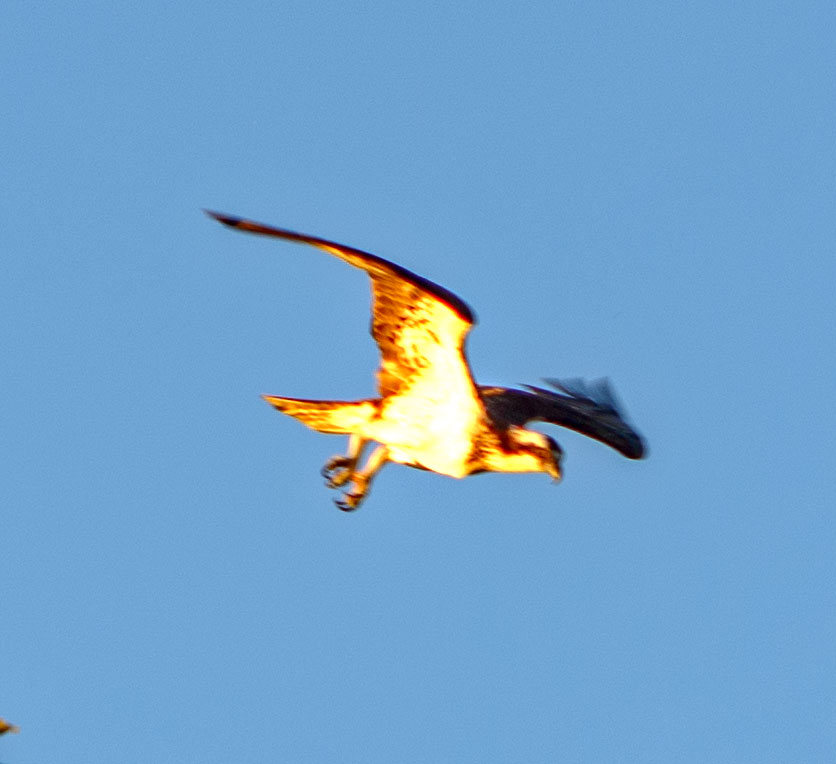
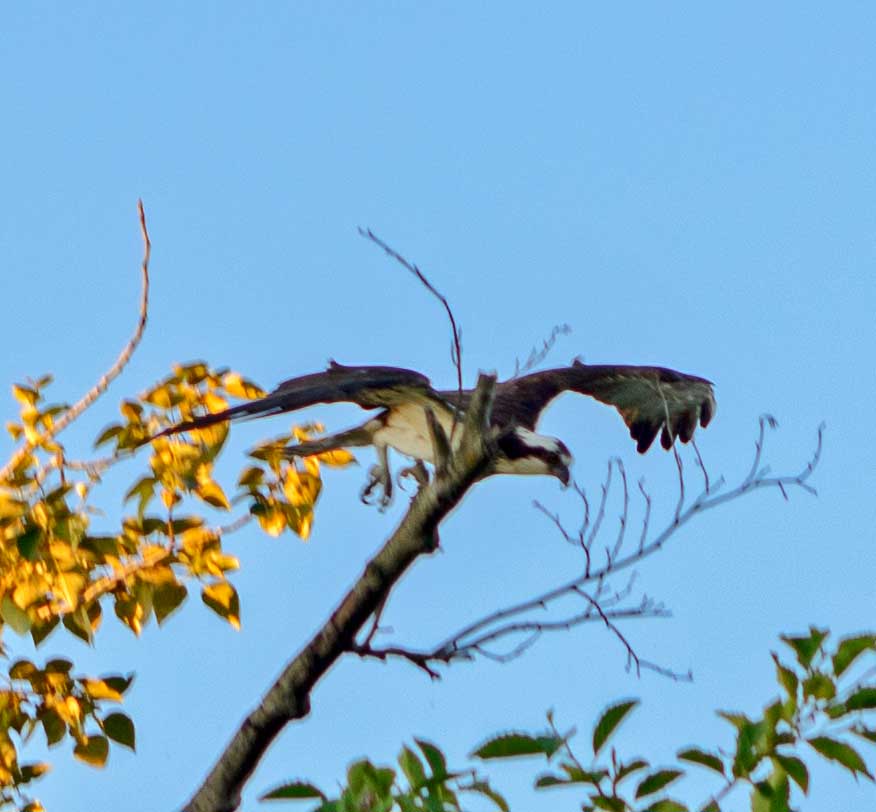
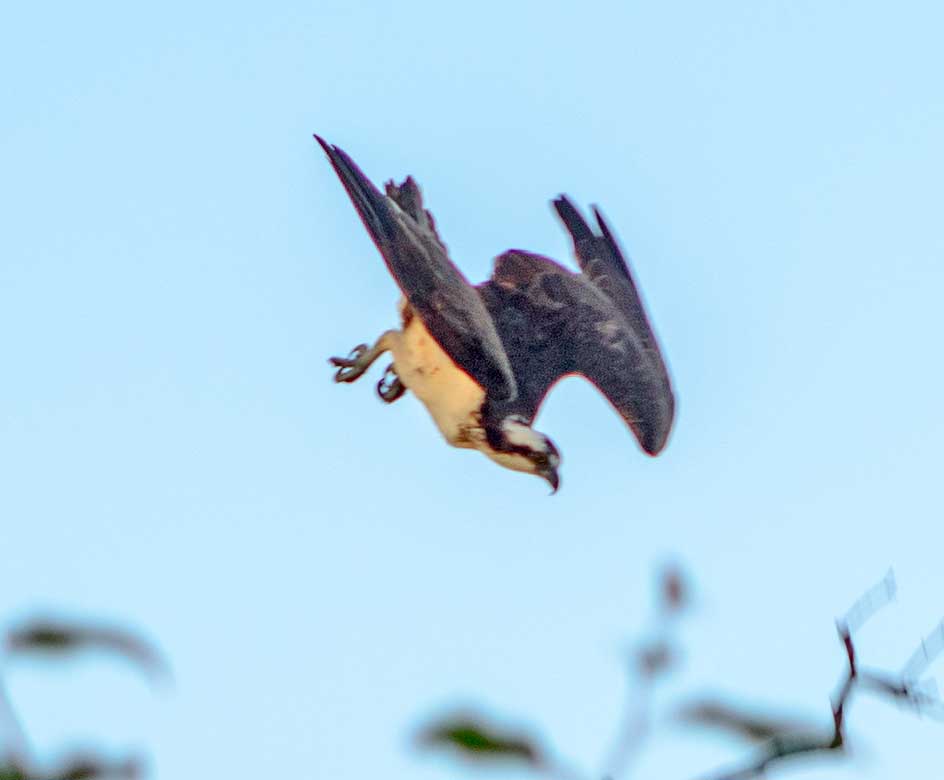
I shot the following at high speed, and have blown them up considerably to give a sense of what happened next. Click to enlarge the thumbnails for greater detail.
Here the eagle disappeared behind the trees, but dove directly into the lake and emerged with a fish.
It flew off, fish in talons, half circling the lake – then returned to its original perch for a leisurely meal.
THEN: After Seattle's Great Fire of June 6, 1889, temporary lodgings for burned-out businesses were hastily assembled, some above the ashes and others, like these sheds facing Third Avenue south of James Street, nearby.NOW: After the Yesler mansion burned down on New Year's Day 1901, the block was fitted with the 2,600-seat Coliseum Theatre, which in turn was razed for the first four floors of the new King County Courthouse, dedicated on May 4, 1916.
As far as I can figure from studying many photographs of Seattle’s Great Fire of June 6, 1889, this line of commercial sheds was a unique response to the conflagration. Tents, not sheds, were the primary answer to the needs of a community that lost practically its entire business district.
The inferno ignited about 2 p.m. at the southwest corner of Madison Street and Front Street (First Avenue) and by sunrise the next morning, the flames had consumed about 32 blocks — but not this one.
In 1883, Seattle’s first pioneer industrialists, Henry and Sara Yesler, began building their mansion on this block. Here, they had nurtured an orchard, the village’s largest. Even with the new big home (part of it shows upper-left) the couple kept a few fruit trees on the side lawns. However, if there were any trees left on the mansion’s front lawn, they were removed after the big fire.
Along the Third Avenue side of the Yesler block, between James and Jefferson streets, Yesler and James Lowman, his manager and relative, nailed together temporary quarters for a few of the businesses that were flattened. For his burned-out stationary and printing company, the venerable Lowman and Hanford, Lowman picked the corner shed here at James and Third.
King County’s courthouse (its tower appears here far right at Third and Jefferson) is now City Hall Park. The 1882 courthouse was saved when soaked blankets were applied to the roof, and bureaucrats, litigants, judges and prisoners repeatedly splashed buckets of water against its clapboard walls.
Sara Yesler had died in 1887. Henry and his second cousin, Minnie Gagle, were living in the mansion at the time of the fire. Five months later they were married; she was 54 years his junior.
WEB EXTRAS
Anything to add, Paul? Yes Jean – more features related to the “Great Fire” and in the neighborhood. We should note that some of the stories may have been used previously in other equally apt contexts. They perform like leitmotifs in this 0n-going Seattle Symph0ny.
FIRST, the ill-fated Seattle birdseye prepared shortly before the June 6 fire and then made mostly irrelevant except as a detailed memory of a business district that was lost to the fire. I know of no other copy than this one – sometimes hand-colored – in which the burned area has been given a border crude enough, perhaps, to suggest destruction or even a struggling sign for smoke.
Best to CLICK TWICE. With careful inspection you can find both the Yesler mansion and the Katzenjammer Kastle. (For a description of this birdseye read the text above it.)
NEXT black and white and color variations of the periodical Western Shore’s Sept. 21, 1889 coverage of the rebuilding underway following the June 6 fire. (Click TWICE to enlarge)
The West Shore birdseyes look northeast from an imagined position mid-block between First Avenue (It reaches the lower-right corner), the waterfront (off-frame to the left), Washington Street (it runs across the bottom of the sketch) and Main Street (behind the artist). The structure left of center on the north side of Washington is the Dexter Horton bank. With some mending it managed to reuse the burned-out shell of its quarters for a few months following the fire. On the center-horizon are the Central School at 6th and Madison (with the t0wers) and to the right of the school the Rainier Hotel on 5th between Marion and Columbia. This big hotel was rushed together – of timber – to serve a city that lost most of its hostelries to the fire. On the far right City Hall – aka the Katzenjammer Kastle – here still the County Courthouse – with its central tower faces the artist over Third Avenue between Jefferson and Terrace Streets. The Katzenjammer appears in the principal feature (on top) one block south of the photographer. To the left of the City Hall/ Court House we discover the Yesler Mansion and even a few of the temporary units built on its front lawn. In the second photograph below the colored rendering of the West Shore birdseye we get a look back through this scene from the front porch of the Katzenjammer, but at an earlier date, sometime perhaps in July, or a few weeks after the fire.
A similar point of view - although lower and earlier - to that taken by the birdseye artist. The bank holds the center at the northwest corner of Main and Commercial (First Ave. South.)Looking back and west-southwest across Third Avenue from the front porch or steps of the City Hall (Katzenjammer Kastle) at the southeast corner of Jefferson and Third. The tents, of course, are temporary. The King Street Coal Wharf, left-of-center, seems to be restored. The Dexter Horton bank can be found right of center with a banner hanging from it. Workers on the left are preparing another temporary structure facing Yesler Way from its south side. Duwamish head it across the bay, on the far right. A few of the fire's survivors take the opportunity to advertise togetherThe day following the fire the Seattle Morning Journal managed to report on it. (Click TWICE to hopefully read.)
=====
The Yesler Mansion between Jefferson and James Streets seen from Third Avenue. That's a library sign hanging above the front steps. Photo by Wilse. Courtesy Lawton Gowey
YESLER MANSION & PUBLIC LIBRARY
(First appeared in Pacific, August 22, 1982)
In 1882, Seattle pioneer Henry Yesler made the national news. The Harper’s Weekly story was about the mob lynching of three accused but untried murderers. The hanging was done from a stanchion braced between the forks of two maple trees on the James Street side of Yesler’s backyard. The Harper’s reporter either interviewed Henry or overheard him say, “that was the first fruit them trees ever bore, but it was the finest.” The artist’s sketch accompanying the article shows the outlaws hanging between Yesler’s maples, and beneath them in the crowd stands Henry Yesler busy at his favorite avocation: whittling.
Henry Yesler is found whittling at the bottom margin right-of-center. His home at the northeast corner of James and First (Front St.) is behind and to the left of the hanging maples. Henry and Sarah Yesler standing in front of their home at the northeast corner of James Street (on the right) and Front Street (First Ave.) on the left. The decorative fir trees and Chinese lanterns (seen full record below) appoint Pioneer Square for the Fourth of July, 1883.
Yesler continues to whittle in this week’s smaller historical photograph (above). His wife Sara poses with him in front of their home at First Avenue and James Street, the present site of the Pioneer Building. To their left (our right) are the hanging maples. Although hidden by the leaves, the stanchion is still in the picture, left as a morbid warning to visiting hoodlums. The year is 1883, and the street is decked out in lanterns, bunting and bordered with evergreens. Whatever the festive occasion, the Yeslers were also celebrating their good fortune of being the largest taxpayers in King County, and having survived in prosperity nearly 30 years in their little home in the center of town. The $92,000 assessment of Yesler’s King County properties in 1881, had risen to $318,000 by 1883.
So Henry and Sara Yesler decided on a larger extravagance, and hired an architect named Bowman to design it. In place of their modest one-story, five-room corner home they would have a three story, 40-room mansion which with its surrounding grounds would fill an entire city block between Third Avenue and Fourth Avenue at James Street.
Construction began on the Yesler Mansion in 1883, but later that year so did the Depression. Both Henry’s prosperity and his home building faltered. By 1885 the Yeslers were nearly bankrupt. When, at last, in July 1886 they moved into their showpiece, it was still not finished. The planned ornate white oak, ash and redwood paneling was missing. Most of the rooms were-empty, so Henry promptly leased many of them as unfurnished office spaces.
By accounts Sara and Henry were a robust couple, with an exuberant habit of dancing into the late hours at public balls. When Sara died suddenly on Aug. 28, 1887, of a “gastric fever” she was only 65. Flags in the city and on ships in the sound were hung at half-mast, many businesses closed and the great house could not hold all the mourners. When the funeral services were over Henry was alone in his home with 40 rooms and a few renters.
Soon, and wisely, Henry decided to leave town. Ten days after his wife’s death, in company with James Lowman, his nephew who since 1886 had been managing Yesler’s business affairs, Henry headed east on the Northern Pacific. He carried two lists: one of friends and relatives to visit, and the other a shopping list of furnishings for his mansion. The 77-year-old Yesler was an intrepid traveler, and soon exhausted his 33-year-old nephew who returned home in October. Yesler kept going until Nov. 26 when he returned to his mansion with the flu and a badly sprained ankle. The injury, illness and memory of his whirlwind tour were, perhaps, enough stimulation to fill the void in his big house left by Sara.
It is also possible that Henry’s mourning was diverted by his second cousin, Minnie Gagle, a “good-looking girl with expressive gray eyes” and 56 years Henry’s junior. Minnie lived in Leitersburg, Maryland, Henry’s birthplace and one of the spots on his tour. In 1888 the Gagles moved to Seattle, by 1889 Minnie was living in the Yesler mansion, and on Sept. 29, 1889 she and Henry were married in Philadelphia, while on another trip east. Returning home, Henry now more than ever stayed in his mansion. But, his marriage seemed either so scandalous or bizarre to his old cronies “that many were alienated and stayed away.”
In 1892, at the age of 82, Henry Yesler, accompanied by Minnie, left his mansion for the last time on a tour to both Alaska and Yellowstone Park. Soon after his return his robust health slipped away. In the early Friday morning of Dec. 16, in the company of two doctors, two nurses, his nephew, his wife and the entire family, the bedridden Yesler wondered aloud if he was about to die. Millie answered, “Are you afraid of dying?” He replied, “No, I don’t care anything about it. The mere dying I don’t like, but the rest I don’t care anything about.” Then, after some nourishment, he added, “That’s all I care for.”
More than 3,000 mourners crowded the Yesler mansion and its grounds for the largest funeral the city had ever been part of. A scandal as big as his estate ensued. Henry’s young nephew accused his young wife of destroying the will. And the city was involved because it was claimed that this “father of Seattle,” who had built the Puget Sound’s first steam sawmill, been mayor twice, paid the most taxes, had left the bulk of his estate, including the $100,000 mansion, to his city. Now the citizen’s repressed resentment for the scandalously young interloping Minnie broke loose. However, neither this prejudice nor the charges were supported by evidence sufficient to convict her.
In seclusion and guarded by her family, Minnie continued to live in the mansion until 1899 when the Seattle Public Library moved in. Sara Yesler, as the library’s first librarian in 1868, would have approved the change. Now it was librarian Smith who had his office in one of the bedrooms, the bindery in the kitchen, another room for periodicals, which left more than 30 rooms for stacks and storage. Our view of the Yesler Mansion as Public Library was taken in either 1899 or 1900. On New Year’s Day, 1901, it burned down taking 25,000 volumes with it.
In 1903, the Coliseum, a barn-sized theater “the largest west of Chicago seating 2,600” was built on the ruins. Then on May 4, 1916, an “immense pile of granite and terra cotta” was dedicated. Our view of the King County Courthouse, as of the library, is from Third Avenue. A plaque honoring Henry Vesler is at the entrance.
Looking north across City Hall park to the south facade of the Coliseum Theatre during an unidentified event that features, no doubt, some entertainment or instruction (or both) from the platform on the right.
=====
In 1883 the city’s first industrialists Henry and Sarah Yesler rewarded themselves by building a 40-room mansion in their orchard facing Third Avenue between Jefferson and James Streets. After its destruction by fire in 1901, the site was temporarily filled with the Coliseum Theatre (“The largest west of Chicago, seating 2600.”) until the first floors of the King County Courthouse – aka the City-County Building – replaced it in 1916. This comparison looks east across Third Avenue. Historical photo courtesy Plymouth Congregational Church.
UNRED RUINS
(Most of this feature is a reworking of what appears in the earlier feature directly above this one. The clever “Unred Ruins” title is courtesy of a Times editor. As a rule none of the titles we submit with our stories are used by the Times. This is an old pulp tradition – there are headline specialists. Sometimes – like this one – they come forward with pretty good headers.)
Henry and Sarah Yesler’s mansion was not yet twenty when it burned down early in the morning of New Years Day, 1901. Actually, from this view of the ruins it is clear that while the big home was gutted by fire neither the corner tower (facing 3rd and Jefferson) nor the front porch – including the library sign over the front stairs – were more than blistered by it.
The Yesler landmark had a somewhat smoky history. Although completed in 1883 Sara and Henry did not move in, and instead continued to live in their little home facing Pioneer Place for three years more. When Sarah died in the late summer of 1887 it was in the mansion, which was then opened for the viewing of both Sarah – she was “resting” in its north parlor – and the big home too.
Soon after Sarah’s death Henry and James Lowman, Yesler’s younger nephew who was by then managing his affairs, took a long trip east to visit relatives, buy furnishings for the still largely empty mansion and, as it turned out, find a second wife for Henry. It was a local sensation when next the not-long-for-this-world octogenarian married in his 20-year-old (she may have been 19) cousin Minnie Gagler. (I have neither found nor made any special search for a portrait of Minnie.)
After Henry died in the master bedroom in1892 no will could be found. While Minnie was suspected of having destroyed it this could not be proved. Consequently, the home was not — as Lowman and others expected — given to the city for use as a city hall. Instead Minnie stayed on secluded in it until 1899 when she moved out and the Seattle Public Library moved in.
Instead of partying on New Years Eve 1900 Librarian Charles Wesley Smith worked until midnight completing the annual inventory of books that only hours later would make an impressive fire. Except for the books that were checked out, the Seattle Public Library lost about 25 thousand volumes to the pyre. (The charge that Smith had started the fire was never proven.)
=====
Facing Third Avenue, the Yesler Mansion and City Hall were photographed together in 1900, the last year they would stand side by side. In 1903, the over-sized but short-lived Coliseum Theater was built in the place o/the mansion. In 1916, the lower floors o/the surviving City County Building were dedicated there. Across Jefferson Street, the site 0/the rambling clapboard City Hall that was destroyed in 1909 was ultimately developed into City Hall Park.
This "repeat" from the street may also serve the feature that follows this one.
PIONEER PAIR
(First appeared in Pacific, March 24, 2002)
So far as I can recall, this is the only photograph that shows, side by side, two of the more significant structures in our pioneer history. On the left facing Third Avenue is the Yesler Mansion; on the right, Seattle City Hall. From this look at City Hall you cannot tell it, but in its lifetime the hall grew into such a heterodox structure that it was popularly called “the Katzenjammer Castle.” (We will include a wider and later shot below that makes the point.) The nickname was drawn from a comic strip featuring the two mischievous Katzenjammer Kids, whose adventures took place in a cityscape stuffed with clumsy structures resembling Rube Goldberg inventions.
In its own, ornate way, the 40-room Yesler Mansion was also clumsy. In “Shaping Seattle Architecture,” Jeffrey Karl Ochsner of the University of Washington Department of Architecture notes its “highly agitated forms . . . irregular bays, picturesque profile and varied details . . . are typical of American High Victorian architecture.” I, for one, fall for this kind of clumsiness.
When construction began on the mansion in 1883 in time for the depression or “Panic of 1883,” its municipal neighbor was already standing for two years as the King County Courthouse. When, in 1886, Henry and Sara Yesler moved two blocks from their home in Pioneer Place (Square) to their big home, it was barely furnished. After Sara died the following year, Henry and his nephew James Lowman went east to visit relatives and buy furniture. Henry died in late 1892.
Seven years later, the Seattle Public Library moved in. The stay was short. On New Year’s Day 1901, fire destroyed the Yesler Mansion and 25,000 books. Twelve years earlier both buildings just escaped the city’s “Great Fire.”
=====
What we now refer to as the King County Courthouse was first known as the City-County Building when Seattle’s mayor George Cotterill and the King County Commissioners agreed to build and share the new building both needed. Construction began in June 1914. This view looks east across 3rd Avenue to where the building’s south side faces what is now called City Hall Park.
CITY-COUNTY BUILDING
(First appeared in Pacific, Sept. 2006)
For fifteen tiring years litigants negotiated First Hill to meet with bureaucrats at the King County Courthouse at 7th Avenue and Alder Street. Consequently, that part of the hill overlooking Pioneer Square was often called “Profanity Hill.” But on May 4, 1916 the new courthouse was dedicated, and it suited the Central Business District well, for it looked more like an office building than a courthouse.
The architect of its first five floors, the commandingly named Augustus Warren Gould, was censured by his peers and kicked out of the American Institute of Architects. In the book “Shaping Seattle Architect,” Dennis Anderson explains with his essay on Gould that the architect “violated professional ethics to secure this commission siding with Pioneer Square property holders who fought relocation of city-county offices to the [Denny] regrade area.” Still Gould kept the commission and this is the result.
Six more sympathetic stories were added in 1929-31. Unfortunately in the early 1960s, as Lawrence Kreisman (a familiar name to Pacific Northwest readers) notes in “Made to Last” his book on historic preservation, “A major remodeling [that] was intended to capture the spirit of urban renewal and cosmetically disguise the building’s true age destroyed many original features of the elegant marble-clad lobbies, windows and entrance portals.”
The U.S. Food Administration’s sign “Food Will Win the War” certainly dates this view from sometime during the First World War. In addition to soldiers and munitions the nation was also sending food to Europe and homemakers were signed up as “kitchen soldiers.” School children recited this rhyming pledge. “At table I’ll not leave a scrap of food upon my plate. And I’ll not eat between meals but for supper time I’ll wait.” These were the years when horse steaks were sold at the Pike Place Market, President Wilson turned the white house law into a pasture for sheep, and the country’s 20th century long march to obesity was temporarily impeded.
=====
Both the unattributed historical recording, above, and Jean Sherrard's repeat, below, look south on First over Spring Street - the former from a balcony above the sidewalk and the latter from Jean's ten-foot pole.
The “GREAT FIRE” of JUNE 6, 1889
(First appeared in Pacific, March 14, 1982)
The Wednesday, June 5, edition of The Times ran beneath its masthead an enthusiastic advertisement for a sale on summer parasols. It had been an unseasonably hot spring and the sun that lay on the city also fanned forest fires in the Cascades. Burning unchecked, they glowed by night and sprinkled ash on Seattle by day. The Times also reported front page that across the continent wetter weather continued on the ruins of Johnstown, Pa., where cold and heavy rains helped spread diphtheria. Six days earlier, May 31, a dam that spanned the Conemaugh River burst and in the time it takes a wall of water to rush 12 miles downstream devastated Johnstown, killing 2,200.
The Wednesday Times also printed an ad for Frye’s Opera House, and its “coming Friday night only appearance of the Cecilian Opera Co. . . .” also would feature “. . . new scenery and magnificent stage effects.”
The Frye Opera House ca. 1887, at the northeast corner of Marion (on the right) and Front (First Ave.).
A story inside continued the compliments. “Theater-goers during the past few weeks have observed a wonderful change in the stage settings at Frye’s Opera House . . . Since the first of the year Frye has put in ten new sets, including one fancy Gothic city, one chamber, a very elegant garden setting, a woods scene.” Frye’s theater (at the present site of the Federal Building) was when built in 1883 the grandest local landmark with its mansard roof, 1,400 seats and a stage with seven trapdoors. The feature article concluded with assurances that “there are five large exits which provide against any danger of a panic in case of fire or an accident.”
Soon enough the fire came. There would be no Thursday Tunes, no summer parasols, no “elegant garden setting,” no “fancy Gothic city” and no Seattle business district.
The principal photograph looks south down Front Street (First Avenue) from Spring St. towards Madison and the intersection where the “Great Fire of June 6, 1889,” first ignited in a basement wood shop across the street from the Opera House. The crowd stands well back from the heat. There was no defending the theater, which although brick, is still ablaze and would soon be consumed. The scene was shot around 3 o’clock in the afternoon shortly after the fire began. It is one of the few images of the fire itself. Most local photographers were busy saving their equipment. We may imagine that many thousands of prints and negatives of the pre-fire city were lost to the flames. Within two hours the fire reached Pioneer Place (or Square) and by 7 o’clock the fire had eaten ‘its way to Main Street and would continue on through the evening past King Street to a wet death in the tideftats where the Kingdome now stands (once stood).
Near the fire's origins at the southwest corner of Madison Street and Front (First Ave) this view was recorded from another balcony above a Front Street sidewalk, this time closer to the fire on the east side of Front about 100 feet north of Madison. With perhaps an hour and a half all this wood would be ablaze.
The Great Fire moved north as well. By sunset the spot from which the photograph was taken, near Spring, and all of the picture’s subjects, including the Minneapolis Art Studio, would be consumed. And in that direction another casualty is noted in Murray Morgan’s classic of local history, Skid Road.
“It climbed east up the hill toward Second Avenue from the Opera House. So great was the heat that the fire pushed backward against the wind across Madison Street and into the Kenyon block which housed, in addition to stores, the press of The Seattle Times.”
And The Times was stunned until Monday, the 10th, when its first post-fire edition would announce: “The Times is still on earth. It is slightly disfigured but still in the ring . . .The Times office went up in flames . . . nothing being saved except the reporters, the files and a few other implements of the trade.” This dauntless report was preceded by a rhyming headline which read: “SEATTLE DISFIGURED, but still in the ring” this is the song Seattle will sing, New buildings, New hopes, New streets, New town, there’s nothing that can throw Seattle down. She goes thru adversity, fire and flame but the Queen City gets there just the same.”
The Frye Opera House ruins at the center, looking north across Marion Street.
This Queen City – named so earlier by a Portland developer – also got a lot of press attention nationally. But it wasn’t the leveling of 30 central city blocks that was news as much as the human interest it discovered in this frontier town’s steadfast generosity. Before the fire, citizens had pledged $576 in relief to the Johnstown disaster. After their own catastrophe, they decided still to keep the faith and send that pledge along to the flood Victims_
The Monday Times reported: “Everywhere confidence in the future of this city is maintained . . . The heaviest losers are the most cheerful.” This booming optimism was encouraged in the eventual finding that no human lives were lost. However, thousands of rats and at least one horse died that day. As the Monday Times reported: “The men who left a head horse in a vacant lot off Madison near Broadway on the day of the Fire: If they do not removed the carcass, they will be reported to the police as the stench arising from the animal is sickening.”
=====
The off-shore reach of Yesler’s Wharf is impressive even after it was destroyed during the city’s “Great Fire” of June 6, 1889. The contemporary scene steps back perhaps two hundred feet to catch the ramps that serve the passenger ferries at the foot of Yesler Way.
YESLER WHARF RUINS – 1889
(First appeared in Pacific, Nov. 2003)
By a contemporary’s description Yesler’s Wharf and the rest of the waterfront was “transformed to charcoal” by the city’s Great Fire of June 6, 1889. The fire began around 2:45 in the afternoon at Front Street (First Avenue) and Madison Street. Pushed by an unseasonably hot wind out of the north it skittered south along the waterfront reaching and engulfing Yesler Wharf by 5:30.
Stripped by the fire of its structures and planking the wharf revealed a substantial foundation of fill and debris gathered through nearly a half-century of serving as the community’s industrial center at the foot of Mill Street (Yesler Way). This view looks east from near the wharf’s outer end to the still standing ruins of the ornate brick buildings that formed a show-strip along the west side of First Avenue for the two blocks between Columbia Street, on the far left and Yesler Way, on the far right.
Here perhaps three or four days after the fire (parts of the rubble are still smoldering) the wharf is already being rebuilt. The new beams at the bottom of the scene have been attached to what is left of the pilings at the southern edge of the fill. The fire obviously could not burn below the water line, and at low tide the best of the surviving stubs were capped and extended. The fire has surely contributed to some of the fill showing between the beams. The size of this scene can be gauged by the single worker standing on a beam right of center.
Barely visible left of center is a Lilliputian party of citizens in suits and dresses visiting the site. They are probably carrying the passes that were required until the eleventh of June. That day a local daily reported that the “district was opened to the public and immediately invaded by a heterogeneous crowd of the curious, relic hunters, vagrants and thieves . . . Riff raff and land pirates set about digging . . . All articles of value that could be found in the ruins were seized upon and many disgraceful scenes enacted . . . The military returned and drove the vagrants out.”
Seattle Rifles show a line of disciplined force and present a chance to use them again this week - as we did last. Here they stand - still - on Front Street (First Ave.) near the foot of Columbia Street with the photographer looking south along the west side of Front thru what was the city's 1880's show-strip of elegant brick structures - until June 6, 1889.
By the end of June nearly all the ruins had been razed, the debris removed and the fire district dappled with temporary tents for businesses. At summer’s end the waterfront was almost entirely planked over, extended, and rebuilt with many more piers and warehouses larger than those destroyed by the fire.
=====
When its first ornate section was built in 1883 the Occidental hotel was perhaps the principal architectural sign of Seattle’s then recent ascendancy as the most populated community in Washington Territory. With its 1887 additions the hotel covered the entire flatiron block between Second, Yesler and James. Destroyed by the “Great Fire” of June 5,1889, the Occidental was replaced by the Seattle Hotel whose unfortunate destruction in 1961 by many reckonings mobilized Seattle’s “forces of preservation.” A small section of its dismal replacement, the “Sinking Ship Garage,” appears in the contemporary photograph right of center between the Pioneer Building and the trees of Pioneer Square.
A portion of the "Sinking Ship" appears right-of-center. The photograph that follows looks east from this position after the fire and before any of the burned out block between Cherry, James, First and Second was rebuilt. Looking east from Pioneer Square (or place) mid-block to the surviving structures on the east side of Second Avenue between James, on the right, and Cherry, on the left. The Yesler mansion peeks above the surviving tree on the right, and to the right of the tree is the Normandie Hotel at the southwest corner of Third and James. It is now the only pre-fire structure that survives in the business district. On the far left horizon is the home with its central tower of James Colman at the southeast corner of Fourth and Columbia. On the right, Guy Phinney's real estate sales tent is the only structure seen on the block. He would build the Butler hotel at that corner. Some of these structures on Second can be seen in the next scene below, from the perspective of the Boston Block at the southeast corner of Second and Columbia. It was the largest surviving structure in town suitable for mostly displaced merchants and professionals - including the post office - and was soon stuffed with them.As just noted above, looking south from the Boston Block across Cherry Street into part of the burned district. Note - and compared with the photograph above this one - the Phinney tent on the right near the northwest corner of James and Second. Upper-left is the rear of the Normandie, also found and described in the photo caption above this one.
“HIDEOUS REMAINS”
(First appeared in Pacific, June 6, 2004)
One hundred and sixteen years ago this morning on June 6, 1889 that part of Seattle’s excited population that tired of watching the flames through the night and had surviving beds to drop into awoke to these ruins and thirty-plus blocks of more ruins and ashes. The Occidental Hotel’s three-story monoliths — perhaps the grandest wreckage — held above the still smoking district like illustrations for the purple and red prose of that morning’s Seattle Daily Press. (It is printed above.)
“The forked tongues of a pierce pitiless holocaust have licked up with greedy rapacity the business portion of Seattle . . . It was a catastrophe sudden and terrific. Besides the smoking tomb-like ruins of a few standing walls . . . people are left living to endure with sheer despair . . . blackness, gloom, bereavement, suffering, poverty, the hideous remains of a feast of fire.”
More temporary tents to the sides of Yesler Way. The ruins of the Occidental Hotel appear here on the right across Second Ave, which is unseen below the bottom border. Duwamish Head is across the Bay and the King Street Coal Wharf, far left, is still not serving any vessels.
Predictably, the reporter’s hideous remains were also fantastic and the city’s photographers were soon making sidewalk sales of scenes like this one. If the best of these ruins had been allowed to stand it would have become both romantic and revered, but it was not. The Occidental’s “towers” were blown up on the evening of the eighth. (Most likely it was either late on the 7th or 8th that this record of their silhouette was captured for the district was still generally ablaze on the sixth.)
Above and below, an Occidental Hotel menu from 1887.
The fire started at about 2:30 in the afternoon of June 5 at the southwest corner of Front Street (First Ave.) and Madison. It took a little less than four hours for it to reach and jump James Street and ignite the north wall of the hotel. In another dozen minutes the fire passed through the distinguished landmark and jumped Yesler Way to spread through the firetrap frame structures between Yesler and the tideflats that were then still south of King Street.
The Occidental Hotel looking east on Mill Street (Yesler Way) from Commercial Street (First Ave. S.). The date is most likely sometime in 1887 for that year's extension of the hotel to the east is underway. Note the scaffolding. James Street is on the left. The tracks are for the horse-hauled "bob tail" common carrier that ran up Second Avenue to Pike and from there west to First (Front) where it continued north in the Belltown and eventually to the foot of Queen Anne Hill. Another look at the Occidental ruins, this time with a few of the manly fireman posing below them. (Courtesy, University of Washington Libraries, Special Collections)
=====
Then caption: Looking north on an unpaved Second Avenue in July 1889. The nearly new tracks on the left served the first electric trolley on the Pacific Coast when the conversion was made from horses to dynamos earlier in March. Second was paved in the mid-1890s and thereafter quickly became Seattle’s “Bicycle Row” with many brands to choose from sold mostly out of small one story storefronts, especially in this block between Spring and Seneca Streets. (Pix courtesy of Michael Maslan) Now caption: The widened Second north of Spring Street was half quiet when photographed on a late Sunday afternoon.
THE CANVAS RECOVERY
The city’s “great fire” of June 6, 1889 consumed most of the business district – more than 30 blocks – but not this block, the first part of Second Avenue that was not in some part scorched. After the disaster it quickly served in the rebuilding that turned practically every available lot and lawn on Second into a sewn strip of temporary tents. The Times for June 10 reported that while “the slabs and sawdust piles are still burning and sending clouds of smoke back over the town” over 100 permits had been issued to put up tents.
Judging by the canvas signs, the large tent on the far left, at the southwest corner of Second and Seneca Street, is shared by two firms: Doheny and Marum Dry Goods and the “manufacturers agents”, Avery, Kirk and Lansing. Before they were for the most part wiped out by the fire the two businesses were already neighbors at the northwest corner of Columbia and Front (First Avenue).
Around two o’clock on the afternoon of June 6, or bout a half-hour before the fire started, Avery and his partners were suddenly $2,500 richer, when W.A. Gordon, a young man recently arrived from Maine, invested that amount, “everything he had” the papers reported, in the business. The sudden cash most likely helped with the construction of the big tent. Still we do not see Gordon’s name stitched to it.
We know from a Times article of August 2, titled “A Tent Occupant’s News” that a firm doing business on Second just north of Seneca had paid $2 a month per running foot for space to construct the framework for a tent and cover it with canvas “at the expense of several hundred dollars.” Now less than two months later the landlord was asking the city to remove the tent for the construction of a building. The threatened residents appealed, “We do not want to be thrown into the street.”
A few tents did business for a year before the city council decided there were “buildings enough for all” and ordered the last of them removed.
=====
Then Caption: Looking west on Cherry Street from Third Avenue into part of the “brand new” Seattle built after the “Great Fire” of 1889. (photo courtesy Lawton Gowey) Now Caption: Within twenty years of the ’89 fire much of the new city was being rebuilt bigger. Here the Dexter Horton Building on the right, the Hoge building, left-of-center and across 2nd Ave, and the Alaska Building, at the southeast corner also of Second and Cherry are surviving landmarks of that enlargement. (by Jean Sherrard)
A STURDY CHERRY
(First published in Pacific March, 2008)
In 1890 the photographers William Boyd and George Braas formed a partnership seeing, perhaps, in the new city being built above the ashes of the old one destroyed in the “great fire’ of 1889 an opportunity to put their “mirror” to the great changes and prosper with them. The partnership lasted barely two years and this example of their work most likely dates from 1892, although without a blade or leaf of landscaping we get no hints of the season.
The partners have titled it, lower-left, “Cherry St. Seattle” and given it the number “141.” The view looks west on Cherry through its intersection with Third Avenue, and everything within their frame, excepting the old clapboards on the far left, is nearly new. One can sense in this sturdy cityscape of brick, sandstone, and fine lines what an elegant city Seattle was after the fire — and almost instantly.
Right of center are the New York Block at Second Avenue and, far right, the Occidental Building, then home for the Albemarle Hotel. Both structures were designed by the by then already venerable Seattle architect William E. Boone who sometimes topped his sensitive posture with a skull cap. On the smoldering heels of the fire the Occidental Building was built quickly in three months and a few days. The New York block was the opposite. First designs were ready in 1889 but the building was not completed until 1892. Both structures were later sacrificed for the grand terra cotta tiled Dexter Horton building, which occupies most of the “now” scene.
The Bailey Block at the southwest corner of Second and Cherry, far left, survives although most of its stone clad skin is hidden in the “now” behind the Alaska Building, which when it was added in 1904 was the Seattle’s first “absolutely fireproof all steel frame” skyscraper.
=====
Then Caption: Looking west down a planked Columbia Street to the waterfront from Third Avenue, circa 1900. [Photo courtesy Larry Hamilton] Now Caption: The Colman Building is the only survivor from the “then” but it can barely be detected, right-of-center, with added stories at the northwest corner of First Ave. and Columbia Street. It is directly across First from the Norton Building, in 1959 one of Seattle’s first glass curtain wall skyscrapers. [Now by Jean Sherrard]
COLUMBIA STREET WEST of THIRD AVE. Ca. 1900
Last week we looked west on Cherry Street from Third Ave. in 1892 and here a few years later we move one block north and look west again on Columbia to Elliot Bay. In the foreground worn planking gives a texture to Columbia but at Second Avenue it runs into brick.
Behind the pole on the right, stands the stately little classic that was Seattle’s post office for most of the 1890s. When it moved to new quarters in 1899, the sidewalk news depot and stationary store survived. A few of the periodicals offered are hung in display beneath the large sidewalk awning.
At the corner with 2nd Avenue, the ornate two story Colonial Building was built by Harvard graduate Herman Chapin who also raised the plain four-story brick Boston Block directly across Columbia at its southeast corner with Second. Constructed in 1887-88, their timing and locations were most fortunate for both buildings just escaped the city’s Great Fire of 1889 (although it cracked their windows) and following the fire they were temporarily stuffed with businesses displaced by it.
The broad-shoulder Haller Building holds the northwest corner of Second and Columbia, right of center. Built directly after the fire from a design by the prolific architect Elmer Fisher, its principal tenant here is the Seattle National Bank, one of whose directors was the “capitalist” Theodore Haller.
Just by the signs evident here in this first block on Columbia one can buy a sewing machine, photograph supplies, a haircut, a Turkish bath, a newspaper, and a meal at the Alley Restaurant, sensibly in the alley north of Columbia. At the waterfront it is still a tall ship with two masts that rests in the slip between the Yesler and Colman docks.
=====
Historical Caption: In the shadow of the Haller Building at Columbia Street an unnamed photographer looks south on Second and into what was then still the city’s primary financial district. (Courtesy Michael Cirelli.) Now Caption; Second Avenue has been elaborately altered in the century between this now and then. Still the Alaska building can be detected in both. (Jean Sherrard)
FINANCIAL DISTRICT CA. 1908
This is the third week in a row that we have featured looks into Second Avenue’s financial district or here down it during Seattle’s greatest boom years, the two decades following the “Great Fire” of 1889 when the City grew from about 40 thousand to almost that many more than 200 thousand.
Two weeks ago we looked west on Cherry toward Second from Third, ca. 1892. Last week Columbia Street was the subject, again looking west from Third to Second, ca. 1900. And here about another eight years later an unnamed photographer records Second Avenue looking south from mid-block between Marion and Columbia, which is being crossed by a lonely motorcar and an electric trolley on the Lake Union line.
What stands out and up in this view is at is center: the Alaska Building (1904) at the southeast corner of Cherry, Seattle’s first skyscraper.
The banner strung across Second Avenue mid-block above the trolley reads, in part, “Old Time 4th at Pleasant Beach (on Bainbridge Island), Boats Leave on the Hour, 50 cents. Including Dancing and Sports.” So the photograph was recorded early in the summer. Since there is no evidence of the citywide promotions connected with the 1909 Alaska Yukon Pacific Expo, we choose 1908 – a century ago – as a likely date.
The Hinkley Block, far right, dates from 1892 and here it is filled with lawyers, dentists, and even some artists. The brick paving on Second is about 12 years old. The oldest structures in this scene are the two on the left: the Colonial or Chapin Block on the northeast corner of Columbia and the Boston Block south across Columbia. As noted last week both were built before the fire of 1889 and provided great service to businesses following it. Post-fire photographs from 1889 show these two buildings standing along above the burned-out business district.
The surviving Boston Block, center, and the smaller Chapin Block across Columbia Street, to the left, seen over the smoldering rubble of the Great Fire of June 6, 1889.
=====
The three blocks between Cherry and Madison Street have almost completely changed in the century since the historical photo was recorded looking north on First Avenue from Cherry Street. The Colman Building (beyond the trees in the “now”) is the big exception. If the year of the historical scene is not 1907, it is close to it. HISTORICAL PHOTO courtesy of Greg Lange
FIRST AVENUE NORTH of CHERRY STREET
(First appeared in Pacific Sept. 2006)
Somehow the historical photographer managed to carry his or her camera to a temporary perch and look north on First Avenue and above the Kenneth Hotel sign at the foot of Cherry Street. With a bustling sidewalk and street scene – including seven trolleys – this elevated portrait of First was favored with its own colorized post card.
In the 1850s this was still the site of a knoll on which the locals built the North Block House that protected them during the one-day “Battle of Seattle’ of Jan 26. 1856. The Indians small arms fire from the woods beyond Third Avenue barely penetrated the logs of the fort although one local was hit and killed while peeking out the temporarily open door. That casualty stood close to our photographer’s mysterious prospect.
James Clemmer, a young theatre man from Spokane, first managed the Kenneth Hotel in 1907, and lived there too. Within a year he converted the hotel lobby into the Dream Theatre, the first Seattle theatre to treat films “seriously” by regularly mixing “one-reelers” with vaudeville acts. The theatre was deep but narrow, for although seven stories high the Kenneth was built on one lot. As such it was Seattle’s best reminder of Amsterdam. From this prospect we cannot tell if the theatre is as yet below the hotel sign.
I raised my camera with a pole (or monopod). Directly behind me is Pioneer Square and its official historic district most of which was built soon after the city’s “Great Fire” of 1889. Of course, most of the buildings showing north of Cherry Street in the older view were also built in the first decade following the fire but with few exceptions that they have been razed and replaced – in a few instances (like across First at its southeast corner with Columbia Street) with stock parking lots.
Looking north through Front Street's (First Ave.) show-strip block and from nearly the same prospect as the above now-then comparison. Again this view was recorded with a camera that was elevated most likely on a ladder leaning against one of the ruined brick monoliths. Denny Hill is on the horizon.
=====
Above, pioneer photographer LaRoche’s circa 1892 panorama of the restored business district looks down from the front lawn of the then new King County Courthouse over 7th Avenue. The Yesler mansion appears far left. Jean’s approximate repeat was taken recently from the roof of Harborview Hospital. (Click these TWICE – please)
It seems that for this moment at least the BLOG has been restored, and we will go forward with adding the rest of the Issaquah-related subjects with this addendum. We begin where the fidgeting first treatment (last Sunday’s) left off, with a full frame version of Tacoma photographer U.P. Hadley’s of militia posing in 1891 in line before their tents on what is now Issaquah’s Sunset Way.
All these Hadley photographs come courtesy of Mike Cirelli.
=====
For the contemporary “repeat” photographer-thespian Jean Sherrard returned to a scene of his former teen “triumph” when Issaquah Historical Society Museum Director Erica Maniez suggested that the best roost from which to take a ‘now’ approximation of the 1888 photograph was from the roof of the Village Theatre. In 1973, the senior at Bellevue’s Hillside School took the stage there as the too endearing and dimwitted giant Lennie in Steinbeck’s play “Of Mice and Men.” Persons familiar with the play, the novel or any of the five movies will remember the last moment as Lenny’s pathetic execution with a bullet to the back of the head administered by his best friend and benefactor George. In Sherrard’s performance the gun refused to fire and the play ended not with gasps and groans but laughter when Sherrard – as Lennie – fell dead after George was forced to say “bang.” Historical view courtesy Michael Maslan
NAME IT GILMAN (for eleven years)
(First appeared in Pacific, March 12, 2006)
When a capitalist laid a railroad to their front door, opened a coal mine nearby and built a home in town as well the citizens of Squak agreed to change the name of their hometown. In 1887 Daniel Gilman’s (with Thomas Burke) Seattle Lake Shore and Easter Railroad began laying track from the waterfront foot of Seattle’s Columbia Street into the King County hinterland with the heroic explanation that it was heading for Spokane (over Snoqualmie Pass) but the modest expectation that it would soon reach Gilman’s coal mine in – yes – Gilman.
And here is Gilman, as captioned for us at the lower-right corner of the photo. With the help of Erica Maniez, Museum Director for the Issaquah Historical Society, we can date it from the spring of 1888. Maniez notes that Mary and Tom Francis’s Bellevue Hotel, with the sign on the far left, opened in May. In this scene a scaffold is still attached to the east (left) side of the hotel and the second floor windows are not yet in place.
The hotel faces Mill Street (Now Sunset Street) and the raised railroad spur that runs to Gilman’s mill. Kitty-corner and across the spur is Isaac Cooper’s saloon (or Cooper’s Roost) and its flagpole facing what is still Front Street. Maniez notes that after her husband Tom died Mary Francis married Isaac Cooper — a kind of cross-intersection embrace at Sunset and Front.
On the far right is another bar on Front, the Scandinavian Saloon. According to the short history of Issaquah on the historical society’s website (http://issaquahhistory.org/historyarticles.htm) the patrons there were most likely lumberjacks, for Northern Europeans generally liked to work above ground, while the English, Italians, Yugoslavians and Czechs were just as inclined to be down in the mines.
By 1899 the citizens of Gilman were generally more alienated than admiring of their absentee namesake and changed the town’s name to a more mellifluous version of the Squak they once intoned. They named it Issaquah.
=====
Ron Edge returns with two of his EDGE CLIPPINGS, both related to pioneer Issaquah.
Front page of the Daily Intelligencer from Sept. 20, 1878 (click twice)Also from Sept 20, 1878. After reading of Tibbet's discovery we are left wondering where it is. If by Squak Creek he means the connector between Lake Washington and Lake Sammamish then these fertile bottom land would be in or near the business district of today's Redmond, at least so it seems to us. Perhaps a reader will refine our guess or discard it in favor of the "facts." Ron - of this clipping and others - points out that the Honorable George Tibbets was not so honorable during the race-riots and killings of the mid-1880s when Chinese laborers were driven (as in whipped) out of Issaquah (and Tacoma and for the most part Seattle too.)The Seattle Lake Shore and Eastern engine Gilman posing in front of the Gilman (Issaquah) station. (Courtesy Michael Maslan)Another relevant Edge Clipping. Dates from Aug. 5, 1888.
=====
Until the original negative is uncovered this copy from Seattle Now and Then Vol. 2 page 220 will have to do.The Issaquah Depot now - pulled from the Issaquah Historical Society's web page.
ISSAQUAH DEPOT
(First appeared in Pacific, Aug. 17, 1986)
[Please note – this text is now a quarter-century old. The Issaquah depot is now home to the Issaquah Historical Society.]
There’s a restoration going on in Issaquah that will make the past a little more real. A group of enthusiastic fixers wants to renovate the old depot in time for the town’s and the state’s centennial celebration in 1989. The Northern Pacific station became the town’s lifeline to the world in 1888 with the arrival of what was called the Seattle Lake Shore and Eastern Railway. It provided Squak (Issaquah’s first name) with a way to ship the locally-mined coal.
The Issaquah depot some time after the name was changed from Gilman to Issaquah.Burke and Gilman, left and right
Seattle railroad promoters Thomas Burke and Daniel Gilman were behind the move to transport the coal and even renamed the town after Gilman. In fact, the town was called Gilman until 1899 when Issaquah (a version of the native word Squak) was adopted. Sixty years later, long after the railroad’s departure, Northern Pacific was considering demolition of the sad old depot. But nothing came of it and it was left alone, serving for a long time as a warehouse.
Enter Greg Spranger, an air conditioner salesman from California who became so intrigued with the old building he moved to Issaquah and became the energetic member and driving force of the Issaquah Historical Society, the group behind the building’s renovation. The next project for the society members – bring back the train.
Above: The S.L.S.E.R engine McDonald posed in front of the Gilman depot.
Below: The McDonald posing on the off-shore trestle at the north end of Lake Union, circa 1887-88, off Northlake Way near Interlaken Ave.
=====
NORTH BEND – 1909
(First appeared in Pacific July 3, 1988 – Jean’s “now” repeat dates from ca. 2005. He recorded it for our book Washington Then and Now)
E.J. Siegrist left no explanation for why he shot a 1909 photograph of his native North Bend’s main intersection, but it may be the first recorded version of a traffic jam there. Although the first automobile had worked its way through the area four years earlier, Siegrist’s subjects were the more conventional means of transportation of the time. It wasn’t till the era of the automobile was firmly entrenched that North Bend’s traffic tie-ups became legendary.
North Bend was platted in 1889, the year Washington became a state. The town’s “father,” Will Taylor, did the planning and named many of the streets, like Bendego, after Australian towns he found in an atlas.
Siegrist records his own North Bend storefront, right of center, in 1907.
In 1915 the Sunset Highway tied the east side of Lake Washington to North Bend and Snoqualmie Pass. After the Lake Washington Floating Bridge made the link to Seattle in 1940, it was only a matter of time before weekend traffic began piling up. When the Highway Department announced plans to reroute around North Bend, townspeople compromised by moving 28 structures back from the roadway and widening it by 30 feet.
North Bend in the mid-1940s.
By the mid-’50s, though, traffic was so heavy that a red light had to be installed to permit residents to walk from one side of the street to the other. For years the fabled intersection had the only stoplight on I-90 between Seattle and Wallace, Idaho.
In 1979 the interstate was routed around the town. Although uncongested, the intersection still has a signal, in part to allow locals time to pause and reflect on its storied past.
Mt. Si, upper left corner, peeking over the North Bend hospital.An unidentified North Bend cabin with Mt. Si.The Milwaukee Railroad (the C.M.St.Paul & Pacific) made it over Snoqualmie pass in 1909. This, the caption indicated, is the first of its passenger trains to call at North Bend.To all side of these timber towns with their backs against the verdant and wet Cascade curtain, narrow-gauged logging railroad spurs snaked about for harvesting the virgin firs and cedars.
=====
Looking east on Cleveland Street towards Redmond’s historic crossroads of Leary Way and Cleveland. Soon after this photograph was taken by the Redmond photographer Winfred Wallace many of these structures were replaced with more substantial ones – like the surviving brick bank building at the northwest corner (hidden here behind the trees in the contemporary photo) of Leary and Cleveland.
HISTORIC REDMOND
(First appeared in Pacific, March 19, 2006)
“What a great picture!” is Nao Hardy’s confident description of this week’s “then.” But then as one of Redmond’s enthusiasts for community heritage Nao is well stocked with articulate affection for her hometown – especially this part of it. “And I can date it accurately. It is 1910 and the photographer, Winfred Wallace, was a local fellow with a keen eye and a good camera who never married and died young.” The view looks east on Cleveland Street one half block to its intersection with Leary Way NE, historically “the community’s main crossroads.”
In 1910 the two two-story frame livery stables far left and right in the historic scene still have a few years of service in them before a horse power not fed by oats marks the dirt of Cleveland Street with the wider ruts of motorcars and trucks.
At the center of Wallace’s record another two-story frame structure appears at the southeast corner of Leary Way. It is half hidden by the big tree. Two signs are attached: “Restaurant and Chop House” and “Olympia Beer.” Historian Hardy explains that this is, or was, Bill Brown’s place and that Brown would soon “replace his popular wooden saloon with a two-story brick building that bears his name today, as much for the handsome public buildings he erected as for his having served as Redmond’s mayor for an amazing 30 years.”
And Brown has a street named for him as well. It is one block long and intersects with Cleveland one-half block to the rear of the contemporary photographer Jean Sherrard who took his “repeat” obviously in a warmer month than this one.
We will wrap this glimpse into Redmond’s historic district with another Hardy observation. “Some hundred years later, Cleveland and Brown streets are witnessing a gentrification with mixed use upscale buildings of condos and new businesses . . . As none of the historical significant buildings with structural integrity in this district have been destroyed, the changes occurring now are seen as improvements by locals.”
The Redmond S.L.S.E.R. depot
=====
Looking north across Pacific St. into the University of Washington Campus to Stevens Way, one small city block east of 15th Avenue, and during the 1909 Alaskan Yukon Pacific Expo, part of the Pay Streak of carni' amusements. (Shown two and three images down.)The S.L.S.E.R viaduct appears here lower-right in Sept. 1994. The following two photographs from the 1909 AYP look north and south from the top of that viaduct.The AYP Pay Streak looking south towards Portage Bay from the top of the SLSER viaduct.The 1909 AYPE Pay Streak looking north from the SLSER trestle.
THE CASEY JONES SPECIAL
(First appear in Pacific, August 30, 1987)
In a summer morning in 1957, Lawton Gowey got up early to do some train chasing. The occasion was the running of the Casey Jones Special. Heading out from the downtown station at 6:45 a.m., Northern Pacific engine No. 1372 rolled north over the old Seattle Lake Shore and Eastern R.R. route (now in part the Burke-Gilman Trail) and around the north end of Lake Washington.
Gowey and other train chasers dogged along the city streets and country roads trying to stay near the steam all the way to its North Bend destination. The train cooperated, taking a scheduled 3 hours and 50 minutes to steam-power its 12 cars to North Bend and a decidedly ironic celebration for train lovers: the dedication of Washington State’s first 3-mile section of a 4-lane freeway from North Bend to Snoqualmie Pass.
On his chase, Gowey took several photos. This one looks across Northeast Pacific Street to the University of Washington campus.
The first Casey Jones Special pulled its rail fans to North Bend in December 1956. The rail excursions were the brain-child of Carol Cornish. Retired herself, she figured these rides would be an enjoyable exercise in fond memories for senior citizens. In fact, the excursions attracted rail fans of all ages. There were 470 passengers aboard this special.
Diesel engines were first introduced into this area in 1952, making steam-powered trains obsolete. So when the steaming Casey Jones Special puffed and hooted into North Bend that June morning in 1957, it was a nostalgic occasion.
This Casey Jones run was one of Gowey’s last opportunities to chase a steam locomotive. Soon after, even Cornish had to give in to having the stronger diesel engines pull her popular excursions to depots in every direction – Cle Elum, South Bend, Sumas, Centralia, Hoquiam, Buckley, Lake Whatcom. According to Tom Baker, Cornish’s assistant, the excursions went on for a decade. Toward the end, the elderly Cornish was ailing and unable to make the trips. The last run on June 9,1968 was, again, to North Bend. It was also the day Carol Cornish died.
A Casey Jones Special pauses for passengers to step off for beside the west shore of Lake Washington. This is now part of the Burke-Gilman Recreation Trail.
=====
We shall finish up with a few more rifles and some tents too.
Then Caption: When the Oregon Cadets raised their tents on the Denny Hall lawn in 1909 they were almost venerable. Founded in 1873, the Cadets survive today as Oregon State University’s ROTC. Geneticist Linus C. Pauling, twice Nobel laureate, is surely the school’s most famous cadet corporal. (courtesy, University of Washington Libraries.) Now Caption: I used old maps and current satellite photographs to determine that the historical view was photographed from Lewis Hall or very near it. Jean Sherrard was busy directing a play with his students at Hillside School in Bellevue, so in lieu of Jean and his “ten-footer” I used my four-foot monopod to hold the camera high above my head but not as high.
DISCIPLINE at AYPE
The Alaska Yukon and Pacific Exposition’s official photographer, Frank H. Nowell, was not the only commercial camera working the fair grounds and – in this week’s subject – its perimeter. Here with the useful caption “O.A.C. Cadets in camp – A.Y.P. Expo. – Seattle June 5th 9 – 09” the unidentified photographer has named the part of her or his subject that might pay for the effort of recording it: the cadets themselves.
The Oregon Agricultural College Cadets’ tents have been pitched just outside the fair grounds in the wide lawn northeast of the Administration Building, the first building raised on the new “Interlaken campus” in 1894-95. In 1909 it was still one year short of being renamed Denny Hall.
Thanks now to Jennifer Ott who helped research historylink’s new “timeline history” of the AYPE. I asked Jennifer if she had come upon any description of the part played in the Exposition by what Paula Becker, our go-between and one of the authors of the timeline, capsulated for us as “those farmin’ Oregon boys.” Ott thought it likely that the cadets participated in the “military athletic tournament” which was underway on June 5, the date in our caption. Perhaps with this camp on the Denny lawn they were also at practice, for one of the tournament’s exhibitions featured “shelter camp pitching.”
Jennifer Ott also pulled “a great quote” from this paper, the Times, for June 12. It is titled “Hostile Cadets in Adjoining Camps,” and features the Washington and Idaho cadets, but not Oregon’s. Between the Idaho and Washington camps the “strictest picket duty was maintained and no one was admitted until word was sent to the colonel in command, who was nowhere to be found. This meant that no one was admitted, except the fair sex, the guards having been instructed to admit women and girls without passes from the absent colonel.” Nowthat is discipline!
=====
Seattle rifles standing guard beside the ruins of Seattle's June 6, 1889 "Great Fire." This was Seattle's "show strip" of elegant Victorian business blocks on the west side of Front Street (First Ave.) between Yesler Way and Columbia Street. This view looks south with the photographer's back near Columbia.The other side of Front Street (First Ave.) looking southeast from near Columbia. More in line with disciplining the coal miners in 1891 here are deputies posing their force during the non-violent General Strike of 1919. Terrace Street is to the left. Off camera to the left is City Hall, now the 400 Yesler Building. The Hotel Reynolds, upper-right, looked west across 4th Avenue to City Hall Park.
Finally, wrapping this package with one more Hadley from his visit to Issaquah with the troops from his hometown, Tacoma.
This HELIX – Vol. 2, No. 1 – comes with a small surprise. We are evicted – or were. I was expecting this, but not so soon. Also within- Robbie Stern, Alan Watts, Black candidates for City Council 1967, Yakima’s “Bitter Harvest,” Don Scott . . .
THEN: A company of state militia pose on what is now Issaquah’s E. Sunset Way. The Bellevue Hotel is in the background of what was then still called Gilman after Daniel Gilman, one of the promoters who opened King County’s resource-rich hinterlands to industrial development in the late 1880s with the construction of the Seattle Lake Shore and Eastern Railroad. Courtesy, Issaquah Historical Museum.NOW: To repeat the U.P. Hadley’s historical record, Jean Sherrard has “leaned” his look west on Sunset Way a little to the southwest.
During the summer of 1891, a Tacoma photographer name U.P. Hadley, boarded a fast train there with a company of state militia mustered to secure peace in Gilman (Issaquah), a coal town then on strike – or trying to be. The Oregon Improvement Company (OIC), undermined by strikes in Franklin, Newcastle and Black Diamond as well, described the miners – many of then members of the early union, Knights of Labor – as “unreasonable in their demands, unruly and above discipline.”
A few weeks earlier the OIC had devised a kind of “southern strategy” when it sent an agent named T.B. Corey to Missouri with ten railroad cars. Corey filled them with Negro miners he lured with the promise of assured opportunity in the West. The company kept the move so under wraps that both the striking miners and their unwitting “scabs” were surprised when the train arrived. The black southerners discovered that they had been tricked into breaking a strike. It was a strategy so successful that the organized miners either picked up and left town or answered the company’s racism with some of their own. As expected by the OIC, with the import of black replacements, the miners’ actions addressing working conditions were overwhelmed by a single – that of race.
In his “Chronological History of Seattle” Thomas Prosch, a publishing historian at the time, noted for 1891 that “The coming of the negroes caused a tremendous sensation all over the county, was hotly discussed in every quarter, and was approved by some people but disapproved by more.” Erica Maniez, director of the Issaquah Historical Museum, adds that the militia was called, in part, because “Issaquah was considered then to be very pro labor.”
Director Maniez also has a date – July 18, 1891 – for the Hadley portrait of the riflemen presenting before their canvas billets. Most of the 29 photographs that Hadley took during his days in Gilman are of the troops hanging out, doing canteen, playing cards and visiting Snoqualmie Falls. After about two weeks the Tacomans went home.
=====
Here ordinarily Jean asks “Anything to add, Paul?” I answer with some variation on “Yes.” This time, however, the Word Press program that runs the blog is not allowing me to go forward with more photos. We are stopped, and just when we had so much to give – including a few more of Hadley’s photos of the Tacoma rifles at Issaquah, and also other past features covering Issaquah, and North Bend and much else. When this injury is healed we will put it up as an addendum.
At ease with, it seems, a table borrowed from the hotel for playing cards.
I conducted this interview with Jon Gallant in the late afternoon of June 7, 2012 with a tiny Olympus recorder yet run on digits and cushioned in a small box of rubber bands and set in a cat mattress propped on my lap. We used no other devices, no prompters and no baton. Jon and I sat side-by-side on a Wallingford sofa. Following the interview Genevieve McCoy snapped the accompanying photograph. (I don’t remember feeling as stunned as we seem.) The interview runs about 30 minutes. I suspect that once negotiated you will want more of Dr. Phage, and we give it to you. Below are five links to other essays written by the Doctor – or doctors, really, because Phage is also an Emeritus Prof of the U.W. Dept. of Genetics. Also down there is a printing of his contributions to the then still bi-weekly Helix for May 16, 1967. It is titled “A Few Modest Proposals.” Surely Jon’s inspiration for his proposals was, at least in part, Jonathon Swift’s own “A Modest Proposal” of 1729 for solving another of those Irish famines. The interview itself reveals the origins of Dr. Phage, his part in the founding and early programing of KRAB (listener-supported) RADIO, and his role in the 1968 Richard Green candidacy for Washington State Land Commissioner, and much else that is at once Swiftian and devouringly screwball.
A FEW MODEST PROPOSALS
By John Gallant / first published in Helix Vol.1 No. 4, May 16, 1967
A number of months ago, I offered the City of Seattle a few modest proposals, including the idea of establishing a professional garbage team. That proposal would have neatly solved two urgent problems in one blow, but I received no call from the mayor’s office, even though I stayed glued to the phone for minutes at a time awaiting the summons. I suppose that some jealous functionary prevented my brilliant suggestions from being relayed to the upper echelons. So, tonight I will give the city another chance. Here are a few modest proposals for a progressive, up-to-the-minute Seattle.
1. The R. H. Thompson Expressway, which has for years been only a gleam in the highway commission’s eye, has reached a terminal planning stage and may start under construction later this year. Let us remember, however, that long-range planning is the essence of progress, so Seattle’s long-range planners should bear in mind that the expressway is only a temporary stage. The next step in the foreseeable future is clearly the removal of expressways, as the proposed removal of San Francisco’s Embarcadero Freeway demonstrates. So Seattle’s planners should immediately embark on a study of the removal of the R.H. Thompson Expressway. Seattle would certainly move into the forefront of progressive city management if it were studying simultaneously the construction and the removal of the same expressway. Perhaps the master plan could coordinate the two activities, so that the demolition crew moved closely behind the construction crew, tearing down each section of the expressway as soon as it was built. That would be progress with a capital P.
2. The planners are already considering the location of the fifth Lake Washington Floating Bridge, or it is the fifteenth? In either case, this approach is lamentably backward. What they should be considering is the economics of covering up the lake entirely with floating concrete pontoons. Floating bridges are, after all, old hat as tourist attractions; but the world’s first floating parking lot would attract people from all over the country in droves, if only to find a parking space. Real estate developers could throw up instant suburban communities right on top of the lake, which six-inch gaps between pontoons to afford each and every home-owner a view of authentic Lake Washington water. Apartment houses would follow, with names like “The Pontoon Arms”, and, “Concrete Vista”. The hundreds of acres of Lake Washington, formerly squandered on sheer, undeveloped, profitless water, would at last yield up revenue. Free enterprise with a capital F.
3. The city government has been alert to the menace of simulated psychedelic experiences such as light shows, but the authorities must reckon with a host of other psychedelic substitutes. Polaroid sunglasses, for example. People wearing polaroid shades can see a twinkling deep indigo effect when bright sunlight is plane polarized by reflection from the surface of Lake Union. And sunlight passing through glass or plastic – motorcycle windshields are especially fine – produces marvelous spectral patterns along lines of stress, which are visible only through Polaroid shades. Shocking report, these private light shows can be enjoyed, without license from the police department, by anyone wearing Polaroids. Meanwhile, drug substitutes are cropping up like mushrooms; mushrooms, in particular, have been cropping up like mushrooms. And researchers working under filtered banana peels report that copies of HELIX, ground up very fine, produced remarkable effects when smoked. Underground laboratories, staffed by hippies with the proverbial high school dropout’s knowledge of chemistry, have been trying to modify the chemical structure of peanut butter so that it can be mainlined without its sticking to the veins.
4. Effective thought-control has been limited by a certain other-worldliness in city government. For example, city officials at first agreed to rent the Opera House to Timothy Leary because they had no idea who he was (he was using the assumed name of Timothy Leary.) Although Leary’s nefarious doings have been reported all over Time, Life, and Newsweek, the press of public affairs evidently keep the City Fathers from keeping up with recent developments, which go unreported in the funny papers. Accordingly, I propose that a special commission be established to keep abreast of the great outside world and filter information about it into the minds of the city council members. The commission could present the city council with concise reports. In very simple language, on such recent developments as the end of the Pleistocene Ice Age, the deposition of King Louis XVI of France, and the advent of talking moving pictures . . .
Gracious, we have completed the first Volume of Helix and are heading for its first winter. Sometime this week we also expect to put up a new Helix feature we are titling HELIX REDUX. It will be numbered as well, and feature interviews, photographs, reminiscences, confessions, links, etc. We hope to encourage you and yours to participate in this, by recording your own reflections and memories and interviews (too) about subjects related to Helix and its times. In this we will – in some way – be making together another journal filled with oddly related features. Bill White – Seattle critic, musician, novelist, poet, pundit of everything – will be the principal editor. Bill was a mere teen with a hammer in the late 60s. He helped construct the stage at the first Sky River Rock Festival and Lighter Than Air Fair in 1968. That is certainly a qualification.
THEN: This right half of a Carleton Watkins’ Stereopticon card titled “suburban residence, Seattle W.T.” includes several clues for its location. NOW: While looking south on 10th Avenue South to Dearborn Street and it’s egress to the Seattle Freeway, Jean Sherrard had no 80-foot long pole to make up for the drop in his position from the Beacon Hill position where Watkins stood 130 years ago. One of Seattle’s grander regrades, the Dearborn Cut, had intervened.The Dearborn Cut when fresh, circa 1913, looking east from Rainier Avenue.
California’s intrepid and prolific pioneer photographer, Carleton Watkins, titled this subject “Suburban Residence, Seattle W.T.” Watkins visited Seattle late in the summer of 1882 while adding Puget Sound subjects to his eponymous “New Series” of marketable views he recorded from Alaska to Mexico. He numbered this one 5230. It was Ron Edge, a frequent help in this feature, who first directed me to Watkins’ suburban home posing with its unidentified family. We wondered together “But where near Seattle?”
The answer came quickly when intuition led us to another Seattle view from 1882, one that I used for this column on Oct. 3rd 1982. An exquisite and revealing panorama of Seattle from Beacon Hill, it too was photographed by Watkins during his ’82 visit, although I did not know it a century later when I used it during my first year between Pacific’s covers.
My intuition, I speculated with Ron, put the home “somewhere on Beacon Hill” because of the site’s slope to a waterway crossed by a line of pilings (above the roof far right), and a distant horizon suggestive of West Seattle across Elliott Bay. Ron soon answered with Watkins’ panorama revealing that our suburban home was in it as well – and the abandoned pilings too. We figured that it may have taken Watkins three minutes to get from one prospect to the other. *
Finally, nearly, Ron remembered journalist-historian Thomas Prosch’s early caption for the Watkins’ pan, which the pioneer included in one of his helpful albums about Seattle history. Prosch writes, in part, “Seattle in 1882 from Dearborn Street and 12th Avenue south looking northwest.” His siting is supported by other recordings of the home and its neighborhood, included in photographs that look back from the waterfront and First Hill to Beacon Hill in the 1880s and 90s.
The relevant page from Prosch's album - Courtesy U.W. Libraries, Special Collections
We have placed the home near what was once the elevated intersection of 10th Avenue South and Dearborn Street, but now – since the Dearborn Cut of 1909-1912 – a paved ditch through Beacon Hill. So far we have not determined who lives in this tidy home, but we have hope.
WEB EXTRAS
Anything to add, Paul?
Yup, including more on the labors – joyful ones – of identifying and locating the Watkins views, a selection of a few other looks into “Gas Cove” and the city from Beacon Hill, and a few looks back at it and up the waterfront from the King Street Wharf, which Watkins also visited during his 1882 tour of Puget Sound.
(Double Click this to enlarge)
If one - you - were to study the shadows of this Watkins with the one taken the same afternoon in Sept. 1882 of the "suburban home" above, one - you - might figure out from the shadows which view was photographed first. Then one might also imagine a conversation with the families appearing in the top photo especially. Did the Californian, for instance, ask them if they would like to be in the picture(s). Don't know, but I think he probably did.
Thanks again to Ron Edge for helping search out the answers for the “suburban” Seattle subject on the top and to Jean for reflecting on our reflections and testing them again our evidences. We will continue with another Edge discovery, one of the first that he introduced to us, now already years ago. This panorama, and the detail from it above it, were photographed from the King Street Coal Wharf looking east towards Beacon Hill. The original print has been dated Oct. 15, 1880 – almost two years before Watkins’ visit. Note the ragged condition of the forest in the vicinity of the “Suburban” home (marked with the red arrow in the detail). The panorama – below the detail – shows two curving trestles heading east and south from the King Street Wharf. The one that heads more-or-less directly for the shore is the newer one, built to replace the one that heads out on its curve across the tideflats. Soon after it was built the wood-boring worms – about which Ivar Haglund sung so eloquently – began to ruin it. (We will include the lyrics at the bottom.) So the trestle on the left was constructed to replace it and at least some of its difficulties with worms and their appetite for wood by reaching land above the tides sooner. The curving and abandoned trestle on the right is already beginning to lose sections. Can you find the gap(s)? It is that broken trestle that was our first clue for where the “suburban” photo was taken. The trestle appears in that view on its right side. (Click to Enlarge)
The suburban home - Oct. 15, 1880 - is indicated with a red arrow.
Dated July 4, 1887, this subject looks east towards Beacon Hill over a log train probably headed for the Stetson Post Mill. The suburban home and its neighbors can be found just below the low butte that once adorned the north "end" of Beacon Hill, which before the Jackson Street Regrade (1907-09) and the Dearborn Cut (1912) was part of a continuous rolling ridge that ran from Portage Bay to Renton. The home is right-of-center. This view can be compared for its deforestation with the 1880 subject above. The position of the "suburban" home is also indicated in a marked detail below. Courtesy, Ron EdgeLooking east, again, from the Moran factory - mostly for building ships - to the ridge line of Beacon Hill and a glimpse, center-left, of the "suburban" home. This view and the one above it can be compared in the marked detail printed next. Courtesy, Hal Will.The promised detail, which marks - with "1." and "A." - the "suburban" home in both the Moran scene ca. 1898 and the log train subject. The other structures mark have not been "identified" by their owners or renters - yet. Another glimpse of the "suburban" homes, this time from the south. But can you find them dear reader? The date for this is 1884 on the evidence that construction work is still underway on the Holy Names steeple at 7th and Jackson and here half way between the subject's center and the far right border. (Have you found the homes yet?) The ID for Holy Names, and the homes plus two more towers is included in the detail directly below. (Courtesy Lawton Gowey)Holy Names on the east side of 7th Ave. between King and Jackson Streets is marked "1." Central School on the south side of Madison Street between 6th and 7th Avenues is marked "2." The Haller Mansion aka "Castlemount" on James Street with its back to Broadway is marked "3." The suburban homes - a mere glimpse - is indicated with the red arrow, far right. An early but still pretty close approximation of the streets super'd on a ca.1884 view of "Gas Cove" from Beacon Hill. (Jackson and King Streets with trestles are certainties.) A few of the piles of the old and abandoned (to the worms) trestle noted above can still be detected curving left-of-center. The other rectilinear pilings are most likely put there by speculators, hoping that this precedent will give them rights to these tidelands later when the state takes them from the feds with statehood. It was in many places a good hunch, for ultimately precedent - whether by squatters or jumpers - paid off when the land was preferentially sold or leased - and very favorably - with statehood.
Here follows a few more aids – constructions – used by Ron, Jean and I for identifying the location of Watkin’s “suburbs.”
This construction includes a glimpse of the California State Libraries website offerings for Watkins' views of which they have many, although not all. Ours of "suburbia" came from them. In a photograph taken from First Hill we have circles the homes in red. A section of Holy Names appears far right. Here, on the right, we have circled what, we believe, is close to the proper street location for the homes, which are also identified by "1." in the photographs accompanying the map. The other numbers - 7 thru 10 - are the names of the avenues. Note the location of South School - if you will.South SchoolWhat every researcher of unidentified fields of subjects hopes for, universal knowledge revealed by some more ancient wit. Looks promising, except that the key to identifying the numbers on the photograph did not come with this page of introduction, we presume. Might "106" and/or "107" be our suburbia? I think that Washington State Archivist Greg Lange first showed this to me. I'll need to find Greg! If we can find the list we may learn the name of our suburbanites. There are others ways, but none so easy as this failed - so far - ready-made. The photo is credited to Asahel Curtis, but he did not take it, only copied it. It dates from the early-mid-1880s, but was not taken by Watkins.
Here we return to Watkins more familiar view – the one from Beacon Hill over “suburbia” to the city, and also from his visit in Sept. 1882. The feature that follows it was first printed in Pacific Magazine now thirty years ago! It makes not of several landmarks that appear in the pan, and we will insert close-ups of a few of them, although for the most part from later years and so not 1882. (Please Click TWICE to ENLARGE)
1882 VIEW FROM BEACON HILL
(First appeared in Pacific, Oct 3, 1982)
Early in the 20th Century, Thomas Prosch, a retired newspaper publisher, assembled and captioned three photo albums now preserved in the University of Washington Special Collections. The Prosch volumes are, of course, helpful for identifying the earliest pictorial records of Seattle. For instance, Prosch’s caption for the accompanying panorama from Beacon Hill reads, “Seattle in 1882 from Dearborn Street and Twelfth Avenue South looking northwest. Among the buildings are the Stetson and Post Sawmill, County Courthouse, Catholic, Episcopal and Methodist churches, Squire’s Opera House, Post Building and Yesler’s Mill Co.”
The city’s “Great Fire” of 1889 destroyed almost all the landmarks included in this panorama. And since Prosch’s caption means little to all but a few 21st Century viewers – you perhaps included – readers will need to take a careful look to see what is there to see.
Easiest to locate is the Stetson and Post Sawmill – the daring intrusion onto the tideflats at the far left. The mill was built in 1882 at the present location of First Ave. South, between King and Weller Streets. During the next year its crew of 117 men would cut some 14 million feet of lumber. The city’s pioneer Yesler Mill was left in its scattered chips.
Stetson and Post mill with Beacon Hill beyond it seen from the King Street wharf. This may date from the 1880s snow, but more likely the 1884 snow, given the want of forest on Beacon Hill.The Stetson and Post Mill, again from the King Street wharf, and earlier. The mill is smaller here and Beacon Hill is greener. This is also by Watkins and can be compared to the panorama assembled of several of his shots from the King St. Pier. It is the same and yet also different. The tides have moved the floating log booms shown here just above and below the trestle. In the pan they have drifted south and closer to the logs corralled on the north side of the mill.A rapidiograph outline for several landmarks included in the Watkins pan, which are noted next in the text.
Next, look for the Catholic Church, Our Lady of Good Help. It’s the large white Gothic structure on the right. Like the mill the church was also new in 1882. Its new pipe organ was the second in town. The first pipe organ was installed in Trinity Episcopal Church in July of the same year. A visiting organist from New York christened it with a well-attended grand opening. Trinity is the white sanctuary with tower just to the right and a little above the Catholics. Dedicated in 1871, Trinity stood at the northwest corner of Third Ave. and Jefferson Street, and was the only major structure on Third Avenue north of Yesler Way (Mill Street then) destroyed by the 1889 fire.
Our Lady of Good Help's first location at the northeast corner of 3rd ave. and Washington Street. This view looks to the southeast.
To the right of Trinity Church is the County Courthouse Prosch noted. Also new in 1882, the large white and boxish structure (with a box-tower too), shows seven windows on its south façade at the southeast corner of Jefferson and Third Ave., now the site of City Hall Park. Unlike the nearby church, the Courthouse survived the fire as jurors and witnesses anxiously adjourned from a murder trail to spread wet blankets across the roof. In 1891 after the county moved to a new home on top of First Hill, the city moved in and through its seventeen-year residency kept enlarging the frame structure in a floundering attempt to keep up with the growing boomtown it tried to govern. The odd additions soon gave city hall a new name in allusion to a then popular screw-ball comic strip. It was called Seattle’s Katzenjammer Kastle.
The "Katzenjammer" County Court House (first) and then the Seattle City Hall looking east across Third Avenue. Jefferson Street is on the left. Courtesy, Seattle Public Library.
The slender pointed spire of the Methodist Church is just to the left of the Courthouse. When it was built in 1855 at Second Ave. and Columbia Street, it was the town’s first church.
Squire's Opera House is on the right, mid-block, and the New England Hotel on the left, at the northwest corner of Commercial Street (First Ave. S.) and Main Street. This too is taken from one of the Prosch albums and he dates it 1881. (Courtesy University of Washington Libraries, Special Collections.)
Squire’s Opera House is the dominant dark structure near the center of the photograph. It stood on the east side of Commercial Street (First Ave. S.) closer to Main Street than to Washington Street. In 1882 it was still the largest auditorium in town.
The Brunswick Hotel - aka Squire's Opera House - left-of-center and somewhat later.
In 1880 the view from Beacon Hill was still obscured by old growth forest in places. But by 1882 it had been clear-cut and at night the city glowed (in places) with 30 gas lamps lining the busiest streets. The Gas Company building can be seen in the crook of the bay, which may also be called “Gas Cove.”
The Gas Plant at the southwest corner of Jackson (on a trestle still) and Fifth Avenue, ca. 1883.
1882 was a boom years for Seattle. In the Nov. election 1,274 votes were cast, the most for any community in the territory, and for the first time more than were counted in Walla Walla – sixty more. New buildings with stone and iron facades were on the drawing boards, many modeled after the Post Building on Mill Street between Pioneer Place and Yesler’s Wharf and mill.
The Post Building on Mill Street (Yesler Way) mid block between First Ave. and the waterfront. T. Prosch stands - with his beard - at the base of the steps.
In the photo directly above Prosch is the bearded figure standing at the base of the steps of the Post Building at Yesler Way and Post Street. In 1882 he was editor and part owner of the Post-Intelligencer, which had been formed the year before by merging his Daily Intelligencer with the Daily Post. Thomas Prosch died on March 30, 1915, while crossing the Duwamish River in a chauffer-driven motorcar. He was returning from a meeting of the Tacoma Historical Society. (For now 97-years – in 2012 – the industrious editor has been resting in peace, and if memory serves within a few headstones from Walt Crowley’s place in Capitol Hill’s Lakeview Cemetery. Walt, along with his wife Marie McCaffrey, and myself, helped found historylink.org. where more can be read about Thomas Prosch and much else.)
Certainly one of the earliest records of the King Street Coal Wharf taken, perhaps, in 1878 the year it was completed. Here four years or so before Watkins visited Seattle, Beacon Hill, beyond, is still crowded with first growth timber. Watkin's stereo of the King Street Coal Wharf most likely taken from the Stetson and Post Mill, seen a few shots earlier. (Courtesy, Dan Kerlee)
=====
Although both the “now and then” views look east at the waterfront towards King Street the historical scene was photographed many yards further to the west from the top of the King Street Coal Wharf. The adjustment allows the “now” to avoid the obstruction of a building and get closer to the site of the “native land” that still shows in the “then” scene. The site of that historic shoreline with the little bluff is now a few feet east of the Alaska Way Viaduct on the north side of King. Historical photo courtesy Seattle Public Library.
NATIVE LAND & URBAN LEGENDS
(First appeared in Pacific, May 29, 2005)
Between 1877 and 1903 the King Street Coal wharf was probably the most popular platform from which to study the city. Fortunately a few photographers took the opportunity to record panoramas stitched from several shots. This view is one of several stitched together (below). It was photographed in Sept. 1882 by the itinerant Californian named Carleton Watkins.
The featured subject two pixs up is taken from this panorama. It's joining is crude because some of its parts came from different sources. And it is still not the full Watkins pan - but nearly. It seems that he had perhaps two cameras out on the King Street Wharf, for the Watkins shot printed next below is obviously taken the same day but from a slightly different position. The difference may be inches. Also for the shot below he has framed his subject differently. The uneven alignment above of the floating logs on the right, which are cut off while joining the far right part of this pan to the next part (including those logs) to the left of it here and so to the north, can be compared to the stereo of the shot of the Stetson Post mill featured a dozen subjects above this one. That view would have splice cleanly with its neighbor to the left (north) in this pan. (Click this TWICE to enlarge)Again, this Watkins stereo may be compared with the shots above it. Those are also from Watkins walk far out on the King Street pier. Incidentally, the Arlington Hotel - once the largest in Washington Territory - at the southeast corner of Commercial (First Ave. S.) and Main Street is far left. (Courtesy, Dan Kerleee)
The scene (two and three subjects above) looks east towards the block between Jackson Street on the far left and King Street on the right. King was then still a railroad trestle built above the tides and all the structures that appear on the right side of this view – the railroad shops and a lumber mill – are also set above the tideflats. The white hotel on the far left with the wrapping porch, shutters, and shade trees is the Felker House, the first Seattle structure built of finished lumber. (In the stereo above, the Felker House is on the far right.)
An earlier look at the Felker House looking southwest across Jackson Street from Commercial Street (First Ave. S.).
Two of what we may kindly call the hotel’s “urban legends” survive its destruction in the “Great Fire” of 1889. First, that it was the town’s first whorehouse. Second, that its overseer Mary Ann Conklin — aka “Mother Damnable” — turned to solid stone sometimes between her death in 1873 and difficult resurrection in 1884 when her body was hauled to a second grave. Believe it or not, her features we in tact.
The rear of the Felker House appears right-of-center, and the south side of the Arlington House to the right of it. The Squire Opera House appears between them. The view was taken by Peterson & Bros from the King Street wharf and shows that not much else escapes the waterfront between it and Yesler Wharf. This view dates from ca. 1881 and can be compared with the broad multi-part panorama that Watkins made and is printed here above. In Watkins view(s) work is well along in filling the waterfront with new piers for the Oregon Improvement Company between the King St and Yesler docks. (Click TWICE to enlarge)
Two more solid points – both about the “native land” shown here (“Here” and in the photos now a few above.) First, it is still a quarter-century before the ridge on the horizon would be lowered 90 feet with the Jackson Street regrade. Second, the tide is out and the small bluff above the beach is the same on which the Duwamish built their longhouse. There from its comfort they looked out on the bay probably for centuries before Captain Felker substituted whitewashed clapboard for cedar slabs.
A "missing link" to the Watkins pan printed above. This "attaches" to it but is again degraded in its sharpness. Somewhere an original almost surely survives. That's Denny Hill on the far left, a summit to which Watkins also took his camera(s) for panoramic shots during his Sept. 1882 visit here. We will save those for later - coincident with another story about the hill or regrade.
For linking to the pix above we will provide-print again the Watkins pan already offered five images up. There may well be another Watkins part to this pan – one that looks left to the northwest. The stereo of Jackson Street, four photos up, identifies it as “No. 7.” Watkins recorded many more than seven images in Seattle, so does the “7” refer to his sequence from the King Street pier? Counting all we have here (but not that the stereo is framed differently) we have, it seems, five parts to the pan.
Later, about 1888, another photographer, perhaps Moore, went nearly to the end of the King Street Wharf and took this view of the waterfront.
Follows several looks down upon the city from Beacon Hill from different – slightly – prospects.
From about 1887. Note, again, the pilings sectioning the tideflats. Jackson Street is still on a trestle between Occidental Ave. and Fifth Avenue. A forested Magnolia is top center.Circa 1891. "Suburbia" is getting crowded. Courtesy Washington State University Library.Ca. 1900. Gas Cove is a mess of flotsam and fill. The gas plant at 5th and Jackson is far right.Ca. 1945.Ca. 1963, Freeway construction, and the Space Needle is on the horizon - literally. Another look at I-5 construction, here across the viaducts many of which would remain unused until the 1-90 hook-up was made many years later. Only now have I noticed that this shot was taken on the same day as the one above it, although with its "snarling" serpentine ramps this one is the more gratifying. Also this one was used in the book "Building Washington." It appears on page 94 in the chapter on Roads and Highways. The entire book - did you know? - can be consultant on this blog. Just visit the front page bug for history books. (Courtesy, Museum of History and Industry, the P-I Collection)Joined slides by Lawton Gowey, 1968. Note that the First National Bank building is under construction, far right.Also by Lawton Gowey and also in '68. 1996 - taken - if memory serves - while helping illustrate Walt Crowley's National Trust guide book to Seattle.
We will conclude this week’s now-then contribution – nearly – with a visit to a later Beacon Hill home up on the hill that is – or was – no longer part of suburbia.
The Spencer Home on Beacon Hill - a W.P.A. tax inventory photo from the late 1930s. Courtesy Washington State Archive, Bellevue branch.
BEACON HILL VICTORIAN
(First appeared in Pacific, Feb. 19, 1995)
The Beacon Hill home that Gertrude and George Spencer built soon after their wedding in 1901 is one of those Victorian fancies that divide tastes. Some love these ornate testaments to the woodworking arts; others regard all this craft as functionless clutter. I like it.
George Spencer was a Pennsylvania-trained teacher who arrived in Washington in 1890 and was hired by Lewis County to teach and later serve as superintendent of its public schools. With his marriage, George moved to Gertrude’s hometown and, after a stint as deputy superintendent of King County schools, became principal of lower Queen Anne’s Mercer School. In 1907 Spencer left teaching for real estate but remained active in education as a member of the Seattle School Board.
In the mid-’20s George was chairman of the Seattle Real Estate Association. Gertrude kept up the business after his death, and for the 1946-’47 term was president of the Women’s Council of the Seattle Real Estate Board. For seven years she also chaired the Seattle Federation of Women’s Clubs.
Both Spencers were members of the Beacon Hill and Jefferson Park Improvement Clubs. They had one office downtown and another on Beacon Avenue, just two blocks from their home. The Spencers could look across their backyard fence to the rear door of the Beacon Hill Bakery on Beacon Avenue. Soon after their post-World War II arrival in Seattle from Anchorage, Eugene and Theresa Odermat bought the bakery and then the Spencer home.
Their son · Victor Odermat (later “king” of Seattle’s car washes) has warm memories of the home’s large rooms, high ceilings, ornate staircase, elegant hardwood wainscoting and clawfoot cast-iron tub. But soon after the widowed Theresa moved out in 1966, the Spencer-Odermat home was razed and replaced by the modern apartment house showing here in the “now.”
======
As advised, we conclude with a printing of one of the waterfront shanties that Ivar Haglund, the aquarist, wrote in order to serenade his customers at the front door to his Pier 3 (later Pier 54 after the WW2 renumbering) Aquarium from 1938 to 1956. His book of ballads was first published in 1953. So far as I know Ivar never lived on Beacon Hill nor below it.
FOOTNOTES:
*(Judging from the shadows Watkins took the panorama first.)
Finding the date for this issue was easy; it is printed on the cover: August 16, 1967, the hottest part of the “summer of love” and a Wednesday. No. 9 continues the 12-page bi-weekly size and schedule, and by now (or then) a kind of Helix style is evident. (You will “know it when you see it.”) Tap the cover below to reach the pdf presentation of the entire issue and if you like there is also a link to an audio review of the issue, which, you can follow while moving through the issue. (Thanks to Ron Edge, again, for scanning and “putting up” this issue and the rest of them too, and thanks again and as well to Bill White for editing away some of the stumbles in the audio commentary.)
THEN: In January of 1902, the probable year for this cityscape on Westlake, City Council decided to connect this oldest part of Westlake between Lake Union and Denny Way with the central business district by extending it directly through and upsetting the city grid as far south as 4th and Pike. A Seattle Times clipping from the time and describing this decision is printed below. (Courtesy Ron Edge)NOW: An early arm of the Denny Regrade reached this corner of Thomas Street and Westlake in 1911 when north of Denny Way 9th Avenue was lowered to nearly conform to the grade of Westlake. The change can easily be detected by comparing the grades of Thomas west of Westlake (to the right) between this week’s “now and then.” (Included below is a feature on the 9th Ave. Regrade of 1911.)Seattle Times clip from April 9, 1934
This look south on Westlake through its intersection with Thomas Street first appeared in The Seattle Times on Monday April 9th, 1934. It was used by the paper for it’s then popular feature based on historical photographs and titled “Way Back.”
Except for the location and the date – 1902 – the photo was apparently not “explained” by Roy Chambers, the reader who loaned it to the Times. So the newspaper’s caption writer gave it some text, which we pass along. “. . . no motor cars, please note that fine span o’ grays hitched to a load of lumber in front of the drug store. Across the street was the W.D. Graves grocery store.”
I knew Nellie and William Graves daughter Katherine Graves Carlson, and wrote about her family’s grocery in Pacific in 1988, now nearly a quarter of century ago. Her parents opened the store in 1902 and lived conveniently in the apartment above their groceries. The frame storefront was then nearly new, built late in 1901 by F. Haydlauff who lived on Thomas in a home behind the grocery.
In the 1902 photograph there is so much of Westlake’s planked pavement showing that we may wonder if it was not the street itself that motivated the unnamed photographer. On Jan. 17, 1902 the street department’s crew of seventeen men and eight teams began scraping an “average of 150 loads” of mud a day off of Westlake’s planks. This, I think, is newer mud. Later that fall City Council committed to replanking Westlake as far north as Lake Union. We learn from a Times report of Sept. 3, 1902 that “new planking would only last about two years.”
WEB EXTRAS
Anything to add, Paul? Yes – a selection of past features and photos from the neighborhood as time allows, beginning with the earlier feature showing the Graves grocery at the southwest corner of Thomas and Westlake.
.
GRAVES GROCERY – SOUTHWEST CORNER, WESTLAKE & THOMAS
(First appeared in Pacific March 23, 1988)
Often the subject for this column is the result of readers sharing a picture from their past. This week Katherine Graves Carlson, daughter of the late grocer William Dwight Graves, loaned us a view of her parents’ store at Westlake Avenue North and Thomas Street. The year is 1903 and shows Carlson’s parents, William and Nellie Graves, standing just to the left of the grocery’s front door. The family lived in an apartment above the store but in 1905 moved to a new home on Minor Avenue.
Owning a grocery store in this working-class Cascade neighborhood was a struggle. Credited home deliveries were a common feature of the competitive retail-grocery business then, and Carlson remembers the family giving up the store because her father “was too generous” to those unable to pay for groceries. (It seems that “Cascade” is a name now rarely used for this strip along Westlake, although one still hears and uses it two blocks east on the plateau or bench of higher land that once was home to the Cascade Primary School – at Pontius and Thomas – that gave its name to the neighborhood.)
Cascade School looking northeast from Pontius and Thomas.
The Graves family lived in the neighborhood until young Katherine reached the sixth grade in Cascade School. They moved to the Green Lake area, where her father went to work for another grocer, Charles Gerrish.
One's shopping list
In the “now” photo (when we find it), Carlson stands to the left of the telephone pole in what she believes is her first visit to the site since the family left the neighborhood in 1914. The clapboard store with its wood-frame windows, sun awning and second-floor front bays, has been replaced by a nondescript commercial property, typical of today’s Cascade neighborhood. A comparison of the two views also shows the radical effects of the Ninth Avenue Regrade project. In 1903, the grade on Thomas Street between Westlake and Ninth Avenue North (to the right of the store) was quite steep. Now the climb is barely an incline.
Not as satisfying a finding the original photograph of Katherina and Lois posing at the corner.
=====
Before laying out a few more past Pacific features, we will put up a potpourri of maps, photos, and such with captions. (For these maps and clippings it is best to CLICK them TWICE.)
This may be the earliest map of pioneer claims stacking from about Yesler Way (Mill Street) at the bottom nearly to the north end of Lake Union. The stack goes so: Boren, Arthur Denny, William Bell, David Denny and Mercer. In the early 1980s I had a studio in the ABC Coop at the southwest corner of Bell Street and First Ave. Consulting a claims map then I remember that the line dividing A.Denny's claim on the south from William Bell's on the north ran through that corner. I'll be safe if I date this hand-drawn artifact from the 1850s. It was "found" and copied in the Map Department (or division) of the U.W library. In the mid-1850's - before the mostly anxious war between some of the settlers and some of the Indians ignited late in 1854 and inhibited bushwhacking surveys in the forests hereabouts - it was our earliest turn for federal surveys to start measuring the natural features hereabouts. This map dating from about 1855 is typical. It is accompanied by journals or field books which include detailed descriptions of what the surveys came upon while dragging their chains along their chosen meridian lines. (Including Meridian Ave. north of Lake Union.) The known claims are marked - this aspect can be compared to the map above it - and features like platted blocks, Indian trails, including those between Portage Bay and Union Bay, upper-right, and the revealing road that leads from the village to the south end of Lake Union by keeping to the waterfront - or just above it - and circling around the north end of Denny Hill rather than heading directly to the lake through the forest and to the east side of Denny Hill. We suspect that the road kept to the beach and turned from it at what we call the Belltown Ravine*, a break in the bluff that allowed one to reach Bell's claim above the waterfront. This was also just north of Denny Hill. These maps can be found at the Federal Archives out on Sandpoint Way. (Call first.) *Beginning in 1883 and continuing slowly into the teens, this ravine was filled in so thoroughly that there is no longer any sense of it. I discovered it while doing research for the Port of Seattle. The problem then was some bones that were discovered during the construction of the Port's new facilities at the foot of Bell Street. Searching old maps first - including topo maps - and photographs too I found the ravine that reached all the way from the beach to First Avenue. By some variation of the right of discovery, I named it.
An early 20th Century adver promoting investment in Graves Grocery neighborhood. The "Big Funnel" to Lake Union seen from the eastern slop of Denny Hill and recorded by Arthur Churchill Warner in 1888, the year he also climbed another "hill" - Mt. Rainier - and was the first one to carry a camera to the top and expose it. I think that is Seventh Ave. in the foreground, although it might be Sixth. Beginning in 1882 with the Californian Watkins, there are a dozen or so photographs taken from the hill to the lake through what remained of the 19th Century. It would be a swell adventure for someone to compare them all for precise calls on the several photographer's prospects or positions. The big factory shed marks Western Mill. Westlake passes through the greater collection of structures on the right. The intersection with Thomas is right-of-center - somewhere.
We look next into the Big Funnel from the side and about forty years later – in the late 1920s. A photographer – probably James Lee – from the Seattle Department of Public Works took this panorama of the Westlake Valley with his back to Boren Avenue near John Street. The pan was taken in preparation for the last of the Denny Regrades, the excavation between 1929 and 1931 that continued razing the hill to the east of 5th Avenue and also at lower grades to the north of Denny Way. In that last effort, for instance, it lowered Denny Park, which appears on the far side of Westlake and 9th Avenues at its original grade. (click this pan twice.)
Terry Avenue reaches Denny Way far right. A cliff on the far (west) side of 9th Avenue separates it from Denny Park. The southern slope of Queen Anne Hill is far right. The street, right-of-center, reaching 9th Avenue from Westlake is John Street. The west side of the 200 block on Westlake extends to the right (north) but does not quite reach Thomas Street and so misses including the structure at its southwest corner, the old Graves Grocery, once-upon-a-time. Here we will introduced a now-then feature about the earlier 9th Avenue regrade but without the "now" photo until, again, it is found. By now the truth of these missing "nows" makes a nearly obvious point that after 40-plus years of shooting local streets, structures and some of the people that have used them I have taken little time to organize my own recordings, and concentrated instead on understanding and finding older ones.The 9th Avenue Regrade looking north from near Denny Way. Denny Park is on the left. Note the structure with the fanciful tower on the right. It is near Thomas Street.
NINTH AVENUE REGRADE
(First appeared in Pacific, July 20, 2003)
This is a rare look into the regrade upheaval at the northeast corner of the by now long lost Denny Hill. To either side of the digging on 9th Avenue the slope of the doomed hill can be followed as it descends to Westlake Avenue off the photograph on the right. Denny Park is at the top of the bluff on the left.
Part of the technique for this street work is revealed in the picture itself. While the workers, bottom-right, extend the rails for the narrow gauged train on a new bed, the dark steam shovel is removing dirt from the elevated old rail bed. The old line of railroad ties runs up from near the center of the bottom border of the photograph where seven or eight of the timbers have not yet been moved to the new bed.
This circa 1911 public work was done for territory and from momentum. First the momentum. One of a few odd jobs done in the general neighborhood of the hill, this 9th Avenue Regrade was separated by several blocks from the Denny Regrade’s grander reductions. In 1911 a dozen years of cutting away Denny Hill came to a stop on the east side of 5th Avenue, and left a cliff there that was considerably higher than the one seen forming here on the left or west side of 9th Avenue. The territorial motive here was to widen the Westlake Business Strip to a width of at least two relatively flat blocks between 9th and Terry Avenues.
Like the cliff along 5th Avenue this one survived until the rest of hill was scraped away between 1929 and 1931 when the Denny Hill neighborhood from Pine Street north past Thomas Street was at last set at the present elevations of the extended Denny Regrade. But for twenty years between 1911 and 1931 the cliff on the left separated 9th Avenue from the grass of Denny Park above it and closed off Denny Way at 9th Avenue as well.
Looking north over the 9th Ave. Regrade from Denny Park at its original grade. Note, again, the fanciful tower.
Short of hiring a cherry picker or climbing a light pole there was no way to faithfully repeat this historical scene with the contemporary photograph (as will be evident after we find and attached it.) Although both views looks south on 9th Avenue from Denny Way – or near it — the “now” shot looks north across Denny Way while the historical photographer is either standing on Denny Way or has his or her back to it. (Historical Photo courtesy Municipal Archives.)
Looking north on Westlake and thru John Street and rather early. The tower is on the left and still near - very - Thomas Street. Its position is "refined" in the panorama three images up. It sits oddly somewhat near the center of the block bounded by Westlake, 9th, John and Thomas. The commercial structures on the west side of the 200 block on Westlake begin with the billboards and end, again, with what was not so long before this image was recorded still the home of the Graves Grocery at the southwest corner of Thomas and Westlake. Not counting now the Graves corner, the two two-story structures showing here on the two hundred block's west side can be found as well in the panorama - three pixs up - from the late 1920s. This street study may have been captured as evidence for good public works. We will next put up two Seattle Times early 20th Century clippings that concern public works on Westlake, including the big project that in 1906 would link this part of it north of Denny Way with a new cut south of Denny leading directly to 4th Ave. and Pike Street. A Seattle Times clip from Jan. 12, 1900.Another Westlake-relevant Times clip, this one from March 6, 1901.
Next, for the most part in the interests of street work, we will take a few looks into the three Westlake Blocks south from Denny Way thru John and Thomas to Harrison Street.
This looks north to and thru the intersection of Westlake and Thomas. The Graves Grocery structure - but no longer the grocery - would be just out of frame on the left. The top of the gas company's tanks on Republican Street peek above the center of the scene. The gaudily-framed billboard right-of-center is one of a few such that were put up in the late teens, a safe and speculative date for this scene as well. (Courtesy Lawton Gowey)Looking north from Thomas Street, circa 1936 with the pavement looking rough. The old Graves structure would be just out of frame to the left. The style of the car approaching Thomas reminds me, at least, of Bat Man. Does any reader know its name? (click to enlarge)Looking north thru Westlake's intersection with Denny Way a few years following the last of the Denny Hill regrades and so also the lowering of Denny Park to its surviving grade. The park is just out of frame to the left.Westlake looking south from Harrison St. in 1932. The date is figured by the adver on the rear bumper of the car on the right. It recommends voting for Vic Meyers, the Jazz Orchestra leader, for Mayor. Meyer's highjink-soaked political career is nicely summarized by Historylink.org. The former Graves Grocery can be found left-of-center. Ernst Hardware is far right, and next to the Washington State Patrol. The pavement looks good here and so the street may have been, again, recorded as a show-off. Not the arrangement of traffic bumps near the bottom-center marking the space "reserved" for passengers boarding trolleys. (Courtesy Lawton Gowey)Westlake looking south, again, from Harrison, this time showing off the east side of the avenue. Here Vic Meyers is still standing for mayor on the bummer of the car parked on the right in front of Ernst Hardware.A WPA tax photo from the late 1930s shows 225 Westlake - mid-block between Thomas and Harrison - playing a part in the avenue's service as one of Seattle's auto rows. Another tax photo, this one from 1958 with 225 now the home for Scientology and covered with a new siding - perhaps asbestos. Another late-30s tax photo this down (south) the block a few lots to 215 Westlake and more services for motorists.
=====
A nearby Graves competitor on Dexter.
HOME BAKING at DEXTER & HARRISON, 1911
(First appeared in Pacific, 3-16, 1986)
In the early part of the 20th-century, city government hired free-lance photographers to document local streets. From 1909 to 1911, a professional named Lee shot an impressive series on small businesses including pharmacies, car dealers, grocers and bakers. All of Lee’s storefronts had one thing in common: He shot them from across the street, revealing the sorry state of repairs of early roadways as well as detail of the storefronts. In the above early photo, for example, he turned his camera on its side so that he could include the full height of this clapboard grocery at the northwest corner of Dexter Avenue and Harrison Street. This was dated April 12, 1911.
The store went through a series of owners. At the time the photo was taken, Charles and Martha Snyder owned the store and lived upstairs. Martha continued to live there even after her husband died, and the store was operated by a brother-in-law.
The store might have stayed in business had the highly publicized Plan of Seattle been approved by voters. It called for Dexter to become a widened, tree-lined boulevard anchored on the south by a new Civic Center and on the north by a monumental train depot at the southwest shore of Lake Union. The plan failed at the polls, but one legacy was left. Dexter is still one of the wider streets in Seattle.
=====
The two Seattle Gas tanks behind the Pioneer Denny home were constructed in 1907 when some of the Denny’s fruit trees were still producing. Built in 1871, the here, in 1911, abandoned and soon to be razed home faced Republican Street, on its north side between Dexter and Eighth Avenues. Courtesy, Lawton Gowey. Now Caption: Looking northeast across to a Republican Street between Dexter and 8th Avenues that was lowered considerably during the 1911 regrade.
A DRY REPUBLICAN HOME
(First appeared in Pacific, early 2007)
I first stumbled upon the accompanying photograph of David and Louisa Denny’s home in a Seattle Times clipping dated Sept 7, 1911. The typical stack of headlines to the story is instructive but also melodramatic, and their bark is mildly silly. They read . . . “Pioneer Home Makes Way to Onward Rush of Busy Metropolis. Ruthless Steam Shovel Encroaches on Site of Old House Built by Late David T. Denny in 1871. Dwelling was pride of Little Village. Landmark, Which Falls Latest Victim to Progress, Was Scene of Many Social Gatherings in Days Long Past.”
Louise and David Denny’s home faced Republican Street at the north end of Denny Hill. The pioneer couple, of course, named it “Republican” for obvious reasons. Here the street is being lowered about twenty feet below its old grade. This was their first big home and with its extensive garden both were typically described as “overlooking Lake Union.” The front door, however, looks south in the direction of the city, although in 1871 it was still far from town and nearly surrounded by a forest that this original pioneer family continued to harvest for many years more. After 1882 the family could see the largest lumber mill in King County at the south end of Lake Union, and they owned it.
The Denny’s lived here until 1890 when they moved a few blocks west to an ornate pattern-book mansion at Mercer Street and Temperance Street, another Denny street name. The Republican Denny was also a tea-totaler and by the time of his death in 1903 his political preoccupations were better served, he explained, by the Prohibition Party. Certainly, the “many social gatherings” in all their homes – beginning with the log cabin near the waterfront foot of the Denny Way – were consistently dry. (click the below – twice)
=====
CLUB STABLES on BOREN
(First appeared in Pacific, Feb. 17, 2002)
In 1909, when Alfred W. Clark moved his Club Stables from 2109 Western Ave. to this brick building at 415 Boren Ave. N., he brought his best client with him: Frederick & Nelson. The now failed department store’s own history, “More Than A Store,” describes “a fleet of 28 shiny delivery wagons and 61 prize-wining horses” needed in the early 1900s. Here are most of them.
When it was built, the Club Stables was one of the very few brick buildings north of Denny Way. The Seattle Times reported in a large headline over a picture, “Club Stables Now In Finest Quarters in West.” The Sept. 26,1909, article describes it as standing “in the very heart of the city . . .These up-to-date stables contain ample accommodations for 250 horses, with every safeguard and comfort in the way of ventilation, cleanliness etc. that modern sanitary science can provide . . . An elaborate sprinkler system of the most approved and efficient type . . . is practically an absolute guarantee against serious-damage by fire. The management solicits an inspection at any time.”
I answered the solicitation 93 years later and found the sturdy brick shell tightly closed except for the many broken windows at the rear. A faded sign on the front of the building reads “C.B. Van Vorst Co.” The name has been associated with the structure since at least the late 1930s. Actually, the building’s role as a livery stable cannot have lasted very long after it was built. By 1909 trucks were beginning to take the place of wagons, especially on the increasingly paved city streets. For a time, teams were left to the tougher deliveries over rutted dirt streets and outlying roads.
The Club Stables earlier home on Western Ave. north of Lenora Street.
= = = = =
Western Mill, early 1890s, at the south end of Lake Union and the principal employer for the greater Cascade neighborhood. (Courtesy University of Washington Libraries, Special Collections. Photo by LaRoche.)Another LaRoche of Western Mill and another courtesy to the U.W. Library. The picture dates from the early 1890s -probably the same occasion as the LaRoche above it - but the map below it is from 1912. It is the same map you can consult for the entire city (in 1912) thru its button on the front page of this blog. We pulled this part to show the point-of-view of the photographer some 20 years earlier.
Finally – for it closing fast again on “Nightybears Time,” – a 1944 full-page printing by The Seattle Times of Seattle’s annexation history, and some good intentions to proof this tomorrow. (Click TWICE to enlarge)
From the Sunday Times, Oct. 15, 1944.
LATER IN THE EARLY AFTERNOON of SUNDAY JUNE 3, 2012
Follows four Kodachrome slides that search the “Big Funnel” aka Great Cascade neighborhood over Aurora from the Tropics Motel balcony, May 1967. The likely photographer was Robert Bradley.
The neighborhood (of our concern) from the Space Needle on May 17, 1968. Photo by Lawton Gowey.