(click to enlarge photos)


Published in The Seattle Times online on August 20, 2026
and in Pacific NW Magazine of the printed Times on August 23, 2026
Tall in the Saddle:
How an Ellensburg innovation found widespread home on the range
By Jean Sherrard
Some innovations arrive out of inspired necessity. The safety pin, the typewriter, Velcro — each provided a solution that quietly reshaped the world.

In Ellensburg in 1892, T.W. Farrell, a saddlemaker noted for his fine craftsmanship, solved a regional riddle with a revolutionary design change.
A young St. John’s University graduate from Stillwater, Minnesota, Farrell had arrived in the territory six years earlier and built his shop at the corner of Third and Main. Working alongside a German leatherworker named Badertscher, he set out to fix a problem every cowboy in the valley knew by feel.
Kittitas County in the mid-1800s belonged to Ben Snipes (1835–1906), the self-styled “Cattle King,” whose herds — well over 100,000 head — grazed a landscape still scarred by ancient floods.
Snipes imported Kentucky Thoroughbred horses and crossbred them with native Cayuse ponies, producing a tough, spirited mount fit for the terrain. Even skilled cowboys struggled to stay seated crossing the valley’s steep hills and coulees.
Farrell’s and Badertscher’s solution: a dramatic reshaping of the

saddle’s fork, the structure beneath the horn. Old-style saddles narrowed sharply from base to horn, more wedge than seat, leaving a cowboy’s legs nothing to grip when a horse fought back.
They flipped the geometry. Instead of narrowing, their fork rose straight up before squaring toward the horn, letting a rider lock his knees and let go with his hands.
The cowpoke response was nothing short of unbridled enthusiasm. Over the following decades, the design spread throughout the West, adopted by saddle makers who copied its simple but inspired shape.
Farrell kept his shop running until 1914, industriously crafting prized saddles to keep his customers satisfied and safe in the saddle.
And the saddle’s influence didn’t stop on the range. Rodeo, in its earliest years, was chaos by comparison. Every contestant showed up with his own gear, some of it flatly dangerous.

That changed in 1919, when rodeo bosses from Pendleton, Cheyenne, Walla Walla and Boise sat down together and agreed: one saddle, one model, for everybody — built on the Ellensburg prototype. Strap into a bronc saddle at any Professional Rodeo
Cowboys Association rodeo today, and you’re sitting in Farrell’s fork.
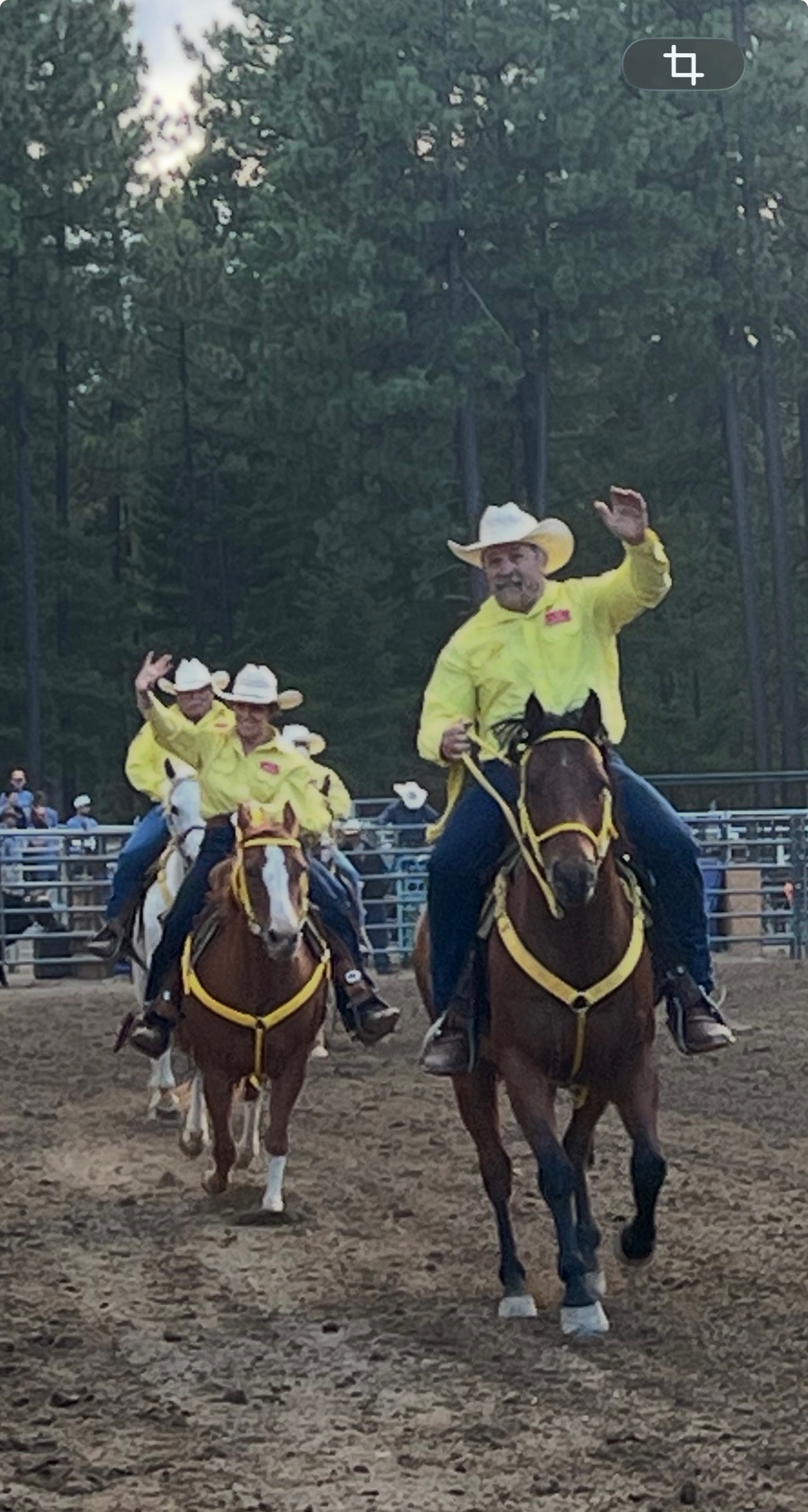
That lineage continues today. Two years ago, Farrell’s great-great-granddaughter Morgan Farrell became the first woman inducted into the Ellensburg Rodeo Posse, cracking a “straw ceiling” nearly a century in the making. She rides a saddle built on her great-great-grandfather’s design.
This account draws on research by Nathan Bradshaw and Michael Allen, “From Range to Rodeo: The Story of the Ellensburg Tree Saddle,” Pacific Northwest Quarterly, summer 2024.
WEB EXTRAS
First, immense thanks to the Farrell family — Tim, Quenby, and daughter Morgan — who guided us around Ellensburg and shared fascinating tales of family lore.
Also, thanks to rodeo photographer Emma Folz, whose stunning photos of rodeos can only be described as breathtaking. Visit her website for more: http://emmafolzphotography.com/
Below, we include a few photos that didn’t make it into the print version but continue the story. Let’s begin with a few featuring the Ellensburg saddle.
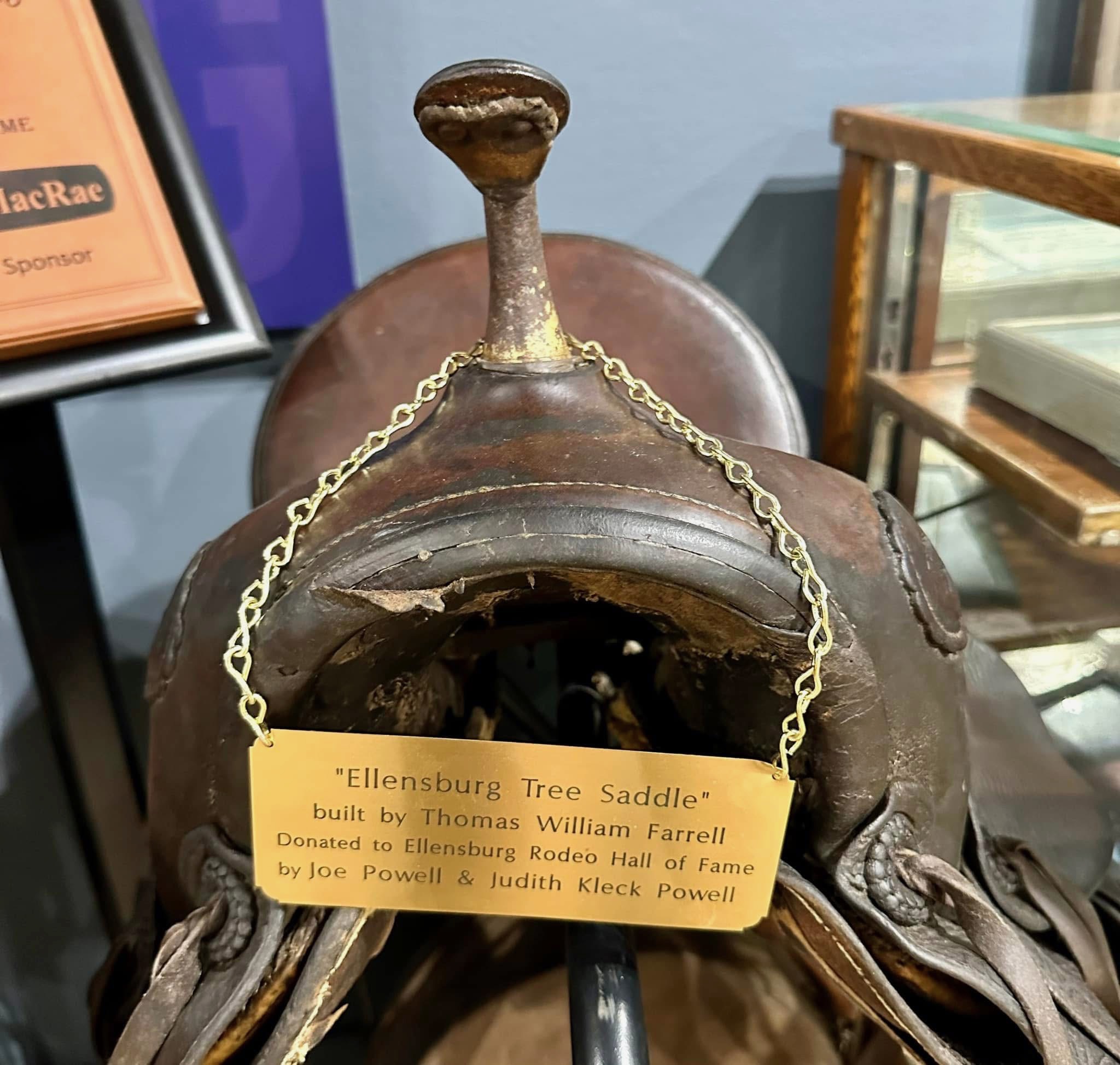


TW had several shops in Ellensburg. The Farrells identified a couple more.


Finally, a few of Morgan Farrell with the Ellensburg Rodeo Posse, courtesy of Tim and Quenby.