Here are a couple of Washington coast photos from the collection of history buff Ron Edge. Question is, where were they taken? The first one dated 1905 has elements of the area north of Ruby Beach but that’s just a guess.
Look familiar, anyone?



Here are a couple of Washington coast photos from the collection of history buff Ron Edge. Question is, where were they taken? The first one dated 1905 has elements of the area north of Ruby Beach but that’s just a guess.
Look familiar, anyone?


With six red brick stories and a corner tower to lend it some picturesque power, architect Elmer Fisher’s creation at the northeast corner of Occidental Avenue and Main Street was but one of the some fifty buildings he designed and built in 1889 and 1890. More than any other architect, Fisher determined what Seattle would look like after its “Great Fire” of 1889, in part because he was already in Seattle getting work before the business district was destroyed. And that – any honest professional will whisper – was great “architect’s luck.”
Now I ask readers to think or look back to last week’s presentation of one of the best examples of the old pre-fire Seattle: the Pacific Block ca. 1886. It was kitty-corner to this Occidental Hotel – at the southwest corner here at Main and Occidental. A likely date for this Frank LaRoche study of the Occidental Hotel, AKA Lebanon Building, is only five years later. The hotel was built on the fire’s ashes and completed in 1891. Here its namesake bar at the corner is as not yet marked with its own sign. It also seems that windows are still being installed on the Main Street façade, far right.
When new, the Lebanon Building was also named for Jesse George, a German-American investment banker who was one of its owners. Much earlier Jesse met his wife Cassandra at Santiam Academy in Lebanon, Oregon, and hence the name. The couple had five children and a home at 4th and Cherry on a lot that is now part of city hall. With Jesse’s death in 1895, Cassandra moved temporarily back to Oregon where she became superintendent of the Portland Women’s Union. Then in 1902 she returned to Seattle and opened a rooming house for working girls in her old home at 411 Cherry.
The 13-year-old Cassandra came west on the Oregon Trail in 1853 and arrived in the Willamette Valley with one sister, one horse, one cow and two teenage boys. The sisters’ mother died before they left and their father along the way.
Remember this photo from a couple of weeks ago?

Well, for those paying attention, historylink’s Alan Stein found the exact spot using GoogleEarth. As promised, we joined Alan for a photo session on site. Here’s a shot of Alan taking his own repeat:

Watch this space for more Now and Then Challenges – soon to be a regular feature at DorpatSherrardLomont.
Here’s a real treat, an extraordinary photo essay from photographer Bérangère Lomont, our French connection.

BB (as her friends call her) takes to the rooftops of Paris to capture stunning and utterly unique views of Paris.

Joining Paris’ roofers with special permission from roofer’s union boss Francis Arsene, she clambers above the arrondissements to capture some remarkable never-before-seen aspects of her beloved city.

Don’t miss the whole story right here!
When these soldiers were photographed, the distinguished Pacific House behind them was nearly new. Listed as a “commercial block,” it appears in the city’s 1884 birds-eye drawing, although those artist’s renderings were smart to include structures that were only in the planning stage.
The scene looks southwest through the intersection of Main Street and what then was still named Second Avenue (Occidental). The guard may be one of the several militia groups formed in 1884-85 by locals anxious about their boom town filling up with strangers, especially after the transcontinental Northern Pacific was completed late in 1883 and made it much easier to reach Puget Sound.
Or these may be regular soldiers from Fort Vancouver sent here twice: first briefly in November 1885 to prevent action against the about 400 Chinese living for the most part in this neighborhood, and then again in February 1886 to secure the town under martial law. In between these visits an organized mob – variously rowdy, racist, and resentful – with the help of the city’s chief of police, rounded up the “Celestials” and pushed 197 of them on board one steamship while waiting for another to take away the remainder.
When the courts and local militias intervened, a riot followed one block west of this intersection at First and Main. One of the mob’s leaders was shot to death. The Governor who again packed the regulars and their rifles north from Vancouver quickly locked the town down. Some part of them was kept here into August.
A brief reminder: this revelatory story is told beautifully in Murray Morgan’s classic Skid Road, the Seattle history he left with us.
(click to enlarge)


For a complementary story, looking east on Main from 1st Avenue, please visit this Now & Then from early 2005.
Last Saturday evening, we attended the deliriously outre Big Game Dinner, hosted annually by the West Seattle Sportsmen’s Club.

Groaning tables and moaning diners alike were loaded up with vast quantities of meat and fish. Jerry Mascio, head honcho, and wife Roz, pulled it off with vigor and aplomb.

Surprise guests arrive!

The dinner bell sounds and the ravenous follow their noses.

For more pix of meaty fun and frolic, click right here! ….
Scrambling to the classical roof of Interlake School (now the Wallingford Center), a photographer from the old North Central Outlook recorded the intersection where Wallingford Ave. crosses 45th Street with a jog. Besides a fine depiction of the game circles painted onto the blacktop of the school’s playfield, bottom-right, the photo shows above that across 45th the brand new grocery with a mighty ambitious name: Foodland.
Foodland’s grand opening – a sign is in the window – began on Nov. 17th 1950, with a spotlight and a great orchid give-away: 500 of them. However, not everything was ready including the neon sign on the roof – seen here – and Van de Kamps bakery, which took a few days to move in. Although still medium-sized, Foodland acted like a super store. The shelves gleamed with products. There were 14 feet of self-defrosting food cases and 34 feet of self-service clear-wrapped meat. You could pick it up, squeeze it, and examine it. And most fascinating, the doors opened to electric eyes.
By the end of its first prosperous decade the shining new grocery was razed for a parking lot to service a truly “super market” directly behind it with the wonderfully silly name Food Giant. For 40 years the big red neon block letters spelling FOOD GIANT extended nearly the length of the roof. It and the Grandma’s Cookies sign on Wallingford’s part of 34th Street were the neighborhood’s principal pop symbols.
When QFC bought the store in the late 1990s and tried to ditch the symbol for its own, a protest from the store’s neighbors brought the compromise we see in Jean Sherrard’s “now.” By recycling seven of the old signs big letters, a new and blue sign of equal grandeur and iconic appeal took its place. It named the neighborhood.
(as always, click on the photos to see full size)


More from Jean:
Whenever I use the extension pole to attempt a repeat, I start with a wide angle lens. This allows for a bit more leeway in framing the shot – later, I can adjust and crop to match the ‘Then’ photo in Photoshop. Below is an example of the wider angle image I start with.

Paul goes into great detail:
‘FIRST THERE WAS WALD’S MARKET’
It is now – at this writing early in February 2009 – a decade and a few months (for those doing the calculations, that is a little more than ten years) since Wallingford’s commercial landmark, the supermarket named FOOD GIANT, was sold to QFC not only for a name change but also a polished make over. FOOD GIANT was more “funk and getting on” than polish. For a few – myself not included – it remains hard to imagine Wallingford without its ambitious FOOD GIANT.
Even now it would not be proper to print FOOD GIANT without using all caps. This is in lingering respect for the independent supermarket’s oversized neon sign, with letters that hollered “cornucopia.” Indeed the letters were so large that they are exactly the same size as those in the “Wallingford” sign put up by QFC in its place. As the reader already knows from the story at the top, QFC recycled many of the old letters while, without missing a patriotic step, changing the color of the neon gas from red to blue. To do so was something of a citizen-pressured compromise by the food corporation – surrendering its principal blandishment, the roof top sign, to the neighborhood rather than to itself. But then it is best to get along with even the most willful of those who will buy your meat.
As you also know, before there was the FOOD GIANT there was, briefly, a Foodland. But first there was Wald’s Market.

Frank Wald learned to cut his meat in North Dakota. A nasty fall there with a side of beef kept him out of World War II and landed him in Seattle, where he hauled stove oil to gun-emplacement camps at South Park, Sandpoint and Fort Lewis. It was important to keep the guns warm. But after the war Wald returned to meat and in 1948 opened his market here at the northeast corner of 45th Street and Wallingford Avenue. His sign was about as big as his market, which he stuffed inside a converted residence. In merely two years, he moved the house off the lot and built Foodland.
In this expansion Wald partnered with a Safeway dropout named Leo Haskins and together they quickly opened three more Foodlands, which they soon divided between them. Haskin’s got Wald’s old home site here at the center of Wallingford and in the Jan 26, 1956 issue of the North Central Outlook announced his name change to Food Giant. The rest is pop-art history.

Soon Haskins was knocking on the doors of his neighbors. He offered them prices they declined to refuse. The grocer purchased more than half the block in order to expand yet again, and this time into a plant that at least approached the sized of its name. But really the stock inside the beloved GIANT was not nearly so extended as that which would later be shelved by the “invaders” from Quality Foods. Since its take over, QFC has also been sold and perhaps even resold. We stopped counting.

The accompanying photos are approximately dated. The view of Wald’s Market must be from the two years, 1948 to 1950, when it was open. The grainy snapshot of the Food Giant I took sometime in the 1980s with Tri-X film. For some reasons we liked the grain.
The first reader who knows car models and can convincingly date this photograph within 16 months wins a free portrait of themselves with the Wallingford Signs behind them, which we see in the third photograph. We will publish it in this blog – with permission, of course.
The one with the Wallingford sign I snapped this afternoon of Feb. 7, 2009.
We will also attach the free portrait prize to anyone – we mean the first dozen persons – who can identify any of those posing in the free groceries promotion near the Food Giant checking stands. We cannot date this one either, although it comes originally from Stan Stapp, the long-time editor of the North Central Outlook. If any of those in the picture step forward we will publish here in our blog a now-then of them standing at the QFC checkout stand and being handed from us a free copy of the weekly tabloid The Wallingford Journal, which we must disclose is free anyway – more the reason to enjoy the ceremony.

Finally, we include a portrait of someone who may well be Frank Wald. It accompanied the picture of the market when Stan first loaned them to us. The practice of enclosing the face in a white field was once commonplace for newspapers. Of course, the rest of the photograph was then normally clipped away. Keeping the total photo intact makes the one enclosed in the mask resemble a sinful peasant or puritan being punished in the stocks. We print this to share another side of newspaper production, which all of us know is experiencing its own restrictions.

Yes, YOU can help us solve a mystery, and be featured in Paul’s column as a Now & Then Maven!
The photo below was taken, Paul guesses, of a Capitol Hill street probably to the east and south of Volunteer Park. He suggests any search begin on 16th & 17th Avenues.
If you think you know the spot, drop Jean a line and he’ll come out and snap the repeat with you in the picture.

Since 1982, Paul has written his popular column for the Seattle Times Sunday magazine.
We will be archiving them here, starting with a handful of more recent contributions and continuing to add more as time and effort permit. Several elements ensure this will be an intriguing feature of our blog.
First, clicking on the photos will provide viewers with a much larger size than the Times can accommodate. Delight can be found in the details. Second, we will post our ‘Now’ photos in living color. Lastly, it allows us to swing the camera around and show wider and alternative shots from different perspectives.
Here’s a contribution from reader Nancy Johnson: a gorgeous photo of the 1916 Big Skate at Greenlake.
Nancy writes:
This [photo] was taken on Jan 16th 1916 at Greenlake by my great grandfather Theodore Ramm; they lived on Greenwood Ave near 60th. I think it was taken near the area that is now the rowing center.
Fascinating shot, filled with action and relationships. Note the threesome at lower left, also, the exuberant skaters lower center and right, narrowly avoiding the parents and child on a sled. A small mystery…just what elevated structure was the photo taken from? Nancy’s guess: a lifeguard tower. The elongated shadows suggest the photo was snapped late in the afternoon. Thank you, Nancy, for sharing this marvel with us!
(please click on photo to enlarge)

[This updated and expanded history was written by Paul Dorpat & edited by Sally Anderson]
Can We Really Believe What We Read About Snowfall?

Some of us do not trust snow reporting. Many of us do not trust snow. When even a merciful snow is dropped upon us, persons and performances we looked forward to meeting or attending are missed. But a snowfall that stays put brings opportunities. For instance, while missing events, especially those we were not particularly keen for or even dreaded, we can clean our room or attend to other neglected projects, like relationships at home. Most often we feel fortunate to live beside our comfortable Puget Sound. But the unexpected — a brimming snow like this Big Snow of 2008 — may enliven us.
Here at DorpatSherrardLomont we are are pepped up to write a history of all our big snows. Frankly, there have not been that many. So we will also add some other oddities that have appeared out of the sky or merely rolled in and then out again since that “night of shock” when Seattle founder Arthur Denny discovered that the barrel of pork he purchased and stored high on the waterfront disappeared into the freezing dark of the settlers’ first really “big weather” – the winter of 1852-53….
(For more of this fascinating story, click here)
Each week we will post images from the current Times’ ‘Seattle Now and Then’ article.
Just mouseclick on the photos below to see them in larger format with greater detail.


Below, here are a few more from that same snow taken on the other side of the lake. And while it didn’t freeze over this time round, it certainly provided an unusual playground.
(repeat click on photos to see full size)


Great for portraits! I had lunch with Leslie at the Green Lake Bar & Grill yesterday, and the slanting occluded sunlight made everything magic. Here’s Les and a baby girl who happened to be sitting behind us with her parents and twin brother. See how they glow.


Here’s a few from a trip taken earlier this week:

John Siscoe – with wife Carolyn – has owned and operated the Globe in Seattle for 30 years. One of our region’s finest small bookstores, it specializes in history and literature. A hundred feet north of Elliott Bay Books in Pioneer Square, this little gem and its astonishingly knowledgeable proprietor merit a visit.
In the interests of full disclosure, John and I founded the Globe Radio Repertory in the mid-80s and spent nearly 10 years making radio drama for NPR (see the Jean’s Radio Theatre link in our blogroll).
When you drop by, ask John about his doing the first unauthorized English translation of a late Samuel Beckett novel – and Beckett’s stunning response.
At Seattle Center on Monday evening, the Winter Solstice Fire Festival lit up the grounds. Delayed for several weeks due to weather, the flames warmed the winter night. Are these the fires that were denied Bumbershoot? (Ah, that now-forbidden closing ceremony! with Durkee and dancers and legerdemain! sigh…)
A little photo tour follows. First, ‘Fire Pod’ created by Mark “Buphalo” Tomkiewicz. The steel sculpture stands eleven feet high and is twenty feet in diameter. The flames are controlled through a midi interface. Eerie percussive sounds synch with bursts of flame. Next, the fire-dance troupe Pyrosutra performs around the base of the fountain.
Flame on!
And afterwards, walking back to my car, a forlorn conjunction. We howl and dance against the dying of the light, but some just go gentle in the night.
(click to see full size)

Here’s a single location, taken in all seasons and weathers. Obsessive or what?
Another shot, stitched together from several, looking across the park, just after sunset. Note the raised bumps of the Four of Hearts, lower right.

For several dozen hearty souls who made their way to the 4th Floor Chapel of the Good Shepherd Center, UP THE DOWN CHIMNEY went forward as planned!
A special thanks to Stu Dempster, who brung the trombone and supplied us with his usual joy and genius.
Here’s a photo taken from above by our sound/light mastermind David Verkade (that’s Paul pontificating in his now-famous Santa suit):
(repeat click on photos to enlarge)

And before the show, I cracked the windows looking west and, a bit later, east across Wallingford.


On our little section of Meridian Ave, we’ve got one of those neighborhoods where tools, sugar, dvds, eggs, and garlic are shared when needed. And some nights we go for walks. Here’s a few scenes from along the snowy way.
A novel method of kid transport…

Around the snow-rimed lake..

A cheery (yet somehow terrifying) house…

Let it snow, let it snow, let it snow!
We’re puttin’ on our show. Won’t you join us please at UP THE DOWN CHIMNEY!

Taken at Portage Bay last August, Vi posed for a Seattle Now and Then column. A remarkable woman of enormous dignity, wisdom, and even at 90, great vitality and zest for life. For her astonishing biography, visit Historylink.
(repeat click for full size)

With dear friend and colleague Jay Miller

This evening as the sun set…

Composer/musician David Mahler has kindly sent us copies of our holiday music faves. What follows is a capsule history of his seasonal sings:
“David Mahler’s holiday sings first fluttered wings in December, 1982. Old songs remembered lined up side by side with new songs discovered.
Perhaps a dozen warblers raised voices at the initial three sings that year, held at 906 E. Highland Drive. The flock grew, and followed the music five years later to 2616 E. Ward, and the following two years to 89 Yesler Way. In 1989 the sings hit the road, with two sessions guest hosted. The red book discovered its green cousin. From that year onward, through floating bridges that sank, presidential elections, and Sundays that stretched into January, the song books grew and the swell voices swelled, until David’s departure to Pittsburgh in 2005. Twenty-four consecutive years of December sings nested into memories.”
 In other news, Stu Dempster is bringing along his legendary trombone! Be prepared for a real treat as we raise voices against the darkness on the darkest day of the year. Death shall have no dominion at “Up the Down Chimney“!
Just a few snaps of kids in the neighborhood to prove to out-of-town doubters that it actually snowed and stuck!
Attempting to repeat a photo for a recent ‘Seattle Now and Then’, I found myself atop the Hyatt, looking west along Pine. A bit of a gloomy day, but an interesting view, nonetheless. Here’s a slightly distorted stitch of a few pix.
(click for larger size)

Back a few insertions or entries in this blog we put up seven, if memory serves, panoramas of Meridian Park from the same prospect as the one attached here, and recorded this afternoon, 12/14/8. In the now 28 months I have been walking through the Good Shepherd campus, sticking snow has been rare indeed. This is the third time. Another of the three is included in the mentioned group below.
(Please click to enlarge)

Our own little wonderland just after dawn.
(click thumbnails twice for full size)
Paul writes:
In March of 2005, my oldest brother Ted celebrated his 80th birthday with a banquet for kith and kin at Ivar’s Acres of Clams. It was a family custom that whenever the Dorpat boys returned home for a reunion or whatever, they would join with their father, a robust bass, in another singing of the song “What Will the Poor Birdies Do Then.”
We never knew the actual title for the song, but that may well be it for the line appears in all four verses, which follow and may be named for the four seasons. Ordinarily we began with the Winter stanza.
There are two important tips for the performance of this pathetic song. First, whenever possible, Norwegian pronunciations are substituted for English – e.g. “Vinter” for “Winter”. Second, with the singing of the same last line in all four verses, “…and put their heads under their wings”, the singers are obliged to do just that: bend or dip their head and crook their arm over it, as if protecting themselves from something falling from the sky.
So here, left to right, are Ted, David, Norm and Paul, the four sons of Rev. Theo Dorpat and Eda Gerina Christiansen Dorpat, singing in a kind of unison “What Will the Poor Birdies Do Then.” It was the last time, for before they could meet and sing and raise their arms again Ted and Norm passed. Actually, Ted never confessed to singing, and if you listen closely, at the beginning of this clip you will hear him announce, “I can’t sing.”
(For those planning to attend ‘Up the Down Chimney’ with Paul and Jean at the Good Shepherd Center on Monday the 22nd, please use the preceding video as a rehearsal tape.)
Friday morning, Paul and I, at the urging of a well-meaning friend, descended on our state’s Capitol for what was meant to be a book signing in the legislative gift shop. It was a slow day for book sales, I fear, though we watched dozens of Washington State calendars selling hotter than hotcakes, and were mildly dispirited by the disinterested yawns (“Washington Then and Now?” the handful of power brokers who wandered past seemed to exclaim, “Been there, done that.”).
There were, as always, pearls of conversation and gentle conversators, but for the most part, we stared blankly at each other and wrestled over a single New York Times. Much amusement was provided when I found a life-sized ad for HBO’s “Saddam, BMOC” and we took turns shooting pix of each other.


Then we each in turns wandered up into the Rotunda, where we discovered an unfolding scandal. While Christmas had reached its merry tendrils into nearly every nook and cranny….
(as always, click to enlarge photos)

…there were serpents in that Yuletide tree (note the state patrolman patrolling with care). But first, let’s visit the capitol’s own creche, a simple stable amongst the marble columns.

Not 30 feet to the left, ATHEISTS had insisted upon their 1st Amendment rights (damn them), and placed a sign reading, in part, “Religion is but myth and superstition that hardens hearts and enslaves minds.”
FOX news, namely Bill O’Reilly, had taken up the cause a few days ago, encouraging his viewers to express their outrage to the Guv. Hundreds of calls and emails poured in hourly. Christmas under siege, Santa held for ransom, myrrh stolen from Christ child. Protesting churchgoers were up in arms. Some added their own signs (see more state patrolmen patrolling beyond the tree).

Then, between 7 and 7:30 in the morning, someone stole the atheists’ sign. Dan Barker, co-founder of the Freedom From Religion Foundation proclaimed the act, “unfriendly.” Later in the day, someone turned the sign in to Country KMPS’s Ichabod Caine. The State Patrol is investigating.
Below, see the brightly colored placard on the left; also in place of the original anti-religious sign is a terse gold-colored reminder from the Foundation: “Church/State – Keep them separate”. George Washington – not a foe of religion, although perhaps of religious partisanship – has positioned his enormous head between opposing sides (his bust here was, Paul informs me, given to the Capitol Building by the Daughters of the American Revolution).

Meanwhile, downstairs in the basement gift shop, Paul and I thanked the staff for putting up with us and left the marble corridors of power, heading once again for our own cluttered basements, which make up in padding what they lack in grandeur. Outside, Paul paused once more to glance at the Times.

In wearing this mask, Paul wrote me earlier this evening, we were doubly posturing, acting the part of an actor acting the part of Saddam, who spent decades rehearsing his own execution by practising it on others.
Is there some significance here? A cradle of hypocracy liberally perfumed with Frankincense? Heavens to Murgatroyd, I’m reluctant to bring up old lessons, but aren’t we all, to some extent, reaping those whirlwinds?
Yesterday, returned to the scene of previous crimes on a glowering afternoon. Howard Lev drove, as usual, through the dark canyon, on the way to Sunnyside, where Mamalil’s Peppers cans.

It’s a Christmas cracker! Paul and I will be reading tales of the season in a couple venues around town. The first is on Saturday the 13th at the Haller Lake Community Center at 7 PM. The second is at the Good Shepherd Center Chapel performance space on Monday the 22nd, starting at 7:30.
We’ll be reading classics – Paul’s soulful version of ‘Gift of the Magi’, plus, donning Santa cap and bells, his sonorous and heartfelt ‘Night before Christmas’. Jean will finish off with the hilarious Jean Shepherd saga ‘Red Ryder meets the Cleveland Street Kid’, from which the movie ‘A Christmas Story’ was adapted.
We can’t decide whether to call these evenings Up the Chimney or Down the Chimney with Jean & Paul. Votes?

Join us!
My apologies for not having gotten these up sooner. They should have accompanied Sally Anderson’s fine review, but better late than never, I always say (in fact, I never say that, but it seemed appropriate for this remarkable show).
(click twice on thumbnails to see full size)
(Incidentally, the mysterious final photo of the series was taken peering through the newspaper coffin to obtain a view, not of eyes, but of the negative-corpse-space’s leg holes.)
Yesterday, I made a few stops around town picking up Now and Then shots for Paul’s column. Those below are extras.
First, I stopped at the 41st and Aurora pedestrian overpass and met historian/preservationist Heather McAuliffe and her daughter’s grade school class and teachers from BF Day for a repeat of a 1936 photo. The original was taken below the overpass looking up.

Then I headed downtown to meet Ron Edge, a photo collector and history sleuth, who’s been helping Paul unravel mysteries. We were trying to repeat a pic of an old tin shop at the corner of what is now 1st and Yesler. Here’s Ron, braving traffic:

Later that afternoon, I met baseball historian Dave Eskenazi and we climbed up on top of a vast rooftop (a windowless storage building for King County Elections) looking for signs of Dugdale Park, an ancient baseball field. This eerie white expanse, which covers the footprint of the old park, is just around the corner from Washington Hall at 14th and Fir.

As always, click on the pix to see them full size.
A pretty glorious shot by guest photog, Steve Sampson. Paul pronounced it the most beautiful sky he’s ever seen in Seattle. Thanks, Steve!

DSL welcomes guest blogger/reviewer Sally Anderson, who lives within two vigorous stone throws of the Chapel at Good Shepherd Center. Here she reviews the remains – it is up only until this coming Saturday, Nov. 15, through 9 pm – of 21 biodegradable coffins hanging from the chapel’s high ceiling.

“Ashes to Ashes”
Chapel, 4th Floor, Good Shepherd Center (climb or find elevator), Wallingford USA
Open noon to 9 pm through Sat 11/15
Wayward Girls Productions (“Lift up your skirts and fly”™)
Artists include (but not limited to):
Maisoui Barham
Alex Branch
Johnny Chalapatas
Catherine Cross
Ben Darby
Jeff Hansel
Christiana Hedlund
Robert Howells
Wendy Lawrence
Matthiu Mendieta
Joshua P. Waddell
Mary Welch
Good Shepherd caretaker Mark Willson

“Now that my ladder’s gone,
I must lie down where all the ladders start,
In the foul rag-and-bone shop of the heart.”
– From “The Circus of Animals,” W.B. Yeats
There are some ladder-gones, and some ladder-beginnings, in this varied take on “the first comfort after death,” to borrow a sentiment from Paul, who joined me a couple of nights ago with “Nancy Appleseed” – Nancy Merrill – perhaps Seattle’s greatest proponent of the planting of trees… for an evening romp among biodegradable caskets.
21 friends and acquaintances accepted curator/resident Mary Welch’s invitation to create coffins for the (suitably) fleeting exhibit titled “Ashes to Ashes” that ends this weekend – Saturday at roughly 9pm – at the Chapel in Wallingford’s Good Shepherd Center.
The exhibit commemorates other endings as well: it’s the last in Welch’s Chapel Trilogy (preceded by “Closet” and “Seven Chairs: Interpreting the Chakras”), the last exhibit under the name Wayward Girls, and also signals the end of visual art exhibits in this intimate space, as the Chapel is better suited acoustically and architecturally as a venue for music, which will continue under the label Wayward Music.
Criteria for showing: the coffins had to be easily biodegradable, weigh 30 pounds or less, and “not stink” for at least 3 weeks. The artists had to both “justify” their materials and be able to themselves fit within, “whether curled up, laid flat, squished out, or the knees stretched out,” per Mary.
All of which left room for the use of beeswax, bamboo, burlap, and bubblegum; newspaper, grouse feet, rice paper, feathers, metal repousse, 16 loaves of Franz whole-grain white bread, silk, antlers, porcupine quills, ink, aluminum foil, leaves, stuffed toys, sugar, and postcards… and words. Lots of words. Some are incorporated into, or inside, the coffins. One submission appears to be a hanging series of newspapers; closer observation reveals, through a tiny cut-out square, that the newspapers are in fact hollowed-out in their centers in the shape of a body.


Each is paired with a paragraph or so of the artist’s imagined obituary. Mary’s humor tends toward the dry side, her caption reflecting her disdain for euphemisms about death:

Maisoui Barham’s, whose interpretation stands out as one of the most organic and complex, begins “They fed me – Now I feed them.” Materials include bones, feathers, fur, and “lightning-struck wood,” to name a few of many.

Johnny Chalapatas also wove elements of nature, using bamboo, burlap, jute, and seeks from friends’ gardens, stating that “Energy doesn’t end; It just leaves its container.” The soft, thready fuzz and whispy fibers of his piece create an oddly crisp shadow that is alone reason enough to visit the exhibit.

The coffins float ethereally from fishing line hung from the high arched Chapel ceiling. This lends a (fittingly) subtle extra dimension of fragility, and rewards with a remarkable play of shadows throughout, on the simple wooden floor and on the waxen flower petals, folded papers, spiky metals, and other fine details atop the coffins. In a happy accident of juxtaposition, the severe shape of the “Chinese Take-Out” coffin (“Thank You / Come Again”) seemingly throws a shadow with arms and feet, which turns out to be cast by its neighbor, “Bread Woman.”


The exhibit overall has a reverential air, from the gracefully muted lighting to the “sound experiment” by Steve Peters (CDs available at the pearly gate) which emanates continuously from a mysterious source.
While several of the coffins reflect the somber mystery of death, the group marvelously avoids a sense of morbidity. A couple are notably lighthearted. The obituary accompanying Matthiu Mendieta’s “cigarette” coffin reads, in part, “Always ready for the next drink and defiantly always on the go. Creative with a very dark sense of humor. May he rest in peace.”

The legend for Catherine Cross’ “Phoenix A-Z” reads: “Instructions for Disposal: 1. Insert dead artist. 2. Keep flat until after burning. 3. Burn / Cremate and Collect / Save ashes (carbon offset investment prepaid to US Department of Education). 4. Mix ash with at least ten yards of rich, well aged compost containing at least thirty percent horse manure. 5. Depending on seasonal and regional availability, Fill manure spreader or heavy duty chalk field liner with the ash and compost mixture. 6. In a large gently sloping meadow facing the sea and bordered by woods, write the words “I Love You” in a smooth thick cursive font as large as the site allows. Add more compost as needed.”

On Wednesday, the exhibit was visited by a group of seniors. Curator Mary, who also does duty as gatekeeper, couldn’t predict their reactions. The next sound she heard was waves of raucous laughter.
Go see and listen. Ends Saturday night.


(Below: Good Shepherd on the night, Nov. 11, 2008, Sally Anderson visited its chapel for this review)

I’m lusting after carbs and proteins, with millions of years of biology urging me to prepare for the long Dampness. I feel a certain kinship with fat crows and bulky spiders feasting before famine.


Bérangère writes:
Here are three photos in Périgord in the neighbourhood of Maison Rouge where my Uncle Claude and Aunt Yanick are living, it has been raining so much all the 4 days long, and we spent so much time around the divine table to eat so many splendorous meals that I decided the last morning to wake up early and walk at the beginning of the day on my own, smell the wet morning country !!!


A remarkable show from Joe, one of our especial favorites around DorpatSherrardLomont. His luminous paintings, at once raucous and restrained, deliriously primitive and utterly civilized, really knock our socks off. Joe’s work is the stuff of dreams, found on cave walls and along alleys, quaysides and memory palaces; signposts for the soulful.
In French, window shopping is leche-vitrines (literally, licking windows). Passing Joe’s bright canvases, I had the nearly irresistible urge to leche-tableaux.

A view from the galleries into the gallery.

Joe with his program writer and designer.


Admirers and fellow leche-tableauxists:


After, outside in the damp, the world seemed refreshed. I found Paul with Renko and Stu Dempster standing in the middle of the street like amazed children.

Don’t miss this show! At Grover/Thurston Gallery, 309 Occidental Ave. S., through December 13th.
You will discover if you are half fortunate that one of the curses of old age is that many of your friends pop off before you do. It is then a bittersweet duty to recall some of their admired qualities.
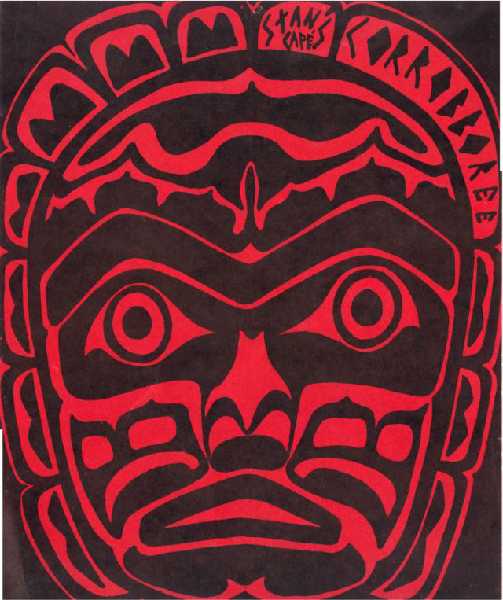
Stan James died in his shoes and in his Granite Falls cabin last week. The moment is not known. I talked with him by phone on Saturday Oct. 25th to confirm that he was coming to Seattle the next day to lead with his strong baritone and button accordion a singing of Ivar’s theme song The Old Settler, for a 70th birthday party “thrown” my way by Jean and other friends at the Acres of Clams (it is also Ivar’s – not Ivar Haglund’s – 70th year).
Stan and I had a good long talk on the phone, as I sort of drilled him on his folk arts related history. I wanted to give a good recounting of it to those who came to the party.Stan did not make it to the party, nor did he call to explain why.He was 72 – I think.

Stan was alone when he died probably suddenly from his heart problems. He was first seen through a window by a neighbor who was asked to seek him out. The visitor thought that Stan was perhaps sleeping. As yet, no one knows how long he sat there waiting to be discovered.
Stan James was one of the most important figures in the history of regional folk music. He had a wonderful baritone voice, with great power or energy and an often times thrilling timbre. The zest and variety of his life can now be studied and wondered at through the discussion thread found at mudcat.

For those who haven’t gotten over the shock and awe, here are pix from our roving correspondents.
Berangere shares images from the morning after in Paris:


Meanwhile, at the Pike Place Market, Steve Sampson records a singular moment in history – note an elated Cynthia Rose peeping out from behind the fold.


Right through these doors…

…in Washington State, for the last time in person. Henceforth, all ballots will be mail-in. Which saddens me to no small degree. For many years, I’ve voted alongside my neighbors in a small but significant gesture of civilization and community. But there was something precious in the walk of several blocks to St. Andrews Church. Something comforting in the (mostly) retirees who manned the precinct tables. Here then is a snap of a few of them, volunteering one more time in King County to help oversee this final bout of neighborhood voting. The good folks from 47-1313.

And immediately upon my return home, I saw an email (“Le moment est venu”) from BB containing the following image from Paris.

Along with her best wishes:
Mes chéris,
All our best french thoughts for you and the elections… We have good hope !
Je vous embrasse très fort. BB
Just arrived from PD:
…of chantrelles. I know this has been happening across the NW, but it’s alarming to wander a favorite mushroom haunt and find only two (that’s right, TWO) chantrelles where a few years back we could be assured of finding several baskets worth. Commercial pickers have taken all.
A lovely spot, though, dense with second growth.

Young Alyce, ever hopeful, helped us search with her parents, my cousin Kristin Sherrard and husband Ed Munro, both biologists. Alas, the forest floor was scoured of edible fungi.

(For those who missed my reading of it, here’s Bill Burden’s eloquent and wise contribution)
For Paul, at the Biblical three-score-ten —
Kind of in the manner of a eulogy for someone who has claimed the infirmities of age for at least the 40 years I’ve known him, but still seems to be hanging on.
In any discussion of “what’s next for Paul,” I think we have to get a handle on what Paul is going to “do” in his next incarnation.
First and foremost, Paul Dorpat is the least idle person I know. I sincerely doubt that he is looking to put his harness down and kick back in some senior paradise. He’s too busy.
As I observed during the years we shared a house in the ‘70s (including the time of the famous 40thbirthday bash) everything Paul did — everything — was purposeful. Not useful, as activities that add to our Gross National Product perhaps, but always with some specific end in mind.
How else could we have had the Helix, the Northwest Film Collective, the famous Sky-River-Rock-Fire movie and the ever-green and ever-satisfying Then and Now oeuvre?
And how else would we have the massive Wallingford Photo Walk project (I don’t think I’ve heard Paul attach a formal name or even description of what he is doing, but that term is how I think of it)?
As some of you probably know, Paul has been documenting, in digital photos, an area of Wallingford. He walks (an excellent exercise for our budding septuagenarian) and takes his photos, about 600 per day. Every day.
I have no idea how he catalogues all these photos (and if you know Paul’s movie-recording history you’ll know why I am mystified) but I pretty regularly get shots that have some story to share from his walk that day.
His goal cannot be just to capture the topography and the structures. 600 shots a day for more than a year-and-a-half would be way beyond overkill, or even compulsiveness (I think). I think he has in mind a specific, if daunting objective: to capture, in exaggerated hand-held, time-lapse photography how fleeting and insubstantial the “solid world” really is.
I think the goal is to get deeper into that physical presence, down to what’s really going on in there, out there, in this burning house.
So a picture of a tree isn’t enough. You have to see the tree with leaves, snow covered, dripping rain, spring-budded — not as an image in itself, but as critical piece of a composite yet to be completed.
So I think of Paul as one of the visionary mapmakers who can’t really describe the coastline until he sees all the tides, all the waves. Does it matter how many maps like that ever get made? And that the ones that do are pretty much the same scale as the world?
Key to his walks are the chance encounters with people on the street. Some know him from his walks and pick up in the middle of continuing conversations. Others may become the subject of a photo, a way to add variety to one of his “set” shots.” (In this setting I also think of Paul as “the king of Wallingford, on his progress around the shire, checking with the citizens).
He also takes shots of people, strangers, who interest him. Some of these have stories connected to them, but in others we are compelled to build a narrative, an explanation, based only on the cues inside the frame — a subatomic particle caught in the shutter flash between two entirely unknowable states.

Like this one, that Paul labeled “Out from wonderland, or To the Hole,” which I think proves that sometimes one picture can be “enough”:
Tonight’s theme may be “Paul in Wonderland,” but at least until he finishes his project, Paul seems to be in his wonderland right here.
Of course, the project that Paul was so committed to more that 30 years ago (Sky-River…), and worked purposefully on for many years, is yet to reach its final form. Actually that’s his NEXT project — he’s planning a video edit in the new year … but he will “need some help.”
Ultimately, perhaps Paul’s real job, from which he has never wavered, is to remain busy enough that old man Death can find no idle entrance.
Don’t stop now!
Two days before the actual event, we threw Paul a party.
Planning began only two weeks ago, initially with the thought that this might bring together a couple dozen of Paul’s nearest and dearest. Of course, that was naive thinking on my part. There are so many that Paul considers his nearest and dearest that the list of invitees kept growing until the day itself. We had well over a hundred for cake and bubbly, and for those that missed it, blame it on Jean. I didn’t have access to all of Paul’s lists and time was too too short.
Here, however, are a few images from the event itself. If I missed folks, my bad; I was juggling. Jef Jaisun was also snapping; perhaps we’ll see a few of his to fill in the gaps.
Thanks to all for making this such a marvelous event. Paul was, as is his wont and most appropriately, happy as a clam!
(click once to enlarge thumbnails, then again for full size)
Found this fellow panting on the path to the Nisqually preserve with Fred Hauptman and Olga Gussow, who are regular visitors.

On the old forest road that runs east from Blewett Pass, there are larches just now turning to gold. The two photos below, I think, demonstrate the uses of b&w. Taken from slightly different angles, each reveals something the other does not. Eh?


A couple miles hike up the Umtanum side canyon that runs into the Yak River canyon, and this is what we found as the sun was setting. It’s hunting season and the hills echoed with the crack of guns in the distance.

Just around the corner from Town Hall, this odd remnant caught my eye.

Note the harbinger perched atop the floating lintel directly above the ‘E T’ of Alfaretta.

Hillside Student Community, the lovely small school where Karen and I teach, is a pretty remarkable place. Student teacher ratio of about 4/1; super academics; amazing group of kids from grades 5-12.
For the first time in its history, we’re seriously concentrating on development and PR. Here’s a photo I took on Friday of our kids at the end of the school day. I’m thinking of making it into a banner for school promo events.

Last week, we paid a surprise visit to Gary in his orchard late in the day. He had just finished spraying and we found him cleaning his tanks on a cloudy evening.

This time of year, his days are long. Production manager at Johnson Foods in Sunnyside by day, Gary makes a bee line to his orchard in the afternoon and works into the night. His pink ladies are the best I’ve eaten and true connoisseur that he is, Gary’s never gotten tired of them himself.

He pointed out hail damage from a couple weeks ago. A direct hit and a sideswipe left its marks.

The weather’s been especially wild this year, with a late cold spring shouldering well into summer and a very late freak frost; another week or two of heat wouldn’t hurt to sweeten things up. Gary holds off picking as late as he can, hoping to harvest by the beginning of November. But when the first big freeze threatens, he calls in the pickers and it’s a race to the finish.
Howard is a big fan and unabashedly grabs an armful of these beauties whenever he drops by.

The two of us head to Seattle with a load of goathorn peppers and a couple dozen apples, and Gary’s back on his tractor.

Tonight after the sun had set, I stalked this long-legged beauty, silently approaching in the gloom. The sound of my shutter sent it flying.

Yesterday, Paul noodled at the piano. His beard caught the setting sun.

Howard Lev called me last week after having driven past a patch of downtown greenery filled with goats. I ran down and snapped a few shots of these delightful creatures.

Chatted with Tammy of Rent-A-Ruminant, who asserted this was a cutting edge example of green business sense. The goats gently munch away brush, then poop, and leave. 
Mostly, they’re just sweet and pettable and the opposite of camera-shy.
These bright curious animals approached me eagerly, virtually nuzzling my lens. More ham than goat, it seemed to me.
Noel writes:
I’ve made a dancing thing with no arms but two beautiful legs.
It lives inside of me, but I wear it like a coat, keeping me in darkness.
Formless, faceless, stacked and grown over years like so much manure,
A throbbing clot in the arteries of my head and my heart.
It stage whispers that I’m both what matters and unworthy.
I gave it legs to run.


This is the most frequent query of the creature below.
In the park behind the Good Shepherd Center, Noel begins his dance. I captured a few encounters with a telephoto lens.


Bérangère Lomont, our dear friend from Paris, will join us here whenever she has the time and the inclination, and share her stunning images, visions, passing fancies, and deepest thoughts. We are thrilled to have her onboard and blogging with us.
BB will post in both French and English for all her friends and soon-to-be admirers.
BB with apple tart and yankee apron

Actually not an oxbow as it is known on the Mississippi. More of a lovely peculiarity of the river, retraced by the tracks of the BNSF railway. Just a camera’s swivel from Hugh Paradis’s glorious shot, referenced elsewhere in this blog.

One for the road.


From left: Sarah Kuck, Emily Nuchols. Sitting: Natalie Brandon.
Emily Nuchols is a near-by Wallingford neighbor – about a half block leap from the back deck. On a recent weekend while on my daily walk of the neighborhood I was lured by bunting and balloons at her front door to make a donation at the back door. There hovering above the salads and corn on the cob on her own deck were a few of Emily’s friends who are supporting her part in the fifth annual “Summit For Salmon.” It is a group climb of Mt. Rainier scheduled this year for August 25. I gave the suggested donation of $20, and thereby joined in the “fight to save our wild salmon.”
Emily is the Save Our Wild Salmon’s Communications Manager, but she has done considerably more than “mediate.” For instance, she has kayaked through Lower Granite Dam on the Snake River, and been “swimming” about Seafair and other events in a well-tailored costume as Buster the Wild Salmon.Our linked sponsorships behave like a kind of pyramid scheme with a wild salmon on the top. This means having been reached I am now expected to find at least five other sponsors and so on until together we raise $5,000 – her goal – for supporting Save Our Wild Salmon by sponsoring her early morning trek up the 14,410 feet of Rainier, the hardest endurance climb in the lower 48 states.
Emily can be seen jogging around the neighborhood, seemingly with little effort. However, by the testimony of practically everyone who has tried it, climbing Mt. Rainier, even on the most fortunate of summer days, is extremely tough.
For my soft part I will stay below in Wallingford keeping a daily posting of what Mt. Rainier looks like – or does not look like – a few feet from Emily’s front door. I have practice, for it is a subject I have been photographing for more than a year, steadying my camera against a power pole at 42nd Street and First Avenue Northeast.
I’ve included here two examples, which I have dated. As every local knows, in any year there are only a few days “The Mountain” can be seen. But what — from Wallingford — will be revealed in the coming three-weeks plus for Emily? These daily postings of the “Mountain That Was God” begin on the first day of August and continue through the 25th, the day of the climb, and perhaps through the month.
When she returns we will ask for an interview.If you would like to help save the wild salmon by helping sponsor Emily’s climb you can contact her at Emily@wildsalmon.org or visit http://wildsalmon.org/donate/. Click “donate now” and then scroll down to “Summit for Salmon” and pick “Emily Nuchols” from the list of climbers.

August 1, 2008: Blue Angels approximate the line of Emily Nuchols upcoming ascent of Mt. Rainier. Photo taken in the early afternoon from the Wallingford corner of 42nd St. and 1st Ave. N.E.. (The dome on the horizon tops Holy Names Academy on Capitol Hill.)

Included as evidence that The Mountain is there. This Rainier was recorded on January 1, 08 and from the same Wallingford intersection (a few doors from Emily’s front door) as those that will be snapped through this month in a watchful accounting or count down to Emily’s ascent…

Looking at Mt. Rainier as if it were there on August 2.


Mt. Rainier twice on August 3. The top was taken around mid-afternoon with a few angels performing for Seafair. The above was snapped about 4:45 pm with the mountain revealed, in part.

Sunset – around 8pm – August 4. The Mountain reflects the color of wild salmon.

Around 7:30 pm – August 5.

Around 6:30 pm – August 6, a Wednesday.

7:30 pm – August 7 – Mountain lost behind miles of haze at the end of a clear but hot day.

6-ish and still beyond the purple haze on 8/8/8.

About one in the afternoon of 8/9/8, a Saturday, with The Mountain relaxing in the bleachers at a cloud rally.

Six or seven hours later after an afternoon squall brushed the north end a rainbow formed a complete semi-circle across the western horizon. As seen from Emily’s avenue in Wallingford its southern end did not quite reach the summit of The Mountain, which was, of course, still hidden behind the remainders of Saturday, 8/9/8.

Sunday, 8/10/8 around 4pm.

Monday, 8/11/8 around 7pm. Had Emily climbed this morning and lingered at the top of The Mountain she could have looked down at Wallingford in the late afternoon.

8/12/8 around 6pm on a generally dismal Tuesday that may have tested the good will of every dear reader.

8/13/8 – a Wednesday – around 5:30 and as clear as The Mountain snapped through the Interstate-5 atmosphere can get.

About 7pm on Thursday the fourteenth after the loitering contributions of this hot day.

A hot Friday afternoon, 8/15/8 – with The Mountain barely detectable on a “clear” day.

A hotter Saturday, 8/16/8, around 6:30 pm, with only the speck of a single crow heading east to the arboretum for the night.

Another clear day and yet impenetrable. 8/17/8
Gray Monday, the 18 of August, about 5:30.

Tuesday the 19th with clouds failing to shape themselves like The Mountain. About 5 pm.

Wednesday the 20th – suggestive of entropy about 6:30 pm.

Thursday the 21st – clouds acting like mountains but no The Mountain about 7:30 pm.

The Mountain shows herself on the afternoon – around 3:30 – of Friday the 22nd, 2008.

August 23, 2008 about 11:30 AM and so some part of two days short of Emily’s ascent of The Mountain. Living now in Portland – and so nearer the Wild Salmon of the Columbia – she will be approaching Mt Rainier from the south side, the side from which she will begin her ascent. We will be watching, sort of.

The day before: Sunday August 24, 2008 about 6:30 pm, and the day before Emily’s scheduled climb for Wild Salmon. Today it rained and tomorrow is looking at least somewhat wet. What will become of the climb in such stuff may be revealed tomorrow.

A moment after the above photo was taken around 3:10 on the afternoon of Aug. 25, 2008 – the day that Emily was scheduled to climb and we assume reach the summit of Mt. Rainier – had The Mountain been in Wallingford, the Seattle neighborhood in which Emily lived when this count down began on the first day of August, it would have been pelted by an impressively heavy rain that flooded the gutters and drove cats to waiting beneath parked cars. Tomorrow we will attempt to recount Emily and the Wild Salmon’s fate on what we hope was a climb that reached above these piling clouds.

The Mountain show her head around 3:30 pm on August 26, 2008, the day after the Wild Salmon team was scheduled to reach the summit of Mt. Rainier. However, no news as yet from Emily nor on the http://www.wildsalmon.org website concerning the success or, we may imagine from yesterday’s weather, gray rain away. Of course, we hope for pictures soon as evidence either way. For our part we will continue to watch The Mountain from Wallingford.

Looking towards The Mountain hidden from Wallingford on Wednesday, Sept. 27, around 4pm — and we have news from Emily.
“Thanks Paul. We ended up getting stormed out. 60 mph winds and avalanche danger turned us around about halfway up Disappointment Cleaver (aptly named :). We were all bummed, but our guides were spectacular and we all had a great time . . . I’ll send you some choice pix tomorrow. Cheers, Emily”
A Google for Disappointment Cleaver will bring up a great variety of slide shows taken by climbers that follow the route that Emily took, until her group was turned back by those winds. If you compare some of these illustrated narratives you will soon get a confident impression of the route to the top that goes by way of Camp Muir, Cathedral Rocks, three glaciers and Disapointment Cleaver. After the rock cleaver one reaches the last part of the climb, up the “big snowy top” of the mountain.

Towards The Mountain from 1st ne and ne 42nd around 4 pm August 28, 08.

August 29, 08 around 7pm with the day’s evidently getting shorter.

Saturday, August 30 about 4 pm. The Mountain is hidden behind sympathetic clouds.

Last day of August 2008, the 31st, a Sunday and around 2pm. When Emily Nuchols returns to her Wild Salmon office (now in Portland) and sends us a scene or two of her group’s attempt to climb The Mountain by the Paradise, Camp Muir, Cowlitz Glacier, Cathedral Rocks, Ingraham flats, Disappointment Cleaver, more Ingraham Glacier (I think), Emmons Glacier to the top route, only to run into 60 mph winds while on Disappointment Cleaver, and there be turned back by their guides, we will print them. Otherwise, this concludes the August record of Mt. Rainier as seen – and not seen – from the northwest corner of the Wallingford intersection of 1st Ave. Northeast and E. 42nd Street, with the camera steadied about seven feet up on the street sign post. And may more wild salmon make it to Idaho.

Sponsors at the back deck benefit – July 12, 2008. From left: Rachel Kuck, Leigh Newman-Bell, Sarah Kuck, Sherry, Emily Nuchols, Mike Cooksey, Rachel Cooksey, Val Heer. Sitting: Natalie Brandon, Dan Ritzman.
Welcome to the new blog, updated for viewing and posting convenience.