THEN: Part of the roofline of Cascade School - the school that named the neighborhood - rises above a tight ensemble of workers homes in 1937-8. (Courtesy Washington State Archive, Bellevue Community College branch)NOW: The school was damaged by the 1949 earthquake and removed. These homes were razed in the early 1980s and replaced first by a play area for day care. Since 1996 the corner has shined with one of the city’s many community gardens or P-Patches. Jean Sherrard’s winter repeat may be complemented with the Cascade P-Patch’s own blog at http://cascade-ppatch.blogspot.com/ (Now photo by Jean Sherrard)
For a moment, only, this historical photographer paused on Minor Avenue about 40 feet north of Thomas Street and aiming east snapped this official record of lot 5 in the tenth block of the Fairview Homestead Association’s addition to Seattle. The addition was filed in the mid-1880s but the photograph was taken in 1937 as part of the depression-time Works Progress Administrations picture-inventory of every taxable structure in King County.
The tax assessment here was not very high for these are four nearly identical 900-plus square foot homes squeeze onto one lot, the second lot north of Thomas. The tax card indicates that they were built in 1900. (Perhaps, but they do not show up in the ordinarily trustworthy 1912 Baist Real Estate map.) The intentions of the original pioneer developers were to help working families stop paying rents and start investing in their own homes. Innovative installment payments made the lots affordable and many of the homes were built by those who lived in them, although probably not this quartet.
If we may trust the 1891 Birdseye view of Seattle – and it is splendid to study – Minor Avenue was then part of a shallow ravine or very near it, which gathered run-off in this Lake Union watershed. And since 1996, as part of the Cascade Neighborhood’s public garden that spreads 50 lovingly tended p-patches across this 7000 sq. ft. corner, rain water for the garden is collected into big barrels from the roof of the nearby Cascade Peoples’ Center.
I am a very small part of the footprint of this corner, having lived from 1978 to 1980 in the house immediately to the rear of principal home shown. My desk sat inside the longer window there and looked out on a coiling blackberry patch where now are many kinds of berries, and veggies, and flowers tended with the meditative pleasures of gardening. JoJo Tran, one of the gardeners here, plants for his table and many others. He reflects, “If you love nature, the environment, the colors of the plants, it you can see the beauty of the garden, you feel the beginning of love.”
WEB EXTRAS
Jean writes: Visiting this sacred corner of Paul’s personal history on a sodden day at the end of December was a mini-revelation. Here, Paul lived with his dear friend Bill Burden (whose wise and scintillating blog can be found here and through the button ‘Will’s Convivium’ at upper right) and I snapped him looking bemusedly from the spot he identified as having once contained Bill’s room.
Paul sits where Bill's room once stood
Paul brought along a photo he’d taken from his own bedroom window of the church across the road. We include it again, below.
Paul holds up a photo taken from his window
Here’s a repeat I did of the photo in Paul’s hand above:
Repeat of Paul's original photo
Anything to add, Paul? Or to correct?
BLOG EXTRAS we call them Jean. And yes I have a few – a slew even – of other pictures that catch this corner or nearby. I will given captions for them, but little ones I hope. I have also written a few now-thens (other ones) about landmarks within a block of this corner but I’ll not include them here. I mention that only to inspire longing in the reader or readers if we have more than one, which is to say more than you.
I’ll begin with two of the south side of 306&1/2 Minor, where Bill and I lived in the late 1970s. My desk – with its Selectric typewriter – sat at the larger of the windows on that wall. I looked out across the vacant ans sunken blackberry snarled corner lot to Thomas Street, and to the left of Thomas still stands Immanuel Lutheran Church. After the views of the window, I’ll place one that looks from it to the church on a night of snow, then others photographed in the late 90s and early 2ooos of the p-patch development. I will date them as best as I can. I believe a highlight of what follows will be my snapshot of Bill trucking down the Minor Avenue sidewalk.
306&1/2 Minor North looking north from Tomas, ca. 1938. A tax photo.306&1/2 Minor in 1958 with "War Brick", a popular asbestos covering sold by door-to-door salesman in the 1940s.Looking from my bedroom window to Immanuel Lutheran Church on a snowing night of the 1977-78 winter.1997 building of the Cascade P-PatchApril 2001. The lot has been raised to street grade. When I lived there it was a pit deep enough for a basement but not necessarily built for one. Next, I'll put in a 1891 birdseye that shows a ravine here or very near here that ran south towards Lake Union.Cascade neighborhood detail from the 1891 Birdseye View of Seattle. Depot St., since renamed Denny Way, runs along the bottom border. Lake Union at the top. Eastlake is far right with the trolley tracks. Rollin, now Westlake, is on the far left. Near the center a ravine runs north-south from Thomas Street towards Lake Union. The big house hanging there above the east (right) right side of the ravine is near the northeast corner of Minor and Thomas, the P-Patch corner.August 2002Jan. 30, 2005Immanuel Lutheran at southwest corner of Thomas and Pontius, early 20th Century.2001 pan of the corner from Minor Ave. sidewalk looking southeast with Cascade Playfield on the left and the corner of Minor and Thomas, far right.306&1/2 interior with the door to my bedroom behind me. I am looking northwest to Bill's desk. Bill's bedroom was off-camera to the left, and the kitchen to the right. Bill did the cooking, and fine cooking it was. Jan and Jack Arkills, old friends visiting from Spokane are on the left. Paula Calderon Kerby is on the right writing a letter it seems. Paula and Bill head for faux stairway to Cascade Playground on Minor Avenue. Our home was to the right. 1977 snow.Unable to reach the Cascade Playfield by its Ceta Mural stairway (ca 1975 Seattle Arts Commission granted creation) Bill Burden continues to truck north on Minor Avenue towards Harrison Street.Stairway off Minor Avenue to Cascade Playfield twenty-two years later & still in good enough repair. Same wall along the east side of Minor Ave. between Thomas and Harrison Streets during its depression-time 1930s construction for the Cascade Playfield (to service, in part, the children of Cascade School, which was directly to the east - right - across Pontinus Avenue.)Looking north from the Roosevelt Hotel over the Cascade Neighborhood to Lake Union in 1959. Still no hint of the freeway. Immanuel Lutheran (painted brown) can be seen but with difficlty - about one-fourth of the width of the slide to the left of its right border. The landscape on the distant north shore of Lake Union (in Wallingford) is a half century younger here than now, and its relative lack of verdure shows. The houses - their roofs - still dominate the 1959 scene. Freeway construction looking south from near Republican. Photo by Frank Shaw, 5/30/62. Only now do I notice that at the bottom left-of-center is part of the stonework on the old Republican Street Hill climb that for pedestrians once extended from Eastlake up to Melrose and so through the steepest part of the climb from the Cascade neighborhood to the attractions of Capitol Hill. Also by Frank Shaw - Freeway construction sometime later. Another Frank Shaw of the I-5 "Seattle Freeway" construction. This one looks north from near Olive and over the Denny Way temporary timber trestle (I believe). It dates from 1963. Cascade neighborhood and beyond it the I-5 freeway construction effectively cutting off the Cascade neighborhood from Capitol Hill. Photo taken by Robert Bradley in 1967 - as seen from the Space Needle. The green lawn of the Cascade Playfield can be easily found right-of-center. Thomas Street rises from the photograph's bottom border about one-third of the way across it from the right side.
That is all for now Jean. Is it too much? When I find one of Cascade School I’ll attach it.
FOUND the school Jean. Twice – back and front. And another looked at Bill on site in 2006 at the bottom.
Cascade School looking northeast from Thomas and PontiusThe source of the Neighborhood's name, Cascade School backside looking west. A south wing on the left has been added.This new one was taken by Berangere - of this blog - in 2006 when both were visiting: the one from Paris and the other from California. Here is Bill smelling and perhaps preparing to buss a sunflower in the Cascade P-Patch and not far from where his bedroom was comforted him at night.
We are delighted to recommend for your enjoyment, Shadow and Light Theatre, a groundbreaking new theatre company presenting two one-act plays by Harold Pinter. Paul and I will be attending next week – the production runs through Feb. 7th at ACT’s Bullitt Theatre – and we urge anyone interested in ‘da real magilla’ to join us for a provocative and haunting theatrical experience.
Directed by Victor Pappas and featuring Frank Corrado and Suzanne Bouchard, this production offers theatregoers an opportunity not only to encounter masterpieces of the theatre (A Kind of Alaska, staged at ACT in 1985; and Ashes to Ashes, receiving its Seattle premiere), but to do so in the company of some extraordinary artists.
THEN: Seattle Architect Paul Henderson Ryan designed the Liberty Theatre around the first of many subsequent Wurlitzer organs used for accompanying silent films in theatres “across the land”. The Spanish-clad actor-dancers posed on the stage apron are most likely involved in a promotion for a film – perhaps Don Q, Son of Zorro (1925) or Douglas Fairbanks’ The Gaucho (1929) that also played at the Liberty. (Courtesy Lawton Gowey)NOW: The curving glass curtain on the west façade of the new Fifteen Twenty-On Second Ave. building can be seen to “repeat” somewhat the symmetry of the Liberty’s proscenium arch. (photo by Jean Sherrard)
In the now 55 years since the Liberty Theatre was razed for the big snuggery of parked cars across First Avenue from the Public Market, a few oil-stained stalls have taken the places of the Liberty’s 1600 seats. “The only theatre built around an organ!” Is how popular organist Eddie Clifford described the Liberty in 1954, which was forty years after it opened as one of the first big theatres built in Seattle for movies rather than some mix of film and variety.
The organ sat front-center – as you see it here – and from its seat some of the best players of its silent film glory days accompanied the films. Half-hidden behind the grills to the sides and above the grand and gilded proscenium arch that framed the movie screen were the pipes and special machines the made the romantic Wurlitzer sounds, and effects like cooing doves, marimbas (you could see the hammers through the grill), canary trills, the sound of surf, and much more. The tallest pipe – 32 feet – was removed for repairs when its dangerous vibrations cracked the plaster.
In 1929, only the 15th year of its joyful noisemaking, the Wurlitzer was quieted as the talkies took over and the screen was widened. Still depression-time attendance was good as management bucked Hollywood’s price policy with its own “New Declaration of Independence” that announced a reduction in ticket prices. The theatre prospered. In 1937 some press agent figured that “if all the money the Liberty has made was laid end to end it would stretch from here to a point twenty-seven miles southwest of Honolulu” – thereby floating a vision of great prosperity with one of a tropical vacation.
While planning to widen the screen for Cinemascope in 1955, management changed its mind and razed the Liberty instead complaining that there were “not enough good films” but plenty of cars needing to be parked. It did not think to revive the Wurlitzer for a new era of silent films – something that is happening now in other venues. The organ was first saved – 15 truckloads – by the music department at Pacific Lutheran University. Now it is at home at Spokane’s First Nazarene church, where it has its own activist chapter of the American Theatre Organ Society. One of the highlights of the American Theatre Organ Society 2010 convention this summer in Seattle will be a cross-state bus excursion to Spokane and the Liberty’s born again Wurlitzer.
WEB EXTRAS
Jean contributes a somewhat wider view:
Liberty's lot
Anything to add, Paul? You might at least compliment me on my double entendre in the caption.
YES JEAN WE HAVE SOME EXTRAS (& continue to click once and sometimes twice to enlarge)
But first our well wishes for you and your puns, may they be as supportive of you as a mother, for one good pun is as good as a mother.
We have more – four more photographs of the Liberty. First another close look at your organ, followed by a wide angle of another production and unidentified too! (something for our reading experts to ponder), followed by another mystery, ushers or performers, we do not know which, posing with an unexplained sign on the sidewalk in front of the Liberty Theatre, and finally a night shot with a happy crowd (we know) gathered to see what that blessedly egalitarian encyclopedia that is written and checked by enthusiasts identifies as “the second talkie photographed entirely in Technicolor.” The blessed media is, of course, Wikipedia, and the film “Gold Diggers of Broadway”.
The Liberty Theatre stage with a scene of passion not identified and its famous organ too.The Liberty's showy stage from the back of the theatre for another unidentified production. We may remind readers who visited last week's insertion on the Swedish Baptist Church that like it the Liberty Theatre was designed by architect Henderson Ryan.We don't know, but it is on the First Avenue sidewalk in front of the Liberty Theatre looking north. When was the last time you made it to a movie that was so appointed?
A happy crowd gathered in front of the Liberty Theatre for Gold Diggers of Broadway sometime after its Aug. 30, 1929 release. This, of course, is only weeks before the great economic crash-panic that began that fall and lingered to the Second World War. So the film’s enduring hits “Tiptoe Through the Tulips” and “Painting the Clouds with Sunshine” were not composed as diversions or compensation for the Great Depression, but would soon serve so.
Gold Diggers was a hit – “one of the ten best films of 1929” as rated then by Film Daily. Wikipedia concludes “Contemporary reviews, the soundtrack and the surviving footage suggest that the film was a fast-moving comedy, which was enhanced by Technicolor and a set of lively and popular songs. It encapsulates the spirit of the flapper era, giving us a glimpse of a world about to be changed by the Great Depression.” To conclude and to repeat the historical point that was noted in the introduction to these four “extras”, Gold Diggers of Broadway was the second talkie photographed entirely in Technicolor.
THEN: The Ballard Public Library in 1903-4, and here the Swedish Baptist Church at 9th and Pine, 1904-5, were architect Henderson Ryan’s first large contracts after the 20 year old southerner first reached Seattle in 1898. Later he would also design both the Liberty and Neptune Theatres, the latter still projecting films in the University District. (Photo courtesy Lawton Gowey)NOW: High rises continue to advance on the parking lot that took the place of the Swedish Baptist Church in the early 1970s. (Photo by Jean Sherrard)
When Seattle became a boisterous “boom town,” especially following its “great fire” of 1889, the immigrant Euro-American communities that fed the growth rarely created neighborhoods of size that were clearly theirs. However, they could organize churches and did.
The Swedish Baptists are an example. Organized as a mission in 1881 for a Seattle of about five thousand, it was “instituted” in 1889 for a community of over 30,000. A stately if typical frame sanctuary with soaring steeple was built on then still affordable land at Olive Way near 5th Avenue. Fifteen years more and the ballooning opportunities of land values moved the congregation five blocks east into this spectacularly towered church of pressed brick and stone at the northwest corner of 9th Avenue and Pine Street.
At its dedication on July 16, 1905, addresses were given in both Swedish and English. Thirty years later, Dr. Emil Friburg, by then its pastor for 24 years, announced to his congregation that Sunday evening services, which for 55 years had been given in Swedish, would from then on be delivered in English only. The immigrant’s children, of course, were not so disappointed. Raised in Seattle and its public schools – more than in the church – their principal language was English.
In 1970 the congregation sold its corner to the Vance Corporation, which given the then slumping economy probably got a deal. It has, I believe, been a parking lot ever since. Many of the church’s members and assets joined with Seattle First Baptist on the northern “ledge” of First Hill.
WEB EXTRAS
At the opposite corner stands the Paramount Theatre, newly signed. Its beautifully wrought fire escapes remain unchanged.
The Paramount TheatreFireoglyphs
Anything to add, Paul?
Yes Jean, here’s something we might call . . . CAN YOU FIND THE SWEDISH BAPTISTS? Remember Jean to click to enlarge. It will help you find the Baptists.
Here we look west towards a Capitol Hill horizon from the nearly new New Washington Hotel, still standing at the northeast corner of Second and Stewart although long since renamed the Josephinum. The Swedish Baptist Church at its new location, the northwest corner of 9th Avenue and Pine Street, appears here left-of-center. It can be best identified by the shine of its tower arches. They are small from this distance but still sparkle. Beginning in this scene at 5th Avenue, Pine Street cuts across the scene from its bottom-right corner. Some of Olive Way appears on the left.
The likely date for this is 1911 (but possibly 1910), for the rear unadorned facade of the Seattle Electric Company’s new administration building appears far left at the southwest corner of 7th Ave and Olive Way. See how the fresh sidewalk on Olive Way shines at the base of the new headquarters. The same company’s old trolley car barn is to this side of 6th Avenue. The new – since 1906 – cut of Westlake is twice evident: in both the bottom-right and bottom-left corners. Broadway High School at Broadway and Pine just touches the horizon, left-of-center. Also up there, but not reaching the horizon, is the wide west facade of Summit School, right-of-center, at 1415 Summit Avenue. It is still in use as Northwest School.
THEN: Carolyn Marr, Museum of History and Industry librarian and Anders Wilse expert, answers the joking caption on Councilman Reinhard’s pant leg with another example. “Wilse had a wry sense of humor. In one photo he took during the Great Northern Railroad construction project, a group of 4 men sit around a table playing cards with revolvers and glasses of liquid. He wrote on the photo ‘A Merry Christmas.’” (Courtesy Seattle Municipal Archive)NOW: Author-editor and friend Clay Eals accompanied Jean Sherrard to the new Queen Anne Standpipe to take Reinhard’s place. Clay is drinking Cedar River water drawn from his own tap. Above him is 2 million more gallons of it. (photo by Jean Sherrard)
For more than thirty years I have included this Anders Beer Wilse image in slide shows. It always amuses. Typically, I explain to those in attendance “Here are two members of the Seattle City Council ‘testing Cedar River Water’.” They answer with incredulous variations of “Oh really!”
“Testing Cedar River Water” is written clearly across the pants of the one tipping the bottle. Who is he, where is he and when? I did not know. But now with a little help from friends and fellow heritage travelers I do and it can be told.
Anders Wilse was hired in 1899 by Seattle Public Works to photograph work-in-progress on the Cedar River gravity system. Anne Frantilla, Seattle’s Deputy City Archivist, notes that the Norwegian photographer’s negative number “80.x” is also written on a pant leg. Deducting from other numbered Wilse negatives and also from news clippings of the city council’s long tour itinerary for this Tuesday, we may conclude that our two “inspectors” are joyfully lifting their arms on top of Queen Anne hill beside its then new standpipe. It is early in the afternoon of May 1, 1900.
Using group photos and newspaper election-time mug shots Jodee Fenton and Carol Lo of the Public Library’s “Seattle Room” have identified these two transplanted Oregonians as the newly elected Scott Benjamin on the left and the third term councilman William V. Rinehard tipping the bottle – but a bottle of what?
Fred Cruger and John Cooper, two antiquarian beverage experts, think they know, and independently. That is a long-necked, foil-capped bottle of a malt-extracted low alcohol drink that Rinehard is sampling. It was promoted as healthful, and new mothers were advised to use it to enrich – or fortify – their breast milk. Consequently, it was most likely not pure Cedar River water, which was still months from reaching Seattle, that councilman Rinehard was chugging.
Just after brunching at Queen Anne’s Five Spot Cafe with sound design supremo Jim Wilson (with whom I worked on 16 Stories of Chekhov a couple of decades ago), I visited Doris Chase’s 15-foot tall steel “Changing Form” – which Paul hazards is the most photographed sculpture in Seattle – except for, perhaps, the Fremont Troll. This narrow strip called Kerry Park provides some of the best views in town.
And even on this wet New Year’s Day, a half dozen cameras were snapping away. A couple of young women stood out for sheer exuberance: a jumper and her delighted photographer, glimpsed through the sculpture against the gray Sound and sky.
Boulevard Haussman, taken tonight in Paris, with the rear of the Opera at center.
BB writes:
“…At least once a month, I want to photograph this little dome in color, but I’ve been working all month photographing romanesque chapels, day and night.
New Year’s Eve was my first day off. I ran straight to the terraces on the 7th floor of the Printemps located on boulevard Haussmann. From there, one can contemplate Paris and its magnificent 19th century domes; far from the crowded streets, we dream in a celestial field of buildings and monuments sculpted by light … Just before the new year !
Thanks to all who attended one of our shows this year! The first, at Town Hall, sold out the downstairs space and was a ripsnorter, indulging in oodles of spirited holiday fare. The second, at the Good Shepherd Center Chapel, drew a more intimate 70 or so, but revealed its own candid pleasures.
Performers included Julie Briskman, Frank Corrado, Paul Dorpat, and Jean Sherrard, displaying a wide range of seasonal tonics, anecdotes, and antidotes. Musicians included John and Tia Owen, Mark Kramer, Stu Dempster, and Ethan Sherrard. We particularly thank our tech support staff – artists both – the always inspired David Verkade and Jean’s brilliant former student Rhys Ringwald.
Here are a few photos from both events:
Wier Harman exhorts the crowd at Town HallFrank Corrado reading 'Red Ryder nails the Cleveland Street Kid'Jean with the remarkable Julie BriskmanDorpat conducts; Dempster's on his axe.Mark Kramer, John and Tia Owen, as the Town Hall show beginsMark, John, and TiaMark KramerJohn, Ethan Sherrard, Jean, and StuPaul reads Thurber (photo from Rhys Ringwald's cell phone)
Vladimir Augustin, whom some may remember from an April post, walked into John Siscoe’s Globe Bookstore, looking cold and a bit blurred around the edges.
He writes poems on cards for passersby and lives rough. For the most part, the tourist trade has dried up, but he carries a small boombox (which was playing a Mozart concerto), and continues scavenging for customers.
Needle postcard
John gave Augustin a postcard of the Space Needle and when I found him in front of the soon to be evacuated Elliott Bay Bookstore, he wrote me another poem. It was night and hard to decipher under the streetlight, but he read it to me aloud. ‘A Masterpiece of Christmas’ he called it, and I’d share it with you but I can’t quite make out the script.
UPDATE:
As per Maria’s request, a photo of the postcard poem — ‘A Masterpiece of Christmas’ – note it contains an acrostic: “The Collective Purpose” (click to enlarge):
THEN: The Seattle Electric Company’s sprawling “campus” for trolleys once covered most of the two blocks between Fifth and Seventh Avenues and Pine and Olive Streets. By 1910 trolleys were being parked and repaired in new barns at places like Fremont, Lower Queen Anne, and Georgetown. (Courtesy Lawton Gowey)NOW: The monorail terminus parked above Westlake Avenue north of Pine Street may serve as a reminder of the importance of this location for public transportation. The last direct reminders of trolleys here on Fifth Avenue were erased with the 1918 opening of the Frederick & Nelson department store (now Nordstrom, at right) and seven years later the Medical Dental Building Seattle (on the left) just north of the store. (Jean Sherrard)
Starting with its simplest part – the bottom – here in a view that looks east towards Capitol Hill, a nearly new Westlake Avenue intersects on a slant with 5th Avenue.
Next, on the far side of 5th the car barns and repair sheds of the Seattle Electric Company, once the city’s trolley monopolist, are half buried.Pine Street on the right and Olive Way on the left, were both raised atop dirt “borrowed” from the nearby Denny Regrade.And so also by 1907 were most of the avenues showing here – from Fifth to Ninth.More than raised, Westlake – still at the bottom – was created or cut through the city grid from 4th and Pike to Denny Way, as we know it now. (Or rather as we knew it up until a few years ago when Westlake Mall and the rest were developed, in part, over the first block of Westlake, the part that ran from 4th and Pike on a slant through Pine to Olive.) That work began early in 1905 and was completed in November of the next year.Perhaps this view was recorded in order to show these street changes.
An approximate date for this subject is 1908.The Waldorf Hotel was completed in 1907.It is the largest structure on the right at the northeast corner of 7th and Pike.The car barn half-sunk below 5th Avenue on the far right was built in 1896 to replace another that was built in 1889 when the trolley company moved here and replaced horse power with electric.(That first plant and much else on this block was destroyed in a 1896 fire.)In a 1909 photograph of an Alaska Yukon Pacific parade, a Chinese dragon twists along in front of that barn at the northeast corner of Pine and 5th.It is significantly different than how it appears here, ca. 1908. (This dragon-parade scene with its own extended description is included below. It first appeared in Pacific, Jan 7. 1983 – more than a quarter-century ago!)
Eventually a super-sized Westlake Market used these old barns to sell groceries. It was in competition with the Pike Place Market until evicted for the 1916-18 construction of the first five floors of the Frederick and Nelson Department Store.
BLOG ADDITIONS
Looking east at the same neighborhood, but from the then new Standard Furniture big store at the Northwest corner of 2nd and Pine (Now the Rack). The seven-story Ritz Hotel, on the left, is the prospect from which the neighborhood photograph used above was recorded about two years earlier. Many other structures appear in both views. Here Pine Street leads east (up) into the center of the view.
ALASKA YUKON PACIFIC DRAGON at 5th and Pine, 1909
Looking south on 5th Avenue across Pine Street, 1909.
With the last reprinting of Seattle Now & Then Volume 1, I returned to many of the subjects and updated their "repeats" including this look south down 5th Avenue into its intersection with Pine Street. Frederick and Nelson Dept. Store was still in place, although barely.This print and the one directly below it were both - I believe - photographed in late 1982 as alternative "repeats" for the 1909 dragon story when it first appears in Pacific, Jan 7, 1983. I cannot explain why I put myself to close to the intersection except, perhaps, to get closer to the pedestrians. Looking south on 5th at Pine Street, also, most likely, in late 1982.
Slaying a dragon is the single most heroic achievement – potentially crowning – for any European hero.Legendary champions have been rescuing damsels from the too hot embrace of these beasts and then putting down the girl to also plunder the treasures the beasts fiercely failed to protect.But in the East, the dragon is often different. It is the most persistent symbol of vital power, fertility and well-being. It is also ordinarily a vegetarian and inclined to share its carrots. However, in our scene of the Chinese dragon dance, we see the lead bearer carrying a staff tipped with a symbolic fruit. The dragon wants it, and will dance through many city blocks to get it.
Here it is on Seattle’s Fifth Avenue, with tail still crossing Pine Street.It is many blocks from the International District where it was released on Chinese New Year to dance through the streets south of Jackson amid fireworks and the persistent beat of drums and cymbals.The event pictured here is part of another celebration: the city’s 1909 Alaska-Yukon-Pacific Exposition. This is – perhaps – China Day.But what is this dragon doing on Fifth Avenue? In 1909, Second Avenue was Seattle’s parade street. It was not planked but bricked, and “canyoned” by skyscrapers like the still-standing Alaska Building, and the New Washington Hotel (today’s Josephinum.)
What, we also wonder, might the man in the European costume, on the right, be thinking. Could he be confusing this happy procession of the Asian monster with the fire-breathing history of its European cousin? Or could he be carrying beneath that derby another kind of demon? That old mean stereotype of the Chinese •‘coolie boy,” or the crude image of the opium-eating heathen, who worked more for less and then gambled it away.Those were the stock Euro-American responses to these Asian immigrants.
By 1909, this attitude had resulted in more than a half-century of prejudicial treatment.First Asian immigrants were used as cheap labor to mine the gold and coal, build the railroads and do domestic service. Then when the work was scarce they were peculiarly taxed and prevented from owning property, gaining citizenship and sending for relatives and wives. Often they were railroaded out of town — both in Seattle and Tacoma in the mid-1880s — on the very rails they had laid.
Here, on Fifth Avenue, some of them are back. Both their costumes and cut-back hairlines are from the Ching Dynasty, which in 1909 was in its 265th year, but with only two years to go. In 1911 demonstrators in Seattle’s Chinatown would replace the dynasty’s dragon flags with the new republic’s single white star floating on a field of blue and red. The design was inspired by the Stars and Strips.
The bottom two of the three “semi-now” scenes above I photographed in 1982 crowded with Christmas shoppers. The top one for a reprint of Seattle Now and Then (the book) in 1997. The Westlake Public Market, behind the dragon’s head, has been replaced by Frederick & Nelsons Department Store (long since Nordstroms).Across Pine, the Olympic Stables and behind it the Methodist Church have left for Jay Jacobs. But the building, which in 1909 held the Hotel Shirley, is still a hotel. (Or was in 1982.) The dragon, of course, still can be seen dancing every Chinese New Year, although ordinarily not here on Fifth Avenue.
“I took this photo at 9 o’clock this morning from the Cité de l’Architecture, located on the hill of Chaillot. This landscape is so unusual for Parisians; it looks like the Eiffel Tower has moved to the mountains…”
In photos taken mere hours ago, our resident Parisienne Bérangère Lomont celebrates the season.
BB writes: “Just two photos of Paris under the snow, it is so rare !!! and just marvelous… The first photo is in the Luxembourg garden where you can see the Panthéon, at 12 noon for lunch time with kids; and the second photo at the end of the afternoon from the bus at saint Michel.”
In the Luxembourg gardensPlace saint Michel
Stay tuned. Tomorrow BB will attempt a snowy Eiffel Tower!
THEN: Looking west from the roof of the still standing testing lab, the Lock’s Administration Building (from which this photograph was borrowed) appears on the left, and the district engineer’s home, the Cavanaugh House (still standing) on the center horizon. (Photo courtesy Army Corps of Engineers at Chittenden Locks)NOW: With the English Gardens the art of landscaping now often overarches that of concrete at Ballard’s Chittenden Locks. From this prospect one can see perhaps 50 of the gardens some 500 species, include Flowering Cherries (closest to the camera), Evergreen Magnolias, Red Oaks, Atlas Cedars, Giant Sequoias, and one tall Eucalyptus, upper-right. (photo by Jean Sherrard)
When the artists who work with plants – gardeners – list our region’s best botanical creations, the one named for Carl S. English Jr. at Chittenden Locks is often lovingly included. For 43 years English, whom the Army Corps hired as a graduate out of Washington State College in the early 1930s, nurtured the seven acres that army engineers had reserved and scraped for landscaping (in places foolishly carting away the top soil while doing it) when the ship canal locks were built at Ballard between 1911 and 1916.
Many years later when the botanical garden was investigated during a survey of federal lands, the visiting examiner upon studying the corps original plans against English’s green creation threw up his hands in confusion and barked, “How did this happen!?” The official inquisitor’s broodings about returning England’s creation back to the corps intended landscape was quickly squelched by what was then a community of organized gardeners ready to save England’s paradise from any federal orthodoxy or reaction.
The date the locks were first opened, 1916, is hand-inscribed on the bottom-right corner of the historical photograph. It records a campus as minimal as the lock’s concrete buildings. While not this scant when English was hired, the landscaping was still “northwest predictable.” But then the young horticulturist went to work gathering, growing and trading seeds. On weekends and vacations he and his wife Edith, also a botanist, went away into the woods on their soon celebrated searches for seeds that they then could either nurture in their federal garden or trade for exotic seeds from distant growers in China, Brazil, and Europe. The result is about 500 species from around the world carefully packed into seven acres.
In 1947 the Post-Intelligencer’s folksy columnist Frank Lynch described English as “a pleasant fellow, and perfectly willing to talk flowers to the interested. There was only this; he refused to name his favorites. ‘I like them all.’ He would answer, and nothing else.”
WEB EXTRAS:
Jay Wells, atop the old testing lab roof
Jean writes: I arrived at the locks on a fine Sunday on the 1st of November, and quickly determined that the ‘Then’ photo had been taken from atop a large brick building on the eastern corner of the campus. I tried a few latches and banged on a few doors, but there was no answer. However, just as I was fitting my camera to my ten-foot extension pole, a fellow in uniform happened by. Serendipitously, it was Jay Wells, director of visitor and educational services for the locks, and an amicable and inspired guide to the locks’ history. We climbed up onto the roof together and Jay talked about preserving the unique beauty of Carl English’s original garden: i.e., when a plant dies, every effort is made to find an exact replacement – which can be difficult, given the rarity of some that English planted.
Here are a few thumbnails from my visit:
Paul dug up this photo of the locks’ garden in winter:
Paul writes: Comparing the trees in this winterscape with those new plantings shown above with the primary “then” in this little garden essay we ask, can trees such as these grow so tall in seven years? Since this cannot be the “Big Snow” of 1916 – the garden was new then – the next available snow of size was in 1923 when 16 inches fell in places. It was a wet snow. We pull this recommendation from our own History of Seattle Snows. Of course it is possible that we missed one.
Time once again for our holiday show at the Good Shepherd Center Chapel.
This year it’s on Tuesday the 22nd at 7:30 pm.
Paul (reading Thurber’s hilarious ‘Visit from Saint Nick’) and Jean (reading Truman Capote’s ‘A Christmas memory) will perform with special guest Julie Briskman, one of Seattle’s finest actresses (reading Nathan Englander’s delightful and bittersweet ‘Reb Kringle’).
Musical guests include John Owen (guitar & steel guitar) and Mark Kramer (guitar), accompanied by Tia Owen on violin.
Here’s a short video sampler from last year’s show:
And now let us remember great snow, through which our audience bravely trudged last year. Here are two views – looking east and west from the Good Shepherd Center’s 4th story windows.
BB has just returned from Warsaw to Paris. She sent us photos and tells the story of her trip:
Here are few photos of my discovery of Warsaw , where I traveled on two missions: Beata Czapska’s exhibition of sculptures with my photos of her creation in the French embassy in Warsaw, and to bring Tomohiro Hatta’s file to participate in the famous concourse Chopin, where the pianist winner receives a prize and the start of great career.
We rented a flat in the center in a district called Zacheta (which means encouragement, stimulation), but the day before our arrival, the Polish owner forgot about our rental and we stayed in a flat which reminded me of the images of the communist East; I couldn’t say where it was located because we arrived at midnight and left this not so attractive place very early.
Much more optimistic, the Royal Way (in Polish, “Trakt Krolewski”) is composed of three streets. I could compare it to the Champs Elysées in Paris, with the biggest monuments and where the most famous shops are gathered. Polish people like to walk along on Saturday.
Here is the view from our flat, the protestant church of Zacheta with its impressive dome and birds on the tree!!! The temperature was exceptional, it was like spring time.
Following the Royal Way we arrive at the castle and the historical district of Warsaw, but it is a fact that every structure was rebuilt after the Second World War’s massive destruction, exactly the same than before. It was declared a national oeuvre by the communist government, this titanic work of rebuilding summoned up all the people from 1949 to 1963.
Here is Rynek Starego Miasta, place of the old town where there is a Christmas market:
Two guys in the market were making candles, I adore their look !
In this district we can feel the dynamism of Warsaw, an entirely rebuilt town, and its modern architecture is disconcerting for a European capital (no patina)! Since 2004 with Europe, Warsaw is booming, buildings are growing in this district.
Palace of culture and science, this monument is the highest of Poland, built by Stalin “to the glory of of socialism” in the 1950s. Doesn’t it make you think of another building?
The view from the top:
The Kurcharzy Restaurant is a marvel located in the kitchens of a palace hotel now transformed into offices; the atmosphere is very convivial, we could observe the chefs cooking …
But I was immediately fascinated by this lady’s chignon in front of me – she made me think of Tippy Hedren playing in Hitchcock’s movies. But she was also fascinated by the people in front of her…
Our neighbor, a Polish man who spoke very good French told us the fascinating man was Volker Schlöndorff [ed. note: director of ‘The Tin Drum’, amongst many other films] who was in town for a German film festival.
I went up to Schlöndorff, introduced myself, invited him to our exhibition, and asked if I could photograph him with his dinner companions. It was delightful to meet one of my heroes!
He wanted to go to the exhibition right then, but it had not yet opened!
Volker Schlöndorf stands in the middle, wearing a turqoise ring; just behind him on the left, the German Ambassador; in black, on the other side, is the head of the Goethe Institute.
And now, a couple of photos from our exhibition at the French Embassy. My photographic studies of Beata were in the form of transparencies, mounted on the windows – I was quite pleased with the effect.
Finally, here are friends at the end of the opening:
L to R: Gilles (Beata's ex husband), Philippe (Beata's coach), my cousin Didier, and Jacquie (another sculptor)
We very much enjoyed discovering Warsaw together, even though, on occasion, it wasn’t so easy. Nevertheless, our adventure was graced with little miracles.
Looking for gifts for the NW history buff in your life? Below, you’ll find a selection of books (and DVD) from Paul’s personal stock, including a few hard-to-find, limited edition items.
Additionally, we’ll sign, seal, and deliver personalized copies of our books in the next day’s mail.
Washington Then & Now
We have 100 copies in stock and are selling them at nearly 20% off the cover price.
Hardcover
Author signed
156 pp
($38.38, includes tax, S&H)
‘Seattle Chronicle’
Paul’s acclaimed Seattle history video, now available on DVD ($23.80 – includes tax, S&H)
‘Building Washington’
This encyclopedic work by Paul Dorpat and Genevieve McCoy won the 1999 Governor’s Writers Award. A must-have guide to Washington state.
Hardcover
Author signed
Out-of-print
422pp 9×12″
($58 – includes tax, S&H)
‘Seattle Now & Then, Vol. 1’
Hardcover
Author signed
Out-of-print
280 pp 8×11.5″
($36.20 – includes tax, S&H)
‘Seattle Now & Then, Vol. 3’
Hardcover
Author signed
Out-of-print
240 pp 8×11.5″
($36.20 – includes tax, S&H)
THEN: Art Critic Sheila Farr describes George Tsutakawa’s fountain at 6th and Seneca as showing a “style that lends modernism with philosophical and formal elements of traditional Asian art, a combination that became emblematic of the Northwest school.” (Photo by Frank Shaw)NOW: The original hope that the Naramore Fountain would soften the environment of the Interstate-5 Freeway was later greatly extended with the construction of its neighbor, Freeway Park. For reference, the Exeter Apartments at 8th and Seneca can be seen upper-right in both the “now and then.” (Photo by Jean Sherrard)
The “Fountain of Wisdom” is the name for the first fountain that Japanese-American sculptor George Tsutakawa built a half-century ago. The name was and still is appropriate for the fountain was sited beside swinging doors into Seattle Public Library’s main downtown branch. In 1959 it was on the 5th Avenue side of the modern public library that replaced a half-century old stone Carnegie Library on the same block. Five years ago this “first fountain” was moved one block to the new 4th Avenue entrance of the even “more modern” Koolhouse Library.
As the sculptor’s fortunes developed after 1959 his work at the library door might have also been called “ Tsutakawa’s fountain of fountains” for in the following 40 years he built about 70 more of them including the one shown here at the southeast corner of 6th Avenue and Seneca Street. Named for Floyd Naramore, the architect who commissioned it, this fountain site was picked in part to soften the “edge of the freeway” especially here at Seneca where northbound traffic spilled into the Central Business District.
Photographer Frank Shaw was very good about dating his slides, and this record of late installation on the fountain, was snapped on June 10, 1967. Tsutakawa is easily identified as the man steadying the ladder on the right. Not knowing the others, I showed the slide to sculptor and friend Gerard Tsutakawa, George’s son, who identified the man on the ladder as Jack Uchida, the mechanical engineer “who did the hydraulics and structural engineering for every one of my fathers’ fountains.”
Gerard could not name the younger man with the hush puppies standing on one of the fountain’s petal-like pieces made sturdy from silicon bronze. However, now after this “story” has been “up” for two days, Pat Lind has written to identify the slender helper on the left. Lind writes, “The young man in the ‘then’ photo is Neil Lind, a UW student of Professor George Tsutakawa at the time, who helped install the fountain. Neil Lind graduated from the UW and taught art for 32 years at Mercer Island Junior High and Mercer Island Hight School until his retirement. His favorite professor was George Tsutakawa.”
When shown Jean Sherrard’s contemporary recording of the working fountain Gerard smiled but then looked to the top and frowned. He discovered that the tallest points of its sculptured crown had been bent down. A vandal had climbed the fountain. Gerard noted, “That’s got to be corrected.”
WEB EXTRAS
Jean writes: It is nigh impossible to capture the visual effects of a fountain in a photograph. I took the THEN photo used by The Times with a nearly two-second shutter speed to approximate the creamy flow of white water over the black metal of the sculpture. But there’s another view, shot at 1/300s of a second, that freezes the individual drips and drops.
More particles than waves
The actual fountain must lie somewhere between the two.
A wider view with on-ramp and red umbrella
A FEW FRANK SHAW COLOR SLIDES – SEATTLE ART
We have made a quick search of the Frank Shaw collection – staying for now with the color – and come up with a few transparencies that record local “art in public places” most of it intended, but some of it found. Most of these are early recordings of subjects that we suspect most readers know. We will keep almost entirely to Shaw’s own terse captions written on the sides of these slides. He wrote these for himself and consequently often he did not make note of the obvious. He also typically wrote on the side of his Hasselblad slides the time of day, and both the F-stop and shutter speed he used in making the transparency. He was disciplined in recording all this in the first moment after he snapped his shot. Anything that we add to his notes we will “isolate” with brackets. The first is Shaw’s own repeat of the Naramore fountain at 6th and Seneca.
6th &Seneca Fountain, June 11, 1967Kids on Archisculpture Whale in Occidental Park, March 29, 1974"Black Sun" - Volunteer Park - Dec. 28, 1969“Sculpture, Full View - Highland Drive, Feb 1, 1970 ("Changing Form" by Doris Chase in Kerry Park on W. Highland Drive. Ordinarily this peice is photographed with the city's skyline behind it. Shaw's look to the southwest is not conventional.)Fountain by Science Pavilion - May 30, 1962“Ferry Terminal Fountain from above, Dec. 31, 1972. (Another by Tsutakawa)Group by City Hall Fountain, Oct 6, 1962 Lion in front of Seattle Art Museum, June 19, 1962Fountain at New Waterfront Park, Nov. 26, 1974Fountain in Playhouse Plaza, May 30, 1962Boys on Plaza Fountain, Civic Center, June 1, 1963Seattle First's sculpture with new Bank of California Building, Feb./21/74Frank Shaw's 1980 return to Moore's art as furniture at the northwest corner of 4th and Madison beside what was once nicknamed "The Black Box." Frank Shaw returned to Moore's sculpture in March 1983, again with black & white film in his camera, to record a springtime event he did not identify.World War I Memorial "Dough Boy" Statue, July 17, 1966
“Rededication of Totem Pole, Aug. 21, 1972. (In Pioneer Square - Can you name those politicians?)“Progress Report - Pioneer Square, Jan 14, 1973 (Note that half of the Olympic Block - to the far side of the Pergola and on the southeast corner of Yesler and First Ave. S. - has fallen in.)“View across Pioneer Square from Olympic Building area. Feb. 7, 1974. (The collapsed section of the Olympic block provided for a few months Pioneer Square's own opportunity for indulging the romantic passion for classic ruins.)
“An example of Frank Shaw's sometimes modern sensibility is this recording of what he describes as "Garbled Billboard" on 1st Ave., April 5, 1972.“Concrete Block, Tree on Fill Area North of Alaskan Way, May 23, 1975. (With his fascination for these dumped concrete blocks Frank Shaw was presciently looking south through the location of SAM's future Sculpture Park.)
THEN: The Sprague Hotel at 706 Yesler Way was one of many large structures –hotels, apartments and duplexes, built on First Hill to accommodate the housing needs of the city’s manic years of grown between its Great Fire in 1889 and the First World War. Photo courtesy Lawton GoweyNOW: With the Seattle Freeway ditch behind and below him Jean Sherrard records a portion of the well designed, maintained and landscaped Yesler Terrace.
Perhaps the lens was too small but the Works Progress Administration (WPA) photographer who included the Sprague Hotel in the inventory of likely First Hill structures that would be razed for the building of Yesler Terrace, the Northwest’s first public housing, has cut off the street, Yesler Way, and its sidewalks. The inventory was done in 1939-40 and by 1941 all of this was gone, including Spruce Street on the left that here still meets Yesler Way at 7th Avenue, which is also out of frame.
The curtains in the windows of the Sprague suggest that at least some of these rooms are still in use. That they are depression-time cheap is advertised in the sign posted above the second floor on the narrow nose of this pie-shaped hotel. It reads, “Sprague Hotel $1.50 Week & Up, Hot and Cold Water, Free Bath, Good Service, Housekeeping Rooms.” Ikeda Taijiro is listed as the hotel’s manager in 1938, but for much of its earlier life an Emil Enquist was in charge.
The windows of the vacant street level storefronts are signed “Cascade Dye Works and Laundry.” Before the crash of 1929 Ahiko Tsuginosuke is listed there with his dye business but following a few depression years he is gone. By 1935 the name Cascade has been taken by a laundry on Fairview Avenue in the Cascade Neighborhood. Early in the 20th Century combination dying and laundry businesses were commonplace – there are more than 150 of them listed in the 1920 city directory. By 1940 the number has dwindled to less than twenty.
In part, because this often dilapidated “Profanity Hill” part of First Hill was multi-racial so was the public housing that replaced it. Thanks to the soft-spoken Jesse Epstein, the persistent and brilliant bureaucrat and UW grad from Montana who conceived of and ran the project, Yesler Terrace is thought to be the first integrated public housing project in the country.
WEB EXTRAS
A few steps west on Yesler, looking northwest
Additionally, Paul has unearthed a treasure trove of photos of houses recorded before Yesler Terrace.
Some Yesler Terrace Sacrifices
The structure shown above and the others below are from that part of the First Hill neighborhood that was popularly called “Profanity Hill” by the time they were recorded in 1940.All but two have their own captions written directly on them by the hand of whatever government surveyor/clerk did the work.They follow much the form and even style of lettering used by the depression-time Federal WPA photo-census of all taxable structures in King County.Many of you by now, I’d bet, if you own a home in King County have ordered the WPA picture of it from that survey – most likely from 1937 or 1938.But these are from 1940 and have more to do with preparing to clear the land for the building of Yesler Terrace and completion of much of it for residency by 1943.Perhaps these photographs were taken to help assess the values of the structures destroyed for the building of Seattle’s then first grand example of public housing.
What may surprise you is how worthy some of the structures appear to us now, and how we would like to have the chance to restore them.Perhaps a sample of these Victorian – often Italianate – residences might have been saved as landmarks.They could surely have added some variety to the uniform new neighborhood that was built over their remains.But in 1940 there was less sensitivity for landmarks and heritage than there is now, and by 1943 when Yesler Terrace opened and the country was in the midst of World War Two there was even less.There are more pictures of these razed structures, and many of them, frankly, don’t look quite as worthy of preservation as the ones included in this batch.As time allows we will include some of those later. For comparison we’ll start with an early photograph of one of the Yesler Terrace units when it was new in 1943.
[Click to Enlarge]
SMITH TOWER COMPARISON
Attached below are two views east into the First Hill (Profanity section) Neighborhood from the top of the Smith Tower.
The first dates from ca.1913-14 when the tower was being completed. The yellow line dropping from the sky over Bellevue ends on the roof of the Sprague Hotel, the structure featured at the top. The blocks to the right or south of Yesler Way are still being developed following the completion of what is called the “Jackson Street Regrade” but actually involved many more streets and avenues. Second only to the Denny Regrade this one, along 9th Avenue and between Jackson and Weller (roughly) dropped the spine or crest of the ridge that includes Capitol, First, Beacon and the rest as far south as Renton, about 90 feet below the old grade. Far right is the nearly new 12th Avenue Bridge over the also new Dearborn Cut. If you click to enlarge this panorama you will find many other still familiar landmarks. Or you can go searching for the structures that appear in the collected thumbnails views just above. Their location is – with one exception – more than hinted with their internal captions.
Our copy of the second image has been dated ca. 1954 – by someone. Here you can see the fairly regular dapple of the still young Yesler Terrace community that took the place of the old neighborhood. The “best part” of this pan is the most ephemeral part – the shadow of the Smith Tower. Note how the western side of First Hill, which is barren in the earlier view is now held against the rains by a second growth of “weed trees” mostly. The old flatiron city hall – police station, later named the 400 Yesler Building is evident bottom-left in both views and survives. (It occurs to me only now to put up a post-freeway view, and I might find one in the Gowey or Bradley collections even before Jean’s next visit to the top of the Smith Tower. Keep watching.)
[Click these TWICE or even THRICE and they will continue to enlarge.]
BLOGADDENDUM fromRon Edge
The helpful RonEdge sends just now – Sunday Afternoon Nov. 29, 2009 – a Pacific Aerial that puts the Smith Tower views to First Hill in perspective. The print is dated August 11, 1950. The northern reach of Yesler Terrace can be seen near the base of Harborview Hospital. The rows of typical Yesler Terrace housing units reach north of Jefferson Street to the bluff above James Street. Columbia Street is far left. [We will continue to keep our eyes open for a more recent view of the neighborhood from the top of the Smith Tower – or Jean will get one first.]
THEN: Depression-time customers examine the eggs and plucked hens in the Market’s North Arcade. (Courtesy Seattle Public Library)NOW: By counting pillars Jean Sherrard figures he is pretty close to the prospect of the historical photographer. Friends of the Market president Paul Dunn agrees. (photo by Jean Sherrard)
In 1964, or about thirty years after this depression Pike Place Market scene was photographed, architect-activist Victor Steinbrueck and others formed “Friends of the Market.” The group meant to do what it’s name decreed: save the market then from the forces of Urban Renewal – people often with good intentions but half-blinded by progress – that might have razed the market for parking lots and more offices.
“Seattle’s finest institution” was founded by farmers – and the city council – in 1907 as a way to distribute fresh goods directly from “producer to you” and so around the then dreaded “middle man.” The market forum grew like zucchini and by 1911 vendors and farmers were already being picked through the market master’s daily lottery to lay their plucked hens, brussels sprouts and sometimes fancy needle work on these tables in the North Arcade that reached almost as far as Virginia Street.
I asked Paul Dunn, an old friend and the current president of Friends of the Market, about this depression-time photo. Paul readily replied, “The Market was a valued destination in the Depression. Women in hats shop for values directly from the producer, here poultry farmers with chickens and eggs. The Western view windows, the dangling light fixtures, the columns with ornamental capitals, and the two rows of theater lights are prominent still. Today these same daytables support producers of crafts. The overhead lights are on a lower bar, the ceiling is repaired and painted, the theater lights are brighter, and the concrete floor is covered with memorial tiles. The spirit of the Goodwins, the market’s early managers, to embellish the Market as theater is still around.”
You should know that Friends of the Market is steadfast as an open membership advocate for the Pike Place Farmers Market. It also conducts educational and historical programs. If you are interested, contact President Dunn at Friends of the Market, 85 Pike St. #92 Seattle, WA 98101. Or call Paul at (206) 587 5767.
The Leland Hotel at the Pike Place Public Market and the covered arcades beyond it, in a "tax photo" recorded in the late 1930s. Courtesy, Municipal Archive.
WEB EXTRA – FARMERS & FAMILIES
This now-then feature appeared first in The Seattle Sunday Times Pacific Northwest Magazine on Aug. 6, 2006.
THEN: The Pike Place Market started out in the summer of 1907 as a city-supported place where farmers could sell their produce directly to homemakers. Since then the Market culture has developed many more attractions including crafts, performers, restaurants, and the human delights that are only delivered by milling and moving crowds. {Photo Courtesy Old Seattle Paperworks in the Pike Place Market, lower level.)NOW: around Rachel during the summer of 2006
A century ago Seattle, although barely over fifty, was already a metropolis with a population surging towards 200,000. Consequently, now our community’s centennials are multiplying. This view of boxes, sacks and rows of wagons and customers is offered as an early marker for the coming100th birthday of one of Seattle’s greatest institutions, the Pike Place Public Market.
Both the “then” and “now” look east from the inside angle of this L-shaped landmark. The contemporary view also looks over the rump of Rachel, the Market’s famous brass piggy bank, which when empty is 200 pounds lighter than her namesake 750 pound Rachel, the 1985 winner of the Island County Fair. Since she was introduced to the Market in 1986 Rachel has contributed about $8,000 a year to its supporting Market Foundation. Most of this largess has been dropped through the slot in her back as small coins.
Next year – the Centennial Year 2007 – the Market Foundation, and the Friends of the Market, and many other vital players in the closely-packed universe that is the Market will be helping and coaxing us to celebrate what local architect Fred Bassetti famously described in the mid-1960s as “An honest place in a phony time.” And while it may be argued that the times have gotten even phonier the market has held onto much of its candor.
The historical view may date from the Market’s first year, 1907. If not, then the postcard photographer Otto Frasch recorded it soon after. It is a scene revealing the original purpose of the Public Market: “farmers and families” meeting directly and with no “middleman” between them.
Postcard photographer M. L. Oakes has captioned his subject “Edgewater looking N.E.” and yet many, perhaps most, of those now living in these blocks will, I’d bet, have no inkling that they live in Edgewater. Some will put themselves in Fremont, others in Wallingford. Only a few will prefer Freeford or Wallingmont. In spite of this confusion, we thank Oakes, for it is rare indeed to find a historic glimpse into any part of old and now largely forgotten Edgewater, especially this extended part of it north of 40th Street.
Woodland Park Avenue is in the foreground, and you can make out the Green Lake trolley tracks running to either side of the darker strip of weeds allowed to grow in the middle of the avenue. Near the scene’s center, 41st Street climbs into Wallingford east from Stone Way, which can also be glimpsed center-left, and a portion of the intervening, and appropriately named, Midvale Avenue is evident center-right. Not more than ten years before Oakes recorded this subject a trout stream flowed through this vale south to Lake Union.
The Edgewood neighborhood was first platted at the north shore of Lake Union in June 1889, soon after Seattle’s “great fire.” Perhaps the partners in this platting, north shore farmer William Ashworth and one time Seattle Mayor Corliss P. Stone, figured that fire-frightened citizens combined with the flood of immigrants, would bring home builders to the north shore of Lake Union. Whatever, they were right. It helped that since 1887 one could easily get here on the Seattle Lake Shore and Eastern Railroad’s commuter service. Also the electric trolleys that first reached Fremont in 1890 over a Westlake trestle continued north to Green Lake, here along Woodland Park Ave.
The home on the right is not among the many homes In Oakes’ view that survive a century later, but the large box, far left, did make it. It was built in 1906, 39 feet wide, and by the mid-1930s another symmetrical 24 feet was added at the rear. Within then were five apartments, one of them with five rooms.
WEB EXTRAS
Jean turned his camera to the southeast and took a couple more shots through a veritable mare’s nest of wires, combined below into a panorama.
The rest of the view
In our next blog post (see below), Paul offers a detailed examination of photographer Oakes’ somewhat narrower southeasterly view.
And near the end of a long and fruitful day, Paul pauses to admire a spectacular tomato bruschetta at his beloved Ivar’s.
Oakes' view to the southeast. Courtesy John Cooper
Postcard “artist” Oakes turned his camera to the southeast and took a second look across the “lowlands” of upper Edgewater. Here, again, Woodland Park Avenue clearly crosses the bottom of his frame, and the trolley tracks heading for Green Lake are there to see. On the left men are working in the vacant lot at the southeast corner of Woodland Park Ave and 40th Street. Beyond them are two homes facing Midvale Avenue and left and to the east of those homes is a patch of the graded scar of Stone Way, an avenue that was relatively slow to be developed through this lowland. These two-plus blocks between Woodland Park Avenue and the hill east of Stone Way once shared their vale with a small creek. Beyond the graded land is another large vacant lot or lots, the future home but now past home of Safeway at the southeast corner of Stone Way and 40th Avenue. Cows are grazing there where now yawns a flooded construction pit. For the other Oakes Edgewater scene above, Jean shares a contemporary pan that repeats both of Oakes’ shots. Below are a roughly patched or merged sequence of snapshots taken this afternoon (11/7/09) of the old Safeway Block from near the northeast corner of 39th Street and Stone Way. It seems that the developers here may have resumed digging their pit. And below that patched pan is a ca. 1904 map of much of Seattle north of Lake Union.
Circa 1904 map of Seattle north of Lake Union.
The big north end neighborhood we now know as Wallingford is not recognized in his circa 1904 map. Instead its streets are “divided” between Edgewater and Latona, both neighborhoods that are now remembered only by citizens with the wit to study recent history. A red arrow has been drawn in the the still undeveloped acres to either side of Stone Way the line of which is indicated by a row of hand-fashioned red dots. An isolated dot – the arrow points towards it – near the corner of Whitman Avenue and 40th Street indicates the prospect from which Oakes took his two Edgewater views a few years after this map was published. The neighborhood of Brooklyn, far right, is long since known as the University District. Ross, on the far left, is remembered with a playground on Third Ave. Northwest at 43rd Street, the home formerly of Ross School.
The business center of Edgewater at 36th Street and Woodland Park Avenue ca. 1910.The same corner block in 1950, but without the hardward store.Both the corner structure and the large box behind it have survived and with some of the same second floor window forms (fenestration). This view was photographed earlier this afternoon of Nov. 7, 2009. The "North End" from the west slope of Capitol Hill looking northwest across Lake Union, ca. 1895.
This is but one of several views that look north over Lake Union to the developing north end of Seattle in the 1890s. “East Fremont” merging with Edgewater is the centerpiece on the far shore, and to the right of it is the scattering of structures associated with “Independent Edgewater”. Note that the “lowland” along Stone Way is still hardly marked by structures. The actual first plat (below) of Edgewater was for streets and lots to the east of the then future Stone Way. On the far right is a portion of the future “Wallingford Peninsuala” or Gas Works Park. The forest on the horizon is (about) north of 45th Street.
The original 1899 plat map for Edgewater. (Courtesy Washington State Archive on the Bellevue Community College Campus)
ANOTHER WEB EXTRA – LINCOLN HIGH SCHOOL.
(This feature first appears in a slightly different version in the Seattle Times issue of Pacific Northwest Magazine for April 10, 2005.)
Lincoln High School, ca. 1914.A repeat for the above ca. 1914 photograph. Like the original feature it also dates from 2005.
This little sketch of Lincoln High School history began by consulting Nile Thompson and Carolyn Marr’s “Building for Learning, Seattle Public School Histories, 1862-2000.”Within we learn that although Lincoln High closed its doors to Wallingford teens in 1981 the now more than century–old story of the school on Interlake Avenue is not over.
First in 1997 it was the students of Ballard who used a renovated Lincoln campus while a new Ballard High was built for them.Next followed the kids form Latona for their two-year stint during the renovation of their campus and following them the students of Bryant Elementary School were bussed to Lincoln while their building was renovated. Roosevelt High followed as that campus was also rebuilt.In a way, the Roosevelt students’ visit was a return of what that school took from Lincoln when it opened in 1922, capturing about half of the older school’s territory with it.Garfield was next in 2006 and in two 2006 “now” photos printed below a temporary sign for the Garfield High holds the corner.Garfield would stay for two years.Now since September of this year (2009) the students of the nearby Hamilton International Middle School are meeting at Lincoln and will use it through the school year as their Hamilton home is renovated.
Early in 1906, an anxious Seattle School board committee scouted the Wallingford site when there were still some scattered stump fields remaining from the original clear-cutting of the late 1880s and early 1890s.The 30-room “Little Red Brick Schoolhouse” was built with speed, and in the following September enrolled 900 students – many of them from Queen Anne.Two years later Queen Anne got its own high school, which it has also since lost.In spite of the Queen Anne drain Lincoln kept growing.
The view accompanying this little history that looks southeast through the intersection of North Allen Place and Interlake Avenue North dates probably from 1914, the year its new north wing was added.In 1930, a south wing followed, and in 1959 an east-side addition.That year Lincoln was the largest high school in Seattle with an enrollment of 2,800. But soon enrollments began a steady decline and 21 years later the home of the fighting Lynxes, would close for a rest until, as noted near the top, it would reopen again and again.
The "Little Red School House" from a postcard of the time, ca. 1909.We come around from the two Oakes Edgewater views described at the top with another Oakes, this one of the new - in 1907 - Lincoln High School. The view looks northeast from 43rd Street and Interlake Avenue.An exposed Lok cafe on the left, and a hidden Lincoln High behind the trees still in full green on Sept. 5, 2006. Same corner of Interlake Avenue and 43rd Street, only eleven days later. The trees are turning but the temporary Garfield High School sign is still in place on the right. The crowded halls of Lincoln about the time - in the late 1950s - it was the largest high school in Seattle.
It is rare to catch such a cherished scholar-author as Portland’s Richard Engeman on the roof of a large Portland warehouse smiling. Richard explains the unique recreation of the jumbo sign behind him. “Did Claire or I send you a pic of the wonderful sign on the top of the Montgomery Park building? It was recycled from when it was the regional warehouse for Montgomery Ward–changing the sign meant changing only two letters.” Claire Sykes took the portrait. This, of course, is also the prospect from which Claire and Richard recorded the “now” repeat of this blog’s recent report on the 1905 Lewis and Clark Centennial Exposition campus.
Richard Engemann atop old Montgomery Ward building (photo by Claire Sykes)
Big Sign reconstitution is something we in the Wallingford Neighborhood (in Seattle, Washington USA) know well. A few years ago our first supermarket with a corny name, the Food Giant, was purchased by Quality Foods (QFC), which might have reasonably disposed of its predecessors jumbo FOOD GIANT sign, but a clamor resounded from Interstate-5 to Aurora to save the neighborhood’s perhaps best example of iconic kitsch and keep alive its sentimental resonances. A poetic justice was derived when some local wit soon determined that from the oversized letters of “FOOD GIANT” once could easily, with a few additions and subtractions, write the name of the neighborhood – WALLINGFORD – and put it on the supermarket’s roof. And so it was.
Wallingfordians Laura and Trout, left and right, with the old Food Giant beyond them, Sept 1994Parisian Berangere Lomont - of this blog - and the Food Giant sign reconstituted as Wallingford. I prompted Berangere to walk by on 45th Street like any ordinary pedestrian during her visit here in Oct. 2006. (This is another of the several hundred "repeat spots" I often visit and record during my "Wallingford Walks".)Here, appropriately, is Claire Sykes - who, again, took the photo of Richard Engeman before the Montgomery Sign - crouching before the Wallingford sign atop that neighborhood's QFC market on the evening of Oct. 27, 2008.
Finally – or for awhile – the front of Food Giant/QFC is now being rebuilt two stories high and also extended south into the parking lot. This about 110 degree pan of the construction – imperfectly merged from three wide-angle shots – was taken on Oct. 19, this year. There is more on this parking lot and the structures that border it in our Seattle Now and Then posts. It is titled “Foodland” and appeared here February 8, 2009. It is a brief history (non-current events) of the corner from WW2 to now: from Wald’s Market through Foodland, Food Giant and QFC Wallingford.
May the tender prejudices of friendship be temporarily put aside for an unbiased look into the qualities of a close friend? I doubt it, unless one stumbles into it.
Click to visit
Vinburd first visited my e-mail box snuggled between two opportunities: one that I help spend the good fortune of a doctor in Nigeria and the other a cheap deal on guaranteed Viagra from Sepulveda. While I wondered what qualifies as a Viagra guarantee, I did not read the gentle blogger named Vinburd until his or her fourth sending, and then I noted to myself, “Bill should read this!” As I prepared to forward Vinburd to Bill I discovered to my surprise and delight that Vinburd was Bill.
With this blog’s introduction to Vinburd (as a buttoned link) and in line with full disclosure, it was Bill Burden who introduced me to Berangere Lomont – of this blog – in 1977. They met, with full Mediterranean exposure, on a boat from Athens to Venice, as Bill was on his way to picking grapes in the south of France during the late summer of 1976, which some of you will remember, perhaps with no particular relevance, as America’s bi-centennial.
And it was I who introduced Jean Sherrard first to Bill Burden in 2001 and then to Berangere in 2005 when Jean and I visited her and her family in Paris. Bill joined us from Saudi Arabia where he was momentarily consulting on something and his daughter Caroline drove down from Germany with her two children.
The accompanying picture is proof of place for at least Jean, Bill and I, but not of our age now. We were directed by Berangere to smile for her where millions of tourists before us have posed with their backs to the Sacre Coeur and on the steps to the top of Paris’ highest hill. Grandfather Vinburd is at the middle. (Although snapped only four years ago, to me we look uncannily young. But then I am currently negotiating my first mid-life crises with my first old man crisis at the same time – this week at the age of 71. Bill is a few years behind me and Jean is still in his prime.)
L-R: Paul, Bill & Jean (photo by Berangere Lomont)
I met John William Burden in the Helix (a newspaper) office during the summer of 1969. The U.W. Grad student in Old English (think Beowulf) was doing public relations (long hair and all) for the “Mayor’s Youth Division.” (Now I wonder, did he think that an “underground tabloid” like ours would have been a pipeline to Seattle’s youth?) We soon became friends and although he moved back to Southern California in the late 1980s we have never been out of touch. He still flies north often, although by now it is as likely for funerals as weddings that we and many friends are reunited.
We lived together for two years in the late 1970s in an old asbestos faux-war-brick workers home next door to the Cascade Neighborhood playfield. There every Sunday in summer we set out the bases for “artist league softball,” a warm tradition that survived for perhaps five years. Bill was then working as an independent carpenter and late 70s hot tub hysteria was splashing his way. (Several friends had them and we were still young enough to comfortably strip with them and even strangers.)
When I met him Bill was married with two children. I watched them grow up. In those sometimes intuited “groovy times” Bill was already a generous and encyclopedic wit willing to use his vocabulary and allusions and so never boring. Jean is the same. One of my fond Parisian memories from 2005 is seeing the two of them side-by-side in animated conversation as they walked across the pedestrian Pont des Arts while we were all returning to Berangere’s Left Bank home from a visit to the Louvre. That, dear reader, is spanning high culture.
Paul, furthest right, bottom row. Bill, with bat next to Paul.
I’m confident that many of you will enjoy following Bill’s reflections on a variety of subjects, both the eternally recurring ones and those that are more contemporary. And here’s some more fan-mag-like twitter stuff on Vinburd. He has traveled almost everywhere. He loves skiing and more than once chose his home site in order to be near the slopes. He is an expert fly fisherman and for a time was a columnist on the subject. This fly-fishing fits his Vinburd persona very well. Of course, so does his wine making. I love his Chateau Fou. Now you may, if you like, imagine taking a walk with Vinburd, and with his blog, Will’s Convivium, you can, if you are so moved, have an invigorating conversation with the oldest brother of Lawburd, Newsburd, and Bigburd.
SOFTBALL PLAYERS IDENTIFIED (see above photo)
With help from a few of those pictured we will identify most of those players in the Artist’s Softball League who managed to pose together on a Sunday afternoon during the summer of 1978 in the Cascade Playfield with Pontius Avenue behind them between Thomas and Harrison Streets. Many are missing including Philip Wohlstetter who helped with the identifications and who this weekend may have been in Paris, and Doug Barnett, who had the mightiest swing among us having slugged a softball from home plate over the fence bordering Harrison Street.
Bottom Row, Left to Right: Who is the bearded man with the white shirt and in profile? We do not know as yet. (Continuing) David Mahler, Irene Mahler (supporting the bat), Bill Burden AKA Vinburd (supporting the other bat), Paul Dorpat.
Second Row, Left to Right: Bob Clark stands with glove and Paul Kowalski next to him has a glove too. Annie Carlberg holds her glove aloft. Judith Connor, with the striped shirt, soon after moved to Japan. Barbara Teeple, with long hair, stands next to someone for now identified only as “Ann Rich’s boyfriend.” Billy King holds his hat. Man behind Billy looks a lot like the “Ann Rich’s boyfriend.” Hmmm. Norman Caldwell, who lived three feet from the playfield, separating it from Bill and my home.
Top Row, Left to Right: Norm Langill, who helped with the captions and played with style; Andy Keating, who hit with power and later moved to New York and Merilee Tompkins with her hands on Andy and David Rosen. (This year David generously let me share his studio overlooking Lake Union.) Next, Norm Engelsberg with the big hair and Lisa Shue in white. Lisa played the cello and lived next door with Norm Caldwell. Neither the dog nor man in striped shirt standing aside to the right are as yet identified. This is more than 18 players – this Sunday enough for two teams and base coaches. We used no umpires.
Here at DorpatSherrardLomont there’s always room for improvement, even long after the fact. On occasion, we will make discoveries related to previous columns – buried treasures usually overlooked in the rush to find supporting materials for Seattle Now & Then.
Last August, Paul related how he had misplaced slides of the Palomar Theatre’s demise. He has now found them and, as promised, they are posted below. To view the original column – now amended – click HERE.
Lawton Gowey has dated this 11th-hour photo of the Palomar Theatre, April 21, 1965, and describes the "On Stage Boeing Musical, April 23, Annie Get Your Gun," performed by Boeing Employees, as the Palomar's "last public show."The razing of the Palomar was well along when Lawton Gowey recorded this slide of the destruction on June 22, 1965.His water department office nearby, Gowey took this photo on April 7, 1978 of the parking garage that replaced the garage.
Amateur photographer George Brown most likely took this view of Portland’s 1905 Lewis and Clark Centennial Exposition from the north porch of the Washington State Building. Brown also played clarinet in Wagner’s popular concert and marching band, which was probably performing at the Expo. (pic courtesy of Bill Greer) Northwest historian and Portland resident Richard Engeman and Portland author Claire Sykes gave each other courage as they climbed to the roof of the Montgomery Building to record this tree-topping view of the neighborhood of warehouses and light industry that has taken the place of Guild’s Lake and the LCCE’s 1905 site. (Now photo by Richard Engeman and Claire Sykes)
[Click to ENLARGE]
The official map of the LCCE shows the location of the Washington Pavilion, below-the-center, from which the historical view was most likely taken.
[Click to Enlarge photos]
From LCCE to AYP
Normal
0
0
1
386
2205
18
4
2707
11.1282
0
0
0
A few days more than one hundred years ago the Alaska Yukon and Pacific Exposition concluded its four-and-one-half-month run on a University of Washington Campus that was landscaped for it and arranged with sublime edifices in the classical style, most of them temporary plaster-on-wood creations, but splendid and convincing.The state legislature agreed to help fund the AYP (for short) if at least three of the new buildings were made to stay put following the exposition for use by the school, which the politicians had long made a habit of neglecting.
Throughout our recent summer – now in flight to California – Seattle has celebrated the memory of that “first worlds fair’ with elaborate exhibits, symposiums, special events, web pages, reenactments, and publications.(This centennial got considerably more attention than the city’s own sesquicentennial of a few years back.)Who could have expected a show of such wonderful energy and insight?You may have devoted your warm months to just tracking it all.If you missed it altogether, you must have stayed in the basement.
Seattle’s AYP was “motivated” more than inspired by Portland’s Lewis and Clark Centennial Exposition (LCCE), of 1905, part of which we see here.Godfrey Chelander, a Seattle exhibitor for his Arctic Brotherhood, returned to Seattle from the LCCE with the desire to make a permanent Alaska exhibit here.James A. Woods, then city editor for The Seattle Times, turned the permanent exhibit into a summer-long worlds fair, partly as a way to show-up Seattle’s principal cultural and economic rival, Portland.And it did with rough statistics. AYP had more exhibits and with 3,770,000 visitors twice the gate.
But could the AYP have been more sublime than this LCCE setting to the sides of Portland’s Guild’s Lake. The site was conveniently near the business district, two trolley lines and the Willamette River and looked towards Mt. St. Helens, which was then still sublime on its own.And Guild Lake was manageable.In summertime it was but 2.5 feet deep.It required no extraordinary engineering to build the 1000 foot long Bridge of Nations, left of center, from the Expo’s main campus, mostly out-of-frame, to its US. Government Buildings beyond.
[The summer-long and more AYPE centennial is in hibernation, perhaps until its sesquicentennial in 2059.But we will not let it go entirely.We are attaching a hamper of AYP related pictures with captions that we will pull from our nearly 40-year stock as we can.That is, this hamper will continue to grow and always in this place – hanging from Portland and its own fair of 1905.]
REST in PEACE – An AYP HAMPER
No. 1The AYP Bird’s Eye, Some Maps & Panoramas
The official AYPE Bird’s Eye was, of course, drawn from plans a few months before the fair opened to help promote it. In the interim the fair changed but the drawing did not. So there are a few mistakes, which wishing to be fair we will not point out, because we do not know all of them. (This Bird’s Eye is another Edge Clipping, and thanks to Ron Edge for helping with it.)
Normal
0
0
1
25
143
1
1
175
11.1282
0
0
0
Quickly built, used and dismantled – except for those few “permanent buildings’” – the Expo, by some headine maker’s decree, became “Seattle’s forgotten worlds fair.” At least most of the structures and appointments were soon cleared from the campus. The exceptions were the few permanent buildings intended for school use following the fair. The juxtaposition below of the UW section from the 1912 Baist Real Estate Map and part of the AYP birdseye printed just above shows how drastic was the razing of AYP. But the inserted map is stingy. It shows in red the permanent campus brick facilities but also omits survivors from the fair, including the extremely wooded Forestry Building which hung around campus for many years after the fair serving at times both as a museum and as home for the school’s school of forestry.
This “temple of timber” was, it seems, the most popular building at the fair. It is number 20 in the expo’s official map below. The reader may wish to try a game of referencing other numbered structures in the map to those appearing in the bird’s eye. In this the map is also good evidence for what is awry with the premature bird’s eye.
Ron Edge here contributes another of his “clippings”. This one an earlier map of the Expo from 1906, which looks both familiar and strange.
The Expo was also recorded from on high.
Photographed from the Expo’s “captive air balloon” this aerial appeared on the front page of a local daily. It was an early use of an oversized half-tone and the captions told a half truth about how the pilot was lost in clouds until they opened to reveal the above. The clouds included at the top of this aerial are almost certainly a pre-photoshop invention. The balloon was also used to take one of the masterpieces of local historical photography, a panorama of about 180 degrees that, however, showed little of the fair but much the neighborhood including Union Bay, Madison Park, Capitol Hill, all of Portage Bay, and wrapping as far to the northwest as Latona and part of Wallingford beyond it.
[Click TWICE to Enlarege the Enlargement]
The panorama is not attributed. Original prints were part of a small archive of University District materials kept by a neighborhood bank. When it was sold to a California “financial institution” I helped persuade the last manager of the community bank to donate the collection to the Northwest Collection at the University of Washington. Somewhere there the five parts of this pan – here only crudely welded together and retouched – are kept in an archival folder waiting for someone to have high-resolution scans done from them with the intention of joining them together and giving this treasure the care and study is deserves. Two trolleys can be found on 40th Street heading for the fair, although portions of the Pay Streak seem unfinished suggesting that the pan was recorded some little time before the Expos opened. The balloon from which the above panorama was shot in five pieces shows in the pan below. It hovers over the end of the Pay Streak, the position it held to take the above pan.
The two-part pan above (here melded at the center to either side of the tree) is one of the sharpest and most revealing of the many panoramas of the Expo that were taken from Capitol Hill. Later we may attach close-ups of a number of the buildings that can be seen in the pan either with numbers to cross-reference them or with a challenge to the reader to figure it out on their own. (In that event we could arrange them so that the first building shown is the farthest to the left and the last one included the farthest to the right and so on inbetween – perhaps.)
Stereo close-up of the photogapher's balloon.
Next we will show a few more pans from Capitol Hill, the first from when construction expo construction was in its mid-stages. The future Pay Streak (the Carnival side of AYP) is merely a cleared path leading north from the photographs bottom right corner where the Portage Bay waterfront has been prepared with pilings for the many attractions that appear there in the balloon pan above. Meany Hall, one of the intended permanent buildings, shows left of center, and to the left of it is the AYP’s administration building.
Another an much wider view of the Expo from Capitol Hill extends far to the west – as far as Seventh Avenue and just beyond it a portion of the low ridge that still rises west of the I-5 Freeway. The Avenues below, right to left, are Seventh, Eigth, Ninth, Roosevelt Way, 11th, 12th, Brooklyn, University Way and 15th Avenue.
Follow now two more pans from Capitol Hill, the first by Asahel Curtis and the other from a few years after the fair – cira 1915 – when most the imposing structures that appear in the Curtis view and the others above it were remembered with pictures like these.
Now we will conclude with a few photographs of the Arctic Circle, which was the sublime Beaux Arts center of the fair. The Drumheller Fountain AKA Frosh Pond is a survivor of this grand hydraulics. Now we sing a lullaby to the fair so that it may sleep better while waiting for its sesquicentennial in 2069, and the likelihood that again by then many will be clueless about “Seattle’s forgotten world’s fair”.
A family - we think - at the fair.Somehow the Expo's official photographer, Frank Nowell, took this view looking into the Arctic Circle and across the first landscaping of the Rainier Vista. The mountain, of course, is here behind you. (The Manufacturer's Building is far right, and will be shown in part with the next two scene's below.)A construction scene looking across the Cascades to the Manufactures building.Sortect officials and VIPs inspect the fair during its late construction. The Manufacturers Building is beyond.The first of four unofficial photographs of the Cascades by photographers who were not allowed to use large format cameras. This snapshot is signed by Goetze.Oakes, one of the more prolific real photo postcard "artists", captured this view of the Cascades.The illuminated Cascades by Phillip Hughett, courtesy of Jim Westall.
Next follows two photographs of the Hawaii Building both, like the illuminated Cascade directly above, recorded by Phillip Hughet. The Hawaii building was the next structure up the Cascades from the Manufacturers Building on the northeast side of the Cascades.
Hawaii Building. Courtesy Jim WestallHawaii Building by electric light. Courtesy Jim Westall.Two by Price, a name long connected with photography. Price photo has for years operate customer services on Roosevelt in the same retail strip with Magnolia Hi. Fi. and the Sunlight Cafe, although much longer than either of them. Both these look towards, right to left, the Manufacturers Bldg, the Oriental Bldg, and the Hawaii Building.
The next scene was recorded sometimes after the fair and most of its temporary structures are removed. Meany Hall appears on the left horizon, and the once cascading steps above the fountain are evident on the right. Right-of-center, Parrington Hall (built as Science Hall) appears, and unlike Meany Hall, which was weakened by an earthquake and removed, Parrington Hall survives.
Contemporary U.W. Map superimposed on a fragment of the AYP Map. The Arctic Circle fountain, AKA Frosh Pond, appears upper right. The map was created by Dan Kerlee one of the real and devoted experts and collectors on AYP. Dan has had a busy year. Visit his AYPE.com web page.U.W. Physics Bldg, right, and part of the Suzzalo Library, left. The Physics building stands in part on the old footprints of both the AYP's Oriental and Hawaii Buildings. The roses here bloom where once the cascades fell. The photographer Robert Bradley date this June, 5, 1959.
In Jean Sherrard’s and my book Washington Then and Now we featured the Arctic Circle with the “then and now” that follows.
Finally – perhaps – a uncrowded scene to help us reflect on the AYPE for fifty years more.
MORE BLOGADDENDA
It is rare to catch such a cherished scholar-author as Portland’s Richard Engeman on the roof of a large Portland warehouse smiling. Richard explains the unique recreation of the jumbo sign behind him. “Did Claire or I send you a pic of the wonderful sign on the top of the Montgomery Park building? It was recycled from when it was the regional warehouse for Montgomery Ward–changing the sign meant changing only two letters.” Claire Sykes took the portrait. This, of course, is also the prospect from which Claire and Richard recorded the “now” repeat of this blog’s recent report on the 1905 Lewis and Clark Centennial Exposition campus.
Richard Engemann atop old Montgomery Ward building (photo by Claire Sykes)
THEN: Great railroad signs, theatre signs and ranks of neon were still the greatest contributors to night light at 4th and Westlake in 1949. (Photo by Robert Bradley compliment of Lawton and Jean Gowey)
[Here follows the main body of text.]
This week’s view north on Fourth Avenue from Pike Street shines with neon and those by now nostalgic flame-shape municipal light standards that once graced nearly all the streets in the business district and a few beyond it.
Written on the slide with a steady hand is its most important information – except the photographer’s name. “4th and Pike, Night, Kodak 35mm, Ansco Film, 8 f-stop, Dec 22, 1949.” The shutter was left open for 10 seconds, plenty of time for the passing cars to write illuminated lines along both 4th and Westlake with their headlights. With help from the Seattle Public Library’s Seattle Room I found the photographer: Robert D. Bradley.
I was given this slide and several thousand more in 1984 – a quarter century ago! – by my friend Jean Gowey, who was then recently widowed by her husband Lawton. With thanks Lawton’s name has often appeared here as responsible for providing many of the historical photographs I have used through the now 27 years of this feature. Beyond his professional life of keeping books for the Seattle Water Department, Lawton was very good at playing the organ for his Queen Anne neighborhood church and both studying and sharing his love for local history. Hoping that I would make good public use of Lawton’s own color photography tracking the changes in the business district, Jean included them in the gift.
Along with Gowey’s slides came Bradley’s, and like this night shot, most of them are examples of cityscape beginning in the late 1940s and ending with his death in 1973. The largest part of Jean’s gift, Horace Sykes’s thousands of Kodachrome landscapes of the west from the 1940s and early 1950s, have little to do with Seattle but much to do with the human heart. Until his death in 1956 at the age of 70, Sykes was a relentless explorer and a master of picturesque landscapes. Almost certainly, Sykes, Gowey and Bradley were also friends.
I have often used both Gowey and Bradley’s recordings to better understand the modern changes of Seattle. And now at last at 70 I am also exploring the west with the enchanted Horace. I include now directly below an example of a Horace Sykes Kodachrome landscape. Most of his slide are not identified, but that will make more the adventure of studying them – a Sykes Hide and Seek. (For instance I for now speculate that the blow “burning bush” photo is of a scene on the Yakima River.) We intend to eventually give Horace and his art is own picturesque “button” here at dorpatsherrardlomont.
WEB EXTRAS
To illustrate the point above about Jean’s street lights reiterating the radiant Christmas star that once the Bon and now Macy’s hangs from its corner at 4th and Pine here’s two snapshots of it by an old friend, Lawton Gowey. (As with the survival of Bon-Macy’s Christmas Star above, I was wrong in this as well, first identifying the two Kodachromes as by Robert Bradley, a friend of Lawton’s too. ) The second also shows the Colonial. The oldish car in the foreground in both belies the year. The original Gowey slides are dated, Dec. 22, 1965. Note that except for the Great Northern RR’s neon goat the transportation being promoted here is by air not rail. Below the two Gowey recordings is Jean standing in the street with his gear and either preparing to take or taking his long exposure photograph of the intersection that appears above with its fortuitous stars.
The almost unique – for Seattle – flatiron block bordered by 4th Ave., Pine St., and Westlake Ave., was formed in 1906 when Westlake was cut through the neighborhood from Pike and 4th to join Westlake at Denny Way. In the below photo the Plaza Hotel, which took that pie-shaped block first, is under construction, and on the left 4th Avenue still climbs the southeast corner of Denny Hill. The photo of the same intersection below this construction scene was recorded in 1908-9, when 4th still climbed the hill.
The area-wide mass transit proposed during the teens was only partially fulfilled here on Westlake with the building of the Century 21 Monorail.
We will conclude this “web extra” with two more postcards. The top one is from 1938 – at least that is how I have marked the date. Besides the fire engines it show both a trackless trolley heading south on 4th and a trolley heading west on its Pine Street tracks. The postcard below it dates from after WW2 and can be compared in detail with Bradley’s Kodachrome slide used at the top.
THEN: The brand new N&K Packard dealership at Belmont and Pike in 1909. Thanks to both antique car expert Fred Cruger for identifying as Packards the cars on show here, and to collector Ron Edge for finding them listed at this corner in a 1909 Post-Intelligencer. (Courtesy Museum of History and Industry.)NOW: Jean Sherrard has posed a celebrating “Senior,” AKA Phil Smart, at the front door of his Mercedes dealership. This year Senior has been meeting the public for a half century here at the corner of Belmont Avenue and Pike Street.
The whereabouts of Seattle’s first Auto Row is easily figured by counting the locations listed in the 1911 Polk City Directory under the simple heading “Automobiles.” Of the forty-one sellers named, thirty-one are either on Broadway Avenue or Pike Street, with 17 and 14 dealers respectively. “Auto Row,” then, was two rows intersecting.
In 1903 there was but one dealer listing for automobiles, and it was not on Capitol Hill, but on “Bike Row,” or on Second Avenue, near Madison Street. There Fred Harrell’s Cycle Company sold motorcars as an alternative to bikes and trolleys for a very few well heeled customers. Our first auto, a Wood’s Electric, arrived here in the summer of 1900. Another twenty years of improvements in machines and roads were needed for the motorcar to become commonplace following World War One.
The historical scene here is from 1909 when this garage and showroom at the northeast corner of Belmont and Pike was brand new, and owners Arthur Nute and J. Trafton Keena had set their joined initials, “N & K,” in tiles at the top of buildings supporting columns. We may imagine the urge to drive away with one of the luxury Packards twice on display: in the show room and on the street.
A century later luxury cars are still sold at this corner and the dapper and gregarious Phil Smart, standing near the front door, is celebrating both his golden anniversary here with Mercedes, and this September his own 90th birthday as well. “Senior,” Smart’s popular name, is the neighborhood’s good-humored stalwart.
Also this year the Seattle City Council under the leadership of councilman Tom Rasmussen, gave its unanimous decision to designate this now old “Auto Row” neighborhood as a conservation district with incentives to restore or incorporate old buildings, like this one, into future plans.
WEB-ONLY EXTRA
Phil Smart Senior at his desk, a treasured portrait of George S. Patton on the wall behind him.
Jean writes:
Phil Smart Senior, affectionately known around the dealership he founded as “Senior”, gamely posed for our repeat, even renting a bowler from Brocklind’s for the occasion. He welcomed me into his office with the genuine charm and affability of a great salesman – in the best sense and perhaps the rarest, that of a man who knows and perhaps fosters a simple truth: it’s not just about the car, it’s about you and me.
He told me about his hero Patton – a rare portrait of whom hangs on his office wall – in whose motorized unit he served during the war, thereby missing the birth of Phil Smart Junior. About his long marriage to his wife and sweetheart. About his forthcoming 9oth birthday, at which I expressed genuine amazement – really, some are blessed with damn fine genes.
With picture of himself in North Africa
Senior still comes into the office several times a week, and he hasn’t lost the touch. During our session for the repeat photo above, wearing the bowler, and leaning casually up against the brick wall, he bantered easily with every passerby, offering them a sweet deal. And as I left, even I felt the pull – and I write as someone who has a built-in resistance to a sales pitch – but I really wanted to buy a car from that man.
THEN: With feet nearly touching the Madison Street Cable Railway’s cable slot, five “happy workers” squeeze on to the front bumper of an improvised Armistice Day float. (Photo courtesy Grace McAdams)NOW: Practically all the early 20th Century structures built along the wide Second Avenue have been replaced and the retail street lined with trees. (Jean Sherrard)
The Seattle Sunday Times for Nov. 10, 1918 was packed with wartime stories.This newspaper, like most others, had been preoccupied with the war since the U.S. declared it against “the Huns” (also known as Germans) 19 months earlier.But The Times was also beginning to introduce lighter touches in its war reporting, like quotes this Sunday from a Seattle soldier’s happy letter to his mother about “naughty Parisians” and another about Yankees not fancying the “Pink Teas” with which some Brits attempted to entertain them.
A much greater playfulness was announced early the next morning — not in print but by The Times whistle.Awakened sleepers knew the meaning.The war was over.
The “monster impromptu parade” began when the early shift in the shipyards was let go to celebrate.By ten a.m. thirty thousand shipyard workers, joined clerks, trolley conductors, teachers, doctors, bankers, and bakers in a parade that circled the business district accompanied by sirens, horns, the back-firing explosions of opened mufflers and a percussive orchestra of garbage cans “borrowed” from every alley.
It was an “ecstasy of joy,” an “orderly disorder,” “a spontaneous combustion of Seattle’s heart and soul.” And there were, The Times noted, “autos and trucks crowded with flag-waving pretty girls” like we see here crossing Madison Street southbound on Second Avenue.
This snapshot by grocer Max Loudon is but one of about two hundred captioned photographs included in the new illustrated version of Richard Berner’s local classic “Seattle 1900 – 1920 From Boomtown, Through Urban Turbulence, to Restoration.”The book appears now on dorpatsherrardlomont, the blog-webpage routinely noted at the end of this feature.Take a moment to examine this important part of the “Seattle Canon” and you may read it all.
THEN: By 1907 it was possible to bump about Seattle on spring seats visiting its favored attractions for a fee. The ride included both a driver and barker – here the swell fellow in the flattop straw hat arranging his pose tending towards profile second from the right. (Pic courtesy Lawton Gowey)NOW: Just beginning to dip its skirt into Lake Union, a captain-driver takes his decorated Duck and passengers for a little swim along the north shore of the lake. (Picture by Jean Sherrard)
Probing “greater Seattle” became regular in the 1870s when it was first possible to walk directly through the woods to Lake Union along a narrow gauge railroad bed and also out to Lake Washington by worn and wide paths along Madison and Yesler Way.
Commercial sightseeing arrived in the 1890s with the development of a network of public transportation that reached scenic retreats on the same lakes. The Seattle Electric Company promoted its cable cars and trolleys for both getting places and seeing them.
While it often took a generation for working families to afford motorcars, by 1907, the year this “Seeing Seattle” carrier posed along the new Lake Washington Blvd, all the necessary materials were in place to invest capital in a sightseeing venture that required neither tracks nor propellers. Many streets were graded, some of them paved, tires were better, and powerful chain driven “auto cars” could manage Seattle’s hills.
Probably more than tourists the generally car-less but booming population paid the dollar to take the exhilarating ride. It was not cheap and a souvenir photo was extra. In 1907 a trolley worker made two dollars a day. Of course, during the year of AYPE, 1909, many exploring choices were available, by rail, rubber and rudder. And it has never – during peacetime – stopped.
In 1996 I “instructed” television producer Brian Tracy in the historical sites he hoped recycled amphibious “buses” would soon visit once he got his raucous “Ride the Ducks” tours clapping and singing through the core of this town. Brian is especially proud of the Coast Guard certified Sea Captains that drive his web-footed fleet of dripping ducks. A friend, and sympathetic spouse of one of these talented captains, enlightened me, “Drive a 26,000-pound machine that gets very, very hot and makes incredible noises while trying to avoid traffic and humans swarming all around and oh yes, be hilarious, tell jokes and sing and clap while you are at it! – It is harder than it looks!”
THINGS having to do with SEEING SEATTLE
Unidentified thespians play for a joke that is not explained, circa 1915.
In 1909, the year of the Alaska Yukon Pacific Exposition, owning one’s own motorcar was still a rarity. This booth at the Expo allowed persons to have their photographs taken at the wheel. Judging by the several examples that survive, it was an attractive Pay Streak offering.
An advertisement for the Gray Line tour of Seattle during the 1909 AYP. To distinguishes their service they coined the expression “See Seattle With Us.”
The AYP bug or logo is printed on the side of the open-bus above.
The competing Green Line promotes its service with a company history. The ornamental symmetrical design is a water stain. [Thanks to Ron Edge for introducing this piece of ephemera. and not attempting to clean it.]
A safe way to fly over Seattle and its waterfront. The Golden Potlatch, 1911-1913, was Seattle’s first summer festival.
Another way to fly – in Soper’s photo studio.
A photographer’s set designed to parody Seeing Seattle tours, including those run by the local trolley company.
The Seeing Seattle car run by the Seattle Electric Company circa 1908. The pergola does not seem to be yet in place. One of this specially-marked trolley’s destinations was the track that circled Green Lake. It began its return downtown by passing over and under the rustic bridges of Woodland Park. Here it waits for passengers in Pioneer Square.
Here follows a “now and then” from Pacific Northwest Mag. for Dec. 18, 1988. Until I find the negative for the “now” photo and/or until Jean returns to town to repeat the 1932 view, the scan from the Pacific clipping will have to do for a “now.” “Speedway” was then ordinarily used as a general name for the oval tracks with bleachers attached that were used for racing mostly open cockpit motorcars. We will conclude this selection with a piece of Aurora-appropriate ephemera sent by Ron Edge, our generous “Edge Clippings” provider. The use of the term here on Aurora north from Denny Way was, then, more by analogy to those commercial racing urges and tracks.
(Click to Enlarge)
This stretch of new highway was what the Dog House and the Igloo correctly expected would bring them a steady line of customers. Again, the now below is a crude clipping scan from the 1988 repeat I took for the Pacific printing.
Now we have got a up-to-date NOW for the look north on Aurora thru its intersection with Mercer and Broad – before their grades were seperated. David Jeffers send this today and notes, “My two cents are offered here for Paul’s benefit, with apologies to Jean for jumping in with an approximation of the “Now”. Looks like I’m back and down a bit in my angle, but this is a terrifying spot on a weekday afternoon.” This is most welcome and hopefully a sign of what’s to be too. We hope to have more friends like David risking limb to get shots like this one and shots of all sorts. Thanks much David. It is most wonderful how the landscape siding “old dirty” Aurora has grown so since I snapped that “now” in 1988. I am not yet familiar with Facebook but probably should be. David says that this blog is linked to his facebook page. Thanks again David. Here follows the 1988 “main story” on the historical view.
The historical view (top) north from Broad Street on Aurora Avenue was photographed in the first moments of the future strip’s transformation from a neighborhood byway into the city’s first speedway. One clue to the street’s widening is the double row of high poles. Old ones line the avenue’s original curb and new ones signal its new eastern border. Also look at the Sanitary Laundry Co. at the northeast corner of Aurora and Mercer Street (behind the Standard Station on the right). The business has cut away enough of its one-story brick plant to lop the “Sanit” from Sanitary on the laundry’s Mercer Street sign.
A photographer from the city’s Engineering Department recorded this view on the morning of June 10, 1932, nearly five months after the dedication of the Aurora Bridge. The widened Aurora speedway between the bridge and Broad Street was not opened until May 1933. Once opened, the speed limit on Aurora was set at a then-liberal 30 mph. Traffic lights were installed at both Mercer and Broad streets, and a visiting highway expert from Chicago declared the new Aurora “the best express highway in the U.S.” It also soon proved to be one of the most deadly.
By 1937, three years after safety islands were installed to help pedestrians scamper across the widened speedway, the city coroner counted 37deaths on Aurora since the bridge dedication in 1932. Twenty of these were pedestrians, and 11 more were motorists who crashed into these “concrete forts” or “islands of destruction.” For a decade, these well-intentioned but tragically clumsy devices dominated the news on Aurora. In 1944 the city removed those that motorists had not already destroyed.
On April 22, 1953, the city’s traffic engineer confirmed what commuters must have suspected, that this intersection was the busiest in the city. Traffic from the recently completed Alaskan Way Viaduct entered the intersection from both Aurora and Broad. (There was as yet no Battery Street tunnel.) Five years later this congestion was eliminated with the opening of the Broad and Mercer Street underpasses. The Standard gasoline station, on the right, was one of the many business eliminated in this public work.
Now pedestrians can safely pass under Aurora, although many still prefer living dangerously with an occasional scramble across the strip. Since 1973 they have had to also hurdle the “Jersey barrier” — the concrete divider (first developed in New Jersey) that has made the dangerous Aurora somewhat safer for motorists if not for pedestrians.
A more pleasant connotation – than safety island death and/or mutilation – for the speed and convenience of Aurora is registered on the billboard for this mid 1950s Aurora Avenue service station that clung to the eastern slope of Queen Anne Hill and served northbound traffic only. The image was photographed by Roger Dudley, a celebrated name in commercial photography hereabouts for many years. It comes from the collection of my by now old friend Dreamland and Lamar Harrington’s (the band Lamar not the person) own Dan Eskenazi. The clouds are so in line and spaced that they might be all plopped in theatre seats enjoying the presentation of the new Ford Edsel. Note the Edsel’s briefly familiar grill on the right. To aid inspection of the Edsel’s features we drop in her an Ivar’s advertisement from 1957. It seems with the failure of Ivar’s hopes that an atomic submarine would take the place of the ferries on Puget Sound, he turned his affections to the then new Edsel. It has been noted that the new Ford product was a disappointment for many because it was not as great a departure from regular Fords as was generally expected. Still the Edsel did have a curious front end that some remarked resembled a submarine or could be easily imagined diving.
And as promised, this feature is for now concluded with a photograph from Ron Edge carrying its own hand-written caption, “Aurora Speed Bowl, 1934.” [I confess to NOT finding the Aurora Bowl in any of my four city directories for the 1930s. Ron? This might make a good feature for Pacific. Jean?
THEN: The Dog House at 714 Denny Way was strategically placed at the southern terminus for the Aurora Speedway when it was new in the mid-1930s. (Photo courtesy of Washington State Archive, Bellevue Community College Branch)
NOW: Near the southwest corner of what some refer to now as Allentown, a new business block has recently replaced what was for many years the site of a strip club. (Photo by Jean Sherrard)
When it became certain that Aurora Avenue would be chosen for the city’s principal speedway north from the business district, the neighborhood around its southern origin at Denny Way began to fill in with automotive enterprise: car parts, gas, beer and hamburgers.
Bob Murray sited his new highway Dog House on the best short block available, on the north side of Denny Way between Aurora, where a driver would soon be allowed to reach speeds of 30 mph, and Dexter Avenue, which was also wide and strait and almost as convenient as Aurora for reaching the new – in 1932 – George Washington AKA Aurora Bridge over the ship canal.
Throughout its length the Aurora speedway profoundly affected not only this neighborhood but also whatever it cut through, like Queen Anne Hill, or flew over and cut through, like Fremont. With the opening of the Aurora cantilever bridge in 1932, northbound traffic switched nearly en masse from the Fremont bascule bridge. Already floundering from the Great Depression Fremon then lost its traffic too.
But not the Dog House. It survived with comfort food, a comforting name and its convenient location. In 1940 it was joined, one block to the west by another eccentric, the Igloo. Together they flourished until their gateway to the Aurora speed way was bypassed in the mid-1950s with the opening of the Battery Street tunnel. “All roads (still) lead to the Dog House” but would you stop? Traffic heading north then through this tunnel-connector between the new – in 1953 – Alaska Way Viaduct on the waterfront and Aurora passed under Denny Way at a speed inconvenient for circling back to either the Dog House or the Igloo.
While the Igloo closed, the Dog House moved nearby to 7th and Bell and survived until the last whiskey was served to the sing-along organist on Jan. 31 1994. It was still a workingman’s and workingwomen’s bar filled with tough sentimentality even on that last night. The bartender’s closing hour instructions are quoted in Floyd Waterson’s historylink reminiscence, article #3472, “It’s time folks – get the X out of my bar. I wanna go home; they quite paying me.”
DOG HOUSE EXTRAS
Here, for your kind canine consideration, we include more dog (and one cat) photos.
Under whitewash and a new roof sign, the Dog House in 1945 with its legal address (Addition – Block – Lot) scrawled above what will be its street address for a few years yet.
Odman’s Fine Foods, 1953
Reuben and Richard Odman moved their namesake “fine food” restaurant into the Dog House once Bob Murray moved out to his new and nearby location on 7th Avenue. Murray made certain that former customers kept with him by lifting a billboard shouting – seen here on the right – “The Dog House has MOVED” with a big arrow pointing towards 7th avenue. From the east the sign blocked any easy view of Odman’s. It must have peeved the brothers. The Odman’s Westernaire Room was one of only thirty-three cocktail lounges listed in the City Director for 1955. This tax photo dates from 1953, and it is clear that the art of taking snapshots for the county assessors office has continued to slip significantly since the late 1930s WPA survey.
Paul’s 2001 repeat
I snapped this repeat of the old Dog House site in 2001, safely from my car, keeping well away from the lure of the posted banner that indicated I could “Make Big $$$, Earn $1,000 or More a Week” while the Déjà vu (which seems to have been there for decades but could not have been) was “contracting entertainers.” Most of the cash promised would have been in very loose change.
It was unseasonably hot during Folklife last Spring, and here are two tired dogs to prove it.
Here – from last fall – is a potential Wallingford instance of pet owner’s abuse by a neighbor’s dog. Copies of this sympathetic and yet anxious flier were posted on power poles requesting that the unnamed owner of an unnamed Wallingford dog living somewhere near 4th Avenue and 43rd Street do the right thing and share the mid-sized nipper’s health history.
Patsy the seal with dog and Ivar
In the late 1930s when Ivar Haglund first opened his waterfront aquarium (Then on pier 3, which was renamed pier 54 during WW2, and this might be a reminder to consult this DSB site’s generously illustrated history of the Seattle Waterfront.) his star baby seal Patsy went moody and refused to feed. As with almost every turn or happenstance in his professional life as a fish monger (both swimming and cooked) Ivar turned the problem into an opportunity for promotion. Here a generous dog owner has pulled his generous dog from her pups for Patsy’s nutrition. Did it work? The answer to that requires more research.
Dog with cat by Sykes
From Dog House to dog in house with a cat. This peaceable kingdom was photographed by Horace Sykes, long-time Magnolia resident and a “master of the picturesque” with his landscape Kodachromes, which we will soon feature on DSB. Horace took this snapshot sometime in the 1940s or early 50s. He rarely either dated or named his subjects. Horace passed in late 1956 at the age of 70. Too young for such an artist and Mutual Insurance Company Inspector – retired.
Another Sykes home view, this time with two dogs and a Christmas Tea – with eggnog or rum – and unidentified friends. Horace’s wife Elizabeth is on the right.
Okanogan parade with dog by Horace Sykes
Another and rare snapshot by Horace perhaps while on an insurance investigation. Typically, he neither named nor dated the scene. But from internal evidence we know that this is the town of Okanogan and that’s the local high school band coming on. To keep to our dog motif, the man in logger’s wear parading nearly alone in the foreground presents, with the help of a dog, his allusion to a real parade commonplace, posts: like marching veterans from local VFW posts and marching bands from posts too. Here his dog carries a sign that reads, “Any Old Post.” And that is brilliant parody on the sometimes smug military variety. The broad rope required to handle this “float” is a nice touch too.
I took an extended pause before choosing this snapshot over another of the once popular Igloo. (That last was written for the Pacific Magazine of March 27, 2005. Here we may show both views of the Igloo, and one of Irene, an Igloo employee, as well.) The view looks north across Aurora Avenue in 1942; a long and prosperous year after construction began on this roadside attraction in the fall of 1940. Unlike the second and sharper view, here the focus is a little soft, indicating perhaps the compromises a taxman must make rushing with his or her camera through the day’s list for needed snapshots of new taxable structures.
The Igloo (actually two igloos with the conventional ice tunnel door between them) was made of steel sheeting, and their texture and “knitting” are evident in the second photo. Also in the 1954 photo two oversized penguins on the roof seem to be running for the “good food” advertised also on the roof. An awning has been attached above the windows with a transforming effect. With the overhanging and circling shades the icehouse resembles two nesting eggs with eyelashes. It is more surreal than Eskimo.
Like its longer-lived neighbor the Dog House, the Igloo was set at the Denny Way gateway to the Aurora Speedway section of the Coast Highway expecting to lure motorists while becoming a Mecca for locals as well. Still the Igloo closed about the time that the Battery Street Tunnel opened in the mid-1950s connecting Aurora with the Alaska Way Viaduct and bypassing Denny Way and the penguins.
Readers interested in some of the humanity attached to this architectural fantasy will enjoy a visit to historylink.org. One delight is Heather MacIntosh’s interview with Irene Wilson who found work and a new family at the Igloo in 1941 after the petite teenager fled a difficult step mom in North Dakota. After this first appeared in 2005 I got a fine letter from Kim Douglas, Irene’s granddaughter.
Here follows most of that letter, and the snapshot of its shy – in some ways – subject, which Kim explains.
I’m writing this as a personal (and rather belated) thank-you to you for your March 27 “Now and Then” article on the Igloo Drive-In. I’ve enjoyed your photos and writings for years, but this one was personal, as you made mention of Irene Wilson and her historylink.org interview; Irene was my grandmother.
Irene passed away in October of 2001, and she’s sorely missed by many…but she was always the same fierce, funny (sometimes inadvertently so!) woman who emerged in her historylink interview profile. I was really delighted to have the opportunity to share her with Seattle again, for a moment.
I’m attaching a photograph we found after her death–Irene in full Igloo uniform! She is, unfortunately, hiding her face, as she continued to do for the next 60 years…
We have a multitude of pictures of Grandma’s hand, or the back of Grandma’s head, or Grandma holding up a hat or a baby to obscure herself. But this is the only one of her in her carhop days that survived…hair-bow, tassled boots, and all.
Thank you again, and best wishes,
Kim Douglas
The Igloo in '42
From 1954Now melted
The Igloo, the once popular provider of Husky Burgers and ice-cold Boeing Bombers, was a lure to both motorists on Aurora and locals. The older view of it looks north across Denny Way to the block between 6th and Aurora Avenues. It is used courtesy of the Washington State Archive, the Bellevue branch of it where the tax photos are kept. I took the repeat in color but divested it of it for the Times grayscale purposes. The newer view of the Igloo is from 1954, and was recorded from the parking lot. It is used courtesy of the Seattle Public Library. No “now” is included of this later recording.
THEN: With the stone federal post office at its shoulder – to the left – and the mostly brick Cobb Building behind, the tiled Pantages Theatre at Third Ave. and University Street gave a glow to the block. (Courtesy Lawton Gowey)
NOW: By one account, when Seattle Center was developed as an enhanced performance center after the 1962 World’s Fair, the Palomar Theatre lost too many on-stage bookings to survive, and a parking lot replaced it. (Jean Sherrard)
At the northeast corner of 3rd Ave. and University Street, Alexander Pantages opened this terra-cotta landmark in 1915, a likely date for this view of it during late construction. The tall “Pantages” sign has not yet been attached to the corner. “Benny” Marcus Priteca was a mere 23 when he took on the assignment to design the theatre. He was so admired by Pantages that he created scores more of the “vaudeville king’s” theatres across the continent.
Like this Seattle Pantages, and the surviving Pantages in Tacoma, many of the bigger theatres were fronted with office blocks. Because this was also the anchor for Pantages’ chain of theatres the grand promoter himself took many of these offices facing Third Avenue. By 1926 there were 72 theatres in the Pantages circuit, which meant that traveling stage acts could be contracted for over a year of work and deals could be made.
The standard faire was a mix of vaudeville and film, and some more famous performers like Al Jolson, Buster Keaton, and Sophie Tucker appeared at the Pantages in both, although not at the same time. After the Pantages became the Palomar in 1936 and then owned and operated by John Danz and his Sterling Theatre Company, film continued in a mix with stage acts, and Louis Armstrong, Duke Ellington, Peggy Lee, and a fresh Frank Sinatra climbed to this stage.
The “Singing MC” Jerry Ross managed the Palomar from 1937 to 45, and for more years than those ran a theatrical booking agency out of the 6th floor. By famed restaurateur John Franco’s recounting, four flights down on the second floor a different “bookie” was running “horse book” – or race gambling – during the late depression when pay offs reached as far as the mayor – through the police.
Jerry Ross was MC for the Pantages-Palomar’s “Last Curtain Party” on May 2 1965. The then locally popular Jackie Souders band played for the dancing. A year later the finishing touches were being bolted to the University Properties parking garage that took the place – sort of – of the then merely 50-year-old but lost classy landmark.
WEB-ONLY EXTRAS
Plymouth Congregational Church Twice on University Street
Now follow two former now-then features that appeared first in Pacific Northwest magazine. The first shows Plymouth Congregational Church at the northeast corner of Third and University. It appeared in The Times on August 13, 2000 and gives a thumbnail history of the congregation – well, a clipping from that thumbnail. But it was written for a similar but different photograph of the sanctuary, one which I cannot for the moment uncover in my piles or files. But this later view will do, and it also reveals work progressing on the Federal Building, AKA the Post Office, behind it. So the date is early 20th century, say ca. 1906. We will skip any special “now” shot for this. We have Jean’s for the “lead” story (above) taken on the same corner.
A few other views of this corner follow this first story. Each is briefly captioned. When I can find them we will post two or three slides of the Palomar’s destruction for the building of the parking garage, which is still in place.
The second story is also about the influential downtown Congregationalists, and records a moment during the cornerstone laying of the church at its then new site on 6th Avenue between Seneca and University Streets, where it is still, although in a different “plant.” This feature originally appeared in The Times on May 22, 2005.
GOTHIC PILE
The boom in building that followed the city’s “Great Fire” of 1889 was not, of course, limited to the burned district. While the ruins cooled the local economy heated up as the march of immigration into Seattle during the late 1880s quickly broke into a stampede. Although the original sanctuary of the local Congregationalists escaped the fire it was much too small for a congregation multiplying like loaves and fishes. The northeast corner lot at 3rd Avenue and University Street was purchased for a price considerably smaller than the $32,000 got for the sale of the original church site on Second Avenue between Seneca and Spring streets. That pioneer property had been donated 18 years earlier by Seattle pioneers and Plymouth parishioners Arthur and Mary Denny. From the beginning the list of Plymouth’s members was filled with local leaders.
Following the 1889 fire Seattle was well stocked with architects – most of them new in town – searching the ruins for commissions. The Congregationalist’s, however, chose William E. Boone, an architect already responsible for many of the city’s pre-fire landmarks including Henry and Sara Yesler’s mansion also on Third Avenue. About the time he got the job in 1890 Boone formed a partnership with William H. Willcox, who brought with him considerable experience in building churches in the Midwest. Jeffrey Karl Ochsner, of the University of Washington’s School of Architecture, speculates that it may have been the experienced Wilcox who served as primary designer for this soaring brick pile done in the then still popular Gothic Revival style.
The cornerstone for the new church was laid on July 31, 1891. A half year later the The Plymouth Church Herald announced to a congregation, which for the past year had been worshiping nearby in the Armory on Union Street, that although their new church was completed the pews were late in arriving and “inasmuch as the floor of the auditorium slopes, it will not be comfortable to attempt seating it with chairs.” While not elegant the parishioners response to this set back was direct — they shortened the back legs of the church’s chairs so that services in the new sanctuary could begin almost at once.
In 1910 after briefly considering developing their Third Avenue corner with a new combination church, office and business building, the congregation decided to build a new church three blocks east at 6th Avenue. Vaudeville impresario Alexander Pantages purchased the old corner and replaced this church will his namesake theater. As a sign of those booming times, Pantages paid the church $325,000, or a little more than ten times what the Congregationalist’s received 20 years earlier for their original site on Second Avenue.
Looking northeast from a rear window in the Savoy Hotel on Second Avenue and over the construction pit for a building that would be home eventually for the Pacific Outfitting Co., to Plymouth Church in its last moments. Photo by Asahel Curtis. Courtesy Lawton GoweyA postcard adaptation from the same window as the Curtis photographAnother postcard and soon after, but this time with the Pantages Theatre in the place of Plymouth ChurchA characterization of Alexander Pantages from his timeLooking south on Third between Union and University Streets during the “big snow of 1916.” The postcard’s own claim that this was “the greatest snowstorm in history” is wrong. It takes second place to Seattle’s bigger snow of 1880. Readers may be now warming up to winter. We remind you that we have a special “button” on this blog for a history of Seattle Snows where the 1880 and 1916 snows, and many others, are described and illustrated. Be prepared.
PLYMOUTH CORNERSTONE
THEN: Mark Matthews, the pastor for First Presbyterian Church, welcomes the parishioners of Plymouth Congregational Church to the neighborhood during the 1911 cornerstone laying ceremonies. (courtesy Plymouth Congregational Church)NOW: As above, this view from University Street looks south to the block between 5th and 6th Avenues; also the contemporary repeat has been adjusted to show both the street and a portion of the neighboring IBM Building on the far right.
Here on the Sunday afternoon of July 30, 1911 at the southwest corner of University Street and Sixth Avenue the members of Plymouth Congregational Church are laying the cornerstone for their third sanctuary. A mere three blocks from their second home at the northeast corner of Third and University, Plymouth picked it after Alexander Pantages, the great theatre impresario, made the congregation an offer that was convincing.
In a passage from the 1937 parish history The Path We Came By this scene is described. “The shabby old frame tenements of the neighborhood, gray with dust from regrade steam shovels, must have looked down in amazement at the crowd gathered there that Sunday afternoon, women in silks and enormous beflowered hats, men in their sober best.” From the scene’s evidence, bottom-center, we may add one barefoot boy with his pants rolled up.
While the surrounding tenements were really not so old they were certainly dusty for the lots and streets of this Denny Knoll (not hill) neighborhood were still being scraped with regrades. Less than ten months following this ceremony the completed church was dedicated on Sunday May 12,1912. On Monday an open house featured “music, refreshments and athletics” and also “130 doors – all open.”
Fifty years later Plymouth’s interim senior minister, Dr. Vere Loper, described another dusty scene. “Wrecking equipment has leveled off buildings by the wholesale around us. The new freeway under construction is tearing up the earth in front of us, and the half bock behind us is being cleared for the beautiful IBM Building.” Plymouth’s answer was to stay put and rebuild. Opened in 1967, the new sanctuary was white and gleaming like its neighbor the IBM tower and seemed like a set with it, in part, because the same architectural firm, NBBJ, designed both.
Lawton Gowey’s snapshot of the Plymouth Congregational sanctuary of 1912 during its last times. The photograph looks across 6th Avenue, and Lawton has dated the slide Aug. 5, 1964Gowey returned on March 21, 1966 to record the razing of the Plymouth church with a view that looks southwest thru the intersection of Sixth Avenue and University Street. The columns that seemed doomed on the left were instead saved and moved to the northwest corner of Pike Street and Boren Avenue where they still stand to puzzle most motorists and pedestrians. We have written a piece about this, but will save the details for another occasion.In between his two views, above, of the church, Lawton also photographed the University Street façade of the Palomar on May 5, 1965 moments before it too was razed. Lawton’s photographs of the razing will be found and printed here - when they are found
THE BLOGADDENDUM
Lawton Gowey has dated this 11th-hour photo of the Palomar Theatre, April 21, 1965, and describes the "On Stage Boeing Musical, April 23, Annie Get Your Gun," performed by Boeing Employees, as the Palomar's "last public show."The razing of the Palomar was well along when Lawton Gowey recorded this slide of the destruction on June 22, 1965.His water department office nearby, Gowey took this photo on April 7, 1978 of the parking garage that replaced the garage.
THEN:The early evening dazzle of the Roosevelt Theatre at 515 Pike Street, probably in 1941. (Courtesy Lawton Gowey)NOW: A block full of neon-announced retailers has been since replaced with another of the Central Business Districts big scrapers, the U.S. Bank Center.
In 1933 the Pike Street Theatre opened with a fine Art Deco façade topped, incongruously, with clumsy roof supports for a grand sign. It closed as the Town Theatre in 1986, but for most of its life it was, as the sign says, the Roosevelt. Hanging inside to either side of the stage were large portraits of Franklin and Teddy – the presidential Roosevelts.
The likely date here is 1941. That spring the features playing in the Roosevelt’s double bill were both released. (If you are thinking of renting the video, “The Devil and Miss Jones”, a romantic comedy with Jean Arthur, Robert Cummings, Charles Coburn, and Edmund Gwenn has got much better reviews than “Model Wife.” Also for 1941, the Chevy’s rear end on the far left has that year’s curves.
In the 1941 city directory there are 44 motion picture theatres listed. Most of them – twenty-six – are out in the neighborhoods. As expected most of the downtown theatres are at its north end with the big retailers. Within three blocks of the Roosevelt, at 515 Pike Street, are nine others: the Blue Mouse, Capitol, Coliseum, Embassy, 5th Avenue, Music Box, Orpheum, Colonial, and Winter Garden theatres. If I have figured correctly, only the 5th Avenue survives – a venue for touring stage shows.
On this south side of Pike between 5th and 6th Avenue we find in the directory’s continuous street listings nine retailers. For “old time’s sake” we will name them starting at the 5th Avenue corner with Friedlander Jewelers and continuing east with Staider’s Delicatessen, Coast Radio, Michael and Coury Men’s Furnishing, Burt’s Jewelry Store (here just right of the Roosevelt,) Anderson’s Confections, and the once very popular Green Apple Pie Restaurant. Like McDonalds with hamburgers The Green Apple kept updating their sidewalk sign with how many pies they had sold. The Brewster Cigar Company completed the block.
For the past 40 odd years, we’ve been visiting the coast of the Olympic Peninsula, staying alternately at Mora campgrounds, Three Rivers, and LaPush Ocean Park, with occasional sojourns along the shore – beach hikes of 2-5 days duration. I’d posit that nature and our connection to it is a work of imagination; never static, changing ever as we change.
Here, for general enjoyment, are two shots of the same scene on the same day, but quite different, I think. One I prefer in color, the other black and white. Two miles north on Rialto Beach, itself just north of LaPush. A stone’s throw from Hole-in-the-Wall, for those familiar with the area.
(click to enlarge)
Tide coming in at RialtoSame, with James Island on the horizon, left.
And further south, my brother Kael and sister-in-law Anne frightened great flocks of gulls on 2nd Beach, where we’ve been jumping waves in the 46 degree water since we were small.
Kael & Anne with gulls
This last trip was especially sweet if only because the forecast was consistently so bleak. Clouds and showers were predicted for both days represented above, and we were prepared with parkas and tarps. It reminded me of an old and now-departed friend adherence to what he called The Doctrine of Zero Expectations: expect little or nothing and you’ll never be disappointed; you may even be pleasantly surprised.
THEN: Looking east on University Street towards Ninth Avenue, ca. 1925, with the Normandie Apartments on the left.NOW: One can still reach 9th Avenue on University Street, but by steps only, and along that way one must meander through the creative labyrinth of concrete and waterfalls that is Freeway Park. (Jean Sherrard)
There were only two precipitous places along the west side of what the pioneers soon learned to call First Hill where an imprudent trailblazer might have fallen to injury or worse. These steep exceptions would be obvious once the forest was reduced to stumps. But when the old growth was intact it was best to stay on native paths or stray with caution, especially to two future prospects on 9th Avenue – the one near Jefferson St. and the other here on University Street.
Exploring the hillside behind Jefferson Terrace at 8th one can still intimate the cliff, which Seattle Housing’s largest and probably also highest low-income facility nestles. Eighth Ave. stops just south of James Street at that high-rise, because the cliff behind it never would allow the avenue to continue south.
The other steep exception was here on University Street where it climbed – or tried to climb – east up First Hill between 8th and 9th Avenues. The goal is half made. On University, 9th has two levels and only pedestrians – like the gent here descending the steps – could and can still climb between them. All others had to approach the lower of the two intersections from below. They could throttle their motorcar into the photographer’s point-of-view west up University from 8th Avenue, or they could make another steep climb from the north, up from Hubble Place.
The bridge is another exception. It reached from the upper intersection of 9th and University to the top floor of the Normandie Apartments, whose south façade we see here covered in Ivy. Thanks to Jacqueline Williams and Diana James for a helpful peek into their work-in-progress “Shared Walls: Seattle Apartments 1900-1939.” We learn that when it was built a century ago James Schack, the Normandie’s architect, included the bridge as a convenience to the big apartment’s residents who rented 84 units, and all of them with disappearing beds.
For another view of the same location prior to Freeway Park, check out this post at Vintage Seattle.
WEB-EXTRAS
Now follows four views of our subject: the steep northwest “corner” of First Hill. All four look to the east-southeast from Denny Hill, or with the last of the four what replaced part of it, the New Washington Hotel. In order, the circa dates are 1882, 1890, 1903 and 1911. With a little more study the dates could be made precise for with the last three views especially there is enough internal evidence to encourage a reader to visit the public library’s Seattle Room for some fine tuning.
I think it likely that this view of our subject was photographed mid-September 1882, by the famous California photographer Carleton Watkins. From a platform he erected on the south or front hump of Denny Hill Carleton took an eight-part panorama, or so the Post-Intelligencer (rest in peace) claimed on Sept. 22, 1882. “He got a very good view of Lake Union.” Well, not so good really. In that part of his pan the lake can barely be seen through the stumps and rejected trees of the ravaged forest. But this view to the east-southeast is more revealing. There is still a greenbelt of forest holding to that northwest corner of First Hill. Like Watkins’ obstructed look north to Lake Union, this is the first view of this part of First Hill – but I hope to be corrected by new discoveries. (This photo was first shared with me by Loomis Miller.)
We hope that there survive better prints of this view, which was also taken from the south summit of Denny Hill. The corner of Third Ave. and Pike Street shows far right. Our subject, far left, has been stripped of its forest, but not yet developed. Being steep it is still land avoided for construction. The Methodist Protestant church is nearing completion in the middle-ground at the southeast corner of Pine Street and Third Avenue. “Bagley’s Church” lost its parish at Second and Madison to the “Great Fire” of 1889, and this congregation like many others sold their pioneer property for much more than this corner lot then still on the fringe cost them. A likely date is 1890 or early 1891. (Picture courtesy of Lawton Gowey)
From this prospect of the old Denny/Washington Hotel atop that south summit of Denny Hill we may ascend the steeple of the Norwegian-Danish Lutheran Church at the northeast corner of 4th Avenue and Pine Street and continue to the barren hillside block bordered by 8th and 9th avenues and Seneca and University Street, our subject, or part of it. To the left of this cleared block is the intersection of 9th and University – both levels of it. A steep bank of spilled fill dirt separates them. It is from the top of that formation that the bridge would lead to the upper floors of the Normandie. Top-center is the Ohaveth Sholem Synagogue showing its rear facade. It was built in 1892 for what was Seattle’s first Jewish congregation. It sits close to the northwest corner of Seneca and 8th Avenue, where the Exeter is now, and across Seneca from where Christian Scientists would build what is now Town Hall at the southwest corner of Seneca and 8th. The steeple of the Unitarian Church is far left, on the east side of 7th Avenue, north of Union Street. Above the synagogue at the northeast corner of Minor Ave. and James Street, the tower of Castlemont, the first oversized home – or mansion – built on First Hill, punctures the horizon. Col. Granville O. Haller was the owner.
While Otto Frasch’s “real photo postcards” cannot always be dated by their number – here #210 – that is no excuse for my uncertainty of the exact date for this scene, which was taken not from Denny Hill (or Hotel) but from the New Washington Hotel at the northeast corner of Stewart Street and Second Avenue (now the Josephinum). There certainly is a splendor of evidence here for dating – I just have not made the effort. Like you dear reader, I’ll wait on another reader to peg the year, and perhaps even the month – or nearly and share them with us as a comment. Here, far right, architect William Doty Van Siclen’s Northern Bank and Trust Company Building (now the Seaboard Building) at the northeast corner of 4th Avenue and Pike Street has its full-storied 1909 addition. And the architect-developer Van Siclen’s namesake Van Siclen apartment building also appears here above the Seaboard Building, where facing 8th Avenue from its east side and mid-block between Seneca and University Streets, it is also a key to this week’s subject-neighborhood, that steep northwest corner of First Hill. The Van Siclen was recently torn down, and the last I looked – when accompanying Jean for his “now” view in Freeway Park, it was still a hole. (Perhaps Jean took a photo of it and will add it here later.) The corner bottom-center is 4th Avenue and Pine Street. The triangular Plaza Hotel with bay windows and nice details – frame not brick or tile – was built in 1906-07 when Westlake Avenue was being cut through the neighborhood between 4th and Pike and Denny Way. The nearly new Normandie Apartments are easy to find, right-of-center at the northwest corner (lower level, you know) of 9th Avenue and University Street. They appear above the roof of Hotel Wilhard.
As a closing on this subject, here is photographer Robert Bradley’s 1963 look into Seattle Freeway construction through the rubble of the apartment houses that once stood on the north side of Madison between Sixth and Seventh Avenues. The freeway ditch here is not yet dug. First Presbyterian is far right (the penultimate sanctuary to the modern one used now). The Beaux-Arts Christian Scientist church – now Town Hall – is next. Exeter House, another survivor, is at the scene’s center and like the Sholum Congregation before it stands at the “gate” to the steep neighborhood shown and described this week. The reader may wish to compare Jean’s “After Gotterdaemerung” look into the I-5 trench at night from nearly the same prospect. It is included two contributions below.
Went to a dress rehearsal of the last of the Ring cycle last night. Probably the most extraordinary example of earth-shattering beauty combined with utter bullshit; one hell of a roller coaster veering between suppressed giggles and tears of joy.
Afterwards, stopped at the Madison overpass to experiment with a long-exposure – sodium lights are such a pain – but an interesting shot, I think, of the late-night river of traffic, and a moment of respite after Valhalla’s flames die down.
Here at DSL (dorpatsherrardlomont) this may be our first Sports Report. We cannot be certain, for although we often do “look back” with this blog, just now we are not inclined to search our own archive. (My how such contradictions continue to pester us!)
Dave Eskenazi
Whatever, this is the story of the annual “The Old Ball Game,” also known as the EEE for the “Eskenazi-Eals Extravaganza,” which the founder will explain soon below. Actually, the beginning is remembered vividly. “The Old Ball Game” it is still too young to have a myth of origins. That requires time – three generations, at least.
Our First Sports Report starts with co-founder David Eskenazi’s appreciation for EEE’s “founder’s-founder” Clay Eals. In this we use David to introduce Clay’s longer reminiscence, which follows.
Clay Eals
Interspersed will be a variety of photographs – some of them with captions – snapped from this year’s game by Jean Sherrard. And Clay is searching for scenes from earlier ball games as well.
The biggest illustration will be of the post-game player’s-pose last Sunday July 26 at the Alki Playfield. We include with its annotated caption something revealing about the performance of every player. Interspersed in this report are photos of David depicting recent honors that have come his way in his important role as Seattle’s baseball historian.
Bérangère sends us the following delights from the Dordogne:
There are so many ways to be amazed in Périgord; it is a province set with so many natural and architectural marvels, and sometimes we can contemplate them both.
Travel through time in the Valley of Vezère (a site classified Patrimoine de l’Humanité by UNESCO) from prehistory to history. We can discover 1500 castles; many have gardens, but the ones presented are exceptional. Their maintenance costs a fortune; the Eyrignac gardens and the Marqueyssac hanging gardens are classified among the most beautiful in France.
Chateau de Hautefort at the top of the hill is surrounded by a great garden. The most extraordinary part is the jardin à la Française on the south terrace, where we embrace the panorama, and walk through the vegetal domes…
(click on photos to enlarge)
View from the chateau de Hautefort
Traditionally, Jardin à la Française are comprised only of green sculpted vegetation; the flowers below at Hautefort are a modern evolution (blasphemy for the purists).
Gardeners tending the Hautefort gardensThe chateau de Hautefort
The Eyrignac Manor House gardens were designed in the 18th century by the Marquis de Calprenede. Here is found topiary art at its best; the experience for every visitor is marvelous – what a joy to see the apple trees of a true Garden of Eden!
Jardin d'Eyrignac with a little folie: white flowers in the center
It was very moving to see one of the gardeners cutting bushes with scissors. The image was symbolic to me; such vast labors to attempt perfection, as in life.
The gardens of Eyrignac (with gardener)
Castelnaud’s garden, dating from the middle ages, is designed in the shape of a cross like a monastery garden.
The chateau and garden of Castenaud
It is protected by a fence lined by roses, the aromatic plants at upper left, the utilitarian ones upper right; vegetables, lower right, and medicinal herbs lower left; in the center there is an almond tree and vines.
Castenaud's monastic garden detail
The Jardin de Marqueyssac is 22 hectares big, with 150,000 boxes… What a belvedere in the valley of Dordogne!!! The castle in the distant hills on the left is Castelnaud.
The Jardin de Marqueyssac
With panoramic views of the Dordogne, the little marvel of Marqueyssac was built just before the revolution. The castle roof was made with lauzes (traditional stones cut for roofs ) and weighs nearly 500 tonnes.
THEN: Pier 70 when it was still Pier 14, ca. 1901, brand new but not yet "polished." Courtesy, Lawton GoweyNOW: The same pier at the foot of Broad Street a few years after its 1999 remodel for the short-lived tenancy of Go2Net, one of the many local internet providers that faltered in the new millennium. (Dorpat this time)
It is very rare for this little weekly feature to get its present before its past, and yet for this comparison I photographed the “now” view of the water end of Pier 70 before I found the “then.” Aboard an Argosy tour boat I prudently recorded everything along the waterfront. That was in 2006 – about. A sign for the law firm Graham and Dunn, the pier’s principal tenant since 2003, shares the west wall with the pier number. Although it is not a perfect match with the “then,” it will do for studying the latest remodel of this big wharf at the foot of Broad Street.
Constructed in 1901-2 for the salmon packers Ainsworth and Dunn, at 570 x 175 feet it was the first large pier at the north end of the waterfront. Here nearly new, it seems still in need of paint and shows no signs of signs and few of work. On the left, Broad Street makes a steep climb to what is now Seattle Center. The northern slope of Denny Hill draws the horizon on the right. (It is still several years before that hill was razed for the regrade.)
Besides Salmon, through its first 70 years Pier 70 was the Puget Sound port for several steamship companies including the English Blue Funnel and the German Hamburg American lines. Among the imports handled here were cotton, tea, rubber, liquor (It was a warehouse for the state’s Liquor Control Board during Word War 2.) and soybeans. The beans were processed across Alaska Way from Pier 70 in what is now the Old Spaghetti Works, although not for a nutritious gluten free noodle but for glue used in the making of plywood.
Joining the general central waterfront tide from work to play, Pier 70 was converted to retail in 1970. Still far from the central waterfront, it was no immediate success. There was then no waterfront trolley, no Sculpture Garden, and, next door, no new Port of Seattle. By now both the Belltown and Seattle Center neighborhoods above the pier are piling high with condo constructions and conversions and the waterfront foot of Broad is quite lively.
WEB EXTRA
Until the numbers were changed by the military along the entire shoreline of Elliott Bay during World War Two, Pier 70 was numbered Pier 14 – as we see it here, again from off-shore. The roofline of some structures on the horizon are the same as those that appear in the earlier scene. The signs that faced shipping broadcast names that were long familiar ones for Pier 14/70 – Ainsworth and Dunn (barely readable at the top of this west facade), the Blue Funnel Line, and the Dodwell Dock and Warehouse Company.
Many of these names appear also on the Railroad Avenue side of Pier 70 in this view of it sent this way by Ron Edge, who appears in this blog not infrequently as a contributor, often with a “button” we have named “Edge Clippings.”
THEN: Above Lake Washington’s Union Bay the Hoo-Hoo Building on the left and the Bastion facsimile on the right, were both regional departures from the classical beau arts style, the 1909 AYPE’s architectural commonplace. Courtesy John CooperNOW: The historical photograph was taken from the Forestry Building, one of the Expo’s grander and taller structures. Later the HUB, or Student Union Building, took its place. From a third floor back window of the HUB a screen of trees blocks the view of the University Club. Designed by Victor Steinbrueck and Paul Hayden Kirk, it took the place of the Hoo-Hoo House, which until is was razed in 1959 also served as a faculty retreat. (now by Paul Dorpat)
Certainly the local enthusiasm directed to this year’s centennial celebration for Seattle’s “first world’s fair,” the Alaska Yukon and Pacific Exposition, exceeds that demonstrated for Seattle’s 150th anniversary: its sesquicentennial of only a few years past. The exhibits, web sites, and publications interpreting AYP are a big basket, and it is filling.
An early example is enthusiast-collector-scholar Dan Kerlee’s site aype.com. Dan also gave generous help toward the publishing of historylink’s “timeline history” of the AYPE. Vintage Seattle is another community website that is attending this centennial. Visit www.vintageseattle.org/2008/05/28/hoo-are-you-hoo-hoo and you will discover undated snapshots of the AYP’s Hoo-Hoo building – here on the left – when it was still used by the University of Washington’s Faculty Club.
Ellsworth Storey, the northwest architect admired for his variations on the Craftsman style, designed it for the Hoo-Hoos, not a club for retired Santas but a lumbermen’s fraternity, which used it throughout the fair for banquets and parties in which their love for cats and the number 9 always played some part. Nine house cats helped run the place, curling up at night on any piece of mission-style furniture they preferred. Sculpted black cats with electric green eyes met visitors near the front door.
The more rustic structure on the right was a facsimile of the Hudson Bay Company’s blockhouse at Nanaimo on Vancouver Island. In 1909 the original was a mere 56 years old and a century later it survives as one of the oldest buildings in British Columbia. The AYP facsimile was commissioned by and served as fair headquarters for the Vancouver B.C. Daily World newspaper.
The Block House replica in this view includes a sizable native wood sculpture on the front lawn that does not appear in the main image shown near the top. This view also shows one more front lawn canon. The tails of the HooHoo's black cats are fairly evident in this recording of the building's front facade.
Number 60. At least that is what the announcements for this year’s parade proposed. The first photo shown here may well be of that first kiddies parade sixty years past. If someone takes the time to read through the tabloid North Central Outlooks for the summer of 1950 this may be confirmed. Stan Stapp, long time publisher-editor of the Outlook and also Wallingford’s greatest public historian, loaned me a copy of this record of single-filed kiddies marching west into the intersection of 45th Street and Wallingford Avenue, the neighborhood’s signature cross-roads.
(Click to enlarge photos)
Wallingford Kiddies parade down the center of 45th Street only, probably from 1950, and surely from the courtesy of Stan Stapp.
The rest of the photographs included are from this year’s parade, which like all others was promoted as “All About Kids” by Seafair and our neighborhood’s powers of concern. All about kids – almost. This year, at least, it was also about five old men with beards whom you see in the next photograph. Unfortunately, I can no longer remember who stopped to take my camera and snap it. I was in a state of high anticipation for the parade and very pleased to be posing with the complete retinue or cabal of the parade’s Grand Marshals near the front door of Al’s Tavern off of Corliss. (It was morning and the tavern was not open.) It is there, north and south from 45th on Corliss that the parade’s parts were first staged and then one-by-one sent west on 45th for a six-block procession that took about 15 minutes to walk or roll.
We can pull an imperfect caption for the above photograph from the description made by the parade’s announcer or master of ceremonies from a stage in front of the Wallingford Center. As we rolled by in our borrowed carriage, a 1961 Mercedes convertible coup, (and so only eleven years younger than the parade,) this good humored although confused voice of Seafair described us in an order that also fits how we are posing here from left to right.
“First we have Dick Barnes, Wallingford farmer. Wave Dick. Then we have Pat Dorpat . . . correction. Paul Dorpat, Wallingford walker and public historian. Next is Dick [actually David] Notkin, 25 years at the U.W. [and now Professor and Bradly Chair of Computer Science & Engineering Department], then our very own Charlotte Trelease, their chauffeur. [This is a mistake by half. She may be theirs but Charolette can be seen to be also one of ours, the five guys with gray beards.] And (finally) Nancy the tree lady.” [That is Nancy “Appleseed” Merrill who is responsible for the planting of so many of our new trees along the neighborhood’s parking strips. It was Nancy who produced our parade part, supplied the shinier beards and designed the identifying signs. It was also Nancy who taught us how to wave like festival princesses with just a slight rotating – and not flapping – at the wrist.]
Nancy's inspiration - a clip of herself from 1984Nancy in white beard and Statue of Liberty cap
The Seafair announcer then concludes our part, “Nancy wants to remind you to water your trees. These are the Grand Marshals of the 59th Annual Wallingford parade.” At was at this moment from his position on the trunk, David in red expressed for all of us, “I knew we would be great, but I did not know about the grand.”
Jean’s pix of us in the Mercedes.
We were liked – as we gently coasted down 45th, applauded and hailed. Someone shouted to Charlotte, “Can I have your car?” And she called back, “It comes with the beard.” At another point the promenading Nancy walked boldly beyond the Mercedes and briefly in front of it and then return to her position beside its starboard side confessing to all of our great amusement, “I almost ran over myself.” At the intersection with Bagley my friends Sally Anderson and Jay Miller – who live up the block cozily side-by-side – were surprised to see me and shouted their good wishes, which I answered with an order that they kneel, which they did not. In fact throughout the parade no one went to their knees or even bowed for these marshals.
Mercedes and Nancy with Theatres behind. Photo by Ray Burdick.
But we were laughed at a good deal, and anything any of our quintet shared with the other four was thought to be funny, and may have been funny by some law of humor relativity in which feeling good encourages the comic vision over the tragic one. At one point I turned around to David and Dick who – you can see – were sitting behind me on the trunk and noted, “Tomorrow this will all be a dream.” David wisely answered, “What do you mean? It is a dream now.” It was a Wallingford version for the Warholesque celebrity dream – this time twenty minutes or six blocks of fame while rolling by our loving neighbors.
Photo-Montage by Sally Anderson
Our part in this Kiddies parade was near its end in the concluding motorcade of odd vehicles including one with more Seafair clowns. The parade pictures that follow in thumbnail can all be moused or clicked for enlargements. Most of them were taken by Jean (of this blog) who took a break from his three weeks of running a drama camp at Hillside School in Bellevue. Perhaps he was still buoyant from that other parade, which he so wonderfully recorded and exhibited here, the Fremont Solstice Parade. Other photographers included Ray Burdick, Sally Anderson and myself. If you don’t see these names you know Jean took it.
I nearly missed this parade. Our part started without me for I was away – but not too far to find me – interviewing an old friend about the brilliance of his first grand daughter who was with him. “Off the charts” is how he put it. I also interviewed – and during the parade as we “Grand Marshals” waited to take out part – David, the uniformed actual marshal who was in charge of organizing the pre-parade line-up on Corliss and then releasing the groups one by one down 45th Street.
After he had sent one of the marching corps with his repeated advice “Enjoy the parade,” I approached him and asked, “How’s the size of this year’s parade?” With the political grace of someone who knows to answer a question from both sides, he replied, “Actually it is pretty much similar to the rest of the years. I think we have a couple more units this year. It’s about the same size. It’s grown every year. I’ve only been a marshal for a couple of years now, but as far as I know this is one of the older parades that we do. At last count there are about forty neighborhood parades. They begin near the end of March and continue to the end of September.”
At this point David’s mother, who was also in a nautical Seafair uniform, came forward and embraced me. I recognized her, and immediately thought – but did not ask – perhaps it was she who promoted me as a non-working marshal. I asked her, “You are really in charge here aren’t you?” She answered. “Oh no-no. David and Kate are in charge. (I did not see Kate although I had corresponded with her earlier.) I am in charge of their support groups.” It seemed like quibbling to me.
So I turned to David again, and without asking he answered, “Mom is the HMIC, the Head Marshal in Command.” Then someone – perhaps his mom – sent a signal to a small device strapped to his shoulder. It was time to release the next group – Family Works was its name – down the promenade. He advised, “You should be ready to go. Have a great parade. Have a great parade.”
THEN: When the Oregon Cadets raised their tents on the Denny Hall lawn in 1909 they were almost venerable. Founded in 1873, the Cadets survive today as Oregon State University’s ROTC. Geneticist Linus C. Pauling, twice Nobel laureate, is surely the school’s most famous cadet corporal. (courtesy, University of Washington Libraries)NOW: I used old maps and current satellite photographs to determine that the historical view was photographed from Lewis Hall or very near it. Jean Sherrard was busy directing another play for his students at Hillside School in Bellevue, so in lieu of Jean and his “ten-footer” I used my four-foot monopod to hold the camera high above my head but not as high.
The Alaska Yukon and Pacific Exposition’s official photographer, Frank H. Nowell, was not the only commercial camera working the fair grounds and – in this week’s subject – its perimeter. Here with the useful caption “O.A.C. Cadets in camp – A.Y.P. Expo. – Seattle June 5th 9 – 09” the unidentified photographer has named the part of her or his subject that might pay for the effort of recording it: the cadets themselves.
The Oregon Agricultural College Cadets’ tents have been pitched just outside the fair grounds in the wide lawn northeast of the Administration Building, the first building raised on the new “Interlaken campus” in 1894-95. In 1909 it was still one year short of being renamed Denny Hall.
Thanks now to Jennifer Ott who helped research historylink’s new “timeline history” of the AYPE. I asked Jennifer if she had come upon any description of the part played in the Exposition by what Paula Becker, our go-between and one of the authors of the timeline, capsulated for us as “those farmin’ Oregon boys.” Ott thought it likely that the cadets participated in the “military athletic tournament” which was underway on June 5, the date in our caption. Perhaps with this camp on the Denny lawn they were also at practice, for one of the tournament’s exhibitions featured “shelter camp pitching.”
Jennifer Ott also pulled “a great quote” from the Seattle Times, for June 12. It is titled “Hostile Cadets in Adjoining Camps,” and features the Washington and Idaho cadets, but not Oregon’s. Between the Idaho and Washington camps the “strictest picket duty was maintained and no one was admitted until word was sent to the colonel in command, who was nowhere to be found. This meant that no one was admitted, except the fair sex, the guards having been instructed to admit women and girls without passes from the absent colonel.” And that is discipline!
WEB-ONLY EXTRAS
LEWIS AND CLARK HALLS
THEN: Looking back at Lewis Hall on the left and Clark Hall on the right, from Denny Hall ca. 1902. Seattle Architects Timotheus Josenhans and Norris Allan had a modest $50,000 available to design and construct the first two dormitories on the UW campus. To quote form Charles Gates’ book, The First Century of the University of Washington, they were built “as ornate as possible for the sum expended.” Little has been altered on the exterior of Lewis Hall, although the inside has been remodeled several times since its 1899 construction. And the men’s bedrooms have long ago been replaced by offices, most recently (or in 2002 when this was first written) for doctoral students of the School of Business Administration.The first buildings on the new campus artfully arranged in an early 20th Century tour book montage. All of them have survived and are in use. At the top is the Administration building, AKA the Main Building, which was later renamed for pioneer Arthur Denny. At the bottom are, left to right, the Clark and Lewis dormitories. The Science Building, right of center, was renamed Parrington Hall for a celebrated University English professor. The remaining scene is an impression of the University District as seen from Campus. At the time the neighborhood was still more often called either Brooklyn, the name its developers gave to it, or University Station, a sign of the Trolley’s importance to the still remote campus and its neighbors.Lewis Hall nowClark Hall today
When the University of Washington’s first dormitories on the new campus were constructed in 1899, they were arranged to give students inspiring views of Lake Washington and the Cascade Mountains. Most of the university presidents that UW president Frank Graves canvassed for recommendations on dormitories advised against them, usually on the grounds of hormones.. They would be hard to control. A minority, however, saw the spiritual side of students staying on campus. Because students had to endure long and overcrowded trolley rides between the school and the city, there was – both students and regents agreed – “a remarkable lack of college spirit.”
Graves estimated that in 1899 there were, at most, accommodations for 30 students in the homes of Brooklyn (the name then for the U District). Graves’ hopes that neighborhood churches might set up dorms came to nothing. Truth was, Brooklyn had more cows than citizens, and their free-ranging habits were so annoying that the school fenced the campus with barbed wire. When the students moved into their new Lewis (for men) and Clark (for women) halls in January 1900, they had their own cows corralled behind the dorms. The 130 men and women shared a dining room – and the milk – in the basement of the women’s dorm.
The president advised his married faculty to follow his example and invite students home so they might “ become acquainted with good homes and learn the usages of the best society.” But when Graves made an unannounced inspection of the women’s dorm while investigating charges of lax discipline, he found their rooms generally “unkempt.” The coeds responded by marching around campus and singing a parody of their president to the tune of “We Kept the Pig in the Parlor.”
Bérangère sent us these remarkable photos of a renowned Paris festival last week. She writes:
Since its creation in 1982, “Fête de la Musique” is an event we wait for, the most popular: everywhere in France, amateurs or professional musicians can play in the street, courtyards, parcs, gardens, hospitals, museums, castles….
We may discover many different kinds of music. In Paris there are big concerts organized: Place de La Bastille, République, classsical concerts in the old district “Marais “, and Rock and Roll in quartier Latin.
There are many people in the street coming from far, visiting Paris, walking from band to band, with a large thirst although it was quite chilly yesterday. Here are a few snapshots:
Fontaine Saint MichelRue Saint JacquesPlace Saint André des ArtsRue DantonAmbiance Métro OdéonRue de l'Ecole de MédecineRue Antoine Dubois
THEN: In a 1884 election Mt. Vernon surprised La Conner by winning the Skagit County seat. Here, ca. 1890, Mt. Vernon has besides its 800 citizens and one ferry, great prospects. (Photo courtesy Skagit County Historical Museum’s Research Library.)NOW: At the time Jean Sherrard recorded this repeat of the ferry photo in 2006, Mt. Vernon was preparing a comprehensive plan for its historic downtown that included an appointed promenade along its waterfront. You may wish to see how this county seat with by now nearly 30,000 citizens is doing by visiting Mt. Vernon’s Saturday Farmers Market along the revetment.
We would imagine that it was Gilbert LaBerge and/or Fred Barnier who arranged for their Mount Vernon ferry to be photographed with the burgeoning Skagit County Seat on the far shore, except that one of them is cut off at the knees – either Gilbert or Fred. The ferry proprietors are both listed in the 1889-90 Washington State Gazetteer as are all the Mt. Vernon hotels whose signs may be read on the far shore – three of them.
The original photo in the Skagit Valley Historical Society’s research library has a caption scrawled on the border: “Mt. Vernon before the fire of 1891.” The fire destroyed most of the business district shown here and so a new commercial strip was built two blocks to the east, or further from the river. With the arrival also that year of the Seattle and Northern Railroad, the Skagit River and its steamers got competition in moving the valley’s produce, lumber and citizens to markets.
Two years later in 1893 the first bridge across the river – a wooden truss with a draw span – was built here. Although more convenient, the bridge was still not much faster than the ferry. Signs on either side warned, “$25 fine for riding or driving over this bridge faster than a walk.”
The 1889-90 Gazetteer includes an impressive list of Mount Vernon concerns, including two banks, four churches, a skating rink, two music teachers, a cornet band, a sawmill, stores for all the necessities and a few luxuries like jewelry and a billiard hall.
In 1890 the Skagit News (also a book store and job printer) was already six years old and today’s Skagit Valley Herald is its descendent. (For a great illustrated horde of “Northwest Corner” history just visit yet another publication, the skagitriverjournal.)
WEB-ONLY EXTRAS
Let’s begin with Jean’s eerie/lovely view from the bridge, just a little bon-bon for all you Mount Vernon lovers.
Evening on the Skagit
And now, more of the historical:
The Black Prince at Mt. Vernon
Of the three sternwheelers pointing upstream on the Skagit River at Mt. Vernon, the middle one, the Black Prince, can be identified by its nameplate. A quick survey of citations in the McCurdy Maritime History for Puget Sound reveals that this 92 foot long freight and passenger steamer was built in Everett in 1901 by Robert Houston for service on both the Skagit and Snohomish Rivers. Beginning in 1923 it was kept around the Everett harbor for use in towing, and then oddly stayed in Everett after it was dismantled in 1936. The upperworks were carried off by the Everett Yacht Club for a clubhouse until 1956 when the members wanted something new. What parts of the Black Prince club members did not carry home for souvenirs became kindling, perhaps, for a Port Gardner incinerator.
Mt. Vernon from the hillThen: Mount Vernon pan from bridgeNow
The bend in the river seen from the hill is the same as that seen from the bridge in the panoramas – then and now – of Mt. Vernon’s waterfront. It is our speculation – waiting for correction by some Skagit River historian (Noel?) – that this view was taken from a point that now would be suspended over the I-5 Freeway that passes between the business district and the residential hill to the east. By these impressions the timber trestle is where South Second Street still rises from the business district, although now on a concrete span over the freeway. And so our hunch also has it that the street on the far left is South Third Street. (Noel? We mean, of course, Noel Bourasaw founder and nurturer of the on-line publication, the skagitriverjournal.)
(If the Then and Now images directly above seem familiar, you may be the proud owner of the Dorpat/Sherrard tome Washington Then and Now.)
The Skagit County CourthouseNow, the Matheson Building
Built in 1892-93 at Mt. Vernon’s First and Pine, southeast corner, the old Skagit County Courthouse survives there as the Matheson Building, but without its playful top story.
Second Street then Looking north now
Mount Vernon, Second Street and looking north to the trestle that figures in the earlier “Mt. Vernon from the Hill” photo, included with this posting. Judging from the motorcars, this view dates from circa 1920 (some car-sensitive reader can probably nail the date), while the “hill” picture is from about 1900. Note that the wooden John Deere building on the left remains today, although obscured by trees.
Skagit River ferry
Before the bridges, and even after them at some crossings, ferries like this one on the Skagit, were ready for a fee to take one and much more to the other side.
I do go on, I know, but the canyon was out yesterday in full color with massive clouds overhead. Big shadows, weird effects, everything one might want in a canyon. Here it is, south to north, late morning to evening, respectively.
THEN: Roughly a century ago, engineer Leo Snow took this candid photograph of a single Native vendor set up at the corner of Second Avenue and Madison Street. (Courtesy Dale & Eric Cooley) NOW: Appropriately, for the contemporary repeat Jean Sherrard recorded Cassie Phillips, a Real Change newspaper salesperson, showing her fare at the same corner.
Clearly, the northwest corner of Second Avenue and Madison Street was good for sales both inside and out. In 1906, the Frederick & Nelson department store expanded from its mid-block quarters in the block-long Rialto building to both corners, at Madison and Spring streets. While the corner sign does not promote baskets, it does list carpets, and its sidewalk “competitor,” the basket vendor recorded here by amateur Leo Snow, also offers mats. Snow’s snapshot is wonderfully unique for its bright-eyed candor.
As confirmed by many other photographs, including a 1911 postcard printed in “Native Seattle,” historian Coll Thrush’s nearly new book from UW Press, this was a popular corner for both selling Native crafts and recording them doing it. Thrush’s postcard shows three of what the postcard’s caption calls “Indian Basket Sellers” huddled at this corner.
When I began giving illustrated talks on Seattle history long ago, I often included a slide of Native American vendors in my show. Many were the times that seniors in the audience would recall having been with their mothers while buying a basket from Chief Seattle’s daughter, and often off this very sidewalk. Since the 86-year-old Princess Angeline died in 1896, this “princess claim” was impossible, I gently explained. Still, however slanted, the memory of sidewalk meetings with Native Americans was still cherished in 1975. Sometime after the farm boy Snow got an engineering degree from Ohio University in 1902, he folded a three-piece suit in his duffle bag and hopped a freight train to Seattle. He was soon on the streets looking for a job. In 1945, Snow retired after working 37 years for Puget Power, and along the way took many more sparkling snapshots with his foldout Kodak.
[ Below is another example of sidewalk sales at the northwest corner of Madison Street and Second Avenue sometime after Frederick and Nelson moved there in 1906. This view is numbered. Unlike Snow’s candid recording this was shot with commercial hopes – hopes that were probaby fulfilled for I have seen prints of this scene in different collections.]
Photos taken along the parade route culminating at Gasworks on this marvelous day of bright sun and looming clouds. Be forewarned: this collection of thumbnails contains a smattering of nudity (although nothing terribly explicit).
Seattle’s own carnival, with a sense, somehow, of decorum and civility thrown in. This solstice celebration has more of a flirty Finnish sauna than wicker man buzz.
Walking away after parade’s end, I saw a tourist approach a couple of cops:
“Excuse me, officer,” she said, “but isn’t nudity against the rules?”
“Not today, ma’am,” the older of the two cops replied with a grin.
THEN: “Users” of Seattle Day Nursery’s recreation patio tip their cups together in 1942. (Historical photo courtesy Museum of History and Industry)NOW: Still located at the First Hill corner of Boren and Alder, but in new quarters since 2004, staff members of the renamed Childhaven gathered their own children to pose for Jean Sherrard’s centennial year repeat.
In 1942 a Post-Intelligencer photographer visited what were the three centers for a charitable institution then still called Seattle Day Nursery. The two branches opened in 1925 in West Seattle and in the Cascade Neighborhood, the latter on a lot later razed for the Seattle Freeway. The main branch was housed in a pleasing brick home built for it in 1921 here at the six star corner of Boren, Broadway and Alder on Capitol Hill.
The children tipping their cups in the historical view are all “clients,” some – maybe most – of them from homes where father is off to war and mother working on the home front, perhaps at Boeing. In ’42 Seattle Day Nursery was 33 years old and still run by volunteers until 1959 when a professional staff was hired. All the children in Jean’s “repeat” belong to staff members of Childhaven, the name for the day nursery since 1985.
This is the institution’s Centennial year. It began in 1909 in the basement of the First Presbyterian Church as a way of helping mostly single mothers who needed to do paying work during the day. It developed into an activist advocate for the youngest among us who were born to abusive parents who themselves were often repeating a cycle of abuse put on them by their parents.
The philosophical, inventive, persuasive, and dogged Patrick L. Gogerty became the institution’s director in 1973, and used his own abused childhood as a source of both wisdom and compassion in guiding Childhaven into its new mission of “breaking the cycle of abuse and neglect.” For Childhaven’s next one hundred years Goberty advices “Support it. Nurture it. Love it. Just like you do with kids.”
WEB EXTRAS
The Seattle Day Nursery nearing completion in 1921
Brand new in 1921, landscaping for the Seattle Day Nursery is far from finished. And yet the nursery is in use. Children appear to be looking back at the photographer across Broadway Avenue from behind the metal fence on the front porch. Among the signs leaning against the classy brick home on the right is one for Harry Bittman who is described as both architect and engineer for the new building. This charity began in 1909 and so is celebrating its centennial and still at this First Hill intersection of Boren and Broadway and Alder, but as Childhaven, the nursery’s “modern” name.
Recess at the Nursery
Another of the Post-Intelligencer’s 1942 records of the nursery, although here of exercising children recessed from its branch in the Cascade neighborhood to show their simian skills for the photographer. The view looks east from the Cascade playfield. Cascade school is on the right facing Pontius Avenue and Harrison Street is on the left to the far side of the high steel fence. The fence and a playfield are still in service, but the nursery and school are both gone from the Cascade neighborhood, which began it steady loss of “residential stock” and families following the Second World War, as it became increasingly a neighborhood of warehouses and light manufacturing.
THEN: The S. S. Suveric makes a rare visit to Seattle in 1911. (Historical photo courtesy of Jim Westall)NOW: When most maritime work moved south of King Street to the reclaimed tidelands Seattle’s Central Waterfront turned to play and tourism. At the foot of Seneca Street this featured at one time or another Bob Campbell’s Harbor Tours, the Seattle Marine Aquarium briefly with NAMU, Trident Imports and now the flotilla of Good Time Waterfront Tour boats.
Judging from the posters tacked to the railing, the S. S. Suveric visited the Seattle waterfront sometime in the late spring of 1911. The broadsides for several popular Seattle venues: the Pantages Theatre, Dreamland, the Majestic Theatre, the Grand Opera House, the Orpheum, Luna Park (at Duwamish Head), and the Lois Theatre all promote programs that date sometime between June 10 and July 1 of that year.
Its unique “fingerprint” also easily identifies the place. The windows atop the pier peeking around the bow of the Suveric are five panes wide and three high. It is Pier 56, also long known as the Arlington Dock. From the time of the Alaska gold rush in the 1890s to the First World War, Frank Waterhouse, an English stenographer turned shipping magnate, ran steamships in every direction from this slip for himself and also for the United Sates Shipping Board.
The seemingly aimless “waterfront watchers” standing near the rail – especially on the far right – may wish to “go down to the sea again.” They are held above the tides on a wooden trestle. The concrete and steel seawall was not constructed here for another 24 years.
Probably the S.S. Suveric’s most famous journey came soon after it was launched at Glasgow in 1906. For 52 days the 460-foot steamship carried 1328 Portuguese immigrants – 459 men, 283 women and 582 children – from Madeira to Honolulu. Thirteen children died at sea and eight more were born. F.P. Sargent, the U.S. Immigration Inspector at Honolulu, noted, “They are a good, strong, clean and fine looking lot of people. I have seen many, many shiploads of immigrants, but must say these are the brightest and best appearing lot I have every helped inspect.” And many of the immigrants carried violins.
THEN: The Perry Apartments is nearly new in “postcard artist” M. L. Oakes look at them south on Boren to where it intersects with Madison Street. (Courtesy John Cooper)NOW: In a humble irony, the southeast corner of Madison Street and Boren Avenue which was first developed as a lordly home site for Federal Judge Cornelius Hanford, his wife Clara and their eight children is since 2006 home for 50 units of affordable senior housing developed by the Cabrini Sisters. The Perry/Cabini structure was torn down in 1996.
While supervising the construction of the prestigious St. James Cathedral, architects Marbury Somervell and Joseph S. Cote, both new to Seattle, became inevitably known to new clients. Their two largest “spin-off” commissions were for Providence Hospital and these Perry Apartments. The Perry was built on the old Judge Hanford family home site while the Cathedral was still a work-in-progress two blocks away. St. James was dedicated in 1907 and the ornate seven-story apartment was also completed that year for its “first life” at the southwest corner of Madison and Boren.
What the partners could not have known was that they were actually building two hospitals. The Perry was purchased in 1916/17 by Sister Frances Xavier Cabrini – not then yet a saint – and converted into the Columbus Sanatorium and later the Cabrini Hospital, and thereby became the Catholic contributor to the make-over of First Hill – or much of it – into Seattle’s preferred “Pill Hill.”
In this view the new Perry is still eight floors of distinguished flats for high-end renters who expect to be part of the more-or-less exclusive neighborhood. Neighbors close enough to ask for a cup of sugar include many second generation Dennys, the Lowmans, Hallers, Minors, Dearborns, Burkes, Stimsons, Rankes, and many more of Seattle’s nabobs.
Most importantly class-wise were the Carkeeks. In the mid 1880s the English couple, Morgan and Emily Carkeek, built their mansion directly across Boren Avenue from the future Perry when the neighborhood was still fresh stumps and a few paths winding between them. The Carkeek home became the clubhouse for First Hill culture and no doubt a few Perry residents were welcomed to its card and masquerade parties.
WEB-ONLY EXTRAS
Aside from the trolleys that ran between a waterfront turntable on Western Avenue and Madison Park, Madison Street was ordinarily quiet. Most citizens either walked or used the trolley. The motorcar, far right, is a rarity in this ca. 1909 scene. The view looks west towards the Perry Hotel on the far side of Boren Avenue.
Looking west on Boren, 1909
The next postcard scene looks in the opposite direction from the hotel’s corner, east on Madison Street. The Stacy Mansion – later the University Club – is on the far left. The wrought iron fence on the right closes the grounds of Morgan and Emily Carkeek’s Mansion from the sidewalk.
The Stacy mansion today from BorenPerry Hotel, ca. 1912. View looks west on Madison Street across Boren Avenue.
With the Perry’s sale to the Catholic order the hotel became first the Columbus Sanatorium and later the Cabrini Hospital. Below are six posing Cabrini nurses and below them is a late 1930’s tax photo of the hospital, used compliments of the Washington State Archive.
Merciful SistersCabrini Hospital tax photo from the 30sWork-in-progress on razing the nearly 90 year-old hotel-hospital. The original slide is dated May, 1995.
THEN: For the four-plus months of the 1909 Alaska-Yukon-Pacific Exposition, the center of commerce and pedestrian energy on University Way moved two blocks south from University Station on Northeast 42nd Street to here, Northeast 40th Street, at left.NOW: The College Inn, on the far left, opened in time for the 1909 A-Y-P and so this year celebrates its own centennial.
To make our historical photo, Frank Harwood took a position on Northeast 40th Street and looked across 14th Avenue (University Way) to the grand entrance of the Alaska-Yukon-Pacific Exhibition (A-Y-P), on the University of Washington campus. The photograph was taken sometime during the world’s fair’s long run from June 1 to Oct. 16, 1909.
On the evening of the first day of the A-Y-P, June 1, a rain squall immersed the fairgrounds, shorted off the lights and sent opening-day crowds stampeding for the trolleys on University Way, knocking over several refreshment stands here on 40th in the rush. The Post-Intelligencer reported that “women fainted, children cried and some passengers paid several fares in an attempt to get on board the cars.”
Since the newspapers and other sources were filled with descriptions of every event, exhibit and feature of the fair, it can be wonderfully replayed in this, its centennial year. And that is what historian-authors Paula Becker and Alan Stein have done, with a lot of help from the historylink.org staff, in producing The “Alaska-Yukon-Pacific Exposition: Washington’s First World’s Fair,” a book packed with photographs and engaging trivia of all sorts: anecdotes, ironies, pithy quotes, sensational and joyful turns, and tragic ones, too. The authors visit the expo day-after-day like “kids at a fair” — bright kids.
This, you may know, is the “launch week” for the city’s centennial celebrations. The book, which is a most impressive expression of our community’s interest in that elaborate spectacular of 100 years ago, is now available in stores.
A NOTE FROM PAUL:
As indicated a few days past, we intend to plant a few Alaska Yukon and Pacific stories in this site through the coming weeks. We know of more than thirty direct AYP features, or related stories, that I have written for Pacific Northwest Magazine over that past 27 years and we intend to include them all. We will also pull a few more AYP strings attached to parts of our collections, including some of Ron Edge’s clippings from local 1909 newspapers. Through the years I have made copies of photographs in many odd collections and it will be a pleasure reviewing and sharing many of them.
We start with this most recent feature – the one that appears in Pacific on May 24, 2009. Appropriately, this views looks from outside AYP towards the main gate and so beyond it to what we will be visiting in the weeks ahead.
The story to follow that look-in will be the feature on the AYP’s official “lookers,” the fair’s photographers: the one’s allowed to use professional gear and to market the results with a percentage going to the Expo’s management. There were, of course, also scores of unofficial photographers for by 1909 cameras were almost commonplace. Many of these also managed to sell some of their unofficial impressions.
Finally we will repeat the story that first appeared in Pacific on March, 26, 2006 of Dan Kerlee, our representative master collector of AYP stuff and student of what it all meant. We show Dan standing with an AYP pennant near where Otto Frasch, the unofficial but prolific postcard photographer, stood to take his exhilarating recording of a crowd outside the Expos’ loudest gesture to military history, the Battle of Gettysburg. You had to pay extra to see it. We refer you there to Dan’s webpage on the AYP, which he has forthrightly named AYPE.COM. Again, there will be much more to come through the spring and summer – for as long as the AYP lasts, only a century later.
As the Alaska Yukon Pacific Exposition’s “official photographer” Frank Nowell and his sizeable crew got their own headquarters at the 1909 world’s fair. Behind the University of Washington’s Guthrie Hall, the site – or at least part of it – is now taken by Guthrie Annex 1, seen below on the right. Built in 1934 by the Washington Emergency Relief Association, the frame annex is now home of the Psychology Department’s clinic.
[What follows appeared first in Pacific Magazine on February 12, 2006.]
Sometime after the 30-year-old Frank Nowell married Elizabeth Davis in 1894 the couple moved to California where Frank became an agent for his father Thomas Nowell’s Alaskan mining interests. More fatefully Frank then took a hobbyist’s interest in photography. When he joined his father in 1900, Elizabeth soon followed, bringing Frank’s camera with her. In the next few years Nowell created a photographic record of Alaska that he is still famous for.
In the Northwest Nowell’s admirable record gets a second boost when after being named the “Official Photographer” of the Alaska Yukon Pacific Exposition he began his meticulous work of recording first the AYP’s construction and then in 1909 the six month world’s fair itself as it was sumptuously outfitted on a University of Washington campus picturesquely re-shaped for it. The size of Nowell’s official endeavor can be grasped from the accompanying photograph of his AYP headquarters and the crew of sixteen photographers fronting it with their tripods and by any standard – especially digital — oversized cameras.
About 660 of Nowell’s AYP images “returned” to campus about forty years ago and most of them can now be enjoyed on the University Libraries webpage. But Nowell and his crew made many thousand of images at AYP and so the nosey mystery recurs: what became of them and the negatives? With mild complaint, AYP collector and student Dan Kerlee notes, “The complexity of the AYP is stunning, and we get just glimpses of it.”
Increasingly, in the next three years Seattle citizens will be getting many more glimpses, and not just Nowell’s. Walt Crowley, director of historylink.org and Leonard Garfield, director of the Museum of History and Industry, as co-chairs of the Mayor’s AYP task force hope by next year to have conceived and scheduled, as Garfield explains it, “the events and activities that commemorate Seattle’s first grand civic celebration, distinguished by its spirit of innovation and internationalism.”
Besides the library link noted above hinstorylink.org is already a fine introduction to the AYP. Dan Kerlee’s now nascent site aype.com already delivers a unique visit to the 1909 expo as shared by an enthused collector. For instance, Kerlee includes a copy of the permit that visitors with cameras were required to purchase and hang on their gear. Howell’s commercial exclusivity was protected by the rule displayed on the permit that visitor’s were restricted to cameras “not exceeding in size 4×5 inches.”
AYP collector-interpreter Dan Kerlee holds an AYP flannel pennant on the University of Washington location where 97 years earlier a crowd awaits the unveiling of the James Hill statue in front of the Battle of Gettysburg attraction. On Stevens Way part of the Chemistry Library – once the Communications Building – shows on the far left of the “now” scene.
[What follows appeared first in Pacific Magazine on March 26, 2006.]
As noted a few weeks past in these pages we are entering a time of exploration into a lavish event that happened now 97 years ago – the Alaska-Yukon-Pacific Exposition or AYP for short.
In the contemporary photo Dan Kerlee holds a typical memento pennant from the 1909 exposition: “Seattle’s First Worlds Fair.” These were sold at least by the hundreds along what was then called the Pay Streak. It was the carnival strip of amusements and concessions that ran along what is now Stevens Way and beyond it to Portage Bay.
Consulting an AYP map that Kerlee has superimposed with a contemporary map of the UW campus he stands beside Stevens Way and within a few feet of where in the historical photograph the man in the “boater” straw hat looks south towards the Pay Streak. With its own caption the historical photo by Otto Frasch reveals what this impressive crowd awaits — the unveiling of the James Hill monument. (Hill, the Empire Builder behind the Great Northern Railroad, also visited the AYP in the flesh.).
Much more than the draped Hill bust the Frasch photo shows the Battle of Gettysburg, a cyclorama where inside one could watch the “reenactment” of the turning point in the Civil War – for a fee. As it’s exterior sign promises, “War War War Replete With the Rush, Roar and Rumble of Battle.”
For more AYP insights from Dan Kerlee, readers are advised to visit his AYPE.COM where this Frasch “wonder” and many more photographs and examples of expo ephemera and artifacts can be found pithily described by Dan. Generally, as he puts it, “The complexity of the AYP is stunning, and we get just glimpses of it.” And now as we approach the fair’s centennial he and other Expo enthusiasts will be revealing old glimpses and certainly finding many new ones.
Meanwhile the James Hill bust is still on campus, although it has been moved. The reader is also invited to go look for it.
[A version of this feature first appeared in Pacific Northwest Magazine for August 13, 2006. I suggested two titles: “First Day Open” and/or “Be Prepared to Wait” for this story on the original opening of the Fremont Bascule Bridge. The latter title referred to the upcoming – in 2006 – scheduled repairs on the bridge . The article ends with a web-link to a Seattle.Gov site dedicated to the repair. We have left it in as an artifact from that summer. When it appeared in The Times, the title chosen was “Drawing A Crowd,” which used a clever pun on “draw bridge” and a reference to some of the crowded events connected with the first year of the bridge – like its dedication – and the thousands of times it has opened to yaughts while sometimes hundreds of cars wait, and finally to the frequent delays that were part of the many months of bridge repairs. This time the mysterious Times’ Title Writer’s creation was better than either of mine.]
(as always, click to enlarge)
THEN: The Fremont Draw Bridge – or bascule bridge – opened 92 years ago, and this “then” scene is from its first day, June 15, 1917. (Historic photo courtesy Municipal Archive)NOW: The cozy traffic in the “now” is exceptional. Although with about 35 openings each day the Fremont Bridge is one of the busiest bascules in the world it was also under repair when the “now” was taken in 2006 - the lanes reduced from four to two. Both views look north toward Fremont.
Judging from the lean shadows it was about lunchtime when a photographer from the city’s department of streets recorded this look north towards Fremont and thru the new Fremont Bridge. It may be the by now venerable draw bridge’s first portrait – formal or informal – for the beautiful bascule opened that day, June 15, 1917, at a little after midnight.
At first it was only the “Owl Cars” or last street cars of the night that were permitted to cross the span, and City Engineer A.H. Dimock stayed up to catch the excitement in the wee morning hours of June 15. But later at five in the morning of its first day, a little after sunrise, the bridge was opened also to pedestrians and vehicles of all sorts. No doubt the drivers and riders of all those shown here – including the Seattle-Everett Interurban car – understood the significance of this day’s passage. Mayor Hi Gill also showed up in the afternoon for a little ceremony.
The truth is that the bridge inaugural – like practically anything else that did not have something to do with the First World War – got less attention than it would have had there been no war fever. Woodrow Wilson – formerly the president who “kept us out of war” – spent much of the first half of 1917 promoting entering it. At last on May 6th Wilson declared war against the “Huns” and suddenly Americans of German decent were either suspicious or downright suspect. In the days to either side of the bridge’s opening the Red Cross drive to raise 300 thousand dollars in Seattle was given several front pages in the local dailies while the Fremont Bridge got only a few inches of copy. [We follow this story with a Post-Intelligencer clip that features side-by-side both the illustrated Red Cross drive and the bridge opening – barren of our picture or any other.]
At a construction price of about $400,000 the bridge cost only a hundred thousand more than the Red Cross kitty, which was promoted as needed for “ministering” to the potential frontline needs of Seattle recruits.
(If I have followed the inflation charts correctly the bridge’s cost would be about $5 million today. Curiously that is only about one-eighth of the projected $41.9 million that it will be expended to complete the current bridge repair. Go ye and figure.)
Readers interested in the bridge repair may learn more about it and the Fremont Bridge on-line here.
THEN: If I have counted correctly this ca. 1930 Fremont Baptist Orchestra is appointed with three cellos, eleven violins and violas, two saxophones, two clarinets, one coronet, one oboe, one flute and two members who seem to be hiding their instruments. (courtesy Fremont Baptist Church)NOW: Members of the congregation mingle with Palm Sunday’s musicians at the front of the church on April 5, last. Judy Gay, the church’s pastor, stands in her pulpit robe in the front line, left of center.
Many Seattle churches got started in the 1890s in what were then Seattle’s suburbs with help from their “mother churches.” For Fremont Baptist that was Seattle First Baptist. These Baptists of Fremont also got help from a railroad car.
The Evangel, a Baptist “Chapel Car,” arrived in the late winter of 1892 and was switched onto a spur near the Bryant Lumber Mill, Fremont’s big employer then. With 26 northend Baptists meeting on board, the church was organized on March 20.
The congregation’s first frame sanctuary overlooked Fremont from 36th Street, and its replacement, the brick church did too. It was built in 1924 – in eight months – and was distinguished by two big signs. First, in large block letters “Fremont Baptist” was painted on its exposed south façade facing Seattle, and in 1950 the roof began to glow with what the church history describes as a “large, dignified neon sign.”
Fremont Baptist was also distinguished by its music. Still neither the date nor most of the members of the church orchestra shown here are identified. An exception is the postman-cellist Jesse Willits, posing far right and three seats to his right (your left) his violinist wife Rowena, in white. In the “now” photo far right, Jesse and Rowena’s granddaughter Mary Allen holds in the place of her forebear’s cello a photo blow-up of the historical scene.
Next Sunday, May 17, from 2 to 5 p.m. Fremont Baptist and the Fremont Historical Society are co-sponsoring an Open House of the church at 717 N. 36th St. Tours and an exhibit of church and neighborhood photographs will be musically accompanied by the church’s Estey pipe organ, which started life as a theater organ in Bremerton.
Mary Allen, a 3rd generation Fremont Baptist, points out her grandmother Rowena Willits.Dedicated on March 24, 1901 the wooden sanctuary was 44x66 feet and built at a cost of $3,200. Especially important for a Baptist congregation it had a baptistery, but Fremont Baptist had no basement. That was added later. Between 1919 and 1924 more contiguous lots were bought on the site and on April 7, 1924 ground was broken for the new sanctuary, which was dedicated only a few months later on December 7. This picture is most likely a record of the ground breaking for the congregation’s new home, which was started first beside its old home.
[In the original hard-copy printing of this book (or report) the webpage’s already inserted chapters 1 & 2 constituted an introduction to what now follows – or begins to follow. In the book it had the grander title “Part One – The Pre-1889 Fire Waterfront.”]
First Photographs
The community’s oldest extant photo – a daguerreotype of the Yesler Home struck ten years earlier in 1859 – does “imply” the waterfront. In it we can find the flume that carried spring water from First Hill to Yesler’s wharf running down and above the center of James Street. [9] It was also a fateful year for Seattle’s future as a port city. The sidewheeler Eliza Anderson was sent north from the Columbia River to Puget Sound and thereby, to quote an old but now long gone friend Jim Faber from his book Steamers Wake, “in 1859 did the Age of Steam solidify on Puget Sound.” (In a second Pioneer Square photograph taken a year later in 1860 from roughly the same position, the flume is gone and water to the mill and a few homes near it is carried through bored logs buried beneath the street.) [10]
Five years later E. M. Sammis, the town’s first but brief resident photographer, returned from a stint in Olympia to resume making portraits of locals and sometimes when they lacked cash trading his art for vegetables. Thankfully Sammis also photographed Chief Seattle – for this privilege he may have paid the chief – and the young town’s first panorama. [11] [12] The 1865 view from Snoqualmie Hall at the southwest corner of Commercial (First Ave. S.) and Main Street is not very revealing of the waterfront, showing only a small section of it on the far left. However (as we will show later), four years later, this same prospect would be used by the visiting Victoria-based photographer G. Robinson and, as already noted above, his wider and sharper panorama is very revealing.
This little lost treasure (PG-rated) comes from Charles Martin for your listening amusement.
Ezio Pinza, we guess, must have recorded this musical blague in the late 20s, though we can’t be sure. Any guesses welcome, educated or not. Ezio actually doesn’t start singing for a couple minutes, but when he does…
THEN: The January, 1941 opening night of West Seattle’s Admiral Theatre, at – or near – SW Admiral Way and California Ave. SW, attracted an inaugural crowd of 1000 to a program that included a tour of the theatre. (Pix Courtesy Museum of History and Industry, the Seattle Post-Intelligencer Collection)Today's Admiral Theatre on a special night last Sunday
With a little effort we may imagine – an exertion ordinarily expected inside a theatre – that the exterior of West Seattle’s Admiral looks something like a ship; at least, that is how its architect B. Marcus Priteca intended it. So in this scene of its grand opening on January 22, 1942, the marquee with its neon anchors break over the sidewalk like a ship’s bow. Above it portholes, guardrails, nautical flags, and a mast (the crow’s nest is out of the frame) playfully elaborate the nautical fantasy
Another exterior view from the early 1940s, this time with the crows nest.
Priteca, famed architect of the fantastic, launched his movie palace career in Seattle with the theatre impresario Alexander Pantages. Designing theatres nation-wide for the Pantages chain or circuit, his Seattle creations included the Pantages (later renamed the Palomar), the Orpheum, and his lone downtown survivor, the Coliseum – “survivor of sorts” for it is long since home for a clothing store named for a fruit. For a neighborhood theatre, Priteca’s Admiral, a name its owner John Danz let West Seattleites choose by contest, was sumptuous. . . (Planned months before the start of the Second World War and opened a month after Pearl Harbor, the Admiral name, although tied to Admiral Way, was also a nice fit for wartime enthusiasms.)
Before cut in two for a duplex, the Admiral’s interior was both lush and grand.
In anticipation of its inaugural night, the West Seattle Herald exclaimed, “It transcends every preconceived idea of motion picture theatres, and will amaze everyone with its new beauties, its new revelations in comfort, sight and sound.” The nautical excitements continued inside with fluorescent murals of underwater scenes, a grand mural of Captain George Vancouver’s 1792 landing on Puget Sound, a ceiling sparkling with lantern projection of the signs of the zodiac, and usherettes ship-shape in naval uniforms.
Forty-seven years later the Admiral struck the bottom-line when, without warning or comment, the expansive Toronto-based theatre chain Cineplex Odeon closed it. And eleventh-hour leak of their intent brought out the pickets in a protest for the preservation of West Seattle’s unique example of the art of motion picture theatre design. Cineplex Odeon bought the Admiral in 1986, raised the prices, cut the staff, and let the place run down. Then, intending to build a multiplex theatre in a new mall planned near the West Seattle side of the new high bridge to West Seattle, the corporation put the Admiral on the block. Understandably, the preservationists found the last night’s bill “Dirty Rotten Scoundrels” appropriate.
On another January night 47 years after its opening, West Seattle citizens protest the sudden closing of the admiral. Appropriately, or ironically, the film that was playing when the theatre went dark was “Dirty Rotten Scoundrels.
Clay Eals, then the recently departed editor of the Herald and the just-installed president of the Southwest Seattle Historical Society, and editor of “West Side Story,” the Herald’s 1987 oversized history of the Duwamish peninsula, was one of the preservationists struggling to save the Admiral. In six months of energetic organizing, the historical society secured city landmark status for the movie house.
This past Sunday, May 3, 2009, Clay returned to the stage of the Admiral as master of ceremonies for Seattle’s part in the nationwide celebration of folksinger Pete Seeger’s 90th birthday. The lesson was – and the song was sung, too – “We Shall Overcome.” In 1989, the people, Clay Eals and Priteca’s creation also overcame. The Admiral, after a three-year closure followed by the theater’s purchase by the preservation-minded Gartin family, reopened in 1992 and shows films and hosts live shows to this very day.
Sunday evening, an exuberant crowd packed West Seattle’s historic Admiral Theatre for a celebration of Seeger and his amazing life.
The inimitable Clay Eals (whose name must be followed by “Amen!”), writer of a monumental bio of Steve Goodman, journalist, historian, preservationist, hosted the event with his usual infectious joy and enthusiasm – think Garrison Keillor as a tenor – and led us on a musical tour of Pete’s life. His partner in this tower of song was Tom Colwell and his band The Southbound Odyssey, joined by the Clallam County band, the Seattle Labor Chorus, and many others.
THEN: Crowding the bluff above Second Avenue to his left (west) ex-mayor Robert Moran looked northwest into the heart of Belltown from near his home site on top of Denny Hill. (Courtesy of Hal Will)NOW: In his attempt to reach Moran’s altitude on the north side of Lenora Street, Jean Sherrard had to leave his prospect and visit instead a rooftop on the south side of Lenora. That he was still some feet lower than Moran can be determined by the relative location of the distant Magnolia Peninsula in the two views.
On a windy summer afternoon (can you see the bush shaking?) Robert Moran loaded his camera with a glass negative and exposed this look down – way down – from the summit of Denny Hill into the heart of Belltown. The 37-year old ship builder and former mayor was one of Seattle’s best expressions of the post civil war Horatio Alger ideal of a guileless young man who by dint of energy and ambition turns a dime into a fortune. Moran steadied himself against the wind in the back yard of his neighbor to the west, hardware dealer Percy Polson, whose home like Moran’s also looked south over Lenora Street between Second and Third Avenues.
This is one of the rare intimate views of the old “North Seattle” neighborhood before it was razed for the commercial convenience of flatter land. The Denny Regrade was completed just in time for the automotive age when it was no longer needed.
Most of the many surviving photographs of the neighborhood are of that dramatic regrading which began on First Avenue in 1899 and, after a pause, resumed here along Second Avenue in 1903. A small portion of the pre-regrade Second Avenue directly north of Blanchard Street is evident bottom-left. By 1906 the not-so-old house, shown here in 1895 with the distinguished bay window looking west to Elliot Bay, was either moved or destroyed – most likely the later – as a steep bluff along the east side of Second Avenue was formed with the lowering of Second Avenue to its existing grade.
For the contemporary repeat of Moran’s recording Jean Sherrard and I underestimated Denny Hill. Returning to the prospect of Polson’s back yard was not possible without a hook and ladder. But across Lenora the roof of the new six-story apartment building awaited Jean. From there he could look directly across or thru Moran’s point-of-view – or nearly. That rooftop is also lower than the hill by about twenty feet.
(And from this point on, Paul’s web-only additions:)
Mayor Moran's home - another view (Courtesy Hal Will)
THE MORAN HOME
Sharing new evidence of the old Denny Hill neighborhood is always a treat. That his home at 216 Lenora Street was also the domestic retreat for the industrious Moran clan lets us imagine what magnitude of zest must have been regularly played out here.
As its own caption indicates this photograph was taken in 1895. That was five years after Robert Moran concluded his second term as Seattle Mayor and only twenty years since with one dime in his pocket he was on a dark November morning – in his own words – “dumped on Yesler’s wharf at the foot of Yesler way at the age of seventeen, without a friend or relative nearer than New York.”
The hungry teenager’s nose led him to the café run on the wharf by Bill Gross, whom he remembered as a “fine five hundred weight colored man who operated what he named ‘Our House.’ Well, it certainly proved to be my house. I got my breakfast on credit. Bill was a fine cook.”
Moran at his desk
After seven years of working on steamboats, Robert Moran opened his own marine repair shop on Yesler’s wharf in 1882 and sent for his mother and four younger siblings to join him from New York. Five years later he was elected to the city council and in two years more mayor. The city’s Great Fire of 1889 came on his watch and the talented machinist helped engineer the rebuilding of Seattle.
In the year Robert Moran shot the above photograph of his Denny Hill home, he added steel-hulled shipbuilding to his ever-growing business. In nine years more he launched the Battleship Nebraska from his shipyard south of Pioneer Square. Also in 1904 he retired with his wife and five children to Rosaria, the lavish country estate he was then building on Orcas Island.
In the 1960s another industrialist, John Fluke, discovered this view and many more glass negatives tucked in the Rosaria attic. Fluke Foreman Hal Will printed them up and it is Will — founder and long-time editor of the Puget Sound Maritime Historical Society publication SeaChest — who shares with us this new glimpse into the lost neighborhood of Denny Hill.
The Willard home (courtesy Hal Will)
AN EXPRESSIVE DUPLEX
Homes with ornaments, especially ones like this Victorian number, are described by architects as having “expressive vocabularies.” This duplex could talk to itself. The porches are like portraits with perfectly round eyes, large arching noses and steps for lips. The chitchat between them would be well stocked with puns, playful arguments by analogy, florid and yet controlled digressions and the occasional spontaneous rhyme.
During the late 1880s and throughout the 1890s the hills of booming Seattle were quickly developed with many fanciful residences like these. Working variations on the Victorian home style then popular, Seattle builders were well stocked with relatively cheap lumber and an army of Scandinavian carpenters who knew how to use a scroll saw, read a pattern book with imagination, and paint these ladies with three, four, or five sympathetic hues.
Between its skirt and the combed cresting and finial points on its roof this duplex is plenty expressive. With bands of fish scale shingles and patterned trim, paneled doors, spindle work and sunburst gables above those expressive front porches, this is the type of architecture that would soon repel modernity. Consequently, very few homes like this one survive.
The likely date for this view of 217 Lenora Street is 1895, the year given a photograph of Mayor Robert Moran’s home across the street at 216 Lenora Street. That scene – like this one also from the Moran collection of large glass negatives — appeared here about three months ago. “The Willard’s home” is written on the negative holder.
In 1890 Lot Sabin Willard moved into this duplex. Soon after this photograph was recorded and captioned, Willard left this duplex on Denny Hill for a home on First Hill. Willard was a deputy county clerk and Miss May Willard – most likely his daughter – who also lived here, was a teacher at Central School. (Since first writing this piece in 2001 we have discovered with help from our “clip master” Ron Edge, that the “Musical Institute” with Mrs. Willard, principal, was soliciting students to this address in the classified advertisements for the Seattle Press for the first of December, 1890. We include, then, another edge clipping.)
If and when I find the “now” photographs I took years ago for the historical photo of the Willard’s ornate duplex, and also of the Moran home across the street (Lenora) the difference between them would be, as I wrote in 2001, a little more than 100 years and a little less than 100 feet. Now it is, of course, a few years more than a century, but the change in elevation is still roughly 100 feet. The Moran Home and the duplex at 217 Lenora Street were parts of the Denny Hill neighborhood and so razed with the hill in the early 20th Century. To repeat, perhaps for your slack-jaw amazement, the Denny Regrade block on Lenora between Second and Third Avenues sits now nearly 100 feet below the old street grade. Jean has some views of Lenora between Second and Third Avenues that will do the trick of showing it off “now.”
Looking toward Lenora & 3rdLooking west on LenoraLooking north up 2nd from Lenora - a wider view
BB shares luminous photos with us from her five days in Istanbul with spouse Denis and son Jean-Baptiste. She writes:
… Istanbul was such a marvel, a revelation, that I am still wondering why I didn’t go there before… The art is so rich, so impressive… We can feel the influence in our own art and architecture, in the roman churchs, the “Orientalists” painters love, I feel amazed for life!
Let’s begin with a brightly-colored sampling of life on the street.
(Those in the know may recognize Jean-Baptiste in the last thumbnail.)
Now a few marvels of architecture, beginning with Santa Sophia, the astonishing Byzantine cathedral, later mosque, and current museum.
And of course, BB’s view of the coupole, about which she writes:
It has been under restoration for the last sixteen years, just enough time to learn and practise Turkish…
Below, thumbnails of the Blue Mosque throughout the day and evening.
…and at night:
Click on the thumbnail below for a view of the Blue Mosque’s coupole:
And what visit to Istanbul would be complete without dervishes?
But the last image is reserved for Haïdar, the owner of the lovely Hôtel Ararat where BB and her family stayed, directly across from the Blue Mosque, pictured here with his son.
Many thousands lined the parade route, cheering every float, every costume, every performer. Quoting from the Procession website:
…on Procession day, residents don their creative expressions and proceed through the streets of Olympia in masks and costumes. Carrying banners, windsocks, and giant puppets, they participate in a cultural exchange honoring the awe and splendor of the natural world.
Congratulations to all involved in this glorious event!
On Saturday, hundreds of participants – dancers, musicians, artists, and celebrants – gathered on side streets to prepare for the late afternoon parade.
The streets were filled with chalk drawings, made with chalk freely provided, turning downtown Olympia into a vast tapestry of community art.
Some may recall my visit to Eli Sterling’s workshop last week.
Friday night, I returned to Olympia for the Procession of the Species luminarios, during which the luminous creations of months of collaborative art are hoisted along downtown streets, culminating at the lake below the capital, enchanting young and old. Here are a small sample of pix from that evening.
Soon, we’ll have a look at the main event on Saturday.
THEN: With great clouds overhead and a landscape 45 years shorter than now, one vehicle – a pickup heading east – gets this part of State Route 520 to itself on a weekday afternoon. (courtesy Lawton Gowey)NOW: For his repeat Jean Sherrard moved further south on the Delmar Drive overpass to get around the screen of trees that now shoulders the freeway.
Both Jean and I confess to some disappointment that this week’s repeat did not quite give what we thought it would.
These views look east from the Delmar Drive E. overpass above Highway 520 where it makes its approach or withdrawal from the Evergreen Floating Bridge. An enthusiastic amateur named Horace Sykes photographed the historical scene on the Monday afternoon of February 24, 1964, which was only a half-year after “the longest floating bridge in the world” first opened on August 28, 1963. Jean repeated it 45 years later to the day – on a Tuesday.
For estimating when in the afternoon Sykes recorded his Kodachrome slide, Jean and I studied the shadows cast on the pavement from the sturdy post, far right, supporting the sign. Agreeing on an estimate – sometime between 4 and 4:30 pm – we smiled and rubbed our hands with satisfaction. We expected that the solitary pickup heading west in Sykes photo would by now be joined by a commuter pack hurrying home like bumper cars in a carnival.
Jean arrived at four and waited – and waited. He recounts, “After standing at the railing for about twenty minutes I got a call from Susan Rohrer, of the State Capitol Museum in Olympia. I told her of my surprise that the traffic was so light and not as I expected it. She told me that her husband, who commutes to Seattle about three times a week, thinks the traffic has thinned as well, and wonders if the recession may be the cause of it all. Feeling consoled I snapped what was given and soon left the overpass a moment short of 4:30pm.”
(We continue with a fascinating and related column about the Montlake Isthmus from August 8th, 1982. From Paul’s first year at the Times, when he was just a kid with a crazy dream.)
This early century panorama of the Montlake isthmus shows a developing Laurelhurst beyond and Portage Bay used as a mill pond in the foreground. (Courtesy of Seattle Public Library)
Perhaps, no strip of regional real estate has engineered more dreams of empire than the isthmus that used to separate Lake Union from Lake Washington. From the beginning of white settlement it inspired local boosters to imagine the cornucopia of raw materials that would come spilling out of Lake Washington right to the back door of Seattle, once the cut could be made through that little ribbon of land.
The line of the first cut can be faintly see in in our turn-of-the-century panorama. (It was recorded from near where the photographs were taken for the linked story about the freeway in 1964 when it was nearly new.) The first cut diagonally passes through the isthmus at the center of the photograph. The Lake Washington side ingress is just right of the four small and two tall trees. Built in 1883 by Chinese labor under the pay of local promoters David Denny, Thomas Burke and others, it was designed for scooting logs from the big lake into the millpond on Portage Bay, and eventually on to the mills of Lake Union, David Denny’s Western Mill at the south end of the lake included.
Our view continues east across that dividing land, part of today’s Montlake neighborhood, to Lake Washington’s Union Bay, which was then considerably larger than today and would stay so until the big lake was dropped 9 feet in 1916. Just beyond rises the largely denuded Laurelhurst peninsula, and in the distance, Kirkland can be seen across the lake.
Although this setting has its pastoral touches, the signs of development are almost everywhere. Not seen, but to the left of the photograph, is the town of Yesler. There, in the late 1880s, near the present site of the University’s horticulture center, pioneer Henry Yesler put up a namesake mill. Most of Laurelhurst was possibly first clear-cut by Yesler’s saws, then milled and finally shipped to market on the Seattle Lake Shore and Eastern Railroad. (That railroad’s bed was later transformed into the Burke Gilman Recreational Path.) By 1887, Thomas Burke’s railroad had reached both Ravenna and Yesler at the north end of Union Bay.
The lakes were first joined by name only on July 4, 1854. Most of Seattle gathered then to celebrate Independence Day on Thomas Mercer’s claim near the southern end of a lake the Indians called “little water.” Mercer proposed that the “big water” to the east be named “Washington,” and that the little water on whose refreshing shores they were gathered be called “union.” Someday, Mercer proclaimed, it would surely be the connection for an even greater union between that big lake and Puget Sound. The locals agreed, and from that moment on there was a recurrent agitation to consummate that union.
The first person to actually try it was Harvey Pike. He followed his father John Henry Pike to town in 1861. The elder Pike was employed to help design and build the then new Territorial University at the northeast corner of Fourth Avenue and Seneca Street. His son was given the job of painting the new school and his wage was a deed to part of this isthmus in present-day Montlake.
Harvey Pike actually tried to split his land in two with a simple pick, shovel and wheelbarrow. This, in the way of tools, was only a little more than Moses used to divide the Red Sea. But Harvey Pike had none of the divine aid, or in his case, federal subsidy, and so he had to give it up. The subsidy wouldn’t come in large amounts until 1910 when a Rivers and Harbors Act passed by Congress included $2,750,000 for the construction of locks down at Shilshole, so long as King County agreed to finance and build the canal that would run from the locks to the “big lake,” and the county consented.
When the channel between the two lakes was opened in 1916 the greatest change was not the opening of the hinterland to the opportunity and exploitation of military and industrial steamers, but rather the lowering of the lake and thereby exposing thousands of acres of fresh bottomland. When the contemporary canal from salt water to fresh was completed in 1917 its Montlake Cut was a few hundred feet north of Harvey Pike’s strip of opportunity. And its primary traffic was, and still is, not ocean-going steamers but pleasure craft.
In 2005, Paul wrote an Illustrated History of the Seattle Waterfront on request from the Seattle City Council. He comments:
It took about 5 months to complete, and I forsook Ivar (except for including him and his in the history – even this introduction!) and much else – except the weekly Times features – in order to get it done. Still it was a great delight to write – or to assemble it from many years of writing on Waterfront subjects and to also use other resources I had not yet studied.
The posting of chunks of this monumental history (heretofore called chapters) will occur when Paul has the time and inclination. Dorpat also affirms that there will be as many as 174 chapters by the time he’s posted them all. (Jean says, Whew!)
Please click here or on the button marked The Seattle Waterfront: An Illustrated History to begin.
Consider visiting Olympia this Saturday for the 15th annual Procession of the Species – a delirious and remarkable community arts event (cum parade) with the stated goal of “[elevating] the dignity of the human spirit…through a process of imagination, creation and sharing.” And it looks like they might just pull it off!
Eli Sterling, founder/director of the Procession
Here are some photos taken during a visit with Procession supremo Eli Sterling in his busy and overflowing Olympia workshop last Thursday.
First released on VHS in 1992, ‘SEATTLE CHRONICLE,’ Paul’s acclaimed video tour through the first 90 years of Seattle history has been re-released with a new introduction on DVD.
A real bargain (we think) – originally $29.95, now $20 + $3.50 S&H (lovingly handled by Paul himself).
HIMSELF INTRUDES
"himself"
Here “himself” recounts the curious history of this production. Under the cover art included just below we have also inserted a scan of the formerly two sided flier that was folded in with the VHS tape. (You can still detect the fold creases.) This was introduced with the second “printing” or run of the tape, and includes some corrections – errata – that a few sensitive friends suggested. If I remember correctly those mistakes were the efficient or practical cause for including also an index. And I do enjoy making indexes because they are so bountiful. The introduction in the flier below also suggests that after many itinerate years of giving slide shows hither-thither it was time to gather my stones and build a presentable and secure fort: an illustated history of Seattle. Actually, the “time” was a telephone call from a teacher who taught teachers. The instructor at Seattle Pacific University wanted a teaching aid – other than a book – on local history and asked “Do you have one.” I anwsered, “No but I could make one quick enough.” The result was this two-hour production, which I can thankfully note was very popular for a time – before YouTube and cell phones and digital cameras and many other recreations.
Double click to see full size
Seattle Chronicle also helped put veggies on the table for quite a while. Seventeen years ago the tape sold for $29.95 – it was a conventional price then, and the margin of profit was more than ever imagined by a free-lance community historian without the monthly support that comes with some portfolio and/or hardwood chair in a faculty lounge. (Imagine, inflation has been nearly 100% since then.) With the help of the KCTS videographer Tom Speer, my next door neighbor then, I videotaped a specially assembled slide show run on two projectors with a dissolve “unit’ between them. I purchased these machines used from another road show artist who was then on Jacob’s Ladder to some new technology for showing his happy Christian shows around the state. (In this I distinguish his shows from the less happy Christian shows we assocate with historical figures like Cotton Mather and Billy Sunday – all long before our time. Yes, I am imagining all this simply from the smiling exchange between us on my front porch – my cash for his projectors and dissolver. I have never seen his show.) Next, I added music (most of my own composition) and some contemporary footage (that “now-then” effect) shot with what was just good enough at the time: a Hi-8 video camera borrowed from another friend. By contemporary high-definition standards, then, this is not as slick in either technique or special effects as even your average endowed private school media production. But it is a pretty good story-telling and once you have taken the two hours – or however long you need to watch it all – you will have a pretty good feel for Seattle History and be better ready to read books (some of which we will also soon !!!SELL!!! here) and explore historylink. Finally, remember times are tough and don’t spend your money needlessly – unless you have lots of it, and then buy buy buy as if you were a digit on the providential invisiable hand that is suppose to keep this for the most part free economy in line or on track or out of the hole.
Click the art below to enlarge it – and disregard the VHS graphic at the top of the cover art. That is merely an artifact of the old video tape. You are getting a DVD not a tape.
Click to enlarge the original cover art
To purchase, either send check for $25.30 (includes tax and S&H) to Tartu Publications, PO Box 85208, Seattle, WA 98145 or use our handy-dandy Paypal button:
[Editor’s note: The following post was put up in Spring of 2009. For a more recent post about Vladimir, from late December ’09, click here]
(as always, click to enlarge)
Vladimir Augustin presenting my poem
This evening, stopping by John Siscoe’s Globe Bookstore in Pioneer Square, I’d just paid for parking in the half-deserted streets, when the fellow above suggested an exchange – poetry for a meal.
“What’s your name?” he asked, “I’ll write you a poem using your name.”
“Deal,” I replied, “but you have to guess my name.”
“Interesting,” said the poet, and I went into the Globe to chat with John. Ten minutes later, my poem was finished, hand-printed on the backside of a borrowed business card.
To Understand the Roads that Belong to us Under a sky of dreams in the Light from the garden in an Embrace that Never ceases to leave from a Tender touch of winter.
“Very nice, but where’s my name?” I asked.
The poet pointed. “Turbulent,” he said, “Your name is Turbulent.”
Paul’s column has run, somewhat remarkably, without pause in the Sunday magazine since he began it in 1982. This Sunday’s paper, however, gave itself over entirely to a worthy celebration of Earth Day. But no worries. We will return to The Times, hopefully, next week.
Last Thursday, Paul and I headed to Tacoma to give a talk in the Washington State History Museum, which is currently hosting our ‘Washington Then and Now’ exhibit through June. Paul saw the show for the first time and called it good.
Drove over the mountains with Mr Mama Lil and found some new perspectives. Howard and I traversed a path above Roza Dam and around the other side. Few clouds but what a view.
Howard Lev on the cliff
Later, drove back through the canyon as the sun went down.
(A few weeks ago, photographer Bérangère Lomont sent us a remarkable photo essay from Paris detailing the first steps in bringing this architectural and artistic treasure back to life. Now she returns to chart the progress of the ongoing restoration in the Marais. Her update, first in English, then in French:)
I really love this phase of the restoration – the following photos illustrate its progress.
J’aime beaucoup ce moment de la restauration, ces photos montrent vraiment son évolution.
In this picture, you may notice the varnish has been removed, the colors are fresher, it is marvelous to discover the painting!
Sur la première image, on peut remarquer , que le vernis a été enlevé , et les couleurs sont fraiches, c’est merveilleux de découvrir la peinture !
We recover the original painting. Below, see the marvelous restorers in action.
On retrouve la peinture originale. Voici les restaurateurs en action, magnifiques aussi.
THEN: Looking northwest from the 4th Avenue trestle towards the Great Northern Depot during its early 20th Century construction. (Courtesy, Museum of History and Industry)NOW: We have not cropped Jean Sherrard’s repeat because, wide as it is by comparison, it is pleasing.
Attentive readers with a memory that holds at least one month may have turned to this week’s now-then comparison feeling a twinge of the uncanny. Yes, you have seen it before – the older part. Now because of a very attentive citizen-reader who signs her or his name “all the best, L. Vine,” you get to see it once again sitting side by side with a fresh “now” by Jean Sherrard. This time, Jean looks northwest from 4th Avenue S. and King Street and not as I earlier mistakenly requested from 5th Avenue S. and King Street.
Jean’s first response to my mistake was most apt. “Perhaps you should move to Tacoma and take the train, but can you be trusted to find the right station?” And I answer, “mea culpa,” which every altar boy knows is the Latin phrase for, “I am guilty of false pride, self-deception, inured eyes, free-lancer’s indolence, and much else.”
After 27 years plus of assembling these weekly sketches on local history, I had with much good luck made no big mistakes on the subjects themselves only those smaller “dyslexic” slip-ups of direction: north for south, left for right and all the others. That run was upset on the Sunday morning of March 15th last.
I knew after reading two sentences of Vine’s email letter that the author was correct. This was not the Union Pacific station under construction in 1910 but rather the Great Northern Depot in 1904. Vine then went on to make her or his many points about shadow lines, and supporting trusses, and window ornaments. It was – all of it – for me absorbing if embarrassing reading. (Readers can study Vine’s full critique and a few of my excuses here.)
After 1425 weeks of this feature, I have missed only one Sunday, and that was an all wine issue arranged by my friend and then Pacific wine columnist, Tom Stockley. Now I, or some part of me, has been away twice. Again, mea culpa.
(For more about the history of Seattle’s Great Northern Depot, please see this archived column from June 5th, 1994)
THEN: Auburn’s Main Street decorated for its Aug. 14, 1909, “Good Old Days” celebration. Photo courtesy of the White River Valley Museum.NOW: Two Main Street landmarks, on the right the Tourist Hotel (now without its original tower) and the Jones Block (behind the letters ELC in “welcome”) have survived the century.
Auburn was platted in 1886 and incorporated five years later, but not as Auburn. Rather, the town was named in honor of a Lt. W.A. Slaughter, who in 1855 was slain near here in a battle with Indians during the war then between the settlers and some of the Puget Sound indigene. For obvious reasons the name would be hard to keep. For instance, local wits might meet visitors arriving by train with the greeting “This way to the Slaughter House.” The proprietors of the city’s hotel, the Ohio House, turned queasy imagining the uncomfortable and unprofitable future they seemed guaranteed as Slaughterians.
The community’s arbiters of taste soon proposed a new name taken from the opening line of Oliver Goldsmith’s poem “The Deserted Village.” It goes, “Sweet Auburn, loveliest village of the plain.” When a few old-timers objected to the change, the contraction “Slauburn” was suggested. It was a failure in the art of compromise. So in 1893, Auburn it was and remains. (It may be noted that Kitsap County was also originally named for Lt. Slaughter.)
Here is Auburn’s Main Street looking east from the Northern Pacific Railroad tracks in 1909. Patricia Cosgrove, director of The White River Valley Museum, explains that the historical photo was probably taken from a boxcar. For the centennial repeat Jean Sherrard used both a stepladder and his trusty ten-foot extension pole. [Below this extended caption for the 1909 view we have attached another look down Main Street from some time later. How much later, you can estimate by the cars and other clues – like the signs. Consider it a research challenge. A third photo from this intersection will also be included – once we can find it. Although temporarily misplaced it was, we are confident, photographed on May 22, 1901.]
Cosgrove explains that the date on the banner – “Welcome Aug. 14” – refers to that year’s Auburn Good Old Days. The director of “the best local history museum in the state” (at least as ranked in 2007 by the Washington State Visitor Guide) adds, “Isn’t it nice that it is an even 100 years ago. Note how the flags still have only 46 stars. They don’t show the addition of Arizona and New Mexico to the union in 1912. The photograph also shows Main Street with a packed earth surface. It was paved in 1912.”
This photograph and many others are part of a community canon of images taken by Auburn pioneer Arthur Ballard – a collection that has recently come into the hands of White River Valley Museum, which is now showing them. The exhibit title lists the three historic names for Auburn: “Ilalko, then Slaughter, now Auburn: Historic Photographs of Place by Pioneer Arthur Ballard.” Be aware or, if you prefer, concerned. This exhibit runs only through this coming Sunday April 12, 2009.
Jean Sherrard took his photograph recently while on a museum tour with his family that stopped at Auburn but wound up in Tacoma at the Washington State Historic Museum. There he saw for the first time that museum’s standing exhibit of his own work with “Washington Then and Now.” It was drawn from the book of the same name that Jean and I completed in 2007.
Of all the farming towns in the White/Green River Valley, Auburn was chosen by the Northern Pacific in 1913 to be its “boxcar terminus” where freight trains were “broken down” and rejoined over the 50 miles of track laid there for that purpose. With the 24-stall Roundhouse, or locomotive repair shop, the previously quiet farm town became an often-boisterous division point for the Northern Pacific. Stockyards were added in 1942 and one year later the Army installed a Depot in Auburn as well. Boeing arrived in 1965.
The same prospect (almost) ca. 1920sAn elevated shot taken May 22, 1901Same day, taken from street levelOur earliest view east from the N.P. tracks - or above them - down Main Street. We give it a circa date with wild speculation - ca.1895In 1909 the Seattle photographer Edwin Pierson was commissioned to photograph the schools of King County, and in many examples their student bodies posing or playing before them. Here is Pierson's 1909 capture of Auburn's Primary School.
THEN: Both the grading on Belmont Avenue and the homes beside it are new in this “gift” to Capitol Hill taken from the family album of Major John Millis. (Courtesy of the Major’s grandchild Walter Millis and his son, a Seattle musician, Robert Millis.)NOW: Although it took much longer than in many other blocks on Capitol Hill, the old homes here were eventually replaced with two of the largest apartment houses in the neighborhood.
There is really no danger that the dog crossing Belmont Avenue here will be hit by anything. When Major John Millis recorded this photograph one could have put all the motorcars in Seattle on the front lawns of these homes with room to spare. Cars were very rare and carriages only a little less so. One walked or took the trolley.
Another photo from Major John Millis’ album shows the same pile of construction timbers (on the left) resting on the same freshly graded but as yet unpaved Belmont Avenue. It is dated May 1901. This view looks south from Mercer Street. The concrete street curb on the far left is still being built. Although all these stately homes are new, they are also already threatened by a neighborhood trend. In less than twenty years much of this part of Capitol Hill will be rebuilt with apartment houses.
Millis, an engineer officer with the Army Corps, lived in Seattle about five years while he directed construction on Puget Sound’s military fortifications. But forts are not given the loving attention in his album that his home neighborhood receives. This is most fortunate for the hill, for this work of his folding Kodak is early. For instance, in one view looking northwest from the back of his home, probably during its construction, one block away the intersection of Summit Avenue and Mercer Street is still only a crossing of narrow paths. (Jean and I have included that example and several more from Major Millis’ album below.)
By his grandson Walter Millis’ account, the Major graduated from West Point in 1880 at the “top of his class.” By the time he reached Seattle mid-career, he had electrified the Statue of Liberty and “devised a plan that saved New Orleans from a hurricane disaster.”
The Millis home in 1901
Here’s looking at the Millis home directly west across Belmont and over the same timbers – we suspect – that show in the primary photo used in the now-then repeat. Most likely the two photographs were taken on the same outing. And note the bonus of all the army corps officer’s notes in the margins. The scribbled “Hotel” in the sky on the far left is pointing in the direction of the grand Denny Hotel (aka Washington Hotel) that then still stood on top of Denny Hill, which would have still been on the southwest horizon in the “fall of 1901.”
A rare photo of a carriage, taken from Major Millis' front porch
It is rare indeed to find photographs of working Carriages on Capitol Hill or any hill. Almost certainly this view was snapped by Major John Millis from his front porch or near it. Walter Millis, of Long Island – the very eastern end of it – gives a caption:
The trio at the carriage are almost certainly my grandmother, Mary Raoul Millis in the center, my Uncle Ralph at the right and the darling little tyke with the long blond ringlets is almost certainly my father, Walter Millis.”
Earlier, the family’s “informant” explained,
Major John Millis (as he then was) was a distinguished officer in the United States Army Corps of Engineers (what some of us around the water on the East Coast shorten to “the Army Corps”). He graduated from West Point in 1880 at the top of his class and was commissioned into the Engineers. (Apparently it was the custom at that time for cadets who did well academically to go into the Engineers.) The Engineers are, of course, responsible for military fortifications and the like but they are also responsible for lakes, rivers, harbors and ports. An early task, when he was still only a Lieutenant was to electrify the Statue of Liberty, which, oddly enough, was quite a big deal. He commanded levees and port facilities; and was responsible for devising a plan that saved New Orleans from a hurricane disaster. At about the midpoint of his career, he was assigned to Seattle to work on military fortifications in the Puget Sound area. For some of the five years he was there, he was accompanied by his wife and two sons, one of them my father. I assume that’s why he wanted the house.”
A panorama by Millis
A MOST UNIQUE STUDY
It would be difficult to overestimate the uniqueness of this panorama snapped into two parts by Major John Millis either from the back of his Capitol Hill home at 523 Belmont or from the back of his homesite before the residence was ready for his family (I’m inclined to think it is the former). The paths that lead out of the bottom of the image have “something to do” with Mercer Street. Mercer between Belmont and Summit has at this point not yet been graded. A good circa date for this is 1900, however, a thorough study of its parts – later – will make a confident date – to the year – almost certainly possible. And, again, it may well be 1900.
That is a Queen Anne Hill horizon, and along its shoreline with Lake Union the timber architecture of the old Westlake Trestle for trolleys, wagons, and pedestrians is evident. Some of the Fremont neighborhood shows far right on the distant north shore of Lake Union. Some of the details in this panorama may be detected in another photograph by Millis that he took later, also from the back of his property or home. We shall include that view next. (On some distant weekend I will try to convince the Pacific Northwest Editors – bless them – to let us run this comparison in the Times Sunday magazine, and with a “now” photo by Jean. One of those will do.)
Millis' then & now
As promised, on the left, part of the Millis panorama shown directly above, and on the right, the neighborhood grown some and Queen Anne Hill too. In the foreground several more homes are evident. Summit Avenue is graded, although not yet paved, and graced with its own sidewalks.
The house that shows in part on the far left of the older view (also on the left) was – we can now see by consulting the later view on the right – at the northwest corner of Mercer and Summit. You won’t find it there now, however. A few of the structures that show up in the about a dozen Capitol Hill snapshots in the Major Millis picture album do survive. (We will include at the bottom a challenge for one of these we have not yet identified.)
Note how Taylor Avenue has been recently graded up the east side of Queen Anne Hill in the later view on the right. Between 1900 and 1910 the population of Seattle grew from about 90 thousand to about 230 thousand, and the differences here are evidence for that growth. Millis, of course, had to record both these views during his about five years in Seattle at the beginning of the 20th Century.
Finally, thanks again to Rob Millis and his father Walter Millis for sharing these scenes, which we copied from a family album.
ANOTHER MYSTERY PHOTO CHALLENGE
"I can do that."
But we haven’t tried. So your turn first. This is one of the dozen or so Capitol Hill (almost certainly) views that are included in Major John Millis’ photo album – a subject from his about five years in Seattle at the very beginning of the 20th Century. But this one is dated by Millis himself. At the bottom he has penciled, “May 1901.” But where is it? Tell us and Jean will shoot a “now” and repeat it here compliments of you. This may be easier than we think.
Here’s another mystery shot from the Major.
Another Millis mystery
UPDATE
Reader Ken comments:
Spectacular rare photos of old Capitol Hill. What a find. I have lived in this block for several years. There used to be 6 houses total on the west side of Belmont. This scene only shows 4 (the large white house 2nd from the left is actually on the south side of Republican. Two more are to be built at each end of the block. Note in the second photo of the Millis house, the north house (corner of Mercer and Belmont) has been built. I don’t think the timbers in the street are the same ones, as these two photos must have been taken months apart.
A couple more observations: In the first photo the dark house on the far left I believe is still standing. Could the small trees newly planted in the west parking strip be the same giant sycamores that are still there? Also, note how back in those days paving the sidewalk was a priority over paving the street. Now it is just the opposite. The curbs are still original I am sure.
Paul responds:
I’m holding onto my timbers. I have another photo by Millis that looks north on Belmont towards the Millis family home site but for that moment sans his home. However, the two homes to either side of the future Millis home are in the picture. This includes to the south that handsome structure with the steep roof and to the north – whopee! – the home on the corner. So although that home does not show up in the primary then-now photos we put down, it is there and so, no doubt, just off the frame/format to the right. Odd thing is – and here my perception agrees with yours – that in the photo that looks west across the timbers in the street and to the Millis home and that also shows the home on the corner, it does not seem possible that given the relatively little space between the two homes – the Millis and the corner home – that it should not also show up in the principal photo. And hence you may have concluded that those timbers could not be the same otherwise they would have rested there through the entire construction of the corner home. This was also my conclusion when I was fumbling through the album – until – until I came upon the other photo that I have just described above (and it now printed just below this ramble.) Pity I cannot [but now I can] show it to you but I do not feel confident in trying to insert it, and Jean who is away producing a play at Hillside School will need to do it this evening when he returns to his Green Lake home. So for this moment please trust me [Or better now look for yourself], but not for longer than one day [or rather only as long as it takes to dip your head.] Jean should get that evidence up tonight. [And he has.] I’ll also send him a semi-crude snapshot I took of a detail of that block from a 1912 real estate map. In that detail I have saturated (made more dense and brilliant too) the color (yellow) of the six houses on the block as well as the one across Republican on the southwest corner of Republican and Belmont so that they will stand out. In the footprints of those homes the one on the southwest corner of Belmont and Mercer – again the neighbor of the Millis home to the north – does not reach as close to the sidewalk on Belmont, and there is another reason why it has a chance of escaping direct inclusion in the photo we primarily wrote about. By the way we will want to repeat that ca.1900 pan from the Millis site west to the Queen Anne horizon and will need to get into an apartment in the northerly most of those two big ones. I don’t think it is the Lamplighter. That is the southerly one. Do you know the manager? Or the name? … of the apartment house.
THEN: Looking across Capitol Hill’s Broadway Avenue during its 1931 adjustments. (Courtesy Seattle Municipal Archive)NOW: Jean Sherrard had to stoop some to repeat the rooflines of the historical photo – good evidence that he is taller than the unnamed historical photographer. But then Jean is also 6’7” tall.
In 1931 the city decided to put things straight – sort of – on Capitol Hill by not only “broadening Broadway” but by pivoting it too. Broadway Ave. got narrow north of Thomas Street and for most of the four blocks between Thomas and Roy Street it also turned a degree or two to the east.
The four-block straightening was a fussy bow to neatness. You can still study it in the irregular widths of the sidewalks that face those buildings on the west side of Broadway that were not pivoted with the avenue. However, the widening of the neighborhood’s principal commercial street made some sense, although many buildings on the east side of Broadway, like the brick store fronts shown here, had to be moved several feet east. But not Pilgrim Congregational Church.
Pilgrim Church
The sanctuary, shown here at the northeast corner of Broadway and Republican, was built in 1906 on a narrow swamp long appreciated for its vocal ensemble of frogs before its chorus of Christians. The front yard was called the church’s “sunken garden.” It still sinks although since the avenue’s 1931 widening the garden is smaller. (Later the top of the church’s tower was removed after it was twisted by the 1949 earthquake.)
In 1906 the neighborhood around the church was filling at first with mostly single-family residences. Pilgrim got started in the 1880s as a Sunday school. By 1931 the broadening Broadway was faced by shops and the neighborhood was known for its apartment buildings, homes for couples that were often childless and/or secular.
A Rev. Dr. Edward Lincoln Smith was hired to help develop Pilgrim into the 20th Century as a place of worship. Perhaps it was not fair for a doctor of theology to then also enter a contest meant to extol the sublime qualities of the neighborhood where he was building a congregation. But that is was Smith did, and he won. Mixing church and real state his victory was announced in an Oct, 1901 advertisement by super-developer and contest originator James Moore who was rapidly opening his Capitol Hill additions south and east of Volunteer Park and thereby naming the entire neighborhood.
Smith wrote in part, “The charms of no other district are so abundant with riches. From this eminence, what is left in view to be desired?” The clergyman was more likely writing from the tower than from the garden.
Pilgrim Congregational Church on Broadway
(For more on the broadening of Broadway, see one of Paul’s earliest columns from March 11, 1984. Just click here)
Bérangère Lomont, our eyes and ears in Paris, has been documenting the restoration of the Hôtel de Sully in the Marais. By way of introduction, she writes:
Without a doubt, the Hôtel de Sully is one of the most beautiful buildings in the Marais. Located on the old Gallo-Roman way which leads from Lutèce to Melun (and later became rue Saint Antoine) it was built during the reign of King Henri IV, first urbanist of Paris, on today’s Place des Vosges in the heart of Marais.
Looking down on the Place des Vosges
In 1625, Mesme Gallet, superintendent of finance and bon vivant, began to build a private mansion with a garden and an orangery, but sold it unfinished. For nine years, it languished until its third owner, 74 year old Maximilien de Béthune, first Duke of Sully, completed its interior decor.
The organization of the rooms is very typical of an apartment of the 17th century; the painted decors by Antoine Paillet with their large simulated perspectives give the illusion of space, which was in the mood in the Marais because of the tiny houses and the narrow streets.
Springtime in the Place des Vosges
The Hôtel kept the name of Sully, although it became an investment property with little shops in the 19th century. In 1944 it was bought by the State and entirely renovated. Since 2000, it has become the head office of Centre des Monuments Nationaux. In 2009, the restoration began of the façades and of the Duchess ‘s Apartment (added to the original structure in 1660) under the direction of Atelier Arcoa manager Jean-Sylvain Fourquet.
UV revealsTungsten conceals
In the spirit of “Now and Then” I offer the following record of restoration…
(to read the rest of BB’s remarkable behind-the-scenes photo essay, please click here)
[We are grateful to L. Vine, who just posted the comment that follows. The results of this reader’s close reading and careful analysis are detailed below. We thought it significant enough to post immediately. –Jean]
As I reviewed the photos posted with the Now and Then article at the Seattle Times website this morning I noticed discrepancies between the architectural character of the Union Station of the present and the historic photograph.
Suspicious of the accuracy of the article, I came to this blog from the Seattle Times website, and found the larger versions of the photos I could more closely exam. After doing so, I believe the Webster and Stevens photo from the MOHAI collection is in fact a photograph of the construction of King Street Station, not Union Station. I believe this for the following reasons:
(1) Differing Architectural Details. Looking at the historic photo side-by-side with the contemporary photo of Union Station taken from the plaza above International District/Chinatown transit tunnel station, a casual viewer might not be cognizant that the ground level of Union Station is indeed hidden below the level of the plaza. But if we examine the contemporary photo with the emerging details of the second floor of the building under construction in the historic photo, you’ll see differing details–details that indicate that we’re looking at two different buildings. First, if we look at the corner of Union Station nearest the viewer in the contemporary photo (the southeast corner), you can see a brick reveal that creates a repeating horizontal shadow line that extends up to the frieze and cornice band. Now looking at the historic photograph we do not see this same repeating horizontal detail, instead we see a blind window being gradually surrounded by concrete or stone jambs (see it there in the historic photo–its that light colored material) at the corner of the building as the building is built. Second, examine the south elevation of both buildings. The contemporary photo of Union Station shows a gable with a large arched window which hints at the magnificent barrel vault inside. These two features are on a form that “bumps” out from the main mass of the building further south than the rest of the building. Now look at the historic photo–there is no such form evident.
(2) Structural Clues in the Historical Photograph. I believe some clues in the original photo have been overlooked or misinterpreted. First, I believe it is erroneous when Mr. Dorpat’s writes that the skeletal steel trusses in the photograph are being erected to support the great hall. What is portrayed in the photo are roof trusses that are not designed for a clear span. Look closely, you can see vertical columns supporting the trusses at mid span. But there are clues that indicate this is a historical photo of King Street Station under construction. Looking just above and beyond the corner with blind windows (the southeast corner) you can see some rather beefy looking steel–that’s the rising King Street Station clock tower. Also, rising above the partially complete south elevation you see six columns which will shortly support the trusses and ceiling of King Street Station’s waiting room. If these were for Union Station, they would be positioned on the east and west sides.
These things I can see in short order by comparing the two photographs. But the mistake is truly revealed by,
(3) The Metadata of Original Photograph. The entry for the photograph in MOHAI collection explicitly says that the historical photograph is King Street Station. There you can read the caption on the back of the photograph where it says “King St. Station being built”.
I think somewhere along the way, a mistake was made. If you agree with my assessment, please provide a correction here and in the Times in the service of historic accuracy.
All the best,
L. Vine
[Paul’s response:]
Mea Culpa. And stupid too.
Greetings dear L. We are working at rectitude. Jean thinks he also took a view from 4th (not 5th) of the Great Northern Depot. If not he will snap it late Monday. I will rewrite the description of this now-then – with something about the King Street Station – and preface that with a “true confession” and a suggestion that the readers also look at your detailed analysis. For that we will also keep a copy of Jean’s photo from 5th near it and near the new pair. Thanks for your interest and thoughtful care in this. It makes good hide-and-seek reading and should be appreciated for that too. My best excuses are that I first thought it was the King Station, that I might have better used the landmark fire station on the old not yet extended 2nd Ave. and beyond it the Stewart and Holmes drugs signs as clues. All are in the photo. There must be other excuses too. Unfortuntely, I don’t think that I am sick, nor was I instructed by any politician, preacher or other authority to make this mistake. I did it on my own. But I have not made another such blooper in 27 years – or about 1400 stories – and that may be taken into consideration during the sentencing. Here’s the other excuse. I am at this time preoccupied. I need to get this Ivar biography “Keep Clam” out by the end of the year or I’ll be ostracized by my friends, but if I make any more mistakes like this one, perhaps also ostracized by the community. I’ll need to move to Tacoma. Yes I WILL move to Tacoma. Meanwhile I shall try to Keep Clam.
More than the best for you L. Thanks much.
Paul
[While taking the pix for this Sunday’s Now and Then, I walked across the street and snapped King Street Station from the road above. While it’s not an exact repeat, it must suffice for a day or so. And as he promised – but can we trust him? – Paul will also write a new brief essay – or extended caption – for the new comparison before he takes a train to Tacoma. Let’s hope he is not confused about the station.–Jean]
THEN: 1910 construction of the Union Pacific Railroad’s grand depot. (Courtesy Museum of History and Industry)NOW: Jean Sherrard has moved a few feet north of the historical photographer’s prospect on 5th Avenue South in order to see the landmark station around the corner an International District Station artifact, on the left.
For the historical construction scene a staff photographer from Webster and Stevens (the studio that the Seattle Times contracted early in the 20th Century to do much of the paper’s photography) stands on a then Fifth Avenue S. trestle a few feet south of King Street to record this work-in-progress on the Union Station, the second of the big “palace stations” built facing Jackson Street and the business district.
The steel supports for the vaulted roof are being set. The waiting lobby below it – what is now called the “Great Hall” – gave Union Pacific and Milwaukee road riders a sublime welcome and/or good bye. At its peak, the Washington-Oregon Station (its other name) employed more than 100 men in the baggage room providing for the almost 40 daily train arrivals and departures.
The station was built in 1910-11 at the corner of the reclaimed tideflats close to what would become the International District, or Chinatown. Because of this location the site was a tidal collector and one of the most polluted parts of the waterfront. Had the photographer stood here three years earlier she or he would have look into the sprawling gas manufacturing plant that then still filled this pit, which was sometimes called Gas Cove. (In 1907 the gas makers moved to Wallingford – Gas Works Park – and lower Queen Anne – the “Blue Flame Building” – to open the cove for the coming railroad.)
Standing on the same spot 29 years earlier anyone would have felt the commotion of the trains loaded with coal charging directly through this scene over a trestle and under full steam to carry them up and on to the oversized King Street wharf where California colliers lined up waiting for the coals of Newcastle and Renton.
Now much of the old cleaned-up cove between 5th Avenue and Union Station is covered with a patio, which itself only partly covers the open-air International District Station. This is the southern terminus for the Downtown Transit Tunnel, and soon Sound Transit Central Link light rail trains will be stopping here as well. A century ago the Union Pacific Railroad still had plans to continue north from here with their own tunnel beneath the city.
A closer view from the plazaUnion Station's "Great Hall"
For more on Seattle’s Union Station, please see the following related Seattle Now & Thens: “The King Street Gas Yard” (originally from 1993) and “High on Labor” (from 2002)
THEN: As explained in the accompanying story, the cut corner in this search-lighted photo of the “first-nighters” lined up for the March 1, 1928 opening of the Seattle Theatre at 9th and Pine was intended. Courtesy Ron PhillipsNOW: Again, Jean Sherrard used whatever was available – a ladder and an extension pole - to approach the prospect taken by the Seattle Times photographer in 1928. The theatre’s name was changed to Paramount in 1930.
Some of the changes here – by no means all – in the 27 years I have now scribbled this weekly feature have made me nostalgic for lost places and – well – pleasures. But much is also the better for it – much better. Ida Coles restoration of the Paramount Theatre is a fine example.
Another improvement is the community of scholars that has grown up in the interval to often write about heritage. The creative – but not closed – circle at the by now familiar web encyclopedia called historylink is the most obvious example. But there are many others, and I’ll use the apparent mutilation of this photograph of the Seattle Theatre on its opening night in 1928 as a way to introduce one of them: David Jeffers. Jeffers is an impassioned and by now very knowledgeable student of local theatre history. His interest in the era of silent films is such that he helps in the exhibition of them, sometimes here at what has long since been renamed the Paramount Theatre.
Ron Phillips, Seattle Symphony’s now deceased legend of the clarinet, first shared with me this fragment of a photograph. He had both played and lived at the Paramount. (David Jeffers also once lived there.) With a lamentation about its torn condition attached, I sent a copy of the photograph to Jeffers.
Jeffers soon answered that the “tear” was really a “designer cut.” The photo was used in The Seattle Times’ review of the joyful grand opening. There the “black hole,” upper-left, is artfully filled with a news photograph of uncomfortable mayoral contestants Mayor Bertha Landes and her challenger Frank B. Edwards purchasing the first tickets to the grand opening. Almost certainly they did not sit together.
For a delightful description of the Seattle/Paramount Theatre history – including details on this opening night – you might start by reading theatre historian Eric L. Flom’s historylink essay. Postscript: Edwards beat Landes out of a second term. Three years later he was impeached.
Another view from around the corner.
Now & Then Tidbit: When the Paramount was the Seattle Theatre, Wallingford’s Guild 45th was the Paramount.
An early incarnation: The Paramount on 45th
For the story behind that name change, please visit this Seattle Now & Then column from January 31, 1993.
While certainly welcoming, perhaps broader meanings for this sign come from within. It reads: “DOORS Take a Look! Prices to Please!” and hangs beside a ceramic grouping of John the Baptist baptizing Jesus. I was of a habit to silently continue: “Please remember, I am the way, the truth, and the light.” Or: “Please knock and it shall be open unto you.” Or both.
The friendly if surreal tableau was a fixture at St. Vincent De Paul on Fairview Avenue along the southeast shore of Lake Union. It was propped overhead on beams and set about halfway down the “Grand Boulevard” on the left side. If you ignored the arrow and took a sharp left instead, eventually, if you watched your head and kept going, you might reach a curtained inner sanctum in which were kept the damaged statues. (The pictured group of busts on pedestals printed here is a simulation only.)
Roman busts on pedestals
I have recently recovered – stumbled upon – Kodachrome slides of the sign with John and Jesus, as well as four other St. Vinnie’s details from a 1967 visit. I’ll use them now to reflect on the pleasures and past uses of one fondly remembered thrift store.
It may also be well-timed. Some of us – but not all – are now more likely to need a discount and ready to also “use the used,” which is to recycle other people’s stuff. Sadly, this fountain of surplus value – Our St. Vinnie’s by the Lake, which was one of the best – is long gone, replaced by yet another bistro…..(click to continue)
THEN: The Volunteer Park water tower was completed in 1907 on Capitol Hill’s highest point in aid of the water pressure of its service to the often grand homes of its many nearly new neighbors. The jogging corner of E. Prospect Street and 15th Avenue E. is near the bottom of the Oakes postcard. (Historical Photo courtesy Mike Fairley)NOW: In the century since Oakes looked east toward Lake Washington most of the elaborate neighborhood pattern of rooftops has been hidden behind the park’s landscape. The slight shadow on the left side is from a portion of the protective iron grill set into the window.
(click on photos and thumbnails for full size)
In 1908, some weeks before Holy Names Academy was completed on Capitol Hill, M. L. Oakes, then one of Seattle’s more prolific “real photo” postcard photographers took this distant view of the school from the water department’s nearly new Volunteer Park tower or standpipe. The Academy’s dome tower is still without its topping cross, and scaffolding for the stone work on part of the front (west) façade is also in place, although difficult to make out at this size.
Practically all these architecturally diverse homes between the park and the school are new or nearly new. Most of them also survive as landmarks homes of English Cottage, Bungalow, Tudor Revival, Classic Box and other styles. Parts of three of the six Capitol Hill Additions that Seattle’s then super-builder James Moore first developed in 1901 – when he also named the hill – are included in Oakes’ postcard,
Through the grill
Oakes scaled the standpipe to its observatory by the protected stairway that winds between the tower’s steel tank and its clinker brick skin, as did Jean Sherrard for his repeat 101 years later.
Jean notes, “It had been several years since I’d climbed the water tower. After completing its 106 clanging steel steps one is rewarded with enchanting views through the sixteen windows that encircle the observatory. They attract locals and visitors alike.
South to Rainier
On a chilly sunny Sunday, I competed for prime spots in front of the arched iron-grills, which both interrupt suicides and make wide-angle photography a challenge. The lush trees that surround the tower, I imagine, have been sensitively pruned to reveal the horizon.”
West to Needle
Another reward for following Oakes and Sherrard is the Olmsted Interpretive Exhibit that adorns the red brick interior walls of the tower’s observatory.
It provides an illustrated “overview” of Seattle parks’ Olmstead Bros legacy.
(Below, a close-up of Holy Names Academy then and now)
Here are a couple of Washington coast photos from the collection of history buff Ron Edge. Question is, where were they taken? The first one dated 1905 has elements of the area north of Ruby Beach but that’s just a guess.
THEN: The Lebanon aka Jesse George building at Occidental and Main opened with the Occidental Hotel in 1891. Subsequently the hotel’s name was changed first to the Touraine and then to the Tourist. The tower could be seen easily from the railroad stations. It kept the name Tourist until replaced in 1960 with a parking lot. (Courtesy Lawton Gowey)NOW: Jean Sherrard moved in a few feet closer to the northeast corner of Main and Occidental to better show the cars parked where once the landmark hotel sat and also the stylish posts that have closed Occidental between Main and Washington since neighborhood architects Jones and Jones developed Occidental Park for the city in the early 1970s.
With six red brick stories and a corner tower to lend it some picturesque power, architect Elmer Fisher’s creation at the northeast corner of Occidental Avenue and Main Street was but one of the some fifty buildings he designed and built in 1889 and 1890. More than any other architect, Fisher determined what Seattle would look like after its “Great Fire” of 1889, in part because he was already in Seattle getting work before the business district was destroyed. And that – any honest professional will whisper – was great “architect’s luck.”
Now I ask readers to think or look back to last week’s presentation of one of the best examples of the old pre-fire Seattle: the Pacific Block ca. 1886. It was kitty-corner to this Occidental Hotel – at the southwest corner here at Main and Occidental. A likely date for this Frank LaRoche study of the Occidental Hotel, AKA Lebanon Building, is only five years later. The hotel was built on the fire’s ashes and completed in 1891. Here its namesake bar at the corner is as not yet marked with its own sign. It also seems that windows are still being installed on the Main Street façade, far right.
When new, the Lebanon Building was also named for Jesse George, a German-American investment banker who was one of its owners. Much earlier Jesse met his wife Cassandra at Santiam Academy in Lebanon, Oregon, and hence the name. The couple had five children and a home at 4th and Cherry on a lot that is now part of city hall. With Jesse’s death in 1895, Cassandra moved temporarily back to Oregon where she became superintendent of the Portland Women’s Union. Then in 1902 she returned to Seattle and opened a rooming house for working girls in her old home at 411 Cherry.
The 13-year-old Cassandra came west on the Oregon Trail in 1853 and arrived in the Willamette Valley with one sister, one horse, one cow and two teenage boys. The sisters’ mother died before they left and their father along the way.
Well, for those paying attention, historylink’s Alan Stein found the exact spot using GoogleEarth. As promised, we joined Alan for a photo session on site. Here’s a shot of Alan taking his own repeat:
The house in the upper center left is the same as in the old photo.
Watch this space for more Now and Then Challenges – soon to be a regular feature at DorpatSherrardLomont.
Here’s a real treat, an extraordinary photo essay from photographer Bérangère Lomont, our French connection.
A gargoyle watches over Paris from its perch on Notre Dame.
BB (as her friends call her) takes to the rooftops of Paris to capture stunning and utterly unique views of Paris.
Rue Chevert, Paris 7th, is a side street southwest of Hotel des Invalides. Looking northeast with morning light.
Joining Paris’ roofers with special permission from roofer’s union boss Francis Arsene, she clambers above the arrondissements to capture some remarkable never-before-seen aspects of her beloved city.
Three roofers, Francis, Frank, & Manuel (L to R), atop the little dome at 63-65 rue des Archives in the 4th arrondissment.
When these soldiers were photographed, the distinguished Pacific House behind them was nearly new. Listed as a “commercial block,” it appears in the city’s 1884 birds-eye drawing, although those artist’s renderings were smart to include structures that were only in the planning stage.
The scene looks southwest through the intersection of Main Street and what then was still named Second Avenue (Occidental). The guard may be one of the several militia groups formed in 1884-85 by locals anxious about their boom town filling up with strangers, especially after the transcontinental Northern Pacific was completed late in 1883 and made it much easier to reach Puget Sound.
Or these may be regular soldiers from Fort Vancouver sent here twice: first briefly in November 1885 to prevent action against the about 400 Chinese living for the most part in this neighborhood, and then again in February 1886 to secure the town under martial law. In between these visits an organized mob – variously rowdy, racist, and resentful – with the help of the city’s chief of police, rounded up the “Celestials” and pushed 197 of them on board one steamship while waiting for another to take away the remainder.
When the courts and local militias intervened, a riot followed one block west of this intersection at First and Main. One of the mob’s leaders was shot to death. The Governor who again packed the regulars and their rifles north from Vancouver quickly locked the town down. Some part of them was kept here into August.
A brief reminder: this revelatory story is told beautifully in Murray Morgan’s classic Skid Road, the Seattle history he left with us.
(click to enlarge)
THEN: The Pacific House, behind the line-up of white-gloved soldiers, might have survived well into the 20th Century were it not destroyed during Seattle’s Great Fire of 1889. Courtesy, MOHAI.NOW: Completed in 1893, the extremely robust Union Trust Building was one of the first buildings in our most historic neighborhood to be restored by the architect-preservationist Ralph Anderson. Photo by Jean Sherrard
For a complementary story, looking east on Main from 1st Avenue, please visit this Now & Then from early 2005.
Last Saturday evening, we attended the deliriously outre Big Game Dinner, hosted annually by the West Seattle Sportsmen’s Club.
Hungry diners await the dinner bell
Groaning tables and moaning diners alike were loaded up with vast quantities of meat and fish. Jerry Mascio, head honcho, and wife Roz, pulled it off with vigor and aplomb.
Jerry guards the teriyaki venison
Surprise guests arrive!
Seafair pirates prepare to sing
The dinner bell sounds and the ravenous follow their noses.
Big game eaters
For more pix of meaty fun and frolic, click right here! ….
Scrambling to the classical roof of Interlake School (now the Wallingford Center), a photographer from the old North Central Outlook recorded the intersection where Wallingford Ave. crosses 45th Street with a jog. Besides a fine depiction of the game circles painted onto the blacktop of the school’s playfield, bottom-right, the photo shows above that across 45th the brand new grocery with a mighty ambitious name: Foodland.
Foodland’s grand opening – a sign is in the window – began on Nov. 17th 1950, with a spotlight and a great orchid give-away: 500 of them. However, not everything was ready including the neon sign on the roof – seen here – and Van de Kamps bakery, which took a few days to move in. Although still medium-sized, Foodland acted like a super store. The shelves gleamed with products. There were 14 feet of self-defrosting food cases and 34 feet of self-service clear-wrapped meat. You could pick it up, squeeze it, and examine it. And most fascinating, the doors opened to electric eyes.
By the end of its first prosperous decade the shining new grocery was razed for a parking lot to service a truly “super market” directly behind it with the wonderfully silly name Food Giant. For 40 years the big red neon block letters spelling FOOD GIANT extended nearly the length of the roof. It and the Grandma’s Cookies sign on Wallingford’s part of 34th Street were the neighborhood’s principal pop symbols.
When QFC bought the store in the late 1990s and tried to ditch the symbol for its own, a protest from the store’s neighbors brought the compromise we see in Jean Sherrard’s “now.” By recycling seven of the old signs big letters, a new and blue sign of equal grandeur and iconic appeal took its place. It named the neighborhood.
(as always, click on the photos to see full size)
THEN: A look down on Wallingford’s principal business corner in the fall of 1950 (Courtesy Stan Stapp)NOW: Using his pole, Jean lifts his camera higher than Ron Petty’s 18-foot bronze “Animal Storm”, the dark “totem” just right-of-center. It is the sculptor’s celebration of the 28 varieties of animals that can be found in Wallingford. Across 45th Street is QFC’s landmark Wallingford sign.
More from Jean:
Whenever I use the extension pole to attempt a repeat, I start with a wide angle lens. This allows for a bit more leeway in framing the shot – later, I can adjust and crop to match the ‘Then’ photo in Photoshop. Below is an example of the wider angle image I start with.
Jean's uncropped wide angle view of the same scene. It includes the red walls of the Wallingford Center, far right, now filled with shops & restaurants. The upper floor is now divided into apartments.
Paul goes into great detail:
‘FIRST THERE WAS WALD’S MARKET’
It is now – at this writing early in February 2009 – a decade and a few months (for those doing the calculations, that is a little more than ten years) since Wallingford’s commercial landmark, the supermarket named FOOD GIANT, was sold to QFC not only for a name change but also a polished make over. FOOD GIANT was more “funk and getting on” than polish. For a few – myself not included – it remains hard to imagine Wallingford without its ambitious FOOD GIANT.
Even now it would not be proper to print FOOD GIANT without using all caps. This is in lingering respect for the independent supermarket’s oversized neon sign, with letters that hollered “cornucopia.” Indeed the letters were so large that they are exactly the same size as those in the “Wallingford” sign put up by QFC in its place. As the reader already knows from the story at the top, QFC recycled many of the old letters while, without missing a patriotic step, changing the color of the neon gas from red to blue. To do so was something of a citizen-pressured compromise by the food corporation – surrendering its principal blandishment, the roof top sign, to the neighborhood rather than to itself. But then it is best to get along with even the most willful of those who will buy your meat.
As you also know, before there was the FOOD GIANT there was, briefly, a Foodland. But first there was Wald’s Market.
Wald's Market, ca 1949
Frank Wald learned to cut his meat in North Dakota. A nasty fall there with a side of beef kept him out of World War II and landed him in Seattle, where he hauled stove oil to gun-emplacement camps at South Park, Sandpoint and Fort Lewis. It was important to keep the guns warm. But after the war Wald returned to meat and in 1948 opened his market here at the northeast corner of 45th Street and Wallingford Avenue. His sign was about as big as his market, which he stuffed inside a converted residence. In merely two years, he moved the house off the lot and built Foodland.
In this expansion Wald partnered with a Safeway dropout named Leo Haskins and together they quickly opened three more Foodlands, which they soon divided between them. Haskin’s got Wald’s old home site here at the center of Wallingford and in the Jan 26, 1956 issue of the North Central Outlook announced his name change to Food Giant. The rest is pop-art history.
A neighborhood classic. FOOD GIANT!
Soon Haskins was knocking on the doors of his neighbors. He offered them prices they declined to refuse. The grocer purchased more than half the block in order to expand yet again, and this time into a plant that at least approached the sized of its name. But really the stock inside the beloved GIANT was not nearly so extended as that which would later be shelved by the “invaders” from Quality Foods. Since its take over, QFC has also been sold and perhaps even resold. We stopped counting.
QFC now with 'WALLINGFORD' sign
The accompanying photos are approximately dated. The view of Wald’s Market must be from the two years, 1948 to 1950, when it was open. The grainy snapshot of the Food Giant I took sometime in the 1980s with Tri-X film. For some reasons we liked the grain.
The first reader who knows car models and can convincingly date this photograph within 16 months wins a free portrait of themselves with the Wallingford Signs behind them, which we see in the third photograph. We will publish it in this blog – with permission, of course.
The one with the Wallingford sign I snapped this afternoon of Feb. 7, 2009.
We will also attach the free portrait prize to anyone – we mean the first dozen persons – who can identify any of those posing in the free groceries promotion near the Food Giant checking stands. We cannot date this one either, although it comes originally from Stan Stapp, the long-time editor of the North Central Outlook. If any of those in the picture step forward we will publish here in our blog a now-then of them standing at the QFC checkout stand and being handed from us a free copy of the weekly tabloid The Wallingford Journal, which we must disclose is free anyway – more the reason to enjoy the ceremony.
Supermarket sweepstakes: shopper wins free bag of groceries
Finally, we include a portrait of someone who may well be Frank Wald. It accompanied the picture of the market when Stan first loaned them to us. The practice of enclosing the face in a white field was once commonplace for newspapers. Of course, the rest of the photograph was then normally clipped away. Keeping the total photo intact makes the one enclosed in the mask resemble a sinful peasant or puritan being punished in the stocks. We print this to share another side of newspaper production, which all of us know is experiencing its own restrictions.
Yes, YOU can help us solve a mystery, and be featured in Paul’s column as a Now & Then Maven!
The photo below was taken, Paul guesses, of a Capitol Hill street probably to the east and south of Volunteer Park. He suggests any search begin on 16th & 17th Avenues.
If you think you know the spot, drop Jean a line and he’ll come out and snap the repeat with you in the picture.
Since 1982, Paul has written his popular column for the Seattle Times Sunday magazine.
We will be archiving them here, starting with a handful of more recent contributions and continuing to add more as time and effort permit. Several elements ensure this will be an intriguing feature of our blog.
First, clicking on the photos will provide viewers with a much larger size than the Times can accommodate. Delight can be found in the details. Second, we will post our ‘Now’ photos in living color. Lastly, it allows us to swing the camera around and show wider and alternative shots from different perspectives.
Here’s a contribution from reader Nancy Johnson: a gorgeous photo of the 1916 Big Skate at Greenlake.
Nancy writes:
This [photo] was taken on Jan 16th 1916 at Greenlake by my great grandfather Theodore Ramm; they lived on Greenwood Ave near 60th. I think it was taken near the area that is now the rowing center.
Fascinating shot, filled with action and relationships. Note the threesome at lower left, also, the exuberant skaters lower center and right, narrowly avoiding the parents and child on a sled. A small mystery…just what elevated structure was the photo taken from? Nancy’s guess: a lifeguard tower. The elongated shadows suggest the photo was snapped late in the afternoon. Thank you, Nancy, for sharing this marvel with us!
[This updated and expanded history was written by Paul Dorpat & edited by Sally Anderson]
Can We Really Believe What We Read About Snowfall?
1880 Big Snow, looking east on Cherry Street from Front Street (First Ave.)
Some of us do not trust snow reporting. Many of us do not trust snow. When even a merciful snow is dropped upon us, persons and performances we looked forward to meeting or attending are missed. But a snowfall that stays put brings opportunities. For instance, while missing events, especially those we were not particularly keen for or even dreaded, we can clean our room or attend to other neglected projects, like relationships at home. Most often we feel fortunate to live beside our comfortable Puget Sound. But the unexpected — a brimming snow like this Big Snow of 2008 — may enliven us.
Here at DorpatSherrardLomont we are are pepped up to write a history of all our big snows. Frankly, there have not been that many. So we will also add some other oddities that have appeared out of the sky or merely rolled in and then out again since that “night of shock” when Seattle founder Arthur Denny discovered that the barrel of pork he purchased and stored high on the waterfront disappeared into the freezing dark of the settlers’ first really “big weather” – the winter of 1852-53….
Each week we will post images from the current Times’ ‘Seattle Now and Then’ article.
Just mouseclick on the photos below to see them in larger format with greater detail.
The Freeze of 1916Taken on a sloppy Christmas day in 2008, just before melting began in earnest
Below, here are a few more from that same snow taken on the other side of the lake. And while it didn’t freeze over this time round, it certainly provided an unusual playground.






![Sculpture, Full View - Highland Drive, Feb 1, 1970 ["Changing Form" by Doris Chase in Kerry Park on W. Highland Drive. Ordinarily this peice is photographed with the city's skyline behind it. Shaw's look to the southwest is not conventional.]](https://i0.wp.com/pauldorpat.com/wp-content/uploads/2009/12/dchasehighland2-1-70-web1.jpg "dchasehighland2-1-70-web")

![Ferry Terminal Fountain from above, Dec. 31, 1972. [Another by Tsutakawa]](https://i0.wp.com/pauldorpat.com/wp-content/uploads/2009/12/ferryterm-12-31-72-web1.jpg "ferryterm-12-31-72-web")


![Rededication of Totem Pole, Aug. 21, 1972. [In Pioneer Square - Can you name those politicians?]](https://i0.wp.com/pauldorpat.com/wp-content/uploads/2009/12/rededicatotem7-21-72-web1.jpg "rededicatotem7-21-72-web")
![Progress Report - Pioineer Square, Jan 14, 1973 [Note that the Olympic Block to the far side of the Pergola and on the southeast corner of Yesler and First Ave. S. - has half fallen in.]](https://i0.wp.com/pauldorpat.com/wp-content/uploads/2009/12/pioneer-square-1-14-73-web1.jpg "pioneer-square-1-14-73-web")
![View across Pioneer Square from Olympic Buildilng area. FEb. 7, 1974. [The collapse secton of the Olympic block provided for a few months Pioneer Square's own repeat of the romantic passion for classic ruins.]](https://i0.wp.com/pauldorpat.com/wp-content/uploads/2009/12/olympic-block-ruin2-7-74web1.jpg "olympic-block-ruin2-7-74web")
![An example of Frank Shaw modern sensibility is this recording of what he describes as "Garbled Billboard on 1st Ave., April 5, 1972.]](https://i0.wp.com/pauldorpat.com/wp-content/uploads/2009/12/garbledbillb-5-5-72-web1.jpg "garbledbillb-5-5-72-web")
!["Concrete Block, Tree on Fill Area North of Alaskan Way, May 23, 1975. [With his fascination for the dumped concrete blocks Frank Shaw was looking south through the location of SAM's future Sculpture Park.]](https://i0.wp.com/pauldorpat.com/wp-content/uploads/2009/12/concreteblocks5-23-75-web31.jpg "concreteblocks5-23-75-web3")

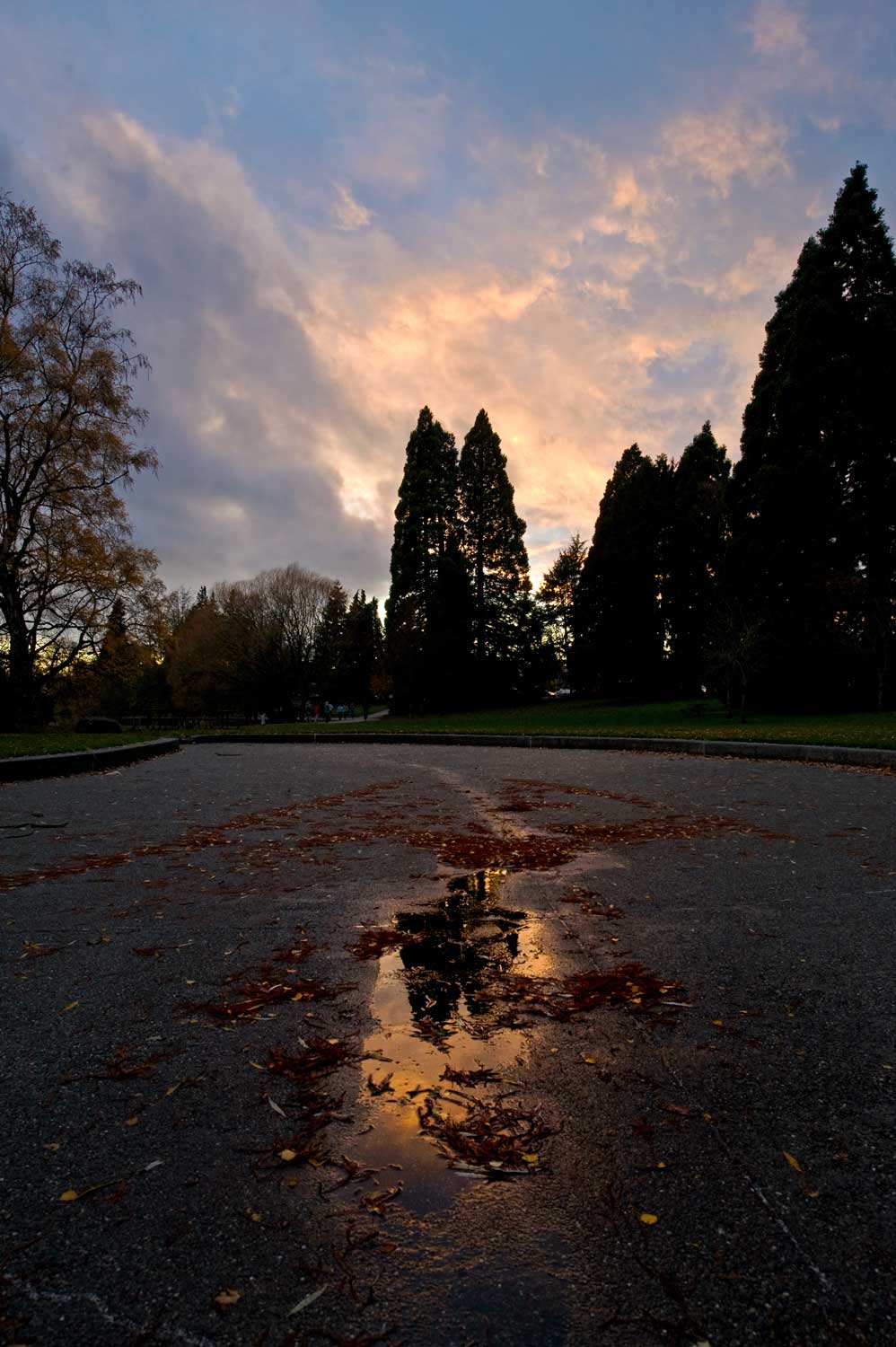


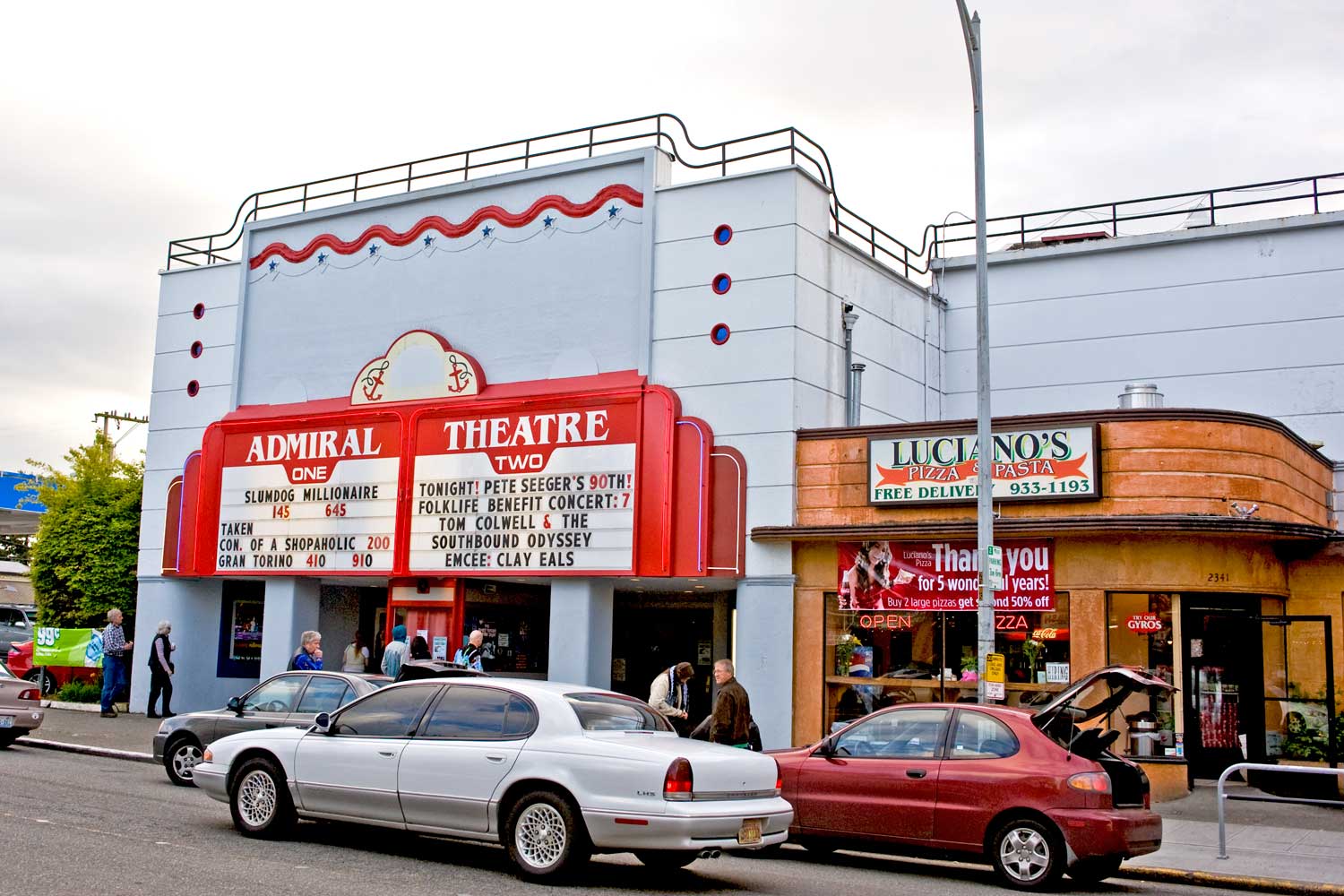


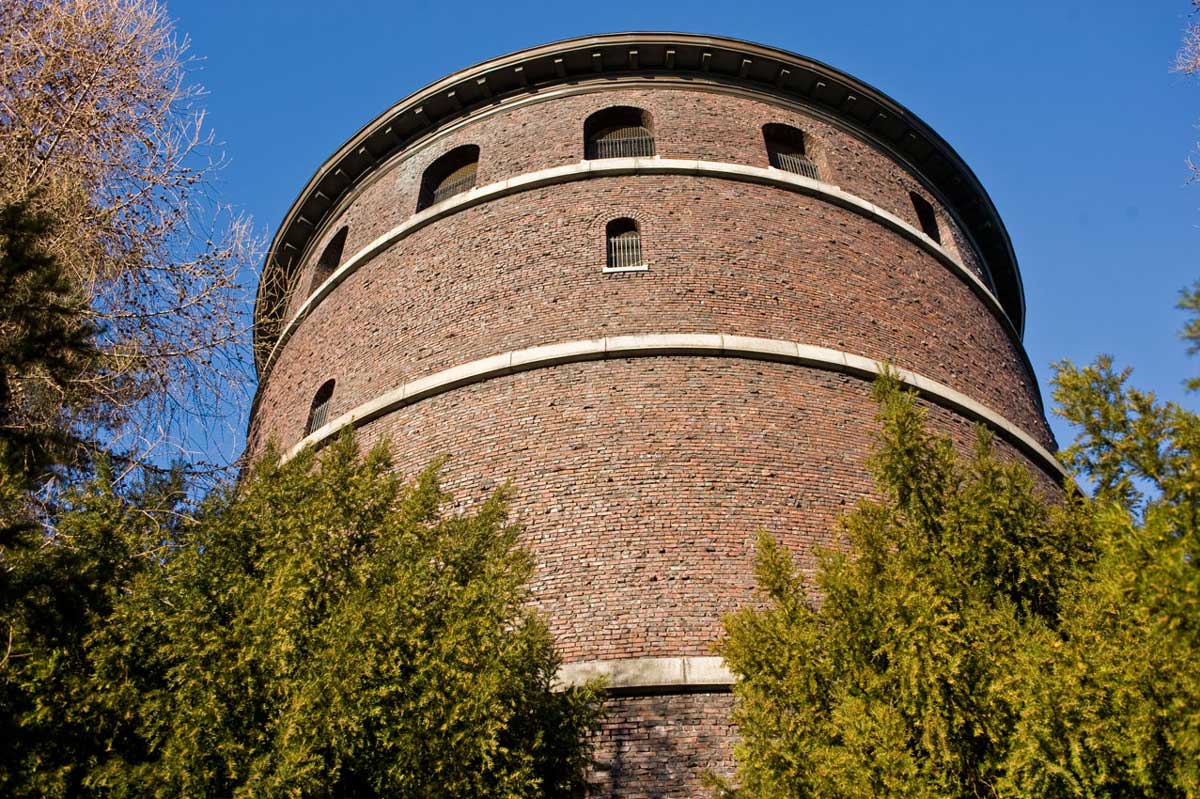


[We are grateful to L. Vine, who just posted the comment that follows. The results of this reader’s close reading and careful analysis are detailed below. We thought it significant enough to post immediately. –Jean]
As I reviewed the photos posted with the Now and Then article at the Seattle Times website this morning I noticed discrepancies between the architectural character of the Union Station of the present and the historic photograph.
Suspicious of the accuracy of the article, I came to this blog from the Seattle Times website, and found the larger versions of the photos I could more closely exam. After doing so, I believe the Webster and Stevens photo from the MOHAI collection is in fact a photograph of the construction of King Street Station, not Union Station. I believe this for the following reasons:
(1) Differing Architectural Details. Looking at the historic photo side-by-side with the contemporary photo of Union Station taken from the plaza above International District/Chinatown transit tunnel station, a casual viewer might not be cognizant that the ground level of Union Station is indeed hidden below the level of the plaza. But if we examine the contemporary photo with the emerging details of the second floor of the building under construction in the historic photo, you’ll see differing details–details that indicate that we’re looking at two different buildings. First, if we look at the corner of Union Station nearest the viewer in the contemporary photo (the southeast corner), you can see a brick reveal that creates a repeating horizontal shadow line that extends up to the frieze and cornice band. Now looking at the historic photograph we do not see this same repeating horizontal detail, instead we see a blind window being gradually surrounded by concrete or stone jambs (see it there in the historic photo–its that light colored material) at the corner of the building as the building is built. Second, examine the south elevation of both buildings. The contemporary photo of Union Station shows a gable with a large arched window which hints at the magnificent barrel vault inside. These two features are on a form that “bumps” out from the main mass of the building further south than the rest of the building. Now look at the historic photo–there is no such form evident.
(2) Structural Clues in the Historical Photograph. I believe some clues in the original photo have been overlooked or misinterpreted. First, I believe it is erroneous when Mr. Dorpat’s writes that the skeletal steel trusses in the photograph are being erected to support the great hall. What is portrayed in the photo are roof trusses that are not designed for a clear span. Look closely, you can see vertical columns supporting the trusses at mid span. But there are clues that indicate this is a historical photo of King Street Station under construction. Looking just above and beyond the corner with blind windows (the southeast corner) you can see some rather beefy looking steel–that’s the rising King Street Station clock tower. Also, rising above the partially complete south elevation you see six columns which will shortly support the trusses and ceiling of King Street Station’s waiting room. If these were for Union Station, they would be positioned on the east and west sides.
These things I can see in short order by comparing the two photographs. But the mistake is truly revealed by,
(3) The Metadata of Original Photograph. The entry for the photograph in MOHAI collection explicitly says that the historical photograph is King Street Station. There you can read the caption on the back of the photograph where it says “King St. Station being built”.
I think somewhere along the way, a mistake was made. If you agree with my assessment, please provide a correction here and in the Times in the service of historic accuracy.
All the best,
L. Vine
[Paul’s response:]
Mea Culpa. And stupid too.
Greetings dear L. We are working at rectitude. Jean thinks he also took a view from 4th (not 5th) of the Great Northern Depot. If not he will snap it late Monday. I will rewrite the description of this now-then – with something about the King Street Station – and preface that with a “true confession” and a suggestion that the readers also look at your detailed analysis. For that we will also keep a copy of Jean’s photo from 5th near it and near the new pair. Thanks for your interest and thoughtful care in this. It makes good hide-and-seek reading and should be appreciated for that too. My best excuses are that I first thought it was the King Station, that I might have better used the landmark fire station on the old not yet extended 2nd Ave. and beyond it the Stewart and Holmes drugs signs as clues. All are in the photo. There must be other excuses too. Unfortuntely, I don’t think that I am sick, nor was I instructed by any politician, preacher or other authority to make this mistake. I did it on my own. But I have not made another such blooper in 27 years – or about 1400 stories – and that may be taken into consideration during the sentencing. Here’s the other excuse. I am at this time preoccupied. I need to get this Ivar biography “Keep Clam” out by the end of the year or I’ll be ostracized by my friends, but if I make any more mistakes like this one, perhaps also ostracized by the community. I’ll need to move to Tacoma. Yes I WILL move to Tacoma. Meanwhile I shall try to Keep Clam.
More than the best for you L. Thanks much.
Paul
[While taking the pix for this Sunday’s Now and Then, I walked across the street and snapped King Street Station from the road above. While it’s not an exact repeat, it must suffice for a day or so. And as he promised – but can we trust him? – Paul will also write a new brief essay – or extended caption – for the new comparison before he takes a train to Tacoma. Let’s hope he is not confused about the station.–Jean]