
Our Daily Sykes #473 – Exhausted, the Dancers Bowed & Graciously Accepted The Applause




Horace Sykes looking down into the dark and deep waters of Dry Falls Lake. Below or looks at the Vista House that are more revealing than those included with Our Daily Sykes #464. (Black and White postcard used courtesy of Drew Miller. – Click to Enlarge)

(Click TWICE to Enlarge)
Dry Fall and a glimpse of Dry Fall Lake too. The environs can be learned below from two of the thousands of recordings taken from the visitor’s interpretative center or near it. A brief study below should find the features of the cliff that Horace Sykes shows above. An alternative is penultimate to the bottom where Mrs. and Mr. Giezentanner pose for real photo postcard artist Ellis with some of the Dry Falls Park observation shelter showing on the left. The Giezentanners are described as the caretakers and lecturers for the park. The couple stands on a short bridge that leads to a monolith that is exposed and feels so. That fenced prospect appears in Jean and my book “Washington Then and Now” on pages 144 and 145. Below the Giezentanners is the billboard that for many years romanticized these rocks and imagined falls. The natural interpretation of the place and its historical forces has changed some since the board was raised. You may easily find contemporary interpretations using the net. There is among them a documentary – with animations and working geologists – that about six years ago was shown on PBS. I have lost the title.


The only identification with confidence here is “Lust for Life,” the 1934 novel by Irving Stone pulled from the brilliance of the letters that Vincent van Gogh wrote to his brother Theo. It is the orange book on the bottom of the pile resting on the table in the lower slide. I suspect that the persons remembered here are both relatives of Horace Sykes – ones living in Oregon. I surely do not know that and there is little chance that these two delicate figures will ever be identified. However, portraits like these are very rare in the Sykes collection, and the most of them – the ones that are identified – are of members of his family and a few of their friends, most often at Christmas. (Click to Enlarge)




Among Horace Sykes slides are one hundred or so copies of paintings. These two are identified with names attached to their frames. The names, however, are either wrong – actually misspelled – or no longer in use. First what the unknown painter has named Crossley Lake is Cosley Lake.
Joe Cosley was a hunter-trapper who frequented this area and later worked as a park ranger once his hunting ground had been nationalized as a protected park. Cosley Lake is about 10 miles north of what was called Lake McDermott, the name used by the painter on his frame, before it was changed to Swiftcurrent Lake. It took awhile to sort this out. There are quite a few postcards of McDermott Lake on line but none that I found indicated where in the park it was. One of the cards described it as near Mt. Wilbur and Mt. Grinnell, so I went looking for them.
Soon I was confident that the little lake named Swiftcurrent, with the largest hotel in the park (Many Glaciers Hotel – and many rooms too), was once named McDermott after a lumberman in the late 1890s. And I also found the waterfalls at the western end of the lake. The name was changed from McDermott to Swiftcurrent in 1928, perhaps because the creek was so named and also the popular mountain pass and trail that cross the divide and lead one to Lake McDonald on the west side of the park. Swiftcurrent lake is only about a quarter mile wide when measured east-west directly across from the hotel. The painting also looks west and a little south. One half mile behind the painter is the western end of the six-mile long finger lake, Lake Sherburne. An earth dam was built at its western end and the lake is now a reservoir for ultimately irrigating the farm lands of Montana and Canada to the east of the park and to the sides of the Milk River.


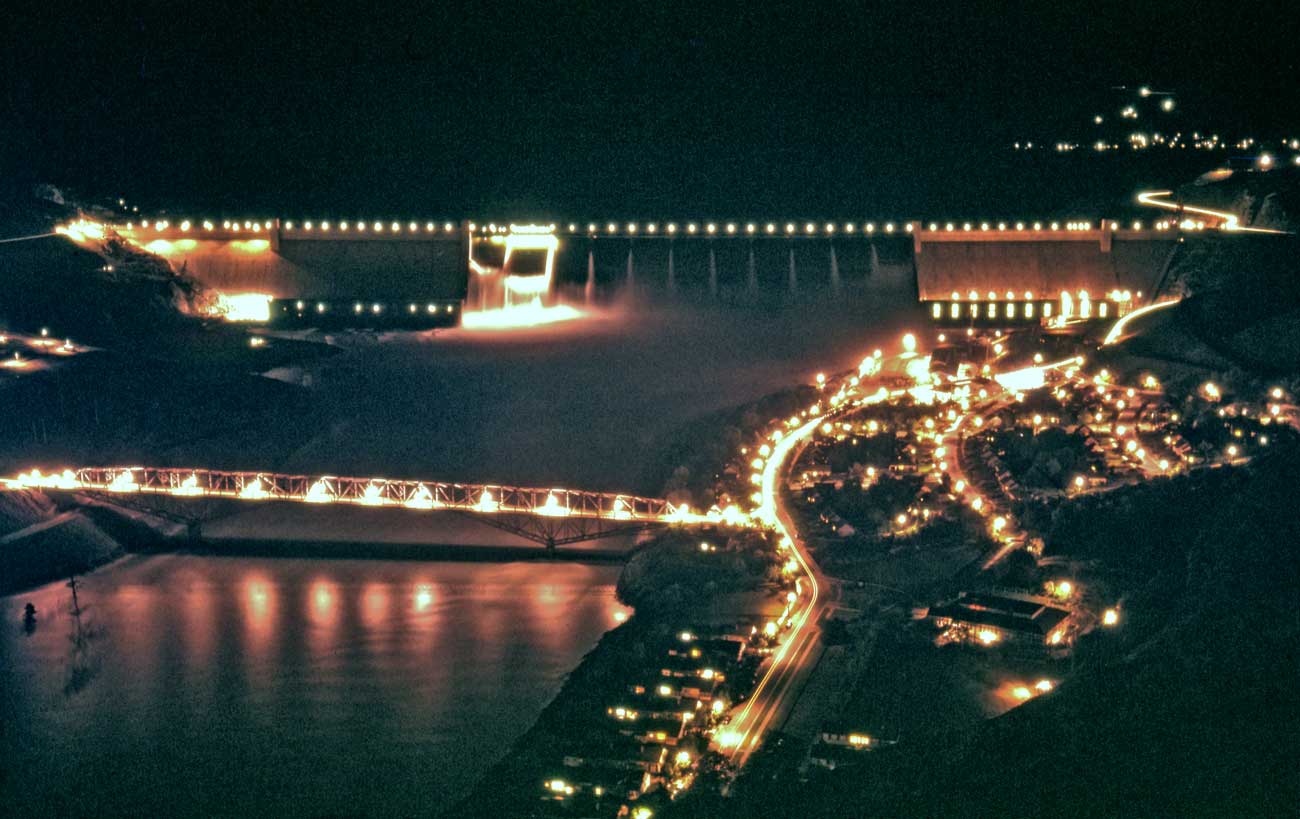

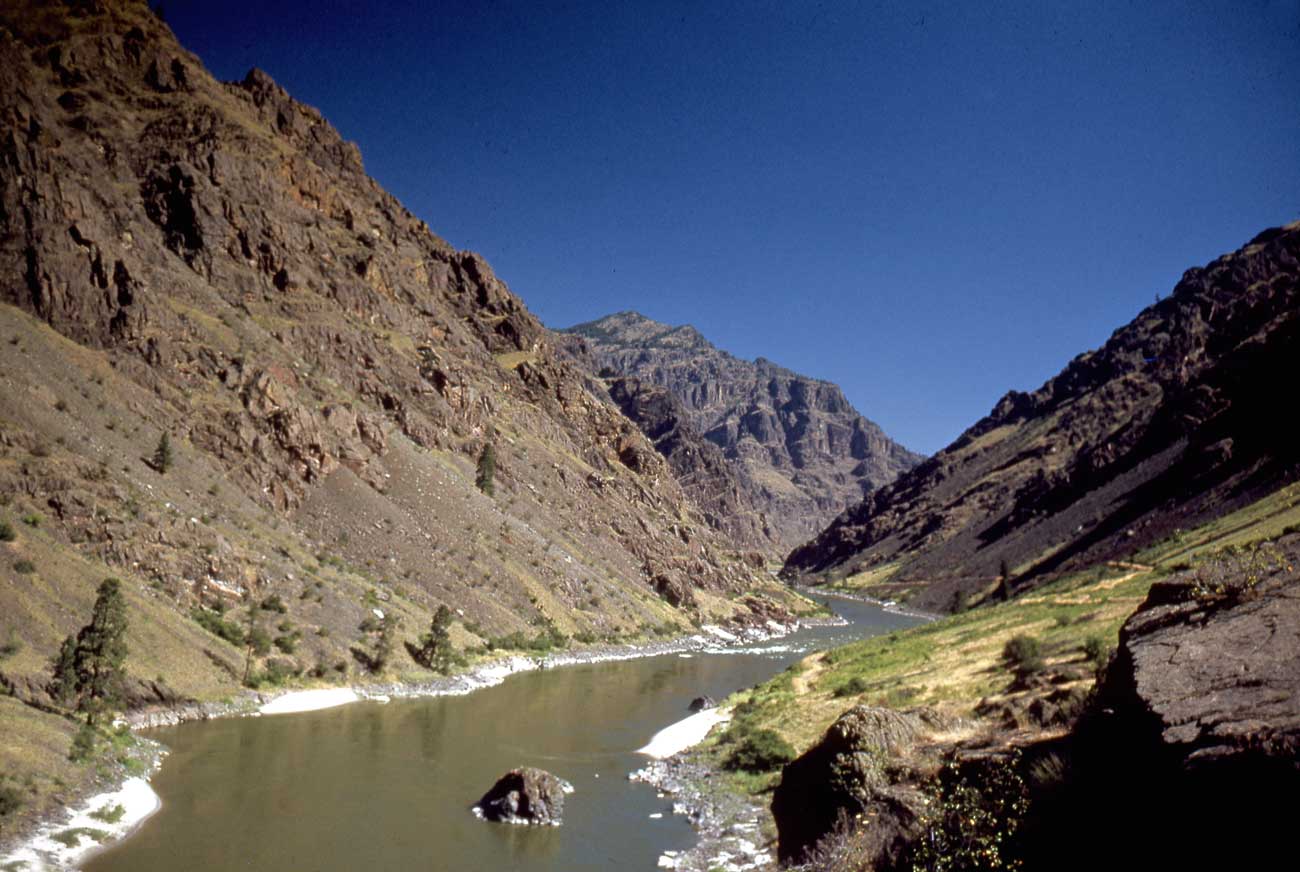
This returns to the rapids shown below as “Our Daily Sykes #435 – ‘Rapids on the Snake, Perhaps’.” This is a wider view and also for me a subject suspected, not known. (Click to Enlarge)
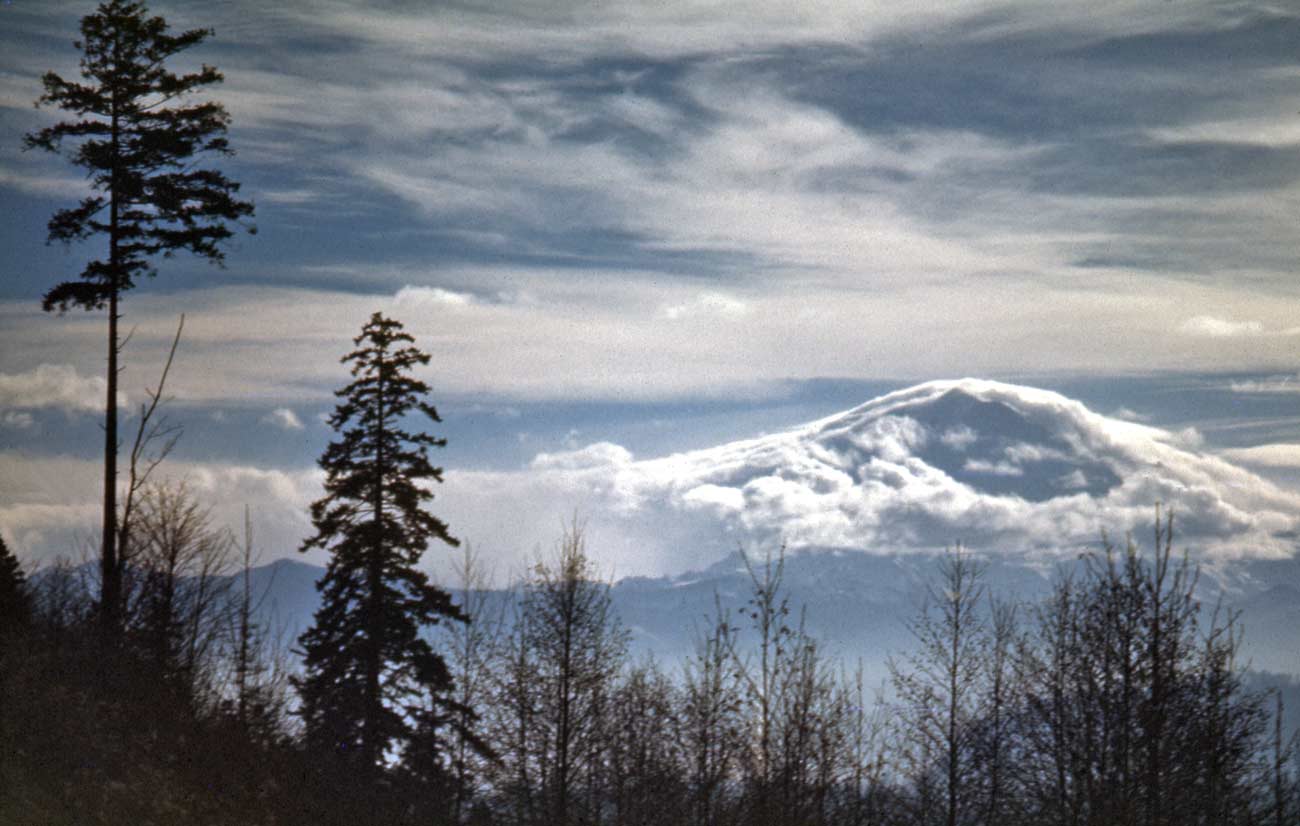
(Click to Enlarge)
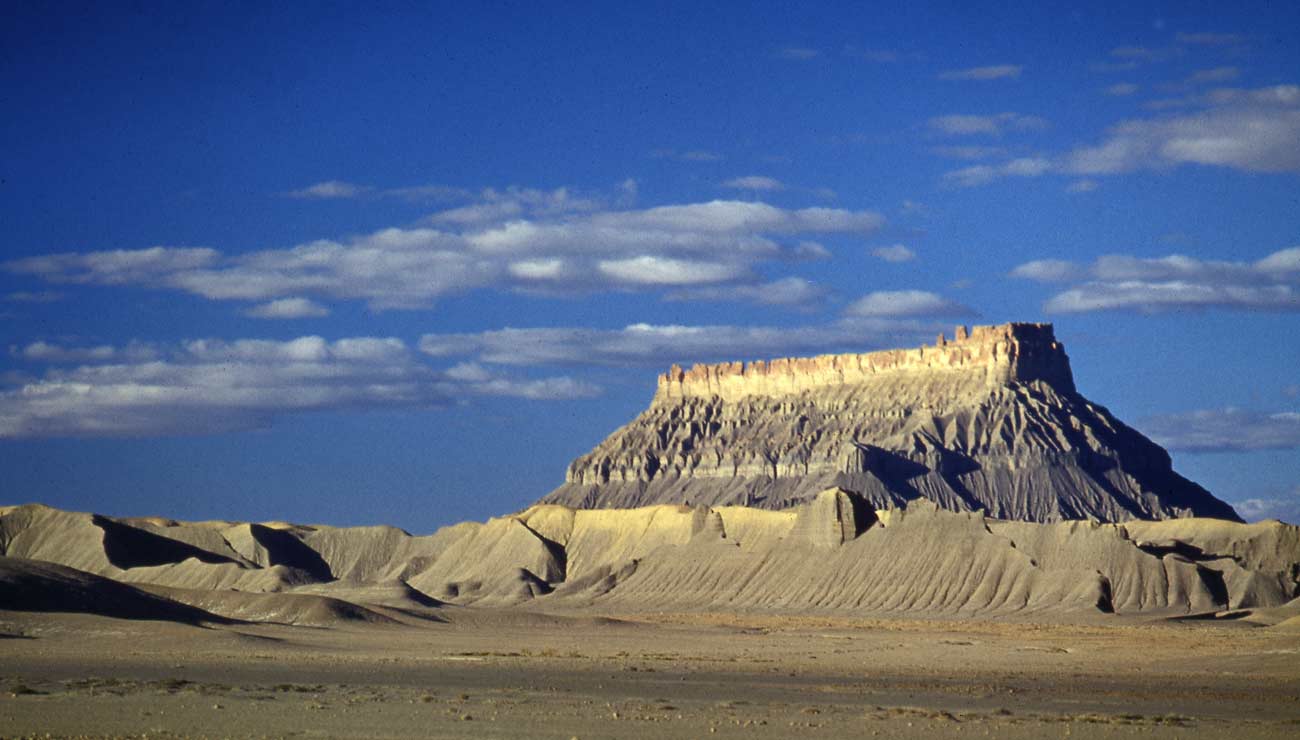
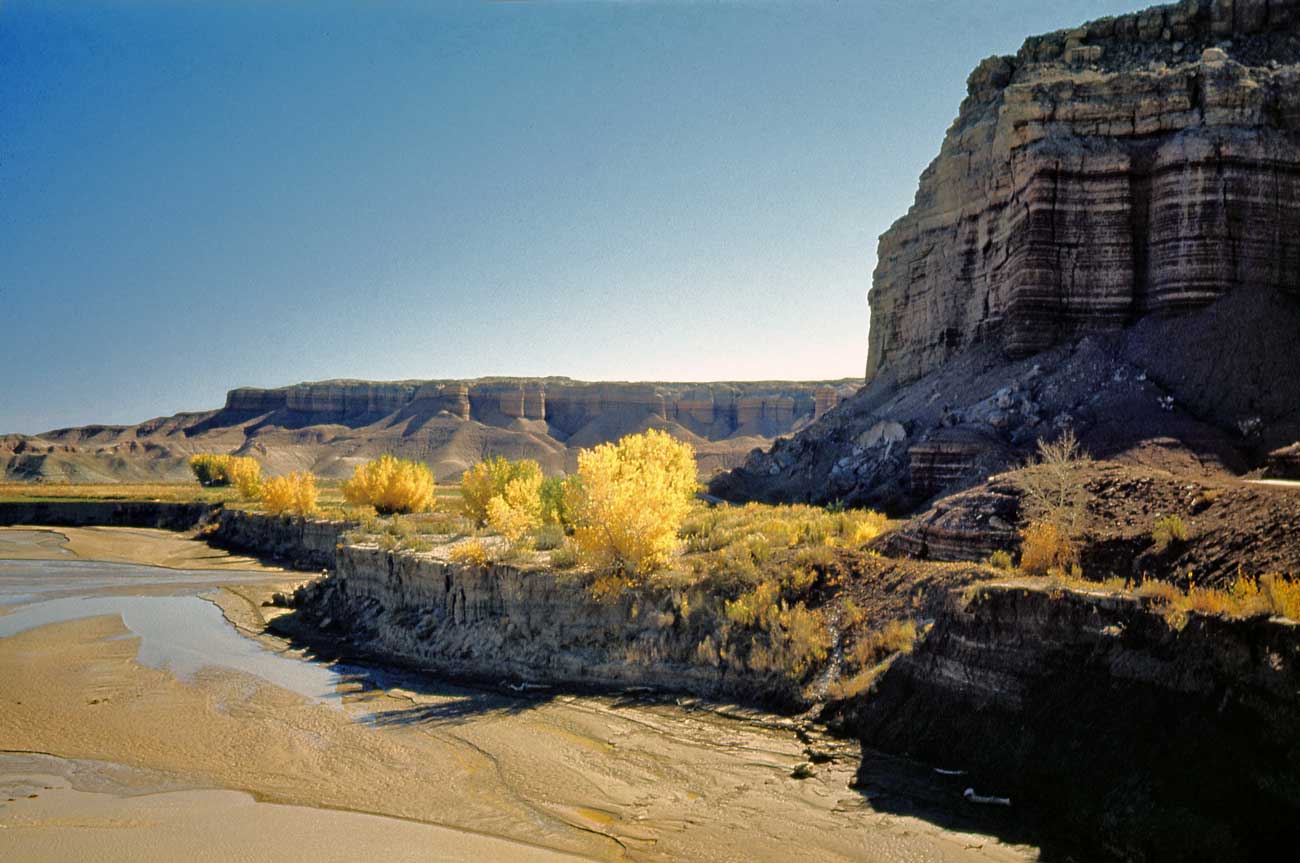
Since I am certain that I have seen this butte before during one of my Google Earth drives – probably through southeast Utah – I have titled it the Temporarily Lost Butte, confident that I will find it again. And yet I have just tried again and failed. I looked mostly to the south of Moab, Utah. That is where I imagined that I saw it earlier. But now I have come upon so many buttes that resemble this one that my hide-and-seek is like confused by the sprite or hobgoblin or leprechan who has tied ribbons around every tree in the forest. Still I will stay with “temporarily” and expect to come upon it again and learn its confident name.

(Click to Enlarge)


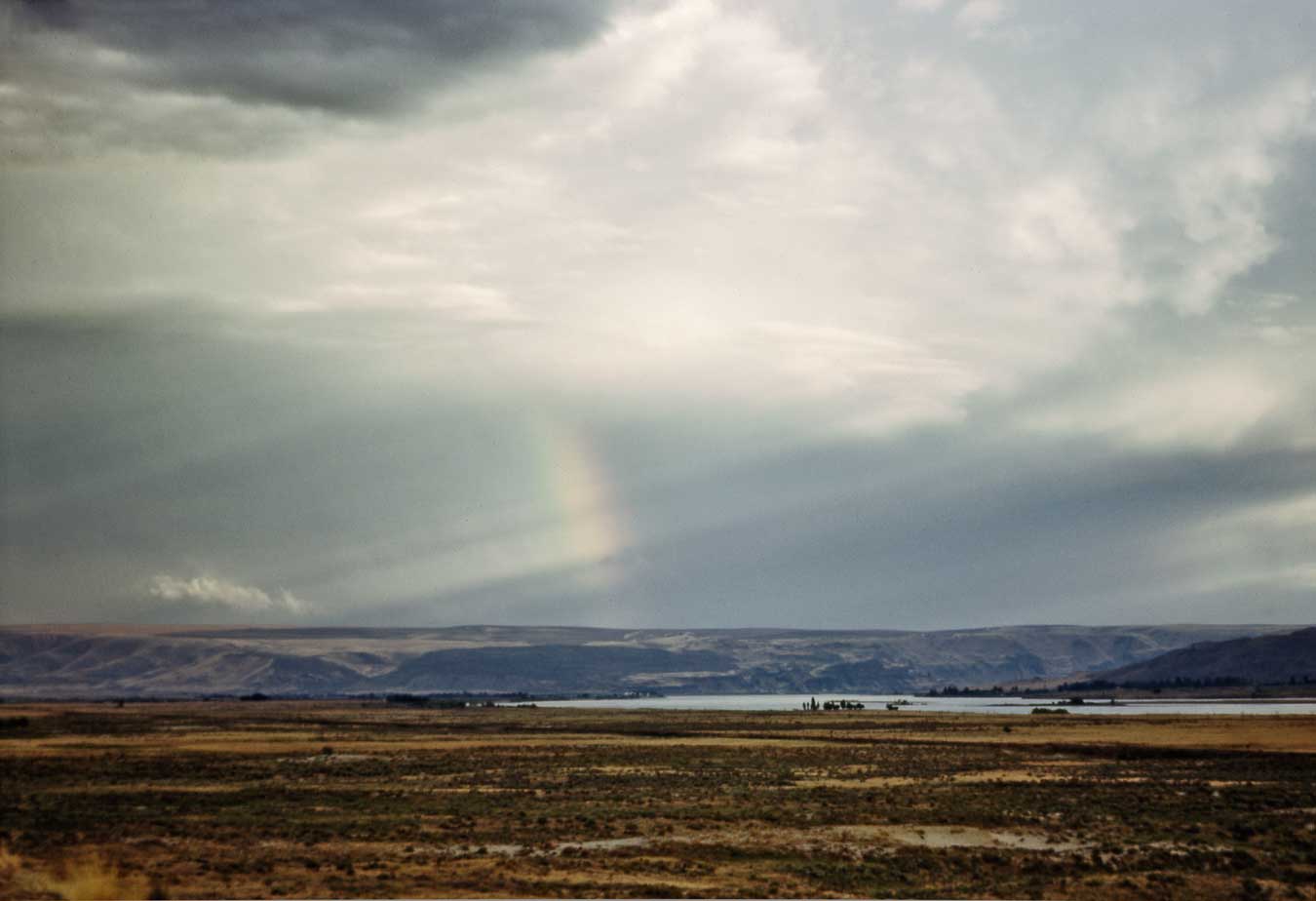
(Click to Enlarge)


On April 22, 2010 for “Our Daily Sykes #10” we printed an addendum that joyfully announced that we had, at last, figured out the location of a subject nearly the same as this, but just down the road – although in that early installment of our Sykes’ routine, there was no arterial with a comforting yellow stripe as there is here. There is also practically every comparison between the clouds in them. That is, they were photographed from within moments of each other, and yet each is uniquely satisfying. (Click to Enlarge)

Here Sykes visits one of the most frequented prospects for Mt. Rainier: looking west from Chinook Pass, at an elevation that’s a few feet more than 5,440. With this detail he contrasts the rough rocks of Governor’s Ridge (with Mt. Governor near the scene’s center) with the swelling compressions of the Emmons Glazier beyond it. Emmons is part of the most used climbing route to the top of Rainier. There’s also a glimpse of the pointed Little Tahoma near the upper-left corner. At 11138 feet it is the fifth highest mountain in the Cascades, after – and in order from the highest – Rainier, Shasta, Adams and Hood. Little Tahoma is a young mountain, only about 500 thousand years. Sykes moved some to the north (right) for the wider look at the same subject, below. (Click to Enlarge)


This late morning of Sunday August 21, 2011, I visited Woodland Park Avenue – a “speedway” the neighbors call it because its greater width encourages racing – and repeated “portraits” of a few homes, apartments and stores built on the street and included now among the historical tax inventory records of structures (taxable ones) photographed in 1937 or possibly 1938. Almost certainly all of the structures then in place on Woodland Park Ave. were included in the late 1930’s survey of every taxable structure in King County. The project was supported by the Works Progress Administration, which, like most of the “Great Depression’s make-work alphabet soup administrations,” produced more than a payroll for out-of-work citizens. Many locals now have these late 1930s records of their homes hanging in their homes.
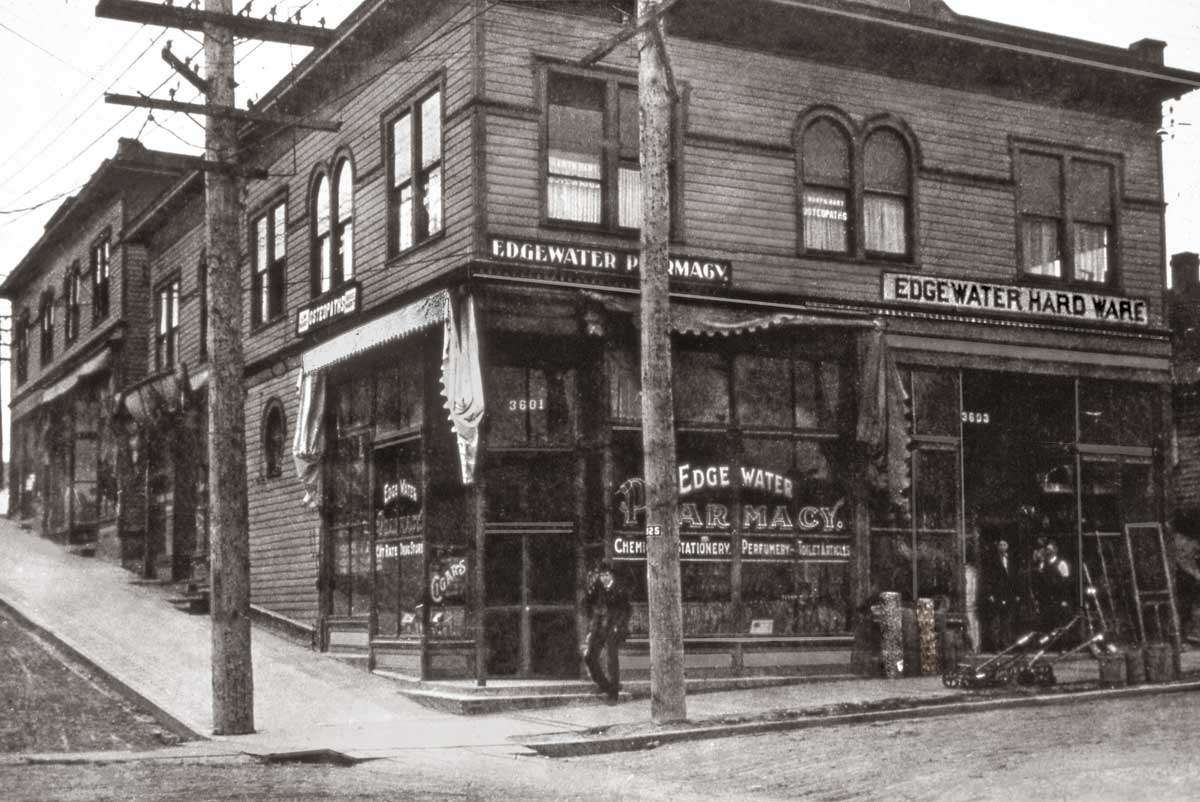
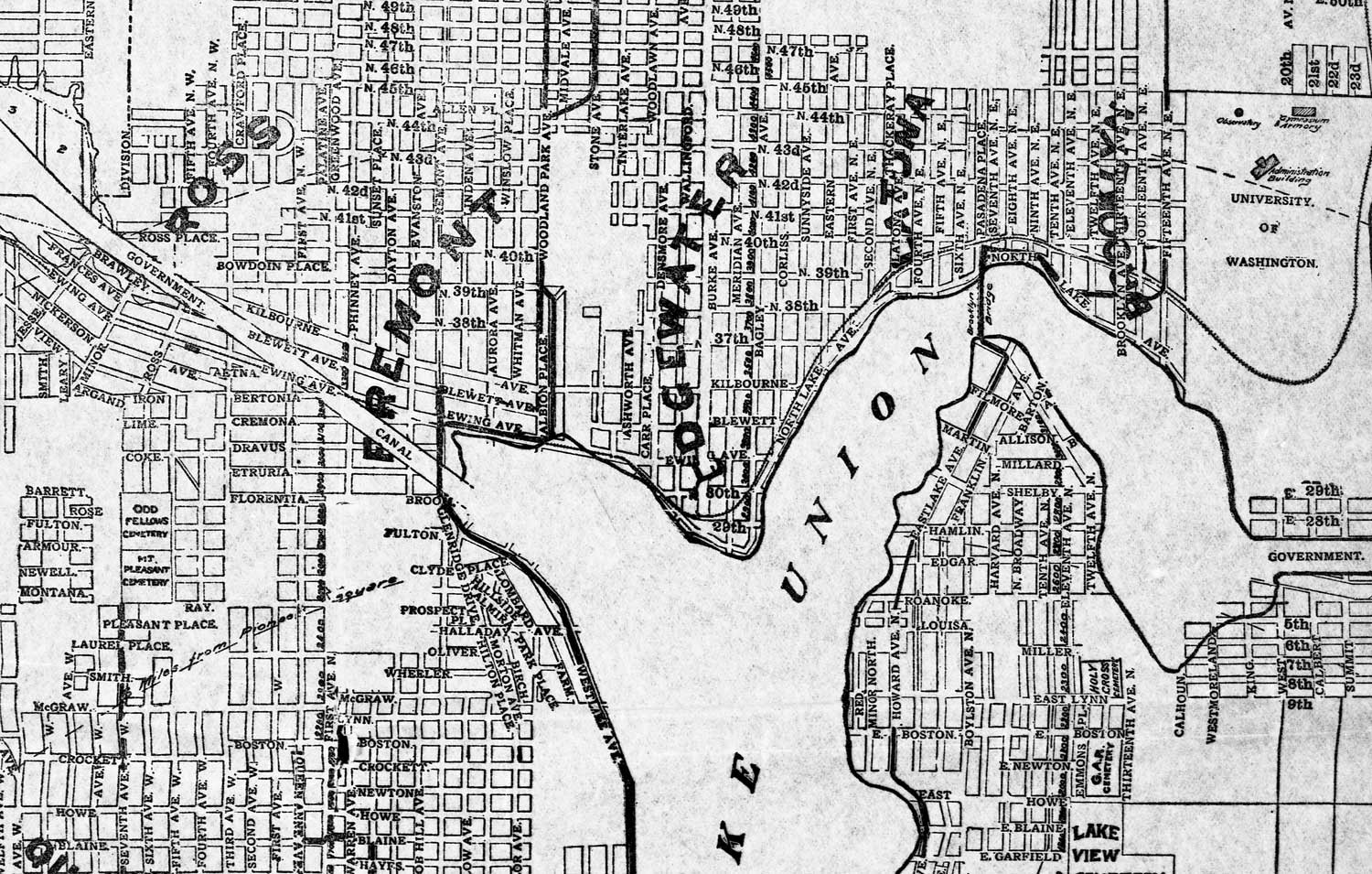
Woodland Park Ave. was improved early in the 1890s to bring the new trolley line north from 34th Street to the southern shore of Lake Union and from there in a counter-clockwise direction following an old logging railroad built just above the lake’s original shoreline. All the structures along Woodland Park Ave. were distinguished and serenaded by the clattering trolleys that ran by them. The neighborhood between 34th and about 40th and to the sides of Woodland Park Avenue was known as Edgewater. (If you wish to make here a key word search you will find other images of its business district at 36th.) Now this strip is variously claimed by Fremont and Wallingford. The names “Freford” and Wallmont” are sometime used in compromise. However, the northern border of this uncertain land grows even more contentious in the blocks north of 45th Street, that is, in Greenford or Wallgreen or Fregreen or Greenmont – depending.
(Should you wish to order a photographic print of any King County property extant in 1937-8 – like your home – contact archivist Greg Lange at the Washington State Archive, the Bellevue Community College branch. The number is 425-564-3942. Have a legal description of the property your are interested in: the tax number or the description of its by the Addition Name, the Block Number within the Addition, and the Lot Number with that Block.)


***


***


***

While snapping (below) 3626 Woodland Pk. Ave. I met someone who lives therein. She told me that the great-grandchild of the builder had visited and told her that grandpa had been a stone mason by trade. It sort of figures.

***


***


***

This comparison is peculiarly deflating – a Greek temple, or a least a small town bank, divested of its columns and pride.

***


***


***


***


***


***


***


***


***


Returning next to 36th Street for an earlier look at the Edgewater business district repeated below it with another photo taken this morning.

A circa 1897 map in which the Edgewater district is emphasized. Note that no Wallingford as yet appears, although its oldest part, Latona, does. Note also that the University District is still referred to as Brooklyn. Finally, and far-left, the Ross Neighborhood is still remembered.

Above: The fitting name for Woodland Park was especially enjoyed in its early years before Aurora Avenue was cut through it. This view looks south from a since razed pedestrian bridge that was built a few yards south of N. 59th Street, at the park’s northern boundary. (Courtesy, Municipal Archives.) Below: To repeat the historic photograph’s prospect, Jean Sherrard used a ten-foot pole and stood next to the surviving river rock wall that was created to support the now long lost bridge. CLICK TO ENLARGE then click again. . .

WITHIN WOODLAND PARK
Thru its first decade – the 1890s – the Green Lake electric trolley line followed the grade of the abandoned logging railroad that nearly clear-cut the neighborhood in the late 1880s. The rails followed the east and north shores and then stopped at the lake’s northwest corner. After the Phinney family sold to the city in 1900 the country estate they named Woodland Park, the Seattle Electric Company completed the trolley line around the lake and through the park.
That the park was appropriately named became easily evident during the city’s quarter century of truly explosive growth following its “Great Fire” of 1889. As the trees were felled for new additions with compass-conforming grids of streets and facing homes this preserved copse of soaring firs on Phinney Ridge increasingly stood out and up. It could easily be seen across Lake Union.
It is now more than thirty years since I first studied the “then” photo featured here in the Sherwood Collection of Seattle Parks history. It is kept now in the Municipal Archives. A few of the photographs gathered by park historian Don Sherwood revealed other parts of the about half-mile north-south route the trolley took through the park although the photos were often not “placed” or otherwise identified. After a lot of comparing and map reading, at last I know – this part of it.
The historical photo was recorded from a rustic pedestrian bridge that snugly crossed over the tracks between two picturesque walls or piers faced with hundreds of river rocks. One of the approaches is gone but the west wall was kept, and can easily be visited on the auto-friendly road that climbs through the picnic sites from the tennis courts off West Green Lake Way North.
The line was built in harmony with the park. Crossing shallow ravines, its wooden trestles, like the one here on the right, were appointed with rustic guard railings. The Seattle Electric Company promoted the Woodland Park crossing as one of the picturesque highlights on their Seeing Seattle excursions.
****#****
Now Paul, have you anything to add? Jean
Jean, less add than link. We have with past features (on past Sundays) put up a few stories that touch on – or touch close to – this one. Ron Edge is searching for these, and will link them soon. All you will need to do is touch the pictures he chooses, and presto they will be with you. Meanwhile we will search for a few more fresh subjects that are also fitting.


Born at Fort Walla Walla in 1883, “Skinny” Gen.J.M Wainwright IV, returned home after enduring three years as a prisoner of Japan during World War Two. “Skinny” was distinguished as the highest-ranking American POW during the war. He and his troops surrendered to the Japanese forces at Corregidor. He first saw action in the Philippines much earlier, in 1908-10 during the Moro Rebellion. “Moro” stood for Muslim – those of the southern Philippines who resisted first Spanish and then American rule. Skinny returned to the Philippines in 1940 to make ready for the Japanese invasion of 1941, and the battles that took Wainwright and thousands more into captivity. Throughout he felt like he had “let his country down,” and was surprised that once freed and back home he was treated as a hero. On Sept. 13, he got his own ticker-tape parade in New York. Horace Sykes does not tell us when he was also celebrated his home town, Walla Walla. [Click to Enlarge]


Horace Sykes moved to Seattle from Oregon in the late 1920s as an expert on fire safety. He had come to work for Northern Life soon after the insurance company had moved into their new highrise at the southeast corner of Third Ave. and University Street and Third Ave. It is now called the Seattle Tower. I have always assumed that at least a good percentage of Horace’s picturesque landscapes were photographed while he was on trips examining insurance claims, and yet this and a photograph of an ice plant destroyed by fire are the only instances or “evidence” of the pain and destruction the insurance examiner must have been very familiar with in his subjects. This is one of two photographs taken of this unnamed woman, most likely sometime in the late 1940s. It is the easier one to look at.



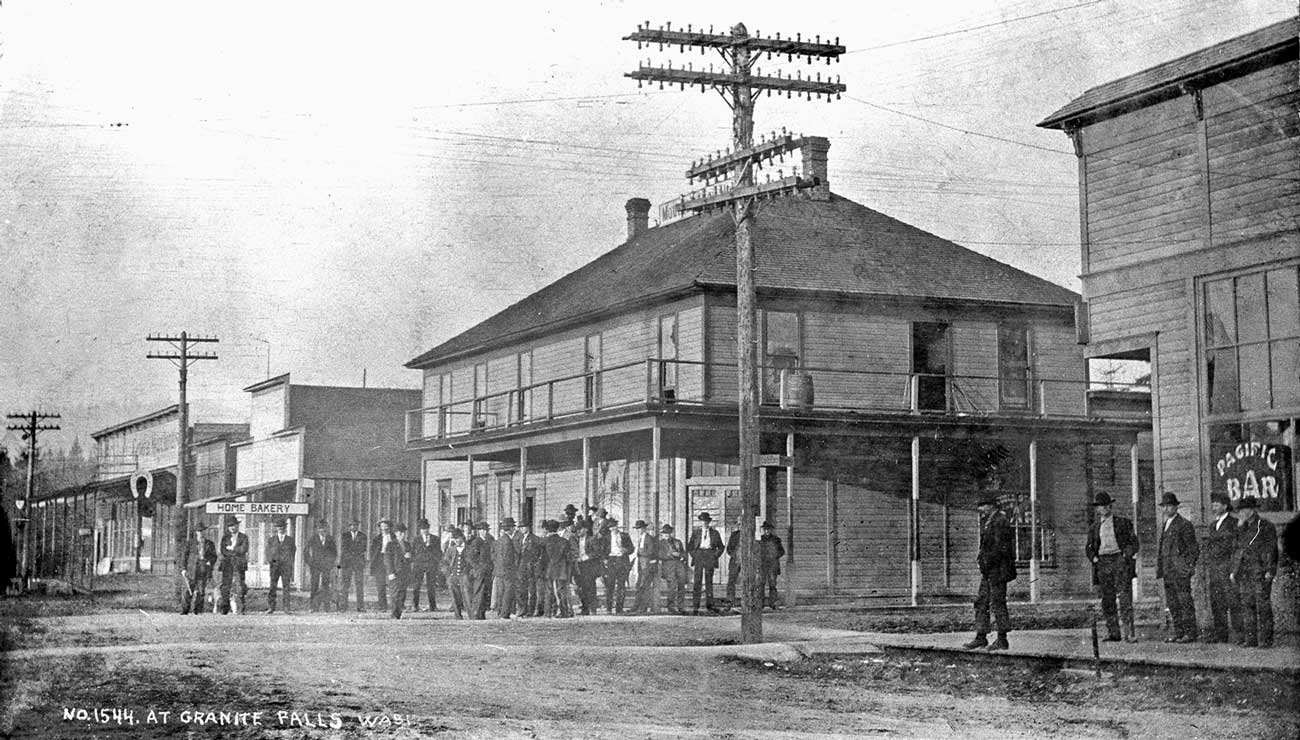
Above: The stately Granite Falls Railroad Station was built for both the Everett & Monte Cristo Railway Line, and a political payoff. (Courtesy, Granite Falls Historical Society.) Below: From the prospect of the unnamed historical photographer, the site of the now long gone Granite Falls station has been returned to nature. (Now photo by Fred Cruger)

(Note: Click the photos to enlarge them. For many of them click twice to go bigger yet.)
THE GRANITE FALLS RAILROAD STATION
For itinerates and pioneer town photographers there were perhaps two subjects most often used to represent an entire community: “Main Street” and the local railroad station. Here, as an example, the Granite Falls station is part of a prosperous tableau that includes Northern Pacific engine #366, and the sweetener of a pressing crowd on the station platform.
Fred Cruger, the current vice-president of the Granite Falls Historical Society, dates this real photo postcard 1909. Fred adds, “there was quite a political battle going on between Snohomish (the County Seat) and Everett (increasingly the County economic center), about where the County seat should actually be. Granite Falls was told that if they voted for Everett, they’d get a really nice railroad depot. It may be difficult now to find the actual vote count, but we did get a great railroad depot!”
This political maneuvering dates from the mid-1890s when the original use of this railroad was to carry minerals from the mountains around Monte Cristo to smelters in Everett. This enterprise was floated by J.D. Rockefeller and eventually so was the railroad by the autumn floods of 1896 and 1897, which damaged or destroyed tunnels and large sections of track. Ten years more and most of the mining activity was over. Hauling lumber and later tourists kept the line going until the early 1930s when tearing out the tracks was among the few new jobs open in Snohomish County during the Great Depression. The Mountain Loop Highway – for which Granite Falls is the “gateway” – was graded in places over the abandoned railroad bed.
Fred Cruger, also an antique car collector, has often helped us in this column with the naming and dating of old motorcars. Now we wish to make note that he and the Granite Falls Historical Society have created “then and now” cyber tours for both their community and the Mountain Loop tour. They are, respectively, http://www.myoncell.mobi/13606544362 and http://www.myoncell.mobi/13603553170.
You may wish to visit Granite Falls for the Railroad Days Festival and Parade, this year on Oct. 1, a Saturday. Not surprisingly the Granite Falls Historical Museum will also be open, and the Mountain Loop Highway too.
BLOG EXTRAS
Have we anything to add Paul?
Yes Jean – we will try. You will remember how we tried to place now-and-then features for both Granite Falls and Monte Cristo in our book “Washington Then and Now,” and in spite of the book being a big one it was not big enough – we failed. Here we will harvest what we can of photographs having to do with Granite Falls, Monte Cristo and a few other sites on or close to the Mountain Look Trail, for which Granite Falls is often called the “gateway.” We’ll start with a few views of the falls themselves. But first we want to thank Fred Cruger again for his frequent help in many things including Granite Falls history and also identifying/dating antique motorcars.


If one takes the Mountain Loop Highway out of Granite Falls to the east, one does it counter-clockwise. When the Monte Cristo train was still running, a big attraction along the way was the Big Four Inn, which nestled below its namesake mountain.




The two attached views above both look over Monte Cristo, but from opposite directions. The top subject looks north from the high ridge south of the mining town. On the far right is Foggy Peak. Left of center, at the end of that ridge, is – I believe – Sheep Mountain, which we may assume has a few mountain sheep on it. The western slope of Wilman’s Peak is on the far right. The bottom view (just above) looks south over the milltown. Foggy Peak just misses being revealed. It completes the snow-capped ridge on the left – behind the hill. Wilman’s Peak, or part of it, is on the far right.

The Mountain Loop Highway circles a ridge of mountains that includes, north to south, Whitehorse Mountain, Mt. Bullon, Three Fingers (north and south) and Liberty Mountain. The lumber town of Darrington is also known for its share of bluegrass musicians, some of them immigrants from the south. Darrington is on the opposite northeast side of the ridge from Granite Falls and much closer to it. Mt.Whitehorse rises from its back door.


ARLINGTON is near the northwest “corner” of the Mountain Loop. Two cedar stumps are rustic landmarks long associated with Arlington. First some variations on the “stump as home” followed by another group, “stump as roadside attraction.” The first was sited on what is now part of the Arlington Airport – or very near it – and the other was next to Highway 99 – and Arlington. I remember it there as recently as 1970. Perhaps parts of it and the home survives as local keepsakes. First the home.


Followed by Stump as Roadside Attraction . . .


Finally versions of Arlington Labor and Capital.







A small collection of clipped cartoons figure in Horace Sykes collection of Kodachrome slides – at most a dozen. Here are seven, which I have titled. A title is a kind of second caption. Two of these date from 1955, which is a year before Horace’s death. I am old enough to remember all these cartoon artists, although I could not name them – never could. It is worth remembering when they were published. But I’d not know what insights follow – easily.



On what wide river is this with a railroad – it seems – on the other side? Click to Enlarge (and study).





This illustrated history of Seattle’s waterfront is a collection of touchstones – a roughly chronological one. As the table of contents reveals it is bumpy and reading it is more like walking on a beach of river rocks mixed with polished pebbles than down a graded road.
The writing was done over a four month sprint and modestly supported with tax dollars – your taxes if you pay them. The client was your Seattle City Council, and its agent, the then city councilman Peter Steinbrueck. Peter felt that members of the council should know more about the waterfront’s past in order to act wisely with issues of its future. In 2004 it was on the verge of the big changes that are now in 2011 beginning to unfold.
City Hall printed and spiral bound perhaps 100 copies for local libraries, city council members and a few others who were interested. It has, I have learned, been useful to a few public historians, but I imagine that its concilmanic uses have been minimal. It is, after all, the normal routine of deliberating politicians to be engulfed with reports and this one is two inches thick. Perhaps Peter’s peers puttered with the pictures. (Repeat that seven times fast, for that may be all the time you have.)
Now with the help of Ron Edge’s machinations – scanning and sectioning – you too may easily read this “Edge Edition” from cover to cover. If you do I guarantee at least a feel for the history of our waterfront, but, again, a bumpy one. Or you are encouraged to enter this field of historical touchstones at any point and leave so too. Whichever, this may be satisfying.
Paul Dorpat 7-10-2011


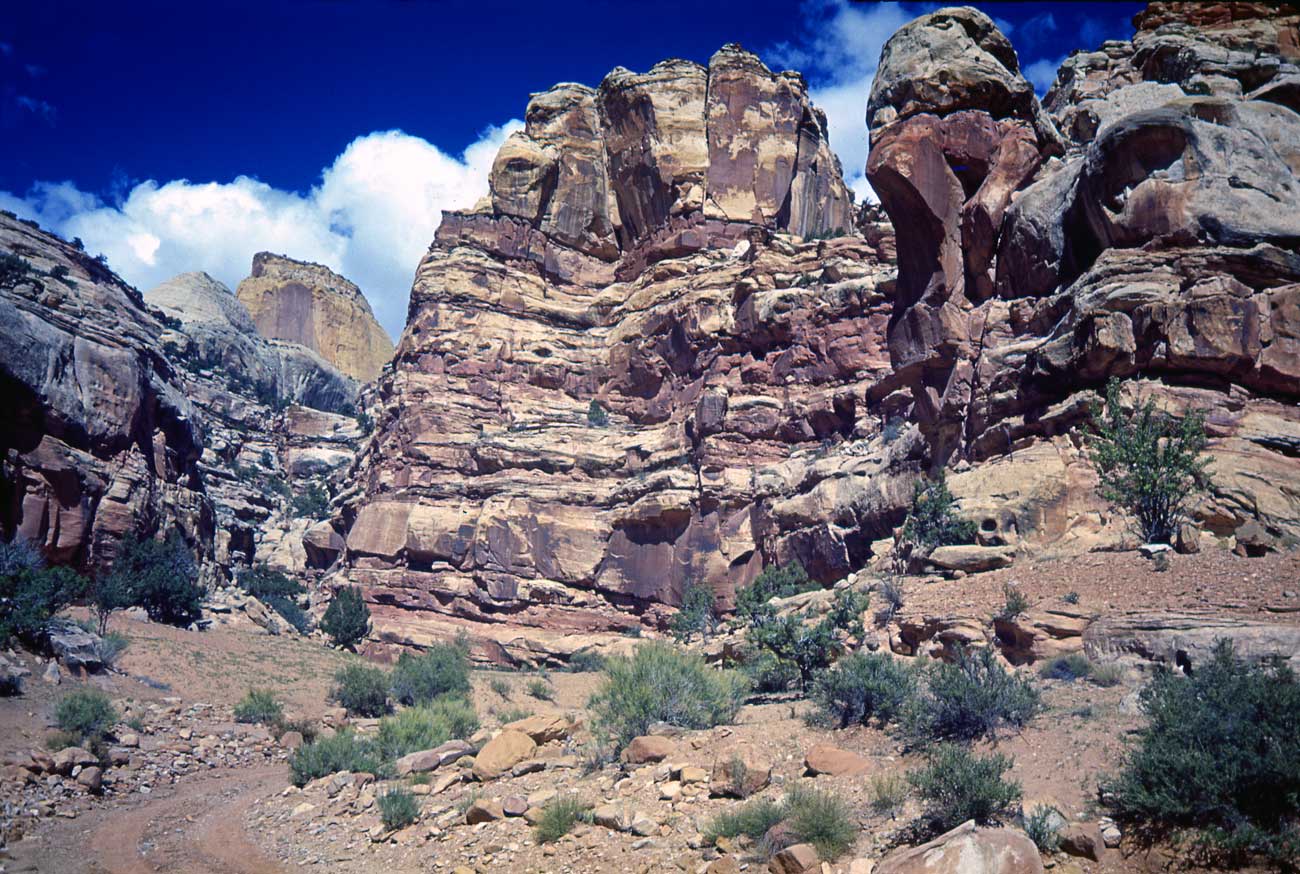

This Double Arch – its descriptive name – is one of the more popular of the 1000-plus arches that span southwest skies – most of them in southern Utah. It is conveniently close to its own Double Arch parking area – a half mile hike round trip. Google Earth notes, “There are no guardrails or fences to prevent visitors from exploring directly beneath and through the arches. The area was used as a backdrop for the opening scene of Indiana Jones and the Last Crusade.” On its visit to Utah ca. 1950 the vacationing Dorpats made it to Bryce and Zion but not the Arches. This failure continued with Indiana Jones. I saw none of the sequels, and so missed the Hollywood premier of Syke’s Double Arch.


I remember this from my only visit to Grand Canyon. It was ca. 1950 with my parents and next oldest brother David. This is the North Rim, which is easily determined with a Google Earth visit to the North Rim dead end on Highway 67. Actually, the end of the road is quite alive with a big lodge – which I do not remember – and many other structures. The elevation is about 8100 feet, one thousand feet – or so – above the south rim at Grand Canyon Village, which as the condor flies is about ten miles to the left. Driving between the two rims is a long trip. Most visitors choose the lower south rim only. My dad wanted to see them both. The “head” showing here is about one-and-one-half miles distant and about 100 feet lower than the lodge and, we presume, Horace Sykes prospect. (Click to Enlarge)

In the grand watershed that feeds the Grand Canyon of the Colorado River there is a Little Colorado River that reaches the big canyon thru a canyon of its own with sheer sides and a narrow width that one might imagine flying over in an aerodynamic motorcycle. There are signs warning responsible adults to keep impetuous children and pets away as one approaches this gash in the Arizona desert, for without the signs there is often no sense that there is a canyon until you reach the very edge of it. Persons suffering from Vertigo will want to stay in some Flagstaff Motel. The Little Colorado River comes out of that part of New Mexico that does not resemble Mars, which is the western part at its belt-line. There are forests, lakes and mountains and this Little Colorado comes to life in them and flows northwest thru serpentine wiggles until it approaches the Arizona border, where it starts to move more earnestly in the direction of the Grand Canyon. I found the Little Colorado while using Google Earth to look down from space upon artist James Turrell’s Roden Crater, which over decades he had been arranging with tunnels and other reclamations into a natural light show. Jean, who is one of the rare ones who have visited it on the ground, gave me the directions. It was during my own inspection from space that I noticed that Roden Crater was but a few stones throws from the Little Colorado, and what is more only three miles due west from its Grand Falls. Here I request that the reader open Google Earth and find the place. It is 30 miles northeast of Flagstaff New Mexico. The falls are represented-pictured with several citizen snapshots. And it is easy to find Roden Crater as well although it is not named it is the only crater in a small field of them that shows a path leading into it and a man-made earth-work in it as well. It a downright surreal with a 2001 uncanny caste. The Grand Falls of the Little Colorado River are grand, or can be when the river is swelling, which in this arid landscape is not often. The occasional flash flood makes them spectacular. The falls are roughly 150 feet high and 500 feet wide, and there is one big step included that is about 70 feet wide. By comparison Niagara Falls is about 170 feet high and it falls without a step. Through its sections Niagara is about 3000 feet wide. It is also much wetter and whiter. The Arizona landscape thereabouts often has a red caste to it, and when these Grand Falls on the Little Colorado get splashing the coloring resembles a shake made from a mix of Pepto-bismol and coffee, a tint familiar to persons with caffeine addictions who are also plagued with bad digestion. I only recently came upon the attached waterfall in the collection of Sykes Kodachrome slides. In my urge to find locations for his subjects I hoped that this might be a detail from the Grand Falls of the Little Colorado River. Now I confess after comparing this look at this waterfall with those on Google Earth of the Grand Falls, well, I think that it is not. Once again we are left clueless by a Sykes’ subject, although not hopelessly so. (Click to Enlarge)
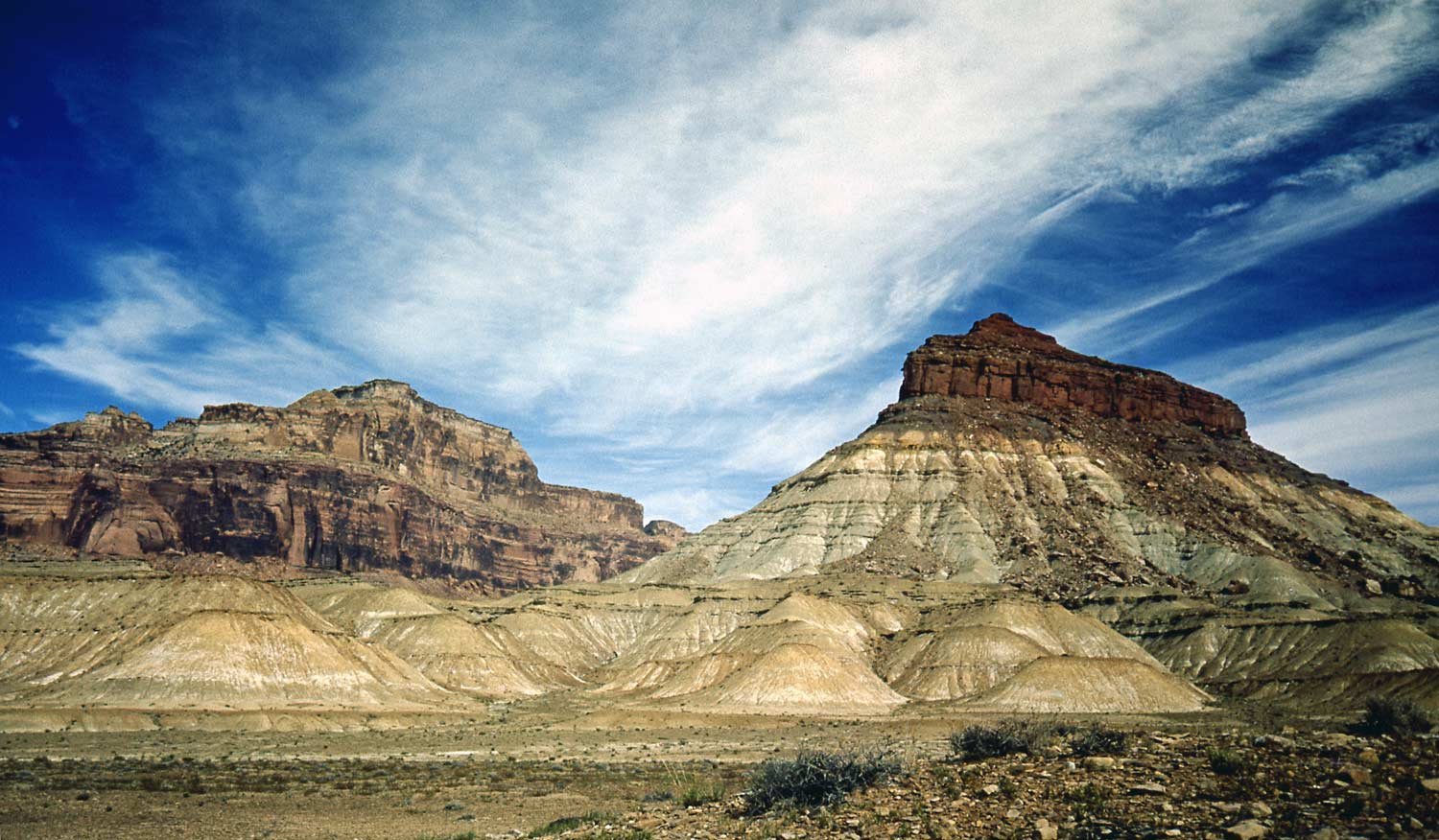

Like a nascent Nile temple or a sprouting Mt. Rushmore for Supreme Court Justices in sepia, or near it. (Click TWICE to Enlarge)
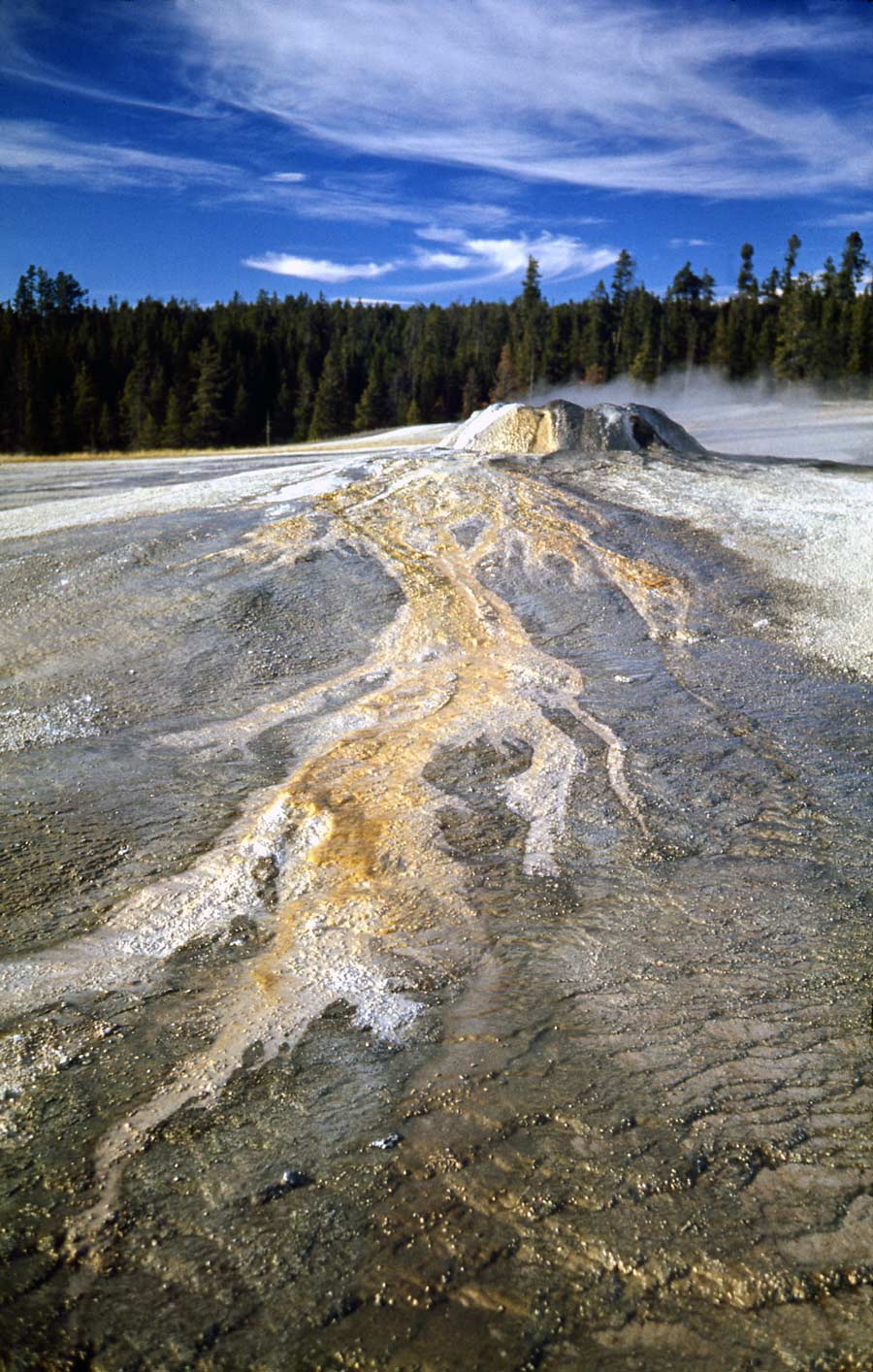
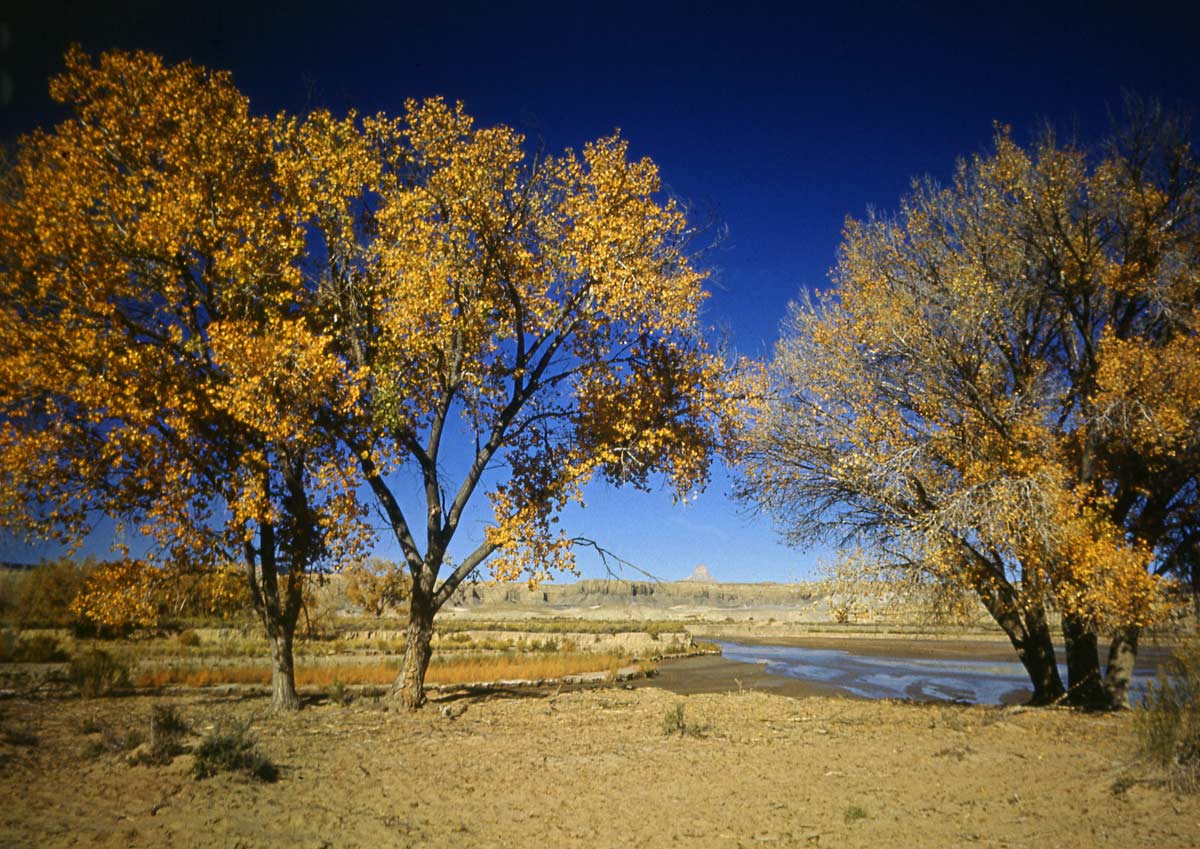
Some of Syke’s slide, like this one, came to a surreal condition by reason of some chemistry along the way. The blue is too blue, and the focus soft. What to say about the rusting landscape? But note the monolith centered on the far horizon. Did Horace mean to stage it all around that isolate effect? When grabbed in detail, like below, some of these rougher slides appear like gouache canvases. (Click to Enlarge)
