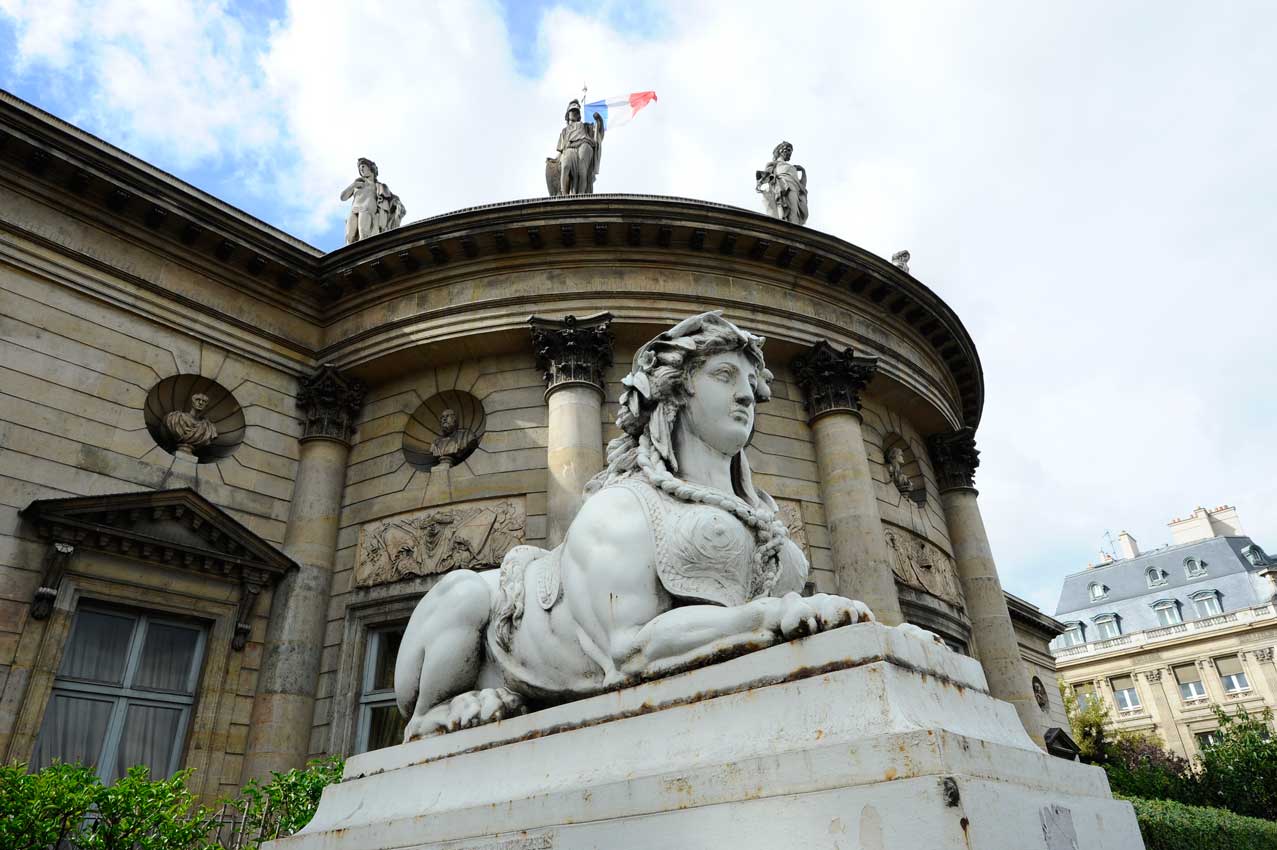
I was going to the opening of the exhibition ” the Comédie Française is showing at Petit Palais ” when I was crossing the bridge Alexandre III, I saw this scene, and I thought the Comedie Française is showing too in the street …
J’allais au vernissage de l’exposition “La Comédie Française s’expose au Petit Palais”, lorsque je traversai le pont Alexandre III, je vis cette scène et pensais La comédie Française s’expose aussi dans la rue…
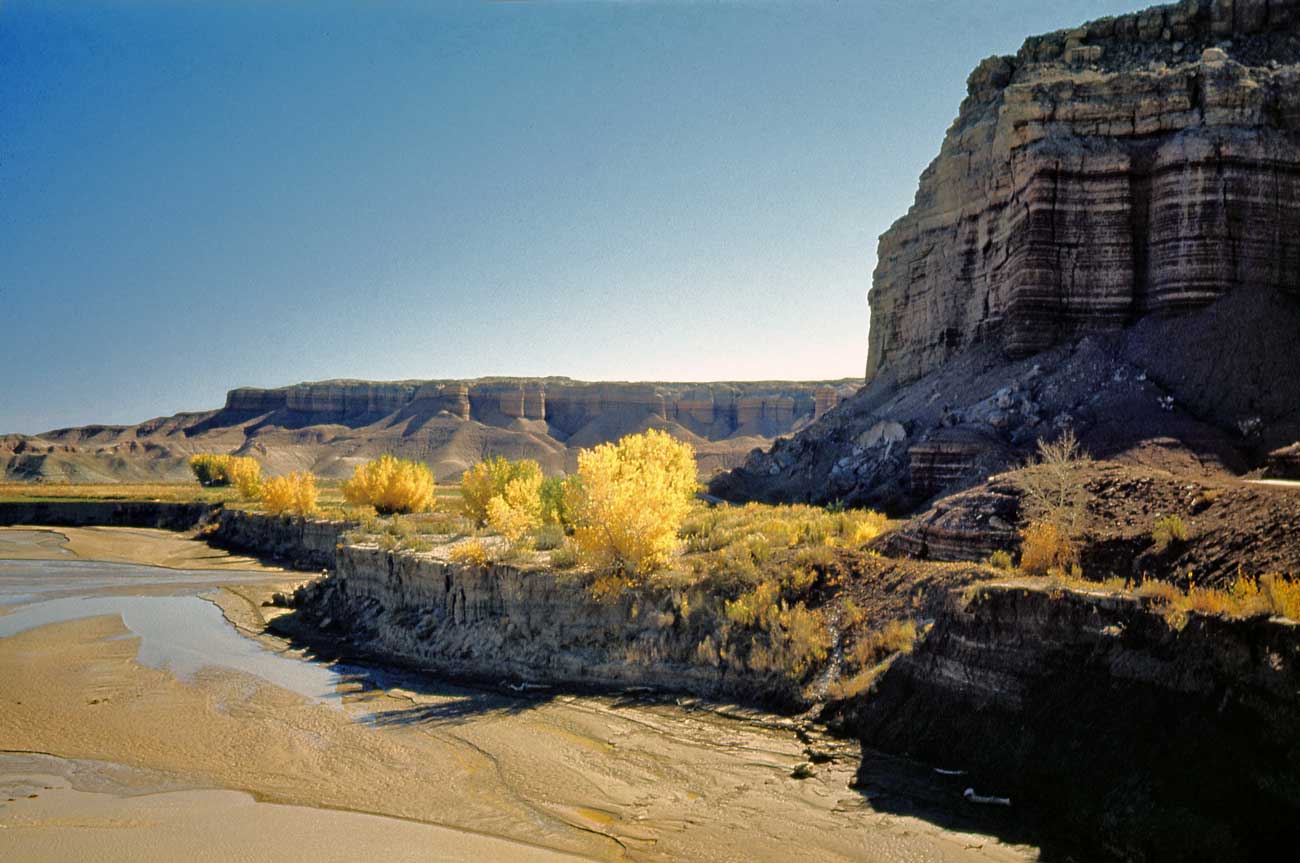
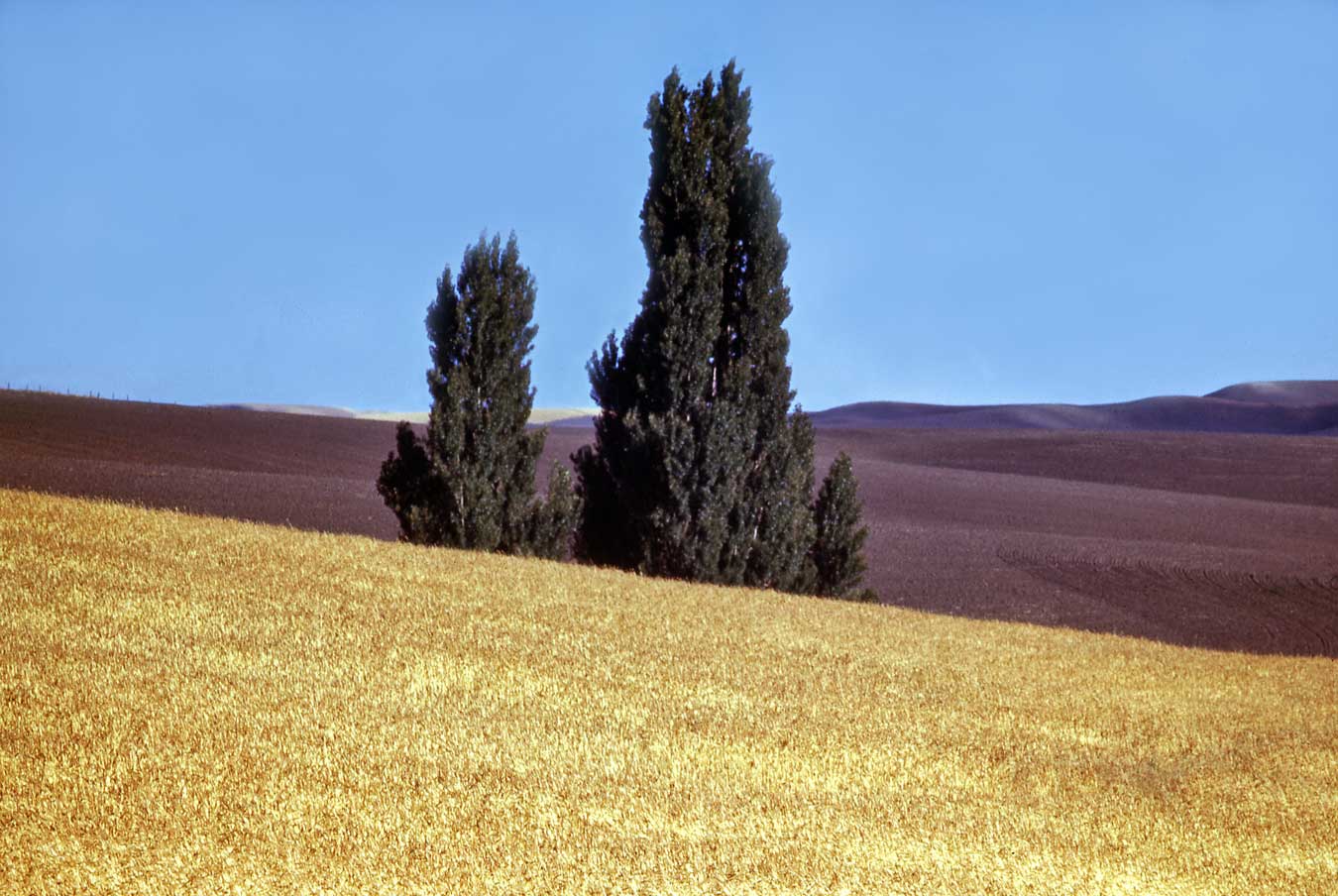
As with Our Daily Sykes #468 Washington is on the left and Idaho on the right. The view looks north at the same subjects as #468 they are studied here from a distant prospect upstream from the bridge and with a telescopic lens. The river, of course, turns west (left) at the base of that ridge, and here the hill appears and feels like I remember it as a child. The serpentine highway that dropped from the wheat fields above to the twin cities below was a great excitement to descend. But not for Annie Grabbe who while visiting my parents from Grand Forks, North Dakota in about 1948 and joining us for a drive to Lewiston - for reasons I don't remember - she went shaking in the back seat next to me as we started the swerving drop to the river. She called it "car sickness" and I marveled at the very idea that such a ride could sicken anyone. By now however things have changed and I can get sick from driving exposed highways as well as Annie Crabbe. Rest in peace. Unlike for #468, this Sykes leaves the truer impression that highway department artifacts are rather puny by comparison with these elephantine hills. (Click to Enlarge)
In the life of Our Daily Sykes we have seen this bridge, and these hills before. We used the clue before too, and because it brought us to the "truth" we don't need it now. But we can make note of it: the monumental "C" near the top of the ridge showing beneath the bridge. It stands for Clarkston. The lift bridge replaced the 1899 cantilevered span between Clarkston,Washington (on the left) and Lewiston, Idaho (on the right) in 1939. (I may be off a year.) Judging from Horace Sykes' travels the new bridge may be a dozen years old here, or less. (Click to Enlarge)
Jean and I have learned that the Museum of History and Industry is worried about our upcoming talk about our “Repeat Photography” show that is hanging at MOHAI until next June. Then everything comes down for the move to the new home that the Museum is now preparing at the south end of Lake Union.
We have been told that not enough tickets are getting sold. We conclude that either we are not worth the ticket price – ten dollars – or the word about the Oct 13 (next Thursday evening) show has not circulated well. Please study the attached literature promoting the lecture, reflect and, perhaps, check your budget. If you come we will encourage you to ask questions.
–Paul and Jean
(and Berangere too, who, if she can make it here from Paris, will get in free.)
THEN: Looking through the main business intersection of what once called the Wallingford Hill District, but now is simply Wallingford. Trolley 702 looks west on 45th Street and across Meridian Street. (Courtesy Lawton Gowey)NOW: Built in 1929 the terra cotta adorned northeast corner of 45th and Meridian survives, presently as a busy coffee bar for Tully’s. (Jean is on his family’s traditional August vacation to LaPush. I shot this one.)
In 1940 Seattle Municipal Railways started to abandon its trollies before pulling up their rails, and the old orange-colored cars became increasingly photogenic, especially to Seattle’s rail fans. Lawton Gowey, a rail fan extraordinaire but now, alas, long gone, shared this photo with me many years ago.
The intentions of the photographer – perhaps Lawton’s father – might have been to make another 11th hour recording of a cherished common carrier. Lawton would have known that car No.702, which is stopping for a rider here on 45th Street at Meridian Avenue, was manufactured in 1913 in Cincinnati, Ohio for the then still privately owned Seattle Electric Company. No. 702 was one of twenty-two cars built to the same long design – from headlight to tail light cars 701 to 722 extended 49 feet and 2 inches. Trollies on the Meridian Line were abandoned on May 5,1940 and scrapped soon after.
This trolley portrait was photographed sometime between its May ‘40 abandonment and March 11, 1938, the day the A&P Super Market, here at the northeast corner of 45th and Meridian, and another in Ballard had their grand openings. They promised “always one low price and no specials . . . You will know that you shopped by wisely and profitably at the A&P super market.”
The meeting of 45th Street and Meridian Ave began in the forest, when federal surveyors carrying their Gunter Chains described – and marked – the future streets as the west (Meridian) and north (45th) borders for the 640 acres of federal land section number seventeen. That done the settlers could identify their claims with some precision.
A&P’s brick and tile corner was built in 1929, just in time for the Great Depression. From 1935 thru 1937, at least, the well-ornamented corner was vacant until A&P opened it to “wise” shoppers in ’38 and stayed until 1942 when it too moved on. The northeast corner then went dark again. (Many thanks here to Jeannette Voiland, Seattle Room librarian-historian at the Seattle Public Library’s Central Branch, for helping with the A&P chronology.)
WEB EXTRAS
Anything to add, Paul?
SURE Jean, and Ron will start out by making some picture-triggered links to a few other and related features that have appeared on this blog. Then I’ll grab a few past features from Pacific that visit the neighborhood (it’s Wallingford) and whatever else comes forward that seems fit to fit.
FIRST, a few random looks at the same intersection of 45th and Meridian, including another look at A&P MARKET and a sample of its newsprint ads.
Opening Day values. March 10, 1938Dec. 7, 1939 - it ran in the Times. One block west at Burke Ave. a neighbor competitor. You may risk a date by the autos showing. Seafair bagpipes, looking east on 45th thru Meridian. An early Seafair Kiddy Parade, looking east on 45th from Wallingford Ave. (Courtesy Stan Stapp)Scene from the 2008 Kiddy Parade at Corliss and near the starting line.
Three of four of the hundreds of records I made of this corner between 2006 and 2010 when I walked a Wallingford Walk that – on a full day – include repeating more than 400 sites for animation (or time lapse). About 25 examples of these TIMELAPSES are the Wallingford part of the REPEAT PHOTO show that is now on exhibit at the MUSEUM of HISTORY and INDUSTRY. (Come early to the lecture this coming THURSDAY and watch them – and Paris Now-Then too!)
Looking kitty-korner at 45th and Meridian, June 12, 2008.November 8, 2008June 29, 2009. These three - and the hundres more - were photogaphed from the top of the trash can resting to the side of the brick bank that holds the southwest corner.
Follows now a reprint of The Seattle Times full-page photo montage on Wallingford’s 45th Street for the Oct. 25, 1925 issue. Using the same framing I repeated these in early December of 1992. The long Times report that accompanied their montage is on display with many other Wallingford images at the Blue Star Cafe at 46th and Stone Way. Before I could put captions up for the exhibit there, the owner lost interest in the cafe and sold it to the present owner. The pictures are still without captions, except for this S.Times feature. A quick study will reveal that there have been both business and physical changes in the nineteen years since. (Click and click again to enlarge you may be able to read the captions.)
*******
Then Caption: Neighbors pose on the front steps of photographer Lawrence Lindsley’s Wallingford home sometime in October 1918 when the city was “dark” and closed-down during the Spanish Flu’s Seattle visit. The masks were required although the law was rarely enforced. (Picture courtesy of Dan Eskenazi)
Now Caption: Wallingford neighbor’s repeat the 1918 flu shot behind masks pulled from one of the group’s mask collection. Only one among the seven is neither hidden nor unnamed: the Chihuahua Sparky. (now photo by Jean Sherrard)
LAGRIPPE in WALLINGFORD
Dan Eskenazi, Seattle photo collector and old friend of mine, first shared with me these masked ladies posing with masked cats on the unlikely chance that I might know the porch. Had the snapshot revealed a street number the choices would have been narrowed city-wide to a few hundred front steps. But Dan’s little 3×4 inch print does better. The names of the women are penciled on the back. The flipside caption reads, “Top row, Anna Kilgore, E. K. Barr, Ms Anna S. Shaw. Lower row, Penelope and Tommy, Mrs Shaw and Golly.”
So seven creatures including the cats Tommy and Golly and all of them wearing masks by order of the mayor. By the time the 1918 flu epidemic reached Seattle at the end of September la Grippe had caused more deaths world-wide than the First World War. When the rule about masks was lifted for good on Armistice Day, Nov. 11 the streets were quickly filled with bare-faced revelers. Still Dr. T. D. Tuttle, the state’s commissioner of health, warned that “people who have influenza are in the crowds that are celebrating victory. They will be in the street cars, in the theaters, in the stores.” Tuttle also confessed, “the order had been more or less a farce as far as the masks are concerned.” (This explains, perhaps, why there are so few mask photos extant.)
Returning to the snapshot’s penciled caption, four of the five women are listed in the 1918 city directory living at 108 E. 43rd Street, in Wallingford. Since that address is about 100 steps from my own I was soon face to face with Dan’s unidentified porch, except that it was one house west of 108. But this slight move presented an opportunity. It hints, at least, of the photographer.
104 E. 43rd Street was built in 1918, the year that the photographer Lawrence Denny Lindsley, the grandson of city founders David and Louisa Denny, moved in. Perhaps Lindsley took the snapshot of his neighbors sitting on his new front steps soon after he took possession with his bride Pearl. Married on September 20, 1918, tragedy soon followed. Both Pearl and their only child Abbie died in 1920. Lindsley married again in 1944 and continue to live at 104 into the 1970s. When he died in 1974, this son of the pioneers was in his 90s and still taking photographs.
Neighbors Exposed - for this Jean took my place (at the top and nearest the front door) and I his camera. Another 1918 pandemic scene, this one on 3rd Ave. So. south of Washington Street. Max Loudon took this. His sister shared his albums with me long ago. By now this is a local "classic" of that flu, and has been used many times over. We made sure that the U.W. Northwest Collection got a copy - or copies - again, long ago.
*******
Above: Identified as a scene on the east shore of Lake Union the narrow passage between the photographer and the far shore suggests that the photograph was taken from somewhere near the west side of the University Bridge. (Courtesy, Mike Maslan.)
Below: Photographed from the north shore of Lake Union, at the small waterfront park that borders Ivar’s Salmon House on its west side. At the bottom of the featured text is a look east towards the south end of the University Bridge and thru the lumber mill that once held the lots now holding the Salmon House.
“EAST SIDE OF LAKE UNION”
(First appeared in Pacific about five years ago.)
For the first time in a quarter-century of writing this little weekly feature I am, I admit, tempted to not include a “now” photograph to repeat the historical scene.
In the original Lowman family photo album from which it is lifted the roughly 3×4 inch print is clearly titled, “East side Lake Union, 1887.” We may have a general confidence in the caption, for there are many other photographs in the album that are accurately described. But with this caption we are left hanging and asking, “But where on the east side?”
The earliest photographs of Lake Union are a few panoramas photographed from the since razed Denny Hill in the mid-1880s. None of those, however, help in identifying this extremely rare detail of the lakeshore from such an early date as 1887. We can see that there has been some clearing of the forest back from the far shoreline, and in the immediate foreground a sawed-off stump nestles near a still standing cedar.
1887 was the year in which the Seattle Lakeshore and Eastern Railroad was laid along the north shore of Lake Union through the future neighborhoods of Fremont, Edgewater (near Stone Way), Wallingford/Latona and the University District. Perhaps the photographer hitched a ride on the railroad and took this snapshot looking southeast from near the little north shore park that is now at the foot of 4th Ave. NE (just west of Ivar’s Salmon House). By 1887 Lowman, Yesler’s relative and his business manager, was one of Seattle’s primary capitalists, and could have easily persuaded the engineer to stop anywhere along the line.)
This conjecture may also help account for the how in the 1887 scene the shoreline draws closer to the photographer on the left side of the cedar. Historical maps of the undeveloped east shoreline of Lake Union show such an irregularity just south of where the 1-5 Freeway Bridge sinks its piers on the east shore of the lake.
The Wayland cedar shingle mill, now the site of Ivar's Salmon House. (Courtesy, Washington State Archive, Bellevue Community College branch.)
*******
Above & Below: The assorted littered of shingles, coal, and railroad cars are scattered to the side of the Seattle Lake Shore and Eastern Right of way. The photo dates most likely from the day following the “Great Latona Train Wreck” of August 20, 1894. On the far left a crane has begun the clean up. Boys from the neighborhood sit on the roof of the tiled boxcar at the center. The house on the horizon survives at 3808 Eastern Avenue north. Built in 1890 it is easily one of the oldest north end homes. The railroad right-of-way also survives, sans tracks, as the Burke Gilman Recreation Trail. (Historical photo courtesy of Roy Nielsen)
The GREAT LATONA TRAIN WRECK
At 5pm on the Monday afternoon of Aug. 20, 1894 a west bound freight of the Seattle Lake Shore and Eastern entered the curve at Latona on the north shore of Lake Union. Engineer Osborn looked up and saw several cattle jousting near the track. In an instant a cow was gored and fell directly in front of the train lifting the engine off the track. Osborn cut the steam, threw the reverse lever and held on before he was thrown from the cab. (He survived the ejection well enough to frantically run to Fremont to stop the northbound passenger train.)
Within seconds of the derailment the ten cars filled with tons of coal, logs and shingles telescoped, propelling the coal tender beyond the engine. In the process it sheered the left side of the engine’s cab. When two shingle weavers from a nearby Latona mill first reached the wreck they saw through the still swirling steam and dust the horrific sight of brakeman Frank Parrot’s decapitated body propped against the boiler with his head lying between his legs. The mutilated fireman Thomas Black lay nearby. Black had been anxious to complete the trip and pick up his pay check, for his wife was waiting at home penniless and alone with their two children. She was also eight months pregnant.
To the side of the engine the shingle weavers laid the bodies of the two victims and covered them with green brush. Within an hour the coroner arrived aboard a special train that also carried railroad officials and a wrecking crew of 30 men.
The trail of grease left by the dragged cow was used later to determined the distance the engine bumped along the ties before it veered to the right and buried its nose in the small trees and bushes that lined the embankment. The Press-Times reported on Tuesday that the trail ran “about 200 feet.” The stack of the engine peeks above the upset boxcar, just left of center.
Follow another now-then of the Seattle Lake Shore and Eastern right-of-way, but many years later for the running of the Casey Jones Excursion, the last passenger train to use the tracks on June 29, 1957. Lawton Gowey, rail Fan and photographer, got up early to chase Casey Jones with his camera.
*******
Above: The pile trestle of the Seattle Lake Shore & Eastern Railroad was built along Lake Union’s north shore during the summer of 1887. This scene of the passenger train was photographed a year or two later. (Courtesy University of Washington Library, Special Collections)
SEATTLE LAKE SHORE & EASTERN RAILROAD in WALLINGFORD/EDGEWATER
(First appeared in Pacific August 28, 1984)
Photographer David Judkins and the lumberman J.R. McDonald both came to Seattle in 1883. This week’s view of the train posing on the pile trestle on Lake Union’s northern shore was photographed by Judkins in 1888 or 1889. The name of the steam engine, painted on the coal bin at its rear, is the J.R. McDonald. In 1887, McDonald was named president of this railroad, the Seattle Lake Shore and Eastern.
This is probably the oldest view of Lake Union shot from what is now, part of Wallingford. The familiar ridge of Capitol Hill runs across the entire scene – clear cut on the right, but still forested on the left. The darker firs in the middle distance on the far left are on the peninsular tip of what is now Gas Works Park.
Judkins probably got off the train to take its portrait. He set his tripod a short distance east of the present intersection of Stone Way North and North Northgate Way.
In Judkins’ scene, passengers are leaning out of the windows and doors, from between the cars, and that may be the fireman posing atop the engine’s cowcatcher. The train is pointed toward Seattle, and is possibly returning from its popular Sunday excursion run to Snoqualmie Falls.
Perhaps SLS & E president McDonald arranged with Judkins to have this photo taken of his railroad and his namesake engine. The January 1890 issue of West Shore Magazine featured McDonald as a Northwestern paragon of how “brains, energy and enterprise” had made for the “wonderful development of the west.”
But it really wasn’t McDonald’s engine or his railroad. One month after the West Shore’s praises, McDonald resigned his presidency and sued the railroad for the $6,000 annual salary he claimed was owed him. McDonald had been a regional figurehead for a company financed with eastern capital and managed by easterners. Not needed, he returned to his lumber and his name was retired from the SLS & E’s rolling stock.
*******
Above: The Buhtz family’s barrel factory was one of the first manufacturers to put Lake Union to work. Below: This “now” was recorded today – Oct. 8, 2011 – which is to say (and write) yesterday.
WESTERN COOPERAGE
(First appeared in Pacific March 25, 1990)
When the partnership of Albert Buhtz Sr. and Albert Buhtz Jr. started hand manufacturing barrels on the north shore of Lake Union in 1896, they could make 10 of them in a day. Twenty years later, with more than 50 coopers laboring under their roof, their output had increased a hundredfold. All of the Buhtzes’ barrels were made from Douglas Fir felled at the company’s forest reserve on Young’s Bay near Astoria, Ore., and by 1916 Western Cooperage was also manufacturing barrels in Portland.
This historkal view of the Buhtz factory was photographed about 1910, or not long after the Buhtzes changed their business name from Fremont Barrel Company to Western Cooperage. As the scene reveals, Lake Union then reached in as far as the present Northlake Way. To the left of the factory a Northern Pacific boxcar has been switched from the old Seattle Lake Shore and Eastern right-of-way (now the Burke-Gilman Trail) to the shoreside apron, perhaps to unload the bundles of Douglas Fir staves first prepared at the company’s Oregon mill and here stacked neatly on the timber quay.
A Western Cooperage team and wagon pose at Westlake and 4th Avenue. The flatiron Plaza Hotel surmounts.
Some of the company’s biggest consumers of their Lake Union containers were Alaskan fisherman. Other common products wrapped in a Western barrel were pickles and Washington State berries – although not together. The German immigrant Buhtz Senior was no doubt pleased that his barrels were also used regularly to store sauerkraut.
This factory on Northlake Way kept producing barrels long after the Buhtzes had left the scene. The last assembler was active here into the 1970s. Next a protected home for vessels, the elaborately remodeled barrel factory is now (in 2011) in part home for the Marine Diver’s Institute of Technology.
Postcard artist Oakes looks east from the north end of Queen Anne Hill to Western Cooperage on the Wallingford peninsula, ca. 1908.
*******
The Latona Boat House seen from the Latona Bridge that ran in line with the I-5 Freeway's Lake Washington Ship Canal Bridge.
LATONA BOATHOUSE
(First appeared in Pacific Oct. 6,1996)
Faded considerably from when it was first exposed in the unnamed postcard photographer’s darkroom, this view is a one-of-a-kind record of the Latona waterfront, circa 1911, or at least that part of it east of the Latona Bridge, from which it was photographed.
This captioned commercial view was included in a packet of snapshots, postmarked 1911, which depicted a summer day of canoeing and courting – judging from the messages written on their flip side – on Lake Union, Portage Bay and through the old Montlake log canal. Perhap’s the couple’s canoe was rented from the Latona Boat House.
In 1911 Orick and Florence Huntosh were proprietors there. The listing from the city directory that year reads in part, “Fishing boats and tackle in season, storage and boats to let, Latona Station, 651 Northlake Ave, Phone No. 148.”
Other landmarks include the faded roof line of the University of Washington’s Parrington Hall (upper right), and the Cascade Coal Company’s bunkers and spur (upper left) off the Seattle Lake Shore and Eastern Railroad (Burke-Gilman Trail) right-of-way. Cutting through most of the view, the black line of the city water department’s 32-inch wood-stave pipeline completes its bridging of Portage Bay and goes underground again at Seventh Avenue Northeast.
Perhaps the earliest photo of the Latona Bridge, and from the Wallingford side. A contemporary repeat would look, in part, through the Salmon House parking.
By 1911 it was known that Latona’s trolley and pipeline bridges would need to be removed for the Lake Washington Ship Canal. In 1912 water superintendent L.B. Youngs recommended that a tunnel replace the pipeline bridge – one big enough to also carry streetcar lines and other traffic. Young’s ambitious solution to cross-canal traffic would have precluded the need for countless motorists to wait on the University Bridge, since it replaced the Latona Bridge in 1919. Three years earlier, the water department’s tunnel carrying a 42-inch steel pipe replaced the old timber trestle seen, in part, here.
*******
Above: Swanson’s Shoe Repair in Wallingford is one of those few specialist shops that has survived in a consumer culture that is increasingly inclined to throw things away rather than fix them. Photo Courtesy of Swanson Shoe Repair.
Below: The lighting fixture hanging from the ceiling and much of Swanson Shoe Repair’s sanders, buffers and stitcher’s survive from the store’s post World War 2 move from downtown to Wallingford’s 45th Street.
“If George Can’t Fix ‘Em, Skip ‘Em”
(dates from 2007)
When Swedish immigrant George Swanson Sr. moved his shoe repair from downtown to Wallingford in 1946 he counted seven cobblers in the neighborhood. Sixty years later the shop’s motto “If George can’t fix ‘em, skip ‘em” seems certified. His is the only cobbler still cutting it on 45thStreet, Wallingford’s “Main Street.”
The historical interior view is easily dated by the Norman Rockwell calendar on the back wall. It shows January, 1950. From the middle of the scene George Sr. peers above a counter-top sign that is still in the shop and even in place although now half hidden beneath a higher counter. Ten years more and George Sr. passed the business on to George Jr., here left of center, allowing “grandpa” to retire to a corner of the shop and concentrate on handcrafting the traditional wooden clogs he first learned to make as a teenager in Sweden. Grandma Hannah Swason is on the right.
Now George Jr’s. son Danny and his sister Patty Mayhle do the cobbling while protecting the shop from unwanted glitz. They appear in the “now” with Danny’s 12 year old daughter Hannah (standing on a stool) and 15 year old son Daniel to the right.
An early night view of the Swanson's Wallingford shop.An early exterior, but as early as the nut shop - below - that preceded the shoe shop. A WPA tax photo from the late 1930s, used courtesy of the Washington State Archive. (For instructions on how to get a WPA tax photo of a property you are interested in (your home?) call Greg Lange at the Bellevue Branch of the Washington State Archive. His number there is 425-564-3942.)
A visit to 2305 North 45th Street, (next to Al’s neighborhood tavern) begins at the windows with its permanent exhibit of cobbler artifacts collected by the three generations of Swansons. Once inside the collection continues throughout the shop to such a depth as to seem archeological. Swanson’s is one of the “stations” on my “Wallingford Walk” and I visit the shop almost daily.
Mayor Ulman pays a visit to the Swanson's work bench. George Jr. with the shop's black cat standing near the customer counter with bench byond, photographed thru the front window.The bench itself, or a close-up of part of it.
*******
Above: St. Benedict Catholic Church’s original sanctuary was at the southeast corner of North 48th Street and Densmore Avenue North. (Courtesy, Old Seattle Paperworks) Below: A generous panorama of Wurstfest 2008 looks north thru the original site of the parish church.
SOULS & SAUSAGES
The contemporary record was photographed looking thru the site of the old parish – now part of St. Benedict School’s playground – in the embrace of Wallingford annual Wurstfest. The panorama looks north towards North 48th Street with the parish school on the right and the very rear of the modern church that is already 53 years old. (in 2008) It sits at the northwest corner of 48th and Wallingford Avenue.
St. Benedict is one of the oldest North End Catholic parishes; construction began in 1906. The congregation celebrated its first Mass in the basement the following April and continued there until the church’s September dedication. In 1908 the structure’s basement and first floor were busy weekdays serving the parish school, where children entered through the side door, here on the left. Mass was held on the third floor in a sanctuary approached from the front door on Densmore Avenue, here on the right.
By the mid-1930s the congregation left its top-floor sanctuary to celebrate Mass in its new school auditorium and stayed there until the modern church was dedicated in 1955. Soon after the new schoolhouse was dedicated in 1924, the Catholic Progress described it as the “largest and finest Catholic school in the diocese.” Its student body of nearly 400 swelled by the early ’60s to nearly 700. One of its instructors then, Blanch LeBlanc, developed a program for learning disabilities that was copied in Seattle’s schools, where LeBlanc became assistant superintendent.
Historically, Wallingford was a neighborhood of working-class souls -and therefore many sausage eaters. Begun in 1983 as a means of raising money for the parish school, “The Great Wallingford Wurst Festival” has become a community event, attended by an estimated 40,000 – a few more than the 900 families that now belong to the parish.
The modern St. Benedict - now 56 years old - with its topping cross here cropped off.
*******
Built in 1913 in a “shake style” that fit its neighborhood, the Wallingford firehouse was, from the beginning, a joint home for firefighters and police. It stands at the southwest corner of Densmore Ave. N. and 45th Street. The “now” (below) was photograph today! – Oct. 8, 2011.
WALLINGFORD FIRE STATION
(First appeared in Pacific Nov. 11, 1992)
Wallingford’s Firehouse No. 11, was built in 1913. Horse-drawn apparatuses charged from the station’s unique accordion-style doors until 1921, when the animals were replaced by a motor pumper.
Station No. 11 was designed by city architect D.R. Huntington to complement the surge of bungalow-style homes then ascending above Wallingford’s modest properties. The station’s drying tower topped the lot and the immediate neighborhood.
Firefighters shared this cedar-shake station with the police until they left it to them in 1965. The forces stayed on until 1984, when health providers moved in. A year earlier, when the station was first listed on the National Register of Historic Places, the neighborhood’s “re-use task force” determined that a health clinic was No. 11 ‘s most appropriate use, and the landmark fire station became the 45th Street Community Clinic. It is the only community health clinic north of the Lake Washington Ship canal. (Or at least “was” when I first wrote this in 1992.) The clinic’s large Latino clientele is served by a staff bilingual in Spanish.
Part of the old firehouse ground floor is also home for the Wallingford-Wilmot branch of the Seattle Public Library. (No more. The library has moved a block west on 45th.)
*******
Above: When constructed in 1904 Interlake Elementary was literally in the sticks. Below: Since 1985 the classic old schoolhouse has been known as the Wallingford Center.
INTERLAKE SCHOOL
(First appeared in Pacific Oct. 21, 1990)
In 1904, the year the Seattle school board opened Interlake School, the intersection of Wallingford Avenue and N.E. 45th Street was still a mess of stumps and street work. This unkempt isolation was short-lived. Only three years later Lincoln High School was opened three blocks to the west, and trolley tracks were laid from the University District along 45th Street as far as Meridian Avenue, two blocks east of the school. The Wallingford neighborhood was soon full of children, and, in time, Interlake became one of the largest elementary schools in Seattle.
Interlake was an architectural echo of its neighbor to the north, Green Lake Elementary. Both schools, and several others in the system, were concretions of school-district architect James Stephen’s 1902 master plan for outfitting the city with well-lit classically styled frame schoolhouses. That Interlake was not razed (the eventual fate of Green Lake Elementary) after closing in 1981 was the result of a happy wedding of circumstances, including its prime location, its landmark status and the initiative of developer Lorig Associates.
Wallingford Center, opened in 1985, includes 24 top-floor apartments and 38,000 square feet of mixed commercial uses, including two restaurants, a bookstore and a bagel factory. (First written in 1990 the tenants have since changed.) It has developed into the retail focus of the Wallingford community, and this year (again, 1990) was awarded the Seattle Design Commission’s “Neighborhood Design That Works” award.
*******
Above: Carnival rides begin to take shape on the parking lot of Interlake School (The Wallingford Center) circa 1953. The view looks north and a little east from N. 44th Street to Burke Ave. N. The now 103 year old Interlake School – since 1985 Wallingford Center — is just out of the scene to the left. Below: This season since May 16th last, the Wallingford Center parking lot has been a Wednesday destination where families meet farmers, many of them organic growers. (Historical picture courtesy of Stan Stapp.)
Pacific Northwest readers old enough to remember the post-World War Two years may find sufficient clues in the accompanying photograph to figure out what is being constructed. With the flamboyant font typical of circus broadsides, the purveyor, Earl O. Douglas, has written his namesake company’s tag, “Douglas Greater Shows”, on the sides of the big trucks that carry all the gear needed to assemble a week-end carnival.
Here on the rear parking lot of Wallingford’s Interlake School – since 1985 Wallingford Center — Douglas will soon accept dimes from kids in the neighborhood for admittance to his several thrill rides and some cotton candy.
The historical photos came from Stan Stapp, longtime editor of the North Central Outlook, a weekly tabloid that served Wallingford and adjacent neighborhoods for several decades. This old friend, recently deceased, was known for his vivid memory and could, no doubt, have told me when these pictures appeared in his paper. I made an admittedly too rapid search of Outlook issues from 1949 through 1952 and failed to find this construction scene or any of the other carnival shots that Stan shared with me years ago. (One of the scenes in that small collection included a gleaming 1949 Dodge sedan.)
The Wallingford Avenue side looking north to Foodland, the predecessor of first Food Giant and now QFC.
We don’t need the exact year for Douglas’s visit to Wallingford to make the point how tastes have changed in the ensuing half-century – at least those tastes involved in the innovative use of school parking lots. The cotton candy has been replaced with a cornucopia of fruits, vegetables, confections and some crafts. They are barely restrained beneath by the rows of tents pitched every Wednesday during the warm months beside Wallingford Center. (The Wallingford Farmers Market has since moved off Wallingford Center’s parking lot to the grasses of Meridian Park. I think the move had something to do with Wallingford Center residents complaints about parking, or general commotion to the, for them, himby parking lot.)
The Wallingford Center Farmers Market is the latest creation of the non-profit Seattle Farmers Market Association. It first opened last June and is by now and by habit my favorite Wednesday afternoon destination. (This was true when I first wrote it a few years past. Now I need to concentrate on making it to the new location. Yes the parking is not so convenient and neither are these old legs so steadfast.)
*******
Above & Below: Looking southeast from the corner of N. Allen Place and Interlake Avenue North the circa 1914 view of Lincoln High and its new North Wing looks very much like the contemporary record. The original 1907 symmetrical section faces Interlaken Avenue on the far right and in the “now” view only the 1930 south wing is mostly hidden behind the landscaping. (Historical Photo courtesy Lawton Gowey)
LINCOLN HIGH SCHOOL
This little sketch of Lincoln High School history began by consulting Nile Thompson and Carolyn M. Marr’s “Building for Learning, Seattle Public School Histories, 1862-2000.” And within this nearly new book we learn that although Lincoln High closed its doors to Wallingford teens in 1981 the now nearly century old story of the school on Interlake Avenue is far from over.
First in 1997 it was the students of Ballard who used a renovated Lincoln campus while a new Ballard High School was built for them. Next followed the kids from Latona for their two-year stint during the renovation of their campus and now Roosevelt High is harbored in these egalitarian halls while north end students get their own makeover. (The Roosevelt visit, of course, required a special street parking study inWallingford.) And other schools will probably be coming to Lincoln in the years ahead.
In a way the Roosevelt visit is a return of what that school took from Lincoln when it opened in 1922 capturing about half of the older school’s territory with it.
Early in 1906 an anxious school board committee scouted the Wallingford site when there were still stump fields scattered about from the original clear-cutting of the late 1880s. The 30 room “Little Red Brick Schoolhouse” was built with speed and 900 students were enrolled the following September – many of them from Queen Anne. Two years later Queen Anne got its own high school, which it has also since lost. Still Lincoln kept growing.
This view dates probably from 1914, the year its new north wing (shown here) was added. In 1930 a south wing followed and in 1959 an east side addition as well. That year Lincoln was the largest high school in town with an enrollment of 2,800. And yet acting like a barometer for the cultural changes of 1960s and 1970s in only another 21 years Lincoln High School, home of fighting Lynxes, would close for a rest until it would reopen again and again and most likely yet again and again.
*******
Above and below, looking west on 40th Street through its intersection with Bagley Ave. N.
DURN GOOD
(First appeared in Pacific Oct.8, 1989)
Since historical views off of Wallingford’s 45th Street are rare, this week’s “then” is a lucky find. It’s one of a batch of pictures taken for the Seattle Municipal Railway in 1920-21.
Here, North 40th Street is a good example of the cragged byways that served as neighborhood streets before paving. In wet weather they were reduced to impassable quagmires, although at many intersections pedestrians were given substantial assistance in crossing the street, enjoying the use of wood planks like those seen here in line with Bagley Avenue.
For much of its life the North 40th car line was truly a Wallingford service, running a short shuttle between the old Latona Bridge and Wallingford Avenue. Around 1925, North 40th was paved with six-inch thick concrete slabs, and buses replaced electric trolleys. The streetcars had a brief revival on North 40th in the spring of 1931, but by the fall of that year they were replaced for good by buses and the overhead wires were removed.
This intersection does have its community landmark – the Durn Good Grocery on the left. The grocery at 2133 N. 40th has been around since the early part of the century. In 1912 Michael and Sara Regan ran the store. In 1927 Charles and Caroline Irwin were behind the counter, and lived upstairs. The building is still owned by an Irwin descendant. The place was named the Durn in the 1950s by Charley and Cynthia Robbins, its proprietors at the time. In the mid-1970s, store owner Gerry Baired added the “Good” to “Durn” and soon after sold it to its present owners Suzie and Thorn Swink.
Inside the Durn Good is a collection of nearly 2,000 cut-out color portraits. About 75 percent of the faces exhibited still shop at the Durn Good. (Or did in 1989.)
(Since this was first composed in 1989, Durn Good lost its lease and move a few blocks west on 45th to new quarters at the northeast corner of 40th Street and Wallingford Avenue. For a brief and pitiful time the new owners tried to run their own small grocery store, but were avoided by the many neighbors that stood loyal to Durn Good and its ways. The old site shown here was later converted into a comfortable Irwin’s Bakery & Neighborhood Cafe and has survived as such now for a few years.)
*******
Above: A rare – if not so spectacular – view into a Seattle neighborhood ca. 1906. The then still largely rough University of Washington campus builds a dark curtain of evergreens behind the Latona skyline. Below: A few of the homes showing in the “then” survive in the “now” although with one or two exceptions they are now hidden. “Posing” are a few neighbors who were nearby when I visited the scene. (Historical view courtesy Frank Harwood.)
LATONA GLIMPSE (Looking East on 42ND STREET from 1st Ave. N.E.)
In 1906 or perhaps as late as early 1907, the photographer Frank Harwood visited the northwest corner of the Latona Addition and recorded this view looking east on 42nd Street from 1st Avenue N.E. That the scene does not include any obvious landmarks is part of its unique appeal. It is rare to find early views like this of “mere” residential street — rather than commercial ones. (Perhaps Harwood who lived near Lakeview Cemetery on Capitol Hill was visiting a friend in Latona and/or Wallingford, which was directly behind.)
The 1906 date is figured from the Latona Primary School campus, which appears here right-of-center. The white tower just to the left of the power pole (near the scene’s center) tops the first Latona School from 1891, the year that Latona and Brooklyn (University District) and Fremont (and much else in the North End) were annexed into Seattle. To the left of the tower is the larger Latona School No. 2, which was completed in 1906. So this year it celebrates its centennial, helped along by its 1999-2000 restoration.
The 1907 speculation is figured from the screen of trees on the horizon. That is the part of the University District that beginning in 1907 was elaborately changed for the Alaska Yukon and Pacific Exposition of 1909. None of the grant fair structures are yet apparent here. They would be in 1908. However, at the far left border of the scene is a glimpse of the University’s nearly new Science Hall, later renamed Parrington Hall.
The Latona Addition was filed in 1889, one year before Brooklyn. At the north end of its namesake Latona Bridge it was, at least east of Fremont, the primary business center of the North End throughout the 1890s. In 1902, however, under protest Latona lost its federal post office to “University Station” the then “hip” name the University District.
The UW’s enrollment in 1906 was 1200 students, 65 faculty and 40 non-academic employees. Still that year the North End’s weekly tabloid “Vicinity of University” proposed “why not name the whole of the Tenth Ward Brooklyn instead of University Station, Latona, University Heights, Ravenna, Cook’s Corners, May’s Corners.” Latona is still remembered by its school and street. But what became of Cook and May?
The first of the Latona schools. This tower can be found in the above primary view holding just left of the power pole that is nearest the center of Harwood's here halved stereo that looks east on 42nd Street. Another of the 400-plus stations of my Wallingford Walks (2006-2020), and this one one short block west on 42nd from the prospect taken a century earlier by Frank Harwood. Both scenes - the summer and the winter - involve the merging to two images in order to reach the the top of the tree on the parking strip. A QUIZ: One of these members of the Seattle City Council is the namesake for this neighborhood - the one we have been elaborating. Which one, and what is his full name - or at least his first and last names, but by all means in proper order.Another sign of Wallingford's multi-cultural affections.
Horace Sykes, an insurance adjuster by profession, recorded this in line with his work - perhaps. Again, he does not identify the subject, and the first hope that it might be Ballard, does not - for this moment, at least - seem likely. (Click to Enlarge)
Horace Sykes looking down into the dark and deep waters of Dry Falls Lake. Below or looks at the Vista House that are more revealing than those included with Our Daily Sykes #464. (Black and White postcard used courtesy of Drew Miller. – Click to Enlarge)
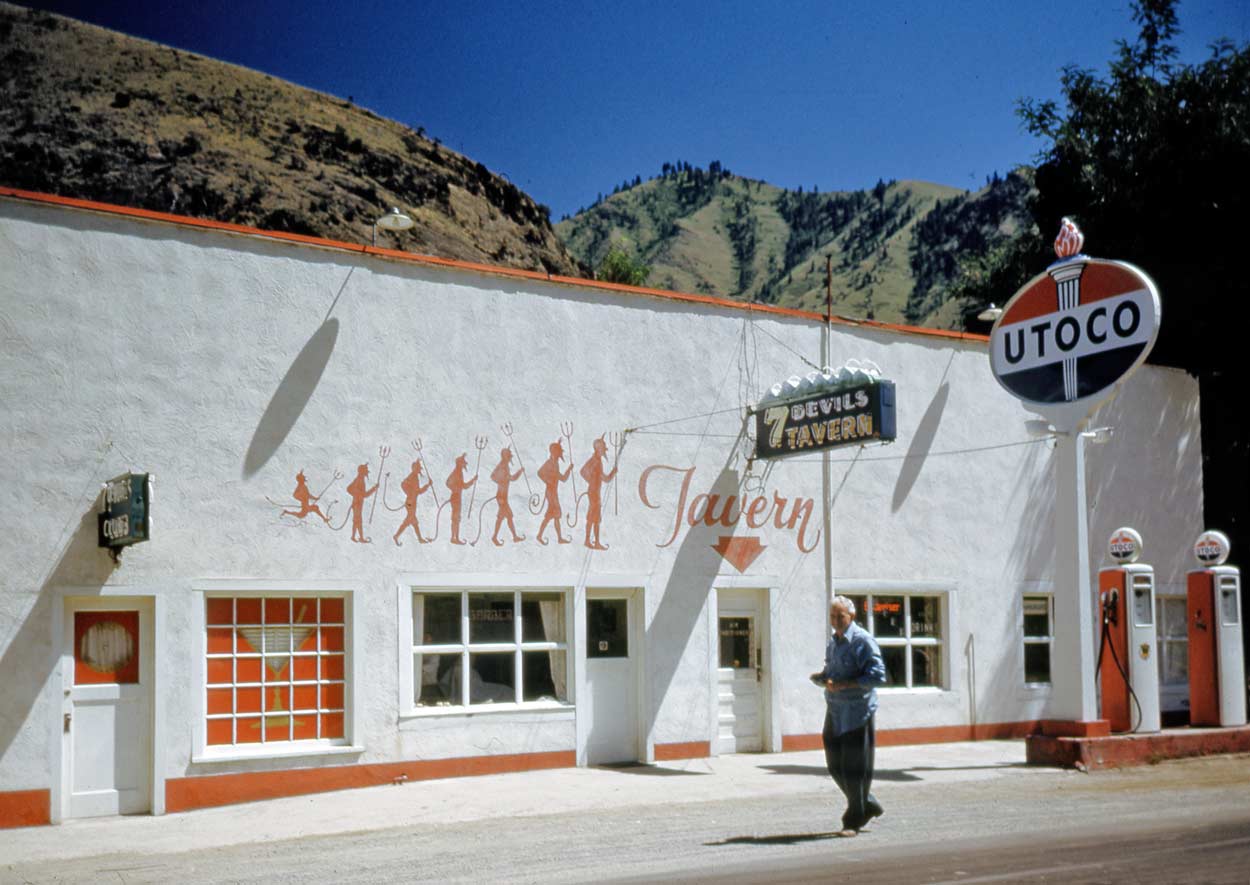
Most likely this is the 7 Devils Tavern that is in Riggins, Idaho. That would put the 7 Devils mountain range nearby - as the crow flies a mere 13 miles from the Tavern to the top of the She and He Devil peaks, which rise side-by-side nearly eight thousand feet above Hells Canyon. (Click to Enlarge)
Dry Fall and a glimpse of Dry Fall Lake too. The environs can be learned below from two of the thousands of recordings taken from the visitor’s interpretative center or near it. A brief study below should find the features of the cliff that Horace Sykes shows above. An alternative is penultimate to the bottom where Mrs. and Mr. Giezentanner pose for real photo postcard artist Ellis with some of the Dry Falls Park observation shelter showing on the left. The Giezentanners are described as the caretakers and lecturers for the park. The couple stands on a short bridge that leads to a monolith that is exposed and feels so. That fenced prospect appears in Jean and my book “Washington Then and Now” on pages 144 and 145. Below the Giezentanners is the billboard that for many years romanticized these rocks and imagined falls. The natural interpretation of the place and its historical forces has changed some since the board was raised. You may easily find contemporary interpretations using the net. There is among them a documentary – with animations and working geologists – that about six years ago was shown on PBS. I have lost the title.
A rare subject of candor among Horace Sykes collection of Kodachrome slides. Two clerics in robes, and a woman running from a small pile of stones on the grass. The terrain looks like the Woodland Park where it fall away to the east - perhaps. (Click to Enlarge)
THEN: M.L. Oakes, Seattle’s prolific “real photo postcard artist,” recorded this interior of Seattle’s First Presbyterian Church most like when it was brand new, or nearly, in 1907. The church was located at Seventh Ave. and Spring Street, and there the congregation has stayed. (Courtesy, John Cooper)NOW: The modern sanctuary, which replaced the classical one of 1907, was designed by Seattle architect William J. Bain Jr., and completed in 1970 on the same footprint.
Saturday, Dec. 14, 1907, a Seattle Times page two headline announced that members of Seattle’s First Presbyterian Church “Will Listen to First Sermon in Half Million Dollar Edifice Tomorrow Morning.” The paper claimed that the new octagonal sanctuary would “seat 2,500 comfortably,” and the congregation’s principal preacher, the tall Tennessean Mark A. Matthews, explained that “there will be no pews for rent, and persons who are not identified with the church as members will be given seats the same as the oldest members of the institution.”
He might have sold tickets. On the Monday following, the Times described the “immense audience” that swelled not only the sanctuary but the neighborhood around it. The streets were “congested for hours” and five thousand were turned away. The enthusiasm was predictable. With his sensational sermons, the charismatic and suitably confident Matthews was the biggest show in town. Since his arrival in Seattle in 1902, he had built First Presbyterian into what was routinely described as “the largest Presbyterian church in Seattle.” Sometimes this was adjusted to “in the world.”
Monday Times coverage of the dedication was printed on page three, while on the front page was another Matthews story that was so foul – it was about two quail – that it now seems fishy. Headlined “Divine Eats Forbidden Birds,” the story describes Matthews “quietly” asking a waiter at the Rathskeller Cafe if he might be served for lunch that same day some quail. Somehow the protracted event was witnessed by the city’s Game Warden. After “two nice hot birds” were served and enjoyed by the cleric, Warden Rief collected the forbidden bones for evidence and arrested the waiter with the likely name John Doe. Rief left no doubt that he thought the Divine was “equally culpable with the waiter” but, he compassionately told the Times reporter, if Mathews “acts properly in the matter I may not prosecute him.”
WEB EXTRAS
The back wall of 1st Presbyterian Church's loft
Visiting the sanctuary of First Presbyterian, my guide pointed over my shoulder at an enormous, vibrant stained glass window, located at the back of the choir loft.
The full monty
It was donated anonymously by a Boeing chairman in the early 60s.
Evidence for this, I was told, lies in the red pane to the right of Jesus’ foot, which evidently sports the faint image of a Boeing jet, but eludes me.
The red pane on the right, it's claimed, contains the image of a Boeing jetliner
Can you make it out, Paul?
No, Jean, I do not see it. Perhaps it requires an even greater enlargement that the one you provide above. If you have time and talent to blow it up real good perhaps a 707 will materialize. Will you try it?
I will indeed, Paul.
Maximum detail
Sadly, Paul, I still can’t see it. Even though my grandfather, Lewis G. Randal, was a Presbyterian minister, I have long-since lapsed. Can your old post-Lutheran eyes see it any better?……
BUT WAIT! I went to the wrong red pane – the plane is much more evident than I’d assumed. Even an agnostic could see it, Paul!
Something springs to mind here – faith in things unseen? The blind leading the blind? The mile high club?
Btw, anything to add?
Yes, Jean, our gracious friend and contributor Ron Edge is providing some links to other features that have appeared in these pages that relate – however remotely – to this week’s feature. Thanks Ron. After those I’ll gather up some other subjects that have sat in these or other pews.
DR. MARK ALLISON MATTHEWS CARICATURES
In the first years of the 20th Century three collections of caricatures of local VIPs were published, and First Presby’s principal pastor got into two of them – a local record for a “man of cloth.” Top one is from “Men Behind the Seattle Spirit, The Argus Cartoons,” published by Argus editor W.A. Chadwick in 1906. The Argus was a long-lived tabloid. I remember it still from the 1970s. The second cartoon dates from 1911 and is pulled from “The Cartoon, A Reference Book of Seattle’s Successful Men with Decorations by the Seattle Cartoonists’ Club.” Frank Calvert was the editor, and yes there are no women represented in either collection.
(DOUBLE CLICK to read the text.)
MARK MATTHEWS SPEAKS – & WRITES
Matthews arrived in Seattle in 1902, and was soon demonstrating his talents for promotions, which included frequent insertions of his sermons and other lessons in local publications. Here are two examples. The first is copied from Pacific Northwest, the tabloids Nov. 1903 issue, and the second from The Seattle Mail and Herald, from May 23, 1902.
(DOUBLE CLICK to read the text.)
HIRAM GILL (right) & MARK MATTHEWS (left)
Seattle Mayor Hi Gill (right) and Mark Matthews (left), especially during the former's prelude to impeachment, were combatants regularly exposed in the local papers. Here for some unexplain reason they share the Smith Tower's observation platform with a unnamed couple that are perhaps betrothed.
NEXT – A PARISH SAMPLER
Above: A procession led by Archbishop Tikhon of San Francisco prepares to carry the church’s relics to the altar during the Dec. 19, 1937 consecration of the then new and unfinished St. Nicolas sanctuary on Seattle’s Capitol Hill. (Courtesy Museum of History and Industry) Below: Jean Sherrard’s contemporary repeat looks east across Thirteenth Avenue near mid-block between Howell and Olive Streets.
ST. NICHOLAS RUSSIAN ORTHODOX CATHEDRAL
(First appeared in Pacific Dec. 13, 2007)
When the St. Nicholas congregation consecrated their new cathedral on December 19, 1937 it was not quite completed. The accompanying photograph of that day’s procession led by Archbishop Tikhon of San Francisco reveals the tarpaper that still wraps most of the sanctuary. Church historian Sergie Kalfov explains that the brick façade was added sometime later in 1938. The sprightly and surviving entryway was also constructed then.
The five cupolas springing from the roof symbolized Jesus Christ and the four evangelists. Kalfov notes that a church with seven cupolas might stand for the seven sacraments, and so on. Ivan Palmov, the architect, was also responsible for the St. Spiridon sanctuary in the Cascade Neighborhood.
Both congregations primarily served Russian immigrants, beginning with those that fled the 1917 revolution, when the church in Russian was persecuted and the Czar Nicholas II and his family assassinated. The Cathedral was dedicated to the memory of the Czar, but its name also refers to the fourth century “wonderworker” St. Nicholas the bishop of Myra in what is now Turkey.
What separated the members of St. Nicholas from those of St. Spiridon was, in part, the former’s continued devotion to the Russian monarchy. This past May 17th the Russian Orthodox Church Outside of Russian and the Russian Church, after nearly 90 years of separation reunited in Moscow. Kalfov explains “St. Nicholas was the first Cathedral to a host a pan Orthodox service shortly after the signing of the Act, where over 14 local Orthodox clergy served for the fist time in such a service.”
The congregation’s 75-anniversary celebration continues until May 22, another St. Nicholas Day.
*******
Above & Below: The obvious continuities between this week’s photographs are the monumental twin towers of St. James Cathedral, upper right, at 9th and Marion and far left the unadorned rear west wall and south sidewall of the Lee Hotel that faces 8th Avenue. Judging from the cars, the older scene dates from near the end of World War Two. The weathered two-story frame building at the scene’s center also marks time. It was torn down in 1950 and replaced with the parking lot seen in the “now.” (Historical photo by Werner Lenggenhager, courtesy of Seattle Public Library.)
NOSTALGIC RECORDER
In 1949 architects Naramore, Bain and Brady began construction on new offices for themselves at the northeast corner of 7th Avenue and Marion Street. Their new two-story building filled the vacant lot that shows here, in part, in the foreground of the older scene. Consequently if I had returned to the precise prospect from which Werner Lenggenhager (the historical photographer) recorded his view ca. 1947 I would have faced the interior wall of an office that was likely large enough to have once held several draughting tables. Instead I went to the alley between 7th and 8th and took the “now” scene about eight feet to the left of where the little boy stands near the bottom of the older view.
That little boy is still younger than many of us – myself included – and he helps me make a point about nostalgia. The less ancient is the historical photograph used here the more likely am I to receive responses (and corrections) from readers. Clearly for identifying photographs like the thousands that Lenggenhager recorded around Seattle there are many surviving “experts.” And more often than not they are familiar not only with his “middle-aged” subjects but also with the feelings that may hold tight to them like hosiery – Rayon hosiery.
Swiss by birth Lenggenhager arrived in Seattle in 1939, went to work for Boeing and soon started taking his pictures. He never stopped. Several books – including two in collaboration with long-time Seattle Times reporter Lucile McDonald – resulted and honors as well like the Seattle Historical Society’s Certificate of Merit in 1959 for building a photographic record of Seattle’s past. The greater part of his collection is held at the Seattle Public Library. For a few years more at least Lenggenhager will be Seattle’s principle recorder of nostalgia.
*******
Above and Below: St. Edward’s Chapel held the northwest corner of Columbia Street and Terry Avenue between 1904 and 1912. It served as the temporary sanctuary for the Catholic see during the development and construction of the St. James Cathedral. Cathedral School, which took the place of St. Edward’s, still holds the corner. Historical photo courtesy of the Archives of the Archdiocese of Seattle.
PRO-CATHEDRAL
In what may be the single surviving photograph of the two together here stand the Cathedral and the pro-Cathedral — the former towering above and behind the latter. (The contrast is made the more impressive by the Cathedral dome which collapsed in the “big snow” of 1916.)
As its name by type suggests, the “pro-Cathedral” was built as a temporary home for worship while the new St. James Cathedral was being constructed. It was designed by James Stephen, a Seattle architect better known for the many plans he created for public school during his term as the Official School Architect for Seattle Public School during the first years of the 20th Century.
Of course, the Catholic pro-Cathedral also had a proper name. A centuryago – this coming Saturday, Nov. 13, 2004 – Bishop O’Dea dedicated St. Edward’s with “full rights of dedication” not typical for a sanctuary so small and short-lived. It was named for the English King who was canonized in 1008, with the added connotation that the Bishop’s first name was Edward and the martyred monarch was his patron saint. Edward O’Dea moved his see from Vancouver to Seattle in 1903. By then Seattle was established as the center of Washington State urbanity and the more likely site for the construction and financing of a Catholic cathedral for the region.
About 200 parishioners attended the dedication of St. Edwards pro-cathedral. Only a year later (less one day) on Nov. 12, 1905 an estimated 5000 were on hand to watch their bishop bending beside a temporary altar helping with the laying of the St. James cornerstone. The Cathedral was itself was dedicated in 1907 and five years later the pro-Cathedral was razed and replaced with the Cathedral School seen here in the “now.”
*******
Above: The landmark Epiphany Episcopal Church at 3719 Denny Way in the Denny-Blaine neighborhood was built in 1911 from designs by Ellsworth Story, a member of the parish. Courtesy, Epiphany Episcopal Church. Below: In order to see around a tree and through the parish landscaping the contemporary photo was recorded from a position somewhat closer to the sanctuary.
EPIPHANY EPISCOPAL CENTENNIAL
(First appeared in Pacific, Jan. 15, 2007)
The city’s boom years of the early 20th century was accompanied by a proliferation of services and institutions into Seattle’s new neighborhoods. This included the churches and this example, the Episcopalians in the Denny-Blaine neighborhood.
Often the idea for a new church was seeded by members of an older or pioneer parish that was founded in the central business district. As Mary Henry, Epiphany Episcopal’s church archivist explains in her historylink.org essay on the parish, the idea for this congregation was promoted when “Bishop F. W. Keator took a group of Episcopalian men from St. Mark’s Episcopal (later St. Mark’s Cathedral) on a yachting trip in Lake Washington and as they passed the Madrona area, he commented on the need for a church in the neighborhood.”
The date for this waterborne inspiration was August 1907, which makes this the Centennial year for the parish. The rustic English Gothic chapel printed here took four years more to build and another sixty-seven years to become an early pick for Seattle’s official registry of landmarks in 1978.
The natural charm of this wood and brick sanctuary was created to compliment the style of the “city beautiful” Denny-Blaine Addition, which is appointed with streets that do not march through the neighborhood on a grid but rather curve through the natural topography as it descends to the shores of Lake Washington. Many of the Denny-Blaine homes are also landmarks, whether listed or not, and a few are by one of Seattle’s most cherished architects Ellsworth Story (1897-1960). Story was both a member of Epiphany Episcopal and the architect of this its first parish.
Mary Henry’s thumbnail history of the parish is, as noted, on historylink.org. and easy to find. (It is Essay 7825.) Later in this its centennial year Epiphany heritage will also get another and longer account with a book history by Barbara Spaeth that is now still a work-in-progress.
*******
Above: Unidentified members of Holy Angels softball team wait and take their turns at bat in this 1937 playground scenes at Ballard’s St. Alphonsus Parish. Perhaps a reader will recognize one or more of these players. Below: The members of the contemporary St. Alphonsus community posing in the “now” scene are named in the accompanying story. (photo courtesy St. Alphonsus School)
‘HOLY ANGELS” AT BAT
(First appeared in Pacific Oct. 11, 2007)
Thankfully centennials will often stimulate an archival rigor in whatever is celebrating its first 100 years. Gloria Kruzner, designated parent-historian for Ballard’s St. Alphonsus Parish School, collected boxes and sacks filled with school ephemera including what she describes as “wonderful and historically significant photos” while preparing her history for the school, which Dominican Sisters first opened as the Holy Angels Academy in 1907, the year Ballard was annexed into Seattle.
This snapshot of eleven members of the 1936-37 Holy Angels softball team is, we agree, a wonderful example. Kruzner has determined that this is a scene from that school term’s “Play Day” program. But who are the players and might a reader know?
1937 graduate Elizabeth Crisman Morrow holds the bat in the contemporary “repeat” photograph. She played shortstop on the 1937 team, but doubts that she is included in this bunch of out-of-uniform players, with the slim chance, she notes, that she is the batter in the historical scene as well.
Behind the players both views show the same three-story brick schoolhouse that opened in 1923 for what was by then with more than 600 students the largest Catholic school in the state. The third floor was reserved for the high school. From the late 1920s on, only girls were admitted to the Holy Angels Academy, which survived until 1972 when it was closed for want of both funds and students. The coeducational St. Alphonsus School carried on with lay instructors and since 2004 with the help of new sisters from the Society of Our Lady of the Most Holy Trinity, (SOLT).
In the “now” reenactment SOLT Sister Mirium James convincingly acts the role of catcher on the far left. Besides the batter-alum, Elizabeth Crisman Morrow, the other members of the Alphonsus community include, left to right, Kathi Abendroth, class of 1955, Maggie Kruzner (daughter of the school historian), Joseph Chamberlin, Megan Chamberlin, Joseph Bentley and Emmiline Nordale who is half hidden beyond the batter. School principal Bob Rutledge is on the right, and climbing the fence, third grader Hanna Nordale takes the part of the “Holy Angel” peering over the fence in the 1937 scene.
*******
Above: Dedicated in 1926 the Seventh Church of Christ Scientists has survived on the roof of Queen Anne Hill as one of Seattle’s finest creations. (Historic photo Courtesy Special Collections Division, U. W. Libraries. Negative no: 26935) Below: Sturdy, intact and wrapped in its own landscape the landmark is yet threatened with destruction for the building of three or four more homes in a neighborhood primarily of homes. Many of the sanctuary’s neighbors are fighting alongside the Queen Anne Historical Society to keep their unique landmark.
QUEEN ANNE LANDMARK – EXQUISITE & SECRETED
On the late morning of Tuesday, May 22nd last (2007), the Washington Trust for Historic Preservation held a press conference intended to turn the fate of one of Seattle’s most exquisite landmarks away from its planned destruction and towards something else – something “adaptive” like another church, a community center or even a home – a big home.
The Trust not only included the Seventh Church of Christ Scientist on its 2007 list of the Washington State’s “most endangered historic properties.” It then also used the front steps of this Queen Anne landmark as the place to circle the wagons for statewide preservation. It was an especially strong sign by the Trust and for its extended family of historians, architects, citizens – including sensitive neighbors of the church – of how cherished is the Seventh Church.
Seattle architect and painter Harlan Thomas (1870 – 1953) created the unique sanctuary for the then energetic congregation of Christ Scientists on Seattle’ Queen Ann Hill in 1926. It was the year he was also made head of the Architecture Department at the University of Washington, a position he held until 1940.
Although a local architectural marvel this sanctuary is not well know because of its almost secreted location. The address is 2555 8th Ave. W. — at the Avenue’s northwest corner with West Halladay Street. Except to live near it or to visit someone living near it there are few extraordinary reasons to visit this peaceful neighborhood, except to enjoy this fine melding of architectural features from the Byzantine, Mission, Spanish Colonial and other traditions.
Since the Trust created it in 1992 the “Endangered List” has not been an immoderate tool in the service of state heritage. Less than 100 sites have made this register, which is really the Trust’s emergency broadside for historic preservation.
*******
Above & Below: For a few years in the 1920s a cross revolved fitfully above the corner of the University Methodist Temple. Since the Methodists moved three blocks to their present home in 1927, the surviving 1907 sanctuary at 42nd and Brooklyn has been used for a variety of sacred and secular enterprises — sometimes together The Vineyard Christian Fellowship of Seattle purchased the building 1991. Fellowship offices in the 1902 chapel receive the rising redolence of the popular Thai restaurant in the basement.
CHURCH of the REVOLVING CROSS
(Appeared in Pacific first in the spring – sometime – of 2007)
For a few years after its remodel in the early 1920s the University Methodist Temple at the southeast corner of Brooklyn Ave. N.E. and 42nd Street was known as “The Church of the Revolving Cross.” The slender spire that had topped the 1907 sanctuary at its corner leaked and was replaced during the remodel with a motorized cross. The mechanism, however, was less than miraculous. It frequently broke down and the cross, seen here, was soon removed.
North end Methodists first met in Latona (now part of Wallingford) in the locally vigorous year of 1891. Seattle annexed new territory as far north as 85th Street in 1891; the first electric trolley crossed the then new Latona Bridge that year. Also in ‘91 the state chose the northeast shore of Lake Union at Brooklyn for a new university campus, although the school waited four years more to make the move. By the time the Methodists built their first small chapel here on 42nd beside the alley in 1902 Brooklyn was just as likely to be called the University District.
The larger corner sanctuary was added in 1907, a year made repeatedly noisy by the dynamite used to shape the nearby campus for the 1909 Alaska Yukon and Pacific Exposition. Besides replacing the spire with the cross, the 20’s remodel also expanded the sanctuary, joining it to the chapel – as seen here. Still in 1927 the Methodists left this clapboard sanctuary for a bigger brick one on 43rd Street, across 15th Avenue from the campus.
Although born in 1927 church historian David Van Zandt was too young to march with the congregation and its preacher Dr. James Crowther the three blocks to its new home. According to Van Zandt, Warren Kraft Jr. is the only surviving church member who walked in that Sunday parade. Kraft was then a two-year-old toddler whose wandering distinguished him at the dedication ceremony. The first words spoken by Crowther from his new pulpit were “Has anyone seen Warren Kraft Jr.”
*******
Above & Below: And official local landmark since 1977, in 2004 the Immaculate Conception Parish at 18th and Marion celebrated its centennial. (Historical photo courtesy Loomis Miller.)
IMMACULATE CENTENNIAL
The twin Italianate towers of the Immaculate Conception Church have distinguished Seattle’s skyline from their pedestal on Seattle’s Second Hill (AKA Renton Hill) for nearly 100 years. The ground was broken for Seattle’s oldest surviving Roman Catholic sanctuary (used continuously for services) in April 1904, and the first ceremonial opportunity that followed was the traditional laying of the corner stone.
The May 15th procession up the hill from the interim parish (in what has since been renamed the surviving Gerrard Building on the campus of Seattle University) to the foundation work for the new parish at18th Avenue and Marion Street was given historical perspective on the spot by diocese Bishop Edward O’Dea. “It is a pleasure to look back into the history of Seattle . . . Twenty years ago one small church sufficed for the needs or our limited membership and now we have four churches and fourteen priests.”
Remarkably, in less than seven months Seattle’s Catholics were ready to march up the hill again for the dedication on the 4th of December. The eight-block procession between the two parishes was led by a platoon of local police and Wagner’s Band, the traditional accompanists for Seattle celebrations. Behind the band marched the Hibernian Knights, the Knights of Columbus, and the Catholic Foresters of Seattle, Tacoma and Ballard — Ballard was then still its own town. Bishop O’Dea and ranked clergy were fit in carriages to elegantly cap but not conclude the procession. “Following them and lining the route” to quote now from an early history of the parish, “was a motley but magnificent parade of priests, sisters and local gentry all in a jovial spirit.”
For the dedicatory High Mass Father Prefontaine, Seattle’s pioneer priest who arrived here in 1867, assisted Bishop O’Dea. The day’s celebrants filled what the local press advised was “the city’s largest seating auditorium.” (The 950 seat record, however, was temporary. It was surpassed by more than one of the large theatres that would soon be built downtown.)
A Sykes sunset over the Olympic Mountains photographed from the family home on Magnolia's Bertona Lane, and a fitting - for now - prospect from which to share our intention to take these Daily Sykes to 500 and then to stop. (Click to Enlarge)
The only identification with confidence here is “Lust for Life,” the 1934 novel by Irving Stone pulled from the brilliance of the letters that Vincent van Gogh wrote to his brother Theo. It is the orange book on the bottom of the pile resting on the table in the lower slide. I suspect that the persons remembered here are both relatives of Horace Sykes – ones living in Oregon. I surely do not know that and there is little chance that these two delicate figures will ever be identified. However, portraits like these are very rare in the Sykes collection, and the most of them – the ones that are identified – are of members of his family and a few of their friends, most often at Christmas. (Click to Enlarge)
Cosmetics on shaped rock, suggestive like some clouds more than tea leaves, like oil stains in the street and pick up sticks: pictographs. (Click to Enlarge)
For Horace Sykes a rare city subject - the brand new Seattle Post-Intelligencer building got his attention. The P-I with its globe entered service for Seattle's oldest daily pulp in 1948 and remained here at 6th and Wall until 1988 when the Hearst vehicle moved nearer the shores of Elliott Bay and took its ball with it. (Here we will whisper "iconic.") As then suspected, it was the P-I's second big step to dissolution. The first was its "Joint Operating Agreement" with The Seattle Times. The JOL was launched in 1983 before the move. At the time persons working both at The Times and The P-I foresaw the failure of the P-I and wore special t-shirts lamenting their premonitions. And yet - to indulge a strict mixing of metaphors - it took a quarter-century for the folding to unfold. (Click to Enlarge)
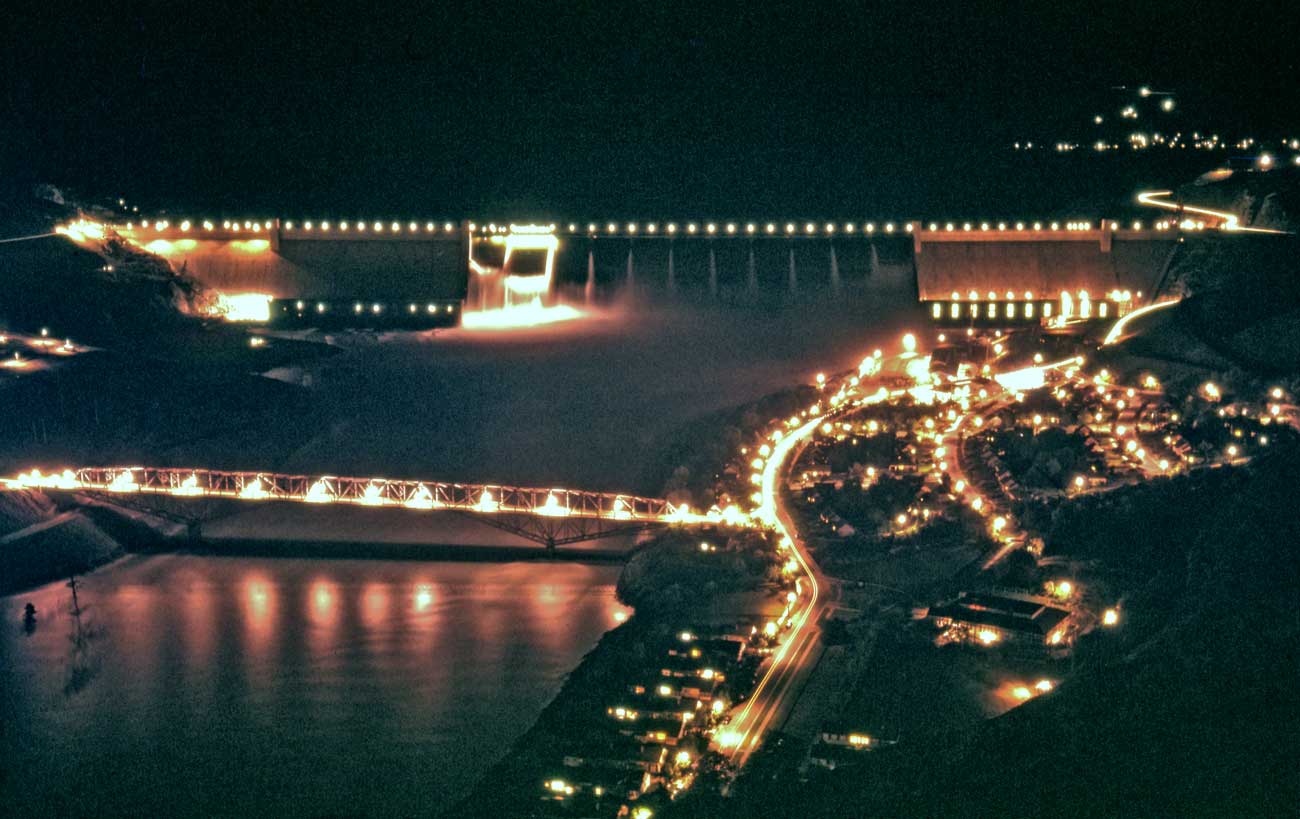
When the Theo Erdman and Ida Girena Christiansen-Dorpat family moved from Grand Forks, North Dakota to Spokane, Washington in 1946, we all understood that we would soon be living with the power of the Grand Coulee Dam's generators and of its reputation as one of the modern wonders of the world. It was on the short list of marvels, and then still the largest construction in the world, when measured by how long a two-lane highway one could make from the cement needed to make the dam. By now its superlatives have been surpassed and I do not remember the miles of the imagined highway. The spectacle of the dam's cascades were ordinarily dampened by its east-west position. The spillway looks roughly north and so is ordinarily back-lighted. (Click to Enlarge)
THEN: Throughout much of the first half of the 20th Century, the Pike Street Dock, here on the right, was home to the fishing fleet. If that is snow marking the roof of the Schwabacher Wharf, on the left, the fleet is here on a winter break. (Courtesy Lawton Gowey)NOW: For the “now” Jean Sherrard includes sculptor James Fitzgerald’s fountain at Waterfront Park, which he visited earlier this year for a repeat of a photograph taken during its construction and printed in Pacific last Feb. 20.
The Pike Street Dock (or pier or wharf), here on the right, welcomed Pacific Net and Twine as its primary renter in 1916, and so began the pier’s preoccupation with fisherman and their needs. The wharf in its enduring landmark size was built in 1903-4. The new dock’s principal tenants then were diverse and included, fish merchants, grain dealers and shipping companies.
With Pacific Net and Twine in residence, the dock became the central waterfront headquarters for the fishing fleet which often – as here – packed the slip between itself and the Schwabacher Pier, to the south and here on the left. Many of the fishermen’s voluntary groups like the Fishing Vessel Owners Association and the Purse Seiners’ Association took residence on the Pike Dock and a variety of sail-makers, fish brokers, and other specialists in supplies for the fisheries had offices there as well.
The Schwabacher wharf was the older pier. It was in this slip that the gold ship the S.S.Portland made its historic call in July 1897 with a “ton of gold” and thereby launched the gold rush north to the Yukon and Alaska. An older and smaller version of the Schwabacher pier just escaped the city’s “great fire” of 1889, and for weeks following it most of the materials for rebuilding the business district entered the city across its then mostly uncovered deck.
Recent history of this slip begins, we will say, with the destruction of what remained of the old Schwabacher Dock in 1967. The city purchased – without condemnation – the Pike Pier in 1973 for a bargain of $585,000. Two years earlier Mayor Wes Uhlman switched his advocacy for building a Forward Thrust (1968) funded Aquarium in Ballard to the Pike Street Pier. Construction on Waterfront Park (seen, in part, in the “now”) began in the fall of 1973. By the late 1970s both the park’s promenades and the aquarium’s tanks served a, by then, mostly playful central waterfront.
WEB EXTRAS
Anything to add, Paul?
Yes Jean there are a few items clinging to the sides of the Pike Pier we will put up. Much else has by now appeared in other stories – or their extras – so I’ll lean on Ron Edge to put them up next as hot-links (do you call them?). After that I’ll do some sampling. Much of what follows and more can be found in the Illustrated Waterfront History included in the “books” part of this blog.
Ron has found three primary links, and each features a string of stories and illustrations. Click on the picture (three of them) directly below and you will be carried to them.
But one of many recordings photographer Frank Shaw made on the waterfront while he was regularly visiting it in the 1970s and '80s. I admit to being mistaken about his subject. Until recently I though the reader was sitting directly on Fitzgerald's fountain.Ninety-nine feet long and propeller-driven the Dode's packet took it to Hood Canal on a day-long run as far as Hoodsport, beginning its return to Pier 3 (now Pier 54) the next morning. Here the Dode rests a the south side of the Pike Street Pier.A steamer with no apparent name rests along the north side of the Pike Pier. Like the Dode above it, this view dates from ca. 1912.
Next we’ll lay in three photographs taken of, to me, an inscrutable life-saving demonstration on a low platform in the slip north of the Pike Pier. These look innocent enough and harmless too, and may most likely be tried at home without injury. The most heroic part in this is the performers willingness to appear in swim wear on the central waterfront when all others are bundled against the cold – or at least the rain. Note the stairway to the Pike Street trestle that after 1912 crossed high above both Railroad Avenue (Alaskan Way) and Western Ave and reached the Pike Place Public Market.
The above detail from a 1911 map of the waterfront shows both the Schwabacher and Pike Street piers, and also to the proposed site for a power boat dock, which was never built. There is as yet no 1912 Pike Street trestle spanning Railroad Avenue (Alaskan Way) here.
The Bogue Plan map (1912) above includes the then new Pike Street trestle as well as two novelties that were never built. The proposed line for the Union Pacific Tunnel meant, like the 1905 Great Northern Tunnel nearby, to move trains under the city between the new Union Pacific Depot on Jackson Street and the waterfront below Belltown. The map also shows an incline on Virginia Street that would have moved teams and their wagons up the steep hill from the waterfront to First Avenue.
Another ca. 1912 look at the south side of the Pike Pier with another vessel - this one sturdy enough to steam the Pacific - the Tallac beside it.
First a detail and the below it a “now-then” of the Pike Street Coal Wharf, which was the first of many docks built at the foot of Pike Street. The photograph dates from the 1870s and was taken from the back porch or window of the Peterson & Bros photography studio on Front Street (First Avenue) at the foot of Cherry Street. The contemporary scene (from ca. 1990) was recorded from the parking garage that extends a block south on the west side of First from Columbia. The “now” prospect is much higher than Peterson’s, whose view was not obstructed my structures on Post Alley.
This detail "pulled" from the Peterson & Bros view, directly below, shows both the east end of the Pike Coal Wharf and the incline, on the right, which climbs the bluff to Front Street (First Ave.) with the narrow-gauged rr-track that ran on Pike and the future Westlake to the south end of Lake Union, where the little engine-that-could, named the Ant, moved the coal-filled cars from barges to the tracks and this last leg of the complicated run that began in the coal fields on the east side of Lake Washington. This system continued until 1878 when the new coal railroad, The Seattle and Walla Walla, reached Coal Creek, Newcastle and Renton directly around the south end of Lake Washington from the new coal wharf and bunkers at the waterfront foot of King Street.
The ruins of the abandoned Pike Street Coal Pier seen from Yesler's Wharf ca. 1881. The modest summits - south and north - of Denny Hill are also apparent. Queen Anne Hill is on the horizon. (Courtesy U.W. Libraries)Detail from the 1891 Birdseye of Seattle shows the waterfront north of Union Street with Denny Hill above it, including the Denny Hotel, upper-right. Splotchy but revealing, this scene looks north along the waterfront from the King Street Coal Wharf, ca. 1902 or 3. The dock at Pike Street is a small one with a stepping waterside facade, seemingly third from the right. Actually four from the right because the odd-angled Schwabacher Dock is in there too just to the right of the Pike Pier. The long white-sided pier center-left is the Gaffney Dock near the foot of Virginia Street. Beyond it is the Coast Company's longitudinal dock, which paralleled Railroad Avenue because Elliott Bay was deeper there and building a finger pier directly into the bay prohibitive. Right to left are the Wellington Coal Dock, the Schwabacher Dock, the Pike Street Pier, the two smaller "fish docks" and part of the Gaffney Dock. Also showing it the Pike Street Trestle which "carried" pedestrians safely from the water side of Railroad Avenue back and forth to the public market.Mayor/Dentist Brown's mid-1920s proposal to built a grand pier and on shore an attached commercial structure - and early threat to Pike Street Public Market - failed.Another of the W.P.A. Tax-Inventory photos from ca. 1937. Here the Pike Street trestle has not been rebuilt to cross Railroad Avenue after it was dismantled for the 1934-36 construction of the seawall between Madison and Bay streets.A circa 1934 aerial of the waterfront that shows Railroad Avenue still with its "centerline" of a dangerous drop-off to the beach. This was filled in and covered with the 1934-36 seawall construction. The Pike Street Trestle is here still intact.The Pike Street Pier from . . . when? Another threat to the Pike Place Public Market - the urban renewal proposals of the early-mid 1960s. The Market neighborhood in 1967-8. The Pike Street Pier is lower-right. Finally - this week - a quiz or contest, and still in the neighborhood. The subject dates from ca.1978, and if you were not there this will be tough. Who is the man behind the counter, and what public market restaurant is this? Hints - note the decorations. The man behind the counter - dish washing - opened his namesake gallery in the mid-60s. It was shot-lived but very influential on the local arts scene (With such a helpful hint it feels like I have almost given up the answer.) Our puzzling subject left it to spend a year reflecting on the shadows cast by cloudless skies and moving across the walls of his rented studio in Kabul Afghanistan. Our subject was it seemed, at least, beloved by all who knew him. It was an attack by strangers later on the Seattle Center grounds that weakened him so that it lead to his death.
Among the hundreds of Horace Sykes own slides are a few by others, most often members of one or another of the photography clubs he belonged to. Club members would sometimes travel together on club excursions. For instance Ira S. Doyle and Horace were part of a group that visited - if my memory serves me well enough - Hells Canyon together. We have a slide showing Horace at the Canyon, which is signed by Ira. And here is another Ira slide that is folded into the Sykes collection. I include it for contrast. While Horace is always concerned about finding another expression of sublime nature and values the qualities we count as picturesque, this view of nature - the 1000 springs - is fronted by some sort of utility structure - a station serving something - that is quite the opposite of picturesque. And yet we do get these waterfalls, which by the banal context created with this snapshot, come forward as freaks of nature. We will wonder if Ira had a handle on the irony. Whatever, he sent the slide to Horace - perhaps as a request. It may be a subject that Horace Sykes wanted for some unexplained reason but which he was not able, or would not dare to impetuously interrupt his photographic dream, to take himself. (Click to Enlarge)
Since 1984, on the third week-end of September, during the Open Days we can visit the National and Private Heritage : monuments, churches, theaters, castles, and also stop in garage sale in the street…
Depuis 1984 , au troisième week-end de Septembre, durant les Journées Portes Ouvertes on peut visiter le Patrimoine National et Privé : monuments, églises, théâtres, châteaux, et aussi s’arrêter dans les vide-greniers dans les rues…
The Mobile Art Pavilion
Le Pavillon du Mobile Art
One day in April, the Mobile Art Pavilion capsule has landed on the front of the Institut du Monde Arabe in the 5th arrondissement, its architecture is unique and very contemporary, it is signed by the Anglo-Iraqi architect Zaha Hadid. Inside, we can discover her projects, achievements and models.
Un jour d’avril, la capsule du pavillon Mobile Art a atterri sur le parvis de l’Institut du Monde arabe dans le 5 ème arrondissement, son architecture est singulière et très contemporaine, elle est signée par l’architecte anglo-irakienne Zaha Hadid. A l’intérieur, on peut découvrir ses projets, ses réalisations et leur maquettes.
Palais de Salm, Paris 7th
One of the Sphinx of the Hotel de Salm in front of the Palace of the Legion of Honor, which served as a model for the construction of the Palace of the Legion of Honor in San Francisco.
Une des Sphinges de l’Hôtel de Salm abritant le Palais de la Légion d’Honneur qui servi de modèle à la construction du palais de la Légion d’Honneur à San-Francisco.
Bourse du Commerce, Paris 1st
Here is America, painted in 1886, it is one part of the fresco in the Exchange Trade dome, 1400M2 wide, symbolizing the international trade. In the sky Christopher Columbus ‘s caravel fleet, this mural evokes the dynamism of civilization on the march meeting indigenous people.
Ici l’Amérique , peinte en 1886, une des parties de la fresque de 1400M2 de la coupole de la Bourse du Commerce qui symbolise le commerce international. Dans le ciel flotte la caravelle de Christophe Colomb, cette fresque évoque le dynamisme de la civilisation en marche à la rencontre des populations indigènes.
Garage sale rue de la Banque Paris 2nd
Vide-grenier rue de la Banque Paris 2nd
Garage sale Place des Petits Pères, Paris 2nd
The Oratoire 145, rue Saint Honoré Paris 1st
On that special week-end you can meet the organist of the Oratoire and visit all the building of the church.
Durant ce week-end exceptionnel, on peut rencontrer l’organiste de l’Oratoire, et visiter l’église de fond en comble
Or you can make photos at the door of Saint Germain L’Auxerrois Paris 1st
Ou faire des photos à l’entrée de saint Germain-l’Auxerrois
Horace Sykes visited this deep prospect in Hells Canyon by car. At the time, ca. 1949, there were no dams in the canyon. Three were eventually built, and the last of these, the Hells Canyon Dam, was built here. Horace's prospect is from near the present spillway behind which the river is about 150 higher now than it was then. Horace, again, did not caption his slide, but I found the location with another flight via Google Earth. The mountain at the scene's center - with the green top - reaches about 5,750 feet above sea level. The dam is much lower at 1600 elevation. The site is about 20 miles down stream from the Oxbow dam where Oregon State highway 86 reaches the river and crosses it with a bridge. Horace reached his prospect on the now paved road that continues north along the Idaho side of the canyon and includes some of the more exposed driving in the northwest. It is not recommended for someone timorous of heights. The Hells Canyon Dam began producing power in 1967. It was, of course, to the considerable injury of the fish that once made this one of the great spawning paths. It is about 8 miles below the Seven Devil mountains on the Idaho side (to the right) and about 10 miles south of Hat Point on the Oregon side, which Horace also visited and photographed. Hat Point is more that 6900 feet elevation and the Devils reach over 9000 feet. These elevations make this the deepest canyon in North America. Sometime after Horace's visit the Hells Canyon Creek Visitors Center was opened just downstream from the dam and around the first corner or bend in the road that shows here on the Oregon or left side. (Click to Enlarge)The Google Earth image above-left is recorded (by some computer's calculation) from directly behind (south) the Hells Canyon Dam's spillway. If I have calculated this correctly Horace Sykes slide of the same general scene was taken from a location somewhat south of the computer-position and so now about 150 feet underwater. (click to enlarge)
Among Horace Sykes slides are one hundred or so copies of paintings. These two are identified with names attached to their frames. The names, however, are either wrong – actually misspelled – or no longer in use. First what the unknown painter has named Crossley Lake is Cosley Lake.
Joe Cosley was a hunter-trapper who frequented this area and later worked as a park ranger once his hunting ground had been nationalized as a protected park. Cosley Lake is about 10 miles north of what was called Lake McDermott, the name used by the painter on his frame, before it was changed to Swiftcurrent Lake. It took awhile to sort this out. There are quite a few postcards of McDermott Lake on line but none that I found indicated where in the park it was. One of the cards described it as near Mt. Wilbur and Mt. Grinnell, so I went looking for them.
Soon I was confident that the little lake named Swiftcurrent, with the largest hotel in the park (Many Glaciers Hotel – and many rooms too), was once named McDermott after a lumberman in the late 1890s. And I also found the waterfalls at the western end of the lake. The name was changed from McDermott to Swiftcurrent in 1928, perhaps because the creek was so named and also the popular mountain pass and trail that cross the divide and lead one to Lake McDonald on the west side of the park. Swiftcurrent lake is only about a quarter mile wide when measured east-west directly across from the hotel. The painting also looks west and a little south. One half mile behind the painter is the western end of the six-mile long finger lake, Lake Sherburne. An earth dam was built at its western end and the lake is now a reservoir for ultimately irrigating the farm lands of Montana and Canada to the east of the park and to the sides of the Milk River.
The Teepee in this charming but primitive painting has a cartoon size. The mountain upper right is Cleveland, the highest in the park. The artist has signed his painting on the bottom-right corner, but I cannot figure it, and Horace Sykes' slide is not in the sharpest focus. (click to enlarge)The same artist on the wing of a crow could have made is south and a little east form Crosley Lake with his brushes and the rest to Swiftcurrent/McDermott Lake in less than ten miles. But along the way there would be a few high peaks to cross or fly around. The artist's actual trip may have been four times as long as the bird's. Mt.Wilbur is on the right, Mt. Gould on the left and Grinnell Point dominates the center. It was George Bird Grinnell who is credited with being the main mover behind the making of Glacier National Park. In 1887 Grinnell was the first non-native to walk on the glacier that was named for him then by Lt. J. H. Beacon who accompanied him. By now much of Grinnell Glacier is gone and the same is true with the rest of the park's namesake ice. Grabbing a montage of related images, which include on the far right the photo of Wilbur Mountain and "McDermott Lake" that helped me identify it as Swiftcurrent Lake.The top highly saturated and retouched look at Swiftcurrent Lake and the now familiar mountains beyond it includes the waterfall depicted in the painting.
THEN: Looking south across Spring Street and into the pit along Third Avenue for its 1906-7 regrade. (Courtesy Lawton Gowey)NOW: Jean Sherrard used his ten-foot extension pole again to reach an altitude more in line with the old grade of Third Avenue before its reduction.
The steam shovel at the intersection of Third Avenue and Spring Street works on making one of the deepest cuts during the Third Avenue Regrade, which extended the eight blocks between Cherry and Pike Streets. Like Biblical signs, the shovel spews the good and the bad – steam and smoke – from its roof. An empty wagon waits for the shovel to pivot with its first contribution.
Behind the rising effluvium are a row first of storefronts holding a laundry, a plumber and an undertaker. Beyond them is the popular Third Avenue Theatre with the open tower at the northeast corner of Third and Madison. Its 16-year run is about to end a victim of grade changes on Third. Across Madison are two more towers, both churches. First, the First Presbyterians at the southeast corner with Madison and one block south the second sanctuary for the first congregation organized in Seattle, the Methodist Episcopal Church at Marion Street. Both parishes moved to new sites because of the regrade.
Upper left is the west façade of the Lincoln Hotel at the northwest corner of Madison Street and 4th Avenue. The regrading on both Fourth Avenue and here on Third were temporarily stopped in the summer of 1906 by an injunction brought by the hotel charging “damaged property” – indeed. More than damaged the hotel was destroyed by fire in 1920. The regrading of both Third and Fourth Avenues was necessary, it was explained, if the retail district was to spread east. First and Second were both filled and the steep climb to Third and Fourth needed to be eased.
Frank Carpenter, a visiting journalist featured in the Post-Intelligencer under the head “Ourselves As Others See Us,” described 1906 Seattle as a “city of ups and downs. It has more hills than Rome . . . The climate here gives the women cheeks like roses . . . I am told that men measure more around the calf and chest than anywhere outside the Swiss Mountains. The perpetual climbing develops the muscles and at the same time fills the lungs with the pure ozone from the Pacific.”
WEB EXTRAS
Anything to add, Paul?
Yes Jean and we will keep to Third Avenue, or not stray too far from it. First with the help of Ron Edge of our sometimes feature, “Edge Clippings” and our maps too, here are a few links to past blog stories that include within them at least some Third Avenue subjects.
May 8, 2011 - Looking North on 3rd Ave.
Jan. 29, 2011 - Lake Union from Smith Tower
Aug. 6, 2011 - Denny Knoll's Death Knell
July 30, 2011 - 3rd and Pine 1917
Jan. 15, 2011 - Central District from Harborview
May 15, 2010 - Lewis Whittelsey’s Survey
May 1, 2011 - The Public Safety Building
Continuing on, here follows a sampler of Third Avenue subjects.
Looking east and a little south from 2nd Avenue to 3rd with the Madison Street regrade on the right and the 3rd Ave. Theatre at the northeast corner of 3rd and Madison on the left. Top-left is a peek at the Lincoln Hotel, which we will return to at the end of this string.North on Third Ave. from the Madison Street trestle for the cable line and during the 3rd Ave. Regrade. The spire of Plymouth Congregational Church shows cemter at University Street. To the left of it is what remains of the ruined Washington Hotel atop Denny Hill. (Courtesy Lawton Gowey)
MADISON TRESTLE OVER 3rd Ave. REGRADE
(First appeared in Pacific May 16, 1999)
The intended subject here is the apparatus of the Madison Street cable line, exposed during the 1906-07 regrade of Third Avenue. We can see the cable beneath the center slots for both tracks, and the supporting architecture is extraordinary – stacked 6-by-6-inch timbers hold the cable car on the westbound track while Third Avenue is lowered beneath it.
It seems that car No. 37 of the Lake Washington and Madison Street cable line has paused at Third Avenue (let loose of the moving cable) to pose for the photographer. The conductor is posing as well, a coin dispenser wrapped about his waist. The man on the tracks just left of the westbound cable car flaunts the commands of the banner strung over Madison Street, far right, one block east at Fourth Avenue. It reads “ALL PERSONS ARE· FORBIDDEN To Walk On Street Car Tracks.”
The original Asahel Curtis print is dated Jan. 25, 1907. On this Friday, The Seattle Times carried a photograph of the Third Avenue Theatre, showing here in the full sun•
light behind the cable car. When the regrade on Third Avenue reached a level where theatergoers could no longer reach the front door, the theater went dark. The caption to The Times’ photo reveals that the theater’s managers, Russell and Drew, are about to tear it down.
Russell and Drew use their doomed theater’s billboard to advertise the play “Yon Yonson,” running the previous week nearby at their Seattle Theatre. George Thompson played the title role of a young immigrant Swede who managed to negotiate through every American “vicissitude . . . owing to his sterling honesty and bland-like innocence, which wins him many friends,” said the Post-Intelligencer’s review. The advertisement claims that Thompson is simply “the greatest of all Swedish comedians. A huge scream. A laugh in every line, and the lines are close together.”
=-=-=-=-=-=
The Third Ave. Theatre at the northeast corner of Madison St. and Third Avenue before the regrades.
THE THIRD AVENUE THEATRE
(First appeared in Pacific April 16, 1989)
The Native Americans posing in front of the Third Avenue Theater are Yakimas who performed on the theater’s stage Sunday, June 6, 1897. The montage of posters on the Madison Street side of the theater give the day and month, and Eugene Elliott’s “A History of Variety Vaudeville in Seattle” gives the year in its appendix of performances.
At the time the Third Avenue was run by impresarios Russel and Drew, who held true to the successful family formula inaugurated by showman John Cordray. Opening the theater in 1890 under his own name, Cordray offered Seattle its first “polite vaudeville,” where liquor, catcalls and the stamping of feet were forbidden.
The Third Avenue had two stages, one for variety shows – like juggling and dancing – and the other for plays usually performed by the theater’s own stock company. Occasionally, special acts such as the Yakimas (aka the Yakamas) would appear.
By the 1890s the memory of their resistance to the miners’ and settlers’ efforts to take their lands 40 years before had developed into a generally noble impression of the Yakimas’ courage, skills and loyalties. On their large reservation the Yakimas were able to resist their enculturation into the revolutionary changes occurring in the surrounding society. Exhibits of the tribe’s native skills appealed to non-native nostalgia and yearnings for a lost innocence.
The Third Avenue Theater survived till the Third Avenue Regrade, when its last stock company moved up the avenue in 1906 to Pine Street and the Methodist Protestant church remodeled for melodrama.
The Third Avenue Theatre still on Third but moved here to the old Methodist Church at the southeast corner of Third and Pine. The Methodists had moved to Capitol Hill. Beyond third is the roughage of the Denny Regrade still a work-in-progess here, although well along in reducing the hill to its current grades.
=-=-=-=-=-=-=-=-=-
THIRD AVENUE REGRADE Looking North Through MARION STREET
(First appeared in Pacific Dec. 16, 1984.)
In 1906, The Post-Intelligencer described Seattle of being regrade-mad. “The early pioneer was content to trudge up and down steep grades all day, unquestioningly, as though such things were destined to be permanent. Now any hill with a valley below it suggests a regrade.”
The historical scene looks up the Third Avenue regrade. The photograph was shot on a sunny winter day in 1907. The P-I went on to explain, “Two of the most important regrades ever undertaken in Seattle are those on Third and Fourth avenues. They are the outgrowth of the wonderful expansion of retail business. With First and Second avenues congested, the retail trade must spread . . . The cut on Third runs all the way from nothing at Cherry Street to 17 feet at Madison.”
The deepest cut was below the Madison Street cable car that passed over Third Avenue on a temporary wooden trestle shown here near the subject’s center. The pedestrian trestle in the foreground followed the line of Marion Street. The Third Avenue Theater did not survive even the Third Avenue regrade. In the historical scene, the theater is above the cable car, at the northeast comer of Third and Madison, the present site (in 1984) of the Seattle First National Bank tower. The theatre has lost the top of its corner tower. The home of Seattle’s first stock theatrical company, it ran its fare of farce and melodrama for 16 years until the regraded 17-foot cliff at its front door made it impossible for theatergoers to get into the show.
Up Third at University Street” the digging didn’t go so deep and Plymouth Congregational Church kept its services going beneath the tall brick tower seen above the cable car.
********
We peek up Marion to its intersection with 3rd Avenue and thru the Vancouver B.C. arch, the Canadian supporter-boosters raised as their part of the 1909 Alaska Yukon and Pacific celebration here in Seattle.
VANCOUVER ARCH – AYP 1909
(First appeared in Pacific Jan. 15, 1989)
The city of Vancouver’s classical arch at Third Avenue and Marion Street holds its dignified place in the history of ceremonial monuments on Seattle streets. The Canadian monument was erected for the Alaska Yukon and Pacific Exposition (AYP), which remade the University of Washington campus into a gleaming white city, and added a few downtown attractions, such as this, as well.
At the Aug. 21, 1909, dedication, Vancouver Mayor Douglas explained to Seattle: “The erection of this arch was not actuated merely by a mercenary motive, or a desire to advertise. It is a token of esteem to Seattle and the Exposition . . . It typifies the friendly feeling existing between two great cities of the North Pacific.”
Mayor Douglas concluded by making an ironic lesson of the 500 white-helmeted British Commonwealth troops in his entourage. “Evidences of this peaceful feeling have been made all the more pronounced today by the landing of British troops under arms on American soil.” Seattle Mayor John F. Miller accepted the arch on behalf of Seattle.
For all its monumental girth, this arch was razed with the AYP’s closing at summer’s end. Soon the demands of the motorcar would make, with few exceptions, such ceremonial obstructions a charm of the past.
*********
LINCOLN HOTEL ROOF GARDEN
(First appeared in Pacific June 30, 1985)
When it was built in 1899, the Lincoln was Seattle’s most elegant and prominent hotel. Reaching nine stories high, it was taller than the buildings down around Pioneer Square and taller than those along the city’s growing commercial strip – Second Avenue. The hotel’s elevated setting at Fourth Avenue and Madison Street also made it seem monumental. The Lincoln, made of white brick and stone, glowed when the sun set.
The stately poplars on Madison Street once continued up the street past Boren Ave.
The Lincoln had a garden on its roof. The vine-snarled trellis of the was slightly visible from the street. The garden was mostly enjoyed by registered guests, although painted post cards of the garden were for sale in the lobby.
The above view looks southeast toward the top-heavy cupola of the county’s courthouse (upper right) on First Hill. There on the courthouse roof is the clue that helps date this photo. Barely showing through the haze is a giant welcome sign, set there in 1908 for the Puget Sound visit of Teddy Roosevelt’s Great White Atlantic fleet. The other closer and more classical dome sets atop the United Methodist Church at Sixth Avenue and Marion Street – and still does. In1908, the sanctuary was still under construction; the congregation worshiped in the basement. Now the landmark gives some architectural soul to a neighborhood of skyscrapers.
A retouched pan of the Lincoln Hotel and its neighbors, the Carnegie Library on the right and the YMCA on the left. The view looks northwest through the intersection of 4th Avenue and Madison Street.
When it opened in 1900, the Lincoln was Seattle’s first apartment-hotel. But it didn’t stay that way. The position that gave it prominence on the city’s skyline also put it too far away from the city’s commercial district. The Lincoln was soon converted into a straight commercial hotel, but faltered in this role as well. The business passed through several managers and owners. The last was the Madison Realty Company, which bought the hotel on Nov. 1, 1919 and proceeded to sink $75,000 into remodeling the rooms as well as the shops and restaurant on the main floor.
On the morning of April 7, 1920, in the first hour after midnight, Mrs. C.A. Gross, proprietor of the cigar store, and Mrs. T., Waters, owner of the beauty shop, met for a moment in the hotel lobby before leaving for home. Their chat was quickly concluded when a man rushed by crying, “Fire!” Within the hour, the Lincoln – brick on the outside but wooden within – was a furnace. The hotel was lost including three of its guests and one firefighter. The water dumped on the fire created a river down Madison Street and Third Avenue. It was the last watering for the Lincoln’s roof garden.
LINCOLN HOTEL FIRE
(First appeared in Pacific June 8, 1997.)
First named the Knickerbocker because of its association with Dr. Rufus Lincoln, the New Yorker who financed it, the landmark hotel at Fourth and Madison opened in 1900 with elegant exterior walls of gleaming white brick trimmed with stone. Later the family name seemed more fitting for what its managers claimed was the first apartment hotel north of San Francisco.
Although the Lincoln Hotel was designed with two-and-three-room suites to attract a patronage with the means to stay a while, they did not, partly because of the struggle required to reach it. The two blocks that separated the Lincoln from the developing commercial strip, Second Avenue, were – for the cable cars that climbed them – among the steepest in the nation. The Lincoln switched to standard hotel service.
Looking east up Madison Street. The Elks Club is on the left and the YMCA on the right.
As guests discovered on the early morning of April 7, 1920, the hotel’s elegance was skin deep. It was “little more than a lumber yard with four brick walls around it ” as the fire chief later described it to a Times reporter. By the night clerk’s estimate it took only five minutes from the moment he heard an “explosive thud” in the basement for the smoke to climb the elevator shaft and make impossible his efforts to warn by telephone the nearly 300 mostly sleeping guests.
Looking east across Third Ave. to the ruined west facade of the hotel with the YMCA on the far right, the Elks Club on the far left, and the Carnegie Library across 4th Ave. showing between the hotel and the club.
The next day’s papers were filled with heroic tales of taxicab drivers, hotel patrons and firemen saving all but three guests and one fireman. Blanch Crowe, a stenographer for the popular Chauncey Wright restaurant, died in her room. A candy maker and his daughter jumped to their deaths from the top floor of the west wall. Others wanted to jump but were persuaded to wait for the firemen’s ladders. Sgt. P.F. Looker, the first policeman to approach the burning hotel, saw “a head in every window and a din of screams and cries for help. I hurried around the building shouting not to jump.”
The Lincoln looks deceptively whole - except for the light in the windows - from this prospect looking across 4th Avenue. The Elks are now on the right and the Young Christians on the left.
More likely to name a flower on a slide than a landscape, Horace Sykes captions this orchid "Cypripedium." And he adds, "Gratrixianum Aureum." The three terms are all used in orchid language, which is easily as articulated and earnestly fussy as that of spirits. Consulting wikipedia, we learn that "Cypripedium is a genus of 47 species of lady's-slipper orchids native to temperate and colder regions of the Northern Hemisphere. Some grow in tundra in Alaska and Siberia, which is an unusually cold habitat for orchids . . . Common names include slipper orchid, lady's slipper, mocassin flower, camel's foot, squirrel foot, steeple cap, Venus shoes and whippoorwill shoe." Of most relevance here is "Venus." On the webpage orchids.co.in we learn that the paphiopedilum gratrixianum is an undemanding Venus's shoe of average beauty, attractive for cultivators for its fairly large flowers and very low cultivation requirement." But hold on. With this gratrixianum we are no in Alaska but rather "the species come from Laos, northern Vietnam and Thailand." This example, whatever its name, sits potted on a sideboard in the Sykes Magnolia home, in direct sunlight off Puget Sound. Horace certainly loved his orchids. There are hundreds more slides of them.
Thanks to Jean Sherrard, we discovered the West Coast from San Francisco to Seattle, a fifteen-day trip filled with surprises and wonders.
Grâce à Jean Sherrard, nous avons découvert la côte Ouest de San-Francisco à Seattle. De surprises en merveilles, notre voyage a duré 15 jours.
Once upon a time, the Redwood forest covered large areas in Northern California and Oregon. Today, it is still wonderful to contemplate this mythical forest inhabited by thousand-year-old trees.
A l’origine, nous pouvons imaginer que la forêt de Redwood recouvrait de grands territoiresen Californie du Nord et dans l’Oregon, et c’est aujourd’hui merveilleux de pouvoir encorecontempler cette forêt mythique peuplée d’arbres millénaires.
Crater Lake remains for me one of the most fascinating sites : the huge lake in the heart of an extinct volcano, the intense blue of its pure water, its reflection, its depth (the seventh deepest lake in the world ) and Wizard Island, a small volcanic cone from the last eruption encourage meditation.
Crater Lake demeure, pour moi, l’un des endroits les plus fascinants : cet immense lac situéau cœur d’un volcan éteint, le bleu intense de son eau pure, sa réflexion, sa profondeur (le7ème lac le plus profond du monde) et Wizard Island, petit cône volcanique datant de ladernière éruption incitent à la méditation.
In the course of this wonderful journey, we crossed forests, climbed along the cliffs, and visited beautiful seaside resorts. We have stayed on the island of Whidbey and hiked through the golden canyons of the Yakima River. The long beaches of LaPush with their lush forests, rocks, mysterious mists and all the power of the Pacific Ocean — gave me the feeling of being the first human to discover the shores of the unknown land.
Dans ce merveilleux périple, nous avons traversé des forêts, longé des falaises, nous noussommes arrêtés dans de magnifiques stations balnéaires, nous avons séjourné dans l’île deWhidbey et marché dans les canyons dorés de Yakima river. Mais les longues plages deLaPush bordées de forêts luxuriantes, ses rochers,, ses brumes mystérieuses, la force del’océan Pacifique donnent le sentiment d’être le premier être humain foulant le rivage de laterre inconnue.
Among Horace Sykes hundreds of slides are about a half dozen sandwiches. I have done it myself years ago. It works best with overexposed slides - two of them. You fit them together in a slide holder.
Almost deep enough for Hells Canyon, but not that canyon from Hat Point on the Oregon Side. It takes a bit of endurance to drive up to Hat Point, but Horace did it ca. 1948. There's little or no evidence that he visited the Idaho side of the our deepest canyon. I think this is more likely near Hells Canyon than above the canyon itself - an Oregon tributary to the Snake River. (Click to Enlarge)
This reminds me of a college course in aesthetics. The professor - Yates was his name - chose a principal text that promoted "spatial relations" as what art was "about" or concerned with. The class did not object or resist this reduction. Like converts having no former religion we embraced it. If one gives "spatial relations" an opportunity or a break it will grow on one. Everything has them. "If a physical object happens to be fairly firm and coherent internally and extends up, down, north, south, east, west, hence and ago, it is likely to be called a body." And that is just the start. (Click to Enlarge these Spatial Relations)
Once also known as Boulder Dam, built in the Black Canyon of the Colorado in the early 1930s, took years to fill and in the process deadened the Colorado River estuary below the dam, killed more than 100 workers during the construction, described with superlatives but soon lost them to the Grand Coulee Dam, which was built soon after. (Click to Enlarge)
This is our fourth or fifth visit to the Grand Canyon of the Colorado with Horace Sykes. Here the sky is in a dance with the canyon. (click to enlarge)
THEN: Clumsily promoted as “The Nation’s Greatest Playground on the Pacific Coast” Luna Park was “thronged” after it opened in the summer of 1907. During its first Independence Day, Lewis MacEvoy and Angela May claimed to have sold to the crowds on this gated platform more than 4000 copies of their new song “All Aboard for Luna Park.” (Historical pix courtesy Oregon Historical Society)NOW: In the spring of 1931 the last attraction at Luna Park, its natatorium, was torched by an arsonist. Later the pool’s sturdy tank was used in the construction of the small park that reaches with fill 100 feet beyond the shoreline. At the lowest tides some of the piles of Luna Park are exposed.
Extending over the tideflats below Duwamish Head it could be seen from almost everywhere. The lolling tidelands off the Head were too shallow for ships but not this sprawling boardwalk raised on piles for amusements. Once the two tardy boilers were installed in its own power plant, Luna Park was its own billboard, shining across Elliot Bay and up and down Puget Sound.
With the staccato of a running headline, the Friday Seattle Times for June 23, 1907 announced “Luna Park Now Open to Public. Seattle’s Coney Island is Visited by Throngs. New Ferry and New Car Line in Operation. Thronged with People until a Late Hour.” Two days later Youngstown, Alki, Spring Hill and West Seattle voted 325 to 8 for annexation into Seattle. The Times report concluded, “Georgetown is left entirely surrounded.”
Although not evident here at its grand gate, for many of Luna Parks attractions Seattle Architect James Blackwell used the exotic – for Seattle – Spanish style typical of Southern California, like the House of Alhambra, that Blackwell pasted into his picture scrapbook. The rides and amusement were proven ones used at other amusement parks like its namesake, New York’s huge Luna Park at Coney Island. Here to the right of the gate the “scenic railway” called the “Figure Eight” reaches 150 feet, its highest point. From there the ride was embellished with the published claim that it “winds for nearly half a mile through the air.”
The busiest issue during the amusement’s construction was whether or not the West Seattle City Council was correct to give Luna Park a liquor license. The developers had promised that the sale of intoxicants would be conducted properly. This propriety ran out with bad news. For instance, a Post-Intelligencer reporter riding a packed trolley to town after a Sunday Night Dance at the park, noted “The boisterous conduct and the indecent language of the joy-dancers disgusted the respectable patrons of the line.” Except for its cleanest amusement, the natatorium, Luna Park was closed in 1913.
(The top comparison is one of the “now-and-then” features included in Jean Sherrard, Berangere Lomont and my exhibit titled “Repeat Photography” on show at MOHAI thru June of 2012.)
WEB EXTRAS
Anything to add, Paul? Oh a few things Jean, and sticking close to Duwamish Head too – with the exception of something on Sea View Hall.
Above: Between 1888 and 1890 the West Seattle Harbor was developed by the West Seattle Land and Improvement Company, which had residential lots to sell atop Duwamish Head. The view looks north over Elliot Bay to a horizon of Magnolia on the left and Queen Anne Hill on the right. (Courtesy, Lawton Gowey) Below: Trees, on the right, now obstruct the view from Ferry Avenue, on the left. The waterfront seen in the ca. 1890 view was greatly changed with the 1913-18 reclamation and 1924 paving of Harbor Avenue. (Now photo by Jean Sherrard)
WEST SEATTLE HARBOR, EARLY VIEW
This may be the earliest intimate birdseye of the West Seattle harbor. I have grabbed 1890 as it’s date on the evidence of a sketch that appeared in the “Graphic,” a Chicago-based publication that this year included a fulsome article comparing West Seattle to the best that Switzerland had to offer in the way of sublimity. The Graphic’s line drawing of the harbor is in every detail the same as this photograph although it was copied from another photograph taken almost certainly within moments of this one a few feet further southeast on what was then the clear cut and exposed Duwamish Head.
The ferry “City of Seattle,” far right, is moving (it is streaked) into its slip after a run from the Seattle Waterfront. The inaugural trip was made on Dec. 24, 1888. The long Northern Pacific spur that runs through the scene between the ferry and the waterfront was completed in August of 1890. And the two-mile-long cable railway that looped up Ferry Street to the West Seattle addition atop the ridge and back down California Way Southwest to the developer’s headquarters, the big boxish building far left, was formally opened on Sept 6, 1890 with much hoopla.
California Way and Ferry Street meet on the far left of the ca. 1890 view. Neither can tracks be seen running near the center of those streets nor can we be certain that they are not. Like the N.P. spur from Seattle these cable railway tracks were also laid during the summer of 1890.
The homey titled Washington Magazine raised its own 1890 cheer for this harbor. “The landing at West Seattle is very attractive . . . owing to the substantial character of its construction and the beauty of its surroundings . . . What more can be said about West Seattle, except that it will be to Seattle before a year passes what Brooklyn is to New York and Oakland to San Francisco.”
*******
HOW TO GET TO WEST SEATTLE
(First appeared in Pacific on Sept. 12, 1982)
Inquiries on how to get to west Seattle often conclude with the question of why go there. And for years, if there was no dugout canoe to be had or hired, the answer was “you can’t get there from here.”
These recurring questions of why and how to go to West Seattle were ones David Denny probably asked himself many times as he waited for his brother Arthur to find him at Alki Point. David had preceded the “Denny Party” to scout for a settlement on Puget Sound. The Denny Party finally arrived on a wet Nov. 13, 1851.
Fifty-four years later a few survivors of this damp landing, in company with a large party of supporters, returned to that West Seattle beach. There they unveiled a pylon that memorialized themselves as the “founders of Seattle.”
But many others claimed Seattle “began” in mid-September, 1851, when the area’s first settlers, including Henry Van Asselt and Luther Collins, staked claims on the Duwamish River in South Seattle, not West. Others objected that the city was more properly “founded” in 1852 when the Dennys and others abandoned Alki Point and marked new claims on the protected east shore of Elliott Bay. From this Seattle site, Alki Point was hidden behind what the Indians called Sqwudux and the settlers called Lamb’s Point. Today we call it Duwamish Head.
And there were other names. In the 1860s it was changed to Freeport, until 1877 when a Capt. Marshall spent enough buying up Freeport to call it Milton. A year later in 1878 the citizens of Milton heard Colonel Larabee sing “Suwannee River” over a telegraph wire converted for the first local demonstration of the telephone. (He might have recited a short passage from Paradise Lost, if there was one.)
City of Seattle Ferry, far right, beside its Marion Street slip.
Milton was first called West Seattle in the late 1880s when the questions of why and how to get there were first seriously answered by the West” Seattle Land and Improvement Company. This group of San Francisco capitalists bought a lot of land up on the bluff for marking and selling view lots; encouraged development along the waterfront with a yacht club, shipyard, boathouse and first regular ferry service from Seattle on the City of Seattle; and started the area’s first community newspaper. And the news spread.
The gangplank on the West Seattle Harbor Ave. side.
An 1890 issue of the Chicago publication, The Graffic, featuring Washington State, exclaimed, “Hundreds of spots of rare beauty may be found in the state of Washington, but surpassing all others, West Seattle easily stands out as the most attractive of them all.” The Graffic’s praise could not contain itself to the Western Hemisphere. “Switzerland, despite the wealth of magnificent scenery has nothing comparable . . . the wild, rugged and imposing; the soft, harmonious and sublime; the beautiful, magnificent and glorious; all are here.” These sentiments were calculated to first transport one to West Seattle rhetorically, and then physically,
Still, not enough buyers were moved. So the improvement company built a cablecar line that looped through 14 curves (the most, it was claimed, for any cable system) from the ferry dock to the top of the bluff and back. However, it ran only when the ferry arrived, and although Seattle was expanding, it was in other directions. In 1898 the capitalists abandoned their cablecars, and the few buyers they had attracted had to walk to their homes at the top of the bluff.
Ferry City of Seattle, center-left, at its Marion Street slip. On the right is the Tourist, out of Port Townsend, and on the left the Flyer, perhaps the most popular steamer in the history of the "Mosquito Fleet." The Flyer's speedy packet was between Seattle and Tacoma, and it held on long after the railroads has spoiled other water routes with obsolescence.
Our historical view – at the top – of the City of Seattle landing and unloading ferry passengers at the West Seattle slip dates from about 1902, the year West Seattle first incorporated its 16 square miles. The new town also bought and converted the unused cable to an electric line, and proudly claimed it the first municipally owned common carrier in the country. West Seattle was still a small bedroom community for Seattle – most of the city council’s work was done on the ferry – but the boom was coming.
It arrived in 1907. The 1,200 citizens voted overwhelmingly for annexation to Seattle, because they were “plainly designated by nature to form one community.” The two were now also linked by the West Seattle, a bigger and faster ferry. However, the most encouraging connection was at last by land, or rather by trestle, along Spokane Street.
Ferry West Seattle, hand-colored by Robert Bradley.
West Seattle now offered in 1907 the modem suburban dream where one could, the promoters claimed, “fully enjoy the quiet of rural life, combined with the comforts and convenience of the city, and feast on the soul-inspiring scenic charms which in matchless grandeur surround one on every side.” In 1907, at last, the bedroom community was adding a living room and raising a neighborhood – actually several of them – and answers to the questions why and how to get to West Seattle seemed self evident.
When in the mid-l960s West Seattle’s density became higher than the citywide average, the old questions returned with a congested alarm. The living room had been converted into an apartment and “where two once lived now eighty do.” Although they were not building 747s in West Seattle, the multi-unit construction reached its peak with the Boeing Boom.
West Seattle ferry terminal during the 1916 Big Snow.
In 1969 a citizen’s group lobbied for resumption of the ferry service. It failed. In the spring of 1978, when the old dream of a giant bridge seemed to be fading, another citizen’s promotion clamored for secession. Now, at least for a while, the assured completion of the new super bridge dissolves the old questions about how to get to West Seattle. (The above first appeared in Pacific on Sept 12, 1982. Imagine – 29 years ago! We, with the bridge, have survived.)
Near the West Seattle site where the West Seattle ferry once landed.
******
WEST SEATTLE FERRY at COLMAN DOCK
(First appeared in Pacific, June 16, 1996.)
On June 27, 1907, the new and larger ferry West Seattle took the place of Puget Sound’s first ferry, the City of Seattle, for the short hauls across Elliott Bay between the Seattle and West Seattle waterfronts. This was one of several developments that summer that drew these neighborhoods together.
Two days later, in a weekend election, the citizens of West Seattle voted for annexation to Seattle. Then came the opening of Luna Park, a gaudy illuminated pier at Duwamish Head, with sideshows, exhilarating rides, an indoor natatorium and “the longest bar in the West.”
Yet it was the opening of trolley service to West Seattle over the Spokane Street bridge that would steal away the new ferry’s passengers and dissipate the commercial joy of its first summer. Purchased by the Port of Seattle in 1913, the West Seattle ferry continued to lose money. Eventually it was given to King County, which leased it to the Kitsap County Transportation Company as a relief ferry on its Vashon Heights run.
This scene is part of a stereograph photographed by Capitol Hill resident Frank Harwood in 1908 or ’09. Its other endearing quality is the confrontation between the prop wash of the ferry as it leaves its slip at Marion Street and the audacious rowboat heading into it.
At 328 feet, the modern-day ferry Chelan is more than twice the length of the 145-foot West Seattle. (The Chelan appears in the Pacific feature for June 16, 1996, but like much else has since been squirreled in some corner of the basement studio where I do something similar to work.) One of the “Issaquah class” ferries constructed for the state in the early 1980s, the Chelan and its five sisters were plagued by glitches in their innovative computer controls. Since their overhaul in the late ’80s, however, the Chelan and the rest have been the reliable mainstays of the system. Smaller than either the jumbo or super ferries, they are able, with the help of variable-pitch props, to quickly pull in, unload, reload and pull out.
******
SEA VIEW HALL
If there is truth in this naming, then the prospect of Puget Sound from Sea View Hall was most likely unobstructed when the hall was built early in the 1900s. Now that view is somewhat obscured by beachside homes and the hall’s own front-yard landscape.
Sea View Hall is one of three log-cabin survivors in the Alki Point neighborhood. (The others are the Log Cabin Museum and the now closed and threatened Homestead Restaurant.) Like the better-known but since lost Stockade Hotel, the hall was constructed in good part of wood salvaged from the beach, its logs set vertically like a fort. “Sea View Hall” was eventually spelled out in “logoglyph” style; letters shaped with big sticks and hung from the roof, or in this case the upper veranda. In this early view, the sign has not yet been shaped or placed.
John and Ella Maurer are probably among the at least 23 persons posing here. In 1954, the hall’s 50th anniversary, John was identified as its builder by his daughter-in-law. After returning from the Alaska Gold Rush, he took up construction and painting, and built this nostalgic summer cabin for his family’s recreational retreat from Seattle. The rustic theme was continued inside with, for instance, a staircase handrail constructed from a peeled log with banister supports fashioned from the same log’s twisted branches.
The Maurers moved on in the 1910s. In the 1930s, probably, a room made of beach rocks was added to the Hall’s north (left) side. According to neighborhood lore it was used as a playroom for the children living there, and the next name I can associate with the hall after the Maurers seems perfect: Rochfort Percy, listed at 4004 Chilberg Ave. in 1939. He soon moved on and Alma Kastner followed, converting Sea View Hall into a World War II boarding house. She kept the sign. Kastner stayed for about 20 years before passing on this fanciful construction to Alvin and Margaret Ross. This is still Ross Hall. (Apparently it is no longer Ross Hall. Since this feature was printed in the Jan 23, 2000 Pacific, the rustic charmer has been sold.)
******
HALIBUTS Below DUWAMISH HEAD
West Seattle’s waterfront was once an energetic mix of shipbuilders, fish packers and yachtsmen. This beach scene, photographed a short distance south of the Duwamish Head, features all three and a few houseboats besides.
In 1913, 70 percent of the world’s halibut catch was shipped through Seattle, briefly the halibut capital of the world. Here a few of these flat fish have found their way to sorting tables. The proprietors may be Thomas King and Albert Winge, who – in addition to running cod and halibut fleets out of West Seattle – built and repaired ships at their yard here at Duwamish Head. The proud partners were so pleased by their rhyming moniker that they christened one of their halibut boats the King and Winge and another the Tom and Al.
The vessel at the bottom of the scene is, most likely, connected with some King and Winge at Duwamish Head.
The King and Winge firm is most likely responsible for the two beached ships at the left of the scene’s center. The partners, who joined in 1901, repaired tugs, barges and ferries, and in a quarter-century built or aided in the construction of nearly 500 vessels.
The towered structure at the center of this (top) scene was built in the early 1890s as quarters for a yacht club – a predecessor to the Seattle Yacht Club. However, the combination of northerly winds, ships’ wakes and remote quarters drove most of the membership back to the Seattle waterfront by the end of the decade. In this early century view, the yachtsmen’s abandoned quarters house a restaurant that surely had halibut on its menu.
=-=-=-=-=-
NOVELTY MILL
Beginning in the summer of 1890 it was possible to pass between Seattle and West Seattle without the ferry. Nonetheless, the trek over the Seattle Terminal Railway’s trestle above the Elliott Bay tide flats was a long one, and missing the last ferry to West Seattle at 7 in the evening was a mistake clearly to be avoided.
The historical scene was photographed from near the West Seattle end of that trestle probably soon after it was completed in 1890. The photographer’s subject, the Seattle Terminal Railway & Elevator Co.’s grain elevator, was believed to be the first of a system of wharves that would crowd around Duwamish Head.
Once the Southern Pacific Railroad selected West Seattle for its Puget Sound terminus, boomers like the San Franciscan, Col. Thomas Ewing, and the agents for his West Seattle Land & Improvement Co. were understandably encouraged about their coming prosperity. The regional periodical, Washington Magazine, predicted in 1890: “What more can be said about West Seattle, except that it will be to Seattle before a year passes what Brooklyn is to New York and Oakland to San Francisco.”
In the year before this (top) view was recorded, the West Seattle heights were cleared of their second-growth timber, leaving the largely barren ridge showing on the left. Ewing built a cable railway to carry his customers up the hill for an inspection of the denuded view lots. The cable line, subdivision and grain elevator were all laid out by an engineer named Richard H. Stretch.
Novelty Mill appears right-of-center, with Seattle Yacht Club vessels restrained in still open waters of the east shore of West Seattle.
The Southern Pacific and the string of wharves never made it to West Seattle’s harbor, but the mill lived on for many years, after 1893 known as the Novelty Mill. Ninety-nine years later a few of its original 1900 piles support Salty’s Restaurant.
******
LUNA PARK BY DUWAMISH HEAD
Described by its builders as “the greatest outdoor amusement in the Pacific Northwest, Luna Park opened in 1907 below West Seattle’s Duwamish.Head, where its twelve acre timber pile platform above the tides lured Seattle to its attractions.
The park could be easily seen across Elliott Bay, especially after sunset with its 2000 electric bulbs. Getting there was easy both by ferry and by electric trolley, which began running to West Seattle the same year, across an early Spokane Avenue swing bridge.
This view by Seattle photographer O. T. Frasch, looks back at the brow of Duwamish Head from near the middle of the amusement park. Moving left from the Ice Cream Parlor at far right, signs visible are “A Day in the Alps” – probably a diorama depicting a majestic mountain scene; the Comedy Theater, in the large vaguely Egyptian-looking structure where, the billboard reads, “the Trocadero Stock Co. puts on a new comedy every week”; a three-arched façade with the sign “Lost Child’ above it; and an exhibit space over which is the large, inviting sign reading “Admission Free.”
The white bridge in the foreground crosses the splash pool to the Chute-the-Chutes Water Slide. Luna Park also had a merry-go-round, a roller coaster, a large indoor saltwater natatorium, a movie house for one-reelers and a dance hall with bar attached. Some dances continued until dawn, when the first morning trolley returned the revelers to Seattle side-by-side wit more sober and sedate commuters. This nearness of wild life and wage slaves ultimately closed the park in 1913, after campaigning moralists described trolley scenes where young girls sat on the laps of their drunken dates “smoking cigarettes and singing songs.”
The only Luna Park amusement that survived this zeal was the good clean but cold fun of the saltwater natatorium, which stayed open until 1931, when it ended its years with its only instance of heated water. The pool was destroyed by an arsonist.
Horace Sykes was raised in Oregon, and here is an Oregonian temple. The color in this slide seems somewhat like that typical of a postcard made in Germany.
We don't know the name of the rock, or the river or these hills; we only suggest that someone before us - perhaps Horace - has imagined calling this rock "Pyramid." (Click to Enlarge)
The "special effects" of streaking headlights roughly reveals how long of an exposure was needed for this after dark look down on the Grand Coulee Dam community in the late stages of the dam's construction.
THEN: One of Seattle’s early examples of honorific public art, caste in bronze, Gov. John McGraw looks over Times Square. Behind him is the freshly lowered and nearly vacant Denny Regrade. The large and all wood Hotel Rainbow on the left barely survived the regrade. (Courtesy, Lawton Gowey)NOW: Last week Jean Sherrard looked over the governor in his repeat of a ca. 1926 Independence Day parade on 5th Avenue with his own record of the Lions International parade last month. This time he is still with the Lions, and has shifted a few feet to the right of the historical photographer’s prospect in order to remove a light standard that would have otherwise seemed attached as a crown to McGraw’s bronze head.
Here facing southeast from his own little park stands this state’s second governor, John Harte McGraw — born in 1850, dead by typhoid in 1910, honored by public subscription with New York sculptor Richard Brooks’ heroic monument.
McGraw was elected governor in 1892, just in time to face the depression that followed the bank panic of 1893. Because of the weak economy he was not re-elected in 1897, the first year of the Alaska-Yukon gold rush. Instead, the former governor packed a miner’s outfit and boarded the S.S. Portland, whose arrival in Seattle days earlier had started the rush.
Although traveling first class, McGraw was peculiarly broke. It was judged that he owed the state $10,000 from some unwarranted expenses during his term. His hopes to find it in Yukon dirt did not pan out, but when he returned to Seattle, his deep connections and investments did. He wound up president of both the chamber of commerce and Seattle First National Bank.
Before his time in Olympia, McGraw had three terms as the sheriff of King County. Earlier this year, at the dedication of the McGraw Square Plaza, the governor’s great-great grandson, Scott Pattison, noted that McGraw considered his “proudest moment” his standoff as sheriff with the anti-Chinese mobs of 1886. It was also his luckiest. After the sheriff took three bullets — one through his hat, two through his coat — the vigilantes scattered.
Seward's statue in Volunteer Park (known then as City Park) with the Conservatory behind it.
In 1909 during ceremonies for the Alaska-Yukon-Pacific exposition, McGraw was squeezed beside the rotund President W.H. Taft in a parading motorcar. McGraw also attended the expo’s unveiling of a statue honoring William Seward. Of course, he could not have known that the same sculptor (Brooks) would soon be casting his likeness in Paris for an unveiling on July 22, 1913.
WEB EXTRAS
Anything to add, Paul? Not so much this morning, Jean. A few asides on McGraw and a few other examples of public art – that’s all. This brings to mind a feature printed here earlier that includes a dozen or more Seattle examples of public sculpture. It is named for the piece that was showcased at the top, The Naramore Fountain. Now forward to McGraw and more – a little more.
While alive the former governor was, no doubt, also known for the grand sweeping bush hiding his upper lip, The McGraw portrait chosen for the cover of this memorial chapbook shows an older ex-governor with a restrained moustache. (Courtesy, Ron Edge)
Aside from his imposing statue in Times Square, McGraw is most often recalled – or rather, named – when one uses or looks for McGraw Street. Below is a clip copied from a Seattle Times Pacific Mag feature that shows the McGraw Street bridge on Queen Anne Hill when it was still a timber trestle. (Click to Enlarge)
=====
In August 1902 this classical arch welcomed both locals and visitors to the two weeks running of the Elks Carnival. It was temporarily mounted at the intersection of Second and James.
ELK’S ARCHES, 1902
Street arches – often spectacular and always temporary – were once almost expected of Seattle’s big events. For its 1902 Seattle Carnival the Elks (the fraternity that started after the Civil War as a club for thespians called the Jolly Corks) raised three unique arches, all gleaming white by day and electrified at night. The above welcome arch at Second and James was similar in size to the arch at First and Columbia, the address also for the Elk’s Seattle headquarters.
The Elks Arch at First and Columbia.
The Elk’s third arch spanned Union Street between 3rd and 4th Avenue. It served as gateway to the old University of Washington Campus that was walled off for the event — like Seattle Center for Bumbershoot. Although then already seven years abandoned by the school for its “Interlaken Campus” the old campus on Denny’s green knoll (not to be confused with Denny Hill) was not yet developed and so offered a wonderful lawn on which to set up the fair that ran through the second half of August.
The Elk's third arch: Union Street and Third Avenue. The view looks east on Union.
The Elks Carnival was really Seattle’s first experiment with an extended summer festival and so an early rehearsal for the Potlatch Days of 1911-1913 and later Seafair. However, as far as I know neither the Potlatch nor Seafair mounted arches.
It was probably the Knight Templar who mounted the last monumental street arch hereabouts for their 1925 Seattle convocation. Spanning Second Avenue at Marion, with its cross on top the Knight’s arch reached six stories. The first welcome arch for which there is photographic evidence was artfully constructed mostly with fir trees and mounted in Pioneer Square for the Independence Day celebrations of 1868.
Framed here on the left by Henry and Sara Yesler's home at the northeast corner of Front (First) and James, and the Occidental Hotel on the right (now the site of the Sinking Ship Garage in the pie-shaped block bordered by Yesler, James and Second Avenue.) This may be the first arch constructed by locals. They did it for the Fourth, and for the visitors from both Whatcom (Bellingham) and Olympia. Both came by way of "Mosquito Fleet" steamers.
Except for Sunday every day during the 13 day Elks Carnival featured a parade and, of course, the parade route was drawn to pass through the arches. Even without parades and arches street life in 1902 was considerably different than it is now. The automobile was then still an extreme novelty and mobility generally meant walking or for distant destinations taking a trolley. Consequently the city streets of 1902 were stages for a cosmopolitan culture that was generally gregarious and even intimate. And sometimes — as with the arches — it was also playfully grand.
=======
AYP’S “PERFECT (SALMON) VALKYRIAN GODDESS”
Of the temporary and monuments scattered about the University of Washington campus for its 1909 makeover into the Alaska Yukon and Pacific Exposition, the Alaska monument was the most pretentious. Three draped figures symbolizing mining, hunting and fishing were set about the base of an 85-foot-high fluted classic column.
Visiting the sculptor’s studio when sculptor Finn H. Frolich’s three “perfect Valkyrian” women were still being shaped from clay, a Seattle Times reporter described the “sublime figures” as revealing the “message and underlying principle of Seattle’s big Exposition – opportunity, glorious, almost infinite – a free offering to a world that now knows it not.”
Frolich was an old master in creating these “magnificent female figures with every line beautiful, every proportion splendid,” to continue the newspaper’s rhapsodic preview. A New Yorker trained in Paris, Frolich returned to the United States to break in big at Chicago’s 1893 Columbian Exposition, for which he created his first set of monumental figures.
Thereafter Frolich was in demand at the string of expositions that followed and largely copied the classical Beaux Arts style of the Chicago fair. In Seattle he set up his studio in the old Territorial University building in downtown Seattle, where he taught classes for the local Beaux Arts academy.
Of Frolich’s three seated female figures, this one, obviously, represents fishing. With her muscular left hand, the figure holds a salmon against her knee. But hanging higher from her right hand is another of the AYP’s preoccupations: electricity. At night the fair was illuminated with 250,000 lamps to emphasize the classical lines especially of the exposition’s Arctic Circle, the “white city” for which the Alaska Monument was its symbolic centerpiece.
=======
A nearly new Plymouth Congregational sanctuary, facing Sixth Ave. Plymouth Congregational Church, Aug. 5, 1964. Photo by Robert Bradley
PLYMOUTH’S COLUMNS
One of our more curious local landmarks is the arrange•ment of four fluted columns and their surrounding screen of trees that look over Interstate 5 from a triangular patch of park at the northwest comer· of Boren Avenue and Pike Street. This week’s “repeat” has followed these now-headless shafts from their original location near the northwest corner of Sixth Avenue and Seneca Street, where they were formerly united for 44 years with their classical capitals above the grand front door to Plymouth Congregational Church.
The mother church of local Congregationalists had its cornerstone laid at this location in July 1911, and ten months later opened all 136 doors of its new sanctuary to the admiring community. The architecture was sober and demure and, except for the classical portico and belfry, showed little ornament. As explained in “The Congregational Washington,” it was a “plain, chaste example of classic architecture . . . peculiarly characteristic of New England.” In “Seeking To Serve,” her history of Plymouth, Mildred Tanner Andrews notes that plans for this church were influenced by the “practical reformist and democratic positions of many of its members.”
Plymouth, March, 21, 1966 - Photo by Frank Shaw
Demolition began the first week of March 1966. By the 20th, all that remained were the columns, and on the 29th, these were pushed and pulled down by a tractor and crane. Meanwhile, the congregation worshiped nearby at the 5th Avenue Theatre.
The four stone columns were reconstituted largely by local builder and art collector John Hauberg, influenced, perhaps, by the example of his wife, art activist Anne Gould Hauberg, and the then relatively new enthusiasm for preservation.
Plymouth’s pillars – each of their seven four-ton segments in place – were dedicated at their new location on Oct. 24, 1967. Thirty years later, the park’s trees have considerably softened the standing stone’s austere formation. (It is an often put – mistakenly – that these columns were saved from the ruins of the Territorial University. Those wooden columns were salvaged, but not here. They have their own “Sylvan Theatre” on the University of Washington campus.)
Pulled from an early 20th Century U.W. yearbook.
=====
Above: Neighbors pose on the front steps of photographer Lawrence Lindsley’s Wallingford home sometime in October 1918 when the city was “dark” and closed-down during the Spanish Flu’s Seattle visit. The masks were required although the law was rarely enforced. (Picture courtesy of Dan Eskenazi) Below: Wallingford neighbor’s repeat the 1918 flu shot behind masks pulled from one of the group’s mask collection. Only one among the seven is neither hidden nor unnamed: the Chihuahua Sparky. (now photo by Jean Sherrard)
SAVING HEALTH & APPEARANCES – LAGRIPPE in WALLINGFORD
Dan Eskenazi, Seattle photo collector and old friend of mine, first shared with me these masked ladies posing with masked cats on the unlikely chance that I might know the porch. Had the snapshot revealed a street number the choices would have been narrowed city-wide to a few hundred front steps. But Dan’s little 3×4 inch print does better. The names of the women are penciled on the back. The flipside caption reads, “Top row, Anna Kilgore, E. K. Barr, Ms Anna S. Shaw. Lower row, Penelope and Tommy, Mrs. Shaw and Golly.”
So seven creatures including the cats Tommy and Golly and all of them wearing masks by order of the mayor. By the time the 1918 flu epidemic reached Seattle at the end of September la Grippe had caused more deaths world-wide than the First World War. When the rule about masks was lifted for good on Armistice Day, Nov. 11 the streets were quickly filled with bare-faced revelers. Still Dr. T. D. Tuttle, the state’s commissioner of health, warned that “people who have influenza are in the crowds that are celebrating victory. They will be in the street cars, in the theaters, in the stores.” Tuttle also confessed, “the order had been more or less a farce as far as the masks are concerned.” (This explains, perhaps, why there are so few mask photos extant.)
Returning to the snapshot’s penciled caption, four of the five women are listed in the 1918 city directory living at 108 E. 43rd Street, in Wallingford. Since that address is about 100 steps from my own I was soon face to face with Dan’s unidentified porch, except that it was one house west of 108. But this slight move presented an opportunity. It hints, at least, of the photographer.
104 E. 43rd Street was built in 1918, the year that the photographer Lawrence Denny Lindsley, the grandson of city founders David and Louisa Denny, moved in. Perhaps Lindsley took the snapshot of his neighbors sitting on his new front steps soon after he took possession with his bride Pearl. Married on September 20, 1918, tragedy soon followed. Both Pearl and their only child Abbie died in 1920. Lindsley married again in 1944 and continue to live at 104 into the 1970s. When he died in 1974, this son of the pioneers was in his 90s and still taking photographs.
======
ANGELINE’S HOME ON PIKE
The Indians of the West were shot twice: fIrst by the cavalry and then by touring photographers. In 1889 the Northern PacifIc Railroad capitulated in its hostility towards Seattle and began giving the city regular service at rates comparable to Tacoma’s. A year later the railroad sent out its offIcial photographer, F. Jay Haynes, in his own plush car to record Seattle’s progress. His subjects included the city’s harbor, its mansions, churches, parks, and one shack.
While she was yet alive and cameras began to proliferated, Princess Angeline, Chief Seattle’s eldest daughter, was the most photographed subject in Seattle. In his search for the photogenic city, Haynes found her resting beside her shack in the neighborhood of what is now the Elliott Bay side of the Pike Place Market.
One year later a Post-Intelligencer reporter accompanied by a pioneer who helped him translate Angeline’s Chinook jargon into his own English journalese, visited the “humble palace of this wizened aboriginal princess.” This time Angeline was inside sleeping. While his guide stirred her, the reporter paused outside to begin his report. His paragraph and Haynes’ photograph “read” somewhat alike.
“Her cabin or shack is about 8 x 10 feet in size, with a roof of split cedar shakes. Half of one of the gable ends has the clapboards put on diagonally . . . At one comer of the house is a huge pile of driftwood, gathered from the ruins of fallen cabins in the neighborhood or picked up from the Bay near by. In the front yard are half a dozen tin and wooden buckets rusty and dirty . . . A narrow, dwarfed door, and a little dirty pane of glass constitute the means of getting into the palace. A horseshoe and mule’s shoe are nailed immediately above the entrance. The door stands open all the time.”
Apparently, the window and shoes had been added to the door since Haynes’ visit, but it was still open, and the reporter followed his guide inside, where “the only space in which the floor was visible was about three feet square. Two low bunks and a shorter one, covered with remnants of dirty blankets, a rickety little cook stove and a few rude cooking utensils and a wagon load of rags, old shoes, pans, boxes etc. were stacked upon the beds, under the beds and on the floor. When Mr. Crawford (the guide) asked Angeline how long she had lived in her present house, she held up her two hands, spreading out her fingers to indicate ten years.”
Despite the reported attempts of “various benevolent ladies to move her to more comfortable quarters,” here Princess Angeline stayed until her death at 86 in the spring of 1896. The door to her shack was then closed and draped in black crepe. She was moved to Lakeview Cemetery and buried in a canoe-shaped casket with a paddle resting on the stern. Princess Angeline was carried there in a black hearse drawn by a span of black horses and followed by the funereal company of what was then left of Seattle’s pioneers.
Angeline's last home was built by lumberman Amos Brown who befriended her. It sat nearby the old footprint at the foot of Pike Street. This photo by Ye Olde Curiosity Shop was produce - it says - in 1910, or fourteen years after Angeline's death.
=====
PRINCESS ON PIKE
There are probably dozens of photographs of Chief Seattle’s daughter, but very few so candid as this one. And yet Princess Angeline probably agreed in an instant to sit for this portrait on the board•walk beside Pike Street and a half block west of Front Street (First Avenue). She was, by all descriptions, not shy. Most likely she also expected to be paid something for her modeling. A quarter was considered equitable.
At the time Angeline was interrupted by the unnamed photographer, she may have been moving between her home near the waterfront foot of Pike Street and Charles Louch’s grocery nearby at First and Union. In the early 1890s the Board of King County Commissioners instructed the prosperous English grocer to give Angeline whatever she needed and to pass the bills on to the county. The meager $1.25 bill for November 1891 included a pack of cigarettes, probably for her grandson, Joe Foster, who then lived with her.
Angeline also moved into a new cabin in 1891 built for her by another pioneer neighbor, the lumberman Amos Brown. Two years earlier, she received her greatest celebrity with a drawing and description in the popular national magazine Harper’s Weekly. The Harper’s correspondent, Hezekiah Butterworth, seems to be imagining a caption for this photograph when he writes, “Her flat, tan-colored face, fiery black eyes and black hair are a familiar picture in the streets of the new city, where she sits down daily on some log or shoe box to marvel at all that is going on.”
Larry Hoffman, my friend and oft-times instructor, introduced me to this portrait at a gathering for his 98th birthday at Hamilton House, the senior center in the University District. Thanks, Larry. (Larry has since passed away.)
For the “now” to Angeline’s posing on Pike you can choose from two – both taken by Jean. The one looks into the subject from Pike Street a few feet west of First Ave. The other looks up from the first arm of the Post Alley as it makes its descent to the waterfront.
=====
ANGELINE’S STONE – LAKE VIEW CEMETERY
KICK-I-SOM-LO, the name of Chief Seattle’s daughter before her pioneer friend Catherine Maynard renamed her, received a lot of whimsical attention from local newspapers in her last years. With layered clothing, unmatched shoes, “skin like the bark of a tree” and bent form, she was at once picturesque and grotesque, a figure for parody. On March 31, 1892, the Seattle Press Times reported under the headline “A Princess Prophecies” that Angeline had visited the local police headquarters and announced that the world would end the following June. Her informant, she explained, was the spirit of Wah-Kee-Wee-Kum, legendary medicine man of her tribe. June came and went, however.
Angeline died four years later on May 31, 1896. For her June 6 requiem Mass, Our Lady of Good Help parish was packed with pioneers and draped with black crepe. The procession to Lake View Cemetery was a stately parade behind black horses and hearse. Everything was donated, including a headstone paid for with ‘pennies and nickels by the schoolchildren of Seattle (partial atonement, it was noted, for years of taunting her), a canoe-shaped casket and the little triangular part of the Henry Yesler lot, No. 111. It was Angeline’s request to be laid next to her friend Yesler, who had died in 1892.
Angeline had also requested of Catherine Maynard that a tree be planted beside her grave. The windblown young maple behind her headstone may well be it. The photograph was recorded mostly likely in 1909. On the left is a portion of the granite curbing for the Yesler gravesite and a slice of the Carrara obelisk topping the plot of real-estate agent Phillip H. Lewis, who died in 1893.
While the dead have slept, much else has changed at Lake View. Dirt paths have been covered with grass, as have many of the old granite curbstones. With the cemetery’s great sweeping lawns, the effect is now more like a park than a pack of plots.
This slide is dated 1997.
In 1958, the Seattle Historical Society attached a commemorative bronze plaque over the original chiseled but worn inscription on Princess Angeline’s headstone.
Chief Seattle in Pioneer Square with Underground Tour guide Celeste Franklin (aka Estelle), ca. 1997.
This returns to the rapids shown below as “Our Daily Sykes #435 – ‘Rapids on the Snake, Perhaps’.” This is a wider view and also for me a subject suspected, not known. (Click to Enlarge)
Since I am certain that I have seen this butte before during one of my Google Earth drives – probably through southeast Utah – I have titled it the Temporarily Lost Butte, confident that I will find it again. And yet I have just tried again and failed. I looked mostly to the south of Moab, Utah. That is where I imagined that I saw it earlier. But now I have come upon so many buttes that resemble this one that my hide-and-seek is like confused by the sprite or hobgoblin or leprechan who has tied ribbons around every tree in the forest. Still I will stay with “temporarily” and expect to come upon it again and learn its confident name.
This is another of the about one dozen Sykes slides in which the color has been drained. The remnants of it may be seen near the borders. Aside from this subject, all the others have something to do with taking a "Lady of the Lake" cruise on Lake Chelan. See Our Daily Sykes #364 for the other example we have included here. (Click to Enlarge)
Looking from the Oregon side of Hell's canyon across to the Idaho side with its chain of Seven Devils. Sykes has given us plenty of these and he visited the remote site more than once - perhaps with one or another of the camera clubs he belonged to. You may wish to key word search for Devils or Snake or Hat Point. Again Horace recorded this sometime soon after World War Two. (Click to Enlarge)
An unnamed photographer looks south on 5th Avenue thru Times Square during the final stages of an early American Legion sponsored Independence Day parade. After nearly two hours of marching, one-by-one the units were disbanded one block behind the photographer at 5th and Virginia Street. (Courtesy Lawton Gowey)NOW: On Tuesday, July 5th last, Jean Sherrard and his ten-foot camera pole entered the flow of marching Lions from clubs around the world. The club motto is “We Serve,” and here they served this repeat nicely. The “now” view is printed a good deal wider than the historical scene in order to show off the day’s fanfare on Times Square.
Booming Seattle, looking for an open staging place north of Pioneer Square in the business district’s new retail neighborhood, found it here at this — depending on how you stretch it — five- or seven-star corner at Fifth Avenue and Stewart Street.
Two disruptions of the city grid prepared this intersection for civic celebrations. The oldest was the pioneer turn in the city’s street grid at Stewart Street. Next, in 1906, Westlake Avenue, between Pike Street and Denny Way, was cut through the grids, creating along the way pie-shaped blocks and several wide intersections, like this.
The 1915 addition of this newspaper’s elegant terra-cotta tiled Times Square Building (far right in both views) gave this civic space a stage from which to address political rallies, announce and post sports scores, and review Independence Day parades.
Jean Sherrard took advantage of the recently parading Lions on Fifth Avenue to make his repeat for the ca. 1926 American Legion-sponsored Fourth of July parade.
“My shot was taken late morning, with the sun high in the southeast,” Sherrard says. “Fifth Avenue at Stewart didn’t begin to emerge from shadow until the last few minutes of the parade. The crowd was thick enough that I stood in the crosswalk at Stewart, hoisting and lowering the camera pole without causing injury to strolling prides of Lions.
“Waves of parade participants flowed down Fifth Avenue, from the red and black banners and umbrellas of youngish German Lions to the yellow jerseys favored by exuberant marchers from both mainland China and Taiwan.
“Interestingly, American branches tended to be older and a bit more sedate than their international brethren.”
WEB EXTRAS
Anything to add, Paul? Yes Jean, but just a few touches on Times Square.
First another parade, this one from the Great Depression, 1937. (Courtesy, Ron Edge)
Next: Twenty years earlier.
TIMES SQUARE – SEPTEMBER 19, 1917
(First appeared in Pacific, May 22, 1988)
This 1917 view of Times Square features three landmarks. One of them is moving and one survives. The survivor, of course, is the building after which the square was named: the Seattle Times Building, seen here, center-right, topped by six flags. Between 1916 and 1931, the newspaper published in this granite and terra cotta Beaux Arts temple perhaps the best memorial to the art of Carl Gould, Seattle’s most celebrated early-century architect.
Times Square was also named after New York City ‘s Times Square, which was also fronted by a newspaper, The New York Times. To complete the equation, Gould’s design also alludes to the New York paper’s plant. Also, neither of these squares is square. Seattle’s is star-shaped, formed by the chained intersection of Westlake, Fifth & Sixth Avenues, Olive and Stewart streets.
The Times Square Building is but one year old here. During World War I, the open area in front of it was a popular meeting place for wartime rallies. This quiet scene was shot on September 19, 1917, or one day before Seattle’s second “Great Recruitment Parade” was staged to send off 724 King County men to the French trenches.
The second stationary landmark in this scene is the noble little structure in the foreground, which is much too elegant to be called, simply, a bus stop. This combination waiting and rest station was built by the city in 1917 and included, below the sidewalk level, two rest rooms. The steps seen at this end lead to the men’s section. (This documenting view was photographed for the Seattle Engineering Department.)
The third and moving landmark is on the right: Car 51. This is one of the six Niles cars that the Pacific Northwest Traction Company bought from its manufacturer in Niles, Ohio for the Seattle-Everett Interurban. The purchase was made in the fall of 1910, or only a few months after the opening of the line in the spring of that year. Car 51 continued to serve until the evening of the Interurban’s last day, February 20, 1939.
Here Car 51, heading in from Everett, is about to take its last turn, onto Fifth Avenue for the two-block run to its terminus beside the Shirley Hotel on Fifth between Pike and Pine. In 1919 the depot was moved to the southeast corner of Sixth and Olive, and in 1927 to Eighth and Stewart on the site of the present Greyhound Depot.
Looking east from Westlake to the same shelter. Stewart is on the right and Sixth Ave. on the left. The date, Sept. 19, 1917, the same. (Courtesy, Municipal Archive) Everett Seattle Interurban on Westlake, (Courtesy Lawton Gowey)
****
THE COLONEL’S MONUMENT
( First appeared in Pacific on Feb. 14,1999)
In “Raise Hell and Sell Newspapers,” Sharon Boswell and Lorraine McConagy’s 1996 history of Col. Alden J. Blethen marking the centennial of the founding of The Seattle Times, the 69-year-old editor-publisher is shown in shirtsleeves vigorously scooping the first shovel for the 1914 groundbreaking of his new Time’s Square plant.
As the authors explain, this was a momentary vigor, for Blethen’s health was in steep decline. Actual construction was put off until after his death in July 1915, and resumed by his sons as a monument to their father’s uncommon life. The building of Times Square began in September 1915 and proceeded with such speed that one year later, on Sept. 25, 1916, The Times could devote an entire edition to its move north from Second Avenue and Union Street to its new terra cotta-tile palace at Fifth and Olive.
The architects, Carl F. Gould and Charles Herbert Bebb, created a monument as much to Renaissance Revival style as to the Colonel. The new partners repeated the division of labor employed so effectively by Bebb’s former Chicago employers, the famous “prophet of modern architecture,” Louis Sullivan, and his partner, Dankmar Adler. Here the practical Bebb, like Adler in Chicago, handled the business and engineering while the Harvard-educated aesthete Gould, like Sullivan, created the designs. Gould took the Gothic plans Bebb had drawn earlier with another partner and transformed them into this gleaming Beaux Arts landmark. .
This rare view of the full northern facade was photographed before much of it was hidden between its neighbors. The flatiron block was Blethen’s direct and proud allusion to the similarly styled New York Times Building, which also faced a Times Square in Gotham. The newspaper continued to publish here until 1930, when it moved north again, this time to its current offices on Fairview Avenue North.
The Seattle Times at the northeast corner of 2nd and Union.The Seattle Times by real photo postcard purveyor, Ellis. Stewart St. is on the left, Olive Way on the right, 4th Avenue in the foreground. Times Square looking west from the Tower Building at the northwest corner of 7th Ave. and Stewart Street. The Medical Dental Bldg is on the left. (Courtesy, Seattle Public Library)Times Building at the northwest corner of Fairview Ave. and John Street.
PROTEST NOT PARADE
Here are printed two slides by Frank Shaw, which he has dated April 16, 1966. The place, of course, is our extended Times Square intersection and the concern is the war in Vietnam. It is not the earliest protest in Seattle, but still it is early. The individual signs reflect a sometimes more sober rhetoric than that often used later. One of the signs indicates support for the Buddhist – of Vietnam – criticism of the war. I checked the Seattle Times for April 16, 1966 and April 17 too (that’s a Saturday and Sunday) and found a prominent report on the Buddhist story, but not on this Westlake protest. Using the new on-line service for searching The Seattle Times between 1896 and 1984, I studied every page for that weekend but still I might have missed it.* The helpful chronology in Walt Crowley’s memoir of the Sixties, “Rites of Passage,” does not make not of it. For that weekend of the 16th-17th of April, 1966, I did find one Vietnam protest story with a local angle, and I have attached it at the bottom. While it holds no signs, the combined opinions of retired Army Colonel Martin T. Riley, Commander of the Catholic War Veterans, is a kind of broadside for the pro-war sentiments of the time. I was then into my second year living in Seattle, having moved over from Spokane. I did not attend this demo. and no longer remember if I knew about it in advance or learned about it later. If the vacuity of my search is confirmed, my chances of reading about it were diminished by the lack of coverage, at least in the Times. I did not make it to the microfilm reader at the U.W. Library to search the Post-Intelligencer.
* You may wish to do your own “key word” search of The Seattle Times for whatever. All you need is a Seattle Public Library card. It shows your long bar code number, but you will also need to know your private 4-number code aka PIN number. If it will help, mine is 1-2-3-4. Perhaps yours is too. It is a common choice.
We will give this ferry to Horace Sykes - name if for him - for we cannot find our book on the river ferries of the Northwest. But surely this is somewhere on the Columbia, or given its calm and narrow channel perhaps the lower Snake before it was restrained by dams. (Click to Enlarge)
On April 22, 2010 for “Our Daily Sykes #10” we printed an addendum that joyfully announced that we had, at last, figured out the location of a subject nearly the same as this, but just down the road – although in that early installment of our Sykes’ routine, there was no arterial with a comforting yellow stripe as there is here. There is also practically every comparison between the clouds in them. That is, they were photographed from within moments of each other, and yet each is uniquely satisfying. (Click to Enlarge)
Here Sykes visits one of the most frequented prospects for Mt. Rainier: looking west from Chinook Pass, at an elevation that’s a few feet more than 5,440. With this detail he contrasts the rough rocks of Governor’s Ridge (with Mt. Governor near the scene’s center) with the swelling compressions of the Emmons Glazier beyond it. Emmons is part of the most used climbing route to the top of Rainier. There’s also a glimpse of the pointed Little Tahoma near the upper-left corner. At 11138 feet it is the fifth highest mountain in the Cascades, after – and in order from the highest – Rainier, Shasta, Adams and Hood. Little Tahoma is a young mountain, only about 500 thousand years. Sykes moved some to the north (right) for the wider look at the same subject, below. (Click to Enlarge)
About seven miles west of Walla Walla stands the roadside attraction of Marcus and Narcissa Whitman's grave site - and a dozen others. It is called "The Great Grave." Above it on a hill stands the memorial obelisk. Here Horace Sykes has framed his subject so that we can see both. The other names on The Great Grave are Andrew Rogers Jr., James Young Jr., Lucien Saunders, Nathan Kimball, Crockett A.Bewley, Isaac Gillen, John Sager, Francis Sager, Jacob Hoffman, Marsh, Amos Sales, and Jacob D. Hall. All were massacred by Cayuse Indians on Nov. 29-30 1847. (Click to Enlarge)
This late morning of Sunday August 21, 2011, I visited Woodland Park Avenue – a “speedway” the neighbors call it because its greater width encourages racing – and repeated “portraits” of a few homes, apartments and stores built on the street and included now among the historical tax inventory records of structures (taxable ones) photographed in 1937 or possibly 1938. Almost certainly all of the structures then in place on Woodland Park Ave. were included in the late 1930’s survey of every taxable structure in King County. The project was supported by the Works Progress Administration, which, like most of the “Great Depression’s make-work alphabet soup administrations,” produced more than a payroll for out-of-work citizens. Many locals now have these late 1930s records of their homes hanging in their homes.
Woodland Park Ave. was improved early in the 1890s to bring the new trolley line north from 34th Street to the southern shore of Lake Union and from there in a counter-clockwise direction following an old logging railroad built just above the lake’s original shoreline. All the structures along Woodland Park Ave. were distinguished and serenaded by the clattering trolleys that ran by them. The neighborhood between 34th and about 40th and to the sides of Woodland Park Avenue was known as Edgewater. (If you wish to make here a key word search you will find other images of its business district at 36th.) Now this strip is variously claimed by Fremont and Wallingford. The names “Freford” and Wallmont” are sometime used in compromise. However, the northern border of this uncertain land grows even more contentious in the blocks north of 45th Street, that is, in Greenford or Wallgreen or Fregreen or Greenmont – depending.
(Should you wish to order a photographic print of any King County property extant in 1937-8 – like your home – contact archivist Greg Lange at the Washington State Archive, the Bellevue Community College branch. The number is 425-564-3942. Have a legal description of the property your are interested in: the tax number or the description of its by the Addition Name, the Block Number within the Addition, and the Lot Number with that Block.)
***
***
***
While snapping (below) 3626 Woodland Pk. Ave. I met someone who lives therein. She told me that the great-grandchild of the builder had visited and told her that grandpa had been a stone mason by trade. It sort of figures.
***
***
***
This comparison is peculiarly deflating – a Greek temple, or a least a small town bank, divested of its columns and pride.
***
***
***
***
***
***
***
***
***
Returning next to 36th Street for an earlier look at the Edgewater business district repeated below it with another photo taken this morning.
A circa 1897 map in which the Edgewater district is emphasized. Note that no Wallingford as yet appears, although its oldest part, Latona, does. Note also that the University District is still referred to as Brooklyn. Finally, and far-left, the Ross Neighborhood is still remembered.
Above: The fitting name for Woodland Park was especially enjoyed in its early years before Aurora Avenue was cut through it. This view looks south from a since razed pedestrian bridge that was built a few yards south of N. 59th Street, at the park’s northern boundary. (Courtesy, Municipal Archives.) Below: To repeat the historic photograph’s prospect, Jean Sherrard used a ten-foot pole and stood next to the surviving river rock wall that was created to support the now long lost bridge. CLICK TO ENLARGE then click again. . .
WITHIN WOODLAND PARK
Thru its first decade – the 1890s – the Green Lake electric trolley line followed the grade of the abandoned logging railroad that nearly clear-cut the neighborhood in the late 1880s. The rails followed the east and north shores and then stopped at the lake’s northwest corner. After the Phinney family sold to the city in 1900 the country estate they named Woodland Park, the Seattle Electric Company completed the trolley line around the lake and through the park.
That the park was appropriately named became easily evident during the city’s quarter century of truly explosive growth following its “Great Fire” of 1889. As the trees were felled for new additions with compass-conforming grids of streets and facing homes this preserved copse of soaring firs on Phinney Ridge increasingly stood out and up. It could easily be seen across Lake Union.
It is now more than thirty years since I first studied the “then” photo featured here in the Sherwood Collection of Seattle Parks history. It is kept now in the Municipal Archives. A few of the photographs gathered by park historian Don Sherwood revealed other parts of the about half-mile north-south route the trolley took through the park although the photos were often not “placed” or otherwise identified. After a lot of comparing and map reading, at last I know – this part of it.
The historical photo was recorded from a rustic pedestrian bridge that snugly crossed over the tracks between two picturesque walls or piers faced with hundreds of river rocks. One of the approaches is gone but the west wall was kept, and can easily be visited on the auto-friendly road that climbs through the picnic sites from the tennis courts off West Green Lake Way North.
The line was built in harmony with the park. Crossing shallow ravines, its wooden trestles, like the one here on the right, were appointed with rustic guard railings. The Seattle Electric Company promoted the Woodland Park crossing as one of the picturesque highlights on their Seeing Seattle excursions.
****#****
Now Paul, have you anything to add? Jean
Jean, less add than link. We have with past features (on past Sundays) put up a few stories that touch on – or touch close to – this one. Ron Edge is searching for these, and will link them soon. All you will need to do is touch the pictures he chooses, and presto they will be with you. Meanwhile we will search for a few more fresh subjects that are also fitting.
Born at Fort Walla Walla in 1883, “Skinny” Gen.J.M Wainwright IV, returned home after enduring three years as a prisoner of Japan during World War Two. “Skinny” was distinguished as the highest-ranking American POW during the war. He and his troops surrendered to the Japanese forces at Corregidor. He first saw action in the Philippines much earlier, in 1908-10 during the Moro Rebellion. “Moro” stood for Muslim – those of the southern Philippines who resisted first Spanish and then American rule. Skinny returned to the Philippines in 1940 to make ready for the Japanese invasion of 1941, and the battles that took Wainwright and thousands more into captivity. Throughout he felt like he had “let his country down,” and was surprised that once freed and back home he was treated as a hero. On Sept. 13, he got his own ticker-tape parade in New York. Horace Sykes does not tell us when he was also celebrated his home town, Walla Walla. [Click to Enlarge]
We have in this Sykes sequence shown another look towards Bellingham and the Cascades from Mt. Constitution, the highest point in the San Juan archipelago. Here, near the bottom, the small islands in Rosario Strait seem longer and greener than I remember them in 1971 when I lived in a beach hut (with running water and electricity) on the west shore of Lummi Island and looked from there west to Orcas Island and over these small Island, which seem much more distant than they do here from a higher elevation - on the mountain - and also from a closer prospect (but not by much). The smaller islands are, left to right, Barnes Island, Clark Island (the longer one), Tree Island and The Sisters. Now I remember that I made a colored pencil drawing of what I saw from my window on a windy afternoon and - if I can find it - I'll attach it below. Bellingham is in this subject and its bay - just above Lummi, which runs across the middle of the scene. My home then was far right. Colored pencil drawing made from my cabin on the west shore of Lummi Island during a stormy afternoon in the winter of 1971. The subject - Mt. Constituion on Orcas Island and the little islands between it and Lummi - may be "figured out."
Horace Sykes moved to Seattle from Oregon in the late 1920s as an expert on fire safety. He had come to work for Northern Life soon after the insurance company had moved into their new highrise at the southeast corner of Third Ave. and University Street and Third Ave. It is now called the Seattle Tower. I have always assumed that at least a good percentage of Horace’s picturesque landscapes were photographed while he was on trips examining insurance claims, and yet this and a photograph of an ice plant destroyed by fire are the only instances or “evidence” of the pain and destruction the insurance examiner must have been very familiar with in his subjects. This is one of two photographs taken of this unnamed woman, most likely sometime in the late 1940s. It is the easier one to look at.
I met Rene Coutelle when I was a teenager. My first visit to his artist studio located in the quartier de Belleville in the north of Paris was dazzling : in front of me I could see a panorama of his sculptures in a garden, a profusion of works, students learning how to sculpt granite, marble, wood under the advices of the Master … Coutelle began an international career and his monumental birds animate many cities in France and worldwide. President of the House of Artists, the studio was very busy and his popular literary lunches were appreciated
In 1991, following a real estate transaction, his studio is cut in half and many of his sculptures were moved to the castle of Reugny.
We can again admire the sculptures again at the coaching inn owned by Mr. and Mrs. de Logivière.
This coach house of the Elms was built in the eighteenth century. This rectangle-shaped building around a courtyard with a pool for the refreshment and bathing of horses, is a perfect architectural achievement, the sculptures of René Coutelle bring contemporary poetry to this historical site.
René Coutelle au Relais de Poste aux chevaux des Ormes
J’ai rencontré René Coutelle lorsque j’étais adolescente. Ma première visite dans son atelier situé dans le quartier de Belleville au nord de Paris fut un éblouissement : devant moi, se déroulait un panorama de ses sculptures dans un jardin, une profusion d’œuvres, des élèves apprenant à tailler le granit, le marbre, le bois sous les conseils du Maître… Coutelle engageait une carrière internationale et ses oiseaux monumentaux animent beaucoup de villes en France et dans le monde. Président de la maison des Artistes, son atelier était très fréquenté et ses déjeuners littéraires très appréciés…
A la suite d’une opération immobilière an 1991, son atelier est coupé en deux et beaucoup de ses sculptures sont déménagées au château de Reugny . On peut à nouveau les admirer dans le Relais de Poste appartenant à Monsieur et Madame de Logivière.
Ce relais de Poste aux chevaux des Ormes a été construit au XVIIIème siècle. Ce bâtiment en forme de quadrilatère autour d’une cour avec bassin destiné au rafraîchissement et au bain des chevaux, est une réalisation architecturale parfaite, les sculptures de René Coutelle apportent une poésie contemporaine à ce lieu historique.
Surely after a few hours - or less - of Google Earth searching the Palouse for highways with curves like these it would be possible to name the place - perhaps even down on the farm in the late 1940s.
Above: The stately Granite Falls Railroad Station was built for both the Everett & Monte Cristo Railway Line, and a political payoff. (Courtesy, Granite Falls Historical Society.) Below: From the prospect of the unnamed historical photographer, the site of the now long gone Granite Falls station has been returned to nature. (Now photo by Fred Cruger)
(Note: Click the photos to enlarge them. For many of them click twice to go bigger yet.)
THE GRANITE FALLS RAILROAD STATION
For itinerates and pioneer town photographers there were perhaps two subjects most often used to represent an entire community: “Main Street” and the local railroad station. Here, as an example, the Granite Falls station is part of a prosperous tableau that includes Northern Pacific engine #366, and the sweetener of a pressing crowd on the station platform.
Fred Cruger, the current vice-president of the Granite Falls Historical Society, dates this real photo postcard 1909. Fred adds, “there was quite a political battle going on between Snohomish (the County Seat) and Everett (increasingly the County economic center), about where the County seat should actually be. Granite Falls was told that if they voted for Everett, they’d get a really nice railroad depot. It may be difficult now to find the actual vote count, but we did get a great railroad depot!”
This political maneuvering dates from the mid-1890s when the original use of this railroad was to carry minerals from the mountains around Monte Cristo to smelters in Everett. This enterprise was floated by J.D. Rockefeller and eventually so was the railroad by the autumn floods of 1896 and 1897, which damaged or destroyed tunnels and large sections of track. Ten years more and most of the mining activity was over. Hauling lumber and later tourists kept the line going until the early 1930s when tearing out the tracks was among the few new jobs open in Snohomish County during the Great Depression. The Mountain Loop Highway – for which Granite Falls is the “gateway” – was graded in places over the abandoned railroad bed.
Fred Cruger, also an antique car collector, has often helped us in this column with the naming and dating of old motorcars. Now we wish to make note that he and the Granite Falls Historical Society have created “then and now” cyber tours for both their community and the Mountain Loop tour. They are, respectively, http://www.myoncell.mobi/13606544362 and http://www.myoncell.mobi/13603553170.
You may wish to visit Granite Falls for the Railroad Days Festival and Parade, this year on Oct. 1, a Saturday. Not surprisingly the Granite Falls Historical Museum will also be open, and the Mountain Loop Highway too.
BLOG EXTRAS
Have we anything to add Paul?
Yes Jean – we will try. You will remember how we tried to place now-and-then features for both Granite Falls and Monte Cristo in our book “Washington Then and Now,” and in spite of the book being a big one it was not big enough – we failed. Here we will harvest what we can of photographs having to do with Granite Falls, Monte Cristo and a few other sites on or close to the Mountain Look Trail, for which Granite Falls is often called the “gateway.” We’ll start with a few views of the falls themselves. But first we want to thank Fred Cruger again for his frequent help in many things including Granite Falls history and also identifying/dating antique motorcars.
A early look at Granite Falls when the Stillaguamish River was running low, allowing the rocks to be draped with a party of picnickers perhaps.My copy of this look at the cascade is captioned, "Granite Falls circa 1915."The contemporary falls has a public works insertion. (Courtesy, Fred Cruger)Early Granite Falls
If one takes the Mountain Loop Highway out of Granite Falls to the east, one does it counter-clockwise. When the Monte Cristo train was still running, a big attraction along the way was the Big Four Inn, which nestled below its namesake mountain.
The Big Four Inn was about 25 miles east of Granite Falls, and from the Inn it was but a few miles more to Monte Cristo.
Monte Cristo ca. 1894. I believe that is Wilman's Peak standing above it. Please correct me if I am wrong. A rock is exposed near the center of the photograph and the curving railroad trestle too. It will show again in the two photos to follow.The mountain and the rock in 1949. (Courtesy Fred Cruger)The rock - somewhat hiding in the bushes - and the mountain in 2004.Looking over and beyong Monte Cristo with Wilman's Peak upper right. Monte Cristo - the mountain - is at the head of this cut. The Monte Cristo Railway tracks leading into the mining - and tourist - town are on the left.Looking north thru Monte Cristo (and so in the opposite direction from the photos shown above) with some passenger cars on the Monte Cristo line showing on the left.A 1902 promotion for the Monte Cristo Railroad directed at tourists. (Thanks to Ron Edger for finding this among his ephemera and sharing it too.)A bridge in Monte Cristo - I believe. If I am mistaken may Fred Cruger correct me.
The two attached views above both look over Monte Cristo, but from opposite directions. The top subject looks north from the high ridge south of the mining town. On the far right is Foggy Peak. Left of center, at the end of that ridge, is – I believe – Sheep Mountain, which we may assume has a few mountain sheep on it. The western slope of Wilman’s Peak is on the far right. The bottom view (just above) looks south over the milltown. Foggy Peak just misses being revealed. It completes the snow-capped ridge on the left – behind the hill. Wilman’s Peak, or part of it, is on the far right.
Darrington
The Mountain Loop Highway circles a ridge of mountains that includes, north to south, Whitehorse Mountain, Mt. Bullon, Three Fingers (north and south) and Liberty Mountain. The lumber town of Darrington is also known for its share of bluegrass musicians, some of them immigrants from the south. Darrington is on the opposite northeast side of the ridge from Granite Falls and much closer to it. Mt.Whitehorse rises from its back door.
Mt. White Horse above Darrington. Granite Falls is on the far side of White Horse - to the southwest.The United States Mill in Darrington.Looking northwest thru Darrington to Skadulgwas Peak, Mt. Higgens, and Rounte Mountain. You may figure out which is which is you consult Google Earth. The date has been scribbled at the top.Not on the loop but rather hidden to the east - about 40 miles due east of Granite Falls - is Glacier Peak. It is one of our five principal volcanoes, and has erupted within the last 300 years.
ARLINGTON is near the northwest “corner” of the Mountain Loop. Two cedar stumps are rustic landmarks long associated with Arlington. First some variations on the “stump as home” followed by another group, “stump as roadside attraction.” The first was sited on what is now part of the Arlington Airport – or very near it – and the other was next to Highway 99 – and Arlington. I remember it there as recently as 1970. Perhaps parts of it and the home survives as local keepsakes. First the home.
Here Horace Sykes stands on or near the rim of the east moraine that helps hold Wallowa Lake in a scoop that resembles a feeding trough - a collector for some of the runoff off the Wallowa Mountains in Northeast Oregon. First in the middle ground is some farm land nearby the town of Joseph, which is at the north end of the lake, and so to the left and out of the frame. The horizon is broken by the several peaks of The Seven Devils Range. They ascend directly and abruptly east of the Snake's Hells Canyon. On their far side is the Salmon River, which is pushed to the north by The Seven Devils - the river then circles or curves to the west around them until it joins the Snake River. Most of the Peaks in this range may have been named in one sitting and in sympathy with the canyon that they fall into to the west - Hells Canyon. The names teeter on the silly. The slightly taller ones are left-of-center, and named the He Devil and the She Devil. Both are a few feet higher than 9,400 feet. The drop to the Snake River is 8000 feet in Six miles. The Ogre is another high point left of center, and the highest of them right of center is the Devil's Throne. Other names in this range continue the facile theme. There is a Devil's Tooth, a Mt. Belial, the Twin Imps, a Carbonate Hill (at 8,107-feet, sort of high for a hill), a Purgatory Lake and somewhat off to the east a Horse Heaven. Also on the east side of these devils is the enchanting Idaho Highway No. 95. I rode it in 1964 aboard a streamlined post-war bus that resembled the Kalakala Ferry. The highway comes out of southern Idaho and for part of its climb to White Bird Pass, travels beside the Little Salmon River. Like the highways of California, the best time to drive #95 is in April or May when the landscape is green. Horace and his prospect are about 31 miles from the He Devil and about 2000 feet more to - and from - the She Devil. (Click to Enlarge)
Nor do I have the name for that Horace Sykes motif, the flowering plant near-at-hand, on the right. But what pass is this? I thought it might be the east approach to Chinook Pass, but it does not Google-out so. (Click to Enlarge)
Right off, this seems like two landscapes - most of the wild ground cover dappled with flowers below, and above that a band of lush green farm land interrupted by a few trees and a copse of them on the left, and muted lavender hillside beyond it with a gray but tender sky on top. I am started by the green band on the far right with what seems to be, in this soft-focus Sykes, a wall of trees, perhaps a wind break. In sum, this is a delicate landscape without landmark stresses but still satisfying in its parts. It is the sort of subject I would explore with a limited frame in order to look for and enjoy satisfying compositions within. (Click to Enlarge - perhaps twice even.)
(Click to Enlarge) I have a notion that we included this here earlier. But even if so I now see for the first time both the tripod with a camera at the bumper of the truck, and the mysterious flappers hanging from a line. The different sizes of these suggest that not all the campers are included here. We can see the working man here is sitting on the bench with the children. The plates on the van are Washington's.
Here is another of those rare slides that Horace Sykes has labeled. He names it "Jack Snipe." The slide has a soft focus, perhaps because these birds do not often pause for portraits, but are for ever poking into things with their long noses - "more sensitive than an elephant's trunk" - most often into grass and ground covers of all sorts. I remember the snipe well - from Boy Scouts. It was a lingering threat, in that factory of hormone stuffed adolescents, that one would be taken some night on a "snipe hunt." This involved wandering through the woods with a flash light, a gunny sack, and two rocks. The light, it was claimed would get the attention of the snipe. The repeated slapping of the rocks against each other would pull them to the light like a magnet, and the sack was for nabbing them. It was never explained how one could slap rocks while holding a flash light and a sack, and there was no thought at all about what one would do with a Snipe once it was had. It was another adolescent disappointment on the level of losing faith in the Burpaplenteous* - the side chamber attached to the stomach into which food will be pushed with over eating or rushed there with eating too fast, and that thereby makes one burp thru a reflex - when this snipe hunt was explained to me to be a hoax. Still, I was then part of the knowing seniors who could, in turn, inflict our own Snipe Hunt plans - for them - on troop novices. (The reasonable part of all this is that Snipes are everywhere and we must watch out for them. I have kept a sack of some sort and flash light in my trunk since I owned my first car, a Nash Rambler for which I paid $50. But the price of fuel was greater than I expected, for this rambler could not take left turns and so getting to a destination meant making some very big loops and always to the right.) Most likely Horace had plenty of Snipe opportunities and yet this is the only one that wound up in his slide collection. Perhaps it was the speed of their darting about that restrained him. * To my potential - only - considerable embarrassment I learned that there was no Burpaplentious when I offered before the entire General Science class at Lewis and Clark High School in Spokane my answer to the teacher's question - to the class - "Why do we burp?" After giving my brief explanation about the novel organ attached to the stomach, he laughed and answered "Good joke." The class was then free to also erupt with laughter. Fortunately, I caught on instantly. My oldest brother Ted, then in Medical School, had made it up. I, however, did not let on, but rather took my teacher's - a Mr. Mickelson, I believe - compliment as earned and laughed along with them all. This seems to me a good lesson in living or life, which ever lasts the longest. (I am not sure of the proper spelling for "Burpaplenteous.")
THEN: Looking north from Seneca into the Fourth Avenue Regrade of 1907 as it cuts through Denny Knoll, home of the original University of Washington campus. (Photo courtesy Museum of History and Industry)NOW: Jean Sherrard wisely stood clear from the center of 4th Avenue to record this repeat from the sidewalk at its southeast corner with Seneca Street.
For this subject a photographer from the Webster and Stevens studio stood near the center of the intersection of Fourth and Seneca and aimed north on Fourth into an intended mess made by teams of sturdy horses. Beginning in 1861 this was the original University of Washington Campus on Denny Knoll.
Note both the small bluff on the left side of Fourth Avenue, and other and higher vestiges of the knoll hinted on the far right. The subject most likely dates from late 1907. Had the photographer chosen this prospect a few months earlier, he or she would have looked across the green lawn of the campus to the tall fluted columns of the impressive portico to the university’s principal building used then as the city library.
At the scene’s center the light Chuckanut sandstone Federal Building, aka the Post Office, is getting a roof for its 1908 opening. To its left the impressive spire of Plymouth Congregation Church (1891) points to heaven above Third and University, although the congregation was then anticipating a sale and looking three blocks east to their current location.
Far left and nearing completion the eight-story Eilers Music Building became home for one of the region’s biggest retailers for pianos and organs that also promoted itself as “Seattle’s Talking Machine Headquarters” selling Victor’s Victrolas, and Columbia’s Graphonolas. To this side of both the music makers and the Congregationalists is the subject’s oldest structure, the big home of Angus and Lizzie Mackintosh. (Lizzie was one of the immigrant “Mercer Girls” of 1866.) The prosperous couple took residence there in 1887. By 1907 they had retired to California for the weather and sold their mansion to Bonney and Watson Funeral Directors.
WEB EXTRAS
Anything to add, Paul?
Yes Jean – for the most a random sampler of the neighborhood. We have now packed this blog with enough stories that the reader who is interested in a subject suggestion by anything might find more with a key work search on the site. We will start, however, first on 4th a few blocks south at looking north up 4th from Yesler. (Whatever I cannot complete by “nighty bears”* time I’ll insert after breakfast.)
* Bill Burden holds all sleeping rights to the phrase “Nighty Bears,” which we expect will at some ineffable time begin to sweep thru our culture like the current much reported proliferation of bed bugs.
Both historical views – before the regrade and during it – and the contemporary too, look north from where Terrace Street joins Yesler Way. In the “now” view (below) the King County Courthouse is on the left and the familiar waffle iron windows of the county’s administrative building can be glimpsed behind the tree on the right. (Historical photo courtesy Lawton Gowey.)
FOURTH AVENUE UPHEAVAL
Under the headline “Many Evidences of Progress,” The Sunday Times of Nov. 22, 1908 reported that the completion of the Fourth Avenue regrade “comes doubtless something of a surprise to many who did not realized the progress that has been made.” Looking at the evidence of this photograph that looks north on Fourth from the Terrace Street overpass two days earlier we may also be surprised.
But we shouldn’t be. While the new street is not yet completed the lowering of it to a new grade has been. Within a year all of the structures — save for the middle one of five on the right — would be destroyed including the historic Turner Hall on the left. Built in 1886 it survived the city’s Great Fire of 1889 to be renamed the Seattle Opera House, although its standard faire was not Mozart or Verdi but minstrel shows. (Note: on the Friday night this photograph was shot Maud Powell, America’s greatest violinist of the time, played Ernst’s ‘Fantasia’ on airs from Verdi’s Othello to more than 1000 packed into the U.W.’s then new gymnasium.)
Also in the Sunday Times just noted, Henry Broderick, then the most quotable of local real estate agents, shared his philosophy of progress in this upheaval. “Someone has said that, in an American sense, a dead town is one in which the streets are not all torn up.” Broderick added this statistic, “It is interesting to know that at the moment there are not less than 15 lineal miles of Seattle streets in various processes of improvement.”
Finally, November 1908 was also a month for spiritual upheaval between two Presbyterian ministers: the Rev. C. H. Killen and the Rev. Mark Matthews. Speaking at Matthew’s invitation before the Ministerial Federation of Seattle, Killen warned his fellow preachers that if they did not institute early Christian practices like “feet washing ceremonies, love feasts and holy kissing bees” that they with their flocks would “tumble head foremost into perdition.”
Embarrassed at having been “buncoed by a religious crank” Matthews soon put it strait on who is really going below. “There is no place where the ruin of young lives can be carried on so easily as in Seattle. The pernicious dance hall, the wine room and the quack doctor are inseparably involved in the steps of progress toward destruction. After that ring down the curtain, for the next act is in hell.”
Turning around and looking south Yesler Way on Fourth Ave. and the regrading. The photo is dated Nov. 20, 1908.
*************
TERRITORIAL UNIVERSITY from the HORTON HOME
This view of the Territorial University was photographed from the back of the Dexter Horton home at the northeast comer of Third Avenue and Seneca Street. (Horton was the founder of Seattle’s first bank, which was named for him.) The university’s main classical building stood one block east at the northeast comer of Fourth Avenue and Seneca Street. Its south wall, on the right, was about 80 feet north of Seneca.
The campus is about 35 years old here. If the scene was recorded in the fall of 1895 or after, it is no longer the home of the university, which that year moved to its new campus north of Lake Union’s Portage Bay and west of Lake Washington’s Union Bay. (Fittingly, the new campus was called the “Interlaken Campus” by some.) After 1895 the old campus and its main building were used for a variety of meetings and assemblies and for a time served as home of the Seattle Public Library.
This main building measured 50 feet by 80 feet and was constructed in a hurry during the summer of 1861. Clearing of the 10-acre campus from gigantic first-growth forest began on March 1 and the school opened Nov. 4. Only one of its students, Clarence Bagley, was of college age. Rebecca Horton was one of the other 29 scholars, and the young Asa Mercer, taught them all. The 22- year old was faculty, principal and janitor.
The details of the campus’s construction are included in a Dec. 4 report to the Territorial Legislature by Daniel Bagley, Clarence’s father. Yesler’s mill provided the rough lumber, and the finished pieces came from Port Madison or Seabeck on Hood Canal. The stone for the foundations was quarried near Port Orchard and the sand was extracted from a bank nearby the site at Third Avenue and Marion Street. The bricks were hauled in from Whatcom (Bellingham), and all the glass, hardware and other finished items were imported from Victoria. The capitols above the fluted columns were carved by A.P. DeLin, who had learned his woodworking as a craftsman for Chickering Piano Works.
(Above) The Dexter Horton home at the northeast corner of Seneca St. and Third Avenue. (Below) The same intersection and prospect ca. 2000.
**************
This rare view of Seattle’s future business core was photographed about 135 years ago and most likely from the main building of the Territorial University Campus. A “now” view (if we could find it) would point west at an inside wall of the west façade on the, about, third floor of the Olympic Four Seasons Hotel.
SEATTLE Circa 1874 – SEEN FROM The TERRITORIAL UNIVERSITY BUILDING
(First appeared in Pacific, July 2, 1995)
This unique view of Seattle was originally photographed and printed in stereo. The date – possibly 1874 – is cautiously deduced from a caption applied to an accompanying stereo mounted and aged like this, describing a pile driver placing the first piles for the Seattle and Walla Walla Railroad in 1874. Also, in an 1878 panorama photographed from the end of Yesler’s Wharf, these blocks appear considerably more developed.
The photographer’s roost was the territorial university’s campus, either the top-floor of its two-story central building, or perhaps from the bell tower. The avenue in the foreground is Third. The primitively graded street on the right is University.
The scene includes at least four orchards. The largest, far-right, is Arthur & Mary Denny’s half-block-sized orchard between First and Second Avenues and north of University Street. While most of the other features in this scene would change in the following quarter century, Denny would resist the urgings of other capitalists to develop his, or replace his frame home – out of the frame to the right – with a modern business block.
Of the few dwellings that appear in this scene, the most distant may be the home of the insurance agent S.F. Coombs, whose residence is the only listing in the city’s 1876 directory (its first) at the corner of Front (First) and University. Reviewing the city’s construction history, the directory lists 758 structures (barns and sheds included) in Seattle in 1874. As judged from other and later panoramas, the landmark tree beside the home was the tallest deciduous tree in town. By 1882 it had been cut down.
A description of Seattle’s residential areas in 1872 still rings true here: “The main portion of the city occupies a gradually sloping plateau . . . Its location is very picturesque . . . In its quietude it resembles a suburban New England town . . . were it not for the ungraded character of some streets.”
Another stereo taken from the University's main building near the northeast corner of what is now the intersection of 4th and Seneca. Here, circa 1874, Fourth stops at Seneca. Beacon Hill is in the distance.I learned rather late that the image in the above stereo was the left section of a panorama that continues west to show Yesler's Wharf and more. The two-story building at the center is Central School, now the site of SeaFirst - or what was once called SeaFirst. It's latest incarnation is, I believe, as a Bank America branch, but with things goin' the way they are . . .
************
VILLARD’S 1883 WELCOME
This street scene and its lineup of livestock and citizens was photographed on Sept. 14 or 15, 1883. The long afternoon shadow across Third Avenue suggests the former. The sun may have also been shining on the 15th, but Henry Villard and his entourage of distinguished guests arrived in Seattle at about 4 in the afternoon on the 14th and left later than night. These cattle are probably waiting for Villard to enter the University of Washington campus through the ceremonial arch, right of center, erected for the occasion on University Street.
Villard saw many more celebrations between here and Minneapolis after he completed the Northern Pacific Railroad to Puget Sound. Six days earlier and 847 miles away in Montana, Villard drove the golden spike that bound the transcontinental link between New York and Tacoma. Beside him in an entourage of 300 were former President Grant, many senators and the governors of every state along the rail line. Seattle was represented by its mayor, Henry Struve, and its “father,” Arthur Denny.
In this picture we get a sense of what prominence the territorial university held for the community atop Denny Knoll. The University Building is decked with garlands made from fir boughs – like the arch. For this day many of the city’s streets were, to quote
Another look at the decorated Territorial University during Villard's 1883 visit.
Thomas Prosch’s “Chronological History of Seattle,” “thoroughly cleaned and adorned for miles with evergreen trees, arches, bunting and appropriate emblems and sentiments.”
Villard arrived in Seattle not by train from Tacoma but aboard the vessel Queen of the Pacific. Villard’s promise to bring the Northern Pacific directly to Seattle was not completed until the following year, and by the his railroad was in other hands whose interests in Tacoma economy meant poor and often no rail service to Seattle.
****************
We may have inserted this next story on an earlier week end, but since it requires little effort to include here (again?) we do it, because it is ‘in the neighborhood” and about regrading its streets.
SPRING & 6TH AVE. REGRADE
(First appeared in Pacific on June 18, 2006.)
When its last of several additions was attached along Madison Street in 1901, Providence became the largest hospital in the Pacific Northwest. Mother Joseph,”The Builder,” as she was called – of this and many more structures for the Sisters of Providence – died the following year in Vancouver, Washington, where she first “answered the call” with her Bible in 1856.
This rear view of the hospital looks west across the intersection of Sixth Avenue and Spring Street, most likely in the spring of 1909 when the city was regrading Spring and Seneca streets east of Fourth Avenue. The cut here at Sixth, as revealed to the left of the steam shovel, is at least 20 feet.
Aside from its central tower facing Fifth Avenue, the part of the hospital most evident here is the first wing that was dedicated on Feb. 2, 1883. With architect Donald McKay, Mother Joseph designed a three-story frame hospital with a brick foundation, large basement, open porches and the first elevator in town. Mother Joseph also supervised the construction.
Despite the heavily Protestant town’s general prejudice toward Catholics, the hospital was busy. Epidemics of many sorts and accidents at work were commonplace. A laborer’s commonplace workday of 12 hours did not shrink to 10 until 1886.
In 1911, Providence moved to its new plant at 17th Avenue and East Jefferson Street. Two years later, Seattle’s progressive mayor George Cotterill temporarily converted this old Providence – then vacant – into the Hotel Liberty for homeless and unemployed men. However, as Richard Berner explains in his book, “Seattle 1900-1920: From Boomtown, Urban Turbulence, to Restoration,” there were no sisters of any sort at the hotel. “Women were not allowed . . . and had to shift for themselves.” (Berner’s first volume, if you haven’t noticed, is up and ready to be read on this blog.)
=-=-=-=-=-=-=-
Another look at Providence Hospital taken from 4th Avenue over the shoulder of the McNaught mansion, which was later moved to the northeast corner of 4th and Spring for the construction here of the Carnegie Library. (Courtesy, Kurt Jackson) The Carnegie Library looking east across Fourth Ave. (Spring is on the left) soon after its completion and shortly before the Fourth Ave. Regrade would put it one story higher, requiring the addition of the grand stairway, seen in detail and intact two below.)Destroying the library with crowbars in 1957. It took awhile.
The Seattle Public Library - the modern one that followed the classic Carnegie plant - looking east across 4th Ave. from the Elks Club Building. Spring Street is on the left, and the federal court house is on top. (Courtesy, Seattle Public Library)The McNaught mansion on the right, at its new location, the northeast corner of Spring and 4th Avenue. The 4th. Avenue Regrade has given it - like the library - a new street level floor.
***********
A few weeks more than 95 years separate this “now and then.” Both views look south on 4th Avenue and through its intersection with Spring Street to the Seattle Public Library, left of center. The north façade of the Rainier Club at Marion Street is also evident, right of center, in the historical view.
PREPAREDNESS PARADE – 1916
Considering their still dapper demeanor these members of the National Grocery Company’s marching band appear to have been prepared to march for preparedness. They are nearing the end of perhaps four hours of marching up and down the avenues of the Central Business District on the hot Saturday afternoon of June 10, 1916. The last of two reviewing stands was constructed on the stairway to the Carnegie Library, upper-left, facing Fourth Avenue and the serpentine procession’s estimate 25,000 marchers disbanded just behind the unnamed photographer at Fourth and Seneca.
Judging from the parade schedule this may have been first of the twenty bands that entertained the estimate 200,000 spectators that packed the avenues to watch a parade of flags – mostly. No direct advertising was allowed and the few floats were simple ones like the truck that carried Herbert Munter, his aeroplane and employer Bill Boeing or the stuffed elephant float followed by 500 republicans chanting “Hughes Hughes Hughes.”
Chief Justice Hughes, of course, was their candidate for the upcoming presidential election that Democratic president Woodrow Wilson would still win in part on his reputation as the one who “kept us out of war.” But on this day one must at least seem to be prepared to fight. Still the marching members of the King County Democratic Club carried a banner that read “Down with Jingoism, Imperialism and Militarism. We are celebrating the enactment by congress of Wilson’s preparedness program.”
The “Six-Footers” – about 600 of them – soon followed with a banner reading “We are Long For Preparedness.” And hidden just behind these statuesque patriots came “The Runts” who chanted in a monotone ‘we are not six feet tall; we are not six feet tall.”
The Northwest Business Men’s Preparedness League organized the Preparedness Parade, and labor was not very evident. Rather, the powerful Central Labor Council of Seattle advised its members to stay away from an event it described as designed to “increase hysteria [and] thwart the cool, calm and deliberate judgment, which is so necessary to the proper solution of this great question.” The question was answered the following April 17, when America joined the war.
**************
The historical view of the foundation work beginning on the old Carnegie Library was photographed from within the library block. The contemporary construction scene looks into the library block across Madison Street from 5th Avenue. (Historical scene courtesy Seattle Public Library)
CENTURY of LIBRARIES
The distance between these two construction scenes is about forty yards and a century. Both are of the Seattle Public Library’s central branch at 4th Avenue and Madison Street although with the new library soon to open in 2004 it might as well be described as sited at 5th and spring, for the footprint of Dutch Architect Rem Koolhaas’s imaginative pile covers the entire block with 13 floors of acute angles and soaring masses.
In 1902 the newly constituted Library Board chose the home site of one of the library’s founders, James McNaught. The McNaught’s 1883 mansion was so grand that it was saved with a move directly north across Spring Street. Across 4th Avenue it faced the First Presbyterian Church seen here on the far right.
Library philanthropist Andrew Carnegie paid for the institution’s first permanent home on what was called the “Meacham Block” after the real estate dealer who swung the deal in favor of the established downtown interests. They had successfully convinced the library board not to build the city’s first oversized classical structure “far uptown” at 8th and Union.
“Starting the Basement” is written along the planks near the bottom left corner of the historical scene. If we trust the Webster and Stevens studio’s negative numbers (“1843” is written in the lower left corner) as an indicator for the year (a convenience ordinarily but not always warranted with the Webster and Stevens firm) then this scene was recorded one hundred years ago in 1903.
The grant Carnegie Library opened on Dec. 19, 1906 with its front door facing the Lincoln Hotel, upper left, across Fourth Avenue. It was destroyed in 1957 and replaced in 1960 with the modern International Style library whose own term was a brief forty years. Given its fantastic size, futuristic design, and a functionality that is meant to serve whatever it is that libraries will be doing down the digital years ahead of us the Koolhaas Library would seem to have a good chance of standing longer than its two predecessors.
************
Above: The make-over of the University of Washington’s old campus in downtown Seattle began with regrading “Denny’s Knoll,” the hill the campus rested on, and digging pits for foundations of the several new buildings built on the lowered campus between 1908 and 1915. (Courtesy Lawton Gowey) Below: The Metropolitan Company’s grandest block, bounded by 4th and 5th Avenues and University and Union Streets, was razed for the 1977 completion of the Rainier Bank Tower and the many low-rise shops that are attached to it.
WHITE BUILDING PIT
The original negative for this construction scene tells us, lower right, that this the “White Building Site” on January 30, 1908. If you were born that Thursday you would now, of course, be a few months older than 100, and so understandably thankful for both your genes and for not having run into something much bigger than yourself. If you are – or rather were – Franklin Delano Roosevelt, you would be celebrating your 26th birthday with Eleanor, who married you three years earlier on the promise, we assume, that you would behave.
If you were the photographer you would be standing near the curb of Fourth Avenue and Union Street, at the northern border of the University’s original campus, and looking southeast into the excavation pit for the White Building. The White was the first of the many substantial constructions put up by the Metropolitan Building Company on acres leased from the UW to build their “city within a city.”
A few men are standing on the new 5th Avenue on the far side of the pit. One-half block east from there, the old 5th was an alley-sized street that marked the eastern border of the campus and is here easily “implied” by the row of rental clapboards that face it. These homes used to look into the loved landscaping of the old campus. In the smaller and shallower pit between the row of homes or rentable flats and the new 5th Avenue sits the Skinner Building since 1927 with its sumptuous 5th Avenue theatre.
The original campus sat on a hillock named Denny Knoll after Arthur Denny who contributed most of the 10 acres to the campus. In 1905, ten years after the campus had moved north to its present “Interlaken” location, the knoll was still a green sward dappled with small pines, larger maples and a few structures including the original territorial university building from 1861. Regrading of the campus began in 1907 and continued at intervals into 1911. At 4th and Seneca the knoll was dropped 22 feet in 1907, while two blocks north — here at 4th and Union — there was no change in elevation.
Looking south on 4th from its northeast corner with Union Street, on an evening during the Big Snow of 1916.Looking thru the same "territory" as above, only this time to the southeast and across 4th Avenue to the Georgian Hotel at 1420 Fourth, on the left, and to its right the light-outlined Mission Theatre, snug between the Georgian and the Imperial Hotel, which is at the northeast corner of 4th and Union. The Imperial's awning at its front door shows in the snow scene above this one.
*********
A Happy Homeopath’s Home
Not at the very top of Lake View Cemetery but near it lie Kitty Sweet Bagley Glenn and her two husbands, the homeopath physician Herman Beardsley Bagley and the Civil War veteran Col. Mitchell Glenn.
Katherine Sweet and Herman Bagley were 19 when they married in Michigan in 1864. In four years Herman had his homeopathic degree and in four years more a surgery professorship at the Michigan Medical College in Lansing. This they gave up for Seattle in 1875.
Here, Herman rapidly became one of the community’s core of brilliant boomers, and in 1879 he was rewarded with a seat on the City Council. Bagley was as prescient in real estate as he was in medicine, and his fortunes grew. Sometime in the 1880s he and Kitty moved into this home at the northeast corner of Spring Street and Fourth Avenue. In the 1890s, they purchased 600 acres bordering the Black River. There, to quote a 1903 biographical sketch, “they lived very happily, surrounded by beautiful scenery and enjoying all the comforts that go to make life worth the living” – until Feb. 8, 1899, when the physician died too suddenly to cure himself. They had no children.
Two years later, the 57-year-old Katherine married the vital 75-year-old colonel. Glenn was a retired manufacturer from Minnesota and a popular Democrat in what was then its Republican metropolis. He came within 137 votes of being elected mayor of Minneapolis. Glen and Katherine lived 22 years looking down on Renton, the Green River Valley and, after 1916, a dry Black River channel. That year, the river was drained when Lake Washington was lowered to complete the Ship Canal. Part of their Renton property was developed into the Earlington Golf Course.
************
Both views look east on Union Street from 3rd avenue. In the historical scene Union Street has been closed and appointed for the 1902 Elk’s Carnival. Historical view courtesy, Bill Greer
The Fattest Babies
For thirteen days, beginning Monday the 18th of August, 1902, the Elks Lodge managed to fence off a sizeable section of downtown Seattle and produce the city’s first multi-day summer festival, “The Elk’s Carnival.” We may compare this temporary gate to Bumbershoot, which cordons Seattle Center for a long weekend of ticketing and celebrating. And with the One Reel Vaudeville Show as its producer since the early 1980s Seattle’s annual arts festival also behaves in a few of its many corners like a carnival.
The Elks furnished its “center” with booths, circus tents, and rides on the then still open and green acres of the old University campus on Denny’s Knoll. From the northern border of the old campus the closed carnival grounds extended west on Union Street from Fifth Avenue to a grand entrance arch that spanned Union half way between Second and Third Avenue. A shorter arm of this enclosure also ran one block south on Third Avenue to University Street. This section was lined with booths offering, the Seattle Times reported, “the best products of the best city on earth.”
In this scene with his back to Third Avenue the photographer looks east on Union Street to the old Armory, which has been freshly painted “royal purple and purity white” for the carnival. The camera has also captured the rump of “Regina.” The carnival’s “Queen Elephant” is heading in the direction of what a Times reporter described as her own “corner of the campus [where] standing alone in her magnificence” she attracted “an ever increasing crowd of men and boys content . . . to worship humbly at the shrine of one of Africa’s greatest children.”
Meanwhile Seattle’s greatest babies were being judged in a “pretty booth” in the Armory. There were, of course, prizes for the “prettiest girl” and the “handsomest” boy, but there was also an award for the “largest and fattest baby sixteen months old.” A week “over or under sixteen months” was considered “no bar to entry.” After making the awards, the judge, a Dr. Newlands, confided to a reporter, “I have about concluded that it will be wise for me to disappear for a while.”
Kitty-Korner across Third ave. and Union Street to the Carnegie Libary, the P-I building behind it, and the White Building looming over it all from the southeast corner of 4th and Union.
**********
UNION STREET West from FOURTH AVENUE
Here, it seems to me, is an inviting street scene. The photographer has stepped into Union Street and sighted west across its intersection with Third Ave. On the right is the ornamented terra-cotta façade of the Joseph Vance building, Built by a lumber-baron-turned-developer, Joseph Vance’s namesake office building was completed in 1929, two years after his namesake hotel. Both were designed by one of the busiest of Seattle’s historical architects, Victor Voorhees.
Across Union Street on the left is the heavy pile of the Main Post Office. In the 20-plus years it has been in service – it opened in 1908 – the Chuckanut sandstone has grown a few shades darker. In 1936 the Third Avenue Association wrote a letter to the postmaster general lamenting that the “Seattle Post Office is about the dirtiest and filthiest building on Third Avenue and is very much in need of cleaning.” From this view their complaint is hard to figure. Anyway it did not get cleaned in time for the Shriners’ grand parade later that summer.
Across Third Avenue from the P.O. is another satisfying tile office building with an elegant cornice, the Thirteen Thirty One Third Avenue Building. Completing the circuit of the intersection, the neon sign for G.O. Guy drugs hangs over the sidewalk at the northwest corner of Third and Union. A short way down Union Street from the drugstore are the Embassy Theater and an institution still fondly remembered by many: a Mannings Coffee Shop. The elegant touches of this scene include the light standards beside the Post Office steps and, on the right, the ornate street clock for Bender Bros. Jewelers. There is nothing plastic in this scene – except, perhaps, rayon. Nor, as yet, is there a John O’Brien.
In 1942 -about the time he was first elected to the state Legislature – a man who now has his own namesake building in Olympia, then a C.P.A. and politician, John O’Brien moved into the Joseph Vance Building. When this feature was first published he was still there, near the top floor. However, in the interim, John “Mr. Legislature” O’Brien passed in 2007 at the age of ninety-five.
Ten times it seems we have followed Horace Sykes to Steptoe Butte, often to its top, 1000 feet above the circling Palouse wheatland. This is another look from where the winding road reaches the top, and on the right includes, again, remnants of James "Cashup" Davis' hotel, which was built in the late 1880s and razed on the night of March 15, 1911 by a fire that was seen from great distances. (Click to Enlarge)
For the Horace horde of Kodachrome slides, this is one of those that reminds me of the Rev. T.E.Dorpat's subscription to Arizona Highways, the glossy magazine of super-saturated landscapes promoting the Copper State AKA the Grand Canyon State. And yet this may be in Utah. (Click to Enlarge - and click again.)
Many, perhaps most, recorded sunsets are the cotton candy of pop photography. The sensational side of every sunset is valued like spun sugar. There are a few sunsets, however, that escape this facile reduction, and use their special powers to great effect. The layers of light here, the front light that also illuminates this land and seascape, and that lovely mound on the left, all combine to shake me up. And I thank Horace Sykes for capturing it. (Mouse this to Enlarge - perhaps twice.)
With few of the picturesque stimulants that are often found in a Sykes landscape, - for instance no shade tree or flowering plant to one side - this one I'll imagine was recorded for the sake of science, the science of geology, the study of rocks and their movements - slow movements. I imagine - only - that this is near the Great Salt Lake. (click to enlarge - please)
THEN: Where last week the old Washington Hotel looked down from the top of Denny Hill to the 3rd Ave. and Pine St. intersection, on the left, here the New Washington Hotel, left of center and one block west of the razed hotel, towers over the still new Denny Regrade neighborhood in 1917. (Historical photo courtesy of Ron Edge)NOW: Using his extension pole, Jean Sherrard took care to show the Securities Building at Third and Stewart by moving his prospect a few feet closer to Third Avenue then the position taken by the historical photographer. In the “then” the top three stories of the Securities Building show, upper-right, above Fire Station #2.
First introduced last Sunday as a ca. 1905 subject, here is 3rd Avenue and Pine Street a dozen years later on Jan. 23, 1917. Ron Edge, who found the photograph, also uncovered its occasion by using his Seattle Public Library card and searching The Seattle Times on-line.
Ron determined that this is the first stop on a long funeral cortege that carried the body of fire Chief Fred Gilham from the department’s Headquarters, then at 3rd Ave. S. and Main, to the Chief’s assigned Station #2 facing Pine here at Third. The white hearse, here uncannily lit by the winter sun, next led a brass band (you can see the horns across Third Ave. on the left) and long lines of uniformed “fire fighters from eight cities in two states,” The Times reported, to First Presbyterian Church for the funeral service. From there the hundreds of mourners went on to Lake View Cemetery for the interment.
Nearly twenty-five years with the department, Gilham died from effects of a Saturday morning fire that three days earlier crashed the roof of the Grand Theatre on Cherry Street. Attempting to reach the cries of his men – all of them survived – Gilham became lost in the smoke and fell from a balcony to the theatre floor.
Fred Gilham’s brick Station #2 on the right (of the top photo) replaced a wooden one in 1906. (More on this below.) In 1921 the station moved to its then new quarters at 4th and Battery, and this two-story brick corner was arranged for sales including the United Auto Stage Terminal on 3rd, the Fashion Bootery, and the Smart Shop Ladies Apparel, “we give credit.” The Bon Marche (in the “now” as Macy’s) replaced the shops and the entire block in 1928-29.
For the Oct. 14, 1900 opening of "Whose Baby Are You?" Pioneer photographer Peiser recorded the Seattle Grand Opera House interior from the stage with a great flash!
WEB EXTRAS
Anything to add, Paul?
Yes Jean I have collected a few subjects and as early morning fortitude allows I’ll put them up. (I mean, I may have to finish it much later this morning and after breakfast.)
First an advertisement for the Seattle Opera House. It is not dated. The poor lighting hints that it was copied at a window. The tableau – I presume – of the Harlem Railroad Bridge tragedy might have used the high ceiling of the theatre’s stage to create the effect . . . unless I am corrected by someone with better understanding of theatre mechanics.
Next a variety of subjects from the neighborhood.
A "now" for this, when it is found, will look directly into the east facade of the Bon Marche facing 4th Avenue. Courtesy Louise Lovely
DENNY AKA WASHINGTON HOTEL
The looming presence of the Denny Hotel, looking down on the city from its prospect atop Denny Hill, was a sublime delight mixed with nervousness. Soon after its construction this Victorian showpiece became increasingly more of a specter than a hotel. Planned before the city’s Great Fire of 1889, the Denny was built in the first two years after the fire. Squabbling among its developers – which included city father Arthur Denny – kept the imposing landmark closed and unfurnished.
The sudden crash of the 1893 economic panic kept the doors shut for another 10 years. It took Teddy Roosevelt to unbar them during his brief visit to Seattle in May 1903. Seattle super-developer James Moore managed to both exorcise the dismal record of the hotel – he renamed the Washington Hotel – and fulfill its great promise almost instantly with one good night’s sleep for the president of the United States.
Moore’s hotel prospered through the summer. Consequently, rather than fight the city’s plan to cut into the Hotel’s landscape when it regraded Second Avenue north of Pine Street, Moore announced that he would cooperate and build a block-long-theater along the exposed east side of Second between Stewart and Virginia streets.
Moore’s plan for a blending of the hotel he had saved with a theater to memorialize him failed. Moore got his namesake theater (it survives at the southeast corner of Virginia Street and Second Avenue) but soon lost his hostelry when the razing of Denny Hill lowered the site of the “Scenic Hotel of the West” by about 100 feet between 1906 and 1907. With it went the grass, the Victorian terrace and the view.
The top scene is made especially pleasing by the inclusion of the row of nearly new terraced apartments at the southwest comer of Fourth Avenue and Stewart Street.
********
The DENNY aka WASHINGTON HOTEL LOBBY
(First published in Pacific on Feb. 18, 1996.)
This view of the Washington·Hotel lobby was published mid-summer 1903, in an advertisement in the periodical Pacific Northwest. The caption reads, in part, “It is impossible to print more than a hint of the praise that has been spoken of the Washington of Seattle. Suffice it to say that within the two months after the date of the opening, May 16, 1903, the hotel was completely filled each day, and many who had not engaged rooms in advance were turned away.”
This is an architectural shot meant to reveal the glory of the place – the soft chairs, plush Persian carpets, stuffed elk and grand stairway. Most likely the photograph was taken before the hotel’s first patron, President Theodore Roosevelt, registered that spring during his tour of the West.
Planned in 1888, construction began on the Denny Hotel (its first name) in the summer of 1889. Through the same months many other buildings – including several new hotels – were also being raised below it, as the city rebuilt after its Great Fire of June 6 of that year.
Inflated building costs, rancor among the hotel’s promoters and the economic crash of 1893 combined to keep the Denny Hotel dark and empty. It loomed above the city for 13 years before Seattle’s greatest early-century promoter, James A. Moore, filled it with furniture and opened it as the Washington. Less then three years later he closed it, persuaded to allow the hotel’s destruction for the razing also of Denny Hill.
For comparison with the "old" Washington Hotel lobby, here is the lobby to the New Washington Hotel, which still stands at the northeast corner of 2nd Ave. and Stewart Streeet as the Josephimun.
Moore’s turreted hostelry looked south in line with Third Avenue, its lobby about mid-block between Stewart and Virginia Streets. The contemporary photograph (when I find it) looks west across Third Avenue and through the elevated former site of the landmark, at about the level of its ground floor. It was recorded from an open window on the ninth-floor stairwell of the Securities Building, about 90 feet above the regrade.
**********
Fire Station #2 at its original location, the northeast corner of Third Ave. and Pine Street.
FIRE STATION #2 – 3rd & PINE
(First appeared in Pacific Feb. 11, 1996)
Seattle’s Fire Station #2, at the northeast corner of Third Avenue and Pine Street, was one of three fanciful frame and shingle stations quickly built after the Great Fire of June 6, 1889. It opened for Captain W. H. Clark’s Engine Company No. 2 on July 21, 1890, two weeks after Station No.3 opened on Main Street between Seventh and Eighth Avenues South. Three months later Station No.4 completed the. triad at Fourth Avenue and Battery Street.
An early 1890s look east on Pine Street from near First Avenue with the Methodist Church on the right at the southeast corner of Pine and Third, and the Fire Station on the left. The photo is by LaRoche.
The city’s volunteer fire department was demoralized and disbanded by its failures during the ’89 destruction of the business district. Although many of these volunteers were soon hired as professionals by Gardner Kellogg, the city’s first paid fire chief, they resented the weight that insurance companies charges gave to their charged inadequacies, rather than to the failures of mechanics and water pressure in the city’s private water system. The new stations, new rigs and, of course, new uniforms helped some to dissipate these ill feelings.
A LaRoche recording of the city from the top of Denny Hill in the early 1890s. Both Fire Station #2 and the Methodist Church are held in the lower left corner.
The top portrait of Fire Station No.2 and its crew was probably photographed between the 1901 publication of the Seattle Fire Department Relief Association’s history of the department – the view does not appear in the book – and the 1903 lifting of the entire station one-half block east on Pine Street during that street’s regrade. The three women posing on the balcony above the steam fire engine, hose wagon and crew pose are probably wives of the fire fighters.
The new #2 at the northeast corner of 3rd and Pine.
By late 1906 a new brick station was built here and this short-lived frame creation beside it destroyed. Immediately the work of regrading Denny Hill began behind the new quarters. Station No. 2’s last move came in 1921 to its present location at Fourth Avenue and Battery Street, across from the original site of Station No.4, which in 1908 moved north to the future site of the Space Needle.
The new #2 with its teams posing at open doors.After it was deserted for a new station at 4th and Battery, Fire Station #2 was refitted for shops.
**********
(This caption also dates from Oct. 2, 2002.) Built in 1890, the Methodist Protestant Church at the southeast corner of Third Ave. and Pine St. was razed when it was still young for the 1913 construction of a commercial building. There, under golden arches, countless cheap burgers have been sold. Now the nonprofit Housing Resources Group (HGR) is replacing the upper floors of the Third and Pine Building with 65 unites of low-income housing and renaming it the Gilmore Building after John Gilmore, the retired president of the Downtown Seattle Association who helped found HRG in 1980.
METHODISTS at THIRD & PINE
(First appeared in Pacific, Oct. 20, 2002.)
The first two churches in Seattle were both Methodist, although one was Methodist Episcopalian and the other Methodist Protestant (MP). The Methodists had split in 1830 over how much power to give bishops. In 1865, when the Methodist Protestants of Seattle built their church, the primary difference between it and the other was not doctrine but color. The first church was white and the new MP sanctuary was painted brown. From then on they were known simply as the white and brown churches.
Looking from Denny Hill across the rear of the Methodist Church to First Hill.
Here, however, the brown church has lightened up. Actually, this is the third “permanent” home for the MP congregation. The original brown church at the northwest corner of Second Avenue and Madison Street was replaced in 1883 with an enlarged sanctuary. Its new stone veneer skin, however, did not save it from the “Great Fire” of 1889.
This is the parish that the congregation, after worshiping for a year in tents, built in 1890 at the southeast corner of Pine Street and Third Avenue.
Looking southeast from the roof of the New Washington Hotel to the razing of the Methodist sanctuary at Third and Pine. The Federal Hotel, bottom right, is the old Plummer Block that was moved to this position from its original location at the southeast corner of Third and Union - before the Post Office. Behind the church, additional stories are being added to the Northern Bank and Trust Co. Building at the northeast corner of 4th and Pike. It is now called the Seaboard Building.Another and later look from the roof of the New Washington Hotel. The church has been replaced by a new and modest business block. The new Fire Staiton #2 is at the lower-left corner.
Clark Davis became pastor in 1885. He bought the lot and built this church for about $40,000. Next door he raised a comfortable parsonage for himself, his wife Cleo and their two sons. The Gothic Revival sanctuary could seat 1,000 and often did. Clark was a “go-getter” and in 1896, after resigning his pastorate, he went for and won the jobs of registrar at the University of Washington and secretary to its Board of Regents.
The Methodist church is here busy with the Third Avenue Theatre, on the right. On the far side of Pine, Denny Hill is nearly razed - that part of it. The Third Ave. Regrade has added a story to the church-as-theatre and also to the frame hotel on the far left.
The Pine Street Regrade (1903-06) lowered this comer 10 feet and converted the church basement into its first floor. With regrades on Third Avenue and Denny Hill coming at them, the parishioners sold their comer for $100,000 and moved in 1906 to a new stone church on Capitol Hill. As soon as the Methodists moved out, the Third Avenue Theater moved in.
**********
HOLE IN THE HILL
This curious look into the Denny Regrade peers north across Pine Street. The photograph was recorded mid-block between 3rd and 4th Avenues probably in either late 1906 or early 1907. The brick paving on Pine Street was laid soon after the street was lowered about twelve feet at 3rd Avenue. Completed in the Spring of 1905 the Pine Street regrade was prelude or practice for taking away the rest of the hill: the two humps of it north and south of Virginia Street.
The two regrade “inspectors” sitting on the planks to the right of the power pole are looking north into what little remains of the south hump. Only a few months earlier Denny Hill had risen 100 feet higher than shown here and held above it the grand architectural pile of Gothic towers and wide porticos first named the Denny Hotel. Because of its lordly prospect this landmark was publicized through its brief life as “The scenic hotel of the West.”
Another but more modest landmark missing from this hole is the old North School that opened in 1873 directly in front of the knees of the “inspectors.” The school closed in 1887 the year Fire Station #2 was built next to it to the west. The arched doorway on the left is the eastern bay of Fire Station. Some of the dirt taken from this part of the hill survives a little more than one block east beneath Nordstroms. It fills what was the swap at 5th Avenue.
North School at Third and Pine before Fire Station #2.
The distant row of houses at the scene’s center is imminently doomed. They face 4th Avenue from its east side directly north of Stewart Street. The ornate structure with the small tower, right of center, has been moved temporarily from harms way to the east side of 4th Ave. It was originally built on the west side of Fourth.
The narrow gauged railroad engine on the right of this early-20th Century Denny Regrade scene can be imagined as plowing into the Bon Marche’s window display near the corner of Pine Street and 4th Avenue – except that the Bon was built in the late 1920s, a quarter of a century after this week’s historical photograph was recorded.
**********
PLUMMER BLOCK at THIRD AND UNION (Southeast Corner)
(First appears in Pacific, Dec. 13, 1987)
In 1889 Edward Plummer, the 29-year-old son of the deceased Seattle pioneer Charles Plummert, used some of his inheritance to purchase the southeast comer of Third Avenue and Union Street from another pioneer, Sarah Denny. Plummer financed the $32,OOO asking price half in cash and half via mortgage. The site had formerly held John and Sarah Denny’s home.
After the Great Fire of 1889 accelerated the city’s spread north the opportunistic Plummer quickly erected an ornamental two-story frame lodging and commercial building and named it immodestly after himself. “The building was a gold mine.” the Post-Intelligencer observed later. “Plummer’s revenue is said to have been no less than $850 in rentals each month. By the time that turn-of-the-century description was printed, the corner had been purchased as the site of a new combined federal post office, customs house and courthouse.
The government paid $174,750 for the corner but Plummer didn’t get a cent of it. The P-I noted that “like many other property owners who were caught in the crash that came in 1893, Plummer thought the golden stream would never stop flowing and used his income in speculation. One morning he woke up bankrupt. Plummer thereafter “earned his living by hard labor” the newspaper reported, working for the city’s water department as a coal passer and then a pick-and-shovel hand.
Plummer’s building, however, was saved by moving it up the center of Third Avenue to the southwest junction with Pine Street. Plummer’s name, however, was stripped from its corner tower, and the building was renamed the Hotel Federal.
Hotel Federal at the southwest corner of Pine Street and Third Avenue before the Third Ave. Regrade.
**********
Above: The southeast corner of Third and Union before the post office was built and after the Plummer Building was moved two blocks north up Third Avenue. Below: The dismal glass curtain Post Office below has had its skin modified – and improved – since this shot of it was taken a few years back.
BEFORE The POST OFFICE, & AFTER The PLUMMER BLDG.
(First appeared in Pacific, Sept. 15, 2002)
It is likely that the intended subject in this scene is its vacant lot. In 1901 the federal government paid Seattle clothier Julius Redelsheimer $174,000 for this comer. A year earlier he purchased it for a mere $60,000 from Sarah Denny, the widow of John Denny, the father of Seattle founders Arthur and David Denny.
Years earlier, this southeast comer of Third Avenue and Union Street was the home site of John and Sarah. After her husband’s death, Sarah sold the comer in 1889 to Edward Plummer, the son of another Seattle settler. Plummer put up his Plummer’s Block, an ornate, two-story business block that brought him good rents until the “Panic of 1883” bankrupt first his renters and then Plummer himself. His namesake cashcow then reverted to Sarah. (This is recounted in the feature printed on top of this one.)
The government chose the comer, in part, because real-estate agents proclaimed: “Our site is perfectly level and will not have to be filled or excavated. More important still, it will not be affected by a regrade on Third Avenue.” In this they were wrong. When the Third Avenue Regrade interrupted construction of the classical post office, the width and elevation of Third were changed sufficiently to require steps to ascend to the lobby from a narrow sidewalk.
Federal Building under construction. Plymouth Congregational Church at the northeast corner of Third and Univesity Street, shows right-of-center.
On one of the longest planning and construction schedules set for any local building, the job of building the Post Office ran from 1901 to 1909. By then the Armory, facing Union on the left, was replaced with a brick business block while Plymouth Congregational Church on the right was only two years from being replaced by Alexander Pantages’ namesake theater. Many locals will still remember the beau-arts post office and terra-cotta clad theater. The classical post office was replaced with an undistinguished glass-curtain one, and a parking garage long ago dislodged the theater.
The nearly new Post Office / Federal Bldg.
************
ELLIS ON THIRD
(First appeared in Pacific, May 10, 1998.)
Perhaps Washington State’s most prolific postcard photographer was a Marysville schoolteacher who was persuaded in 1926 to stop preparing for classes and instead purchase a photography studio in Arlington. J. Boyd Ellis might have dedicated himself to wedding work were he not convinced by an itinerate stationery salesman to make real photo postcards of streets, landmarks and picturesque scenes that the salesman would peddle statewide. Postcard collectors such as John Cooper, from whom this week’s scene was borrowed, are thankful. .
It’s fairly easy to date this home front street scene, which looks south on Seattle’s Third Avenue from Pine Street. Across the street and just beyond the very swank Grayson women’s apparel is Telenews, a World War II entertainment oddity that showed only newsreels. The marquee promises “50 World Events.” We can figure the date from the headline emblazoned there: “YANKS TAKE BIZERTE!”
On May 7, 1943, the North Africa campaign was all but over when Allied forces marched into Bizerte on the north coast of Tunisia. Five days later about a quarter million Axis soldiers capitulated.
Across Third Avenue at the Winter Garden – most of the marquee is visible at far right – James Cagney’s “Yankee Doodle Dandy” is playing. The vaudevillian George M. Cohan’s life story was one of the period’s great patriotic hits. It is likely that both the newsreels and the song-and-dance biography were well-attended. With war work running around the clock, many theaters, including the Winter Garden, never closed.
This is Ellis scene No. 1011; Cooper has more than 3,000 Ellis cards. For the collector Ellis is a great confounder, for he used some numbers more than once. Ellis’ son Clifford carried on his father’s recording into the 1970s. Cooper suggests that their most popular card shows a young Clifford riding a geoduck. That card is still for sale.
***********
THE WINTER GARDEN
(First appear in Pacific, July 13, 2003.)
In 1979, the 59-year-old Winter Garden theater, on the west side of Third Avenue mid-block between Pike and Pine streets, was closed and remodeled for a Lerner’s store. A downtown branch of Aaron Brothers, an art-supply chain, is the most recent proprietor.
In the summer of 1920 one of the last remaining pioneer homes on Third Avenue was razed for construction of the Winter Garden. This mid-sized theater of 749 cushioned seats was made exclusively for movies – not vaudeville. The Winter Garden opened early in December, taking its name from a famous New York City theater, the successor of which staged the 15-year Broadway run of “Cats.”
The proprietor of Seattle’s Winter Garden, James Q. Clemmer, was the city’s first big purveyor of motion pictures. He got his start in 1907 with the Dream Theater where he mixed one-reelers with stage acts. Eventually, he either owned or managed many if not most of the big motion-picture theaters downtown.
Except for a few weeks in 1973 when the IRS closed it for nonpayment of payroll taxes, the Winter Garden stayed open at 1515 Third Ave. until 1979. In the end it was known simply as the Garden, a home for X-rated films where the house lights were never turned up. Here it is in 1932 showing a remake of a 1919 silent film, “The Miracle Man.”
In the late 1950s, when television cut into theater attendance, many of the downtown theaters, the Garden included, played B-movies in double and triple features. In 1962, an eleven-year-old Bill White would walk downtown from his home on Queen Anne Hill and spend the quarter his mother gave him for bus fair to watch movies in what he describes as “the dark comfort” of the Embassy, the Colonial and the Garden. White, whose mom thought he was at the YMCA, grew up to be an expert on films and a movie reviewer.
*********
CINEMA PENITENTIARY
We have asked Bill White to let us print a dark – or flickering – confessional excerpt or two from “Cinema Penitentiary,” his early education in the motion picture theatres of Renton, first, and then Seattle. And he has agreed. Here’s Bill who was writing reviews regularly – both film and music – for the Post-Intelligencer before it cashed in.
Here are two excerpts from my movie house memoir, “Cinema Penitentiary.” The manuscript runs 90,000 words and covers the years 1958-1981. These selections are from the early chapters, and are set in and around the Garden Theater.
At the corner of Third and Pike, I felt like a gnome caught between two giants. I peered through Kress’s glass doors, and saw a machine popping fresh popcorn in the center of a display featuring vertical glass tubing filled with marvelous candies. Then I looked across the street to Woolworth’s and wondered if it too was like some imagined, idyllic theater lobby, filled with the smell of popcorn and the sweetness of a candy factory. The crosswalk light changed, and I was carried further up Third Avenue in the current of Saturday afternoon’s shopping crowd. Then I was in front of the theater. From the outside, The Garden seemed fancier than The Embassy, if only because of its larger marquee. Since I didn’t want to worry my mother by arriving home four hours late, I waited until the following Saturday to go inside.
The Garden was like the Roxy theater in Renton in that it combined adult and family fare. But instead of getting a preview of “Butterfield 8” before a Jerry Lewis movie, the Garden often double-billed the adult feature with a family movie. After seeing “Peyton Place” and “Heaven Knows, Mr. Allison,” I walked up Pine Street to 4th Avenue and discovered The Colonial. It was smaller that the Garden, and also offered double features for a quarter.
Since “Peyton Place” had been over twice the length of two horror movies, it was already getting close to the time my bus was scheduled to leave Second and Madison, so I shouldn’t have gone in, but I paid my quarter anyway, figuring that if I just watched one movie, I would be able to catch the next bus, and wouldn’t get into much trouble.
One of the things I noticed about the adults in these theaters was that they rarely arrived at the beginning of a movie. They came and went as they pleased, so I did the same, coming into the middle of “Battle Hymn,” which had Rock Hudson as an ex-bomber pilot who rescued over 1,000 people from an orphanage that was in the path of invading Chinese during the Korean War to atone for having killed 27 children in an accidental bombing of a German orphanage during World War Two.
At the Garden, I was no child among parent-like people, but one of the anonymous figures taking refuge in a movie theater. The woman who sold me the ticket never told me I was too young to see the features inside. I paid my quarter, got my child’s ticket, and went inside where the secrets of the adult world were brought into the open where I could contemplate and try to understand them.
In the summer of 1962, I was learning more about my father from “Home From the Hill” than I had while playing center field for the little league team he used to coach. He had put me in center field because I was a lousy ball player and did not have many opportunities to embarrass him way out beyond the batting capabilities of most of the kids. Once in a while I would fumble a pop fly, but there was always the sun to blame for my lack of hand to eye co-ordination. My inability to hit the ball was another issue, one that could not be so easily explained away.
“Don’t be afraid of the ball,” the coach would yell at his sissy son, like some French officer in charge of the firing squad telling the Spanish prisoners not to be afraid of the bullets. When I realized that I was just as likely to be hit by the ball by standing there dumb as by swinging the bat, my father’s estimation of my athletic abilities was fractionally heightened. “Go out swinging, boy!” he would cry, seeing no shame in failure if the failure was the failure of action and not the result of passivity,
Unlike Robert Mitchum in “Home from the Hill,” my father had no bastard son to take on hunting trips. He had no source of secret pride. The only manhood he had was his own, and violence toward those weaker than he was the easiest expression of that manhood. Maybe if my mom had also been a drunk, my father wouldn’t hit her so much,” I thought while watching “Days of Wine and Roses.” Although the movie was about alcoholism, it didn’t have much to tell me about my dad’s drinking. This drinking between a man and a woman created a different world from that of an alcoholic family man.
I did learn one thing from that movie, though. I learned that when a serious movie was made about adult problems, it was usually shot in black and white. The opposite was the case for movies about troubled adolescence. Whereas the cheap JD movies came out in black and white, the important ones, like “Rebel Without a Cause” were in color. I guessed this was a way of telling the audiences that, even though the movie was about bad kids, it wasn’t just for thrill-seeking teenagers, but for the contemplation of serious-minded adults.
Inane war movies like “Marines, Let’s Go” were in color, but the ones with ideas, like Phil Karlson’s “Hell to Eternity,” about how the attack on Pearl Harbor affected the friendship between a white kid and a Japanese-American family, were in black and white. Musicals were almost always in color, as were Westerns. “The Man who Shot Liberty Valance,” which I saw with my father in a South Dakota drive-in, was in black and white. This bothered me. Years later, when I was reading books on Hollywood directors, I discovered that movie had bothered a lot of people, but for different reasons. It was dismissed as an “indoor western,” which meant, I guessed, that it lacked the rock formations that distinguished many of John Ford’s Westerns. That didn’t bother me, though, because I saw it at an outdoor theater, surrounded by the black hills of Dakota. I think it failed because the adults did not consider it a serious enough Western to warrant its being filmed in black and white.
*******
A few of the ornaments or details above have not survived into the below – like the two newsboys standing in the niches above the first floor.
PUGET SOUND NEWS COMPANY Bldg.
(First appears in Pacific, June 4, 2006.)
In “CARL F. GOULD: A Life in Architecture and the Arts,” authors T. William Booth and William Wilson tell us that when the aesthete Gould took his eclectic talent into company with Charles Herbert Bebb, it was a splendid marriage. The architect-engineer Bebb brought to the new partnership a portfolio stuffed with influential . political and commercial contacts.
Bebb also carried a number of projects from his former prosperous partnership with Lois Leonard Mendel. Among these was the “ensemble” of buildings at the Hiram M. Chittenden Locks, the splendid Beaux Arts Times Square Building (a former home of The Seattle Times), and the less ambitious but still tasty Puget Sound News Co. building seen here on the west side of Second Avenue, second lot south of Virginia Street.
Gould and Bebb joined their complementing talents in 1914, the year Gould also founded the Department of Architecture at the University of Washington. The following year the university named Gould head of the department, and awarded Bebb and Gould the commission to plan the UW campus into the field of mostly Gothic landmarks we cherish today. With its Gothic ornaments, the terra cotta-faced Puget Sound News Co. building can be easily imagined on that campus.
Booth and Wilson put the construction date in 1915, though the tax records have it one year later. A tax assessor’s photo of 1937 includes the north facade, where we learn the nature of this “news” company. The company sign reads (without benefit of commas) “The Puget Sound News Co. Wholesale Booksellers News Dealers Stationers School Supplies Holiday Goods.” They might have added “Postcards,” for a quick internet search of the company name brings forth many examples of regional postcards for sale that were published early in the 20th century by the PSN Co.
************
BELLTOWN SCHOOL
(First appeared in Pacific, May, 12, 2002.)
Here is Belltown school, but when the photo was taken is uncertain. The draft of “Building for Learning, Seattle Public School Histories, 1862-2000” gives a “circa” date of 1880, and that will do. It is exactly halfway into the life of this sturdy but stuffed schoolhouse at the northwest corner of Vine Street and Third Avenue.
Belltown School was built during a bit of a boom in 1876. Austin Bell, namesake for it and the neighborhood, sold the comer property to the school district for $200, and for another $2,642 a local contractor named M. Keezer put up this two-story structure.
At Third and Vine, the new schoolhouse was only eight blocks north of North School, on Pine near Third. (A photograph for that is attached directly below.) The psychological distance, however, was greater, for Denny Hill then still stood between them.
By 1882 all of Seattle’s public schools were overflowing. At a January mass meeting in Yesler’s Hall, “10 gentlemen and five ladies” were appointed to visit and describe the schools. At North School, teacher Miss Sandersen declared that for her 40 seats she had 74 students, and that if any more enrolled she would “commence hanging the little fellows on the hooks on the walls of the room.” The air at North School was so stale that the newspaper reporter who tagged along noted that more than one of the visitors left with a headache.
The investigating committee concluded that if changes were not made, the city’s schools would soon become a “disgrace and a stench in the nostrils of all public-spirited citizens.” The following year the 12-room Central School was opened at Sixth and Madison, and in 1884, after another multi-room school, Denny School, was built nearby at Fifth and Battery, Belltown School was closed.
A small collection of clipped cartoons figure in Horace Sykes collection of Kodachrome slides – at most a dozen. Here are seven, which I have titled. A title is a kind of second caption. Two of these date from 1955, which is a year before Horace’s death. I am old enough to remember all these cartoon artists, although I could not name them – never could. It is worth remembering when they were published. But I’d not know what insights follow – easily.
Common SenseImaginationInsightJudgementPsychologyToleranceDiscipline
This is revealing. I figured that this was probably the Snake River, but then it occurred to me that long ago near the beginning of these daily sykes I put up another storm over the snake - with #30 , I think. (Or near it.) What is revealing is how different they are. Some of the same landmarks are shown and they were photographed form the same prospect, but the earlier one shows more sky and this more earth - land that with this coloring and line resembles - somewhat - an animal. Between them the Kodachrome processing, and photoshop/scanning too, joined to "express" the volatility of this emulsion and color generally.
While I cannot be certain that these two poplars are in the Palouse wheat land of the southeast part of Washington State, it is a pleasing conceit. (Click to Enlarge)
(click to enlarge photos – sometimes click twice!)
THEN: The steps, left of center, and above the steps the one-block long counterbalanced trolley connect to the front door of the Washington Hotel at the top of Denny Hill. The unnamed photographer looks across Pine Street and north on Third Avenue. (Courtesy Lawton Gowey)NOW: Since 1928/9 the Bon Marche – now Macy’s – has held the northeast corner of Third and Pine and much else. For nearly a quarter century previously it was home for Seattle Fire Station No. 2.
This week and next we will abide near the southeast corner of Pine Street and Third Avenue. The two subjects are but twelve years apart, however, as you will see next week the difference is total. An exception might be the curb showing here, in part, behind the man crossing Pine Street. The shadowed hole to the right of the pedestrian was home for Seattle Fire Station No. 2 until 1903 when it was moved a half-block east to make room for a new brick station that will be revealed in next week’s “then.”
While not the earliest of the several regarding projects that cut into Denny Hill the Pine Street regrade was still early. It began in 1903 and continued into 1905 when it paused waiting for the earth movers to return in 1906 to begin carving away the south summit of the hill seen here with the Washington Hotel atop it.
I’ll pick late 1905 for this recording but it could be early the next year. The classy closing party for the hotel was held on May 7, 1906, which was only three years after it first opened to its first guest, then Pres. Theodore Roosevelt.
On the occasion of the landmark’s last good-byes, one of the more influential characters in Seattle history, Judge Thomas Burke (of the museum, trail and monument) lamented to the press “It is a matter of the greatest regret that the Washington Hotel is to be taken down . . . It would have been much better to have saved Denny Hill and to have carried Third Ave under it, (with a proposed tunnel) thus . . . preserving the natural beauty that means to much to any city . . . The site would have been ideal for a park, or even for an art gallery.”
Next week a new corner.
WEB EXTRAS
Anything to add, Paul?
Yes Jean but less than planned. I have made a blog blunder. That is, I prepared extras for a different feature, one that comes around, it seems, in two weeks. Still in a scramble I have tried to make a small redemption with a few things having to do with the hill and the hotel. I am also a little shy about confessing what a horde of features I have written about that damn hill and hotel. So here is only a pinch. We’ll start with two looks at the counterbalance that took folks up the one block from Pine Street to the portico of the hotel. We’ll follow that by grabbing an early feature that appeared in the first collection of the now-and-then contributions in 1984, “Seattle Now and Then, Vol. One.” It is a pretty long feature on the Denny Hotel. Again we will grab and half-illustrate it. It was first written when I was still doing two pages in Pacific. The joint operating agreement with the P-I put a stop to that – I think it was.
A close-up of Moore's counterbalance to his hotel, renamed Washington, from Denny, when he first opened it in 1903. Both the hotel and its counterbalance mostly destroyed. On the right is the new fire station at the northeast corner of 3rd and Pine and still under construction.The city as seen from the "scenic hotel," photographed by A. Wilse before the hotel opened or its counterbalance installed. Third Avenue is below and a part of the old frame fire station appears at the bottom left corner. A likely range of dates is 1898 to 1900. Courtesy Lawton Gowey.
The above first appeared in Pacific on May 29, 1983. The “now” below was photographed this year (2011) for the pair’s part in our exhibit on “Repeat Photography” currently up at MOHAI until next June, 2012, when they take it down and leave the 1952 plant for their new one in the revamped naval armory at the south end of Lake Union. (Historical picture courtesy of Murray Morgan)
DENNY HOTEL
For 16 years from 1890 to 1906, the Denny Hotel stood high above the city. From where it topped the front hump of Denny Hill, the Denny, renamed the Washington in 1903, nearly met the hotel’s huckstering attempts to exaggerate its glories. And example: From this “largest and best equipped hotel in the Pacific Northwest,” one could have “one of the most beautiful views that can be found anywhere in the United States.”
For years Arthur Denny had reserved this six-acre double block atop his original donation claim for a state capitol. He called it “Capitol Hill.” However, in 1888 he was convinced by fellow patriarchs, Thomas Burke included, to abandon these political dreams for another stately speculation.
A clear-cut Denny Hill, on the left, as seem from Elliott Bay in the late 1880s. Here the hill is still without the hotel or much else. The front hump (or south summit) shows but not much of the back elevation.
As the local historian Thomas Prosch described it only a few years later: “It was thought that if a large, showy, modern house were built upon an eligible, commanding site, with spacious grounds and grand view, properly managed and with the money-making idea of secondary consideration, that tourists from all parts of the country would be attracted to it, and that the town would be greatly benefited thereby.”
Denny agreed that his most eligible hill would be the first asset of the Denny Hotel Company. And the plans were indeed lavish, inspired by something more like civic pride than a quick profit. The 200,000 locally subscribed dollars were for a hostelry with 100 more rooms than the competitive Tacoma’s prestigious Tacoma Hotel.
The Tacoma Hotel as seen from the Murray Morgan Bridge, although long before it was so renamed. Courtesy of Murray Morgan.A steamer's stack hides the center portion of the Denny Hotel, when it was still a work-in-progress. Construction shots of the hotel are more than rare. This is the only one I've seen - I think. (Please show me more.) It was photographed by Haynes, the Norther Pacific Railroad's official photographer on his visit here in 1890.
The beginning of construction on the Denny was announced in the March 20th issue of the Weekly Intelligencer, only two-and-a-half months before the Great Fire of June 1889 would wipe out most of Seattle’s hotels. Ten years and ten days later, the March 30, 1899 issue of the P.I. still vainly promised that “within six weeks from today the building which bears the honored name of the pioneer founder of Seattle, will be completed to the original plans and ready for occupancy.” It actually would not open to its first guest, Teddy Roosevelt, for another four years. What happened?
The cost of building the Denny Hotel had more than doubled when the international crash of 1893 stopped the work and put all parties in the courts. While this litigation dragged on toward the twentieth century, the city was running wild with a population and building boom that by 1900 would completely surround Denny’s vacant hotel and make it the centerpiece of over 500 structures that covered his namesake hill. But for more than a decade only a solitary watchman lived in this nearly completed “castle” whose looming presence above the city must have seemed haunted on moonlit nights.
There had been no “quick profits” with the Denny. Yet, after the developer James A. Moore took it over in 1903, spent over $100,000 repairing and appointing it, and renamed it the Washington, it became a paying hotel every day. (It is not recorded whether T. R., its first patron, paid for this inaugural slumber.)
The Denny Hotel fitted with opening-day bunting. Teddy Roosevelt's portrait hangs over the front door. Courtesy, University of Washington Libraries, Special Collections.
Moore set competitive rates with the “hotels downtown by the depots,” attracted special events and conventions to its larger halls, and proclaimed the clumsy but effective line, “a trip to Seattle without a stop at the Washington is no kind of a trip to brag of at all!”
But even before the spring day in 1903, when the Washington Hotel opened to its impressed guests, the regrade rhetoric was preparing for the “great work” of both closing the hotel and dropping the hill beneath it into the sea. Only when Moore was at last convinced that a “New Washington” highrise (today’s Josephinum) on lowland could make more coin than this grand hotel on the hill, did he surrender to the city engineers and their urge to flatten North Seattle into today’s Denny Regrade district.
Mr. and Mrs. Moore hosted the Old Washington’s last hurrah on Monday night May 7, 1906. The lobby and grand ballroom were draped with scotch broom, Easter lilies, ferns, palms, rhododendrons, roses, and carnations. Red tulips shaded the lights. Mrs. Moore was draped in cream silk, lace, and diamonds. Many more of the distinguished guests wore black lace, white chiffon and taffeta, yellow satin, and lots more diamonds.
Both one of the party guests and one of the hotel’s original investors, Judge Thomas Burke, on the hotel’s last day announced to the press: “It is a matter of the greatest regret that the Washington Hotel is to be taken down, and what used to be known as the Denny Hill is to be leveled . . . From a commercial point of view and certainly from an aesthetic one, it would have been much better to have saved Denny Hill by carrying Third Avenue under it, [with a proposed tunnel] thus obtaining the desired result while preserving the natural beauty that means so much to any city . . . If the city could have acquired the hotel, the site would have been ideal for a park, or even for an art gallery.”
This might sound familiar. (Footnote from 1984. “In 1983, when I first wrote this, I was thinking of the failed proposal for an art museum in Westlake Mall. However, there is a long list of frustrated opportunities for preservation and innovative use of old and cherished resources – buildings and hills included. To think the City Hall might have been moved from its travel lodge into the Smith Tower.”)
This postcard is slightly misleading. While the center photo of the three the "same spot," it is also seen from the opposite direction. The artist's vision of "the city on a hill" includes it's own hill, the pimple-like swelling on the far left. Otherwise it is all city-grid and most importantly those ships in Elliott Bay, the artist's real affections.Heads up for the hotel in it last days intact. Courtesy Ron EdgeThe Hotel is more than half razed, but a gleaming new Washington Annex holds the southeast corner of Stewart and 2nd Avenue - now a parking lot. The first steel members for the new Washington Hotel at the northeast corner of 2nd and Stewart are evident on the left.
Above: An early 20th-Century scene during the Second Avenue Regrade looking east into its intersection with Virginia Street. A home is being moved from harm’s way. The hotel on the hill behind it would not survive the regrade’s spoiling. (Photo used courtesy of Ronald K. Edge) Below: The Moore Theatre at the southeast corner of Virginia St. and Second Avenue and, behind it to the right, the New Washington Hotel, replaced the hill here and the old hotel. (Photo by Jean Sherrard.)
MOVE IT!
Like the next “now and then” comparison below, this one looks towards the front entrance of the Moore Theatre. We may imagine this view also peeking into the lobby, or where its plush appointments would be admired about two years after this unique photograph was recorded. It looks east through the intersection of Virginia Street and Second Avenue, during the razing of Denny Hill for the Denny Regrade.
Use Jean Sherrard’s “now” view to grab a sense of where the Moore marquee would later stand after the regarding on Second Avenue was completed and the theatre quickly constructed. It would materialize to the far side of the steam-power excavator with the black roof, which stands right-of-center beyond the house-moving trestle. This crude but workable timber skid temporarily crosses the curving tracks used for the regarding work of removing the hill, most of it into Elliott bay.
Of the scores of homes that covered Denny Hill few were saved. This Italianate box being inched along the skids was one of the survivors. The grand Victorian landmark looming behind it was not. The Washington Hotel was one of the greater architectural losses in our still brief history.
Built in 1890 straddling Third Avenue on the front (south) hump of the hill, the hotel did not open until 1903 when James Moore – of the theatre – purchased it from its squabbling owners, and welcomed Theodore Roosevelt that spring as it first guest. Moore’s first plans were to enlarge the hotel and put a roof garden on his promised theatre that would blend with the landscaping for the hotel. About the time this photo was recorded in late 1905 or early 1906 he changed his mind, and allowed the hotel to be destroyed with the hill.
ABOVE: Steel beams clutter the center of a freshly regarded Second Avenue during the 1907 construction of the Moore Theatre. The view looks north towards Virginia Street. Courtesy, Lawton Gowey BELOW: One hundred and one years later, the Moore is one of early-20th Century famed theatre architect Edwin W. Houghton’s few survivors. (Pic by Jean Sherrard)
MOORE THEATRE CONSTRUCTION
(First published in Pacific in 2008)
Last year (2007) with deserved fanfares and events, the Moore Theatre celebrated its centennial. First imagined in 1903 by its namesake James Moore, Seattle’s super-developer at that time, the opening night curtain did not open until Dec. 28, 1907. Many in the overflow crowd were devoted to live theatre, but then the dulling effects of television were still decades away although the delights of silent films were available.
The inaugural night’s VIPs, included Governor Albert E. Mead who from the stage gave a learned speech on the part played by history in theatre, for the Moore’s inaugural faire was an operetta, “The Alaskan.” The scenario was taken from the book of the same name, written by Joseph Blethen who was also the librettist. Since the author was the son of Seattle Times publisher Col. Alden J. Blethen, the family newspaper fittingly declined to review what was described in another newspaper as “the event of the season.”
This moment in the Moore’s construction was also recorded in 1907. The theatre was built very quickly. Moments before the doors opened to the happy crowd, workers were still installing their seats.
James Moore was another one to climb the stage to share some wit. Once the thankful and admiring applause stopped — and here I borrow from Eric Flom’s historylink essay on the theatre — “Moore’s comments were brief and, quite literally, off-the-cuff. ‘In anticipation I wrote out a very good speech. I wrote it on my cuff and I laid out that cuff tonight to wear. Mrs. Moore is a careful sort of woman and she discovered what she believed as a soiled cuff and took it away. So I come before you speechless.’”
Now (that is, in 2003) but four years short of its centennial, the Moore Theater at Second Avenue and Virginia Street has run touring plays, vaudeville, opera, concert series, musicals, political rallies and lectures. Beginning in 1935 it became the venue for impresario Cecilia Schultz, one of Seattle’s cultural treasures, and in 1976 the Seattle International Film Festival got its start here.
MOORE THEATRE NEARLY NEW
(First published in Pacific in 2003.)
When the Moore Theater opened in December of 1907 its namesake James Moore, then Seattle’s resident super-developer, claimed it was the third largest in the county. Moore was himself both large and large-mannered. When he died in a San Francisco hotel in 1929 this motivating maxim was found in his papers: “Make no little plans. They have not magic to stir men’s blood. Make big plans.”
At the opening night performance of “The Alaskan” a packed crowd gave Moore a standing ovation. Some were already standing for the audience was a few hundred more than the 2436 seat fire code capacity. From every point on the floor one could see Moore, for the innovative balcony was supported by such hefty steel girders than none of the action or oratory on the widest and deepest stage in town was obscured by posts.
That was on the inside. On the outside the Moore was restrained like we see it here looking north on 2nd Avenue towards Virginia Street. This is still very early in the life of the theater. Construction is not yet completed on most of the store fronts to either side of the also unfinished stone arch to the Moore Hotel. Most likely it is the spring of 1908. “Coming Thro The Rye” a fine fair weather musical fabricated from the lines of the poet Robert Burns is advertised on the marquee. (Burn’s ballad is now a popular selection for karaoke artists.)
A part of the old Denny Hill neighborhood is glimpsed on the far left across Virginia Street. Moore first proposed his theater in the fall of 1903 when Seattle contractor C.J. Erickson started lowering Second Avenue to its present grade between Pine and Denny Streets. Before this Second Avenue regrade the intersection at Virginia Street was in the valley between the south and north summits of Denny Hill. It was described as the “saddle on a two-humped camel.”
After the road work the intersection at Virginia was the highest on Second — as it is now. For those who wanted it lower, like city engineer R. H. Thomas, it was forever after the regrade’s stupid “terrestrial dunce cap.” The intersection’s altitude was left as is to serve the theater because the megalomaniac Moore had won his argument with Thomson to keep it so. It was one of the few concessions that Thomson, whom The Seattle Times described in 1907 as one who could “bring the mayor of the city on his knees begging favors,” made in his nearly 20 years with the city.
Readers wishing to learn more about this landmark theater can consult for the detailed essay on it by Eric L. Flom.
Above: Webster and Stevens, the studio responsible for recording these soldiers marching south on Second Avenue towards Stewart Street, describes the scene simply as “drafted men.” The next photo in the studio’s numbered stock at the Museum of History and Industry is also a parade shot and it is dated September 20, 1917. We may safely assume that this too is that parade. (Courtesy Museum of History and Industry) Below: A few of the most substantial structures survive from the 1917 parade scene into the contemporary street setting that also looks north on Second Avenue to Virginia Street.
DRAFTED MEN
By the fall of 1917 Seattle was well practiced in patriotic parading. The first wartime parade for Prepardeness stuffed the central business district with flag wavers on June 10, 1916. It required another nine months of Pres. Woodrow Wilson’s promoting the idea of joining a war to “save the world for democracy” before the periodic hoopla turned outright bellicose. On April 3, 1917 congress was ready to back Wilson’s war plan and the following day uniformed sailors paraded the downtown sidewalks carrying signs reading, “We are recruits and have answered our country’s call. Why don’t you?”
Also on the 4th, Seattle’s third daily, The Seattle Sun, got downright threatening. Across the top of the front page it trumpeted, “Today, in this land of ours, there are only two classes of people. One class consists of Americans. These will stand solidly behind President Wilson. All others are TRAITORS.”
Two days more and on April 6 congress voted 373 to 50 to fight Germany – or “the Hun” or “Kaiserism” or “Prussian savagery.” That evening a “monster parade” was staged downtown. Then after weeks of arguing for conscription the president got it on April 28 when the draft law passed. Eight senators voted against it. The Star tarred these with a shame list explaining that this war was, after all, “a fight made in behalf of all humanity.”
For its June 18 night parade the Red Cross asked merchants to “darken all electric signs” in order to “enhance the value of the spectacular features of the parade.” The next big parade – this one from Sept. 20 — was called to exhibit Wilson’s new warriors. And filling the force had been made easier in early July when the war department revised its policy about small men. Thereafter one needed to stand shoeless at least 5’1” and weigh at least 110 lbs when stripped to shorts. One recruit, a 21-year-old janitor at St. James Cathedral, ask for an exemption because he had earlier lost most of his trigger finger. He was denied and told to use his middle finger.
The startling differences between this week’s now and then are the results of more than 110 years of development. The older photograph looks northeast from a 4th Avenue prospect on Denny Hill. The contemporary scene was recorded in line with the old but from the top of the 4-story garage on the east side of Third Avenue.
FROM ONE HILL TO ANOTHER
When detailed panoramas like this rare look from Denny Hill to Capitol Hill are printed small we are left for the most part with describing impressions and larger features like the fresh grade of Denny Way, upper-right, where it begins to climb Capitol Hill.
The original print shares the photographer’s name, A.J.McDonald, on the border. McDonald is listed only in the 1892-93 Corbett Seattle Directory. Perhaps the economic panic of 1893 drove him back to California. The California State Library preserves a large collection of his San Francisco subjects but only a few Seattle scenes survive in local collections. Probably most of his Seattle subjects – maybe all -were taken during the photographer’s brief stay here.
The street on the right is Stewart, and its most evident part is the then still steep block between 8th and 9th Avenues. The large box-shaped building at the northwest corner of 9th and Stewart is home for Hendrick Bresee’s Grocery. He appears in the 1892-93 directory with McDonald. Ten years later it was J. M. Ryan’s Grocery. In 1910 the intersection was lowered fourteen feet. One block west at 8th Avenue Stewart was also raised with fill, thereby creating the contemporary gentle grade between 8th and 9th appropriate for the Greyhound Bus Depot built there on south side of the street in 1927.
In 1892-93 Westlake Avenue between Pike Street and Denny Way is still 15 years in the future and Virginia Street, one block north of Stewart, has not yet been developed through the two steep blocks east of 8th Avenue. Cascade School, one of the scene’s future landmarks opened in 1895. But the scene is dappled with many residents. All of them are relatively new, the creations of Seattle’s explosive growth in the early 1890s, including the Gothic steeple of the Norwegian Danish Baptist Church at the northeast corner of 6th Avenue and Virginia Street that appears at the border on the left.
Ten years before McDonald recorded this cityscape it was practically all forest. A few stragglers stand above City Park (Volunteer Park since 1901) on the rim of the ridge that in 1900 James Moore, its primary developer, named Capitol Hill. [For more on Capitol Hill history please consult historylink.org]
Bert in Robert, Wisconsin gets a letter from . . . whom? Perhaps it is Eva. And is that Eva posing with a dirt “spike” on the Denny Regrade behind her? Eva – if it is she – lives in Hermiston, Oregon, and misses Bert, if we can believe her. We cannot know what is wrong with Uncle Will. The postcard “taken in Seattle last summer” is a rare moment of candor, even if it is posed. Most regrade shots are about the often dramatic public works with the human content incidental. (Click to Enlarge)
Closer yet and yet not the same camp - it seems. Although similar, these details are different than the parts of the Square Tower that can be studied in #400 and #402. Here for the pleasure of your hide-and-seek there is a human foot (with shoe) to search for and easily find. And there are also many footsteps. Perhaps it is no longer permitted to walk around these ancient ruins. And yet there are neither taggings nor graffiti shown here. (Click to Enlarge)
A Fairy's or Leprechaun's or Coyote's or Little Person's promise that if set free he or she or it will tie a ribbon around the tree below which a great treasure is buried, is like a rainbow's promise of a pot of gold waiting at the end of it. With the ribbon the party of the second part finds that every tree in the forest has been wrapped with a ribbon. With a party in the canyon lands of Utah and Arizona the quest is all so confused because the color of the soil can make it seem as if gold has been strewn everywhere. (Click to Enlarge)
About 30 miles west of Durango, Colorado; 40 miles east-northeast of 4-Corners; and 50 miles southeast of some modern cliff dwellings in Montezuma Canyon, the Square Tower group of Anasazi dwellings if but one of many in the Mesa Verde National Park. (Click to Enlarge)
I know this is Lake Mead, and I am proposing that those are the Muddy Mountains on its north side. Lake Mead is, of course, impounded behind Hoover Dam. As with practically every other reservoir it has an ominous contrived shoreline. Here when the Colorado River is running low the lake tugs its pants down revealing, as it were, the tan line at the belly - the body art of the Army Corps' earth work. Slip into this lake and you may not be able to get out. (Click to Enlarge)
THEN: A century ago the Seattle Parks Department built the large Alki Beach Municipal Bathhouse seen here behind the four posing flappers. None of the woman are identified. The bathhouse was a city-wide magnet for summer fun with thousands often swarming this beach on weekends. (Courtesy Southwest Seattle Historical Society.)NOW: In early 20th Century swim attire on loan from the Goodwill collection of antique apparel, four West Seattle enthusiasts pose in front of the west wall of the replacement Alki Bathhouse. After the original structure surrendered to age in 1955, part of its west façade became the foundation for the west wall of the new structure shown here. (Now photo by Clay Eals)
Next weekend, July 23 and 24, you may wish to visit Alki Beach for its Alki Arts Fair. Former West Seattle Herald editor, Clay Eals, who is also the step-in photographer for this week’s “now” repeat, and for his friend, Jean Sherrard (Jean is away) notes that this beach fair is a “fun raiser” and not a fundraiser. Past editors are permitted such pleasantries.
Apropos the “now” photograph that Clay has both snapped and arranged, the weekend’s beach celebration will include a fashion show of antique swim wear, much of it more than a century old. For his “repeat” Clay persuaded four West Seattle women to take poses, which are improvisations of those held by the four flappers kneeling in the sand, ca. 1920. It took no coaxing on Clay’s part for the members of this modern quartet are connected with the Southwest Seattle Historical Society’s landmark Log Cabin Museum. Both Clay and Carol Vincent, far left, are former presidents of the Society.
Continuing to the right from Vincent, the remaining contemporary women are, Lucy Kuhn, Kerry Korsgaard and Charlene Preston. The swimsuits they model were all loaned to the Society out of Goodwill’s historical collection of diverse duds. They date from ca. 1910 and so are typical of swimwear at least a decade older that the more revealing suits chosen by the women in the “then.”
Wool was once the commonplace material for swims suits, and it may be that all eight of these women are dressed in it. Considering how much of Seattle’s weather in 2011 has resembled Juneau, Alaska’s, wool might be an appropriate material to wear to the beach next weekend. We hope not. Whatever, readers are encouraged to come join in the fashion show this weekend wearing their grandmother’s suit – or grandfather’s – if they can find them. If not, be creative.
Similar prospect but at higher tide.The wind is straightening the flags and cooling the swimmers or freezing them, depending.Tide’s out so if the sun is shining the sand will warm the incoming tide.
Detail from contemporary bath house door.
WEB EXTRAS
Anything to add, Paul?
Yes Jean, a few past features that touch on Alki Beach. First some things on the natatoriam that was one on the beach between Duwamish Head and Alki Point and also something on another and earlier but short-lived ‘nat that was at Alki Point.
For the 19 years that the Alki Natatorium covered the beach it was closed and or in disrepair about as much as it was open to plungers and other recreations. The sprawling facility was camped on the tides side of Alki Avenue between 58th and Marine Avenues Southwest. Historical Pix courtesy of Don Myers.
ALKI “NAT”
If we could but read the license plate on the bumper of the car (that looks very much like the one my dad drove the family west in from North Dakota in 1946) we could date this stark portrait of the Alki Natatorium. Since much of the glass along the Alki Avenue façade is busted out we know that this scene was photographed sometime when the fitful entertainment center was not serving.
But when jumping there was more than swimming here. For instance, the neon sign with the diving swimmer also advertises dining and dancing at the Shore Café. And at least during the late 1930s when the Premier Amusement Company was running it, the “Nat” was also a skating rink.
The short-lived Alki Point Natatorium is marked on this 1906 real estate sales map. Note that there is, as yet, no bath house.It is tempting to think that this is the Alki Nat photogaphed from the dock also indicated on the map. I found this in a collection of unmarked Seattle postcards. No one, so far, has come up with another explanation for this, nor for another photograph of the, again, sort-lived nat on the point.
This natatorium was the last of three built along the beach. The first opened near Alki Point in 1905, but quietly closed while planning an “Oriental-styled” enlargement complete with “real Geisha Girls” serving tea and the “world’s largest swimming pool.” The second opened in 1907 with Luna Park at Duwamish Head. And although the amusement park was soon closed for introducing “lewd and disorderly behavior” the big indoor natatorium stayed open until 1931 when it was one of many targets torched by an arsonist that year. (More on that below.)
Three years later this “Nat” opened a short distance up the beach from the Municipal Bath House towards the Head not the Point. The “Nat” managed to survive the Great Depression but not a lawsuit by an injured swimmer in 1939. In 1942 the Seattle Park’s Department renovated and reopened it in time for the preoccupations and parsimony of the war, and the place again closed. Especially when dark, its great expanse of roof glass was pelted by naughty children (read boys) with rocks borrowed from the beach. Several moves by the Parks Department and City Council to restore it following the war turned out to be good intentions only and in 1953 the Alki Natatorium was razed to the beach.
An Alki Point public works fantasy from the early 1950s. As ever Click to Enlarge.
=-=-=-=-=-=-=-=-
Whatever its name or primacy the Alki cabin in this photograph was razed in the fall of 1892. The photograph is not dated. Its site may have been lost as well – temporarily. The contemporary photograph looks towards the corner of Alki Avenue and 63rd Avenue S.W., the original location of the Founder’s pylon that commemorates the builders of this log cabin. (The pylon has long since been moved across Alki Avenue.) Historical photo courtesy of Seattle Public Library.
The Stockade
LOW DOWN ON THE DENNY CABIN
[Nov. 2004]
Our punning headline plays with the uncertainty about this celebrated photograph. Is this the Denny Cabin or the Low Cabin? To add to the confusion, for reasons that still grieve John and Lydia Low’s descendants, the Low Cabin is most often called the Denny Cabin?
After scouting and then choosing Alki Point for a townsite John Low hired the teenager David Denny to build a cabin beside Alki beach while he returned to Portland to bring back his family and the rest of what later became known as “The Denny Party” and not the Low Party. The foundation was laid on Sept 28, 1851 and when the immigrants (22 of them) arrived on the schooner Exact on Nov. 13th the cabin still had no roof. Injured by his axe, a dismal David welcomed his older brother Arthur so, “I wish you hadn’t come.”
The Museum of History & Industries diorama of the Denny Party landing.
While building a second cabin – the Denny Cabin – the dampened settlers crammed into the Low Cabin. So the Low Cabin was first cabin, but in practically every printing of this photograph the structure is described, in some variation n, as “The Denny Cabin, the settler’s first home on Alki.” I think it is the Low Cabin. Greg Lange, of the Washington State Archive, thinks it is the Denny Cabin – or the second cabin.
Drawing with the cattle yoke showing in the photograph.Drawing with notes but sans yoke.
Both Greg and I are members of the growing “Cabin Committee”—hitched to the Southwest Seattle Historical Society. (Since this is a committee without meetings you might like to join.) Members agree to two collective goals. The first is to investigate and share the early history of the Alki townsite and its architecture. The second is to identify where this cabin sat, and for this our standard is both liberal and circumspect. We want to locate it to within “the length of a medium sized horse, from nose to extended tail.”
When this was first printed in Pacific in 2004 the CABIN COMMITTEE boldly promised to make its public report on Nov. 13, 2005, the centennial of the First Founders Day and the dedication of the Alki Beach landmark, the “Birthplace of Seattle” Pylon. Here in 2011 we are still working on that report. Our calling has been more difficult than we imagined.)
A 1951 Centennial reinactment of the 1852 landing. Courtesy, MOHAI
–=-=-=-=-=-=-=-=-=-=-
The Museum of History and Industry library dates this photograph of the Alki Beach Founders Pylon from September, 1949. The library’s records do not, however, name the members of the monument’s small crew of tenders. Let us know if you know. In the “now” repeat, Jim Seaver, one of SPUD’S proprietors, studies the pylon (Historical photo courtesy of the Museum of History and Industry.)
SESQUICENTENNIAL ADIEU (aka Swept Away)
At the beginning we may have had a hard time either pronouncing or spelling it. Now three years and four days latter while bidding it adieu we should be practiced in saying “Sesquicentennial” and pleased as well to review it. Seattle was founded in 1851. In 1852 King County was separated from Thurston County, and in 1853 Washington Territory from Oregon.
The first year of the three-year celebration featured a re-enactment of the original pioneer “Denny Party” landing near Alki Point 150 days later to the day – the thirteenth of November. Both days – in 1851 and 2001 – turned exceedingly dismal with heavy rain. The children of the founders dedicated the Founder’s Pylon at the West Seattle site in 1905, and here in 1949 an unidentified quartet is cleaning it up, perhaps in early preparation for the Seattle Centennial of 1951.
In addition to staging the re-enactment at Alki the Southwest Seattle Historical Society (of the Birthplace of Seattle — Log Cabin Museum) also made two important additions to the Founders Pylon in 2001: plaques recognizing the roles of both the Duwamish Peoples and the Pioneer Women in the origin of the city. The original carvers failed to mention either.
The added plaques.
For the city’s sesquicentennial the Museum of History and History mounted its “Metro 150 Exhibit” and also gathered a committee of local historians to do the impossible: name the 150 most influential citizens in the city’s first 150 years. The committee generally favored cultural figures over politicians.
Above and below: two looks at the pylon in its original location on the front lawn of the Stockade Restaurant.
Perhaps the most enduringly useful child of our triple anniversary will be historylink.org, the on-line encyclopedia of Seattle and King County history that was launched in 1999 by local historian-pundit Walt Crowley his wife Marie McCaffrey (and myself in a lesser role) in anticipation of the sesquicentennial. On March 2, 2003 – Washington’s 150th anniversary – HistoryLink began to also explore state history with its pithy essays. For more in this line on-line open historylink.org and type “sesquicentennial” in the key-word line.
Pylon 1905 dedication photogaphed from the Stockade balcony.Survivors of the 1851 Denny Party landing pose with the Pylon in 1905. Carson Boren wears the beard. To his left (our right) is Mary Denny, Arthur’s wife. Next to her is her son Roland Denny who was a babe-in-arms when the party arrived.A page from a scrapbook and a lesson too. Never use scotch tape with fastening ephemera.
=-=-=-=-
SEATTLE’S LONG BRANCH
(First appeared in Pacific on Sept. 2, 1984)
For a few thousand years winds and tides have been manufacturing a fine sand on West Seattle’s Alki Beach. Its exposed and rather shallow shore has made an excellent resort but a lousy port.
Yet it was the port that the original settler, Charles Terry, was looking for when he stepped ashore here with the Denny Party in November 1851. Terry had visions of turning this beach into a big city and almost immediately opened the New York Cash Store on this exposed point.
When the Dennys, Borens, and Bells left it to found and settle Seattle on the east short of Elliott Bay early in 1852, Charles and his brother Lee embraced it and named the whole peninsula New York after their home town. For the younger Lee it was probably homesickness that motivated the naming for he soon returned to the real Gotham. But the enterprising Charles stayed on his point New York and sold necessities like grindstones and brandy. It was a good place from which to spot customers.
And the customers could see the point, however, some of them didn’t share Terry’s big-city vision. So, to his name they added the Indian-trade-talk word for “in a while.” It stuck, and for a while it was New York-Alki or New York-in-awhile (or bye and bye) before the point became just plain Alki.
In the summer of 1852 while Terry was in his New York-Alki selling brogan shoes and hard bread to the settlers who didn’t have their own stores, the real New Yorkers were escaping the heat of Manhattan for the recreational sands of a New Jersey resort named Long Branch. Fifty years later West Seattle’s beach would be compared to this New Jersey resort and not New York.
In 1902 the hottest trading on Alki was not in hickory shirts but in bathing suits. Under the heading “Bathing At West Seattle Draws the Summer Crowds,”a summer edition of the Seattle Newsletter drew this analogy: “West Seattle is to Seattle what Long Branch is to New York – the haven of the Sunday crowds and an ideal bathing resort.”
This historical beach scene accompanied that article, which went on to say, “The Seattleite sweltering from the sun’s warm rays can within 15 minutes reach West Seattle and enjoy a swim along as fine a beach to be found anywhere in the world. A welcome breeze is always present from Duwamish Head to Alki Point. For three miles the beach is lined and dotted with tents, with here and there frame refreshment houses, bath houses, dime side shows, merry-go-rounds, ice cream stands and sandwich counters. It is estimated that at least 2,000 people are camping on the beach this summer and on pleasant Sundays the ferry carries hundreds who merely go to see the sights, bathe, buy red lemonade and peanuts . . . there is really no inconvenience in coming from and returning to town.”
The Newsletter predicted, “Some day, when a driveway is built along the shoreline connecting the ferry landing, or with a road circling the head of the bay, Seattle’s Long Branch will be an even more extensively visited resort.”
The trolley made it to Duwamish Head in 1907 and on to South Alki within the year following, making big changes on the beach.Before the beach was graded and reclaimed for tracks and a road the trollies ran above a trestle thru part of their trip around Duwamish Head and onward to Alki Point.A smaller trestle for pedestrians was constructed between the tides and the beach community of tents and otherwise sheltered campers and purveyors.
=-=-=-=-=-=-=-
In 1910 the city purchased much of the Alki Beach waterfront for the development of a groomed park and the seawall showing on the far right of the “now” scene. Both views look east on Alki Beach from near 64th Avenue NW. About one century separates them. Historical photo courtesy of Lawton Gowey. Contemporary photo taken by Jean Sherrard.
ALKI BEACH PARTY
(OCT. 2004)
This beach party scene comes from that most popular and yet unknown source: somewhere. The beach is familiar enough – at the scene’s center is Duwamish Head marking the entrance to Elliott Bay – but neither the year nor the group nor the photographer whose back is to Alki Point are identified.
Depending upon who is throwing it this scene is a stone throw or two from the site where the Denny Party landed on Nov. 13, 1851. Judging from the costumes and the development (or rather lack of it) on the beach it was photographed about a half century later. Most likely then if this is not a group from the neighborhood its members came to their picnic by boat for the electric trolley did not reach the beach until 1907, the year that West Seattle incorporated into Seattle.
By the time this driftwood tableau was photographed the attraction of Alki Beach as a summer retreat was already commonplace. After regular steamer service was launched across Elliott Bay in 1877 the Daily Intelligencer advised “Now is a good time for picnics on the beach at Alki Point, so it will pay some of our new settlers to go over and see the spot where Messrs. Denny, Maynard and others lived during the ‘times that tried men’s souls.’” (I found this reference in “The West Side Story”, the big book of West Seattle history.) We can only imagine what pains those we see frolicking and lounging here gave to the hardships of the founders.
There is a revealing similarity between the beach visitors in the “now” and the “then” scene: how few of them there are. Alki Beach was frequented by throngs after the arrival of the trolley and the 1911 opening of Alki Beach Park with its oversized bathing and recreation pavilion – 73,000 of them in 1913. By comparison Jean Sherrard took this week’s “now” photograph last July 24, one of the hottest days of the summer. While there are surely many more offshore attractions in 2004 then in 1913 when it comes to chilling dips we may also have become less robust.
Not an afternoon for a beach party. Duwamish Head is in the distance, and a pier shed stocked with whaling gear shows far left. Part of the bath house is far right.Alki Beach has been cleaned and regularly kept clear of driftwood in this real photo postcard by the prolific Ellis. The Alki Bath House, painted white, appears up the beack, at the center. Courtesy, John Cooper
=-=-=-=-=-=-
About 80 years separate the two later afternoon views on Alki Beach Park. Both look to the southwest from near the foot of 61st Avenue Southwest. (Historical photo courtesy of Washington State Historical Society, Tacoma. Contemporary photo by Jean Sherrard.)
ALKI BEACH PARK
Last week’s “then” looked northeast on Alki Beach. This week’s record surveys the same stretch of sand but in the opposite direction. Why spend two weeks on one beach? Because about a quarter century separates the two historical photographs – last week’s and this one – and the changes are revealing.
As shown seven days ago a picturesque litter of driftwood distinguished the ca. 1900 West Seattle waterfront. Here a quarter-century later the same waterfront is littered instead with bathers in wool suits and separated from a wide planked promenade by a seawall. Actually the change from the irregular strand landed on by the founding settlers of 1851 to a groomed shoreline occurred very rapidly after the city condemned and purchased in 1910 the nearly 2500 feet of this shoreline between 57th and 65th Avenues Southwest.
In quick order the city built a large bathing pavilion (the historical photo is photographed from its roof) and the wide walk protected by the sturdy wall. This radical makeover was dedicated on Independence Day 1911 and the following year the covered bandstand was extended over the tides. That first year the city’s Parks Department estimated that 103,000 persons were attracted to the 75 concerts performed from its octagonal stage.
From the band stand
In 1925 the wooden seawall was replaced with a concrete one that was designed to protect the beach with a concave profile that inhibited the undertow of high tides. (See the Ellis postcard one feature up.) In five years more the seawall was extended in the other direction (to the northeast) to within 150 feet of Duwamish Head. At last in 1945 this gap was also acquired and improved to make a continuous recreational shore between the Head and the string of homes that lie between the public park and the closed – since 9/11 – Alki Point lighthouse (1913).
This chronology was gleaned from the book “West Side Story” and Don Sherwood’s unpublished (but often photocopied) manuscript history on local parks. Much on Alki Beach history is featured in the exhibits and publications of the Log House Museum (one block from the beach at the corner of Stevens St. and 61st Avenue) and also in permanent display on the walls of the by now venerable SPUDS fish and chips on Alki Avenue.
These look to the greater part of Alki Beach that runs northwest from the bath house, which is seen here during a ca.1913 storm. At the bottom of this view is the beach looking southwest from Luna Park. The chain dance was recorded by Max Loudon. Below are three or four more of the athletic and convivial Max’s beach shots. In his album there are several other examples of such early 20th-century pulchritude.
With this view of Max’s unnamed subject we learn the setting. An outside wall of Luna Park, below Duwamish Head, shows in the background. All these are courtesy of Grace McAdams, Max’s sister.
LUNA PARK
(First appeared in Pacific on Sept. 5, 1983.)
Where West Seattle drops its northern face into Puget Sound, a tideflat continues for a hundred yards or more. Here for centuries an aquaculture of mussels and clams thrived in a deposit of Duwamish silt cleaned by the tides. It was, naturally, a favorite place for the natives. This changed in 1906.
West Seattle residents understood that their exposed Duwamish Head with its shallow tideflat was a tough location for ship-tending piers, and in 1906 their city council agreed it was the perfect place for “the greatest outdoor amusement park in the Northwest.” The pile driving began for an acre or two of thrilling rides and gaudy amusements.
In the spring of 1907, Seattle looked across Elliott Bay at a Duwamish Head with an altered profIle. At night the tideflats would sparkle with thousands of lights that lined the Chute-the-Chutes Water Slide, the Figure Eight Roller Coaster, the Giant Swing, Canal of Venice, Merry-go-round, Salt Water Natatorium, and Dance Palace. With Luna Park the West Seattle
City Council had found another way, besides the ferry from MarionStreet, the trolley along Railroad Avenue, and the real estate atop the bluff to get Seattle to West Seattle. There was another attraction: the “best-stocked bar on the bay.”
Luna, the name for the Roman goddess of the moon, makes one think of romance or lunacy or both. It was the latter that disturbed the residents of West Seattle. The spirits that escaped from their “longest bar” threatened to drive some of them crazy with drunken revelers running the length of Alki Beach. These citizens of West Seattle accused their council of planning a beachhead of bars for “the boozers from Seattle” and thereby turning their “Coney Island of the West” into the “Sin City of West Seattle.” When the council conceded and voted to stop building bars, the citizens soon went further and voted no more council. The 1907 election count was 325 to 8 for annexation to Seattle.
In 1907 Seattle was in an expansionist mood, annexing Ballard, Columbia City, Rainier Beach, as well as West Seattle. It was also in one of its moral moods, electing for mayor a judge named Moore who promised to close the town to unnatural vices and open it to municipal ownership of those “natural monopolies” like water and light. This is just what the citizens of West Seattle landslided for: better city services and an administration with a moralist’s nerve to fight vice.
But like the phases of the moon, Seattle’s moral moods waxed and waned. In 1910 Seattle allowed its new Mayor, Hi Gill, to once again open up the city. This, of course, now included West Seattle, Luna Park and its one long, well-stocked bar.
Almost as soon as Gill took office, a group calling itself the “Forces of Decency” tried to take it back by recall. These progressives, prohibitionists, and newly enfranchised women voters were aided by the muckraking reportage of the Seattle Post-Intelligencer. One P.1. story was headlined “Many Drunken Girls and Boys at Luna Park.”
The January 31, 1911 accusations claimed that at “the Sunday night dances at Luna Park . . . girls hardly 14 years old, mere children in appearance, mingled with the older, more dissipated patrons and sat in the dark corners drinking beer, smoking cigarettes and singing.” Against this spirit of righteousness, his honor Gill temporarily lost his honor in the February recall election.
Gill is best remembered for allowing his chief of police Wappenstein and a few of the latter’s shady cronies to build a 500-room brothel on the side of Beacon Hill. In this Luna Park was implicated. Its manager W. W. Powers, a Gill supporter, was also, the P.1. reported, “the owner of 50 shares of stock in the corporation organized to erect a brothel on a public street at 10th Avenue S. and Hanford Street.”
The industrial-sized brothel with its back to Beacon Hill.
Two years later in 1913, most of Luna Park was closed. Three years later, Gill was once again elected mayor of Seattle.
One of the above views of Luna Park looks west from atop the Figure Eight roller coaster. The merry-go-round’s onion-domed round house is easily found. In the distant center of the photograph is the Bath House. The water was cold and salty. An indoor balcony circled the pool at the level where the roof line meets the great arching domed windows. From there one could enjoy the swimming without getting wet.
In 1931 swimming was still a favorite recreation at Luna Park but the Merry-go-round, Figure Eight, Sunday dances, and Infant Electrobator were long gone. In April of that year, the Natatorium also was gone, torched by an arsonist.
Now the stubby remnants of those Luna Park pilings, which once supported a popular culture of dime sensations, show themselves only at low tide mixing with kelp, clams, barnacles, and human waders. Up the beach on the Alki strip, one can visit, or more properly “cruise” what is still on hot summer days one of the most popular outdoor amusement resorts in the Northwest.
Carl Hinckely and his pig were popular entertainers on the Luna Park boardwalk.
=-=-=-=-=-=-=-=-=-=-=
ALKI POINT LIGHTHOUSE
(First appeared in Pacific on May 19, 1985.)
“YE LIGHT MUST NOT FAIL”
The Alki Point lighthouse was constructed in 1912 and completed the following year. The historical photo dates from then. The guard fence is not yet up, and the ladder leaning against the lighthouse’s west wall (on the right) leads to an oil lantern which may have been used, during construction, as a temporary warning beacon to Mosquito Fleet steamers slipping through the night between Seattle and Tacoma.
Alki’s first warning light was also just a simple lantern hung from a pole. Sometime in the mid-1870s Hans Martin Hanson, who in 1868 bought the point from pioneer Doc Maynard, began his public service of lighting that lantern every night, or encouraging his son Edmund to do it. Edmund soon passed the responsibility on to his cousin Linda Olson who each night and morning precariously negotiated the planking above an old swamp that separated the sandy tip of Alki Point from the rest of the peninsula, to ignite and dowse the light, trim the wick, and polish the brass.
Detail of a 1899 NOAA map of Alki Point shows the marsh that the Linda Olson crossed to reach the lantern. Another map detail shared by Ron Edge.
In 1887 the U.S. Lighthouse Service took notice and replaced the homemade beacon with a lens-lantern mounted on a scaffold. But the tending was still kept in the Hanson-Olson family when Hans Hanson was appointed the official keeper of the light. The pay was $15 a month, and it was probably Linda Olson who kept walking the plank.
Hans Hanson died in 1900, but not before he divided his land among his children. Edmund got the tip of Alki and the tender’s job. Ivar Haglund was Edmund Hanson’s nephew, and remembered him as an odd sort of lighthouse keeper. Edmund was a fashionable dresser with yellow gloves, top hat, and cane and, like Ivar (who was an uncommon sort of fish-seller), he wrote jingles and told stories to the accompaniment of his guitar. Ivar remembered these performances as “incredible, but of the sheerest delight.” The young nephew was, no doubt, both charmed and influenced.
In 1911 Edmund sold the point to the U.S. Lighthouse Service, and with the $9,999 he gained, took his wife, children, and guitar on an extended vacation to California. By 1913, the 37-ft. octagonal tower was up and its light flashing every second for five seconds followed by five seconds of darkness.
The Alki light was converted to electricity in 1918, and 21 years later its control and keeping were handed over to the Coast Guard. In October 1984, its operation was made fully automatic.
Its last officer in manual charge was Coast Guardsman Andrew Roberts. (Roberts stands on the bulkhead at the right of the contemporary scene.) Roberts, who must have one of the Coast Guards’ better billets, now caretakes the grounds and leads weekend tours of the tower. Visitors are invited to sign in on the lighthouse log and make their comments.
There, many pages earlier, in 1954, H. Nelms wrote, “Looked on by ye land-lubbers with but a passing glance, looked on by ye seafarers as a beacon of hope, ye light must not fail.”
(As noted above, this feature first appeared in Pacific more than a quarter-century ago. No doubt Guardsman Roberts has long gone from the Point, and the last time I visited it I was turned back from even approaching the lighthouse campus. This, off course, was another 9-11 inhibition. This feature also appears in Seattle Now and Then Volume 2, the 42nd chapter or feature therein. You can find it on this blog’s homepage under or within in the books button.)
That’s it for now Jean – it’s rolling towards 3am, and so it is once more (and with fond thoughts for Bill Burden the originator long ago of the nightly goodbye, “Nighty Bears”) it is Nighty Bears to you and our readers, what there are of them – bless them. Tomorrow (later this morning) after breakfast I’ll add something on the Alki Beach SPUD. And proof it too.
=-=-=-=-=
SPUD
On Sunday Morning (Remember the poem of that title by Wallace Stevens, with its chocolate, coffee, oranges and fish and chips?) we conclude with a visit to SPUD. This Alki Beach institution is old – older even than I am old, but not by much. It is also well-stocked with beach heritage. We mounted a “permanent” exhibit on its walls about eight years ago. Near the bottom we will attach a pix or two of the hanging when it was in process. We encourage visitors to Alki Beach to visit it and the West Seattle Historical Society’s Log House Museum, which is a short stroll away from SPUD – behind it and off the beach.
Probably the earliest view of SPUD, copied from a 1938 tax card. Courtesy Washington State Archives.
Brothers Jack and Frank Alger opened The SPUD on Alki Beach in June of 1935. It was the beginning of summer but also the dead of the depression. At 10 Cent for a cardboard boat stuffed with fries and two big pieces of breaded ling cod the English-born Alger’s fish and chips serving was affordable, delicious and filling – but only in the warmer months. In late fall the stand was closed and looked as it does here in this Works Progress Administration tax inventory photo recorded on Oct. 14, 1938.
To either side of SPUD in 1938 was a line of small beach homes, a few small apartments, Turner’s Shell station, Sea Home Grocery, Seaside Pharmacy, Alki Bakery, two groceries, a barber, a cobbler, a plumber, a tailor and four other eateries — two serving hamburgers and hot dogs and the other two fish and chips. Most commonly on Alki Ave. s.w. were the late depression vacancies but most importantly for the life of the beach was the Alki Natatorium Swimming Pool built across from Spud on pilings over the tides.
Following the war the shanty seen here was replaced with a nifty modern plant featuring portholes, and SPUD written in big bas-relief block letters over the front door. Sheltered inside was a counter with four stools. By then there were Spuds at Green Lake and Juanita as well. The family continued to run the Alki Spud until Frank’s son Rick decided prudently at the age of 55 that he needed “to slow down and enjoy life more.” Recently retiring to build their “dream home” on Hood Canal Rick and Terry Alger sold Spud to Ivar’s.
This is one of several night exposures of popular cafe’s shared with me by Larry Polmateer
It was a both sensitive and poetic choice for also in 1938 when Ivar Haglund opened his first café – a fish and chips stand at the entrance to his aquarium on Pier 54 — the Alger brothers helped him. Roy Buckley, Ivar’s first employee, learned his fish and chips while working at Spud. All of them, Frank, Jack, Ivar and Roy were West Seattle lads.
SPUD ca. 2002. The Alki Point historical exhibit hangs on the walls of the upper floor and in the stairwell as well.
While both Spud and Ivar’s survive in 2003, we may conclude by listing a few popular restaurants of 1938 that do not. All are still savored in memory only. Manca’s and the swank Maison Blanc; The Green Apple (home of the Green Apple Pie); The Jolly Rogers, The Dolly Madison Dining Room, and Mannings Coffee (several of them); the Moscow Restaurant and the Russian Samovar; Ben Paris downtown and Jules Maes in Georgetown; the Mystic Tea Cup, and the Twin T-P’s, Seattle’s Aurora strip landmark most recently lost to a tasteless midnight wrecker.
Mounting the SPUD exhibit on Alki Point history.A move from personal reflections to neighborhood history – the mirrors come down and the now-then’s go up.
In the past year and more we have sampled at least two other recordings of this sunset subject - Horace Sykes looking west from the south bank (the Kennewick side) of the Columbia River to Rattlensake Mountain, right of center, and the smaller Red Mountain, left of center. A possible explanation for this abundance is that from Seattle the Tri-Cities would have been a common enough destination for one heading on to the Palouse or Hells Canyon or Utah, all popular destinations for Sykes. (Click to Enlarge)
The monolith standing like a startled golem in the canyon. It is so dumb that it will be attracted to something else by the time we drive by. After that, if it turns to follow us, the sun will be in its eyes and it will look away.
Horace Sykes here looks down from a mesa, we sense, on a big bend that may be a tributary to the Colorado. At the abrupt turn in the river a farm spreads with its grove of trees going autumnal. (Click to Enlarge)
For Monumenta 2011 of last May and June, the artist Anish Kapoor was invited to appropriate 13,500 m2 of the Grand-Palais and created an art-work especially for this event.
He set his immense inflated sculpture Leviatan within the Grand-Palais.
Already at the entrance visitors were amazed, facing infinity they were taken by vertigo. The guard had to push them inside!
“It’s a sensory experience” explains Anish Kapoor, “both intense and huge, as if we were entering in a giant body and we discovered again our first sensation of the uterine world.
The audience may find lost feelings, archaic and universal in the dark translucence of this monument, which transforms the overhead light of the Grand Palais.”
En Mai et Juin derniers dans le cadre de « Monumenta 2011» , l’artiste Anish Kapoor a été invité a investir les 13500 m2 du Grand-Palais et à créer spécialement une œuvre pour cet evènement .
Il a installé son immense sculpture gonflable : Léviatan.
A l’entrée, les visiteurs étaient pris de vertige en face de cet infini, au point que que le gardien devait les pousser à l’intérieur.
« C’est une expérience sensorielle dit Anish Kapoor, à la fois intense et colossale, comme si l’on entrait dans un corps géant et que l’on retrouvait la sensation première du monde utérin.
Le public retrouvera comme par magie , une sensation perdue, archaïque et universelle dans l’obscurité translucide de ce monument que modifiera la lumière zénithale du Grand Palais »
This blog has visited this prospect - nearly - before. There are differences between the earlier record from Sunright Point and this one, but they are clearly the same place. The first showing was as Our Daily Sykes #18, last year on April 30. Both exploit the warm inclinations of the Kodachrome emulsion and make Bryce Canyon's hoodoos appear like transluscent class art. Our Daily Sykes #384 - a little ways below - was also of Bryce, it seems looking the "other direction." (Click to Enlarge)
This illustrated history of Seattle’s waterfront is a collection of touchstones – a roughly chronological one. As the table of contents reveals it is bumpy and reading it is more like walking on a beach of river rocks mixed with polished pebbles than down a graded road.
The writing was done over a four month sprint and modestly supported with tax dollars – your taxes if you pay them. The client was your Seattle City Council, and its agent, the then city councilman Peter Steinbrueck. Peter felt that members of the council should know more about the waterfront’s past in order to act wisely with issues of its future. In 2004 it was on the verge of the big changes that are now in 2011 beginning to unfold.
City Hall printed and spiral bound perhaps 100 copies for local libraries, city council members and a few others who were interested. It has, I have learned, been useful to a few public historians, but I imagine that its concilmanic uses have been minimal. It is, after all, the normal routine of deliberating politicians to be engulfed with reports and this one is two inches thick. Perhaps Peter’s peers puttered with the pictures. (Repeat that seven times fast, for that may be all the time you have.)
Now with the help of Ron Edge’s machinations – scanning and sectioning – you too may easily read this “Edge Edition” from cover to cover. If you do I guarantee at least a feel for the history of our waterfront, but, again, a bumpy one. Or you are encouraged to enter this field of historical touchstones at any point and leave so too. Whichever, this may be satisfying.
This water is most likely too hot for lilies. A detail of a Yellowstone attraction - I imagine - it may be confused or mingled with Monet. (Click TWICE to Enlarge.)
We chose the title because it describes, here for Horace, new uses for logging. The clear-cut on the modest mountain features, besides a switchback logging road, a backdrop for the tall firs on the far shore of rapids on some unnamed - by Horace - river in the fall. (Click to Enlarge)